Murja Kunya

Trending at any cost: TikTok fame and the rise of Kabeer 2Pack

By Hadiza Abdulkadir

In a striking example of how far young people are willing to go for online fame, a TikTok content creator known as Kabeer 2Pack has taken social media by storm with bizarre, often repulsive stunts—drawing the attention not only of millions of followers but also of serious academic inquiry.

Kabeer, dubbed the “April 2025 sensation,” has garnered over 5.2 million likes and 618,300 followers on TikTok by performing antics such as bathing himself in filthy gutter water and covering himself in dust and charcoal. His goal, he insists, is not madness but “glory”: “Ba hauka ba ne, ɗaukaka na ke nema,” he says—“I’m not mad, I seek glory.”

While his popularity soars—one of his videos reached 30.3 million views—critics question why such extreme behaviour overshadows respected Islamic scholars like Sheikh Aminu Daurawa, whose most viewed video stands at 2.4 million. In comparison, controversial influencer Murja Ibrahim Kunya boasts 3.1 million followers and 59.4 million likes.

Professor Abdalla Uba Adamu of Bayero University, Kano, argues that these influencers, despite their antics, are crucial subjects for academic study. “Influencers, trenders, even sickos and weirdos are all part of the data to harvest in order to fully understand contemporary society,” he wrote in a recent commentary.

According to Adamu, the phenomenon reflects what scholars now term the “Attention Economy,” where digital content, no matter how outrageous, is exchanged for social capital, influence, and often money. He compares this with global TikTok stars like Khaby Lame, who silently mocks life hacks and has amassed over 162 million followers—earning $20 million in 2024 alone.

“Even the most ridiculous trends can be read as resistance, escapism, or social commentary,” Adamu notes, urging researchers to see past the surface and explore the deeper meanings behind online behaviour.

In a digital age where clout is currency, young people like Kabeer 2Pack are not just chasing fame—they’re reshaping the culture, one like at a time.
Hisbah saga: governor’s public condemnation, misstep in leadership

By Umar Sani Adamu

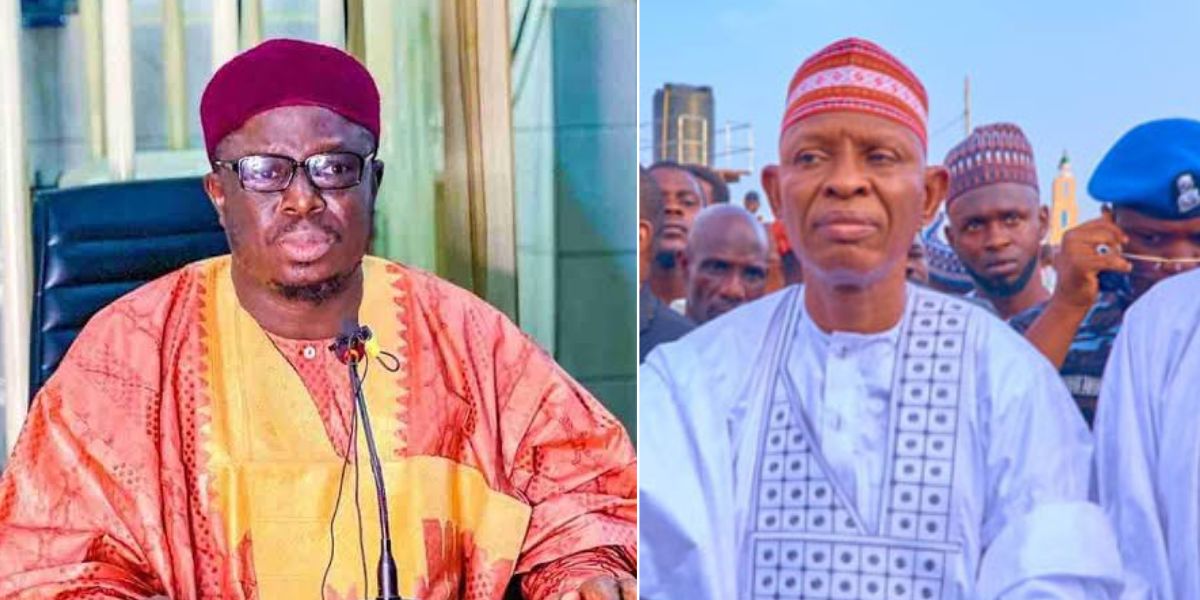
The recent public criticism by Governor Abba of the Hisbah board in Kano State has sparked controversy and raised concerns about leadership decorum and responsible governance. While it is crucial for leaders to address concerns and seek improvement within government agencies, the manner in which Governor Abba chose to express his dissatisfaction raises questions about his leadership style and the potential consequences of his actions.

First and foremost, criticizing a government agency publicly, especially one tasked with religious and moral enforcement like the Hisbah board, can create unnecessary tension and undermine public trust in the institution. Governor Abba’s decision to air his grievances in a public forum instead of handling them internally or through diplomatic channels demonstrates a lack of discretion and undermines the credibility of the Hisbah board.

Furthermore, by openly criticizing the Hisbah board, Governor Abba risks exacerbating existing tensions within the community and fueling resentment towards the agency. This could potentially undermine the effectiveness of the Hisbah board in carrying out its duties and could lead to a breakdown of law and order in the state.

Additionally, Governor Abba’s public criticism of the Hisbah board without offering concrete solutions or constructive feedback demonstrates a lack of leadership maturity. Effective leaders understand the importance of providing constructive criticism in a constructive and respectful manner, focusing on solutions rather than simply pointing out problems.

Moreover, Governor Abba’s decision to publicly criticize the Hisbah board instead of engaging in private dialogue with relevant stakeholders, such as Sheikh Mallam Daurawa, further highlights his disregard for diplomatic protocols and his tendency to prioritize personal agendas over the well-being of the community.

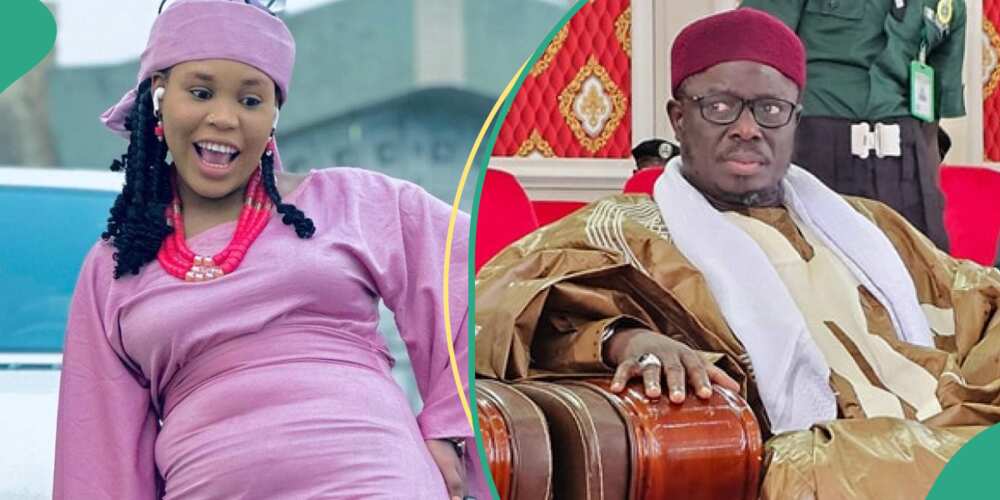
Adding the context of Murja Kunya’s situation provides further insight into the potential implications of Governor Abba’s public criticism of the Hisbah board. Murja Kunya, a social media influencer, has been accused by the Hisbah board of encouraging indecency and immorality. In this context, Governor Abba’s public condemnation of the Hisbah board could be interpreted as a form of protection for Murja Kunya.

By publicly criticizing the Hisbah board’s handling of the situation, Governor Abba may be perceived as undermining their authority and potentially shielding individuals like Murja Kunya from accountability. This not only weakens the effectiveness of the Hisbah board in enforcing moral standards within the community but also sends a troubling message about the government’s commitment to upholding moral values and protecting societal norms.

In light of these circumstances, Governor Abba’s public condemnation of the Hisbah board takes on an even greater significance. It not only raises questions about his leadership style and approach to governance but also calls into question his commitment to upholding moral standards and protecting the well-being of the community.

Therefore, it is imperative for Governor Abba to reconsider his approach and prioritize responsible leadership that fosters constructive dialogue and collaboration, while also upholding the values and principles that are essential for the well-being of society as a whole.

Umar Sani Adamu (Kawun Baba) 

Mother protests treatment of Kano TikToker at psychiatric centre

By Sabiu Abdullahi

The controversy surrounding the arrest and trial of Kano-based social media influencer, Murja Kunya, has escalated with her mother, Hadizatul Kubra, vehemently rejecting what she perceives as the inhumane treatment of her daughter at the Federal Neuro Psychiatric Hospital in Kano. 

Murja Kunya, currently held in custody by the Kano State Hisbah Board, faced a Shari’a Court order to undergo medical evaluation at the government-owned psychiatric hospital ahead of her impending trial.

Charges including indecency, public nuisance, and promoting prostitution were leveled against her by the Hisba Board. 

Expressing concern over her daughter’s treatment, Murja’s lawyer, A.U. Haji, criticised the hospital for allegedly attempting to administer unidentified substances without informing her about her health status, branding it a violation of her human rights.

According to Leadership newspaper, Murja’s combative behaviour towards healthcare personnel has further complicated her situation. 

In a widely circulated audio interview, Hadizatul Kubra voiced dissatisfaction with her daughter’s alleged maltreatment, asserting Murja’s sound mental health but dramatic disposition.

She recounted being urgently summoned to the hospital, where Murja was reportedly distressed, and denounced what she perceived as mistreatment. 

In the audio, Kubra appealed to the state government for leniency while opposing psychiatric evaluation or treatment for her daughter, adamantly refusing any injections, stating, “I know they are doing this to kill my daughter, and I will never allow her to be injected with anything, no matter what.” 

She highlighted Murja’s familial support, particularly towards her and her ailing father. 

The court hearing is slated to resume on May 20, 2024, following the completion of the psychiatric evaluation as ordered by the trial judge, amid continued contention surrounding Murja Kunya’s case.

Fake News: Sheikh Daurawa did not resign from Kano Hisbah Command

By Aisar Fagge

Rumours circulating on social media platforms about the resignation of Sheikh Aminu Ibrahim Daurawa, the Commandant General of Kano State Hisbah Command, were found to be false.

Speaking to Dr. Mujahid Aminuddeen, Deputy Commander General of Kano Hisbah, he said, “All those stories were fake, and Sheikh Daurawa is already in his office attending to many people.”

The development of this fake news is not unconnected to the story of the release of Murja Kunya, the embattled TikToker who was arrested by Hisbah after receiving a series of complaints against her from the residents of the area where she lives.

After being taken to court, Kunya was facing multiple charges, denied bail, and the date for her trial was set. However, yesterday, February 18th, new information revealed that Kunya had been miraculously released.

The Daily Reality is working to find out why, how, and under what condition(s) she was released.

Why Kano Hisbah declares prominent TikTokers wanted

By Uzair Adam Imam

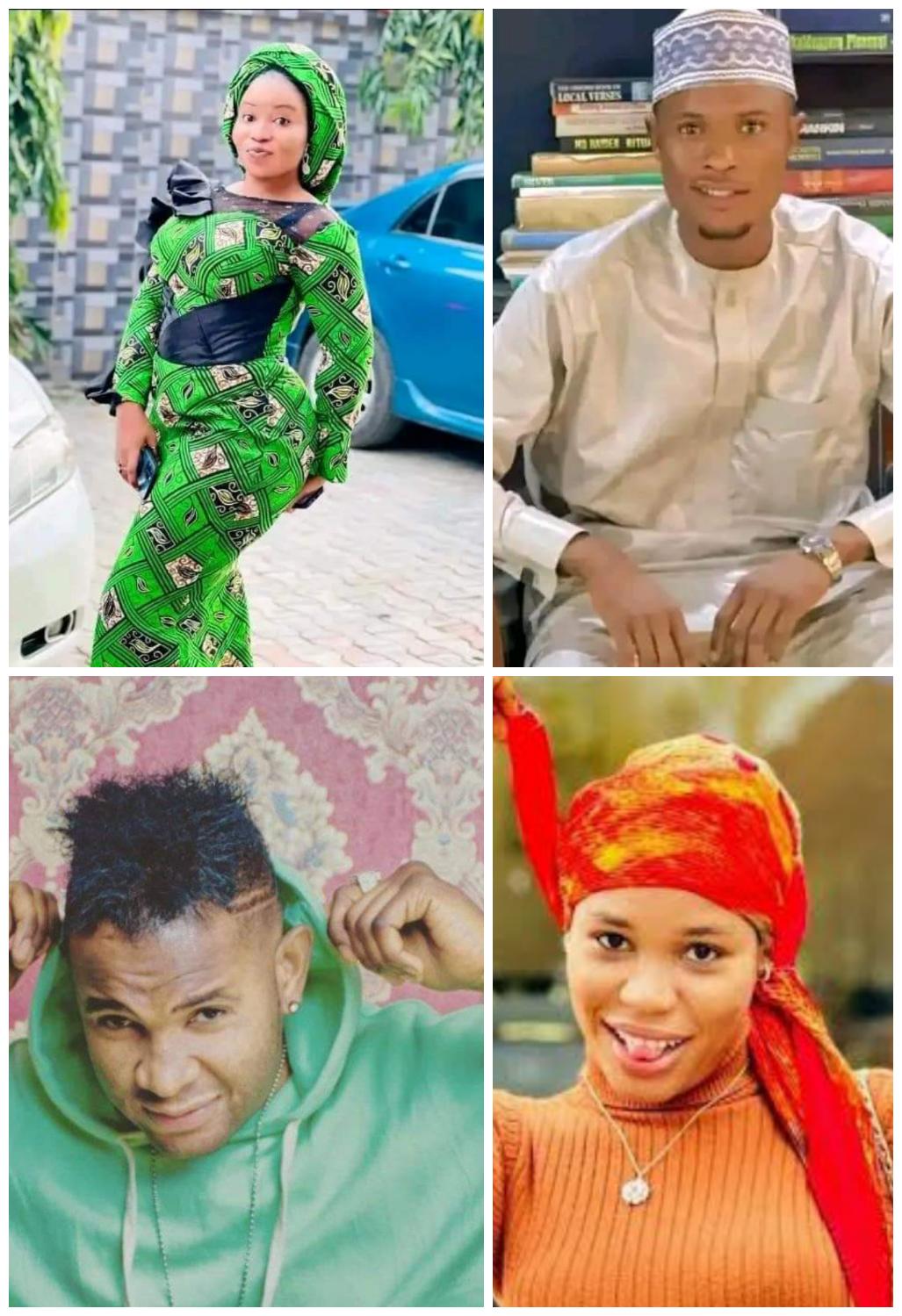
Kano State Hisbah Board has launched a manhunt for some prominent TikTokers over a vulgar post. The wanted TikTokers include Murja Kunya, Idris Maiwushirya, Shakira, Hassan Make-Up and Kano State Material, popularly known as G-Fresh.

Recently, the TikTokers posted an uncouth video on the TikTok app, which was said to have contravened the Hausa norms and Islamic teaching. But the board said it was responding to some distress calls it received from some concerned citizens in the state over the unethical video.

Declaring the TikTokers wanted, the board read, “We are looking for anyone who sees these people or knows where they could be found.”

Advert turns vulgar, immoral

The video, which went viral, was allegedly meant to advertise the enlargement supplements for women at the Shakira`s shop in Kano. However, the TikTokers resorted to what many critics consider vulgar utterances.

In the video, G-Fresh was seen flattering the body shape of one of the TikTokers, Murja Kunya, who was consequently turning her butt to show her curvy shape.

The Daily Reality’s finding shows that this is not the first time the wanted TikTokers have published such video content that is incongruous with the norms and values of the Hausa people and the religion of Islam.

Disrespect for Hisbah, law

A person close to the Hisbah, Malam Aisar Salihu Musa, said the wanted individuals are so disrespectful to Hisbah, Shari’a and other related laws in the state. He added that this was not the first time Hisbah summon these people and tell them what they were doing was wrong.

He stated, “Hisbah invited and preached to them. They were also advised on how to use their pages as Muslims and Hausa people. “Their attention was also called to the implications of what they were doing, which may, in turn, haunt their children later in life, let alone frustrate their relatives. However, Aisar lamented that the TikTokers’ immorality was even worse after the Hisbah interventions in 2023.

“Some of them, though not on the current video, were also called and cautioned by the board. Some were even jailed. Sadly enough, all of them have now gone back to their former behaviour and do even worse than what they were doing before.” He added, “I believe there are many ways these people can entertain and educate people without necessarily being immoral”.

Peoples` condemnations

Showing her disappointment, Khadija Deejah described the development as shameful, saying, “I feel shy whenever I come across their content. I am pleading with Hisbah also to arrest Sayyada Sadia.

Usman Auwal Hassan said, “They deserved (to be arrested) since.”

Sadia Uba Musa opined that they should face the wrath of the law for their actions over time. She stated, “They need to be strongly warned and punished for their actions over time.”

Suggesting how to find them, Hassan Ubali said, “There needs to be a check into our hotels, even if not all. I believe two or more of them could be found. Also frowning at the development, Nura Ahmad Usman said, “Murja needs to be severely punished to serve as an example for the rest because she thinks that she is above the law.”