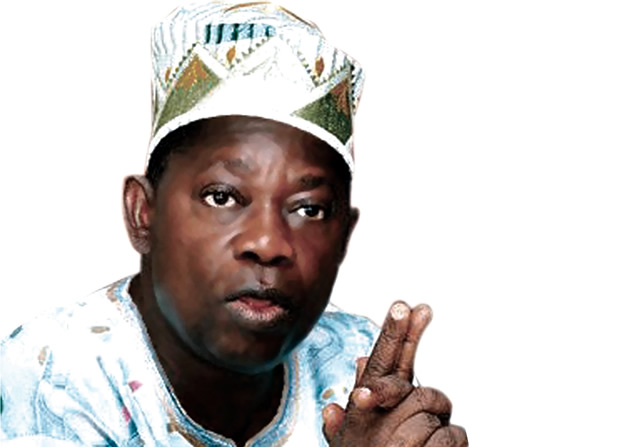
MKO Abiola

June 12 and the lopsided narrative: How Yoruba elites hijacked a national struggle

By Salisu Uba Kofarwambai

The annulment of the June 12, 1993, presidential election by General Ibrahim Babangida stands as one of the most consequential events in Nigeria’s political history. What began as a tragedy for democracy soon became a powerful weapon of political repositioning for the Yoruba elite, who skillfully leveraged national sympathy to strengthen their grip on Nigeria’s democratic evolution.

This singular incident opened the doors for the Yoruba to produce three heads of state—an achievement that might never have occurred under normal political circumstances. Ironically, this is the same political milestone that the late Chief Obafemi Awolowo, the revered father of Yoruba nationalism, spent his entire life trying to attain but could not.

Sadly, many who ultimately benefited from the June 12 crisis were not even supporters of Chief M.K.O. Abiola during the election. Instead, they emerged later as political opportunists—vultures who hijacked the struggle, turned it into a sectional movement, and weaponized it for political dominance.

It is important to recall that the North overwhelmingly voted for Abiola over its own son, Alhaji Bashir Tofa. But following the annulment, the Yoruba intelligentsia cleverly shifted the blame from the military, a national institution, to the North, creating a narrative that painted the region as the villain of democracy. This deflection became a foundation for the Yoruba to assert political superiority, while the North unknowingly fell for the narrative.

In the aftermath, Chief Ernest Shonekan—a Yoruba technocrat—was installed as head of the Interim National Government. Later, in 1999, the North once again conceded power to the South-West, with Chief Olusegun Obasanjo returning as a civilian president. However, Obasanjo’s tenure is remembered by many in the North for economic policies that led to the decline of the region’s industrial capacity. Many northerners believe these policies were deliberate, politically motivated, and economically harmful to the North.

Today, with President Bola Ahmed Tinubu at the helm, the North’s frustration appears to be deepening. Recently, a ₦16 trillion infrastructure project was allocated to the South, while liberal economic policies continue to disproportionately impact northern states, compounding existing inequalities.

This growing sentiment of marginalization was reinforced by President Tinubu’s Democracy Day national address. During the broadcast, a list of recipients of national awards was unveiled to honour those who fought for democracy. Yet, the list revealed a clear bias. While individuals like Professor Wole Soyinka—who went into exile during the military era—were honoured, many who stood their ground and bore the brunt of military repression were ignored.

Where are the names of Abubakar Rimi, Abdulkarim Dayyabu, Sule Lamido, Gani Fawehinmi, and M.D. Yusuf—figures who paid a heavy price for resisting military rule? Most of them were imprisoned under General Abacha and only released after his death. Yet, these sacrifices appear forgotten, excluded from a national recognition that should be inclusive.

Even the institutionalization of June 12 as Nigeria’s Democracy Day under the Buhari administration has continued to project the day as a Yoruba affair—further entrenching the idea that the Yoruba were the sole victims of the annulled election. This skewed narrative continues to sideline other critical voices and regions, especially the North, which was deeply invested in the democratic struggle of the 1990s.

As we mark June 12, the North must soberly reflect on how much has been lost—from the annulment of 1993 to the current political dispensation. The region must also begin to ask tough questions about its place in the national project and how to reclaim a fair share in Nigeria’s democratic future.

June 12 was a national tragedy and should be a national symbol of resilience—not a sectional emblem of victimhood. Until this is fully acknowledged, the spirit of June 12 remains only partially honoured.

Corruption and market distortions in Nigeria: A historical perspective

By Muhammad Usman

Markets do not exist in isolation; they rely on trust, fair competition, and robust institutions. When corruption remains unchecked, the market becomes skewed in favour of a select few, and ordinary individuals bear the consequences. 

Over the decades, Nigeria has experienced corruption at different levels, from the military era to democratic governments. This article examines corruption under different administrations and how it has affected various sectors of the economy, benefiting elites like MKO Abiola, Aliko Dangote, Mike Adenuga, and other politically connected businessmen.

Under General Ibrahim Badamasi Babangida (IBB), Nigeria’s oil and gas industry, which should have been a national blessing, became a tool for personal enrichment. Instead of promoting a competitive and transparent market, Babangida awarded oil licenses to individuals and companies with close government ties.

A clear example is Mike Adenuga’s rise, who received an oil block from Babangida’s government. This preferential treatment enabled him to build a substantial business empire, including Conoil, while smaller enterprises lacking political connections were excluded. Likewise, Aliko Dangote, who later became Africa’s richest man, gained immensely from government-backed monopolies and exclusive importation rights.

During the first Gulf War (1990–1991), Nigeria earned an estimated $12.4 billion in oil revenue, which was never accounted for. The Pius Okigbo Panel (1994) revealed that these funds were squandered on questionable projects and private accounts instead of being used for national development. Ordinary Nigerians saw no benefit from this windfall, facing rising inflation and economic hardship, while a few became extraordinarily wealthy.

One of Babangida’s most significant economic policies was the 1986 Structural Adjustment Program (SAP). While it was meant to liberalize the economy, it favored those with government connections. Under SAP, state-owned enterprises were privatized, but instead of an open and competitive process, these businesses were sold at giveaway prices to Babangida’s allies.

For example, MKO Abiola, a wealthy businessman and close associate of the regime, gained immensely from these privatisation deals. Meanwhile, ordinary Nigerians suffered as the naira was massively devalued (that’s the beginning of the naira devaluation) that continues to haunt us to this day.

Babangida’s government also enabled massive corruption in public contracts. One infamous case was the $150 million Ajaokuta Steel project, which was riddled with mismanagement and corruption. Similarly, when Babangida moved Nigeria’s capital from Lagos to Abuja in 1991, many development contracts were inflated or abandoned, yet payments were made to political allies.

Furthermore, consider the power sector scandal during Olusegun Obasanjo’s administration, in which over $16 billion was allocated to electricity projects with little to show for it. Examine the Halliburton bribery case from that period, where Nigerian officials allegedly received $180 million in bribes from foreign contractors in exchange for lucrative government contracts. Despite the overwhelming evidence, many individuals implicated were never prosecuted.

During this period (Obasanjo), Aliko Dangote’s business empire expanded rapidly, as he received exclusive waivers and importation rights. While many businesses struggled with high tariffs, Dangote was given government-backed monopolies in cement, sugar, and flour, ensuring that competitors could not challenge his dominance. 

Muhammad Sani Usman writes from Zaria and can be contacted at muhdusman1999@gmail.com.

The metaphor of self in Ibrahim Babangida’s A Journey of Service: An Autobiography

By Bashir Uba Ibrahim, PhD

Etymologically, the terms “autos”, “bios”, and “graphein” are Greek forms. While the former stands for “self”, the “bio” represents “life”, and the “graphein” which diachronically and morphologically changes over time to “graphy,” means “to write”. Thus, autobiography is a self-written narration of one’s own life. 

According to Celluni, “All men, whatever be their condition, who have done anything of merit, if so, be they men of truth and good repute, should write the tale of their life with their own hand”. Thus, the recent 420-page memoir launched by the former military Head of State, Ibrahim Badamasi Babangida, on Thursday, 20th February 2025, is a typical instance of a self-written account of one’s own life experiences.

Babangida’s A Journey of Service: An Autobiography is highly anticipated due to the author’s role as one of Nigeria’s most controversial, if not enigmatic, military leaders. His perceptive ingenuity and cunning leadership style earned him the nickname “Maradona” or “evil genius.” Thus, his reign was marked by numerous seemingly unforgettable controversies and troubles, ranging from the mysterious death of journalist Dele Giwa, the failed coup of Mamman Vatsa and his subsequent execution, Gideon Okar’s bloody failed coup, the Structural Adjustment Programme (SAP), the OIC palaver, and above all, the 1993 June 12 saga. 

As noted by Lejunre (1975), the supreme value of autobiography lies in its nature as a product of the writer’s self, the private realm of his reflective self that informs the bios and graphein, with which they interact to form a text as a discourse about his existence, particularly emphasising the development of his own life and personality. Therefore, as an autobiographical text, A Journey in Service represents a personal account of its author.

In addition, Babangida, in this book, makes a striking revelation, submissions and confessions that left some of its readers in a deep shudder and bewilderment. For instance, about the June 12 saga, an election that was annulled in broad daylight by him, he writes that on June 23rd, 1993, he left Abuja for Katsina to commiserate with the Yar’adua family over the death of their patriarch, Musa Yar’adua, the father of Major General Shehu Yar’adua and the late Nigerian president Umar Musa Yar’adua when “a report filtered to me that the June 12 elections had been annulled” (pp-275). He thus shifts blame to former Head of State General Sani Abacha, who was then his Chief of Defence Staff, the accusation which some people view as not only baseless but rather a joke and a scapegoat as succinctly captured in the book “But annulment was only a component of series of other options. But to suddenly have an announcement made without my authority was, to put it mildly, alarming. I remember saying: ‘These nefarious inside’ forces opposed to the elections have outflanked me! I would later find out that the forces led by General Sani Abacha annulled the election. There and then, I knew I was caught between a devil and deep blue sea” (pp-275).  

Therefore, Abacha served as a whipping boy or a fall guy, thus taking the blame. This is where the need for thanatography- a death writing comes up. Had Abacha been alive, the people would like to hear his side of the story on this saga, or had it been possible to write from the grave, thanatographically, his submission will help in striking a balance. Therefore, it is probable to say that Babangida’s autobiography, A Journey of Service, is just a metaphor of self that conceptually and schematically treatises his life journey from his early years, school years in Wushishi and Bida, early military career as a young officer to Nigerian civil war and NDA teaching years, mounting the saddle of leadership as the military head of state and the challenges that follow. 

In short, this autobiography is timely as it emerges in an era where one of MKO Abiola’s disciples, who fought for the cause of June 12, which led to his exile, is ruling the country. Meanwhile, the public’s eagerness to hear Babangida’s perspective after 32 years since the incident, along with numerous intricate mysteries, controversies, and decisions that characterised his regime, makes the book’s readership thought-provoking. 

However, my prediction is that the book will be subjected to various interpretations, re-readings, and misinterpretations depending on the perspective of its readers. Therefore, critics of this autobiography or memoir may approach it with the intention of deconstructing it, as the autobiographical activity (by Babangida) is also a form of deconstruction, evident through the narrative account and the self-writing upon the subject self.         

Dr Bashir Uba Ibrahim writes from the Department of English and Literary Studies, Sule Lamido University, Kafin Hausa. He can be reached via bashirubaibrahim@gmail.com.

Democracy Echoes: Tinubu’s anthem and the unfinished legacy of MKO Abiola

By Haroon Aremu

On a peaceful Sunday afternoon, I found myself immersed in the music of Dr. Sikiru Ayinde Barrister, a pioneer Fuji maestro known for his deep and meaningful lyrics that reflect Nigeria’s socio-political landscape. As I listened to a track titled “Adieu MKO,” which began with Nigeria’s newly adopted anthem, I was inspired to delve deeper into MKO Abiola’s legacy in relation to President Bola Ahmed Tinubu’s presidential journey and the adoption of the new anthem, as I began to wonder if all this could be a strategic message to Nigerians.

Sikiru Ayinde Barrister, a renowned Fuji musician, frequently added societal issues into his music, notably addressing the life and contributions of MKO Abiola. Barrister’s songs portrayed Abiola with admiration, acknowledging his philanthropy, political influence, and commitment to democracy. Barrister shared personal anecdotes, portraying Abiola as a humble figure despite his wealth and influence, creating a multifaceted portrayal of the Nigerian icon.

According to Historical research, Moshood Kashimawo Olawale (MKO) Abiola began his journey from humble beginnings. Born into a low-income family in Abeokuta, Ogun State, he started earning money at a young age by performing odd jobs, including singing and drumming at events. His exceptional intelligence earned him a scholarship to attend the prestigious Baptist Boys’ High School in Abeokuta. Later, he received a government scholarship to study at the University of Glasgow in Scotland, where he earned a degree in accountancy.

Beyond his political aspirations, Abiola was a successful businessman who built a vast business empire with interests in telecommunications, oil, and banking. He founded the telecommunications giant ITT Nigeria and was also involved in the publishing industry, owning newspapers like Concord Press. His philanthropy earned him the title of “Aare Ona Kakanfo of Yorubaland,” a highly esteemed traditional title.

Abiola is most famous for his presidential bid 1993, which is widely believed to have been the most free and fair election in Nigeria’s history. Despite winning, the election results were annulled by the then-military government led by General Ibrahim Babangida, leading to a significant political crisis. After declaring himself the rightful president of Nigeria, Abiola was arrested in 1994 by the military regime of General Sani Abacha. He remained in detention for four years and died under suspicious circumstances on July 7, 1998, the day he was due to be released.

Despite the controversies surrounding his death, Abiola’s legacy as a champion of democracy in Nigeria is honoured. In 2018, President Muhammadu Buhari posthumously awarded him Nigeria’s highest honour, the Grand Commander of the Federal Republic (GCFR), and declared June 12 as Democracy Day in recognition of his contribution to Nigeria’s democratic struggle.

Abiola was also a cultural figure with deep connections to the Yoruba cultural renaissance and promoted Nigerian culture globally. His influence extended beyond politics and business, impacting social and cultural spheres in Nigeria. He maintained extensive international connections in business and politics, improving Nigeria’s relations with other countries.

MKO Abiola embodied the patriotic spirit that “Nigeria, We Hail Thee” represented. As a businessman, philanthropist, and political leader, Abiola’s efforts were always aimed at uplifting Nigeria and contributing to its progress and unity.

The newly adopted anthem’s lyrics, emphasising unity and patriotism, reflect Abiola’s vision for Nigeria. He consistently advocated for a united Nigeria, free from the divisions that plagued the country. His presidential campaign in 1993 was a significant demonstration of his commitment to national unity and democracy.

Abiola’s contributions to Nigerian culture and his promotion of the Yoruba cultural renaissance align with the pride and national identity celebrated in “Nigeria, We Hail Thee.” He supported cultural initiatives to foster a sense of pride and belonging among Nigerians.

The anthem’s call to serve the nation resonates with Abiola’s extensive philanthropic activities. He invested in education, healthcare, and community development, reflecting the anthem’s spirit of dedication to the well-being of Nigeria and its people.

The period during which “Nigeria, We Hail Thee” was the national anthem corresponds with a formative time in Nigeria’s political history, including the early years of independence. Abiola’s political career, especially his role in the 1993 presidential election, continues the struggles and aspirations encapsulated in the anthem.

With some sense of factual comparison, President Bola Ahmed Tinubu’s relationship with MKO Abiola reflects a shared commitment to democracy, justice, and the advancement of Nigeria. Both leaders believed in the country’s potential and actively worked towards its progress. Tinubu and Abiola were influential figures in Nigeria’s political landscape, with Abiola’s 1993 presidential bid resonating with Tinubu’s political aspirations and being associated with the Social Democratic Party (SDP). Abiola’s leadership qualities, philanthropy, and vision for Nigeria deeply inspired Tinubu, who likely admired Abiola’s ability to connect with the masses and his unwavering dedication to democratic ideals. 

Like many other pro-democracy activists, Tinubu supported Abiola’s mandate and condemned the annulment of the June 12, 1993, presidential election, forging a bond rooted in shared democratic principles. Tinubu continued to champion democratic values, electoral reform, good governance, and the rule of law, echoing Abiola’s vision for a democratic Nigeria. 

Furthermore, both leaders have been actively involved in philanthropic activities and community development initiatives, aligning with Abiola’s legacy of social responsibility. The Fuji icon King Wasiu Ayinde Marshal has sung about Tinubu following Abiola’s legacy, highlighting their enduring connection and further reinforcing the significance of Abiola’s impact on Nigeria’s political landscape. 

Considering the recent anthem change by the president, one could perceive it as a message of togetherness and an assurance of following Abiola’s legacy, given the similarities between Abiola and Tinubu, including their association with Muslim-Muslim tickets and other shared values.

To President Bola Ahmed Tinubu, I implore all citizens to wish and pray to God to grant him insight and foresight. Imight (strength) need to realise the democratic journey that Abiola envisioned.

Haroon Aremu Abiodun is a youth Corp Member with PRNigeria centre, Abuja and wrote in via exponentumera@gmail.com.

Is Tinubu Awoist – a disciple of Awolowo?

By Abdullahi Khairalla

Given the recent tsunamic and fundamental economic and educational reforms in the country, people have started raising historical and comparative questions of whether President Bola Ahmed Tinubu holds dearly the sacred political and economic principles and ideals of a centenary Yoruba saint Obafemi Awolowo known as ‘Awoism’.

Since the 1960s, Yoruba politics has been dominated by a political orientation known as ‘Awoism’. The phrase refers to the political philosophy of the late Yoruba political leader Awolowo, who espoused policies he called “democratic socialism”. Its primary tenets were welfarerism, free social services and job creation. Awolowo loomed large over Yoruba politics for over forty years. He was an intensely intellectual figure with great energy.

Awolowo had a ground-breaking term of office as the premier of Nigeria’s Yoruba-dominated Western region between 1955 and 1959. During this time, he introduced free education and health care in his region with other social welfarist policies.

Awolowo’s political ideology did not die with him. He was a great and transformational leader who was loved, revered and cherished like the rock of Gibraltar by the Yorubas and all who benefitted from his pioneering social welfare programmes. They refer to themselves as ‘Omo Awolowo’ (Awolowo’s children) or Awoists (disciples of Awolowo and his principles). Awolowo’s ideas remain so deeply ingrained in the political psyche of the Yoruba that being an Awoist is regarded by many Yorubas as the only legitimate apprenticeship before becoming a Yoruba politician on the national stage.

President Tinubu has very few in common with Awolowo. Tinubu, just like MKO Abiola, is not like Awolowo. Awolowo was trim, dapper and austere. In contrast, Tinubu is well known for his staggering wealth and flamboyance, which made him appear larger than life. Awolowo was a socialist: Tinubu is an ultra-capitalist billionaire who sits atop— bringing in completely capitalist-oriented policies in the education sector, oil and gas industry, health, electricity and many others, which makes him look like the opposite figure of Awolowo in Yoruba land.

Of course, Awolowo’s death politically orphaned the Yoruba. He had served or played a dual role as the Yoruba leader and also their political representative on the national scale. After his death, Yoruba politics were dominated by one trend. First, there was the search for another iconic and radical socialist to inherit Awolowo’s dual role. 

Many thought Tinubu would apply some Awoist policies on Nigerians now that he became the Nigerian president, but the recent developments and realities seem to belie this hope. 

Abdullahi Khairalla writes from the Department of Political Science, University of Maiduguri.

MKO Abiola’s children drag Buhari to ECOWAS Court over mother’s death, demand $10m compensation

By Ahmad Deedat Zakari

The children of the late Mrs Kudirat Abiola have sued the administration of President Muhammadu Buhari at the ECOWAS Court of Justice sitting at Abuja over the assassination of their mother. The deceased’s children sought different reliefs from the court and a compensation of ten million dollars.

Mrs Kudirat Abiola was allegedly murdered on June 4, 1996, by the military junta of General Sani Abacha while her husband, Moshood Abiola, famously known as MKO Abiola, was in prison at the behest of the Nigerian government

According to reports, Khafilia Abiola, Moriam Abiola and Hadi Abiola are sueing for themselves and on behalf of the other children of the deceased

The Daily Reality gathered that the suit filed on Tuesday and marked ECW/CCJ/APP/62/2022 was filed on their behalf by human rights lawyer and Senior Advocate of Nigeria, Femi Falana.

The plaintiffs are challenging the “violation of the fundamental human rights to life and dignity of human person of the late Mrs Abiola.”

However, as at the time of filing this report, the court is yet to fix a date for hearing of the case

The Plaintiffs are seeking the following reliefs from the ECOWAS Court:

  1. A DECLARATION that the killing of Mrs. Kudirat Abiola by the armed agents of the defendant in Lagos on June 4, 1996 is a violation of her rights to life and dignity guaranteed by articles 4 and 5 of the African Charter on Human and Peoples’ Rights and articles.
  2. A DECLARATION that the refusal of the defendant to charge Sergeant Barnabas Jebila (a.k.a. Rogers) Mohammed Abdul (a.k.a Katako) and Aminu Mohammed Sergeant Barnabas Jebila with murder for the brutal killing of Mrs. Kudirat Abiola in Lagos on June 4, 1996 is a violation of her rights to life and dignity guaranteed by articles 4 and 5 of the African Charter on Human and Peoples’ Rights and articles.
  3. AN ORDER directing the defendant to charge Sergeant Barnabas Jebila (a.k.a. Rogers) Mohammed Abdul (a.k.a Katako) and Aminu Mohammed with murder for the brutal killing of Mrs Kudirat Abiola in Lagos on June 4, 1996.
  4. AN ORDER directing the defendant to pay the sum of $10 million to the Applicants as compensation for the unlawful killing of Alhaja Kudirat Abiola.”

President Muhammadu Buhari’s administration had on June 6, 2018 changed the Democracy Day annual celebration from May 29 to June 12. This was done to honour the sacrifices of the Abiola’s family and commemorate the democratic election of MKO Abiola on June 12, 1993.

When not to celebrate democracy

By Mukhtar Jarmajo

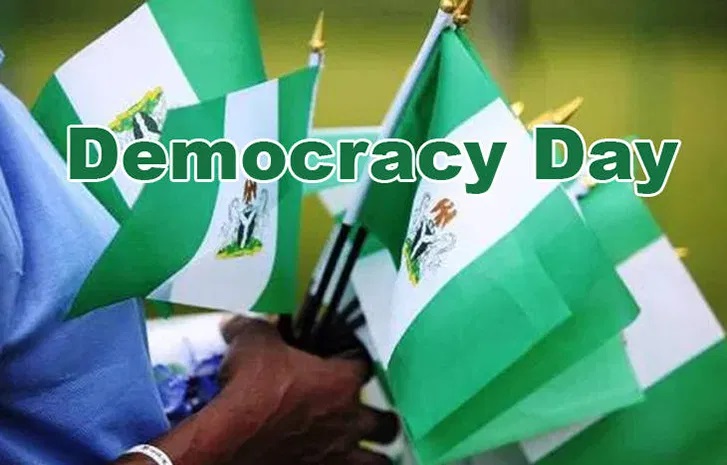
Every year, Nigeria’s federal government declares June 12 as a holiday to celebrate the nation’s democracy. It used to be May 29 as it was the date democracy returned to our shores in 1999 after many years of military dictatorship. But to acknowledge and immortalise the democratic struggles of the late MKO Abiola, the date was changed by President Muhammadu Buhari virtually two years ago. It is, however, astonishing that as a nation, we put so much time and energy into celebrating democracy, which in the truest meaning of the word, does not exist on the shores of Nigeria.

Democracy is about freedom, but what there is here is post-colonial slavery, where the ordinary man lives in untold hardship perceiving the miasma of hopelessness. When the lives and properties of the citizens of a nation are not safe; when there is no access to affordable and quality healthcare services; when a nation’s education system is shattered; when a nation’s economy is so unhealthy that most of its citizens hardly afford two meals a day, it bears no repeating that the citizens of this country are in the shackles of slavery. Therefore, one cannot talk about practising the democratic system of government.

How can we even celebrate democracy in today’s Nigeria when our universities have been under lock and key for almost six months owing to industrial action embarked upon by lecturers? It is here that Petroleum Motor Spirit (PMS) is scarce and therefore only obtainable at high prices with attendant consequences on all goods and services.

In today’s Nigeria, human life has no value given the spate of kidnappings and killings that occur daily across the country. Moreover, corruption, which is like a poison coated with sugar and thus mortally dangerous to the entire human species, is rooted in Nigeria’s public and private sectors.

There is no law and order in the polity. Almost everyone is morally and mentally impatient that we cannot follow queues in banks, hospitals, airports and shops. In virtually all instances, one person tries to take advantage of the other. The public space is chaotic. So, ordinary people are under pressure as we go about our daily activities. And worse is that there is hopelessness on our faces, given that there is no hope in sight for merry days ahead.

What is very obvious is that both the leaders and the followers in this country are ready to let the nation continue journeying on this very rough and dusty path. While most of the leaders here are selfish, the biggest number of followers are irresponsible. Most Nigerian politicians aim to rule and please themselves through corruption and self-aggrandisement. They achieve it by using the fault lines of religion, region or ethnicity to divide the people and eventually get the opportunity to perpetuate themselves in power.

And to worsen matters, the people, the electorate, who have the democratic means to save the nation from the drift towards collapse, have failed to do so for obvious reasons. Poverty and illiteracy, which are direct products of bad governance, have effectively forced the people into allowing the leaders of Nigeria to divide us on the fault lines of religion, region or ethnicity and then rule us. This is one of the reasons why Nigerians rarely speak in unison against all the hardships and the apparent injustices the people are grappling with.

Jarmajo writes from Misau, Bauchi state, via dattuwamanga@gmail.com.