Minimum wage

The Price of a Nigerian Passport and the Cost of Being Nigerian

BY Nazeer Baba Abdullahi

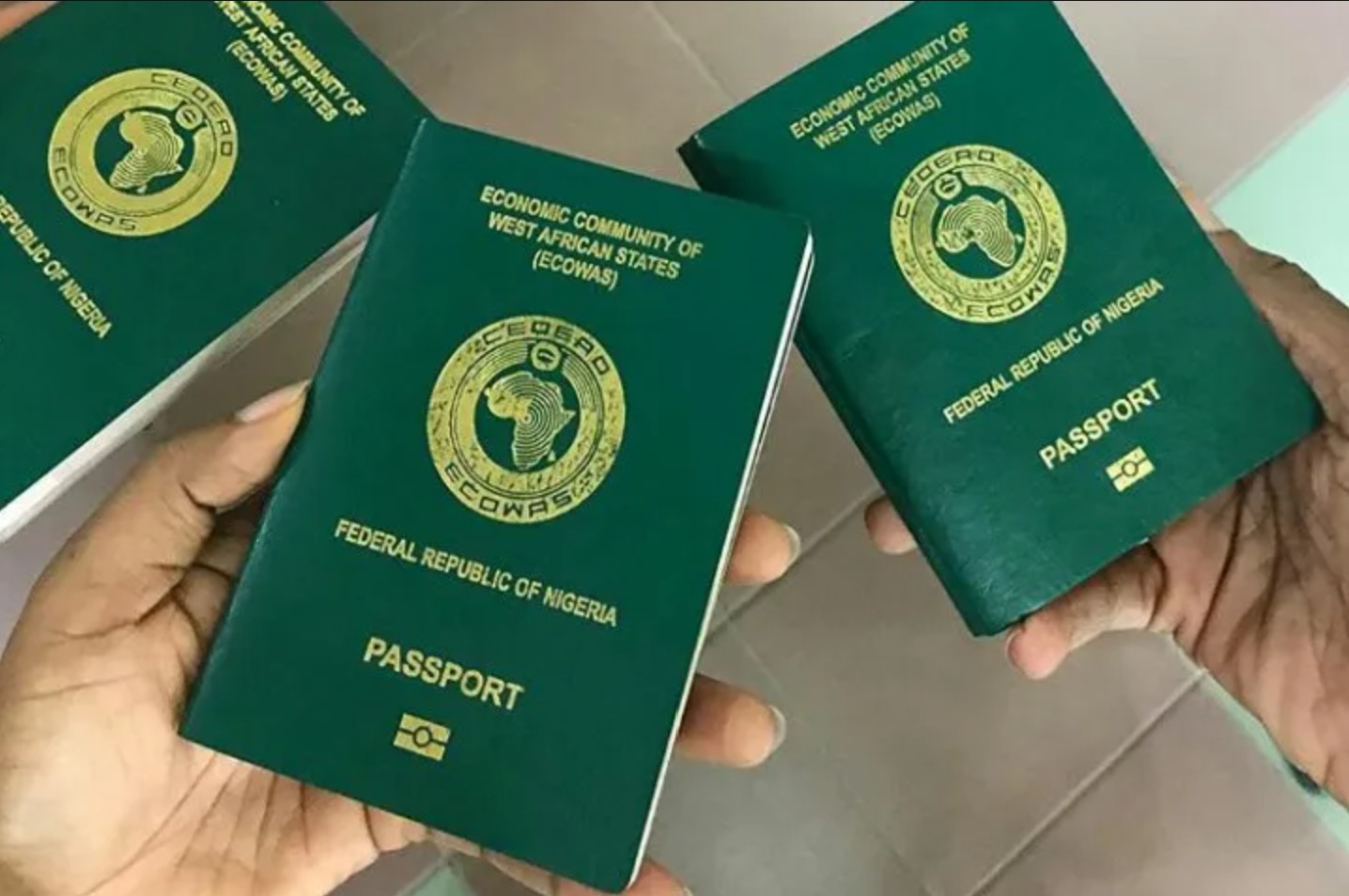
Imagine holding a Nigerian passport, symbolising pride, identity, and opportunity. However, effective September 1, 2025, the fee doubles from ₦50,000 to ₦100,000 for the 32-page version and from ₦200,000 to ₦ 400,000 for the 64-page version. This isn’t just an administrative change; it breaches the social contract.

Converting a basic identity document into an expensive luxury creates a two-tiered citizenship system, penalising ordinary Nigerians and restricting access to opportunities. A passport is a right of citizenship, like the free National ID and voter’s card, not a privilege for the wealthy. Why should a global identity extend to a commodity? 

The typical justification of ‘cost recovery’ is invalid. Essential state services should be subsidised to ensure equal access, not turned into profit centres at the people’s expense. This is especially true amid Nigeria’s economic struggles with inflation, unemployment, and rising costs. The new ₦100,000 passport costs more than the ₦70,000 minimum wage, making it unaffordable for a civil servant’s monthly salary. When a passport exceeds one month’s earnings, citizenship access is effectively priced out. This isn’t governance, but punishment. Officials say the hike maintains quality and integrity, but Nigerians only want access to a valid ID, not luxury features. Raising fees without service improvements monetises desperation. Nigeria ranks 91st globally in terms of passports, highlighting the need to improve its international standing.

The irony becomes even more glaring when compared with the voter’s card. That document is distributed free of charge, delivered to electoral wards, and made as accessible as possible. The reason is simple: it benefits the political elite by ensuring mass participation in elections. The passport, however, offers no direct political benefit. Instead, it empowers citizens to seek opportunity abroad, to level themselves in mobility and access with the very elite who govern them. Empowerment is seen not as a service to the state, but as a threat. Your vote is free because they need you. Your passport is expensive because they fear you. This is not an accident of policy; it is a deliberate strategy of control. It reveals a government more concerned with revenue extraction than with service to its people. 

A recent pattern shows the government increasing passport fees again after the August 2024 hike, indicating a trend of using vital documents for quick revenue rather than rights. Compared to neighbouring countries, Nigeria’s fees are disproportionately high. For example, a 34-page passport costs approximately ₦80,000 in Kenya, equivalent to a minimum wage of ₦ 15,000, and around ₦46,900 in Nigeria, both of which are less than the Nigerian cost. While Kenyans and Ghanaians with minimum wages can obtain passports in days or weeks, Nigerians face fees that exceed their monthly income, creating a severe financial burden.

The Nigerian passport should never be treated as a luxury item. It is a necessity in a globalised world and a symbol of national identity. To price it beyond the reach of ordinary citizens is to betray the very essence of governance, which is service, dignity, and protection of rights. What kind of nation are we building when we put a price tag on our citizens’ ability to seek a better life? What does patriotism mean if leaders measure it not by how they serve the vulnerable but by how much they can extract from them? Proper governance is not about profit; it is about fairness, opportunity, and respect for citizens.

Nazeer Baba Abdullahi wrote via babanazeer29@gmail.com.
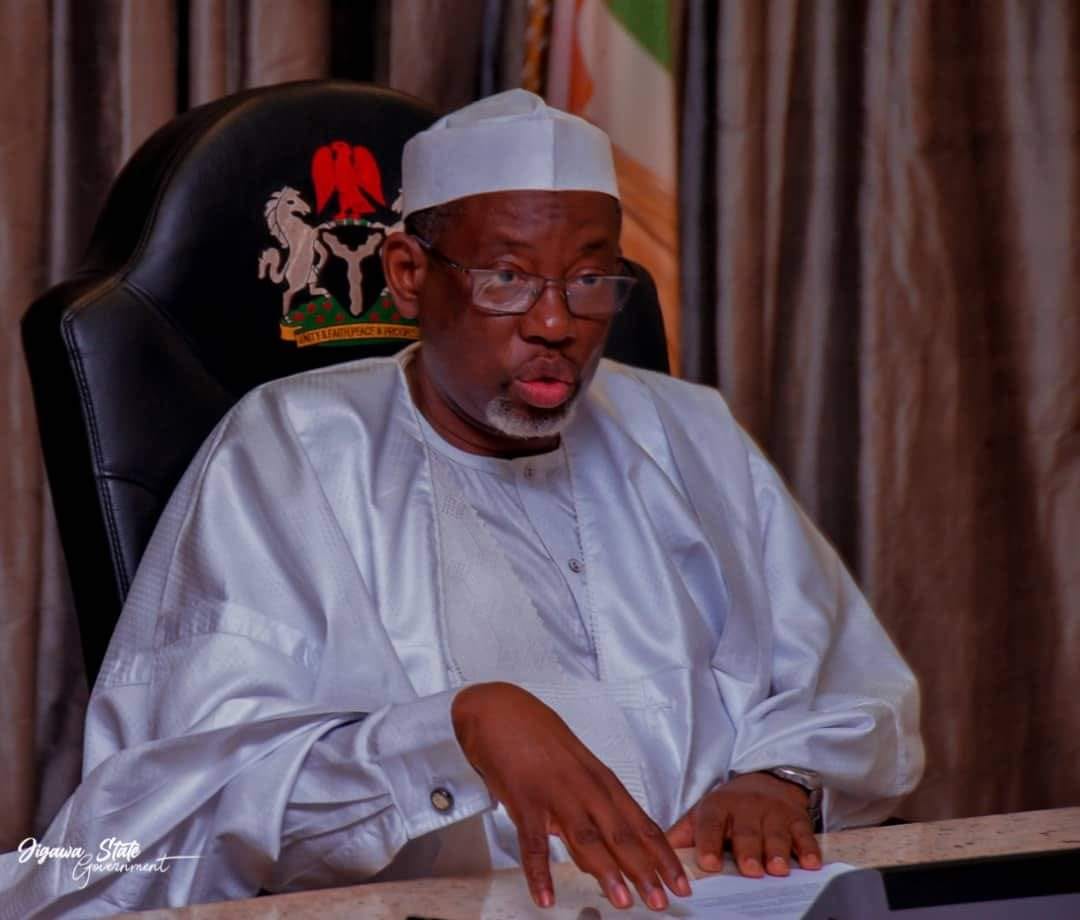
An open letter to Governor Namadi of Jigawa State

Your Excellency,

I offer my warmest congratulations on your two-year milestone as the Executive Governor of Jigawa State. Steering the affairs of a diverse and dynamic state is no small feat, and under your leadership, we have indeed witnessed tangible progress. 

May Almighty Allah continue to strengthen your resolve and guide your hands as you navigate public service responsibilities.

In these two years, your administration has recorded remarkable achievements across critical sectors—agriculture, education, infrastructure, security, and healthcare. There is much to commend, from the introduction of bold reforms to the implementation of people-centred policies. 

Notably, your decision to approve a ₦70,000 minimum wage—nearly double the previous figure—has sent a powerful signal of your administration’s commitment to workers’ welfare. This singular act resonates deeply with civil servants across the state, who now have renewed hope in a more dignified standard of living.

Sir, these achievements have not gone unnoticed. Numerous awards and recognitions by reputable organisations are a testament to the strides your government has made. 

Yet, as a concerned citizen and journalist, I feel compelled to highlight areas still yearning for attention, not to diminish your efforts, but to reinforce the voices of everyday Jigawans who earnestly seek your listening ear and urgent intervention.

Our healthcare system, for instance, still bears the scars of neglect, particularly in rural communities. Several hospitals lack basic medical facilities, suffer chronic shortages of essential drugs, and are grossly understaffed. 

During my recent fieldwork, enrollees under the Jigawa State Contributory Healthcare Management Agency (JCHMA) lamented being forced to purchase prescribed medications from private pharmacies due to stockouts in government hospitals.

Even more concerning is the plight of newly recruited nurses and midwives, many of whom are yet to be captured under the new salary structure. Their morale is low, which understandably affects service delivery quality. 

Surely, if we must strengthen healthcare delivery, the welfare of frontline health workers must not be overlooked. In the agricultural sector, where Jigawa’s reputation shines, a widening gap exists between government efforts and grassroots impact. 

According to the National Bureau of Statistics, Jigawa accounts for 75% of Nigeria’s agricultural exports, and nearly 90% of our people depend on farming for their livelihood. Yet, many smallholder farmers, particularly those in remote villages, say they have not received the much-publicised palliatives and support inputs. 

Some have had to rely on exploitative loans from private lenders, only to repay in harvests, leaving them at the mercy of uncertain seasons and fluctuating prices.

I humbly suggest the establishment of community-based monitoring committees, drawn from trusted local stakeholders, to ensure transparent and equitable distribution of agricultural support. The rural populace, whose turnout during elections often determines the course of governance, must not be left behind when dividends are shared.

Your recruitment of over 3,000 teachers and 147 first-class graduates in education is indeed laudable. This has brought renewed energy to our classrooms. However, many more qualified youths remain unemployed, submitting CVs into what seems like an unresponsive system. 

The discovery of 6,348 ghost workers and the savings of over ₦314 million monthly offer a golden opportunity to absorb some deserving graduates. The teacher shortage still looms large. The Nigeria Union of Teachers reported a deficit of 32,000 teachers in Jigawa. 

This is not just a statistic—it is a call to action. If we must invest in our future, we must first empower those who educate the future. Your administration’s empowerment initiatives have also made notable impacts—programs like the mobile kitchen distribution scheme have provided many with a path to self-reliance. 

But the landscape of youth enterprise is vast and diverse. Young people engaged in trades such as phone repairs, tailoring, and tricycle operations have felt excluded. 

To build an inclusive economy, your empowerment programs must evolve to accommodate a broader range of trades and offer skills training as well as access to starter kits or seed capital.

Your Excellency, when hope meets genuine leadership, progress becomes inevitable. The people of Jigawa have shown faith, and now they ask for more inclusion, visibility, and compassion in policy execution. Their plea is not one of criticism, but of partnership. 

They long to be part of the story you are writing for Jigawa—one of transformation, equity, and shared prosperity.

Sincerely yours,

Muhammad Abubakar Tahir,

A concerned Jigawa indigene.

77K NYSC allowance and the future of youth in Nigeria

By Usman Mujtaba

When Brigadier General O.O. Nafiu, the Director-General of the National Youth Service Corps (NYSC), announced that corps members would receive their monthly allowance of ₦77,000 starting from March 2025, they thought it was business as usual. This is because they had been receiving similar announcements since last year. 

Moreover, the minister also gave multiple assurances recently when he was interviewed on Arise Television, Channels, and even on the MicOn Podcast hosted by Seun Okinbaloye, a host of Channels Television’s program Politics Tonight.Perhaps corps members are tired of the DG’s words; they only want action. As one Hausa adage goes, “An gaji da sa ba’a ga kaho ba.”

Unknown to them, this time is different, whether because it comes from the new DG or that the bureaucratic procedure was ripe, I couldn’t tell. But on Wednesday, March 26, 2025, corps members were thrilled to start receiving the ₦77,000 as their allowance, which they call “Allawee.” The jubilation was palpable across all regions of the country. Social media was full of jokes about the development, with one post reading, “NYSC DG for President 2027.” See how the allawee makes people go crazy

After the alert, what’s next? Minimum wage increment and inflation are familiar bedfellows; in fact, many economic pundits are against it, arguing that it won’t increase the value of products sold or services rendered. I was shocked when one of my friends told me that a corps member is tasked with responsibilities at home when they start serving. After a fixed amount, they will send monthly, so many requests will follow from such a home, probably from siblings.

The corps member who serves and the ghost corps member (who does the thumbprint) when the month ends are Tweedledee and Tweedledum in terms of expenses. Here’s why: while the serving corps member will have to budget for foodstuffs and transport, the ghost corps member plans for transport mainly from their hometown in a different state and the amount they’ll probably give to the PPA and/or the secretariat, given the agency’s corruption, nepotism, and favoritism. As such, the expenses become balanced. It’s better for a corps member to calmly settle at their place of primary assignment (PPA) and serve their fatherland.

Is it decisive to reform NYSC at this juncture? As the saying goes, “Eat when the food is ready. Speak when the time is right”? I recently came across an article, “Time to Reform NYSC,” in Daily Trust on April 23, 2025, in which Babakura Aninigi suggests some ways forward for the initiative. Though holistic, his take is realistic. 

Aningi wrote, and I quote, “The federal government should consider restructuring the scheme… to reflect current realities.” This is apt because many believe that all is well with the adoption of a minimum wage. It’s not. Corps members will undoubtedly adjust, but only in the short term because inflation and additional expectations are inevitable. The call for reform of policy and strategy is the appeal for the long term.

The bustle and energy of graduates are palpable in towns whenever the NYSC opens its portal for registration. The energy will be doubled now that every graduate moves with additional zeal to enjoy the new approved allowance.

I discussed with one of my friends the possible addition of allowance from his PPA (a private school in Kano). I told him that it would be easier for a camel to pass through the eye of a needle than for him to get that addition with his ₦77,000.

He informed me they originally gave ₦5,000. Imagine! It’s indeed another challenge many corps members will face. Some will even withdraw what they usually give. As one of my friends jokingly observed, a corps member’s allowance is more than the salary of some private school headmaster.

₦77,000 is a commendable development, but it shouldn’t douse the energy and kill the idea of reforming the NYSC scheme.

Usman Mujtaba wrote via usmanmujtabashehu@gmail.com.

NLC to begin nationwide strike over non-compliance with new minimum wage

By Uzair Adam

The Nigeria Labour Congress (NLC) has directed an indefinite strike across states that have not implemented the 2024 Minimum Wage Act, effective December 1, 2024.

The Daily Reality gathered that the directive came after a National Executive Council (NEC) meeting held in Port Harcourt, Rivers State, last Friday.

In a communique issued on Sunday, NLC President Comrade Joe Ajaero highlighted the union’s dissatisfaction with the delay or refusal by certain states to adopt the new minimum wage, viewing it as a violation of workers’ rights.

The strike order will apply to all state councils where the minimum wage remains unimplemented as of November 30, 2024.

The NEC communique expressed concerns over escalating inflation, economic hardships, and rising costs of living, all of which have severely impacted Nigerian workers.

It called for a comprehensive wage review and immediate intervention to ease citizens’ suffering. Additionally, the NLC emphasized the need for reforms in Nigeria’s energy and fuel sectors, including enhanced transparency in fuel pricing and reactivating domestic refineries to stabilize costs.

The communique criticized some state leaders, stating, “This betrayal by certain governors and officials disregards both legality and morality, denying workers their rightful earnings amidst worsening economic hardship.”

To ensure compliance, the NLC has set up a National Minimum Wage Implementation Committee, which will launch campaigns to mobilize workers and citizens against what the union termed an assault on workers’ dignity.

Minimum wage adjustment sparks momentum in private sector

By Uzair Adam

Following the recent enactment of a N70,000 minimum wage for public workers, over 20 states have announced their readiness to implement the new standard.

However, the private sector’s response remains less visible.

Notably, the textile industry has set a new precedent, as the National Union of Textile Garment and Tailoring Workers of Nigeria (NUTGTWN) and the Nigeria Textile, Garment, and Tailoring Employers Association (NTGTEA) agreed on a 25% pay increase for the sector’s lowest-paid workers.

Vanguard reports that this adjustment, effective August 1, raises their monthly wage to N75,000.

Meeting under the National Joint Industrial Negotiating Council (NJINC) in Lagos on October 21, 2024, representatives of NUTGTWN and NTGTEA reviewed their sectoral collective bargaining agreement (CBA).

The current agreement includes wage-related allowances such as medical, transport, and food subsidies, aiming to offer better support amid Nigeria’s challenging economic climate.

The NJINC also announced efforts to incorporate clauses from ILO Conventions 190 and 155, reinforcing workplace safety and addressing harassment.

“This year’s negotiation outcome underscores the union’s dedication to a living wage,” stated Peters Godonu and Ali Baba, leaders of NUTGTWN.

Despite the textile sector’s significant challenges, such as rising production costs, smuggling, and insufficient infrastructure, the union expressed appreciation for the cooperation shown by the NTGTEA.

The union also called for government support, urging policies that protect the textile industry and enable it to remain competitive.

With the NJINC’s history of peaceful negotiations and its commitment to social dialogue, leaders stress that a supportive regulatory environment is crucial for the sector’s sustainability and growth.

Jigawa: Gov Namadi suspends adviser over premature minimum wage announcement

By Uzair Adam 

Governor Umar Namadi of Jigawa State has suspended his Special Adviser on Salary and Pensions, Alhaji Bashir Ado, following a premature announcement regarding a proposed N70,000 minimum wage.

The suspension was confirmed in a statement issued by Bala Ibrahim, the Secretary to the State Government, in Dutse on Saturday. 

The statement revealed that a circulating media report claiming the governor had approved the new minimum wage was both inaccurate and premature.

“This is an embarrassing situation, as the committee tasked with advising on the appropriate wage, led by the Head of the State Civil Service, has yet to finalize its report,” Ibrahim explained.

Due to the incident, the governor has approved Ado’s immediate suspension pending the outcome of an investigation. 

A committee, chaired by the State Attorney-General and Commissioner of Justice, Bello Abdulkadir, has been set up to probe the source and intent behind the statement.

The committee, which includes Commissioner for Information, Youth, Sports and Culture Sagir Musa, Commissioner for Health Dr Abdullahi Muhammad, and Muhammad Hahaha, Permanent Secretary of Establishment and Service Matters, is expected to submit its report within two weeks.

Gombe: Government to pay ₦70,000 minimum wage

By Abdullahi Mukhtar Algasgaini

The Governor of Gombe State, Muhammadu Inuwa Yahaya, CON, has announced his intention to pay the ₦70,000 new national minimum wage to workers in the state.

The position of the governor was presented by the Deputy Governor, Manassah Daniel Jatau, PhD, who is also the Chairman of the Tripartite Committee on Minimum Wage Negotiation, Gombe State, during a press briefing at the conference hall of the Deputy Governor’s Office, Gombe.

Represented by the State Head of Civil Service, Alh. Ahmed Kasimu Abdullahi, during a Press briefing ,the Deputy Governor explained that the governor is highly committed to ensuring that civil servants in the state enjoy the 70, 000 new national minimum wage so that they can put in their best in serving the state.

He said, the governor has set a machinery in motion and the standing committee has been fine-tuning to see to the implementation of the new minimum wage.

“Government has set the machinery for the implementation of the new national minimum wage in Gombe State. Let me assure you that His Excellency the Governor is fully determined to pay the minimum wage. Unlike what you have been hearing in some quarters that the governor said he won’t pay. No, not at all. His Excellency is one of the governors in the fore front of payment of the new minimum wage”.

He said Governor Inuwa Yahaya has been magnanimous enough to willingly pay a 10,000 palliative in form of a wage award since September last year, across board to all civil servants in the state to cushion the effect of fuel subsidy removal which, automatically brought the minimum wage to 40,000 naira when other states couldn’t pay the 30,000 minimum wage.”

In the magnanimity of the Governor to alleviate the hardship occasioned by fuel subsidy removal, he approved the payment of 10,000 across board to all civil servants without anyone putting any pressure on him in order to make the civil servants feel better in the discharge of their duties. The additional 10,000 naira was because of his concern, feeling and regard to civil servants and it has made the minimum wage 40,000 instead of 30, 000 even when other states couldn’t pay the 30,000″.

He however pointed out that the negotiation committee has decided to separate the monthly salaries from the 10,000 palliative pending when conclusion is reached in order to prepare the Civil servants on knowing their exact salaries when the minimum wage is finally agreed upon.

“Effective from this month of August, the normal salary will be paid, then after two days the ten thousand naira palliative will be paid to help the worker know his actual salary and this will continue until the new minimum wage is agreed upon. We are now waiting for the salary table from the federal government before we commence the negotiation. Once we reach an agreement the implementation will begin and the 10,000 naira palliative will stop”.

The Nigeria Labour Congress Chairman, Mr. Yusuf Aish confirmed that this was the position reached at the tripartite committee meeting on the new minimum wage.” we had a brief discussion during our negotiation in the last 30,000 naira minimum wage due to some balance of some payment where we have agreed that this committee is a standing committee of minimum wage negotiation in the state. As a result this same committee met to begin negotiation on the new 70,000 naira national minimum wage. However,in our tripartite committee meeting we have agreed to wait for the time the new minimum wage table as approved by the federal government will be released. Whenever it is released we will start full negotiation with a view to reaching an agreement on what is to be paid in Gombe State”.

He also explained that civil servants will receive two alert messages beginning from this month of August, being the normal salary and that of 10,000 naira palliative urging the civil servants to be patient pending when the negotiations will be concluded.

N70,000 minimum wage: Kano State sets up implementation committee 

By Anas Abbas

Governor Abba Kabir Yusuf has inaugurated the Kano State Advisory Committee on the New National Minimum Wage to oversee the implementation of the newly approved N70,000 minimum wage in the state.

The committee, headed by Alh. Usman Bala Muhammad, Special Adviser to the Governor on State Affairs, has been tasked with presenting practical recommendations for the state government’s immediate implementation within three weeks.

Speaking at the inauguration, Deputy Governor Comrade Aminu Abdussalam Gwarzo emphasized the committee’s responsibility to plan effectively for the newly approved minimum wage, stressing that the welfare of workers is a top priority for the government.

The committee comprises representatives from various state ministries and departments, including the Head of the Civil Service, Commissioner of Finance, Planning and Budget, Information and Internal Affairs, and other stakeholders.

Abba assured workers that the implementation of the new minimum wage would boost development across all sectors in Kano State.

The move follows President Bola Ahmed Tinubu’s approval of the new national minimum wage, which is intended to improve the standard of living for Nigerian workers.

President Tinubu assents new N70,000 national minimum wage into law

 By Sabiu Abdullahi 

President Bola Tinubu has signed the National Minimum Wage Amendment Bill 2024 into law, officially setting the new minimum wage at N70,000.

The legislation, which is subject to review every three years, was signed at the State House in Abuja on Monday. 

The signing ceremony was attended by Senate President Godswill Akpabio and other National Assembly leaders, who had expedited the bill’s passage.

President Tinubu expressed his gratitude to the National Assembly for their swift action on the legislation. 

According to the Head of Service, the new law demonstrates President Tinubu’s commitment to the welfare of workers, saying “the new law will undoubtedly reassure the workers that the President cares about their welfare.” 

This is believed to be a step forward in bringing down the dire situations Nigerian workers are in, in the face of the unprecedented inflation around the country.

Senate approves landmark N70k minimum wage increase  

By Sabiu Abdullahi

The Nigerian Senate has unanimously passed the amended National Minimum Wage Act, paving the way for a significant increase in the minimum wage for Nigerian workers.

The bill, transmitted by President Bola Tinubu, rapidly progressed through the first, second, and third readings, and was approved by the Senate in a matter of minutes. 

Following a thorough clause-by-clause examination in the Committee of the Whole, the National Minimum Wage Bill was passed, aiming to raise the national minimum wage from N30,000 to N70,000.

This new amount was agreed upon by the Nigerian government and the Organised Labour leadership. 

President Tinubu had urged the Senate and House of Representatives to expedite consideration of the bill, also proposing to reduce the review period for the national minimum wage from five years to three years. 

The bill’s passage marks the end of a prolonged dispute between the government and the Nigerian Labour Congress (NLC), which led to industrial action.

The new law promises a substantial improvement in the minimum wage for Nigerian workers. 

As President Tinubu noted, the increased minimum wage represents a crucial step towards enhancing the welfare of Nigerian workers.