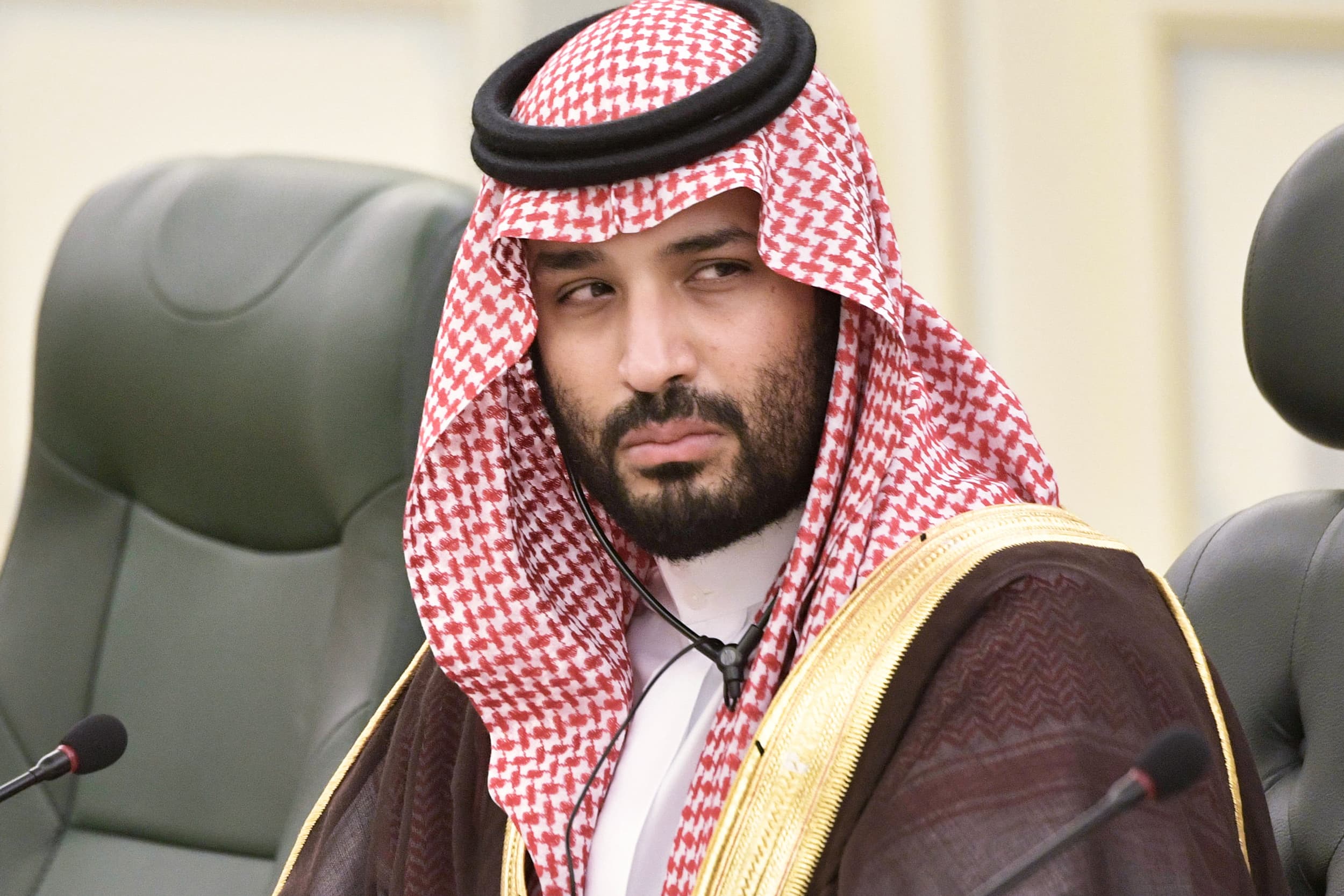
MBS

Saudi Arabia bans political, sectarian activities at Hajj sites

By Uzair Adam S

audi Arabia’s Ministry of Interior has declared a comprehensive ban on taking photographs, recording videos, and displaying political or sectarian expressions at all key Hajj sites.

According to a statement released by the ministry, pilgrims are forbidden from engaging in such activities within Masjid al-Haram in Makkah, Masjid an-Nabawi in Madinah, and at significant Hajj locations such as Mina, Arafat, and Muzdalifah.

Authorities noted that these actions could disrupt the spiritual sanctity of the pilgrimage and potentially sow division among pilgrims gathered from around the world.

The ministry stressed that Hajj is a time for worship, humility, and unity, and any acts that contradict these principles will not be allowed.

Pilgrims are urged to respect these directives and work closely with officials to ensure that Hajj 2025 unfolds in a peaceful, organized, and spiritually fulfilling manner.

“Security personnel will be stationed throughout the pilgrimage to monitor and enforce these regulations,” the statement added.

Saudi official denies reports of alcohol ban being lifted

By Muhammad Abubakar

In response to recent media reports suggesting a potential easing of Saudi Arabia’s longstanding alcohol prohibition, a senior Saudi official has categorically denied any plans to lift the ban.

Princess Haifa bint Mohammed Al Saud, the Assistant Minister of Tourism, addressed the issue during a panel session at the World Economic Forum in Davos. She emphasized that the Kingdom remains committed to its laws prohibiting alcohol consumption.

“The short answer is that we’re going to continue with our current laws,” she stated, highlighting that Saudi Arabia has successfully attracted tourists without altering its cultural and legal frameworks.

The clarification comes amid speculation fueled by the recent opening of a liquor store in Riyadh’s Diplomatic Quarter, exclusively serving non-Muslim diplomats. While this move marks a controlled exception, it does not indicate a broader policy shift regarding alcohol availability in the country.

Furthermore, Saudi officials have reiterated that the alcohol ban will remain during major upcoming events, including the 2034 FIFA World Cup. Prince Khalid bin Bandar Al Saud, the Saudi ambassador to the UK, confirmed that alcohol will not be available to fans during the tournament, aligning with the Kingdom’s cultural and religious values.

As Saudi Arabia continues its Vision 2030 initiative to diversify the economy and promote tourism, officials stress that modernization efforts will proceed without compromising core cultural principles.

UN condemns 34-year imprisonment of Saudi woman for tweeting politics 

By Uzair Adam Imam 

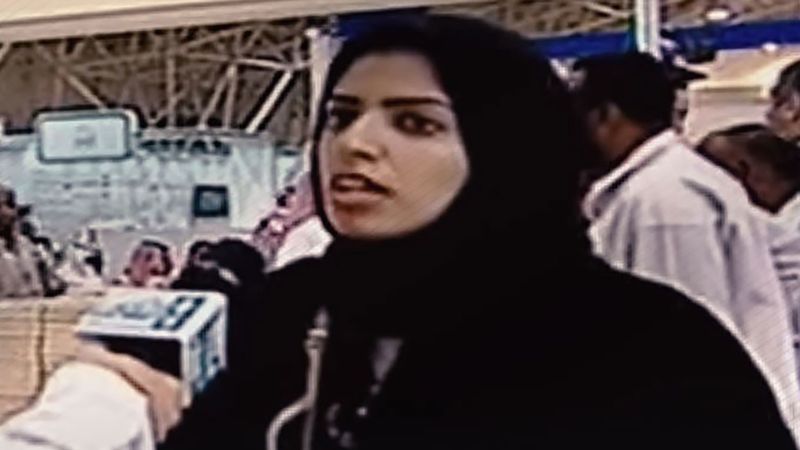
The UN human rights office, OHCHR, has expressed grievance over the 34-year prison sentence of one Saudi woman, Ms Salma Al-Shehab, 34.

Al-Shehab, a doctoral student, was sentenced to 34-year imprisonment for following and retweeting so-called dissidents and activists.

She was arrested in Saudi Arabia in 2021 while on holiday from her studies at Leeds University in the UK.

The woman, who has two small kids, was sentenced to jail, followed by a 34-year travel ban in connection with a series of tweets and retweets on political and human rights issues in Saudi Arabia,

OHCHR expressed concern in a statement by its spokesperson, Liz Throssell, urging the Saudi authorities to quash her conviction and release her immediately and unconditionally.

The statement read, in part, reads, “She should never have been arrested and charged in the first place for such conduct.”

“Saudi Arabia must not only release Al-Shehab so that she can re-join her family but also review all convictions stemming from free expression against human rights defenders.

“The government should release those jailed, including women who were jailed after they legitimately demanded reforms of discriminatory policies, as well as religious leaders and journalists,” Throssell said.

Saudi Crown Prince MBS’ clampdown on clerics continues

The 35-year-old Saudi Crown Prince Mohammed Bin Salam, alias MBS, initiates more radical changes in the kingdom hitherto known for its conservatism and strict adherence to Sharia.

In addition to barring loudspeakers from amplifying prayers and sermons at mosques and turning down the volume during calls to prayer, the Saudi government announced that shops, restaurants and other enterprises do not have to close anymore during prayer times. A government was reported to have declared that “Those days of inconvenience are now over.”

The MBS initiated liberalisations continue to reverberate around the kingdom while dissents are silenced.

According to two Saudi human rights groups, “When a little-known religious leader penned an online article criticising the decision by the Ministry of Islamic Affairs, he was arrested, and his once-active Twitter account went silent.”

It is also reported that the government fired “many” Imams for not following an official directive to preach against the Muslim Brotherhood, which MBS-led Saudi Arabia has designated as a terrorist group.

A year ago, the government stripped the religious police of their powers to arrest people. Around the same time, women were granted the right to attend sporting events while removing gender segregation at restaurants, other events.

Sarah Dadouch of The Washington Post concludes thus, “Mohammed is rewriting the longtime power-sharing arrangement between the ruling family and the clerical establishment — a partnership that created the kingdom. Islam has remained a cornerstone of Saudi identity; the kingdom is the birthplace of the religion and hosts its two holiest sites in Mecca and Medina. The king’s official title is the custodian of the two holy mosques.

In some quarters, fears abound that the fabric of the kingdom is now 4unravelling. But those fears are rarely shared anymore, lest there be more arrests.”

Saudi Arabia: Conservative versus Western values

By Salisu Yusuf

Since becoming the crown prince and de facto leader in 2017, Prince Mohammed bn Salman (known as MBS) is stirring controversies in Saudi Arabia and making the country a battleground between the conservative Sunni and trendy Western values.

Immediately after assuming power, MBS declared that the return of ‘moderate Islam’ was key to his plans. MBS’s declaration is an affront to Islam because his statement gives credit to Western media, which categorises Muslim adherents as either ‘moderate Muslim’ or ‘Islamic extremism.’ Such labels are derogatory and indictment; to label somebody as either moderate or extremist Muslim is to say that extremism is an extension of Islam. Moreover, MBS’s statement is a subtle backing to America retaining Guantanamo Bay Camp, where many innocent Muslims are being held without a trial and tortured. 

In 2018, MBS lifted a ban on women drivers. Saudi, being the last country in the world where such provision existed. Many, including Muslims, commanded the move as there’s no available Qur’anic injunction or Hadith that prohibits doing so. However, shortly before the ban was lifted, many women rights activists who campaigned against the ban were rounded up and imprisoned.

Bn Salman is seen by many as a power monger. For example, he was seen in 2017 shortly after becoming the crown prince with the former crown prince, Mohammed bn Nayef, the former pledging allegiance. Bn Nayef is King Salman’s nephew. He’s, therefore, MBS’s cousin. Bn Nayef was seen kneeling and kissing his older cousin’s hand, a gesture disapproved in Sunni Islam.

Saudi annual billion-dollar US arms deal is making Saudi Arabia a laughing stock. Former US President Trump supports Saudi because of the deal, and on the other hand, US moral and financial unconditional support to Israel is a source of concern.

The latest controversy is the mosque speaker restrictions. The Saudi government asks Imams and Muezzin to lower their speakers to a third of their maximum volumes during calls to prayer and during the prayer itself. 

Opponents criticise the restrictions, saying cafes and restaurants could be heard blaring loud music all over the country. Authorities had earlier said they placed the restrictions because parents complained that the speakers disrupt their children while asleep. Even though modern means of a call to prayer, the outrageous number of mosques and airing the prayer itself could be contestable if they’re brought under strict Islamic legal spotlight, some see MBS’s attempt to give some consolation measures to Western nationals living in the Kingdom.

Prince MBS has stepped up his opposition to freedom of expression, arresting and jailing many critics. Some have paid the heavy price with their lives, like the US-based journalist Jamal Khashoggi who was extrajudicially killed in the Saudi Consulate in Istanbul. Many members of the ruling family were also arrested and imprisoned. They could only be released after paying the state some huge amounts of money, which authorities claimed was payback for alleged corrupt practices. In the past, substantial freedom of expression was allowed, especially on issues of check and balance.

Brazenly, Saudi Arabia has recently signed a 10-year professional wrestling contest show with an American World Wrestling Entertainment Company (WWE). So today, you can go to a stadium in either Jeddah or Riyadh and watch wrestling contests; Royal Rumble, Super Showdown, etc., are a daily occurrence as is seen in Texas, New York, and other cities in America.

Moreover, Hajj has been suspended since last year. The first time a Hajj was suspended since the creation of the Saudi Kingdom in 1932. Many Muslims criticise the move after watching the mammoth crowd that graced the 2020 Euro final played this month (July) at Wembley stadium. Over 60,000 spectators watched the final. Prior to kickup, thousands of Italian and English fans were shown walking en route to Wembley, overlooking the so-called Covid-19 protocols. If Europe, the epicentre of the coronavirus, could gather such huge crowds, they asked, why the international Muslim community could not be allowed to go to Hajj?

As Prince Mohammed bn Salman consolidates power and his father gets older, only time will tell for how long and which of the two contrasting values will win the battle in Saudi Arabia’s mainly Sunni, conservative community.