By Bilyamin Abdulmumin
In the dramatic Gabon coup d’etat late last year, after all the hope seemed to be lost for Ali Bongo, he resorted to the last glimmer, he appeared in a recorded video that went viral appealing for the public to make some noise, apparently to deter the Junta from succeeding. To paraphrase the former Gabon president, in the spirit of the success of the Mambila hydropower project, let us make some noise!
When the news of the contract between Nigeria and the government of China to undertake the project broke, it threw the country into much celebration. The project was said to have been conceived about 40 years ago, but each government came and went without moving the project an inch. A presumable turning point came when the then president, Buhari, met with the Chinese president and both governments were said to have agreed on the formation of a joint venture by the three companies, CGCC, SINOHYDRO, and CGCOC under the guidance of the Chinese authorities for the project building. The total cost of the project was estimated at 5.8 billion dollars, With the Chinese government providing a loan of 4 billion dollars from Exim Bank, and the Nigerian government providing the rest. The news of the strategic bilateral agreement went all over the internet with several stories surrounding it. Given its potential for improving the socio-economic status of not only the community around the Taraba State but Nigeria at large. The Nigerian President even likened the project to China’s Three Gorges Dam.
Currently, Nigeria (after generation, and transmission finally) distributes a meager 4 to 5
MW of electricity for more than 200 million Nigerians, but the Mambila alone is proposed
to add about 3.5 MW to the national grid, one now can fathom not only the extent of
Nigeria’s energy poverty but why the euphoria about the project.
From 2017 when the news of the contract was broken down to 2023, the project
development news kept flying around, fueling the hope and happiness of the public as
such painting the government of the day white. Some government zealot supporters
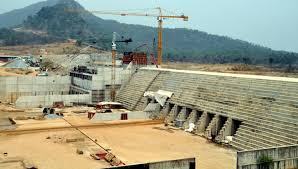
even circulated colorful pictures of other projects at the completing level purporting it to
be the Mambila hydro-power project.
The back and forth, mystery, and uncertainty surrounding the project triggered BBC
Hausa to embark on a fact-check mission, making a few-minute documentary about the
project. This fact-check mission steered up the honest net making the news become the
major public discussion. The public felt utterly betrayed by the government and thus
questioned its transparency resulting in straining the government’s image like never
before. It emerged that the project purported to be at the completion stage with finishing
pictures circulating has yet to be torched an inch.
This development forces the government through Garba Shehu to come out for damage
control. Unknown to the public, while all the euphoria was going on about project
completion, the government was battling court litigation. According former special
adviser, a businessman named Leno Adesanya, through their company Sunrise Power
Transmission Company of Nigeria Ltd (SPTCL) has filed about 2.3 billion dollar lawsuit
at the ICC International Court of Arbitration, Paris, against the Federal Government of
Nigeria (FGN) for breach of contract” which they have secure the right in the 2003
agreement to construct the 3,050MW plant in Mambila, Taraba state, on a “build,
operate and transfer” basis.
On March 26, 2020, the then attorney general and minister of justice Malami secured an
out-of-court resolution with this company, to pay the sum of $200 million as a “full and
final settlement” to discontinue the arbitration and set the government free from all
liabilities in the dispute. The only soft landing that could warrant the project to proceed.
However, Buhari, in his reply, a month later, rejected the settlement: “FG does not have
200 million dollars to pay SPTCL. Shehu echoed this response while responding to BBC
Hausa’s report: The Nigerian government could only call on him to show nationalism to
withdraw unconditionally, to allow the project to continue.
Now that those who are holding to ransom, the Mambila power project is clear: the
government and SPTCL company, let’s make more than just noise – let’s make a
resounding call for transparency, justice, and the release of a project poised to be a
game-changer for Nigeria’s socio-economic landscape. The Mambila hydropower
project deserves more than a viral plea; it deserves a roar of collective voices
demanding accountability and progress.