Malnutrition

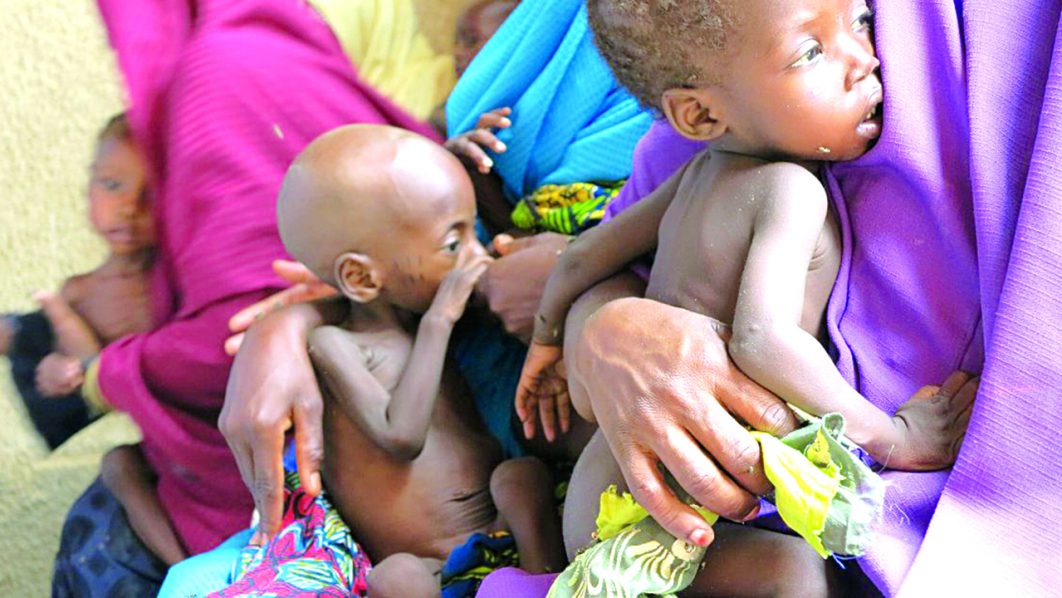
Northern Nigeria faces a severe malnutrition crisis

By Onumoh Abdulwaheed 

Northern Nigeria is facing an increasingly severe malnutrition crisis, with recent data revealing a stark escalation in cases. UNICEF reports that Nigeria has the second-highest burden of stunted children globally, with a 32% prevalence rate among children under five. An estimated 2 million children suffer from severe acute malnutrition (SAM), yet only 20% receive treatment.

According to Médecins Sans Frontières (MSF), the situation has worsened dramatically in 2024. Dr. Sanjana Tirima reports alarming increases across northern Nigeria. In Maiduguri, northeast Nigeria, MSF’s inpatient therapeutic feeding centre admitted 1,250 severely malnourished children with complications in April 2024, double the figure from April 2023. The centre has had to expand to 350 beds, far exceeding its initial 200-bed capacity.

Similar trends are seen elsewhere. In Bauchi state, MSF’s facility at Kafin Madaki Hospital saw a 188% increase in the first quarter of 2024 compared to 2023 in the admissions of severely malnourished children. Northwestern states like Zamfara, Kano, and Sokoto have reported increases in admissions to inpatient centres ranging from 20% to 100%.

Dr Christos Christou, MSF’s International President, previously highlighted the multiple challenges facing northern Nigeria, including “overwhelming levels of malnutrition, frequent outbreaks of vaccine-preventable diseases, lack of medical facilities and personnel, and continuous insecurity.” The crisis is further exacerbated by widespread flooding, which has devastated farmlands and displaced millions.

Despite the escalating crisis, the humanitarian response remains inadequate. In May, the United Nations and Nigerian authorities issued an urgent appeal for US$306.4 million to address nutrition needs in Borno, Adamawa, and Yobe states. However, MSF notes this is insufficient as it doesn’t cover other affected parts of northern Nigeria.

Dr Tirima emphasises the situation’s urgency: “Everyone needs to step in to save lives and allow the children of northern Nigeria to grow free from malnutrition and its disastrous long-term, if not fatal, consequences.” She calls for immediate action to diagnose and treat malnourished children and engage in sustained, long-term initiatives to address the root causes of the crisis.

MSF and other organisations stress the need for a comprehensive and urgent response as the situation worsens. “We can’t keep repeating these catastrophic scenarios year after year,” Dr. Tirima warns. “What will it take to make everyone take notice and act?” The crisis in northern Nigeria remains a critical humanitarian concern requiring immediate and sustained attention from national and international stakeholders.

Onumoh Abdulwaheed wrote via onumohabdulwaheed@gmail.com.

Shettima launches nutritional programme to tackle malnutrition

By Uzair Adam

Vice President Kashim Shettima has officially launched the federal government’s new nutrition initiative, aimed at addressing malnutrition and food insecurity across Nigeria.

The programme, named the “Nutrition 774 Initiative,” is set to improve nutritional outcomes in all 774 local government areas of the country.

Shettima emphasized the government’s commitment to ensuring that every household in Nigeria has access to nutritious food, beyond just availability in stores and warehouses.

He noted that the initiative aims to eradicate malnutrition through a community-based approach that empowers local actors, such as health workers and community leaders, to take charge of nutritional improvements in their areas.

At a roundtable meeting with development partners, Shettima called for their collaboration to make the programme a success. He explained that addressing malnutrition requires collective efforts from all stakeholders, including the government and development organizations.

The initiative also focuses on training local health professionals to better equip them in handling malnutrition at the grassroots level. Despite recent floods and global inflation affecting food security, Shettima highlighted the need for innovative solutions that directly tackle these challenges.

Coordinating Minister of Health & Social Welfare, Prof. Muhammad Pate, described the initiative as crucial in addressing malnutrition, particularly among vulnerable populations.

He stressed the importance of a multi-sectoral approach, integrating efforts from agriculture, health, water, sanitation, and social protection sectors to ensure the success of the programme.

Nigeria in global malnutrition crisis’ web: A sad commentary

By Lawal Dahiru Mamman 

Malnutrition, generally, is when humans or any other living organisms get little or insufficient food nutrients, resulting in health problems. Nigeria is one of the 12 world countries recently declared as the epicentre of the global nutrition crisis. 

The other 11, mostly African countries, include Burkina Faso, Chad, Ethiopia, Kenya, Mali, Niger, Somalia, South Sudan, Sudan, Afghanistan, and Yemen.

COVID-19, war in Ukraine and conflicts in some of these countries are factors that have exacerbated the situation. Barely seven years ago, the number of under-nourished people in sub-Saharan Africa rose from 181 million in 2010 to almost 222 million in 2016. This figure increased to 264.2 million according to a study titled, “Malnutrition: An underlying health condition faced in sub-Saharan Africa: Challenges and recommendations,” published in a medical journal, Annals of Medicine and Surgery, in October 2022.

Recently, Anne Patterson, the Director, United States Agency for International Development (USAID) Mission, at the Trade Fair for Ready-to-Use Therapeutic Foods and Other Life-Saving Nutrition Commodities in Abuja, disclosed that Nigeria is ranked as the country with the second-highest malnutrition rate in the world.

This is according to the recent Food Consumption and Micronutrients Survey, she said.

In reality, Africa, with its abundant water body, aquatic life and favourable climate (which supports the growth of various food crops, including fruits and vegetables), has all that is necessary to produce the macro and micronutrients required to nourish the body for optimal growth and health.

For Nigeria, in particular, which has agriculture written all over its national symbol (as the green on our National Flag signifies agriculture, and the black shield on the coat of arms symbolises fertile soil), the country should not be mal- or undernourished, even ranking second globally.

There are also about 200 species of fish, thanks to the large water body nature has blessed our country with. This, along with other aquatic lives, can be harnessed for healthy foods. There are livestock of various types, giving quality nutrients, too.

A lot is invested by the government in building more resilient health systems medical technologies, training of medical practitioners, and treating illnesses. It is time the same energy and resources are invested in nutrition.

For example, during this year’s World Malaria Day, Nigeria still routinely spent an estimated sum of N2.04 trillion on malaria annually.

Breaking this figure further, the Chairman of the Pharmaceutical Society of Nigeria (PSN) said, “The estimated cost for an individual to treat uncomplicated malaria in Nigeria ranges from approximately N700 to N3000, depending on the type of treatment, and the healthcare facility visited.

“While treating complicated malaria could be significantly higher, ranging from N20,000 to N60,000, or more”. 

On the cost to the Nigerian government, the consultant pharmacist said: “This cost includes expenditures on healthcare facilities, medication, and personnel.”

Tackling the menace of investing heavily in treating illnesses and sicknesses affecting citizens would be to invest in its prevention. And that entails boosting the masses’ nutritional health by ensuring the availability of good and nutritious meals. 

This will help in fortifying the immune system of Nigerians and combating all forms of malnutrition troubling citizens, especially Nigerian children from less privileged backgrounds. 

Being a nation that also engages in massive agricultural cultivation of food and tearing of assorted livestock, the last thing citizens should have as a companion is hunger. Therefore, the federal government and other concerned authorities should worry about the global survey that ranked us as one of the world nations battling with the malnutrition crisis. It is a sad commentary.

Lawal Dahiru Mamman writes from Abuja and can be reached via dahirulawal90@gmail.com.