Literature

Forum calls for applications for training from budding writers in Northern Nigeria

By Sabiu Abdullahi 

The Flame Tree Writers’ Project, in partnership with the Heinrich Böll Foundation, has announced a call for applications for a writers’ workshop targeting emerging writers from Northern Nigeria.

The initiative aims to support young writers in honing their craft and envisioning a more democratic and peaceful Nigeria.

According to Abubakar Adam Ibrahim, founder of the Flame Tree Writers’ Project, “This has been a passion project of mine for so long, and I am excited that, with the support of the Heinrich Böll Foundation, it is coming to fruition.”

The workshop, scheduled for June 24–28, 2024, in Abuja, will be co-facilitated by NLNG Nigeria Prize–winning authors Abubakar Adam Ibrahim and Chika Unigwe.

Participants will receive guidance in writing a short story suitable for publication in an anthology. 

Ere Amachree, Program Manager at the Heinrich Böll Foundation, noted, “The foundation is excited about the Flame Tree Writers’ Project, as it advances our vision of promoting writing as a means of political expression, just like Heinrich Böll, the German writer after whom our foundation is named.” 

The call for applications is exclusively for writers from the 19 Northern States of Nigeria, aged between 18 and 35. Female emerging writers are strongly encouraged to apply. 

Interested participants must meet the eligibility criteria and submit their applications to flametreewritersproject@gmail.com by June 1, 2024. 

Encouraging writers to apply, Mr. Abubakar said, “It’s not just a workshop but a project that will publish the stories from the workshop in an anthology of new writing and get them into institutions of learning, where they will be taught as part of the growing and exciting corpus of literature from this part of the country.”

Salute to a Woman of Substance: Hajiya (Dr) Hafsatu AbdulWaheed, D.Litt., Honoris causa

By Prof. Abdalla Uba Adamu

She has done it again. She first did it in 1974/80. In 2024, she repeated it. The feat that no female northern Nigerian has ever performed. Hajiya Hafsatu Abdul Waheed (b. 1952, Kano, northern Nigeria) was the first woman creative fiction writer from northern Nigeria to be published in any language, although hers was in Hausa.

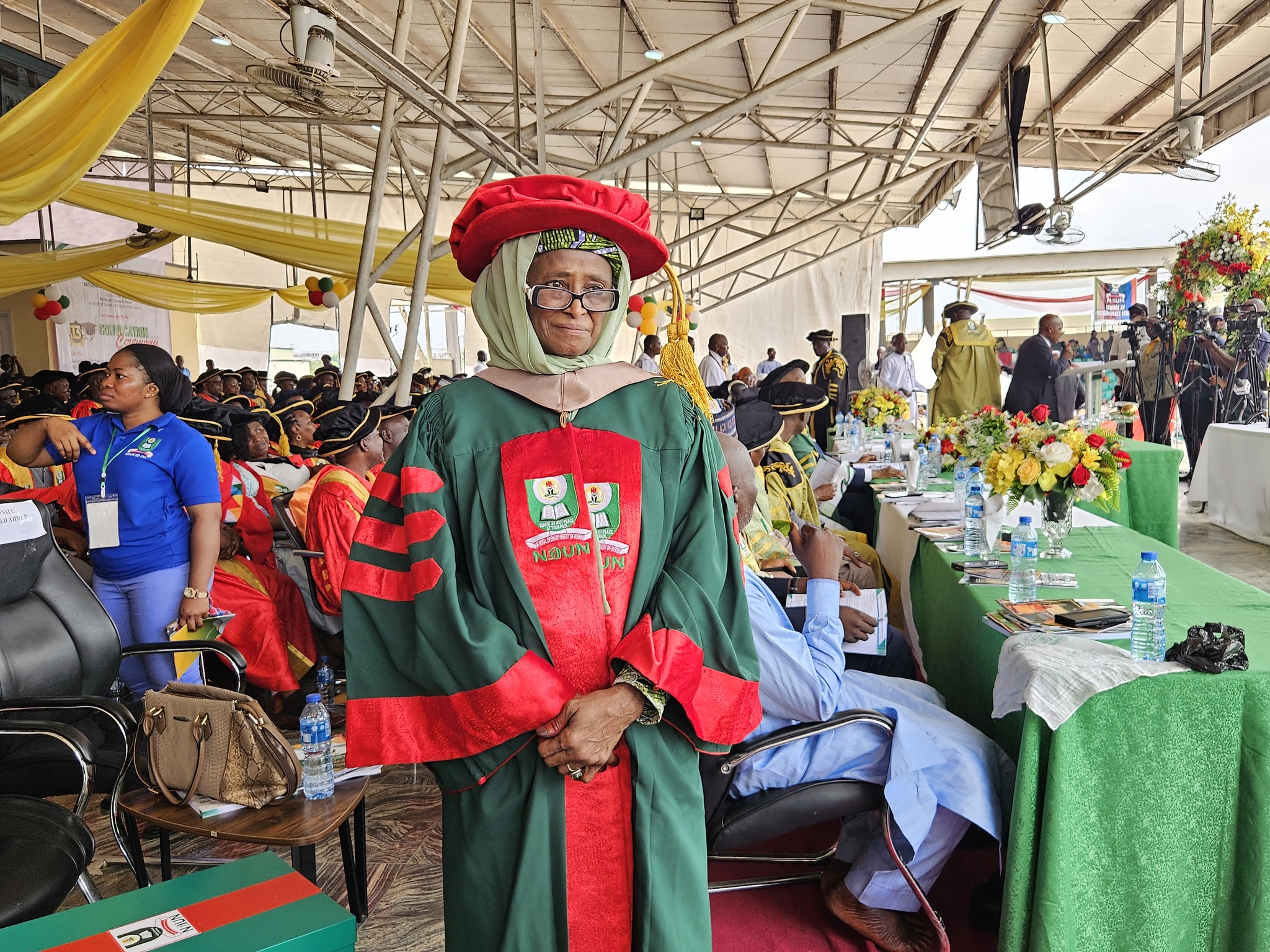
On 13th April 2024, she became the first female Muslim northern Nigerian to be honoured with D.Litt. (Honoris Causa “for the sake of the honour”) doctorate degree from a no less institution than the biggest online university in Africa, the National Open University of Nigeria (NOUN). This was at the 13th Convocation Ceremony of the university held on 13th April 2024 in Abuja, the main headquarters of the university.

In a way, Ms. AbdulWaheed represents a paradox. She is not Hausa or Hausa-Fulani. She is Fulani, pure and simple. She learnt Hausa only outside her family home, in school, but at home, it was Fulfulde all the way. Yet her creative writing has always been in Hausa, with the exception of one book of poetry in English and the recently published collection of short stories titled Sharo. Nothing in Fulfulde, though.

The common historical narrative on literary development in northern Nigeria was that a literary competition to encourage the reading culture among Hausa youth was organized by the Northern Nigerian Publishing Corporation (NNPC) in 1978. One of the entries, which was also one of the winners, was “So Aljannar Duniya” by Hafsatu Abdul Waheed. It was in the Hausa language. However, it would appear, according to Hafsatu herself, that she wrote the novel in 1972, and it was published in 1974.

It was, quite simply, the most radical novel in Hausa literary history. Even “Ƙarshen Alewa Ƙasa” by Bature Gagare (who died in 2002), an unconventional novel, , published in 1982 (as a result of a literary competition organized by the then Federal Department of Culture, Ministry of Social Welfare and Culture) did not come close. Curiously, they contrasted each other. Gagare’s novel is about the lost glory of the ‘original’ Hausa people—the Maguzawa. Hafsatu’s novel is about breaking the Pulaaku—the Fulani code of behaviour. Both Hafsatu and Gagare became spokespersons of their ethnicities.

So Aljannar Duniya is brash, bold, audacious, trenchant, and unapologetic. It is a declaration of war against Pulaaku. It was unarguably the first Fulani feminist tract written in Hausa. Hafsatu’s style and critique of tradition might be compared with those of Bilkisu Salisu Ahmed Funtuwa and Balaraba Ramat Yakubu. However, there are quite a few differences.

Despite its pioneering boldness, So Aljannar Duniya is difficult to read. Perhaps that was because the author started writing it while still in secondary school! Its narrative is often jumbled and non-linear. Understandable. It was written in anger, so words tend to wobble, but the message is clear. This is more so because it is ethnographic. Hafsatu wove a story around her sister, of course, a Fulani, who had every intention of marrying an ‘alien’—an Arab from Libya. So Aljannar Duniya is, therefore, a true story, spiced up by fictional elements to convey a message. As I said before, it is a feminist tract.

Balaraba Rama Yakubu, however, writes in a deeply engaging mature and absorptive style with plenty of hooks. For instance, “Wa Zai Auri Jahila?”, which I consider her best novel, is dark and deeply disturbing narrative of what in contemporary feminist Woke world would be considered an injustice to women, especially young girls in a traditional African society.

Although Novian Whitsitt, who did his PhD on Balaraba’s novels, referred to it as ‘feminist’ I disagreed with him. I labelled her works ‘womanist’, after Alice Walker’s short story, ‘Coming Apart’ (1979). As explained elsewhere, “a womanist is committed to the survival of both males and females and desires a world where men and women can coexist while maintaining their cultural distinctiveness.” This inclusion of men provides women with an opportunity to address gender oppression without directly attacking men (Adamu 2003). Balaraba reflects this in her novels, especially “Alhaki Kwikuyo” (translated by Aliyu Kamal and published by Blaft Books in India). Can’t say much about Bilkisu Funtuwa’s books, though, as I have never read any.

But Hafsatu AbdulWaheed is a feminist—at least as portrayed in So Aljannar Duniya. The plot revolves around a young Fulani lady who wants to marry an ‘alien’ (Arab) from Libya. In real life, Hafsatu’s elder sister. Their parents rejected the idea. The plot of the novel does away with the Fulani Pulaaku and introduces a brash, assertive, loud and anti-establishment heroine, Boɗaɗo, who, armed with a degree in Pharmaceutical Sciences, comes back to her village to set up a drug store (called Chemists in Nigeria, a bit like Walgreens) and introduces her fiancé—all un-lady like behaviours in the Fulani mindset.

Thus, she discards the Fulani munyal (self-control), semteende (modesty) and hakkillo (wisdom)—central components of Pulaaku—and declares, openly, her love for an “alien” in her auntie’s presence! The opening dialogue from the novel sets the pace in which Boɗaɗo, speaking, informs her aunt:

(Hau) Aure! Inna ni fa na gaya muku ba zan auri kowa ba sai wanda nake so. Kun san zamani ya sake.

(trans) Marriage! Aunty, I have told you that I will only marry the man I love. You know times have changed.

Such direct confrontation in a Fulani village was uncommon and reflects the author’s autobiographical rebellion against tradition. Her aunt—delegated to mediate in these matters on behalf of the protagonist’s mother—is shocked. As she lamented:

(Hau) Mhm! Wannan zamani, Allah Ya saukaka. Yarinya ki zauna kina zancen auren ki, sai ka ce hirar nono da mai. Don haka fa ba ma son sa ɗiyar mu makarantar boko. In kun yi karatu sai ku ce kun fi kowa. Me kuka ɗauke mu ne?

(trans) Mhm. These are difficult times. May Allah save us. Listen to you talk about your marriage as if you are talking about milk and butter. That is why we don’t want to send our daughters to school. After you finish, you feel superior to everyone. What do you take us for?

A battleground and the rules of engagement have been established—female empowerment through education—and Hafsatu chose the most conservative arena: a Fulani settlement, considered generally more trenchant about Pulaaku than urban Fulani. Additionally, the novel’s subtext of rebellion against arranged and forced marriage underscores Hafsatu’s acerbic demand for personal choice in marital affairs by women. It was a template for rebellion.

Another contrast between Hafsatu’s So Aljannar Duniya and Balaraba’s Wai Zai Auri Jahila? is in the choice of careers. Hafsatu chose Pharmacy for her protagonist, while Balaraba made her own a nurse. Pharmacy was a profession in the period, and by making her character a pharmacist, she thrusts Boɗaɗo into a man’s world to compete equally with men. Balaraba, on the other hand, by making her character a nurse instead of a doctor, maintains the womanist ethos of an achieving woman in a male-dominated society, fitting in with career stereotypes of women in caring professions.

The success of So Aljannar Duniya sent a message to the budding Hausa literati to pick up their pens and set to work—thus spawning a genre which t revolutionized the Hausa literary landscape in contemporary times.. Furthermore, the combined effects of the harsh economic realities of the 1980s (the decade of military coups and counter-coups in Nigeria) ensured reduced parental responsibility in the martial affairs of their children. Therefore, fantasy, media parenting, especially Hindi films, anti-authority and a loud, persistent message from bursting testosterones in a conservative society that sees strict gender separation combined to present Hausa youth with soyayya (romance) as the central template for creative fiction. It was a safety valve to repressed sexuality.

Hafsatu’s radicalism, however, did not end at rebellion against arranged or forced marriage for women. At one stage she declared to run for the office of the Governor of Zamfara State. This was provoked by a statement by the sitting governor that there were no educated women in the state. To prove him wrong, she decided to campaign for his chair! She even made posters, but was asked by her father to stop. At least, she had made a statement. Furthermore, her real-life echoes Boɗaɗo’s—she was also married to an ‘alien’ from the Middle East (a Syrian). Incidentally, it was a marriage that took her to Gusau, the Zamfara State capital, and I had the pleasure of meeting her late husband, Malam Ahmad Abdul Waheed, during a British Council “Intensities in Ten Cities” Islamophobia tour on 9th July 2003. Both Hafsatu and her husband were born and raised in Kano. It was his career that took them to Gusau.

In literary circles, she also has a voice. For one, she used to assiduously attend every single literary convention anywhere it was held. As part of ANA Kano activities, we were together in Niamey and Maraɗi in Niger Republic at various times to attend international conventions of Hausa writers. She never tired of attending and actively participating. Wonderful enough, she often went with her children and grandchildren, showing them the way. It is little wonder that some of these children became well-celebrated in their chosen professions—for they had a strong role model at home. A good example is her eldest daughter, Kadaria Ahmad, the award-winning journalist who owns and runs the NOW FM radio station in Lagos.

Thus, the recognition of the pioneering efforts of Hafsatu AbdulWaheed by the National Open University of Nigeria (NOUN) on 13th April 2024 during the university’s 13th Convocation was a salute not only to the resilience of feminist women but also to all Hausa language writers of both genders. As far as I know, she was the first female Muslim Fulani (or Hausa) writer to be so honoured by any university in Nigeria. She has, therefore, entered the history books. She is truly a woman of substance.

References.

Adamu, Abdalla Uba. “Parallel Worlds: Reflective Womanism in Balaraba Ramat Yakubu’s Ina Son Sa Haka.” JENDA: A Journal of Culture and African Women Studies, no. 4 (2003). https://bit.ly/3Q2gNlY.

Whitsitt, Novian. Kano Market Literature and the Construction of Hausa-Islamic Feminism A Contrast in Feminist Perspectives of Balaraba Ramat Yakubu and Bilkisu Ahmed Funtuwa. PhD dissertation, University of Wisconsin, 2000.

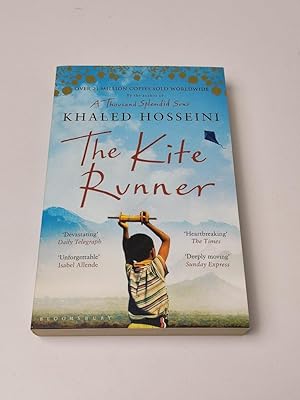
Beyond fiction: A short review of Khaled Hosseini’s The Kite Runner

By Muhammad Sani Usman

If you are an introvert and, worst of all, you don’t want to go out and meet strangers, or you are not financially stable enough to explore the world you romanticise in your head, then you should read fictional books.

Consider The Kite Runner by Khaled Hosseini for a unique perspective on Afghanistan. Unlike the war-torn image often portrayed in American movies, Hossien’s narrative paints a different picture. He depicts a flowing country, with small boys flying kites in the streets of Kabul and the vibrant Afghan holidays like Nowruz. 

You will learn about friends and kinship. There is Amir, the privileged son of a wealthy businessman, and Hassan, the son of their family servant, who grew up together in Kabul. Despite their different social statuses, they are inseparable as children. They spend their days flying kites, with Hassan being the best kite runner, always ready to retrieve the kite Amir cuts down. 

If you don’t know what betrayal is by a friend, then you should look at how Amir witnesses Hassan being sexually assaulted but chooses to do nothing out of fear and selfishness. This event haunts Amir, leading to guilt and a sense of betrayal that defines much of his life.

If you are still wondering about the lengths people go to with the ones they love, you will see how Amir chooses to marry Soraya (his girlfriend), accepting her past and the societal judgment that comes with it. In essence, you will see matured and refined love between Hassan and Soraya.

You will only get all this information from creative writers pushing the world close to you. 

Muhammad Sani Usman wrote muhdusman1999@gmail.com

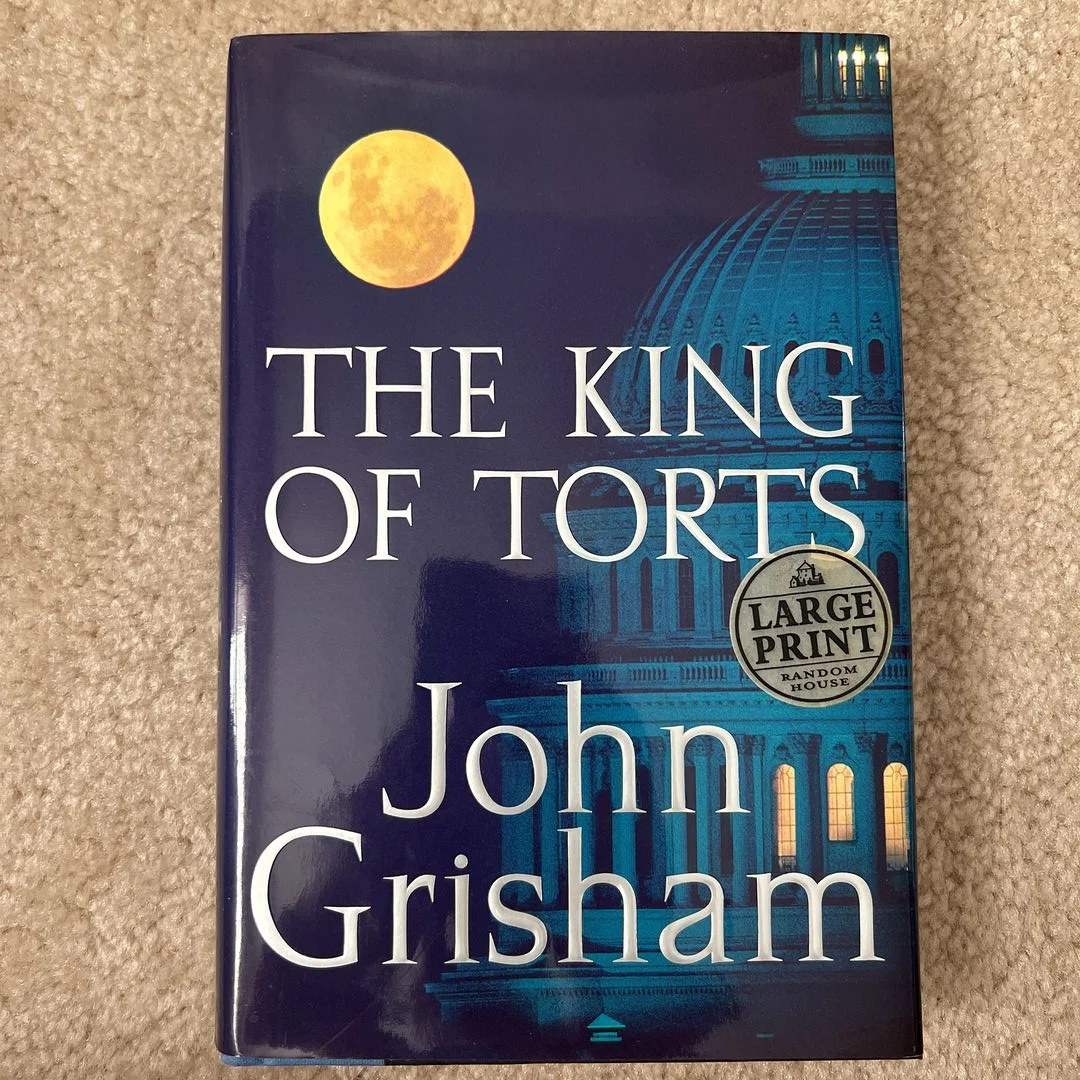
The King of Torts: The problem with overnight riches

By Saifullahi Attahir Wurno.

John Grisham’s The King of Torts tells the story of Clay Carter. He is a Washington city-based, poorly paid lawyer who works as a public defender on the city’s outskirts. Like most employees, he was unsatisfied with his job as it hardly paid his monthly expenses. Another problem with Clay was that he had been dating Rebecca for a long time, and her parents were unhappy with their relationship. These issues kept Mr Clay’s poor mind busy, always thinking of nothing but how he would become rich.

One afternoon at the office, a man named Max Pace appeared before Mr Clay, claiming to be an insider of one pharmaceutical company that secretly carried out a clinical trial on some prisoners without their consent. The story goes that a drug called Tarvan had a side effect that forced its victim to carry out senseless killings without any remorse. Mr Clay became interested in the case and went to investigate up to the prison and interviewed the victims. 

Mr Clay gathered enough evidence to sue the pharmaceutical company involved. Before that, he went into an agreement not to disclose or involve Max Pace in the dealing. After lengthy litigation, the company pleaded guilty and made a massive settlement for the victims through Mr Clay’s hands. This made Mr Clay a hot cake within a month. 

Surprisingly, Max Pace appeared again while trying to adjust to his new life, promising Mr Clay that more litigation cases needed another lawyer for the investigation, so he advised Mr Clay to try his luck. Ever greedy with money, without question, Clay accepted the challenge and plunged into action.

 This one involved another giant pharmaceutical company called Ackerman Laboratories that developed a drug called Dyloft, which was found to be carcinogenic (potential to cause cancer). This time, Mr Clay raised a campaign in TV and magazines until, eventually, the Ackerman laboratories pleaded guilty and agreed to pay a 100 million Dollar settlement. Barrister Clay became an overnight Millionaire and the talk of the city, with magazines featuring and making stories about him; they even nicknamed him ‘The King of Torts’.

Typical of a man longing for cool Dollars, Mr Clay bought a new black and latest Mercedes Benz for a couple of millions, purchased a house in a neighbouring suburb, leased a building and founded a private law firm just for handling litigation cases. He hired more smart rookies ( young lawyers) and decorated his office building to appear prominent and affluent. 

The problem with soft Dollars is that they often affect our thinking negatively. This time, Mr Clay’s relationship with Rebecca becomes sour, and he begins to distance himself from her, although they genuinely love each other. The fact that her parents are not happy with their relationship and would not allow them to live together forced Mr Clay to date other young girls secretly. He was always roaming from one five-star hotel to another, paying huge bills to satisfy his desire.

 He entered the big league of Great lawyers in town, spending lavishly, travelling around the country attending conferences in a state-of-the-art private Jet he leased! and travelling to the Caribbean Islands during holidays to enjoy his wealth. 

 He eventually met a lady named Ridley, who was a beauty Model. Ridley (modern-day prostitute). That is where Mr Clay was losing his soft Dollars quickly and without noticing. He bought many properties in her name, fearing to lose them to the FBI, thinking he trusted her enough and their relationship would be permanent.

As for his work, he was luckily getting more dollars, litigating more pharmaceutical companies, the latest involving a company called Goffman that produced a drug called Maxatil. Thinking it’s always a win, he invested heavily in this case by orchestrating expensive adverts, hiring expensive lawyers, and even recruiting fake victims just to get the soft Dollars. Unfortunately, Goffman was not ready to back down; they hired more expert lawyers and conducted a deeper investigation. Eventually, Mr Clay lost the case.

Losing for the first time, Mr Clay lost his balance, and more trouble awaited as the Goffman company sued him for blackmailing their products; this forced Mr Clay to lose a large proportion of his fortune.

 Mr Clay was sued again before the court by the clients on whose behalf he collected a massive settlement for not paying them enough to cover their hospital bills after leaked news by one of his close allies. Without saying, Mr Clay becomes more deeply in trouble.

He was eventually investigated by the FBI, risking a jail term or a settlement that would cost him almost all of his fortune. He has the option for the latter.  He lost all his assets and new ‘friends’, including Ridley, who fled without a trace. He fled the country, and surprisingly, all this while, his original lover Rebecca was married to another man but got divorced later. Finding out Mr Clay’s story, she travelled to meet him, console him and offer her genuine care and love. They continued to live afterwards, and Mr Clay learned his lessons.

History has continually shown that overnight riches or those who stumble upon a vast fortune suddenly and effortlessly are similarly more susceptible to losing it. The problem with overnight riches is that they impede our positive thinking, allowing us to dive deep into fantasies, opening unrealistic doors, and drawing us toward deceptive paths.

This story can reference some of our lives today; this insatiable search for soft money by all and sundry, hook or crook, could remind the old maxim that happiness, contentment, genuine wealth, and loving family matter more. 

Sharing ideas with a rising star and his brainy sister

By Kamal Alkasim

Last year, I hung out with my good friend Umar, a hotshot writer and all-around awesome guy. He proudly introduced me to his younger siblings, calling me a writer and poet. My heart did a flip-flop – being called that in front of his sisters made me a little nervous! But I took a deep breath and chatted with them, especially the super smart Maryam. 

Maryam showed me a cool book she had. I wanted to read it badly, but I didn’t want to seem rude by ignoring everyone else. You see, I’m all about cheering on women and helping them reach for the stars.

Not everyone likes the idea of strong women, which stinks. Girls should write their own stories, not have others write them for them. So, we decided to write a fun story together in our language. Maryam, her eyes shining, told me how writing was her passion and how she wished she could be like me. 

I shared my writing journey, the good and the bad, and told her, “The only way you fail is if you avoid making mistakes. Sometimes messing up is what gets you ahead.” Maryam seemed impressed, which was fantastic!

Here’s the thing: sometimes it’s better just to listen than to try and give advice. Words are powerful. They can build you up or tear you down. Think of yourself as a special gift to everyone you meet. And you never know where you might find success.

Maryam shared how her teacher had slammed her dreams. “They said I’m wasting my time on something nobody cares about. They even said girls shouldn’t be writers, especially if their boyfriend doesn’t like it!” she sighed. I told her to keep reading, even more than she wrote, like planting seeds of hope to water her dreams.

It’s crazy how often we forget to talk about dreams with our sisters like their voices don’t matter. Too many girls deal with this kind of drama at home. Our chat got a little sad when Maryam talked about her late sister, but it just made me even more determined to keep lifting women, no matter what.

So there you have it: a story about sharing ideas, encouraging dreams, and the power of friendship. Remember, everyone has a story to tell; sometimes, they need a little push to start writing it.

Kamal Alkasim is a Freelance Writer based in Kano, Nigeria. He wrote via kamalalkasim17@gmail.com.

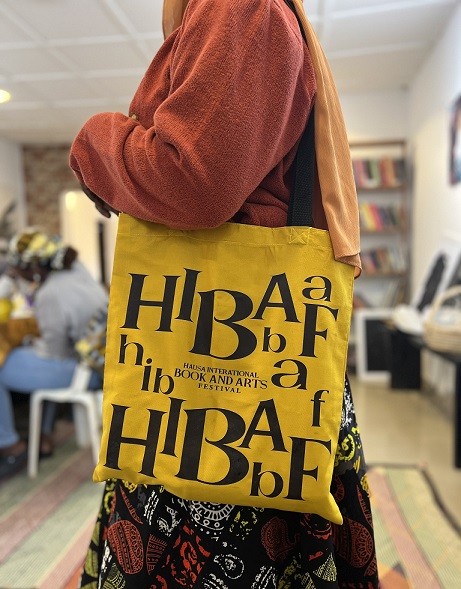
The conscious reawakening of Northern storytelling: HIBAF and its long way to liberation

By Sa’id Sa’ad

In 2021, I sat at Arewa House. I listened to Late Ummaru Danjuma (Kasagi) thunder – in his old throaty yet commanding voice – bitterly about how Hausa culture and stories have diluted over the years. His face, though saddened, lit by fluorescence – old, yet much alive – spread goosebumps throughout the room, reawakening all the murdered tales back to life. No one would think that that command births the reawakening of not just Hausa culture, stories, and language but northern Nigeria’s stories.

That was the maiden edition of the Hausa International Book and Arts Festival (HIBAF)—a time when literary festivals have suffered lashes of COVID-19. Literary enthusiasts, writers and journalists were once again full of life to reconnect. While some see it as a promising beginning for a new Jaipur Literature Festival of Northern Nigeria, a lot thought it was just a naming ceremony of yet another Nigerian literary festival that will soon wither due to shrinking funds.

Hausa or northern Nigeria literature – before now – couldn’t afford itself a “consistent” arts festival that solely promotes and celebrates its artistry, culture, and stories until the advent of HIBAF. However, there were several one-off attempts previously, but mostly political. One might argue that festivals like Kaduna Book and Arts Festival (KABAFEST) have blanketed the same purpose. Still, I would differ because KABAFEST is an international festival bringing international guests with national stories to a northern city. KABAFEST is – or now probably was – an arts festival “in” northern Nigeria, while HIBAF is an arts festival “for” northern Nigeria. This is not a dismissal of the influence KABAFEST had on northern Nigeria. It would be stupid to dismiss that.

However, as the region continues to suffer stereotypes about its literary prowess, HIBAF could stand on the edge of liberating northern Nigeria from such an ugly view. Perhaps the birth of what can be predicted today is the conscious reawakening of northern stories.

For a young festival with such an ambitious name, the question is: Is HIBAF only representative of the Hausa people or northern Nigeria?

It is easy to assume that HIBAF solely represents Hausas and their stories, especially for those who view them from the outside. This is mainly because, unlike other art festivals in Nigeria and around the world founded to represent a geographical entity, such as Lagos Book and Arts Festival, HIBAF is one of few whose nomenclature represents a tribe. In previous seasons, the festival granted conversations in the English Language; therefore, that says a lot about HIBAF going beyond Hausa “alone” in its programming, which I find healthy.

It would be great if HIBAF were only for Nigerian Hausas. It is okay if it is for Hausas globally. But it will be graciously honourary if HIBAF is for northern Nigeria in general. The value of this ambitious festival is in its capacity to reconnect Hausas and Hausa cultures with cultures around it through diversifying into introducing tribes that have existed with Hausas, such as Fulani, Nupe, Tiv, Igala and other northern tribes to its programming. This will mean Hausas and communities of non-Hausas in Hausa communities could re-share a space in arts and shape a positive narrative of the region in terms of collective literary and artistic prowess. This will create a unified northern story(ies).

Another issue that can’t be dismissed is the problem of northern consciousness – this time, refusal – to appreciate northern initiatives. It is a similar case for HIBAF. It is seldom difficult to see a representation of famous northern personalities – especially from Kannywood and music sub-sectors, aside from a few interested in literature such as Aminu Ala or Ado Gidan Dabino. Most hardly care. This does not mean that such personalities – who don’t care – will decline invitations from similar festivals in other parts of Nigeria. They certainly will accept. Now, the question of the “potentiality” of the festival in creating “value” and “shaping northern stories” has everything to do with bringing people of value, not just in literature but from other art sub-sectors such as Kannywood and Hausa music space into its fold.

Knowingly or unknowingly, the Kannywood industry needs more fora this time than ever. Imagine Ali Nuhu, Rahama Sadau, Fauziya D. Sulaiman and Salisu Balarabe on a panel to discuss how northern creative writers could get their – more well-written stories – to Kannywood screens. This panel can pave the way for collaboration that could place both the creative writing and Kannywood film industries decades ahead—a potential both industries share.

With its ambiguous programming nature of inculcating cultural programmes, the festival could give life to northern cultural heritages on the verge of fading with the recent digital revolution. It will be fascinating to see HIBAF Durba, HIBAF Tashe, HIBAF Dambe, Dandalin HIBAF, HIBAF Mawakan Gargajiya and other numerous HIBAF’s all-year-round that could bring back the northern cultural heritages while also Including non-Hausa cultural programme. Again, this creates unified northern cultural narratives.

This year’s HIBAF, in its third year of awesomeness and vibrancy – though still wounded by honest negative feedback from the second season – is bringing diasporic faces back home. Simply put, ‘going international with locals, and for locals.’ Such a breed can give life to a new dimension of cross-geographical collaboration between northern storytellers in the diaspora and Nigeria—a remarkable feat to a tremendous progressive bond.

While the festival, through its host organization, is becoming a spot for learning and sharpening creative and artistic mastery through workshops and seminars, it depicts how it can create a birthplace of yet new sets of Abubakar Imams and Zaynab Alkalis who would live to tell the stories. But this can also be limited if the focus is Hausa and literature alone as, thus, expansion both in language and sub-sector is where the growing inclusive value lies.

From pages of novelists to the rhymes of poets, from scenes of playwrights to screens of filmmakers, from the vocals of singers to the lyrics of songwriters, from the colours of culture to the lens of photographers, from northeast to northwest and northcentral, HIBAF could cook a recipe of blended stories – of all that have been around Hausa – to a valuable northern unified story.

Though all these are a long walk to a new revolution for northern Nigeria’s stories, it can place HIBAF at a point of liberating the region and demolishing its stereotypes.

Sa’id Sa’ad is a Nigerian writer, playwright and journalist from Maiduguri. He won the Peace Panel Short Story Prize 2018 and the NFC Essay Prize 2018. He writes from Bonn, Germany. He can be reached directly at saidsaadabubakar@gmail.com

A fool

A fool I was,

To believe we shared something.

I had never felt so broken before,

Not even when my last left me.

I should have learned my lesson then,

But NO!!

I believed you were better than that.

Now, it’s all plain in sight,

Directly in my face 

I can’t deny the obvious truth anymore.

Your betrayal hurt like hell,

The thought of our “forever deal” breaking off 

Keeps turning me mad,

I seem to be losing control……

I know this is me 

not letting go of the shattered dreams,

But if this is truly a dream,

Wake me up to reality 

I don’t think I can survive this pain.

©Ink of Emotions 

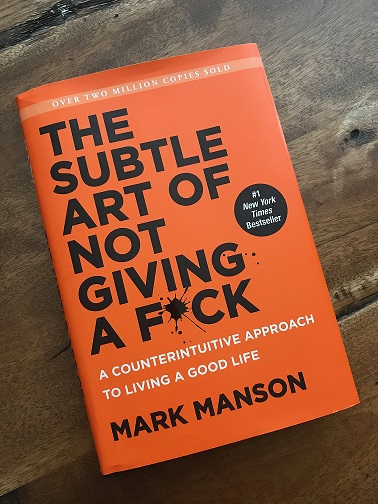
Book Review: The Subtle Art of Not Giving a F*ck

By Hafsah Ja’afar

The Subtle Art of Not Given a F*ck is a book with a provoking unconventional tone that challenges traditional sundries of happiness and success. Penned by Mark Manson, this book presents a refreshingly honest and no–gibberish approach to living fulfilling lives. Manson argues that true happiness and particular growth come from accepting our limitations, embracing discomfort, and understanding that life is innately difficult and delicate.

He encourages his readers to prioritize their values and choose what truly matters to them instead of seeking constant positivity or avoiding negative gests. Throughout the book, Manson explores colourful themes such as responsibility, authenticity, and the significance of setting boundaries.

He advocates for letting go of societal prospects, embracing failures, and learning from them. He suggests that we can lead a more meaningful and authentic life by fastening on what truly matters to us—using a mix of particular stories, philosophical perceptivity, and detailed advice.

Manson provides readers with a fresh perspective on changing happiness and purpose. It encourages them to let go of external confirmation, embrace their defects, and control their lives.

Overall, this book offers a counterintuitive yet empowering gospel that challenges everyone to rethink their precedence, review success, and live a life guided by their values rather than the prospects of others.

Hafsat Ja’afar is a school teacher and wrote from Kano via jaafarhafsat@gmail.com

IKIGAI: The Japanese secret to long and happy life

By Hafsah Ja’afar

It is a captivating and insightful book that explores the concept of Ikigai, a Japanese philosophy that translates to ‘reason for being’ written by Hector Garcia and Francesc Miralles. This book delves into the wisdom and practices of the people of Okinawa, one of the world’s blue zones. The people of that region are known for their longevity and well-being.

The authors take readers on a journey to discover the essence of Ikigai, which lies at the intersection of four fundamental elements: What we love, what we are good at, what the world needs, and what we can be rewarded for. Drawing from extensive research and interviews with residents of Okinawa, the authors reveal how living a life driven by Ikigai can bring profound fulfilment and joy.

Through engaging anecdotes and practical guidance, the book offers valuable insights into how to uncover one’s Ikigai and cultivate it in daily life. It explores the importance of finding purpose, maintaining a strong sense of community, adopting a positive mindset, and embracing simple yet meaningful pleasures.

Ikigai provides inspiration and actionable steps to help readers discover and pursue their own Ikigai. It highlights the significance of aligning personal passions with contributing to the greater good, emphasising that a life rooted in meaning and purpose can improve well-being, longevity, and overall happiness.

With its blend of cultural wisdom and contemporary research, Ikigai: The Japanese Secret to a Long and happy life guides individuals seeking a more fulfilling and balanced existence. It offers practical tools and profound insights to help readers unlock their inner purpose, embrace the present moment, and lead a life of greater significance and contentment.

One of the surprising things about living in Japan is how active people remain after retirement. Many Japanese people never retire but rather keep doing what they love for as long as they are ‘hale and hearty’. There is no word in Japanese that means “leaving the workforce for good” as it is in English.

According to National Geographic reporter Dan Buettner, having a purpose or reason for being is so fundamental in Japan and the Japanese culture that the word retirement ceases to exist. The art of staying young while growing old is a choice you make; a healthful diet, a strong sense of community, and Ikigai (reason for being) play a significant role in their eternal youth, most especially in Okinawa (the island of eternal youth), one of the blue zones where centenarians the extraordinary human beings live in massive numbers.

Hafsat Ja’afar is a school teacher and wrote from Kano via jaafarhafsat@gmail.com

Afflictions and Stitches

By Zee Aslam

The door slammed open to reveal a heart-touching moment of a mother struggling to discover her breath as she aimed to bring another life into the world. The birth of a baby is one of the world’s most wondrous and hazardous moments. 

Childbirth is a challenge, but it is undoubtedly one of life’s most rewarding events. As painful and fearsome as it may seem, the mother has this wonderful emotion overwhelming her as she awaits the arrival of her bundle of joy. 

Being a mother comes with lots of sacrifices. Your body figure will be altered, re-moulded, and your brain becomes addled as you are being re-programmed right from the womb swelling with pride down to experiencing the pain of labour. 

Pregnancy is exciting and scary all at the same time. Some days feel like a breeze, while others are just plain hard. However, the long nights with no sleep and mood swings are all worth it. 

Despite all the doctors, nurses, and loved ones in the room during childbirth, it is all about you, your body, and your child. It’s an incredible experience. It’s like uncovering a superpower you never realised you had. 

As she gasped for air while pushing out the baby, she looked around her and reminisced on the decision she took months back, which she never regretted once but still harboured doubts and fears. “What would become of this baby?” She asked herself. 

The cry of her little one signalled the beginning of a new life. She looked keenly as the nurse cleaned up her baby and placed him on her, wrapped in boundless passion. 

The aftermath of her decision just began. At night and when the hospital staff were distracted by an emergency, she stealthily sneaked out and walked miles away to a place where an orphanage was situated before dropping off the baby at the foot of a gate and then knocking at it. 

An elderly woman came out and was attracted to the baby’s cries. She stood halfway, staring at the innocent boy before she reduced her height and picked him up inside. The mother watching from afar, only wiped off tears as they streamed down her face. “That was the best she could do for her baby”. 

She travelled down memory lane to the path where some unknown men abducted, defiled and abused her. Then she thought she only paid the price of being an orphan roaming on the street, but now she knows better. 

Her life took a new turn and brought her to face its realities, she has just given away her soul and a piece of her heart to a total stranger, but she rests assured that her boy will grow up amidst other kids and be a better person. 

She calmly dragged her feet out of that street to what she called home and picked up the remnant from her shattered life, yearning to stitch them back together. 

If she could turn back the hands of time, she would. 

But since it’s beyond her control, she will only move on with her life and keep praying for the best to unfold into a piece.