Lebanon

Iranian security chief promises continued support for Lebanon

By Anwar Usman

The top security chief of Iran, Ali Larijani, vowed in Lebanon on Wednesday that his government would continue to provide support, after the Lebanese government ordered the army to devise a plan to disarm Tehran-backed militant group Hezbollah.

Ali Larijani’s trip to Lebanon comes after Iran expressed opposition to a government plan to disarm Hezbollah, which, before a war with Israel last year, was believed to be better armed than the Lebanese military.

“If the Lebanese people are suffering, we in Iran will also feel this pain and we will stand by the dear people of Lebanon in all circumstances,” Larijani, the head of the National Security Council, told reporters after landing in BeirutDozens of Hezbollah supporters gathered along the airport road to welcome Larijani.

He briefly stepped out of his car to greet them as they chanted slogans of support.

In Lebanon, the security chief is expected to meet with President Joseph Aoun, Prime Minister Nawaf Salam, and Parliament Speaker Nabih Berri, who is close to Hezbollah.

Iran has suffered a series of blows in its long-running rivalry with Israel, including during 12 days of open war between the two countries in June.

Reports show that, Hezbollah is part of Iran’s so-called “axis of resistance” — a network of armed groups in the region, including Hamas in Gaza and Yemen’s Huthi rebels, united in their opposition to Israel.

The ouster in December of Bashar al-Assad in Syria, which long served as a conduit for weapons deliveries between Iran and Hezbollah, cut off the supply route to Lebanon.

Iran has declared its firm opposition to the Lebanese government’s bid to disarm Hezbollah, while the movement itself has slammed the decision as a “grave sin”.

U.S. deports Rhode Island doctor over alleged Hezbollah ties

By Hadiza Abdulkadir

U.S. authorities have deported a Rhode Island doctor, Rasha Alawieh, to Lebanon after allegedly discovering “sympathetic photos and videos” related to Hezbollah on her cellphone, officials announced Monday.

Dr Alawieh had been living in the United States for several years. Officials said forensic analysis of her deleted files revealed images and footage of the late Hezbollah leader, as well as militant activities.

Authorities did not specify whether she had direct ties to the group, but her presence in the U.S. was deemed a security concern. She was deported last week following an investigation.

The case underscores the heightened scrutiny of potential security threats, as officials continue to monitor individuals with suspected extremist affiliations.

Middle East, Israel targeted assassinations and the increasing risk of all-out war 

By Ismail Obansa Nimah

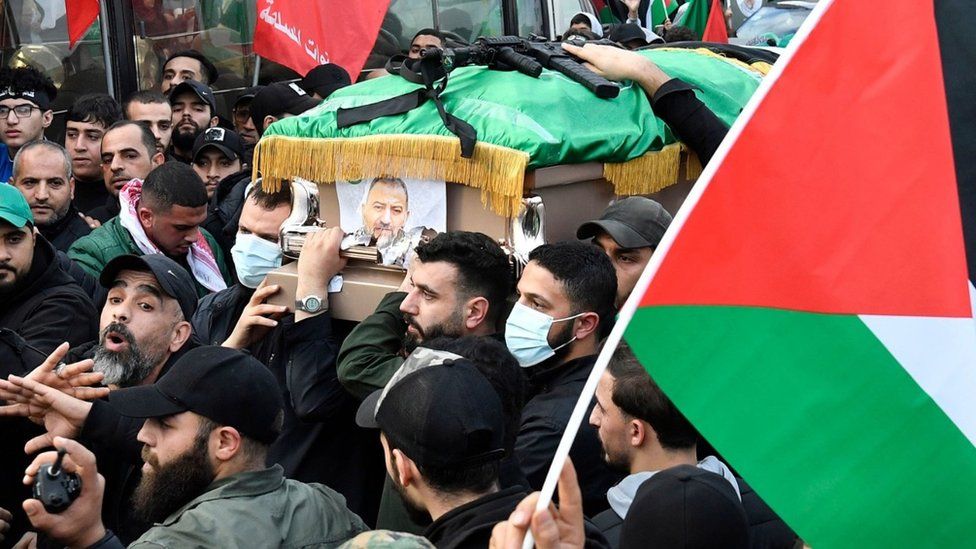
Yesterday again saw another targeted Israeli assassination of a high-profile leader of the Palestinian resistance axis, Hamas deputy leader Saleh Al Arouri. The assassination by Israel took place in the heart of Beirut, the capital of Lebanon, at about 5:45 pm Local time. It comes roughly 24 hours before the 4th anniversary of the assassination of Qassem Soleimani, former Commander of Iran’s elite Quds brigades of the Iranian Revolutionary Guard corps.

On the 3rd of January, 2020, turmoil was yet again unleashed in the Middle East when the United States of America (USA), in collaboration with her Israeli ally, assassinated Major-General Qassem Soleimani, a man who doubled as the commander of the Iranian Elite Revolutionary Quds Force and the second most potent/influential man in Iran after Ayatollah Al-Khamenei (Iran’s supreme leader).

Citing the preservation of the interest and national security of America, the United States launched a drone strike at a convoy conveying Soleimani and Iraqi militia leader Abu Mahdi Al-Muhandis, killing them both and eight others near Baghdad airport in Iraq.

The conflict between the US and Iran dates as far back as the 1970s, and as almost always, the killing of Soleimani immediately rattled up tensions, bringing the US and Iran to the brink of war. According to some Iranian sources, General Soleimani was on an important mission to deliver a message to the Iraqi prime minister about its gulf neighbours and reconciliatory steps taken between Iran and its neighbours, especially its regional rival Saudi Arabia, suggesting that Riyadh may have leaked intelligence to Washington.

The killing of Soleimani was met with shock, worldwide condemnation and fierce declarations of avenge from Iranian officials and Iranians, generally with the supreme leader, President and military commanders/leaders pledging a harsh retaliation. Following the killing, massive protests and mourning broke out in the cities of Iran and Iraq, with hundreds of thousands of Iranians pouring out into the streets, mourning and chanting their desires for revenge.

On January 5th, 2020, the remains of General Soleimani and the other Iranians killed alongside him were flown into Iran amidst a sea of millions of mourners. The funeral and national procession of the Iranian legend was planned for the 7th of January, at his home town in ‘Kerman’, but an ensuing stampede due to massive crowds led to the death of at least 56 people and injuring 213 people, resulting in the immediate postponement of the burial.

In the early hours of the 5th day after Soleimani’s assassination, on the 8th of January 2020, Iran retaliated and launched over a dozen ballistic missiles on two US bases in Iraq. The attack by Iran injured over 100 US soldiers, with most of them reportedly suffering traumatic brain injuries, and also resulted in the destruction of important US assets in the bases. Tensions immediately skyrocketed following the Iranian counterattack, with oil prices rising to levels not seen in 3 months and countries including the US ordering their citizens to evacuate and leave Iraq and its environments, as well as airliners being told to avoid the airspace over Iran and Iraq.

As the world woke up to the news of an Iranian response, so did the news of the downing of Ukrainian International Airlines flight 752, killing all 176 on board. The Iranian Revolutionary Guard Corps placed its defences on high alert following the counterattack, allowing its surface-to-air missile defence system to mistakenly shoot down the Kyiv-bound airliner shortly after take-off from Tehran. Following damages to the US bases and injuries to personnel, President Trump and the Pentagon ordered the immediate deployment of more US military assets to the Gulf region. Consequently, an airstrike on Iran that would be called off at the last minute by President Trump was ordered.

 Iraq, caught in a conflict between the world’s superpower and a Middle Eastern regional power, became destabilised. With the outright violations of its national sovereignty by a supposed ally, protest broke out with both ordinary Iraqis and the Iraqi parliament calling for the expulsion of American troops and other foreign forces from its soil. For a lot of them (Iraqis), the horrors and consequences of decades of war can still very much be remembered and felt, and they, by all means, want to be left out of another regional conflict.

Four years on, tensions remain at a ceiling level between Iran and the US/its Middle Eastern allies, particularly Israel. Israel’s brutal genocidal war on Gaza has killed more than 22,000 Palestinians, as well as more Israeli-targeted killings of Iranian officials. It’s regional allies with American support, including Mohsen Fakhrizadeh; it is yet to be fully known how close an all-out war is between Iran and American-backed forces within the region, particularly Israel.  Although so many structures have been re-named after Soleimani, the void created in the hearts of Iranians, the Palestinian resistance axis and the Islamic Republic of Iran by his death will take a long time to heal and will require more than an anniversary celebration for the already sanction crippled nation.

Ismail Obansa Nimah wrote via nimah013@gmail.com.

Book Review: The Lebanese in Kano

By Dr Shamsuddeen Sani

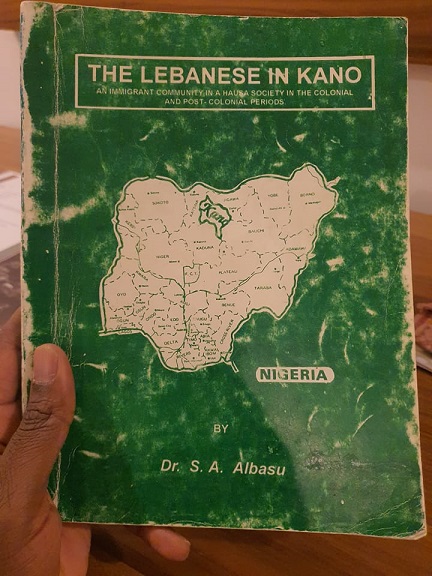
I thought The Lebanese in Kano: An Immigrant Community in a Hausa Society in the Colonial and Post-Colonial Periods merely contained a handful of newspaper tales. I was mistaken! Within its pages lies a meticulously researched body of work, a testament to the cultural heritage of Kano that begs to be savoured and preserved for generations to come. It has profound glimpses into the very foundations of Kano’s societal evolution as it illuminates the paramount role played by the Lebanese community in the rich Kano’s historical traditions.

This book, published in 1995 and authored by S.A. Albasu, unfolds with an intricate chronology of eight captivating chapters. As the introduction sets the stage, the initial chapter gracefully delves into the existing body of literature on migration, skilfully intertwining it with the historical fabric of West Africa and Nigeria. Embracing a tangent in the second chapter, Albasu illuminates the emigration of the Lebanese into Kano, beginning in the mid-19th century.

However, a pivotal juncture in Lebanese history within Kano emerged in 1920, a defining moment marked by profound geographical and religious divisions among the Lebanese migrants. The historical catalysts propelling Lebanese emigration into Nigeria were meticulously examined within this segment.

It becomes apparent that prior to the 1920s, the Lebanese immigrants in Kano predominantly belonged to the Maronite Christian community. It is only after this period that a demographic shift occurs, welcoming the arrival of Muslim Lebanese, particularly those of the Shiite sectarian extraction hailing from southern Lebanon. The book exposes the reader to the sociocultural intricacies of the Lebanese community’s towns of origin and unravels the fabric of their society, dispelling prevailing myths.

The entire Lebanese migration into Kano is thoughtfully categorised into four distinct phases, each meticulously explored with great detail: 1890-1903, 1903-1912, 1912-1920, and the 1930s during the tumultuous period of the great depression. Each of these phases represents a significant milestone in the history of the Lebanese community within Kano, as well as its impact on the city’s socioeconomic development.

Subsequent chapters of this book delve into the physical establishment of the Lebanese community, intricately entwined with crucial historical policies such as colonial taxation, the indirect rule system, and segregation policies.

Chapters four, five, and six embark on an exciting journey, covering the consolidation of the Lebanese community within Kano’s vibrant business milieu. From the thriving cattle trade to the realms of Kolanut and groundnut businesses, the book unfurls the profound influence of factors like colonial intervention, the upheaval of the Second World War, Nigeria’s independence, and the burgeoning national consciousness. The book has revelations of ground-breaking nature, leaving you enlightened and astounded, and for me, every piece seamlessly falls into place now.

Subsidy Removal: Is Nigeria on the verge of collapse like Lebanon?

By Sa’adatu Aliyu

In August 2020, the Port of Beirut came under explosive attacks, which shook the country’s very foundation. After many reports came in after that, it was said that another attack to have shaken the country with such intensity was that which killed the then Prime Minister Rafik Hariri in 2005.

Before the explosion, however, Beirut had been struggling with its economy, thanks to its widespread corruption. That already had it standing at the doorstep of the World Bank begging for financial relief. It also saw many of its populace unemployed, uncertain of the future.

Therefore, for a country already grappling to pay its citizens their salaries, with families finding it increasingly hard to feed their children or send them to school, the explosion added fuel to the fire. After much investigation, it was gathered that the port officials had been indirectly responsible for the incident, which killed and injured many. This is because the large amount of chemicals initially bound for Uganda was instead stashed up in the Beirut port, left without any safety preservative precautions taken to prevent an imminent attack.

After that, Beirut was indeed to see itself knocking at the gates of the World Bank, yet again-if once silently and with patience – then now it was with desperation for help. It would, in fact, at this point turn its hands to accept any offer coming in from any country but most importantly, the Saudi government with which it maintains a close political tie.

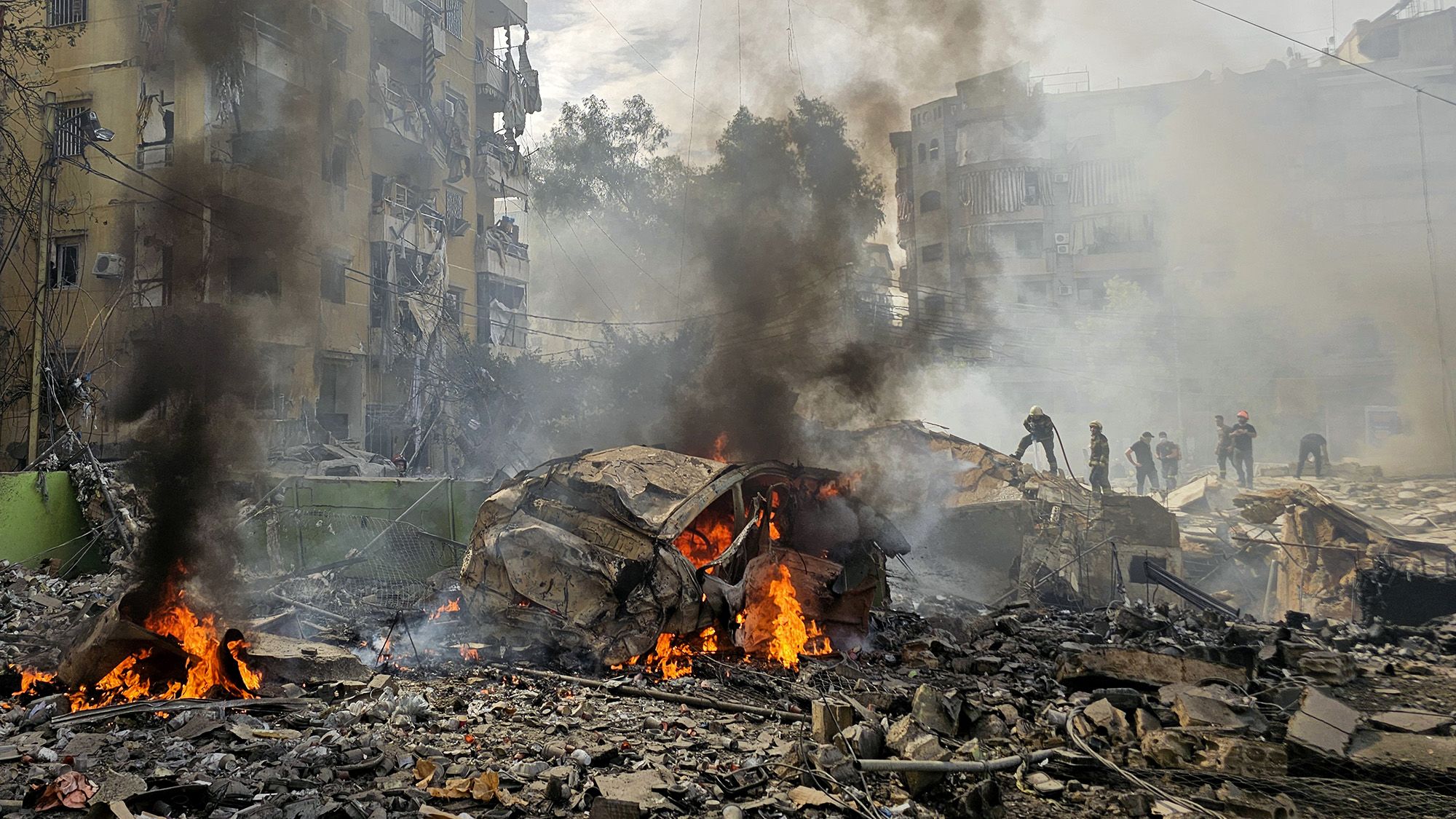
What makes me liken the Nigerian state to the status quo in Beirut is its corruption and the most recent proposition by the government on the possible removal of fuel subsidy. For a country whose system is heavily built on corruption and even more so we can say still thrives because of it, I am afraid to say that I hope we, too, do not one day wake up to the smokes of our country in flames with everyone running helter-skelter in search for safety.

Beirut’s reality stares Nigeria in the face. The trudging of its imminent collapse is ever so closer. Abject poverty remains the order of the day with the larger part of the population living below one dollar; price for education forcing worry heaves and sighs out of its largely lower-middle-class population, price of food items costing twice more than before. To make matters worse, the state of our country’s security has never been so fragile and then to have life becoming more difficult by the removal of fuel subsidy by a government on which many have placed the hope of a better living condition is to assert to the population that the government lacks any sense of good direction.

I don’t want to sound pessimistic. However, with the country’s challenges rising every day and a government that focuses more on enriching themselves and their families, I cannot see a brighter future for us either.

With the drama in display and the Nigerian state calmly maintaining its dance on the tracks of lagging-behind countries, and as we face yet another upcoming election next year, I pray we do not wake up to the scorching burns of increased crime rate, escalating terrorism, among other ills.

One thing that doesn’t require divine telling is that Nigerians have never felt more apathetic towards the system. We are all bracing for what lies ahead.

Sa’adatu Aliyu comes from Kogi state. She is a graduate of English Language from Ahmadu Bello University, Zaria and a Masters student in Literature at the same institution. Her email is saadatualiyu36@gmail.com.