Labour

Atiku blasts Tinubu over unpaid wages, demands release of labour activist

By Muhammad Abubakar

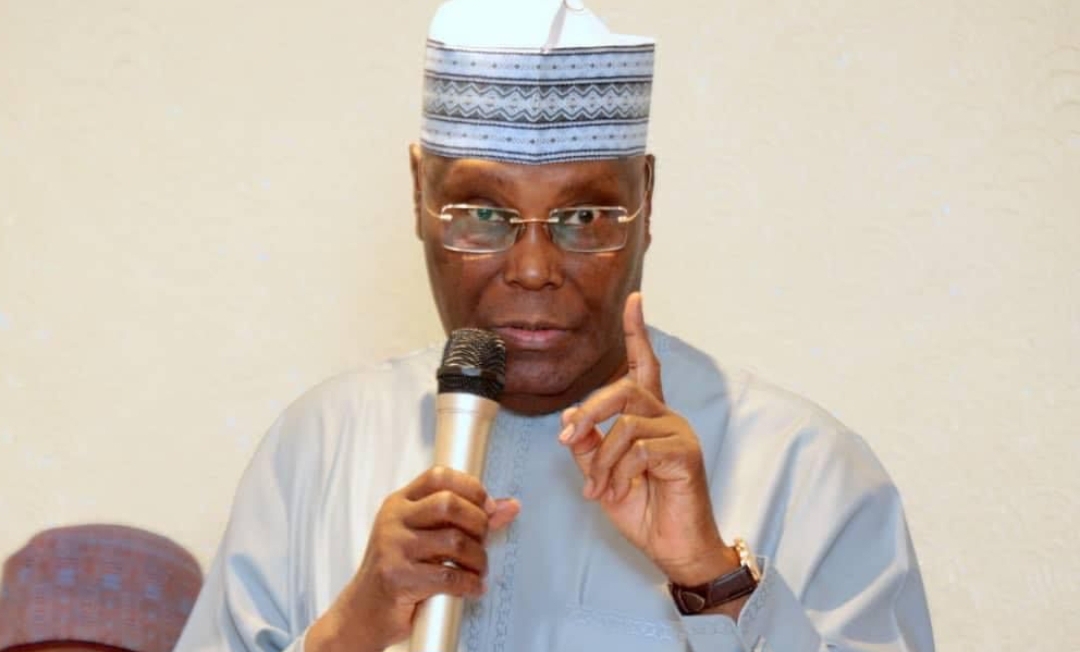
Former Nigerian Vice President and presidential candidate Atiku Abubakar has criticised the Bola Ahmed Tinubu administration over unpaid wage awards and the detention of labour activist Comrade Andrew Uche Emelieze.

In a statement shared on his social media accounts, Atiku accused President Tinubu of worsening economic hardship through the “hasty and thoughtless” removal of fuel subsidy on his inauguration day, which he said plunged Nigerians into inflation, hunger, and despair.

Atiku said the government promised a ₦35,000 monthly wage award to federal civil servants pending the conclusion of a new minimum wage deal. Ten months later, only six months have been paid, leaving ₦140,000 owed per worker.

He condemned the arrest of Comrade Emelieze, who was detained for attempting to organise a peaceful protest over the unpaid wages, calling it “an affront to democracy.”

“We demand the immediate and unconditional release of Comrade Emelieze,” Atiku said. “Nigerian workers will not be silenced, intimidated, or forgotten.”

The Federal Government has yet to respond to the statement.

Gombe: Government to pay ₦70,000 minimum wage

By Abdullahi Mukhtar Algasgaini

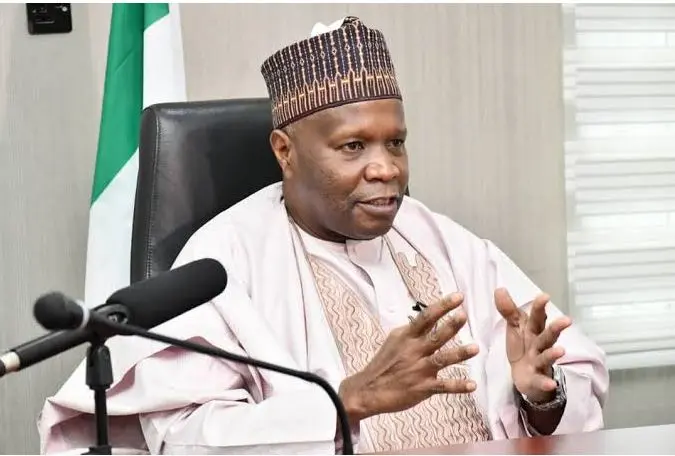
The Governor of Gombe State, Muhammadu Inuwa Yahaya, CON, has announced his intention to pay the ₦70,000 new national minimum wage to workers in the state.

The position of the governor was presented by the Deputy Governor, Manassah Daniel Jatau, PhD, who is also the Chairman of the Tripartite Committee on Minimum Wage Negotiation, Gombe State, during a press briefing at the conference hall of the Deputy Governor’s Office, Gombe.

Represented by the State Head of Civil Service, Alh. Ahmed Kasimu Abdullahi, during a Press briefing ,the Deputy Governor explained that the governor is highly committed to ensuring that civil servants in the state enjoy the 70, 000 new national minimum wage so that they can put in their best in serving the state.

He said, the governor has set a machinery in motion and the standing committee has been fine-tuning to see to the implementation of the new minimum wage.

“Government has set the machinery for the implementation of the new national minimum wage in Gombe State. Let me assure you that His Excellency the Governor is fully determined to pay the minimum wage. Unlike what you have been hearing in some quarters that the governor said he won’t pay. No, not at all. His Excellency is one of the governors in the fore front of payment of the new minimum wage”.

He said Governor Inuwa Yahaya has been magnanimous enough to willingly pay a 10,000 palliative in form of a wage award since September last year, across board to all civil servants in the state to cushion the effect of fuel subsidy removal which, automatically brought the minimum wage to 40,000 naira when other states couldn’t pay the 30,000 minimum wage.”

In the magnanimity of the Governor to alleviate the hardship occasioned by fuel subsidy removal, he approved the payment of 10,000 across board to all civil servants without anyone putting any pressure on him in order to make the civil servants feel better in the discharge of their duties. The additional 10,000 naira was because of his concern, feeling and regard to civil servants and it has made the minimum wage 40,000 instead of 30, 000 even when other states couldn’t pay the 30,000″.

He however pointed out that the negotiation committee has decided to separate the monthly salaries from the 10,000 palliative pending when conclusion is reached in order to prepare the Civil servants on knowing their exact salaries when the minimum wage is finally agreed upon.

“Effective from this month of August, the normal salary will be paid, then after two days the ten thousand naira palliative will be paid to help the worker know his actual salary and this will continue until the new minimum wage is agreed upon. We are now waiting for the salary table from the federal government before we commence the negotiation. Once we reach an agreement the implementation will begin and the 10,000 naira palliative will stop”.

The Nigeria Labour Congress Chairman, Mr. Yusuf Aish confirmed that this was the position reached at the tripartite committee meeting on the new minimum wage.” we had a brief discussion during our negotiation in the last 30,000 naira minimum wage due to some balance of some payment where we have agreed that this committee is a standing committee of minimum wage negotiation in the state. As a result this same committee met to begin negotiation on the new 70,000 naira national minimum wage. However,in our tripartite committee meeting we have agreed to wait for the time the new minimum wage table as approved by the federal government will be released. Whenever it is released we will start full negotiation with a view to reaching an agreement on what is to be paid in Gombe State”.

He also explained that civil servants will receive two alert messages beginning from this month of August, being the normal salary and that of 10,000 naira palliative urging the civil servants to be patient pending when the negotiations will be concluded.

Sultan of Sokoto appeals to labour to shelve strike action

By Uzair Adam Imam

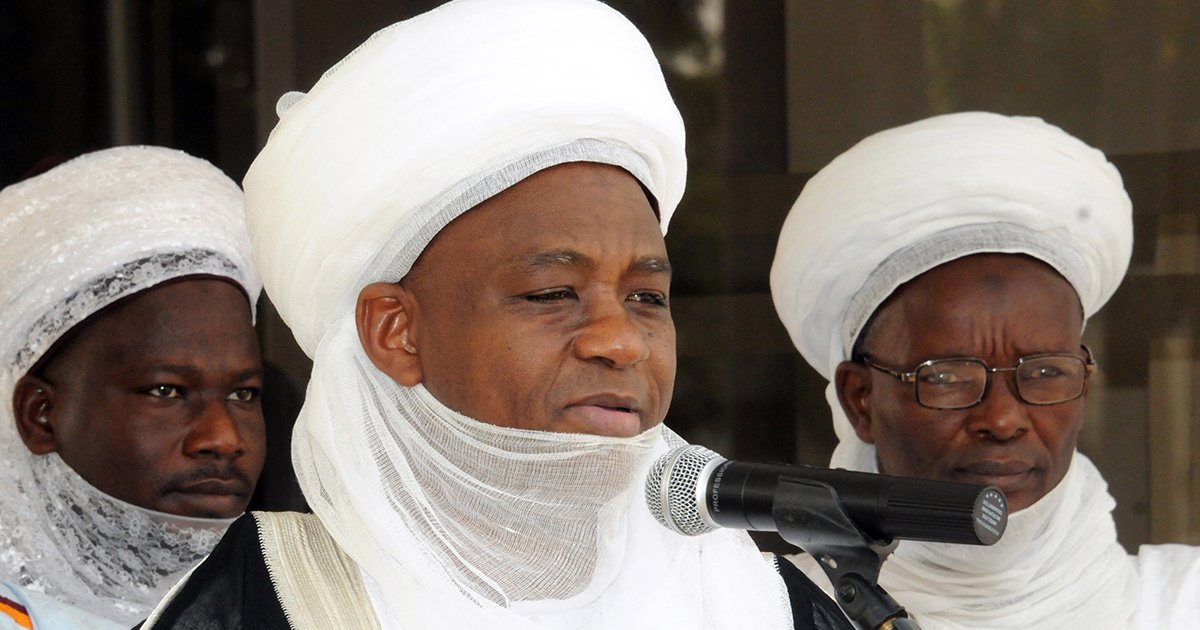
The Sultan of Sokoto, Alhaji Muhammad Sa’ad Abubakar, has urged the Organised Labour in Nigeria to reconsider their planned strike action scheduled to commence on Monday, June 3, 2024.

In a statement released by his media team on Sunday night, the Sultan appealed to the labour leaders to consider the potential hardships their action may cause Nigerians.

“The Labour leaders should consider the overbearing effects of the strike action they plan to embark upon on the wellbeing of the same Nigerians, whose interest they are fighting to protect, and therefore shelve the industrial action,” he said.

The Sultan emphasized the importance of negotiation, encouraging the labour leaders to continue engaging with the government.

“We appeal to Labour not to take the nation through another leg of hardship… They should try to listen to the government while the government should listen to them and both parties arrive at a conclusion that will be beneficial to all Nigerians, with the working class inclusive,” he said.

Drawing from his personal experience in past negotiations between labour and government, the Sultan acknowledged the labour leaders’ efforts to advocate for better welfare for their fellow workers.

However, he cautioned them to consider the potential consequences of their actions and to prioritize compassion.

“You are doing what is right for your class of fellow workers, but you should do it within the ambit of compassion and see strike always as the last option,” he said.

Love your job: Rethinking the nobility of work in a societal context

By Iranloye Sofiu Taiye (Optimism Mirror)

In today’s society, the value placed on labour appears to be diminishing, leading to job seekers being labelled as lacking vision. The prevailing mindset prioritises monetary gain over the intrinsic significance of the work itself and fails to question the ethical implications of wealth accumulation.

Throughout the annals of history, labour has consistently been regarded as noble, transcending various economic systems such as feudalism, the industrial revolution, legitimate trade, slave trade, colonialism, and the post-colonial era. Regardless of the prevailing economic orientation, whether capitalist, socialist, or communist, the consensus remains that individuals must sell their labour, skills, or ideas to earn a commensurate wage, stipend, or salary.

Selling one’s labour is undeniably the most legitimate means of earning a living. However, it is worth pondering why employment has become synonymous with working exclusively in corporate organisations. It is both peculiar and disconcerting that those engaged in seemingly menial jobs, such as shop attendants, cashiers, bolt drivers, waitresses, security personnel, graphic designers, and others, are frequently dismissed and their contributions overlooked.

In reality, the services provided by these individuals are indispensable to our collective well-being as a society. Imagine a world devoid of bricklayers, furniture makers, plumbers, teachers, tailors, farmers, and countless others—can we guarantee survival under such circumstances? This serves as a stark reminder to anyone engaged in any form of work that they should consider themselves honourable contributors to the fabric of society.

Regrettably, our society is currently grappling with the pervasive issue of the “get-rich-quick” syndrome, which is predominantly prevalent among the youth. Parents, religious leaders, friends, and elders openly encourage and support their offspring to pursue wealth by any means, irrespective of the nobility of the endeavour. Labour is now seen as optional, and the value of hard work has been overshadowed.

Consequently, we find ourselves in a problematic situation where numerous graduates, lacking practical work experience, wander the streets searching for white-collar jobs that offer exorbitant salaries. They are unwilling to consider jobs that would cover their basic expenses and provide personal growth and development opportunities. It is vital to acknowledge that not everyone is destined to be an entrepreneur or business owner—some individuals will sell their expertise, labour, and creativity to others. CEOs and business leaders require a workforce to carry out essential production activities.

Nevertheless, loving and appreciating the value of one’s work is imperative and essential. No one should succumb to intimidation, bullying, or dehumanisation for engaging in an honest means of livelihood, as long as it is legitimate. It is of utmost importance to recognise that the dignity and worth of work extend far beyond the confines of corporate offices.

Significantly, we must re-evaluate our societal perceptions of work. We must wholeheartedly embrace the notion that all forms of labour contribute to the well-being of our communities. By cherishing and honouring our work, regardless of its nature or scale, we can foster a society that recognises and respects the nobility of every individual’s contribution.

Iranloye Sofiu Taiye (Optimism Mirror) is a political/public affairs analyst, writer, public speaker and youth advocate. He can be reached via iranloye100@gmail.com.