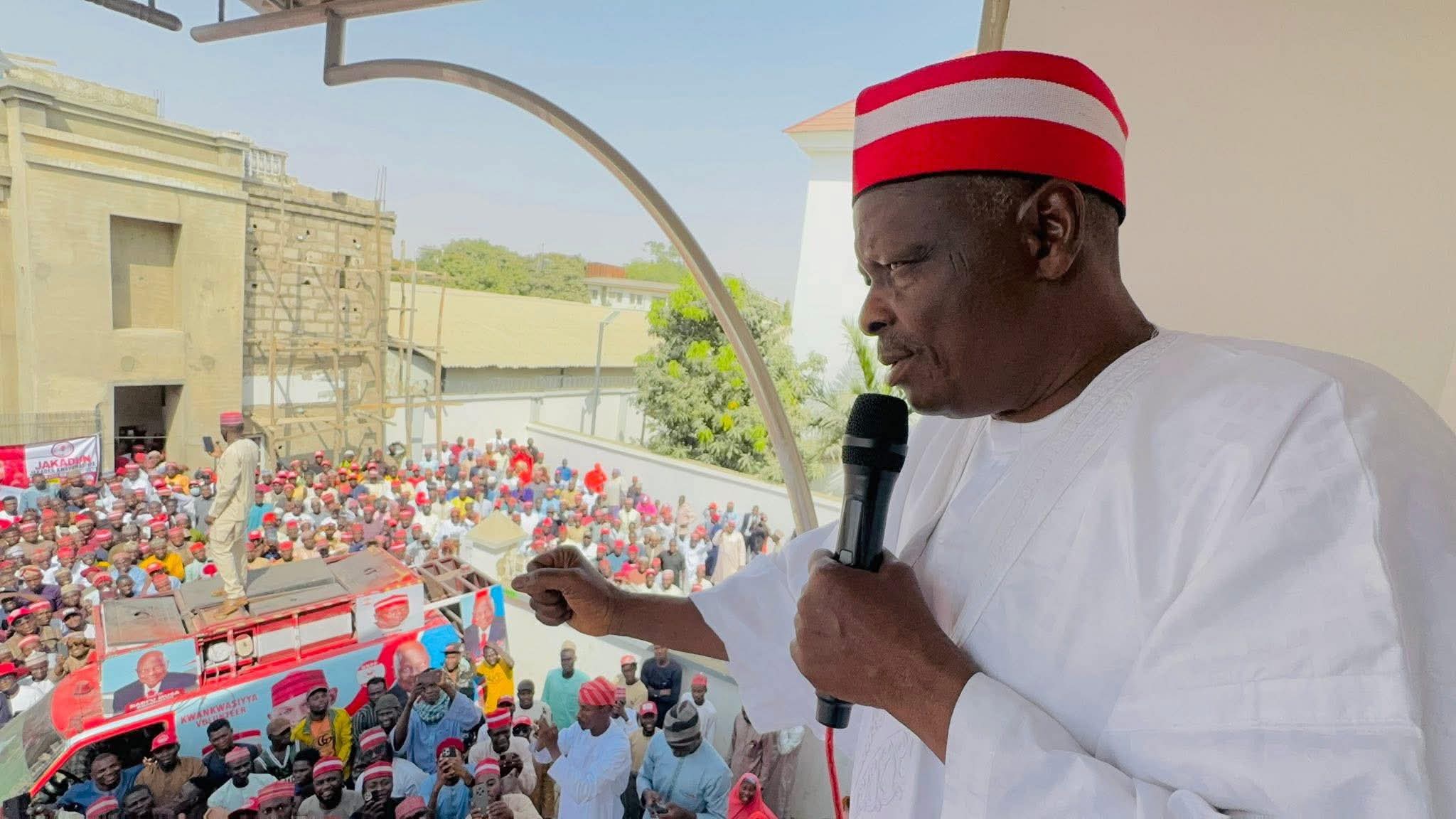
Kwankwasiyya

In defence of Kwankwaso and the scholars who stand with him

By Muhammad Sani Ilyasu

I woke up to a video circulating on social media by a former Kano State anti-corruption czar, giving his opinion about scholarship beneficiaries on why they had no moral right to identify with Kwankwasiyya. It is important to clear the air. Much of what is being said comes from people who were never inside the scheme and never lived the consequences.

Let me state this clearly and upfront: I do not identify with Kwankwasiyya. I disengaged from the movement in 2020. What follows is not partisan advocacy. It is testimony.

Criticism of Rabiu Musa Kwankwaso and scholars associated either rightly or wrongly with his ideology has become fashionable. But much of that criticism is detached from the lived realities that shaped those associations, especially the horrible experience of Kano State scholarship beneficiaries. I write as one of them.

Yes, the scholarships were funded with Kano State resources. But at no point—none that I can recall—were beneficiaries compelled to support Kwankwaso politically. There was no loyalty test, no ideological oath, no expectation of political repayment. In fact, many scholars openly opposed him. I personally recall frequent debates with colleagues who were supporters of Ibrahim Shekarau, many of whom never gave Kwankwaso any credit for the scholarship. Most of us were indifferent, credit was never the issue.

The lesson however came in 2015. That was when Abdullahi Ganduje assumed office—and when all of us, including Kwankwaso’s fiercest critics among the scholars, learned the brutal difference between right and privilege. Tuition payments were halted. Upkeep allowances disappeared. Return-ticket funds were withheld. Scholars were stranded and pushed into destitution in foreign countries.

Some waited over eight years to receive their certificates after the scheme was abruptly terminated. In some cases, parents died without ever seeing the academic fruits of sacrifices they had made.

As if that were not enough, scholars were publicly discredited—labeled products of “substandard universities,” their academic legitimacy questioned to justify administrative neglect. Throughout this period, Kano State went silent.

Religious leaders. Business elites. Civil society organizations. The same voices that now moralize and gaslight scholars looked away. The only “crime” of the scholars was that Kwankwaso started the program.

If, as some critics claim, the scheme was merely a vehicle for siphoning public funds, a simple question remains unanswered: why was Kwankwaso never prosecuted—and why were scholars punished instead? Why were entitlements withheld if the beneficiaries were not the accused?

What makes the silence more damning is that this neglect extended beyond foreign scholars. Until the return of a Kwankwasiyya-led government, even undergraduate scholars sent to private universities within Nigeria—and to Egypt and Cyprus—were denied certificates. For postgraduate students, the delay was damaging. For undergraduates, it was life-shattering: no certificate meant no employment, no future.

In all those years, only one political current consistently raised the issue and demanded settlement: Kwankwasiyya. This is the context critics conveniently ignore.

What they now describe as “indoctrination” or “blind loyalty” was, in reality, a rational response to abandonment. You cannot withdraw education, dignity, and future—then later shame people for gravitating toward the only structure that acknowledged their suffering.

That is not principled criticism. It is double standard. Scholars were not pushed toward Kwankwaso by manipulation. They were pushed there by neglect and even for those of us who have long moved on, that historical truth remains intact—uncomfortable, inconvenient, and undeniable.

Gaslighting scholars for the choices they made under abandonment is not moral courage.
It is hypocrisy.

Muhammad writes from Baltimore Maryland and can be reached at msaniiliyasu@gmail.com.

Beyond “scandals”: Subtle war against Kwankwasiyya administration?

By Nuraddeen Nasir

In recent weeks, Kano State’s political atmosphere has been unsettled by a series of corruption allegations targeting senior government officials. From the resignation of the former Commissioner of Transportation, Honourable Ibrahim Namadi Dala, over a bail scandal to the latest accusations linking another top official to the diversion of public funds, the narrative has been one of scandal after scandal, amplified across select media platforms.

While accountability remains a cornerstone of good governance, it is important to ask a deeper question: Are these allegations isolated incidents, or do they point to a calculated effort to discredit the present administration?

A closer look reveals a pattern. Each controversy is picked up, amplified, and sensationalized in ways that extend beyond normal journalistic inquiry. The timing and intensity suggest more than coincidence; it hints at a broader political strategy designed to erode public trust in the governor’s leadership.

By targeting appointees one after another, the opposition may be seeking to create a perception that the administration is engulfed in corruption, regardless of the facts.

The real danger lies not only in the allegations themselves, but in how the administration reacts to them. Governor ABBA KABIR YUSUF has earned a reputation for his swift responses to public concerns. While such responsiveness is commendable, it can also be exploited. Reactionary decisions, especially dismissals or quick condemnations, may serve short-term public applause but risk long-term instability. They can embolden political opponents, who thrive on portraying the government as fragile and divided.

What is needed now is a balance: firm commitment to accountability, but guided by due process rather than media pressure. Investigations into any such incidents must be thorough, transparent, and credible, not dictated by headlines or political intrigue. At the same time, the administration must recognize that governance is not only about policies, but also about narratives. A robust communication strategy is essential, one that highlights achievements, places allegations in context, and exposes the political motives behind orchestrated attacks.

Kano State stands at a critical juncture. The battle is not merely about individual scandals; it is about the credibility of an administration that came to power on the promise of people-centered governance. If unchecked, the systematic discrediting of its officials could weaken the governor’s mandate and distract from his developmental agenda.

The lesson is clear: while corruption must never be condoned, neither should conspiracy be ignored. Seeing the bigger picture is essential. This is more than a string of scandals; it may well be a subtle political war aimed at shaping perceptions ahead of 2027.

Nuraddeen Nasir is a Doctoral candidate from Bayero University, Kano
MD, Data in-use Nigeria LTD

Group applauds massive turnout for Governor Yusuf’s welcome rally

By Uzair Adam 

The Kano State Governor, Abba Kabir Yusuf, witnessed a mammoth gathering on Thursday as thousands of supporters lined the streets to welcome him back from the Kingdom of Saudi Arabia, where he had gone for the Hajj pilgrimage.

The Daily Reality gathered that what is ordinarily a 30-minute drive from the Mallam Aminu Kano International Airport to the Kano State Government House took several hours due to the massive turnout of well-wishers who accompanied the governor’s convoy amid chants, music, and the waving of red caps — the symbol of the Kwankwasiyya Movement.

Commending the solidarity and support shown to the governor, the AKY Go Again Movement, in a statement on Sunday, expressed deep appreciation to the people of Kano, political and non-political groups, and government officials for their overwhelming participation in the reception rally.

The statement, signed by Hon. Ramadan Yusuf on behalf of the group, described the turnout as a clear demonstration of loyalty and love for Governor Abba Kabir Yusuf and a reaffirmation of the strength of the Kwankwasiyya Movement under the visionary leadership of Senator Rabiu Musa Kwankwaso.

“We organised this grand reception to show appreciation for the impactful and transformative leadership of Governor Yusuf, and to publicly declare our unwavering support for his continuity in office beyond 2027,” the statement read in part.

The group said Governor Yusuf’s people-first leadership style, dedication to restoring dignity in governance, and delivery of key developmental projects have set Kano on a path of progress and prosperity.

It added that the AKY Go Again Movement will continue to serve as a strategic platform to mobilise grassroots support, highlight the administration’s achievements, and promote the ideals of progressive leadership espoused by the Kwankwasiyya philosophy.

The statement listed key members steering the movement, including Alhaji Tijjani Hussain Gandu (SSA Mawallafa), Hon. Sadeeq Kote (Chairman), Hon. Abdullahi Sarki Fulani (SSA, Kano State Censorship Board), Hon. Abubakar Muhammad Inuwa (SSA on Reformatory Institutes), Hon. Sulaiman Mukhtar Bichi, Hon. Ramadan Yusuf (SSA on Media Monitoring and Innovation), Hon. Aminu Yanmedi, Hon. Yakubu Kubaraci, and Hon. Shamsu Kura.

The movement prayed for Allah’s continued guidance and protection for Governor Yusuf as he continues to serve the people of Kano State.

Dr Sani Danjuma: An uncommon gatekeeper

By Sani Surajo Abubakar

Dr. Sani Danjuma was among Governor Abba Kabir Yusuf’s personal aides appointed on the 16th of June, 2023 as Senior Special Assistant (SSA) Administration I, but later assigned to oversee the portfolio of Principal Private Secretary (PPS) to the governor following the redeployment of the earlier appointment PPS Dr. Faruk Kurawa to (Kano State Agricultural and Rural Development Authority) KNARDA as substantive Managing Director.

Before his first appointment into the administrative circle of the government of Alhaji Abba Kabir Yusuf, he served as a senior lecturer and the Head of the Computer Science Department of the Northwest University, Kano. 

In the intricate web of governance, the role of a Principal Private Secretary to a Governor is often understated yet profoundly impactful. Dr. Sani Danjuma, as the Principal Private Secretary to the Governor of Kano State, exemplifies the qualities of an uncommon gatekeeper. 

His dedication, strategic acumen, and unwavering commitment to public service have made him an indispensable asset to the Kano State Government.

As a pillar of support, Dr. Danjuma’s role extends beyond mere administrative duties. He is the linchpin in the Governor’s office, ensuring seamless communication, efficient coordination, and timely decision-making. 

His expertise in managing complex schedules, facilitating high-level meetings, and advising on strategic matters has been pivotal in the smooth operation of the government.

Dr. Danjuma’s role has contributed to the smooth operation of the government by ensuring that decisions are implemented effectively; his robust coordination between public agencies is leading to more efficient service delivery.

Beyond his administrative responsibilities, Dr. Danjuma serves as a trusted advisor to the Governor, providing informed and innovative insights. His ability to analyse complex issues, foresee potential challenges, and propose effective solutions has earned him the respect and trust of his peers and superiors.

Also, his commitment to public service is evident in his tireless efforts to support the Governor’s initiatives and policies.

He is driven by a passion for contributing to the development of Kano State and improving the lives of its citizens. 

His work ethic and professionalism set a high standard for others in the public service.

What sets Dr. Danjuma apart is his uncommon leadership style, which combines humility with effectiveness. He leads by example, inspiring those around him to strive for excellence. 

Thus, his ability to work collaboratively with various stakeholders, from government officials to community leaders, has been crucial in advancing the Governor’s agenda.

Dr. Sani Danjuma’s role as an uncommon gatekeeper is a testament to his exceptional skills, dedication, and commitment to public service. 

As he continues to serve the people of Kano State in this capacity, his contributions will undoubtedly have a lasting impact on the state’s development. 

His story inspires all who aspire to make a difference through public service.

In recognising Dr. Danjuma’s contributions, we acknowledge not just his professional achievements but also his character and the values he upholds. He is indeed an asset to the Governor’s office and a role model for future generations of public servants to emulate.

By highlighting Dr. Danjuma’s qualities and impact, it becomes clear that he is an indispensable tool in the number office in the state, contributing significantly to the state’s development.

His dedication to public service and strategic thinking is one of the tools that make him an exemplary figure in governance. 

Sani is the deputy director of the Public Enlightenment at Kano Government House.
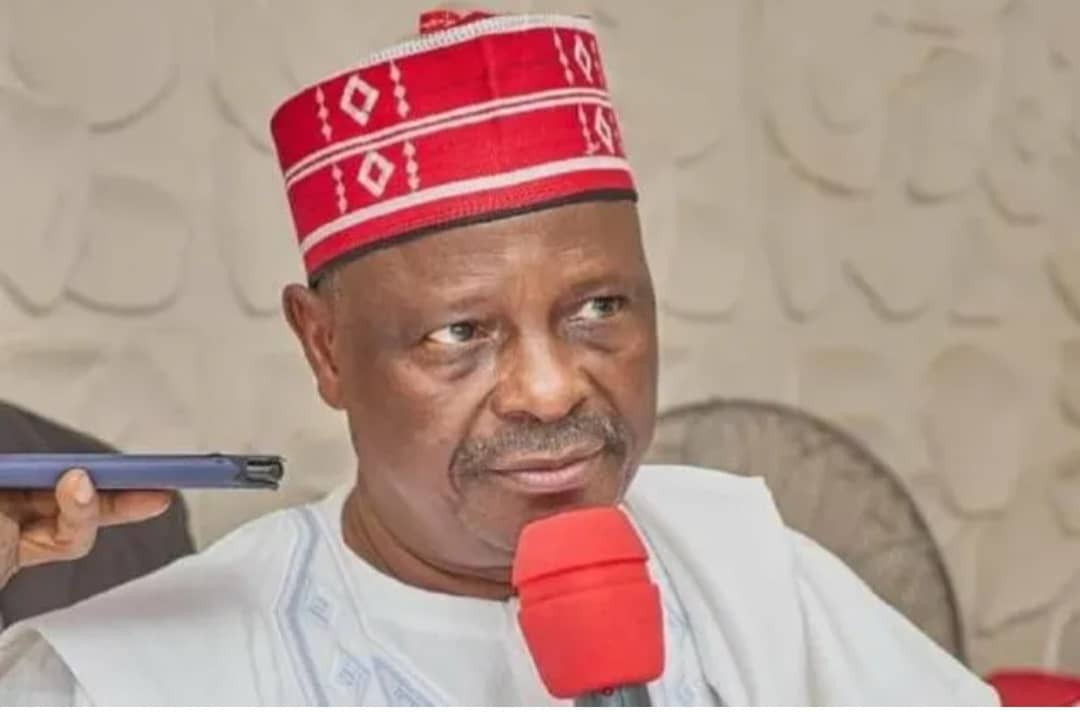
AVM Ibrahim Umaru’s appointment: Square peg in a square hole

By Sani Surajo Abubakar

At the commencement of the 28th Kano State Executive Council on Monday 19th of May, 2025, held at Kwankwasiyya City, Governor Abba Kabir Yusuf presided over the swearing-in of Air Vice Marshal (AVM) Ibrahim Umaru (rtd.) as the new commissioner of Internal Security and Special Services.

His nomination, screening and confirmation by the Kano State House of Assembly and subsequent swearing-in followed the resignation of the pioneer Commissioner of the Ministry some few weeks back.

The new commissioner was the immediate past Director-General of the Special Service Directorate, Kano Government House, responsible for coordinating the operations of security agencies and other engagements critical to safer living in the state.

Before his debut in the government business of Kano State, he was a retired Airforce Officer with vast experience in peacekeeping operations and national assignments both locally and internationally.

He is passionate and committed to youth empowerment and entrepreneurship skills development, with a firm belief that empowering youth will help improve the living standard of the state’s residents and boost rapid socioeconomic development and prosperity.

As a retired Air Vice Marshal, his new position as commissioner will bring a wealth of experience from his illustrious military career in curbing security challenges in the state.

 Indeed, his sojourn as Director-General of the Special Service Directorate and subsequently as commissioner underscores the state government’s commitment to harnessing expertise from various fields to drive progress.

The appointment of Air Vice Marshal (AVM) Ibrahim Umaru as Commissioner in Kano State Government has sparked widespread interest and debate. As a seasoned security expert, AVM Umaru’s induction into the state executive council is seen by many as a strategic move to leverage his expertise in bolstering security and development initiatives in the state.

Many observers view AVM Umaru’s appointment as fitting, given his background and the current security challenges facing Kano State. His experience in security matters is expected to significantly contribute to the state’s efforts in maintaining peace and stability.

The appointment seems to align perfectly with the needs of the state, making it a case of a “square peg in a square hole.”

With AVM Umaru on board, the Kano State Government will likely benefit from his strategic insight and operational expertise. His role could be pivotal in enhancing Security Measures.

He will also utilize his military background to strengthen security frameworks and responses, advise on policy matters, provide informed counsel on security and development policies, and Facilitate dialogue and cooperation between security agencies and local communities.

AVM Ibrahim Umaru’s appointment appears well-considered, aligning his skills with the state’s needs. As he takes on this new role, expectations are high for meaningful contributions to Kano State’s security and development landscape. Only time will tell how effectively he navigates the complexities of his new position, but the outlook seems promising.

Congratulations, AVM, and may your appointment yield positive results for our dear state, Kano.

Sani is the Deputy Director of Public Enlightenment at the Kano Government House.

54 Kano students return from India, get automatic employment

By Hadiza Abdulkadir

Kano State Governor, Abba Kabir Yusuf, has announced the automatic employment of 54 indigenes of the state who recently completed their Master’s degrees in India under the state government’s foreign scholarship program.

The governor made the announcement during an Iftar gathering with the returning scholars, emphasizing the government’s commitment to investing in education and strengthening the state’s workforce.

Governor Yusuf urged the graduates to repay the state’s investment by contributing diligently to Kano’s development. He reaffirmed his administration’s dedication to providing educational opportunities and employing qualified professionals to enhance governance and public service.

Gov Yusuf warns property owners in Kwankwasiyya, others to reside in their buildings or risk revocation

By Uzair Adam

Governor Abba Kabir Yusuf of Kano State has directed property owners in Kwankwasiyya, Amana, and Bandirawo cities to occupy their properties within three months or risk having them revoked.

The directive was announced in a statement by the governor’s spokesperson, Sunusi Bature Dawakin Tofa, on Monday.

It follows the swearing-in of the new Commissioner for Housing Development at the Kano Government House.

“We must continue developing our state, and these three cities were established with that vision in mind. To all property owners in these areas, I am giving a clear directive: either occupy your properties or risk revocation,” Governor Yusuf stated.

He urged those unable to relocate to consider renting out their properties, emphasizing the government’s commitment to ensuring the areas thrive.

“We want these cities to flourish, which is why we have provided all necessary infrastructure, including roads, water, and 24-hour electricity.

“The Governor’s Lodge is also situated in Kwankwasiyya, and I am already operating from there. If you have any complaints, reach out and talk to the Governor,” he added.

Governor Yusuf also announced that the State Ministry of Housing Development would take over the current Housing Corporation headquarters, while the Corporation would be relocated to Kwankwasiyya City to bring the government closer to the people.

Top Kwankwasiyya members, Gov Yusuf’s relative defect to APC

By Uzair Adam 

The Deputy Senate President, Barau I. Jibrin, has received prominent members of the Kwankwasiyya Ulama Forum and other political groups into the All Progressives Congress (APC).  

Jibrin, in a post on his verified social media handle on Saturday, announced that Malam Yahaya Abdulkadir Aliyu, Secretary of the Kwankwasiyya Ulama Forum, alongside 23 executive members, had officially joined the APC.  

Similarly, Mahbub Nuhu Wali, a relative of Kano State Governor Abba Kabir Yusuf, also defected to the ruling party.  

During their Friday visit to Jibrin at the National Assembly, the new APC members removed their symbolic red caps associated with the Kwankwasiyya Movement. 

From his office, they accompanied him to the A-Class Event Centre, where they joined a coalition of Atiku Abubakar’s 2023 election support groups from across the 19 Northern states.  

Following the event, APC National Chairman, Dr. Abdullahi Umar Ganduje, formally welcomed the defectors into the party.  

Among those who joined were Mahmoud Salisu Gwale and Farouk Ahmed Gwale, two chieftains of the New Nigeria Peoples Party (NNPP) from the Gwale Local Government Area of Kano State.  

While welcoming the new members, Jibrin reiterated his commitment to serving the people of Kano North Senatorial District and beyond, regardless of political affiliations.  

“As Deputy Senate President, I want to emphasise that I’m a senator for all. Regardless of your political affiliation—whether PDP, LP, Kwankwasiyya, or APGA—I am here for you.  

“My doors are open to all. If you wish to join our party, the APC, the people’s party, you are welcome. The more, the merrier!” he stated.

Open Letter to the Governor of Kano State: There is a need for a balanced executive council composition

Your Excellency, sir, I want to use this opportunity to draw your attention to the trend followed by your predecessors: forming a composition of the state executive council that is not all-inclusive and fails to address the need for every local government to be well-represented in accordance with the principle of federal character establishment. 

The negligence or oversight of this administrative arrangement has become a typical setback, leading to the marginalisation of Warawa L.G.A. since its establishment by law in 1991. This undermining of not only its human capacity development but also the general welfare of its indigenes is evident in the few developmental projects the state has executed so far.

Sir, none of your predecessors on record has ever given us fair representation or equal opportunity through appointment to serve as a state executive council member, either as Commissioner or Special Adviser, since the establishment of Warawa Local Government. Your Excellency, your administration’s adoption of a similar trend is a significant setback to your performance indicators for good governance and fulfilling your campaign promises.

Among the twenty-four (24) Commissioners and about thirty-two (32) Special Advisers you appointed and cleared before the State Assembly, none is an indigene of Warawa L.G.A. Not only that, Your Excellency Sir, so far, all of your political appointments for the various positions of heads of respective Ministries Departments and Agencies (MDAs) ranging from about (7) Director General DGs, (44) Managing Directors MDs and Deputies, Executive Directors EDs, (5) Executive Secretary ES, and even Project Coordinators none is an indigene of Warawa L.G.A. 

Your Excellency Sir, only if you imagine having a similar composition of Federal Executive Council members at the Federal level without Kano State having any ministerial position designated (not even minister of state). 

At the same time, another state gets two or more. It appears disheartening that this recurring marginalisation is so severe that a ward from another L.G.A. will have two or more appointees and even an additional appointment as head of some MDAs. In contrast, Warawa ends up with none as a constitutionally recognised L.G.A.

Except for state constituency allocation and the ongoing 5 km entrance road projects, road developmental projects are not sponsored by the state as obtainable in other L.G.A that are well represented in the Council and beyond. Warawa L.G.A is autonomous like every other Local Government Area. The constitution and electoral act made it mandatory that no single election into the office of the executive governor of Kano state would be declared conclusive without the votes of this administratively neglected local government area.

For this reason and beyond, in the principle of justice, fairness, and equity, we call upon you to address the issue by giving us a fair and equal opportunity to develop this resourceful local government area. Our interest is to be part of this administration’s history written in gold, as we were part of the struggle that brought it on board.

Thank You.

Yours Sincerely,

Engr. Ismail Abdu Garba

Engr. Ismail is a lecturer, research scholar, and member of the Kwankwasiyya Scholars Assembly (KSA). He is also the Chairman of the Warawa Education Election Campaign Committee for 2019 and 2023. He can be contacted via madaarie@gmail.com.

What sets Kwankwaso apart in Nigeria’s political landscape

By Aiman Fodio

I respect Senator Rabiu Musa Kwankwaso as a leader and admire his dedication to charitable causes, especially education. He is, by no means, a saint; he is human, like all of us, subject to the frailties that come with the human condition. Yet, when we consider moral reasoning, pragmatism in leadership, ethical choices, and the complex compromises of politics, I believe he emerges as a stand-out figure in Nigeria’s presidential landscape today.

We all concur that the nation cannot grow without a productive, well-educated populace. Therefore, we must commend his efforts in providing scholarships and educational support to countless underprivileged youths. 

In Nigeria, where quality education is often reserved for the privileged few, he at least tried to bridge that gap. These are nothing short of transformative. He’s not just speaking abracadabra on X (Twitter) about change; he actively works to make it accessible, particularly for those who need it most. Don’t just come and tell me that he did all that with the government money or looted; I challenge you to bring someone with a comparable track record which surpasses his commitment to uplifting the marginalised.

As we know, Nigeria is a developing nation grappling with the intricacies of governance that differ from those in developed and developing countries. This climate needs politicians who starkly contrast with the transactional politics that often dominate our region. 

Kwankwaso is unique in that his power hinges on support from ordinary Nigerians, while many of his contemporaries are tethered to elite alliances. This dynamic has made him the Jagora—leader and guide—to many, though some may derisively label him the ‘Local Champion’.

Most (about 95%) oppose him with divisive ideologies that tarnish his reputation and undermine his connection with his supporters. Many view his popularity with scepticism, trying to erode his strong rapport with his base. Yet, Kwankwaso resonates with the public, not because of propaganda, but because of his track record and genuine empathy. For this reason, he remains one of the few politicians whose influence is authentically rooted in the people’s will, making him a formidable figure on the national stage.

One aspect of Kwankwaso’s political style that I find particularly troubling is the pervasive influence of godfatherism. It’s disheartening to observe his tendency to exert undue influence over his protégés, such as Governor Abba. This dynamic creates a political climate where loyalty to a godfather supersedes the imperative of serving the collective interests of the populace. 

Godfatherism has no place in a progressive political landscape; it stifles authentic leadership and compromises the integrity of those who are meant to govern. Kwankwaso should let Governor Abba Kabir Yusuf focus on the ideals that empower him, granting him the latitude to evolve and serve his constituents with the autonomy they deserve. That would earn Kwankwaso more respect.

Despite this concern, I firmly believe that Kwankwaso remains one of the most qualified and deserving candidates to lead Nigeria. The need to choose the “lesser of two evils” becomes glaringly apparent in a milieu often characterised by many less competent alternatives.

While no leader is without their shortcomings, his extensive experience and interest in uplifting the marginalised position him as a formidable candidate. We must weigh our options carefully, recognising that his potential to enact positive change far outweighs the flaws that may come with his political relationships. Ultimately, our choice should reflect the need for a leader who prioritises the people over personal ambition, and I still see that potential in him.

Aiman Fodio wrote via aimanfodio@gmail.com.