Kidney

How I escaped from kidney traffickers: A true story

By Sabiu Usman

On a Thursday evening, I began to experience symptoms of a fever. I took paracetamol, which temporarily reduced the temperature, but the fever returned more aggressively by nightfall. I spent the entire night shivering and praying for dawn, hoping to visit a nearby pharmacy for further treatment.

By morning, I was too weak to leave the house alone. I contacted a neighbour who often assisted people with basic medications. He came over with some drugs, inserted a cannula into my hand, and administered an injection. After some time, I felt slightly better, just enough to perform my early morning obligatory prayers.

After prayers, I visited my parents for the usual morning greetings. They noticed the cannula in my hand and expressed concern. I explained that I had been battling a fever all night. They offered prayers for my quick recovery and good health.

I returned to my room to rest, but a few hours later, the fever returned. I decided to visit a hospital for a proper diagnosis and treatment. I informed my mother and father, who responded with prayer and support.

Just as I stepped out, NEPA restored electricity, so I went back inside briefly to plug in my phones. Then I picked up my HMO & ATM card, some cash, and headed out. I stopped an Okada taxi motorcycle and climbed. However, midway through the trip, I suddenly felt dizzy and weak. I asked the Okada man to stop so I would not fall off. He parked and waited with me for about 10 minutes. When the dizziness did not subside, he advised me to stop another Okada when I felt better, and he left.

As I sat by the roadside with my head lowered, trying to recover, I heard someone call my name: “Sabiu, what are you doing here?” I looked up and saw a man who seemed to recognise me. I told him I was heading to Doma Hospital, and he offered to give me a ride. Without much thought, I entered his tinted glass car, given my background working in places like banks, I often encountered many people, so I did not find it unusual that he knew me, even though I could not recognise him.

I did not realise the danger until the doors shut behind me. The two men in the back seat immediately pulled me to the centre and forced a long beanie over my head, covering my face. We drove for about 25 minutes. When the cap was finally removed, I found myself in an unfamiliar room with three men surrounding me.

One of them, wearing a face mask and medical gloves, opened a kit, pulled out a syringe, and took my blood. He also forced me to give a saliva sample by pressing my jaw and collected it in a small container. Then he asked for a urine sample. I told him I did not feel the urge, but he insisted. One of the men, a tall, heavy-set individual, struck me twice in the back. The pain and fear triggered an immediate urge, and I had no choice but to comply. I gave the sample.

They offered me food, which I refused. I was scared and confused, still burning with fever. I noticed a wall clock, and it was 11:20 am. They left me locked in the room around noon and did not return with food and water until late that night, around 10:00 pm. Again, I refused to eat.

Later, one of the men sitting beside me was scrolling through what appeared to be my Facebook profile on his phone. I realised he had likely performed a reverse image search using the photo he had taken of me earlier. As he continued scrolling, a call came in from a contact saved as “Dr. Gombe.” He answered briefly, and shortly afterwards, they opened the door to let the doctor in. He appeared again wearing a face mask, this time also with a pair of glasses.

He reviewed some papers and likely test results and told the others that my vitals were fine and the only issue was my fever. He handed me medication I recognised and trusted, so I took it. It relieved the fever, but I remained cautious and continued to reject all food and drinks they offered.

That night, I could not sleep. I was terrified, and I knew something terrible was about to happen.

On Saturday morning, I refused to eat the breakfast they brought. They eventually left, leaving me alone inside the room. Around 9:00 pm, they returned. I overheard a tense conversation between the men and the doctor from behind the door. The doctor confirmed that everything had been arranged for a journey to Kaduna, where a surgery was scheduled for Monday. The driver, whom I had become familiar with by voice, asked about payment and the buyer of the kidney. Suddenly, one of them realised the door had not been entirely shut and might have allowed me to overhear their plans. He quickly pulled it closed and locked it properly.

When I realised they were planning to transport me to Kaduna, surgically remove my kidney, and sell it, a wave of fear surged through me. My heart began to race uncontrollably. I knew, without a doubt, that I had to find a way to escape or I might not live to tell the story.

That night, after they all left with the doctor, I gathered what little strength I had left and began inspecting the room. The doors were solid, and the windows were tightly secured with reinforced burglar-proof bars. Then, as I looked upward, I noticed the ceiling was made of a thin, rubber-like material, not as strong as the rest of the room. I dragged a chair to the centre, climbed onto the headrest, and carefully broke through two ceiling panels. With trembling hands, I pulled myself up into the roof cavity.

Carefully crawling along the ceiling joists, I broke through another panel leading into a different bedroom. I did not stop. I kept crawling, searching for a way out, until I spotted a weak point near the edge of the roof. With all the strength I could muster, I pushed through it, and to my relief, it opened to the outside.

I jumped down and instantly heard approaching footsteps. My heart pounded as I dove into a nearby flower bed, pressing my body flat against the ground. A man walked by, sweeping the area with a flashlight. I held my breath, praying he would not see me. Fortunately, he moved on to another part of the compound. When his back was turned, I leapt up, climbed onto a drum near the wall, and scaled it, disappearing into the night as fast as my legs could carry me.

I ran blindly, barefoot, and disoriented. Eventually, I found a road. I tried flagging down cars, but most sped past. Finally, an elderly man stopped. He asked where I was going. I said Nasarawo. He said he was not going that far but would drop me at Jekadafari Roundabout.

He noticed I was barefoot and looked me over suspiciously, probably questioning my mental state, but he said nothing. When we reached Jekadafari, I got down and began walking toward Central Primary School, exhausted and disoriented. Along the way, someone who looked familiar stopped me. Though I could not remember his name, we recognised each other. 

“Sabiu, what happened to you?” he asked, shocked. I did not have the strength to explain. I simply begged, “Please just take me home.” Without hesitation, he helped me onto his motorcycle and rode straight to our house in Nasarawo.

My mother was the only one at home; all of them were out searching for me. I knocked on her door and weakly said, “It’s me.” She opened it, and I collapsed in her arms, crying. She offered me water, which I drank desperately. After two sachets, I passed out from exhaustion and trauma.

My elder brother and his wife, both medical practitioners, had returned by then. They immediately began treating me. I was given injections and placed on intravenous fluids. Their swift care helped stabilise me.

I didn’t wake up until midnight the next day, Sunday. I had slept for more than 24 hours straight. My body had completely shut down from the fever, stress, and trauma.

When I finally regained enough strength to speak, I sat with my mother and narrated everything, from the moment I fell ill to my escape from the traffickers. As I said, her eyes filled with tears. She listened in horror, then pulled me close and wept.

Through her sobs, she kept repeating, “Alhamdulillah. Your prayers and ours worked. Allah protected you.” Today, I am recovering, still feeling aches and pains, but alive. I thank God for giving me the courage and the opportunity to escape.

I share my story to warn the public: organ trafficking is real. These people are organised and patient, and may even know your name or background. They work like professionals, from collecting samples to contacting buyers.

Please be cautious when interacting with strangers, even those who seem familiar. If you ever feel dizzy, disoriented, or experience sudden symptoms after a simple injection, seek professional medical help immediately.

Above all, always let your loved ones know where you are going and don’t move around alone, especially when you are unwell.

May Allah continue to protect us all, ameen.

Sabiu Usman can be reached via sabiuusman12@gmail.com.

The urgent need for action on kidney disease-related deaths in Gashua

By Mujahid Nasir Hussain

Gashua, a local government area in Yobe state, Nigeria, is facing a distressing public health crisis. An alarming increase in the number of individuals succumbing to kidney diseases is being reported, yet the underlying cause remains unidentified. 

The kidneys are essential organs located in the retroperitoneal part of the body. These bean-shaped organs perform several crucial functions, including blood filtration, blood pressure regulation, electrolyte balance, acid-base balance, blood calcium regulation, and many more. However, when they become impaired, those vital functions are compromised, leading to severe and devastating deterioration and complications.

The rising number of deaths linked to kidney diseases in Gashua is a cause for serious concern. It is impossible to implement effective interventions without identifying the underlying cause, whether environmental, genetic, or related to lifestyle factors. 

The Yobe state government must prioritise an investigation into the root causes of these kidney diseases to find an end to the problem. Public health agencies, researchers, and medical experts should be mobilised to conduct thorough epidemiological studies and screenings to identify potential risk factors. 

In addition, there is also a need to take proactive measures through:

  • Raising Awareness:  Educating the community about kidney health, risk factors, and early symptoms of kidney disease to encourage timely medical consultation.
  • Enhancing Healthcare Facilities: Improving access to quality healthcare services, including dialysis centres and nephrology specialists, to manage and treat kidney diseases effectively.
  • Providing Clean Water: Ensuring the availability of clean drinking water is essential, as contaminated water is a known risk factor for kidney damage. 
  • Encouraging Lifestyle Changes: Promoting healthy dietary practices and regular medical check-ups to prevent kidney-related diseases.

Mujahid Nasir Hussain studies at Bayero University, Kano, Nigeria and writes via mujahidhnasir@gmail.com.

Gashua, who will save you?

By Hamza Muhammad Tasiu

I want to start with a powerful word: Kafkaesque! The meaning? It is when you enter a surreal world in which all your control patterns, plans, and how you have configured your own behaviour begin to fall to pieces. You find yourself against a force that does not lend itself to how you perceive the world. You don’t give up; you don’t lie down and die. You struggle against this with your equipment and whatever you have. But of course, you don’t stand a chance. That’s Kafkaesque as defined by Frederick R. Karl.

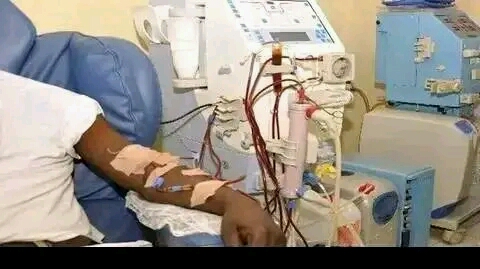
Kafkaesque comes from the name of the German author Franz Kafka. The word perfectly describes the cases of most kidney failure patients. The disease starts with back pain, then people go for diagnosis, and dialysis follows (Thank God it is free for Yobe indigenes). Swelling in arms and legs, shortness of breath, and hiccups follow and then comes the expected: slow and painful death. These are some of the things patients go through. 

But what is kidney failure? Kidney failure is a condition in which the kidneys lose the ability to remove waste and balance fluids. In other words, the kidneys have failed. 

Ordinarily, kidney failure should not be a death sentence. Dr. Ibrahim Sulaiman told us that a person can survive on 25% of his total nephrons, the kidney cells. That is, you only need half of one kidney to survive. But for most people, being diagnosed with one kidney failure is like being issued an indirect death certificate.

Most patients diagnosed with kidney disease put everything they can into the fight against the disease, but they stand no chance in most cases. And as the word says, ‘You don’t give up, you don’t lie down and die. You struggle against this with your equipment and whatever you have. But of course, you don’t stand a chance.’ 

Gashua has the highest number of cases of kidney failure in the whole of Yobe State. You could go to the dialysis unit in Yobe State Teaching Hospital and look at a kidney failure patient and ask him, ‘Are you from Gashua?’ The most probable answer? ‘Yes!’ 

As we speak today, hundreds of families are at the mercy of this disease. May we, the healthy ones, be protected from it. We also pray that this crisis comes to an end soon. 

My attempts for writing this short piece are that we may get someone (individuals, NGOs, governments, etc.) who will come to our aid and relieve the pain in my heart. As Neil Gaiman said, ‘Pain shared, my brother, is pain not doubled but halved.’

Hamza Muhammad Tasiu wrote via hamzamtasiu@gmail.com.

Kidney Disease: To me, it is a  killer disease, too

By Alhaji Musa Muhammad 

The more you have been infected with kidney failure, the more you will come to the mind of the people: “You are finished”. Others take you as a corpse just walking before its last breath.

Hadejia, the area with a number of such cases, is still facing the problem without knowing its root causes. However, there was a time when one of the presenters (name withheld), during a campaign awareness, warned vegetable/fish farmers to avoid using pesticides and herbicides on direct fruits, for example, eggplants.

He said there was a time when he saw a  farmer spraying his eggplant farm and asked him why he was pouring it. The farmer replied yes, I’m spreading it for every fruit to rip simultaneously. The Dr said are you not afraid the chemical will affect the consumers? The farmer replied, ‘I’m not the one who consumed it”.

Efforts have been made by some politicians, especially former senator Ibrahim Hassan, to take urgent action to tackle the spread of the disease. Unfortunately, there is no remarkable feedback about the different gatherings held on the kidney problem in the area.

Community-based organisations have done a lot in organising sensitisation meetings in collaboration with health practitioners, but the community members are still witnessing the increase in the problem.

One thing to be done regarding the kidney problem is the need for the government to take urgent action and mobilise the environment on the causes of the disease.

I must commend the effort and struggle of Dr Isah Billami during his tenure as chairman of Hadejia Ina Mafita to organise a town meeting to learn the solution to the problem. However, there was no positive feedback on the issue.

Our politicians range from the council chairman, members representing Hadejia at the state House of Assembly, senators representing Jigawa Northeast and the Governor at large; your response is highly needed now.

Allah ya kawo mana dauki , Ameem .

Alhaji Musa Muhammad wrote from Hadejia, Jigawa State.

7 simple things you can do to protect your kidneys

By Dr. Khadijah Tijani

The kidneys are two bean-shaped organs located in the abdomen. Their main function is to detoxify the body by removing waste products and excess water in form of urine. They also perform other vital functions such as regulation of blood pressure and secretion of hormones like erythropoietin (responsible for red blood cells production) and vitamin D (maintaining bone health, etc).

Any insult to the kidneys could result in irreversible damage, and kidney failure is not only expensive to treat but extremely distressing to the victims and their caregivers. It is quite worrisome that almost every day I scroll down my timeline on Facebook, there is always one person putting up a fundraiser for themselves or someone else suffering from kidney failure.

There are some causes of kidney injury that can neither be predicted nor prevented (such as acute haemorrhage, burns, congenital disorders, etc). But there are also some preventable causes that we should be aware of and guard against. When it comes to kidney health, prevention is definitely better than cure. Here are 7 simple tips on how to maintain healthy kidneys…

1. DRINK PLENTY OF WATER
Apart from regulating the amount of water in the body, the kidney itself depends on adequate water (and blood) supply. Dehydration puts a strain on the kidneys and if this reaches a certain threshold, the kidneys begin to shut down. Dehydration also predisposes you to develop kidney stones, which can damage your kidneys by obstructing the pathway of urine flow. Aim for 3 litres of water daily. You may need more or less depending on the weather and your activity level.

2. DO REGULAR HEALTH CHECKS
There are certain medical conditions that “kill” the kidneys slowly. These diseases are silent killers in the sense that they are often not manifested by clear signs and symptoms until they have damaged the kidneys and other vital organs to a considerable extent. Chief among these diseases are HYPERTENSION and DIABETES. Checking your blood pressure and sugar levels periodically will ensure early detection and quick intervention.

3. EAT RIGHT
The importance of a healthy diet cannot be overemphasized. Avoid junk snacks and sugary drinks. Take a balanced proportion of every class of food but pay attention to more fruits and vegetables. Clean and healthy foods protect your kidneys from excess toxic wastes, therefore the more healthy food you ingest, the better.

4. STOP DRUG ABUSE
The kidneys are actively involved in the metabolism of many drugs. When you take medications (either orthodox or herbal concoctions) indiscriminately, you are exposing your kidneys to more workload than they can handle. Also, some drugs are inherently toxic to the kidneys, so if you have a history of kidney disease, your doctor will help you adjust the dose or change to a less toxic alternative.

5. STOP SMOKING AND ALCOHOL
Cigarette smoking and alcohol ingestion have direct effects on the kidneys because these products increase the amount of toxins that your kidneys need to deal with. Hence, it is clear that avoiding them will be beneficial to the kidneys and the entire body.

6. DON’T TAKE ANY DISEASE FOR GRANTED
Whenever you fall ill, contact your doctor and get treated as soon as possible. Simple infections can become complicated if ignored or poorly managed. For example, malaria is a known cause of kidney failure. When infected red blood cells are broken down in large numbers, they produce a high concentration of toxic substances which can damage the kidneys if proper treatment is not sought.

7. MANAGE CHRONIC HEALTH ISSUES
Some chronic illnesses pose a great threat to the kidneys. Examples are diabetes, hypertension, sickle cell disease, cancer, etc. Because of the vital role of the kidneys in maintaining a healthy body, they are easily affected by any deviation from the norm. Hence, individuals who have any of these diseases should take extra care by managing their conditions well and doing regular “kidney function tests” to ascertain how healthy the kidney is and detect early signs of kidney failure.

To sum up, early signs of kidney disease may not be easily recognized by people, so, it is extremely important to take precautions against the preventable causes and seek prompt treatment for any medical condition that may result in irreversible kidney damage.

Dr. Khadijah Tijani
askodoctorkt@gmai.com
Ibadan, Nigeria.