Kidnapping

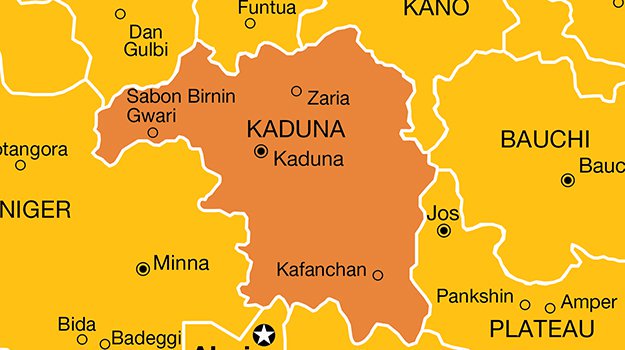
Abductors insist on N100m of ransom for Kaduna doctor, family

 By Sabiu Abdullahi 

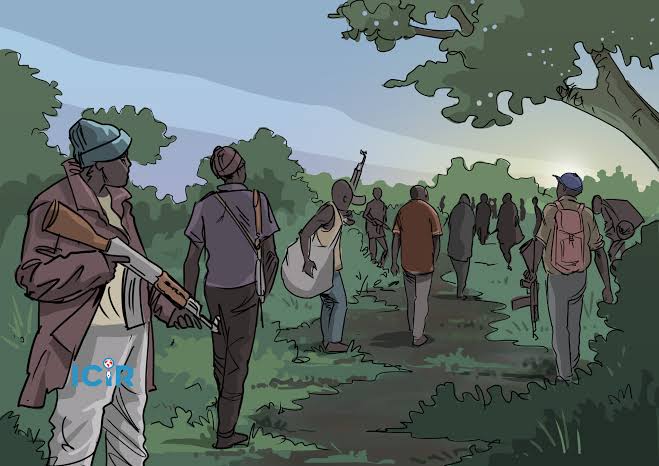
The abduction of Kaduna-based ophthalmologist Ganiya Olawale-Popoola, her husband Nurudeen Popola, and their 16-year-old guest AbdulMugniy Folaranmi has taken a grim twist as reports indicate the abductors are unyielding in their demand for a N100 million ransom, one month after the initial kidnapping. 

Despite the family’s earnest attempts to negotiate a reduction in the ransom, the kidnappers have held their ground, insisting on the hefty sum.

The kidnappers, who allegedly broke into the ophthalmologist’s residence on December 27, 2023, at 1 a.m., took the doctor, her husband, and their teenage guest. 

Communication from the kidnappers only commenced on the fourth day, with a demand for N100 million for the release of the victims.

The family source revealed that the kidnappers threatened to harm the couple if the ransom wasn’t paid by January 18, reasserting their demand on Friday. 

Despite the family’s plea to consider a reduced amount, such as the N20 million they were able to raise, the kidnappers remained unyielding.

The family is now grappling with the situation, expressing confusion about the way forward. Efforts by the family to seek assistance from the Air Force and police authorities yielded assurances of ongoing endeavours to secure the victims’ release without harm.

However, the family, facing exhaustion, has called on the Nigerian government to intervene, as they find it impossible to meet the demanded ransom. 

In response to inquiries, Kaduna State Police Public Relations Officer Mansir Hassan affirmed that the police are actively working to secure the release of the abductees without casualties.

He underscored the commitment to rescuing victims from abductors and emphasised efforts to prevent harm during the rescue operation.

Police rescue ex-INEC staff member from abductors, arrest three suspects

By Sabiu Abdullahi 

The Cross River State Police Command rescued a former staff member of the Independent National Electoral Commission (INEC) from her abductors at her residence in Calabar on Saturday.

The daring rescue operation was confirmed by Irene Ugbo, the spokesperson for the command, who praised the gallantry of the officers involved. 

Ugbo disclosed that the rescue operation led to the arrest of three suspects, who were apprehended by the command’s Anti Cultism and Kidnapping Squad (ACKS), led by SP Chukwuma Ogini.

The team sprang into action following a distress call reporting the abduction at Mathias Oje Avenue in Calabar Municipality.

The operation was further assisted by the courageous efforts of the Njangachang youths in the locality, who played a pivotal role in apprehending the suspects. 

During the operation, the police recovered two vehicles believed to have been used in the abduction. The suspects were found in possession of arms, ammunition, and charms, indicating their criminal intent. 

Irene Ugbo commended the bravery of the officers and the local youths, emphasizing the commitment of Commissioner Gyogon Grimah to eradicate crimes and criminal activities in the state.

She reiterated the commissioner’s resolve to make Cross River State an inhospitable environment for kidnappers and criminals. “We want to make it clear that no kidnapper or criminal will find the state a safe haven for their nefarious activities. This is the directive of the Commissioner, as mandated by the Inspector General of Police,” stated Ugbo, as quoted by the News Agency of Nigeria (NAN). 

The successful rescue operation stands as a testament to the dedication and efficiency of the Cross River State Police Command in ensuring the safety and security of its residents.

The resurgence of kidnapping in northern Nigeria

By Mukhtar Garba Kobi

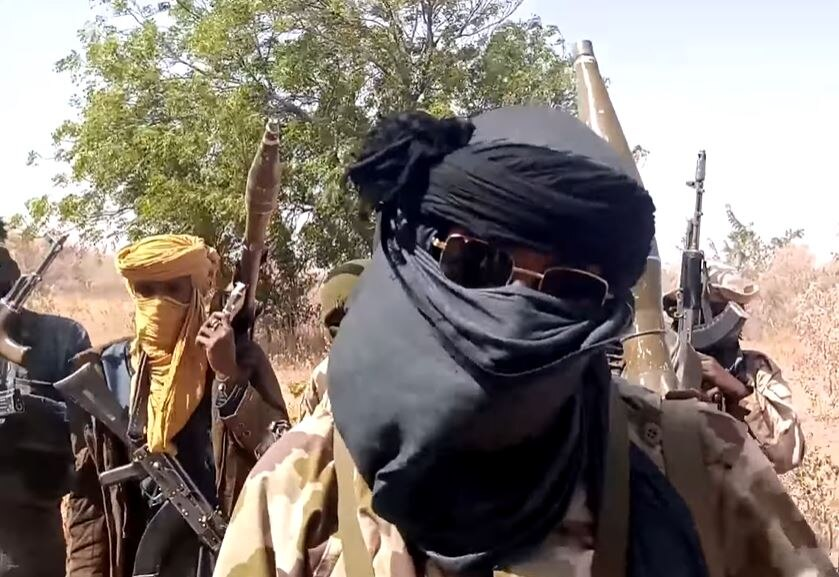
The barbaric act of abducting people by some bad elements in the Northern part of Nigeria is one of the major threats to the endearing peace and economic growth; bandits operate on roads, communities and recently in institutions of higher learning. News of an unspecified number of farmers in Borno and students of Federal University Dutsen-Ma has gone viral lately; bereaved families of the victims are still in shock while many resolved to withdraw their wards from schools; this is bad looking at the importance of education to mankind and development of all. People in those areas are doubting the promises made by leaders on protecting lives and properties.

Nobody on this mother earth is above the law. In some developed countries, even incumbent leaders are forced to face the jury and account for their mischievous deeds in office. Still, unfortunately, in Africa, the existence of immunity attached to leaders gives them the audacity to do as they wish.

One of the bandits’ kingpins in the Northern part of Nigeria, Dogo Gide, released an audio message which a well-known media man, Bello Mu’azu, shared. Still, the message contained has added fuel to the blazing fire of insecurity. The dreaded Dogo Gide stated that he preferred to die as a bandit and had no interest in reconciling with the government, no matter the money given to him.

Since most of the bandits’ hideouts are known by our gallant security forces, they (bandits) could be cleared in a few days, but such only end in discussions. Public figures have made excellent attempts to mediate between bandits and governments. Unfortunately, their efforts were fruitless due to the negligence of the government. There is no way fire could be put out with the same fire, but combining the two (attacks and dialogue) would greatly help. Moreover, engaging in dialogue would pave the way for peace in most kidnapping-ravaged States. Culturing crops and businesses would regain their lost glories while students would learn without fear.

Furthermore, research conducted by SBM, which is an investigative firm, revealed that between June of 2022 and July of 2023, three thousand six hundred and twenty (3,620) people were taken hostage in five hundred and eighty-two (582) kidnap-related incidents in Nigeria. It was further uncovered that “North-West and North-Central regions exhibit higher in-kind ransom demands. This aligns with Nigeria’s poverty and its correlation with areas where food is commonly demanded. Additionally, these regions have seen a surge in motorcycle demands due to economic opportunities and possibly because of their potential use in terror activities”.

Some of the factors that fuel kidnappings include high levels of poverty and hunger; waking up empty-pocketed and nothing for family members to consume have forced many into the act, especially unemployed Fulani herders. The second factor is greed and uncontrolled love to be rich, which also persuaded many into kidnappings; shallow-minded persons often view abduction as the easiest way to get enough money to meet their daily needs. Kidnappers play vital roles in influencing their friends; they give uninterested friends convincing points while those low faculty of thinking accept the offer without a second thought on the implications of such ventures. 

The mass abduction of people can be stopped if the following measures are adopted: schemes for employing youths or training them on skills have left behind several villagers, and most of the arrested kidnappers were dwellers; there is a need for the villagers to be included in whatever government came-up with. Since kidnappers have leaders, there is a need to have a virtual or physical meeting with them to know why they are kidnapping. Governments should ensure that their demands are met. Granting amnesty to repentant kidnappers would be a welcome idea, but they should not be reintegrated back into societies. They should be taken to rehabilitation homes and trained on different skills to be useful community members. 

Mukhtar writes from Bauchi and can be reached via garbakobim@gmail.com.

Prioritizing security in Zamfara State

By Dr Musab Isah Mafara

The security situation in Zamfara State demands immediate and resolute action from the state and the federal government of Nigeria. Security, undoubtedly, should be the topmost priority of any government, as it lays the foundation for meaningful development and progress. Regrettably, recent events and the ongoing spate of attacks across the state indicate that more substantial efforts are required to ensure the safety and well-being of the people.

The recent official recognition and recruitment of ‘Yan-Banga by the state government is a step in the right direction. This move acknowledges the need for additional security personnel to combat the rising wave of criminal activities. Furthermore, the swift response and the rescue of some of the kidnapped students of FUG two days ago is a testament to how the reaction time of the security apparatus in the state has improved. However, one may argue that a similar response has not been seen where the helpless victims were not students. And since we are yet to know the actual number of students kidnapped, it is not far-fetched to assume that some students may still be in captivity in addition to hundreds of Nigerians in the kidnappers’ dens in Zamfara state and beyond.

While we acknowledge that the government may be undertaking efforts behind the scenes, the prevailing situation demands a more visible and concerted response. The spate of attacks that continue to plague the state is a clear indication that there are still gaps in the security apparatus. It is imperative that the government takes swift and decisive action to bridge these gaps.

In his book, Wujubul Hijrah, Shehu Usmanu Danfodiyo discussed the need for a leader to prioritize security even if it means spending all the state resources to ensure the safety of his people. Shehu wrote:
وسيرة ائمة العدل في الفيء والخمس ان يبدا بالسد المخاوف والثغور واستعداد الات الحرب واعطاء المقاتلة فان فضل شيء فللقضاة والعمال وبنيان المساجد والقناطر ثم يفرق على الفقراء فان فضل شيء فالامام مخير بين تفرقته على الاغنياء وخبسه لنوائب الاسلام

(Words in square brackets [ ] are mine to further explain the points made)
“The history of just leaders as regards to [the wealth generated by the state through] fai’ and khumsi [two of the many means of generating income to the treasury of the state] is that the leader should start with fortifying the state [walling the cities, building garrisons, etc], procurement of armament, and paying the salaries/allowances of soldiers. If something remains [in the treasury after that] then the leader should pay the judges and civil servants, and build mosques and bridges [and by extension roads]. And then he distributes the wealth to the poor [this could mean direct cash transfer but also providing social amenities such as schools and hospitals]. If there is still money [in the treasury after all these expenses] then the leader is given the choice of distributing it to the rich or keeping it for a rainy day.”

The quoted text clearly shows the need to give absolute priority to security above all else in the running of a state. Financial investment in the security sector should be a priority, as it is an indispensable component of effective security measures. There is also a need for our security strategy to move from being reactive to attacks to being proactive and preventing attacks. So many villages have been attacked, so many students have been kidnapped that the next attack is a question of when not if. The security measures must also be sustained for the foreseeable future. What tends to happen is that every time a school is attacked, the security agencies become active in some flash points for some days only to let their guards down after a while, until we are taken by ‘surprise’ again by the bandits.

The time for decisive action is now. The people of Zamfara State deserve to live in an environment where their safety and security are guaranteed. The government must intensify efforts, allocate adequate resources, and collaborate with relevant stakeholders, especially the two ministers of defence, to fortify security across the state. Only by doing so can Zamfara State flourish, with meaningful development and progress becoming attainable goals.

Policing: Safeguarding communities from internal threats

By Ammar Yakubu Sani

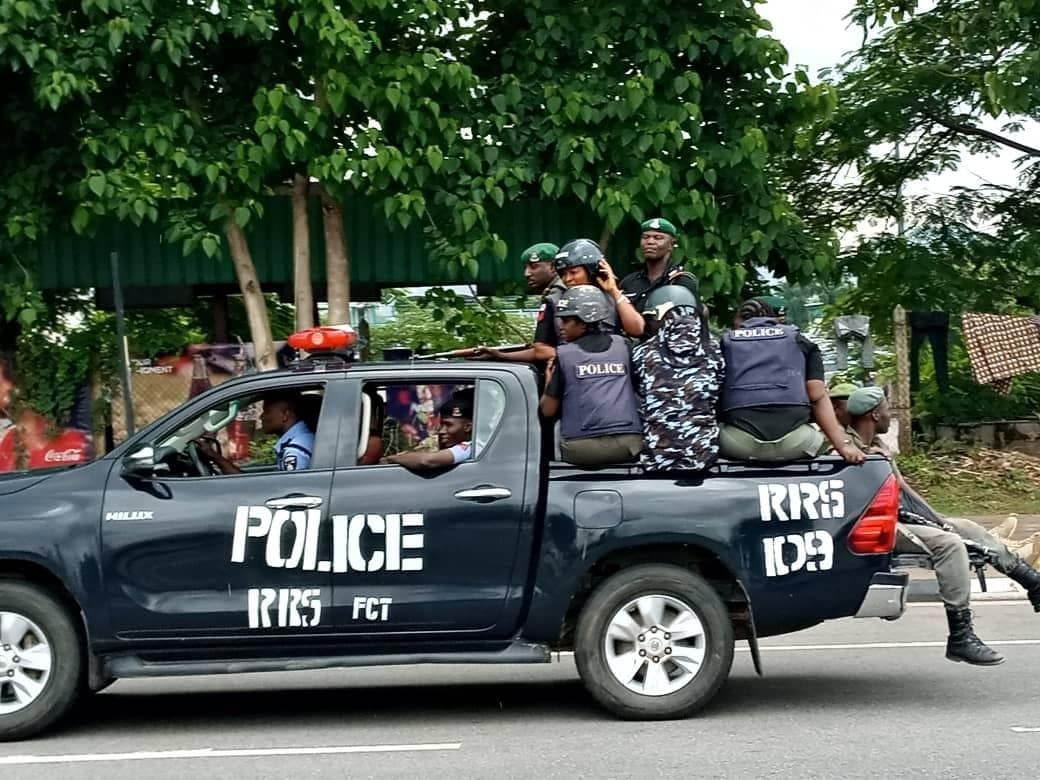
The role of police officers in maintaining law and order in a society cannot be overstated. They serve as essential guardians, working selflessly to protect citizens and ensure their safety. Recently, the police officers in Katagum Zone and its environs have displayed exemplary dedication and resourcefulness in tackling various internal security challenges, with commendable successes for their efforts.

One of the significant security concerns in the area has been the menace of motorcycle snatchers. These criminals, often operating with impunity, create fear and unrest within communities. However, the diligent work of the police has resulted in a significant reduction in motorcycle snatching incidents. Through strategic patrols, investigations, and targeted interventions, police officers have demonstrated their unwavering commitment to eradicating this criminal activity, giving residents a renewed sense of safety and security.

House robbery and murder strike the hearts of individuals and families. The police have been instrumental in curbing such incidents by implementing proactive measures and enhancing community engagement. Their rigorous investigative work and swift response to distress calls have brought perpetrators to justice and deterred potential criminals. The tireless dedication of police officers has undoubtedly contributed to a decrease in the occurrence of such alarming crimes.

Under the leadership of a newly posted Commissioner of Police, Auwal Musa Muhammad, a remarkable operation was undertaken against a notorious gang of kidnappers in the Ningi Local Government Area. This operation was a resounding success, resulting in apprehending the criminals and dismantling their hideouts. The Commissioner’s astute guidance, accompanied by the unwavering commitment and bravery of the police officers, demonstrated the effectiveness of well-coordinated efforts in combating heinous crimes and preserving the peace.

Equally notable is the recent elimination of kidnappers around Jama’are and Itas Gadau Local Government Areas of Katagum Zone. Through meticulous intelligence gathering, strategic planning, and relentless pursuit, the police managed to root out this criminal network. Their determined efforts have provided a glimmer of hope and relief to the residents of the area, reinforcing their faith in law enforcement and the potential for a safer environment.

These successes affirm the assertions made by Dr. Babangida Ruma regarding the restoration and maintenance of internal security under the authority of the police force. The achievements of the police officers in Bauchi State and its environs demonstrate their capability to tackle security challenges when provided with the necessary support and empowerment. The dedication, discipline, and professionalism displayed by these officers serve as an inspiration and testament to law enforcement’s critical role in safeguarding communities.

Efforts must be made to sustain this momentum by further empowering the police force. Adequate resources, modern technology, and regular training must be provided to effectively enhance their capacity to combat evolving threats. Moreover, fostering a strong partnership between the police and local communities is crucial to creating an environment where citizens actively collaborate with law enforcement agencies, resulting in more timely and accurate information sharing.

Citizens, community leaders, and policymakers need to recognise the remarkable achievements of the police force and support their endeavours to maintain law and order. By doing so, we can work collectively towards a society that thrives on security, justice, and harmony. The progress made by the police officers in Bauchi and the wider area serves as a beacon of hope, inspiring us to invest in strengthening our internal security mechanisms and forging an even safer nation.

Ammar Yakubu Sani wrote from Wambai Salihu Street, Dabar Makaho Azare, Bauchi State. He can be contacted via ammaryakubusani@gmail.com

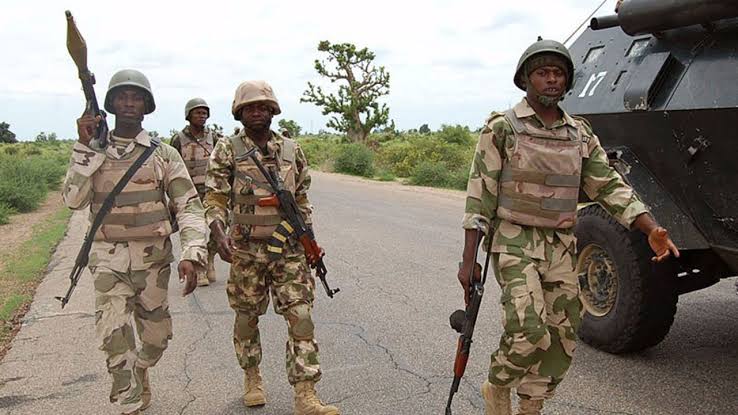
Nigerian military rescue nine kidnap victims in Zamfara

By Muhammadu Sabiu

Operation Hadarin Daji troops on Friday freed nine abducted victims in Zamfara State’s Bukuyyum Local Government Area.

It was learned that the military responded to a distress call on armed bandits in Mailere village in the Bukuyyum region while conducting normal patrols and protecting farmers in their farmlands.

According to a senior military source who asked to remain anonymous and spoke to journalists, the forces deployed quickly to the location of the event and made contact with the armed bandits at the community’s gate.

However, the troops’ superior firepower forced the armed bandits to retreat and leave the nine kidnapped people when they engaged them in combat.

The Daily Reality understands that the freed victims were afterwards reunited with their families.

Zamfara State has been on the list of Nigerian provinces terrorised by the activities of armed bandits who attack, abduct, and abduct travellers and residents of communities in the state.

Miyetti Allah worried over missing National VP, Lamido

By Uzair Adam Imam

Engr. Munnir Atiku Lamido, the National Vice President of the Miyetti Allah Cattle Breeders Association of Nigeria (MACBAN), is declared missing by the association.

The National PRO, MACBAN, Alh. Muhammad Nura, disclosed this in a statement he made available to journalists on Friday.

According to the statement, Lamido left his house in Katsina State on Friday with the intention of traveling to Kaduna and has been missing since then.

Lamido’s car was discovered on Thursday between Jos and Kaduna road near Mararraban Jos town, parked with all his telephones inside but all efforts to trace him proved abortive so far.

The statement said, “We wish to bring to the notice of the general public and the security agencies that Engr. Munnir Atiku Lamido is missing. Engr. Munnir is the National Vice President of MACBAN.”

“He left his house in Katsina State on Friday 23th June, 2023 with the intention of traveling to kaduna. He has been missing since then.

“Anyone with useful information on Lamido’s whereabouts should kindly contact the nearest Police Station or reach out to its offices across the nation,” the statement read.

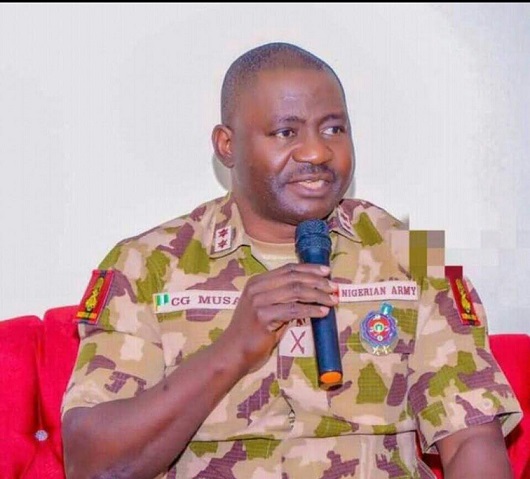
The task before the new CDS, General Christopher Musa

By Prof. Abdussamad Umar Jibia

Southern Kaduna (popularly known as Southern Zaria because of its history of being part of the Zaria emirate) is a place I feel connected to whenever it is mentioned. At the age of 12, when I went to a boarding secondary school, a large percentage of those who became my classmates were from that area. Although GSS Musawa was located in the heart of what is now Katsina state, one can say without any fear of contradiction that nearly half of its students were from Southern Kaduna. 

With this background, I can accurately claim to have grown up with people from Southern Kaduna, many of whom remain my friends. Religious and communal crises that set us against one another are unfortunate. With those many crises, it would be a lie to claim that there is no mutual suspicion between the people of that area, who are mainly Christians and the Northern part of Kaduna state made of mostly Muslims and the greater old Kaduna/North-central state to which I belong. 

Of course, like any other people, there are good and bad people in Southern Kaduna. To verify to which category a particular person belongs, you find out. Since the announcement of Major-General Christopher Musa as the new Chief of Defence Staff (CDS), I set out to investigate the kind of person he is. After contacting my sources, I was left thankful to President Bola Tinubu for choosing such a detribalised professional soldier to head our military, especially when professionalism is required to deal with the many security challenges across the country.

The choice of Christopher Musa is timely not just because he is a thoroughbred General but also because he is a victim of the banditry scourge that has bedevilled the Northwestern part of Nigeria. To be a Nigerian, one must first belong to one of the 774 local governments in one of the 36 states or FCT. Like the case with many other places in the North West, the state and local government area of General Musa have been attacked.

But, contrary to what the Southern press would want us to believe, although Southern Kaduna has its share of banditry, it is not the worst hit. Killing, kidnapping and other heinous crimes committed by bandits are daily occurrences in Zamfara, parts of Sokoto, Katsina, Kebbi and Niger, in addition to both Northern and Southern Kaduna state.

To succeed in his task, General Musa has to dispel the incorrect notion that bandits are coming from outside Nigeria. I believe the security reports are at his disposal, but there are things that we, the victims, expect from him that his predecessors failed to achieve.

Most of the operations hitherto carried out involve bandits at the bottom of the bandits’ hierarchy. The most dreadful bandits’ leaders are lurking safely in the North West. Only recently, one of them released the last batch of students of FGC Yauri whom he kidnapped and kept on Nigerian soil for more than two years, during which he extorted their parents through the nose. He is still living unscathed despite the billions of Naira the Government spends on security. 

He is not alone. In a widely condemned show of irresponsibility, another criminal who killed more than 100 villagers in Katsina state and was declared wanted by the Nigerian Police was given a traditional title in Zamfara state last year. He lives peacefully while the orphans and widows his crime generated are left on their own.

Another criminal who burned a passenger bus with 30 people in it days after opening fire on a village market that claimed 60 lives is also enjoying himself in Zamfara state. He is said to be moving around like a king in his locality.

Yet, another criminal who publicly claimed to have killed many Nigerian and Nigerian soldiers and abducted 40 Nigerian children days after he killed 53 farmers in Zamfara state is living there like a king. He also moves around unscathed. 

A bandits’ kingpin who ambushed Nigerian soldiers and killed many of them in 2020 is now enslaving villagers in Katsina state. Villagers under his jurisdiction work on his farm whenever he invites them to do so.

These are some of the most well-known bandits’ Generals with bases in the North West. The list is not exhaustive. That they were accessed by international and local media to which they gave video interviews leaves our security forces with no room to claim that the criminals are at large.

Of course, arresting/killing the above-mentioned bandits’ ring leaders and others in their category is not as easy as mentioned. In addition to sophisticated weapons and trained fighters, they have powerful sympathisers. We cannot rule out mischievous claims of genocide when the military goes all out to deal with them. Ordinary people like me expect that General Musa and Mr President should ignore any noise resulting from securing the North West and  North Central geopolitical regions of Nigeria.  May Allah help them, amin.

The question begging for an answer is whether General Musa and his team are willing to take up the challenge and uproot banditry by attacking its leadership, or they will just scratch the surface, make their money and go into partisan politics like we saw some of their colleagues did.

Prof Abdussamad Umar Jibia wrote from Kano, Nigeria. He can be reached via aujibia@gmail.com.

40 worshippers reportedly abducted in Kaduna

By Muhammadu Sabiu 
 
At least 40 worshipers were on Sunday reportedly abducted by bandits while on congression at Bege Baptist Church, Madala, Chikun Local Government Area of Kaduna State.
 
The incident was reported on Monday by Rev. John Hayab, leader of the Christian Association of Nigeria’s Kaduna State branch.
 
According to Hayab, the incident took place at 9:30 a.m., during the worship time.
 
He was quoted as saying, “The worshippers were in the Sunday service in the Church when around 9:30 am they heard gunshots very close to the Church. The gunmen attacked the Church and went away with 40 worshippers.”
 
However, he added that 15 of the kidnapped worshippers managed to escape, leaving 25 others in the kidnappers’ hideout.

Open Letter to President-Elect Bola Tinubu: A Golden Ticket to Presidency Success

By Group Captain Sadeeq Garba Shehu (rtd.)

When new executives with a change mandate take over an organisation, they typically invest time in reshaping its strategy and determining the kind of culture needed to succeed. Those choices guide other decisions, including who their senior managers will be and how the leaders will allocate their time. Sadly many neglect the key factor that will help determine their effectiveness: the administrative system that guides day-to-day operations in their offices. This system ensures that leaders make the most of their limited time, that information arrives at the right point in their decision-making process, and that follow-up happens without their having to check. Many new executives default to the system they’ve inherited. Often there’s a better way to handle the information flow necessary for a President to succeed—and very often, a chief of staff (CoS) can play an essential role.

The CoS to the President is a political appointee of the president who does not require Senate confirmation and who serves at the pleasure of the President. While not a legally required role, Since President Obasanjo, all Nigerian civilian presidents have appointed a chief of staff. President Obasanjo had Gen Abdullahi Mohammed, while President Umaru Musa Yar’Adua had Gbolade Osinowo. The position was temporarily absent between 18 September 2008 – 17 May 2010 when President Yaradua sacked Osinowo and never appointed a replacement. President Goodluck Jonathan had Mike Oghiadomhe and Jones Arogbofa. President Muhammadu Buhari had the late Abba Kyari, and after his demise, the current CoS Prof Ibrahim Gambari. The position of CoS to the President is widely recognised as one of great power and influence, owing to daily contact with the President and control of the Office of the President. Almost all, if not all, governors in Nigeria now have a Chief of Staff, and many ministers have them.    

The CoS role originated in the military and dated back centuries. Cicero, the Roman politician and orator, used a slave named Tiro, who, according to Cicero’s biographer Zach Bankston, served as a secretary, a financial overseer, and a political strategist. Andrew Roberts’s Napoleon: A Life describes the vital role that Louis-Alexandre Berthier played in assisting Napoleon at the height of his powers. The historians Ron Chernow and Joseph Ellis have described the CoS–like a role that Alexander Hamilton played for George Washington. These people aren’t to be confused with the personal secretaries or aides-de-camp that each leader also had. Rather, they were close advisers who handled the most-delicate strategic matters and became trusted confidants. While the Chief of staff is a role that started in the military, and now, we can see it in most industries and sectors.

WHAT DOES A CHIEF OF STAFF FOR THE PRESIDENT DO? 

While there is no one-size-fits-all when it comes to describing the duties of a CoS in Nigeria, and each incumbent had wielded / not wielded power according to his personality and the relationship he has with his principal, the President, or the style of the President, their primary duties are making time, information, and decision-making for Mr President more effective. In other words, a CoS to Presidents helps Presidents become the best version of themselves.

The role of the chief of staff is not about dealing with administrative tasks only as he is not a PA. A CoS does not manage the President’s day-to-day schedule. The chief of staff is a leader. He/she makes high-level decisions, strategizes processes, and sets policies by devising meaningful plans and generating useful ideas, anticipating problems, and coming up with new solutions.

Paraphrasing Patrick Aylward, who breaks down the job of any CoS into five categories, I would say the job of the CoS to the President can be summed up as:

1. An air traffic controller for the President and his cabinet controlling the flow of people into the President’s office. 

2. An integrator connecting MDAs’ work streams that would otherwise remain siloed, breeding inter-ministerial/inter-agency squabbles, duplication, overlap and fragmentation.

3. A communicator linking the Presidency team and the broader FG apparatus. 

4. An honest broker and truth-teller when the President needs a wide-ranging view without turf/mandate considerations.

5. A confidant without an organisational or personal agenda-His agenda being only that of Mr President.

An effective and successful CoS to the President should be able to translate the above five categories can be translated into tasks and duties.

REQUIREMENTS OF AN EFFECTIVE AND SUCCESSFUL CoS: SKILLS AND PERSONAL QUALITIES 

The main responsibility of CoS is to help the President stay organised, which will allow him to give time to more important A items. This requires a good understanding of the business of government, effective communication skills, and the ability to manage projects and relationships. It also requires the skill to anticipate and avoid problems, add value to the President’s vision, and be intelligent on the organisational and political levels. The CoS must be excellent in the management of important projects. The ability to simplify complicated tasks, strategic thinking and problem analysis is one of their strongest suits, and they should know how to see things through, from idea to execution, even when the President himself forgets.

The best skill one would have for any position is being effective in getting the right things done. In his book The Effective Executive, Peter Drucker argues that effectiveness derives from a set of five practices anyone can learn: managing time; focusing on results (what to contribute to an organisation); building on strengths; concentrating on top priorities; and making effective decisions. Experts are agreed that the above five skills or practices are extremely useful when it comes to the chief of staff position.

Managing time: When it comes to time, presidents find it challenging to have enough of their time at their disposal and available for important matters, which do make a difference. They can get easily distracted, and leaving little time to focus on strategy is usually the outcome. A good chief of staff helps presidents record, manage, and consolidate time and reallocating time through doing, delegating, and deferring non-urgent tasks and cuts unproductive demands on time. CoS helps diagnose time wastage (e.g., excess of meetings) and communicates where the President’s time should be spent to key stakeholders.

Focusing on results: Most executives focus on efforts rather than results.. An excellent CoS redirects the President’s attention towards contribution by focusing on direct results, building values, and developing people.

Building on strengths: Presidents might not be fully aware of all the available strength points (the strengths of associates, the strengths of individual ministers and cabinet members, and even the President’s own strengths). Excellent CoS helps the President conduct strength assessments to fully comprehend the team’s strengths and how to manage them best. CoS can help redesign jobs to attract and scout the right people and talents, recognise those with weak performances, especially managers, and initiate action plans.  

Concentrating on top priorities: The need to prioritise and focus on major opportunities is the very core of a President’s job. This is what delivers results. Successful Presidents need to eliminate anything that is not worth doing and concentrate on the tasks that, if done perfectly, will make a difference. A successful CoS prepares and facilitates strategic planning processes and encourages the President to drop processes before they begin to decline. CoS leads or co-leads strategic initiatives and aims for what makes a difference rather than what is easy and safe to do.

Reaching effective decisions: With the chief of staff handling a considerable number of tasks, the President will have more time to think through big decisions, with the CoS serving as a reliable sounding board by testing opinions against facts. Without the help of a quality CoS, the President may make rash decisions, will not study the consequences of a decision before making one, and may be indecisive most of the time. An effective CoS gathers different teams’ perspectives to help Mr President understand the implications and helps direct the President to make decisions only when there is a disagreement, test opinions against facts, and compare the effort done and the risk of not taking action versus taking action.

Managing Meetings: Holding meetings is an integral part of the chief of staff’s responsibilities. Meetings represent a great demand on the President’s time, and the role of the chief of staff is to help the President never allow meetings to become the main demand on his time. To effectively manage meetings is a crucial part of the role of a chief of staff, as this chief of staff must not only manage the meeting but the people, agenda, objective, goal, strategies, and measures. To do this, the CoS must ensure all relevant MDA representatives are in the room, at the table, and participating while ensuring that meetings are designed to move the business forward with timed actions against goals. So, effectively managing team meetings is an important job requirement for the role. 

The most sophisticated chiefs of staff also assist the President in thinking through and setting policies—and making sure they are implemented. They anticipate problems and are especially sensitive to issues that require diplomacy. They function as extra eyes and ears by pointing out political potholes their bosses may not recognise (especially if the bosses are new to the company). Importantly, a CoS acts with the implicit imprimatur of the President—something that calls for humility, maturity, and situational sensitivity.

Regardless of specific responsibilities, a CoS can help a leader achieve sharp gains in productivity and impact. The CEO to the President helps the leader become better organised, with more time for A items; Manages important projects well; Helps President and his Cabinet navigate through uncertainty and risk. Required capabilities include: Can do project management, Can manage relationships, Communicating well, Organising the President’s office, Can simplify complexity, Does strategic thinking and problem analysis, Can manage the process of idea to execution, Can anticipate and avert problems, Can grasp and adding value to the president’s vision, Has organisational and political intelligence, ability to research on a full range of topics. A good CoS knows which relationships are most important to the leader’s agenda. Being organised and disciplined, showing attention to detail, and following up doggedly to ensure the right results. Ability to see what pressures the leader faces in pushing for changes and to find ways to lessen them. Finally, communication skills are crucial because the CoS must help refine the leader’s message and ensure that it is understood by the right audiences. 

WHAT KIND OF CoS SHOULD THE PRESIDENT-ELECT LOOK FOR? 

So far in the CoS role , we have seen Gen Abdullahi Mohammed (OBJ), Gbolade Osinowo (Yaradua) Mike Oghiadomhe and Jones Arogbofa (GEJ) , Abba Kyari and Prof Ibrahim Gambari (PMB) , each with his different style , the powers he wielded , and based on the style of his Principal . With respect, the most enduring name, for good or bad (depending on who you ask) is that of late Abba Kyari. Many agree there were fewer inter-ministerial squabbles and less confusion in the Presidency when Kyari was around. He left a legacy and a reputation of a rigid gate-keeper for PMB, qualities that several analysts believe are required of a CoS to the President. During the last days of his presidency, Barack Obama observed: ‘One of the things I’ve learned is that the big breakthroughs are typically the result of a lot of grunt work—just a whole lot of blocking and tackling.’ Grunt work is what chiefs of staff do.” Richard Nixon’s first chief of staff, H. R. Haldeman, garnered a reputation in Washington for the iron hand he wielded in the position—famously referring to himself as “the president’s son-of-a-bitch”, he was a rigid gatekeeper who would frequently meet with administration officials in place of the president, and then report himself to Nixon on the officials’ talking points.

Everyone requires help to achieve his or her highest potential and to sustain the effort it takes to lead a complex organisation. The right chief of staff can be an important source of assistance to leaders who are pushing their organisations and themselves to ever better performance. President-elect Bola Ahmed Tinubu, in looking for a CoS, should look for all the qualities enumerated here but in addition, look for that person that also has the capacity and personality to be a rigid gatekeeper and, like Nixon’s CoS Haldeman and PMB’s CoS late Abba Kyari be “the president’s son-of-a-bitch”. But to be an effective CoS, the President must also empower the CoS. Both Nixon’s Haldeman and PMB’s Kyari have empowered CoS.

Group Captain Sadeeq Garba Shehu (rtd.) is a Private Security Consultant and member APC PCC Security Committee.