Kenya

The Price of a Nigerian Passport and the Cost of Being Nigerian

BY Nazeer Baba Abdullahi

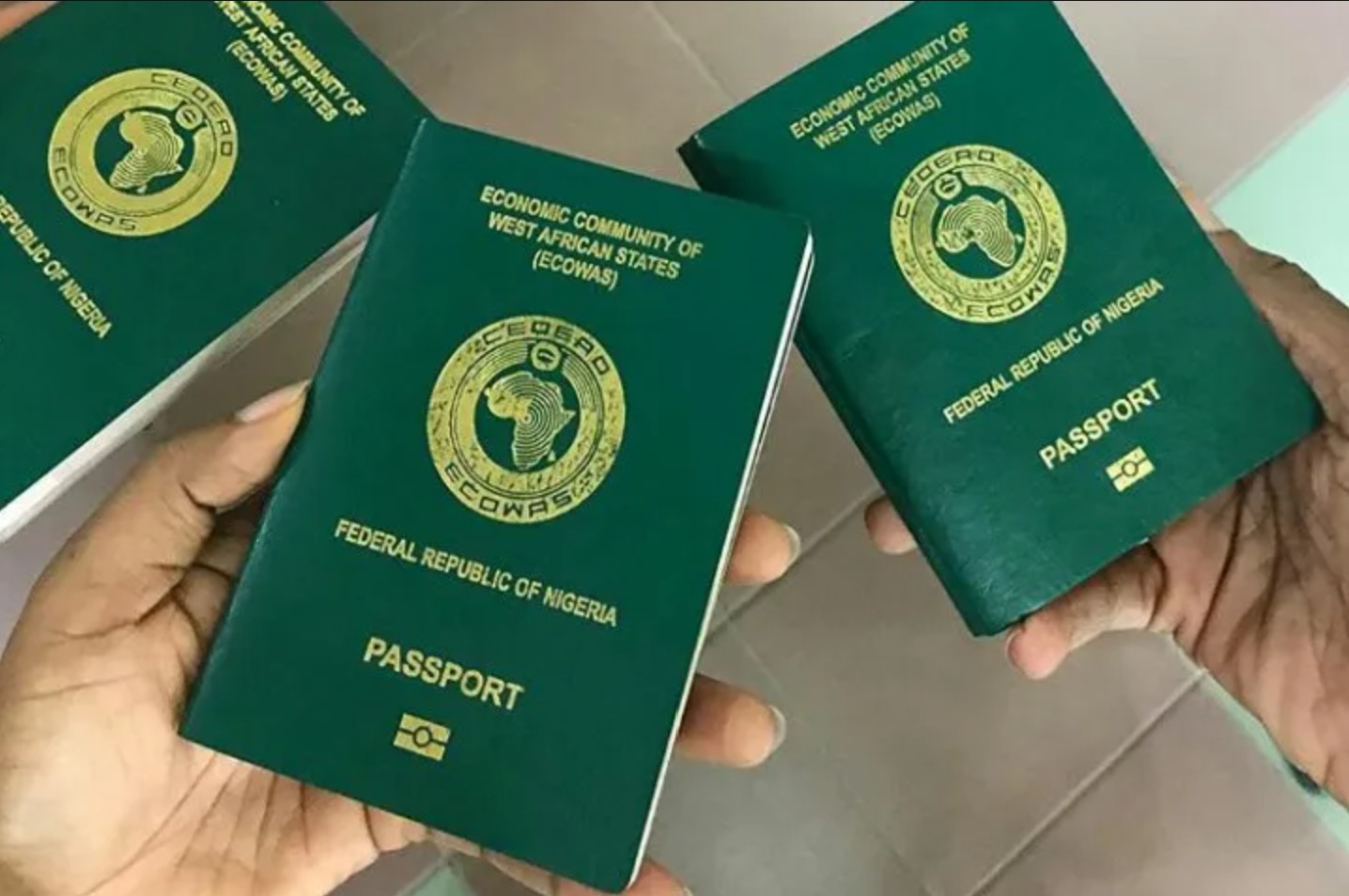
Imagine holding a Nigerian passport, symbolising pride, identity, and opportunity. However, effective September 1, 2025, the fee doubles from ₦50,000 to ₦100,000 for the 32-page version and from ₦200,000 to ₦ 400,000 for the 64-page version. This isn’t just an administrative change; it breaches the social contract.

Converting a basic identity document into an expensive luxury creates a two-tiered citizenship system, penalising ordinary Nigerians and restricting access to opportunities. A passport is a right of citizenship, like the free National ID and voter’s card, not a privilege for the wealthy. Why should a global identity extend to a commodity? 

The typical justification of ‘cost recovery’ is invalid. Essential state services should be subsidised to ensure equal access, not turned into profit centres at the people’s expense. This is especially true amid Nigeria’s economic struggles with inflation, unemployment, and rising costs. The new ₦100,000 passport costs more than the ₦70,000 minimum wage, making it unaffordable for a civil servant’s monthly salary. When a passport exceeds one month’s earnings, citizenship access is effectively priced out. This isn’t governance, but punishment. Officials say the hike maintains quality and integrity, but Nigerians only want access to a valid ID, not luxury features. Raising fees without service improvements monetises desperation. Nigeria ranks 91st globally in terms of passports, highlighting the need to improve its international standing.

The irony becomes even more glaring when compared with the voter’s card. That document is distributed free of charge, delivered to electoral wards, and made as accessible as possible. The reason is simple: it benefits the political elite by ensuring mass participation in elections. The passport, however, offers no direct political benefit. Instead, it empowers citizens to seek opportunity abroad, to level themselves in mobility and access with the very elite who govern them. Empowerment is seen not as a service to the state, but as a threat. Your vote is free because they need you. Your passport is expensive because they fear you. This is not an accident of policy; it is a deliberate strategy of control. It reveals a government more concerned with revenue extraction than with service to its people. 

A recent pattern shows the government increasing passport fees again after the August 2024 hike, indicating a trend of using vital documents for quick revenue rather than rights. Compared to neighbouring countries, Nigeria’s fees are disproportionately high. For example, a 34-page passport costs approximately ₦80,000 in Kenya, equivalent to a minimum wage of ₦ 15,000, and around ₦46,900 in Nigeria, both of which are less than the Nigerian cost. While Kenyans and Ghanaians with minimum wages can obtain passports in days or weeks, Nigerians face fees that exceed their monthly income, creating a severe financial burden.

The Nigerian passport should never be treated as a luxury item. It is a necessity in a globalised world and a symbol of national identity. To price it beyond the reach of ordinary citizens is to betray the very essence of governance, which is service, dignity, and protection of rights. What kind of nation are we building when we put a price tag on our citizens’ ability to seek a better life? What does patriotism mean if leaders measure it not by how they serve the vulnerable but by how much they can extract from them? Proper governance is not about profit; it is about fairness, opportunity, and respect for citizens.

Nazeer Baba Abdullahi wrote via babanazeer29@gmail.com.

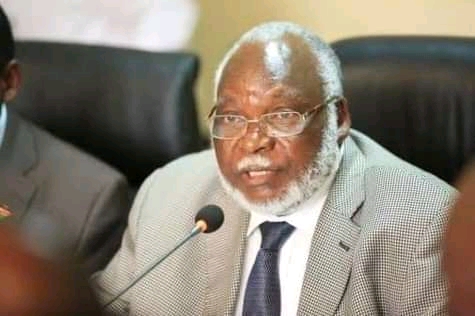
Ngũgĩ wa Thiong’o, renowned Kenyan literary author, passes away at 87

Ngũgĩ wa Thiong’o, one of Africa’s most influential literary figures, has died at the age of 87.

His daughter, Wanjiku wa Ngugi, confirmed the news in a Facebook post on Wednesday, May 28, 2025.

“It is with a heavy heart that we announce the passing of our dad, Ngũgĩ wa Thiong’o this Wednesday morning, 28th May 2025. He lived a full life, and fought a good fight. As was his last wish, let’s celebrate his life and work. Rîa ratha na rîa thŭa. Tŭrî aira!” she wrote.

She also noted that the family’s spokesperson, Nducu wa Ngugi, would release more information about the celebration of his life in due course.

Ngũgĩ, who was born on January 5, 1938, in colonial Kenya, made his mark on global literature through novels, essays, and plays that dealt with colonial rule, independence struggles, social justice, and African identity.

He gained international acclaim not only for his writing but also for his unwavering support of African languages and cultural autonomy.

His debut novel, Weep Not, Child (1964), was the first to be published in English by a Kenyan writer. He went on to write The River Between (1965), which explored the tensions between tradition and change; A Grain of Wheat (1967), a narrative set against the backdrop of Kenya’s independence; Petals of Blood (1977), which addressed post-independence corruption; and Devil on the Cross (1980), originally written in Kikuyu as a political statement.

Ngũgĩ was arrested and held without trial in 1977 due to his outspoken criticism of government policies.

Following his release, he went into exile and continued his work from abroad.

He later became a respected academic, teaching at leading institutions such as Yale University and the University of California, Irvine, where he served as Professor of English and Comparative Literature.

Throughout his lifetime, Ngũgĩ wa Thiong’o remained a leading voice in the call to decolonise African literature and promote the use of indigenous languages in literature and education.

Grandmother pays school fees with chickens in heartwarming gesture  

By Abdullahi Mukhtar Algasgaini

In a touching display of determination and love for education, an elderly grandmother brought six live chickens to Adiedo Mixed Secondary School in Migori, Kenya, on Tuesday, May 14, 2025, to settle her granddaughter’s unpaid school fees after the child was sent home for non-payment.

The elderly woman’s unconventional payment moved teachers and onlookers, mainly when one of the hens laid an egg on the spot—a moment seen as a divine blessing. 

The incident highlighted the family’s profound dedication to education, despite facing financial hardship.  

School officials accepted the poultry, recognising the grandmother’s sacrifice of her valuable laying hens to keep her granddaughter in class. The story has since touched many, highlighting the lengths families go to secure their children’s futures.

Nigeria makes history with 1st shipment to Kenya under AfCFTA

By Sabiu Abdullahi 

The Nigeria Customs Service (NCS) has successfully facilitated the country’s inaugural shipment to Kenya under the African Continental Free Trade Area Agreement (AfCFTA).

Lucky Fibres, a subsidiary of the Tolaram Group, has become one of the pioneering companies to export goods to Kenya through this landmark agreement. 

According to Olusegun Olutayo, Senior Trade Expert and Lead of Trade Enablement at the Nigeria AfCFTA Coordination Office, this shipment demonstrates the collaborative spirit of AfCFTA.

“It is not that we are doing it alone; I have already sent a message to the Secretariat in Ghana that there will be a shipment under AfCFTA to Kenya. I have also communicated with the AfCFTA implementation committee in Kenya. So this is the spirit we are building to ensure that we increase intra-African trade,” Olutayo noted. 

The NCS has played a critical role in facilitating this trade, leveraging its expertise as the Designated Competent Authority (DCA) under AfCFTA.

Olutayo praised the service, as he was quoted as saying, “The Nigeria Customs Service has been fantastic; they are ready to facilitate trade. Once they hear that there is an issue, particularly around AfCFTA, you will see everybody ready to support and facilitate it, which is the essence of true trade facilitation.” 

Assistant Comptroller Olusola Salako highlighted the NCS’s efforts to harness technology for seamless trade.

“The service has aligned with the mandates of the World Customs Organisation to prioritise the importance of trade. Gone are the days when we experienced issues. Today, we have a Unified Customs Management System (UCMS). With trade becoming more global, we went back to the drawing board and improved our technology, which will help us facilitate trade.” 

Salako concluded that the NCS is well-prepared to handle AfCFTA-related exports, with trained officers, dedicated ports, and streamlined procedures in place. “The service is already in top gear; officers have been trained, and we have dedicated officers, senior officers, and releasing officers for this particular export procedure—not limited to AfCFTA alone—and we also have dedicated ports,” he said.

For PWDs in Nigeria to live a fulfilled life

By Fatimat Ibrahim Abedoh,

In 2022, Crystal Asige, a visually impaired woman, was nominated to the 4th Senate in Kenya’s 13th Parliament to represent people with disabilities and special interest groups. Picked by the Orange Democratic Party (ODM), she was sworn in alongside 66 other Senators on September 8, 2022. 

Despite her disability, Asige was seen for her potential and allowed to thrive, becoming a role model for many in similar circumstances. She has been excelling ever since. In contrast, Nigeria has a significant population of about 35 million people with disabilities, yet they are still mistreated, shunned, and disregarded. 

No public space, transit system, or infrastructure in Nigeria is designed with PWDs in mind, reflecting the height of their struggles. It is no secret that life in Nigeria is challenging, but for PWDs, it is twice as difficult.

PWDs in Nigeria face numerous challenges and barriers to full inclusion and participation in society, issues that are not discussed enough. Individuals, private organisations, and public institutions are often unwelcoming, making it difficult for PWDs to thrive in all aspects of life. 

This lack of accessibility constrains their potential and strips them of the platform to live and contribute meaningfully to society—whether in education, politics, employment, or social activities.

Their fundamental human rights are severely violated, as being disabled often equates to being treated as less than human. This is why many PWDs resort to begging for survival. But they need more than a pity party; they deserve respect and inclusion.

Recently, a PWD faced discrimination at an eatery. Adebola Daniel, son of former Ogun State Governor Gbenga Daniel, recounted his humiliating experience at the KFC outlet in the Murtala Muhammed Airport via his X handle (@DebolaDaniel). A wheelchair user, Daniel described the incident as the worst public humiliation he had ever faced. 

He explained that due to the out-of-service lift to the airport lounge, he decided to wait at the KFC outlet with his wife and three brothers. However, this simple choice turned into a “colossal mistake,” as he put it.

His tweets partly read: “Being disabled often rolls over my spirit, leaving behind a trail of shattered dignity and forgotten humanity. Nowhere more so than in Nigeria. To be disabled in Nigeria is to be undesirable, unwelcome, and unaccepted… Today, I faced the worst sort of public humiliation that I have ever experienced. To think that this happened at an international brand, KFC, at an international airport – Murtala Muhammed Airport, Lagos – is unthinkable.”

Daniel’s case gained public attention, mainly because of his family background, prompting the Federal Airports Authority of Nigeria (FAAN) to shut down the outlet and demand an apology. But what about the millions of other PWDs who have faced similar or worse situations? Who listens to them, and who takes action on their behalf?

Since Asige entered the Senate in Kenya, she has been able to sponsor three bills that the Kenyan government has enforced, all tailored to the interests and welfare of persons with disabilities. These are the Persons with Disabilities Bill 2023, the Kenyan Sign Language Bill 2023, and the Startup Bill 2022. 

She continues to work in the interest of Kenyan youths and those across Africa. In Nigeria, former President Muhammadu Buhari passed the Discrimination Against Persons with Disabilities (Prohibition) Act into law in 2018. Yet, six years later, it has not been fully implemented.

Adequate funding for education, assistive technology, and other essential resources for PWDs is urgently needed. Nigeria practices representative democracy, and PWDs deserve to be heard, seen and listened to. They need representation in the Senate or the House of Representatives to amplify their voices. 

PWDs are capable of much more than their disabilities, and no one can represent them better than one of their own.

Fatimat Ibrahim Abedoh is a fellow at PR Nigeria’s Young Communication Fellowship.

Gunmen kill prominent Pakistani journalist, Arshad Sharif, in Kenya

By Ahmad Deedat Zakari

A prominent Pakistani journalist and TV presenter, Arshad Sharif, has been shot dead by unknown gunmen in Kenya’s capital city of Nairobi.

Arshad Sharif’s wife, Javeria Siddique announced the demise of her husband on Twitter in the early hours of Monday, October 24, 2022.

“I lost friend, husband and my favourite journalist @arsched today, as per police he was shot in Kenya. Respect our privacy and in the name of breaking pls don’t share our family pics, personal details and his last pictures from hospital. Remember us in ur prayers,” she tweeted.

She appealed to the public to respect her family’s privacy and desist from sharing pictures of her husband’s last moment on social media. She also said politicians and the media are not allowed with cameras in their home.

“Pls @Twitter remove last picture’s of my late husband @arsched from ur social media site. Politicians and media are not welcomed with cameras inside our house,” she pleaded.

As at the time of writing this report, authorities of Kenya and Paskitan are yet to officially confirm the development.

Kenya becomes the first African country to teach coding as subject in schools

By Damilare Dosunmu

Last Friday at the State House in Nairobi, the president of Kenya, Uhuru Kenyatta, announced the addition of coding as a subject into its primary and secondary schools curricula. This new development makes Kenya the first country in Africa to approve coding as a subject of study in the two early schools.

 “I applaud the Kenya Institute of Curriculum Development for leading our nation to this landmark achievement, by implementing coding as a critical skill within our new Competency Based Curriculum,”  President Kenyatta said at the event.

The President also launched the National Cybersecurity Strategy 2022, which provides strategic interventions in addressing national cybersecurity challenges in Kenya. The Kenya National Digital Master Plan, which will run till 2032, was also inaugurated.

With all these digital roll-outs, the president, whose tenure comes to an end in a few weeks, is optimistic about the impact the National Digital Master Plan would have on the country. He believes the plan will establish the country’s leadership in ICT by fostering the growth of ICT-related businesses and creating an enabling policy, legal and regulatory environment for the greater adoption of e-governance.

“This, no doubt, will enhance employment creation, enable and scale up ICT innovation and the development of a dynamic and robust ICT sector that will enhance the growth of all sectors of our economy. The master plan also guides investors while planning their investment priorities,” President Kenyatta said.

The digital master plan’s target of establishing over 20,000 village digital hubs across the country will enable the government to employ an additional 40,000 youth directly to run the centres and train interested citizens.

Kenya continues to maintain its place as one of the hotbeds for digital innovation on the continent. This new initiative reflects an ambition to reimagine education and a solid dedication to building the future. And as it seems, both the private and public sectors are aligned with this vision. Just this year alone, Microsoft, Visa, and Google opened their first development centres in the country’s capital.

Source: www.techcabal.com

Kenya High Commissioner to Nigeria is dead

By Ahmad Deedat Zakari

Kenya High Commissioner to Nigeria, Mr Wilfred Gisuka Machage died in an Abuja hospital on Saturday, February 19 at the age of 65. Machage’s twin brother, Sopester Magitar who was a Kenya Ambassador to Russia told newsmen of the sad development.

“It is a very sad moment that I have today lost my best friend and confidant” he reportedly said.

It was also gathered from sources close to the deceased that he fell ill and was rushed to the hospital where he died around 1pm.

Man sets own mother’s house ablaze over food

By Muhammad Sabiu

A Nairobi man in Kenya identified as Joseph Njuguna, who allegedly set his own mother’s home on fire over her refusal to finish cooking food on time, has been dragged to court.

Reports indicate that the burnt house is worth about N4.7 million.

Njuguna was said to have arrived home and asked the mother where his food was. However, to his utter dismay, she didn’t finish cooking.

After she tried to console him to wait for some time in his room for the food to be ready, he insisted he “would do something about it” as he later came back and had a brief argument with her.

Shortly after, while she was still cooking, she realised that the house had been engulfed in smoke.

Panicked by the smoke, she tried to flee the home, but after reaching the door, she found that it had been locked as she had to scream for help.

She finally got rescued by neighbours, as the suspect was said to have gone into hiding.

People in the area later launched a manhunt on him, and he was later found. After he was found, they started beating him to the extent that his mother had to come to his rescue.

Injured by the beating, the mother took him to a nearby hospital to receive some treatment.

Police got informed, and they intervened, stating that “Joseph Njuguna unlawfully and willfully torched his mother’s house on November 6 within Nairobi’s Dagoreti area.”

Njuguna pleaded not guilty, but he has bagged a bond of Ksh500,000.