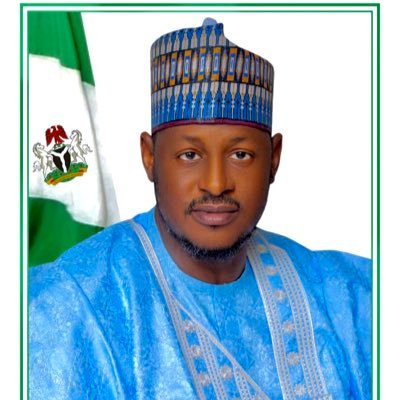
Katsina State

The dilemma of negotiating with bandits: A path built on ashes?

By Aliyu Ya’u

His Excellency, Dikko Umar Radda’s position on rural banditry has provoked considerable reactions, with some questioning his resolve to confront bandits rather than seek a peace agreement.

Given that he lacks control over the paramilitary and armed forces present in the state, it is fair to say that he has taken commendable steps by establishing the state’s community policing group and encouraging the civilian population to engage in self-defence. 

I fully empathise with his frustration, especially in light of the constant criticisms and pleas from victims suffering due to the terror of rural banditry. Understandably, his excellency may feel disheartened and powerless to prevent these criminals from continuing their activities. 

Further, everyone, especially the civilian population, would welcome a peace accord in a real conflict situation. In such situations, all parties’ demands are tabled and deliberated, and sustainable solutions are found and implemented. 

However, in the case of an unorganised and unregulated group like rural bandits of the North-western and North-central Nigeria, who wreak havoc daily without reasonable justification. 

The question lies not in the society respecting the peace accord, but in the modalities employed to guide the peace settlement. Another question is whether the peace accord is sustainable, using historical parameters to assess the credibility and reliability of the commitment of the violent party involved. 

Any peace accord between a government, society, and an armed group should be based on disarmament, demobilisation, and reintegration (DDR). 

According to the United Nations Peacekeeping operation unit, DDR is “a process of removing weapons from the hands of members of armed groups, taking these combatants out of their groups and helping them to reintegrate as civilians into society.”

The question is whether the militias or bandits are ready to surrender all their weapons, demobilise from their dens, and reintegrate into the larger society. Unless the government can confirm these terms with the bandits’ leaders, mediators, and sureties, it will not be obligated to build a wall of ash blocks. 

Other questions include, How strong and convincing are the commitments laid down or presented by the militias? How committed is the leadership to the pact? What are the demands? How cogent and soluble are they? Do they have a unified command structure? Is the command structure capable of issuing an effective directive that will be respected by various dens and groups committing heinous bandit crimes? 

These armed groups are often small; in most cases, a group comprises 10 or fewer bandits who act autonomously, unless they need to cooperate against a sedentary enemy community. The absence of a centralised governing body makes it difficult to build an effective peace agreement with the groups. How could a peace accord with hundreds of bandit groups roaming the regions’ thick and interconnected forests that span hundreds of kilometres and access many states be possible? 

Another aspect deserving the government’s focus is the scope of Katsina state’s peace accord. What areas will it encompass? Will the armed bandits responsible for heinous crimes in Katsina state prevent others from neighbouring states from crossing into the area to commit banditry? It’s crucial to recognise that we are not dealing with an insurgent group, a separatist movement, or an ideological terror organisation; rather, the state is confronting multiple disorganised criminal entities. 

The focus should be on the following: The state’s primary concern is achieving lasting peace, not a temporary ceasefire. The bandits should establish a reliable leadership structure that is known and accessible, and willing to take full responsibility if they breach the agreement. They should clearly specify what sets their current commitments apart from those made with previous governments. Additionally, they should submit their complaints for the state’s review and assessment. The sureties must first confiscate or disarm the bandits before any peace accord is signed.

Aliyu Yau holds an M.Sc. in Defence and Strategic Studies and is a public policy and conflict analyst based in Kaduna.

Dikko Radda reshuffles cabinet, appoints new heads of key agencies

By Anas Abbas

Governor Dikko Umaru Radda of Katsina State has approved a major cabinet reshuffle and announced new appointments across key government agencies to enhance efficiency and service delivery.

The development, which takes immediate effect, was contained in statements issued on Thursday by the Chief Press Secretary to the Governor, Ibrahim Kaula Mohammed.

The move involves redeployment of some commissioners and the appointment of two new special advisers.Under the reshuffle, Hon. Adnan Nahabu becomes Commissioner for Higher, Vocational and Technical Education, while Prof. Ahmad Muhammad Bakori, who previously led Agriculture and Livestock Development, now heads the newly created Ministry of Livestock Development.

Additionally, Hon. Aliyu Lawal Zakari moves from Youth and Sports to Agriculture, and Hajiya Zainab Musa Musawa shifts from Basic and Secondary Education to Special Duties.

Also, Hon. Yusuf Suleiman Jibia now oversees the Ministry of Basic and Secondary Education, while Engr. Surajo Yazid Abukur takes charge of Youth and Sports Development. Hajiya Aisha Aminu, former Director-General of the Katsina State Enterprise Development Agency, becomes Commissioner for Women Affairs.

Governor Radda further appointed Hajiya Hadiza Abubakar Yar’adua as Special Adviser on Nutrition and Welfare Services, and Isa Muhammad Musa as Special Adviser on Cultural Orientation.

He urged all appointees to align with his administration’s Building Your Future agenda focused on accountability, innovation, and improved governance.

However, the governor appointed Engr. Abba Junaidu, MNSE, as Chairman of the Katsina State Road Maintenance Agency (KASROMA).

He also appointed Dr. Babangida Ruma as Director-General of the Katsina State Enterprise Development Agency (KASEDA), describing him as a technologist and youth advocate previously recognised by UNESCO as the “Father of Technology and Innovation.”

Former Head of Service, Idris Usman Tune, was appointed Chairman of the Katsina State Civil Service Commission.

The Katsina State Pension Bureau was reconstituted with Ibrahim Boyi Dutsinma as Part-Time Chairman, Musa Rabiu Mahuta as Executive Director of Finance and Administration, Abbati Ibrahim Masanawa as Executive Director of Operations, and Usman Shehu as Executive Director of ICT and Database Management. Dr. Faruk Aminu will serve as Independent Observer.

Similarly, for the Katsina State and Local Government Pension Transition Board, Hon. Muntari Dan Ammani was appointed Executive Secretary, while Garba Sanda Mani, MNI, will serve as Part-Time Chairman.

Governor Radda expressed optimism that the changes will strengthen coordination and improve policy execution across ministries and agencies, reaffirming his administration’s commitment to transparency, accountability, and people-centered governance.

From Dubai dreams to banditry nightmares: The tragedy of APC governance in Katsina 

By Muhammad Isyaku Malumfashi

What is happening in Katsina under the present APC administration is a shameful outcome from a government that once boasted of being widely read, widely travelled, and experienced. In fact, from the campaign period to its first year in office, the government bragged that it had all it took to make Katsina a “new Dubai.” That was why a high educational background was used as a symbol of the administration. Even in appointments, only so-called “learned” people were considered, irrespective of whether they were truly experienced or trustworthy.

The most pressing challenge of this government is denial. This denial is even more dangerous than the insecurity bedevilling the state. When you acknowledge the existence of a problem, you will be open to every advice on how to tackle it. But if you keep denying or boasting that you have eliminated it. At the same time, the menace still exists—and perhaps in a more deadly form than during the previous administration—then no matter the energy you invest, you will not succeed. The government and its loyalists continue to deny the bold existence of Fulani terror groups in the state.

Before the recent banditry attack on Muslim worshippers during dawn prayers at Mantau town in Karfi Ward, Malumfashi Local Government—which drew attention from outsiders to what we have long been saying about the APC government’s ill-conceived security surveillance approach—there had already been several incidents of bloodshed, property destruction, and abductions across about nine local governments daily. In places like Malumfashi, where I come from, the banditry menace has worsened since Governor  Dikko Radda assumed office.

The government’s approaches to fighting terror are either ill-planned or manipulated by vested interests, gambling with people’s lives and properties. If we are to judge by the capacity and fanfare displayed by the governor in the past two years—boasting about his readiness and zeal to wipe out criminals from their hideouts—then this government has no excuse for failing. By now, Dr Dikko Umaru Radda himself must have realised that governance, especially in a state with millions of residents, is hectic and demanding. It is unlike how he portrayed it during his campaign. Thus, Katsina is bigger than Charanchi, and the State Government House Office is not an ordinary SMEDAN office.

Notwithstanding, I read with dismay some comments by APC loyalists denying the existence of rampant banditry. According to them, the present government has curbed it. But I was gladdened by how people tackled them in the comment sections, pointing to multiple banditry incidents under this government—incidents worse than anything seen before.

Meanwhile, I do not waste my energy trying to rebut these “data boys” because I know they are either sponsored to promote the government and whitewash its failures, or they do it voluntarily to secure appointments. That is why I stopped engaging in the comment section of my friend Hamis Nababa whenever he appears on air defending the government, because I know he has a personal target. Let alone the unfortunate lawmakers or appointees like Surajo Abdu Kwaskwaro, representing Kaita, who went on air denying the recurrence of bandit attacks in Katsina.

When people are desperate for food, not everyone can remain true to their conscience. Hunger is a terrible thing; it pushes some people to compromise their integrity. But one should not put one’s reputation at stake simply for survival. This is where business security matters—because if those “data boys” were truly independent or well-established in their own ventures, they would not be engaging in such disgraceful acts of defending a failed government whose shortcomings are already too glaring.

One doesn’t even need to doubt whether Governor Dikko is a Grade II certificate holder or truly a PhD holder. Just look at how his government executes projects and the questionable funds allegedly spent on them. Even when figures appear clear on paper, the blunders make them impossible to explain convincingly. At the end of the day, there is nothing tangible to show.

As many have opined, the only candidate that will be extremely difficult to sell in 2027 is that of the APC. If you doubt this, let us wait for time to tell. Those bragging that APC will still win should remember: unless the ruling party uses force, manipulative tactics, vote-buying, intimidation, or pre-stuffed ballot papers, it will be unseated before noon on Election Day if the election is free and fair. Mark my words—because no sane person can campaign for APC in its present state without appearing utterly ridiculous.

Muhammad Isyaku Malumfashi wrote via muhammadisyakumalumfashi@gmail.com.

Saving a legacy: Urgent call to protect Umaru Musa Yar’adua University

By Dikko Muhammad, PhD

Dear Governor Malam Dikko Radda, PhD., with honour and regards befitting of your office and esteemed personality, the people imploring you to address the urgent matters of Umaru Musa Yar’adua University, Katsina, are your friends, not your foes. They don’t want to see the beautiful pumpkin planted about two decades ago uprooted by your administration. If that calamity, God forbid, would happen, it mustn’t happen under the administration of the most credentialed person in the history of our state. 

Sir, UMYU isn’t just a mere state university. It was an ambition and a dream of our revered Malam Umaru Musa of blessed memory. UMYU is the culmination of the sweat and toil of many prestigious individuals from our dear state, impeccable individuals who embraced Malam Yar’adua’s dream and made it a reality.

Men and women who spent sleepless nights, travelled far and wide, to ensure that UMYU isn’t just a prestige project, but a strategic and need-based initiative that addresses the higher education deficit of our dear state and the Northern region. Many of these important individuals are alive today. Please, Sir, as they inch nearer to their graves, don’t make them feel that their labour is in vain. UMYU alone is a fulfilling mission for many of them.

Sir, forgive my repetition– UMYU isn’t just a mere state university. It’s a solution to our century-old gender gap in access to educational opportunity. It enables thousands of parents to educate their daughters to the level of degree certification at a time when interstate and intercity travel are becoming increasingly dangerous by the day. 

When UMYU collapses, may Allah prevent that, it will sink with the dream of thousands of girls who aspire to become educated mothers, productive members of society, and contributors to the future knowledge-driven economy. You just need to look left and right in your own extended family to see the impact this university has already made. 

Your Excellency, Sir, look into the posterity. It’s very long. And it remembers all. Save this system. The university workers are not asking for the impossible. They simply ask that you respect the law establishing this university. They’re only asking you to give the equivalent of whatever is obtainable in federal universities. This is enshrined in the laws that established UMYU. 

I’m deeply sorry if I sound boring. I want to remind your esteemed person that at the point of inception, no state across the Northern region has invested resources in its university as UMYU. Billions have been spent on the training of staff. I am a product of UMYU. I got my first degree here. My teachers called me to join them and serve UMYU. The university has spent millions training me for my master’s and PhD degrees. The same happened to hundreds of others.

Unfortunately, the tasteless, unmotivated and uninspiring condition of service has frustrated many out of UMYU. Many others are awaiting the bond period to japa or to move to another university. In my faculty (pictured here), I know of more than 10 people who have left this institution with their PhD financed by UMYU. UMYU has failed to retain its most precious investment. It has also fallen short of attracting other people with the highest degrees into its corridors. 

As tens of PhDs are leaving UMYU, the university can only attract people with a first degree or, at most, a master’s degree. In practical terms, UMYU is gradually positioning itself as a training ground while Katsina continues to be short-changed in the process. 

Your Excellency, I may disagree with many of your policies. But I never doubted your resilience in moving our dear state forward. Please look into UMYU. Write your history on the footprints of time. You have all that is required to save the most important legacy of Malam Umaru Musa Yar’adua, a statesman, your political mentor, a person you hold dear and a man related to you in other equally important capacities. 

Dikko Muhammad writes from the Department of English and French, UMYU. He can be reached via dikko.muhammad@umyu.edu.ng.

Phone snatchers tighten grip on Katsina metropolis — Authorities must respond swiftly

By Usman Salisu Gurbin Mikiya 

Katsina, as the name resonates, is widely regarded as a home of hospitality — a land where people live in harmony and mutual respect. It is a place of comfort where the warmth of its people makes life pleasant and fulfilling.

Recently, however, the long history of relative peace has begun to fade; an uncharacteristic catastrophe once thought distant has started unfolding, becoming a major concern for residents of Katsina Metropolis and beyond, especially as it adds to the decade-long insecurity bedevilling the state.

The issue of phone snatching in Nigeria originated from wristwatch snatching in Southern Nigeria, particularly in Lagos and other highly populated state capitals. It often occurred in strategic areas with heavy traffic, and over time, it evolved into a practice of phone snatching.

In Northwestern Nigeria, phone snatching started in Kaduna State about eight years ago. I vividly recall my visit to Kaduna in 2020, when I was on assignment for my media organisation. A Keke Napep rider warned me to hide my phone from criminals after noticing me pressing it through his mirror.

What began as an alarming trend in Kaduna escalated into a catastrophic issue, with phone snatching syndicates extending their activities into Kano, creating panic and undermining public safety.

During one of my visits to Kano, two of my brothers, on different occasions, warned me not to use my phone while on a tricycle in certain areas. They cautioned that I could lose my life over a phone, as snatchers were everywhere, and even advised me to choose the Keke Napep I boarded carefully.

Indeed, what started as an alarming wave in Kaduna has gradually spread like wildfire, creeping into Kano and now reaching Katsina. Once considered a distant menace, the problem has arrived at the very doorstep of Katsinawa, turning a basic necessity —the mobile phone — into a source of constant fear. This epidemic of criminality is no longer a local crisis but a regional catastrophe demanding urgent attention.

In Katsina Metropolis, residents of Sabuwar Unguwa are no strangers to this menace, as multiple reported cases of phone snatching have occurred, particularly targeting visitors and strangers in the area.

During Governor Ibrahim Shehu Shema’s administration, wayward youths, popularly known as Kauraye, emerged in Katsina. They crippled businesses and created tension in the metropolis, especially in areas such as Sabuwar Unguwa, Inwala, Sabon Layi, and Tudun Ƴan Lahidda.

Their reckless activities frustrated Governor Shema to the point where he took decisive measures that restored sanity and ended the menace.

Similarly, during Governor Aminu Bello Masari’s administration, persistent attacks by delinquent youths, suspected to be from Inwala in the ATC area, forced the government to establish a special Civil Defence outpost. This step drastically reduced the menace.

In his first year in office, Governor Dikko Umaru Radda also faced resurging activities of wayward youths in Sabuwar Unguwa. He personally led security agents in night operations, which eventually restored peace in the area.

However, with three different phone snatching incidents recorded within just three days on major roads, it is clear that social vices are escalating in the city. If not urgently addressed, they risk crippling businesses and threatening public safety.

The first incident occurred on 20th September, when Mrs Sada Shu’aibu was attacked near Sabuwar Dan Marna graveyard, and the attackers attempted to snatch her phone and inflicted serious injuries on her body. 

The following day, 21st September, during the grand finale of the Maulud procession, Usman Marwan was brutally attacked by phone snatchers at his business centre near the MTN office in Kofar Ƙaura.

Furthermore, on 26th September, another victim narrowly escaped death after being attacked by snatchers. This incident has heightened concerns among residents of the metropolis.

With insecurity already ravaging some local governments in Katsina State, the fact that the capital city is now battling phone snatching suggests that Katsina is increasingly under the control of thugs.

This menace has resurfaced under the leadership of Governor Radda, who had earlier recruited hundreds of youths to fight insecurity in the state. Many residents are now watching closely to see how he will respond to this rising threat.

Phone snatching can still be contained within a short period if several urgent measures are taken, including:

The government should initiate a law prescribing either the death penalty or life imprisonment for anyone convicted of phone snatching, alongside a shoot-on-sight order for fleeing offenders.

The government should declare a state of emergency on phone snatching so that the fight against this menace does not derail broader security efforts in the state.

Usman Salisu Gurbin Mikiya, M.Sc. student, Department of Mass Communication, Bayero University, Kano. He can be reached via his Email: usmangurbi@gmail.com.

Outrage as notorious bandit leader Babaro attends peace meeting in Katsina

By Muhammad Abubakar

Shock and outrage have trailed the appearance of a notorious militia leader, Babaro, at a government-backed peace dialogue in Faskari Local Government Area on Sunday. The bandit commander, long accused of mass killings and sexual violence, arrived at the meeting heavily armed and in a convoy, alongside his fighters.

Witnesses said Babaro and his gang openly flaunted their weapons, taunted residents, and bragged that “nothing will happen to them” despite years of terrorising communities across Katsina and neighbouring states.

Babaro is accused of carrying out some of the deadliest attacks in the region, including the massacre of more than 50 worshippers during morning prayers at Unguwar Mantau Mosque in August. Survivors say the bloodstains of that slaughter are still visible on the mosque’s walls and floor. He is also alleged to have raped women and girls in front of their families, and, together with fellow warlord Kachalla Isiya Akwashi Garwa, killed an unconfirmed number of people, particularly in the Faskari axis.

In Kankara, Malumfashi, and other parts of Katsina, his name has become synonymous with fear, mass abductions, and relentless bloodshed.

The decision to give Babaro and his fighters a seat at a peace meeting has left victims’ families devastated. Relatives of abducted persons, some of whom attended the dialogue, broke down in tears as they watched the same men who killed their loved ones sit at the negotiating table with impunity.

Amnesty International Nigeria sharply criticised the development, warning that privileging armed groups while silencing victims only deepens injustice.

“The mere notion that it is now acceptable for a group of people in Nigeria to carry arms that are solely used to kill people who are never armed is unbelievable,” said Isa Sanusi, spokesperson of Amnesty International Nigeria. “The assumption that those who are carrying sophisticated arms and decorate themselves with bullet magazines can accept peace or are ready to renounce violence is faulty. Nonsense.”

Sanusi questioned how bandits like Babaro continue to obtain weapons and logistical support while victims are left unprotected, marginalised, and ignored.

The Faskari meeting has reignited anger over the government’s controversial peace overtures to armed groups in the northwest, where thousands of people have been killed, abducted, and displaced in a decade-long wave of violence.

Bandit kingpin attends peace talks in Katsina as communities call for negotiations

By Anwar Usman

Local communities in the Faskari local government area of Katsina State have entered into negotiations with armed groups, raising fears of a repeat of a sequence whereby the collapse of peace agreements led to renewed violence.

Reports have it that bandit representatives, including figures accused of leading raids and abductions, sat with community leaders at a gathering in Hayin Gada.

The bandits reportedly agreed to stop attacks on villages, allow farmers safe passage, and release abducted persons in exchange for freedom of movement and market access for Fulani and the development of their areas.

In attendance were the notorious kigpin Alero, who spoke on behalf of several armed groups. He said the initiative was “not the first of its kind”, but the turnout was unprecedented.

Also present was Kwashe Garwa, whose name is 19 on Nigeria’s most-wanted terrorists list. Videos shared on multiple local media show Mr Garwa, with ammunition strapped around his waist, condemning the stereotyping of Fulani herders as criminals.

Garwa stated, “In Nigeria, whenever there is a discussion, they call Fulani herders bandits and terrorists. But tell me, which tribe in the world does not have criminals among them? You, Hausawa, who say we are bandits, don’t you also have bandits among you? Yet, no one stereotypes you with such a name.”

Garwa further asserted that killings and kidnappings would not stop until “injustice” against the Fulani was addressed. “There will be no peace if security agencies do not also stop killing our people,” he added.

Reports indicate that similar peace agreements were reached in Jibia and other frontline areas, with residents negotiating directly with bandit leaders for safe passage, a cessation of raids, and the reopening of markets.

Acknowledging the arrangements, Governor Dikko Radda said at the launch of an EU-funded conflict prevention project last week that negotiations were ongoing in several frontline local government areas and credited them with restoring calm in those areas.

Tribute to my father – Alhaji Musa Muhammad Ringim

By Kabir Musa Ringim

15/08/2025

My father, Alhaji Musa Muhammad, was an orphan who lost his father at a very young age. He was nicknamed Musa Lare in reference to his mother, Lare. His father, Mallam Mamman Aminu, a staff member of the Nigerian Railway Corporation and a native of Daura in present-day Katsina State, was transferred to Ringim to work at the corporation’s train station. There, he met Lare, a Fulani widow, and they married in the early 1940s.

Their first child, a very handsome boy, was named Musa. Sadly, destiny decreed that Mallam Mamman would not live long enough to have another child or witness his son’s growth and achievements.

Alhaji Musa Muhammad was born in 1945 in Ringim. After completing mandatory Qur’anic school, he was enrolled at the age of seven in Ringim Elementary School (now Katutu Pilot Special Primary School) in 1952, finishing in 1955. In 1956, he proceeded to City Senior Primary School, Kofar Nasarawa, Kano (now Government Girls Secondary School, Shekara, Kano), and graduated in 1958. In 1959, he entered Kano Provincial Secondary School (now Rumfa College, Kano) with school number 230.

His first job came in 1963 when the University of Ibadan, in collaboration with the Federal Ministry of Agriculture and Natural Resources, offered him a one-year temporary position. He conducted a market study on the quality, quantity, and price of selected farm produce – millet, sorghum, and beans – at Kurmi and Sabon Gari markets in Kano. The results were sent monthly to the Nigerian Stored Products Research Institute (NSPRI) Kano for onward transmission to the University of Ibadan. During this period, as a federal government worker, the Emir of Kano, Sir Muhammad Sanusi I, provided him with accommodation at the palace.

In 1964, Alhaji Musa Muhammad joined the Forestry Division of the Federal Ministry of Agriculture as the pioneer Government Forest Guard. He attended the Government Forest Guard Course at the Regional School of Forestry, Jos, after which he was posted to Zaria. In 1966, he was transferred to Kaduna Parks and Gardens as Officer in Charge of nurseries.

When states were created in 1967, he was deployed to his home state, Kano. Following directives from CP Audu Bako, the then Military Governor, he was posted to Kuda Gangara in Kazaure Emirate to establish Bagaruwa plantations for producing pods used in the state’s tanning factories. These plantations were established at Kuda Gangara Forest Reserve along Achilafiya – Karkarna Road.

In 1968, he applied for a change of cadre from Forester to Forest Assistant in training. His application was approved, and he was sent to the Federal School of Forestry, Ibadan, for a six-month Forest Assistant Course, running from May 1970 to October 1971. He completed the course with a Second-Class Certificate and was posted to Kano North Central Administrative Area, headquartered at Dambatta, as Area Forest Officer in charge.

In January 1973, he was selected for a one-year Diploma Course at the Federal School of Forestry, Ibadan. He graduated with a First-Class Diploma, becoming the first Northerner to win a prize in silviculture (the cultivation and management of trees). Due to his outstanding performance, he was posted to Hadejia Administrative Area as Forest Officer in charge. There, he established three new forest nurseries in Hadejia, Diginsa, and Kafin Hausa, upgraded the Birniwa nursery, and created shelterbelts in Diginsa and Birniwa, along with numerous roadside plantations.

In 1975, at the age of 30, while working in Hadejia, he met my mother, who was then fifteen years old. They married that same year and remained together for fifty years until his death.

In 1976, he was transferred to Kano, attached to the Forest Management Division (West), and placed in charge of the Savannah Investigation Unit, which conducted soil and vegetation surveys, produced soil maps, and interpreted aerial photographs.

In 1977, he was transferred to Kano South West Administrative Area, headquartered at Rano, as Forest Officer in charge. In 1978, following the local government reforms, he applied for the position of Head of the Local Government Agriculture Department, in line with a Ministry of Agriculture circular inviting qualified diploma holders to apply. He was appointed and posted to Ringim Local Government as the pioneer Head of Agriculture.

In 1980, he was transferred to Tudun Wada Local Government. While there, he expanded his qualifications by enrolling with the British Institute of Engineering Technology, Aldermaston Court, Berkshire, England, to study Tropical Agriculture, Agricultural Engineering, and Animal Husbandry in the Tropics via correspondence. He completed these courses in three years.

In 1983, he returned to Ringim Local Government, and in 1984, he was transferred to Gezawa Local Government as Head of Agriculture. In 1987, he was moved to Dutse Local Government. That same year, the Kano State Government decided to professionalise the Inspectorate Division of the Ministry for Local Government. Heads of Departments in Agriculture, Works, Health, and Social Welfare were selected on merit through interviews. He was appointed Assistant Chief Local Government Inspector, joining three colleagues.

This role gave him opportunities to attend various courses, including:

1. Project Management Implementation and Control at the Agricultural and Rural Management Training Institute, Ilorin.

2. Rural Development Project Formulation and Management at Ahmadu Bello University, Zaria.

3. Leadership and Management at the Nigerian Institute of Management.

4. Various workshops, seminars, and committee assignments within and outside Nigeria.

Following the creation of Jigawa State in 1991, he was deployed as Assistant Chief Local Government Inspector. With civil service reforms, his post became Assistant Director of Agriculture Inspection. In 1992, he was transferred to the State Council of Chiefs as Council Secretary. He was promoted to Deputy Director, then substantive Director in 1997, a position he held until his retirement on 31 August 2001.

Twenty-four years after retirement, on 3rd July 2025, he passed away peacefully at home in Ringim without any known illness, leaving behind my mother and 19 children. Among his sons are two classroom teachers, four lecturers, and a consultant neurosurgeon.

My late father was a man of strong faith, selflessness, and patriotism. When asked how all his children found good jobs, he replied that it was Allah who provides and that he had prayed for his children’s success. He detested corruption, avoided politics, and never sought personal favours. He refused cash gifts even from his children and was meticulous about keeping records and time, locking his house himself every day at 8 p.m.

He was the healthiest person I have ever known. I never for once saw him bedridden or visiting a hospital. Even at 80, he could drive, walk upright, and retained his senses of smell, hearing, and sight. He ate in moderation – only twice a day – favouring healthy, traditional foods such as fura, zogale, bread, tsire, and tea, with oranges, mangoes, and bananas as his preferred fruits.

While in service, he also farmed, growing millet, sorghum, beans, tomatoes, and other crops for home consumption. After retirement, he devoted his time to prayer and religious duties, declining all job offers. Though considered an elder statesman in Ringim, he kept few friends and preferred to stay indoors, coming out after late morning prayers until Zuhr to interact with neighbours.

His enduring message was: “Be resolute, fear your Creator, and surmount every difficulty to achieve your objective. It is not the beginning that matters but the end.”

May Allah (SWT) forgive his shortcomings, accept his good deeds, and grant him Jannatul Firdaus. Ameen.
Goodbye, Muhammadu Buhari, I love you

By Prof. Abdussamad Umar Jibia

“Fellow countrymen and women. I, Brigadier Sani Abacha of the Nigerian Army, address you this morning on behalf of the Nigerian armed forces. You are all living witnesses to the grave economic predicament….”

That was on the 31st of December 1983. I was a Form Five student at the Government Secondary Technical School,Mashi. But the school was on its first-term vacation. So, I was at home. I was sitting with my father that early morning when someone came in to announce that the Army had overthrown President Shehu Shagari and that “rediyo baya Magana”, meaning the radio was silent. It was after my father sent for his transistor radio that I understood what the man meant. Normal radio programmes were not running. The radio station we listened to those days was mainly Radio Kaduna. Occasionally, we listened to Rima Radio, Sokoto, a Nigerien radio channel and Radio Kano. There was no Katsina State, so no Radio Katsina. No FM. No social media.

The only voice Radio Kaduna was airing was that of Brigadier Sani Abacha with the historical coup speech at regular intervals, filled with military music. Since my father did not go to Makarantar Boko, he asked me to translate, and I did that with the confidence of a final year student ready to take the WAEC examination in five months. Yeah, only WAEC. No NECO. No NABTEB. Nothing else except WAEC. 

But that was not the point. Everyone was anxious to know Shagari’s replacement. It didn’t come immediately. Later in the afternoon, a Yoruba voice (later identified as Tunde Idiagbon) spoke to announce the acceptance of the “voluntary retirement” of service chiefs. While they were still waiting, another General (Ibrahim Badamasi Babangida) spoke; he asked Nigerians to remain calm as they awaited the speech of the new Head of State and Commander-in-Chief of the armed forces. 

The speech did not come until midnight, when many of us were already asleep. The following morning, my father didn’t need me for translation as Radio Kaduna was airing the translated speech of the new Head of State, Major General Muhammadu Buhari. I saw happiness on the faces of the adults. I understood that they were happy because the new Head of State was not another Kaduna Nzegwu or an Aguiyi-Ironsi. 

That was the beginning of the Buhari story. For those of us in secondary schools, nothing changed. Our holiday ended and we went back to our boarding school. In the whole of what is now Katsina state, I knew of only one day secondary school. That was the one in Katsina town, and it was owned by the Government. All the other schools I knew were boarding schools and public schools.

We sat for the WAEC GCE O-level exam and passed with the necessary credits and distinctions. My BUK pre-degree admission came quickly, and it was after I reported and registered that I understood that Buhari had removed the feeding subsidy in tertiary institutions. So, we were on our own.

Buhari was overthrown in August 1985, and that was the beginning of his popularity. Four months after he was overthrown, Nigerian students went on a rampage to protest the IMF loan. It was followed by the unpopular SAP. The more General Babangida introduced new policies, the more popular Major General Buhari became, even though he was in prison. People were tearing Babangida’s pictures and pasting the pictures of Buhari, his prisoner, on their vehicles and business premises.

The interview Buhari gave The News magazine after his release from detention made him even more popular among the elites and demonised Babangida. In the interview, Buhari spoke about the “fifth columnist” in his administration,which was understood to be a veiled reference to Babangida.

Fast forward to 2015, as a democrat, Buhari became the President after three failed attempts. The experiences of Nigerians were bitter, depending on who was involved. To the victims of banditry like us, he was a failure. To university lecturers like me, he destroyed tertiary education. To the Shiites, he was a murderer. To the masses, he is synonymous with hardship.

However, regardless of how you see Buhari, you must admit that he was sincere. He was incorruptible and meant well for Nigeria. Buhari would have been the best president Nigeria had if only he had ensured accountability in his Government.

May Allah have mercy on the soul of Muhammadu Buhari and admit him into the highest level of Firdaus. Amin.

Professor Abdussamad Umar Jibia wrote via aujibia@gmail.com.

Debunking the Claims: A closer look at governance and opposition in Katsina State

By Ahmed Abdulkadir

It was with a mix of curiosity and concern that I came across an article published by The Daily Reality on July 12, 2025, titled “How the Lack of Strong Opposition Masks the Government’s Failures in Katsina.” The write-up was emotionally charged, laced with sweeping generalisations and unverified claims against the administration of Governor Dikko Umar Radda. But beyond the passion and provocative headline lies the need for a more measured and fact-based perspective—one grounded in reality rather than rhetoric.

Let us take a closer look at the major allegations raised in the article and critically examine them with verifiable facts and thoughtful context.

The “Failure” of a PhD Holder? A Misplaced Premise

One of the more glaring assertions in the article is the idea that Governor Radda’s possession of a PhD was oversold during his campaign and that his government has since failed to meet expectations. But such a claim is not only simplistic—it is unfair.

Yes, Governor Radda holds a doctorate degree, a fact that underscores his academic pedigree. However, governance is not a matter of titles or certificates—it is about policies, programs, and political will. The proper question should be: What has he done since assuming office in May 2023?

So far, the Radda administration has rolled out programs in agriculture, healthcare, and security reform. For instance, his data-driven community development model now guides the distribution of fertiliser, agro-support, and loans, ensuring that those who truly need support get it. His collaboration with the Bank of Industry for interest-free loans to MSMEs is unprecedented in the state. His administration has also launched the Health Insurance Scheme for Retirees—the first of its kind in Katsina’s history.

If there are areas needing improvement, no doubt. But to write off the administration as a “failure” just two years into a four-year mandate without a balanced assessment is more political than logical.

Insecurity: Who Really Bears the Blame?

The article devotes significant attention to the security situation in Katsina State. It laments the rising tide of banditry and communal violence, laying the blame squarely on the state government’s shoulders.

There is no denying the pain and fear that many communities in Katsina face. Attacks in places like Yargoje and Faskari are fresh scars in our collective memory. But to understand the security challenge in Katsina, one must first recognise that it is a national crisis, not a localised failure.

Security in Nigeria is under the exclusive control of the Federal Government. The police, the military, and the intelligence agencies all answer to Abuja. Governors, including Dr. Radda, are often described as “chief security officers” in name only—they command no troops, control no weapons, and fund security operations from limited state budgets.

That said, the Radda administration has not folded its arms. It has recruited and trained community vigilantes, equipped local security outfits, and created a Directorate of Humanitarian and Social Support to cater to victims of banditry and displacement. These interventions may not be silver bullets, but they reflect proactive governance in a highly constrained security architecture.

Education: A Long Road, not a Quick Fix

Another issue raised in the article is the high number of out-of-school children in Katsina. On this point, the critics are absolutely right. Katsina ranks among the states with the highest rates of out-of-school children in Nigeria. But what they failed to mention is that this is not a new problem, nor one created by the Radda administration.

The roots of the educational crisis in Katsina go back decades. Years of underfunding, weak infrastructure, socio-cultural barriers, and insecurity have combined to undermine education in the state. What matters now is what the current government is doing to address it.

Governor Radda has begun the process of improving school enrollment, especially for girls. New schools are being built in underserved areas. He has introduced teacher recruitment and training initiatives. And there are plans underway to integrate Qur’anic education with formal curriculum to bridge the gap between Almajiri and Western education.

Is it enough? Not yet. But progress is being made—step by step.

Opposition Politics: Is There Really a Vacuum?

Perhaps the most politically charged claim in the article is that Katsina suffers from a lack of effective opposition, which allows the government to operate without scrutiny. This is an old and recurring lament in Nigerian politics, especially in states where the ruling party dominates.

Yes, the All Progressives Congress (APC) won the 2023 governorship with a comfortable margin. Yes, the party also secured all three Senate seats and most House of Assembly positions. But to interpret this dominance as the death of opposition politics is disingenuous.

The PDP remains active in Katsina. The SDP fields candidates. Civil society voices are alive and well. In fact, the very article in question—published without censorship—is evidence that dissenting voices are being heard.

If opposition parties are underperforming, the responsibility lies with them to reorganise, re-strategise, and connect meaningfully with the grassroots. Democracy is not sustained by the volume of complaints but by the quality of alternatives.

A Balanced View, not a Biased Verdict

In conclusion, while the concerns raised by Daily Reality are important and deserve public discourse, their presentation lacks balance and fails the test of objectivity. The article reads more like a political broadside than a serious critique of governance. It ignores nuance, omits progress, and assumes malice where complexity exists.

Katsina State, like much of Nigeria, is grappling with real challenges—security, education, healthcare, and youth unemployment. But it is also a place where honest efforts are being made to build a better future. The truth, as always, lies somewhere in the middle, not in the extremes of praise or condemnation.

Governor Radda may not have achieved everything yet, but his administration has not been idle, incompetent, or indifferent. Let us hold him accountable, yes—but let us also be fair, factual, and future-minded in our assessments.

Ahmed Abdulkadir is the Board Chairman of Katsina State Radio and Television Services.