Kano

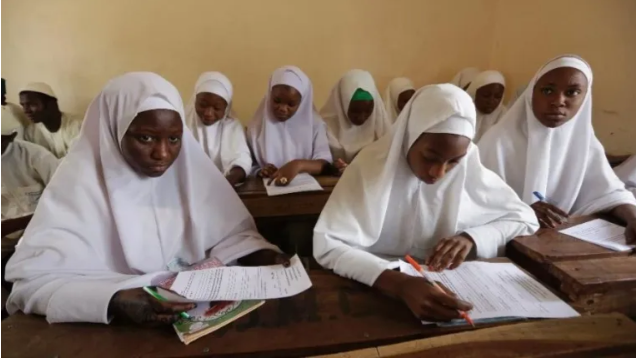
Kano Hisba is right in its “selective raids”

By Mubarak Ibrahim Lawan

It is commonsensically understandable when Kano Hizba could not stage a daring raid on Fatima Ganduje’s wedding or that of powerful people. Their excuse is acceptable to good Muslims and every reasonable person. However, some dimwitted Islamophobic detractors of Islam, who hate or fear Muslims, Islamic politics or culture, will always scorn the Hizba.

From Malam Ibrahim Shekarau’s governance in Kano to date, Hizba has always been the first target of those Islamophobia-suffering people. When they were strong, Hizba succeeded in reducing prostitution, alcohol drinking, excesses of Kannywood actors and actresses and helped maintain order in Kano. It also provided means of livelihood to thousands then, just as KAROTA delivers now. And, since the second coming of Engr. Rabiu Musa Kwankwaso, the powers given to the Hizba during Malam Shekarau was drastically reduced. Politics is all to blame; we all know.

So why do those detractors of Islam choose to ignore this simple fact? Why do they ignore the capitalistic, autocratic Nigerian factor of “the rich/powerful is always right”? Why do they criticise when Hizba works, as when they burn crates of beer, and when the board fails? In that case, what do these detractors want? Similarly, why do we judge people and institutions by some few wrongs or some unavoidably uncontrollable wrongs and limitations? If Allah forgives the Hizba for being forced to overlook, then why can’t you?

It was narrated from Ibn ‘Abbas that the Prophet (ﷺ) said: “Allah has forgiven my nation for mistakes and forgetfulness, and WHAT THEY ARE FORCED TO DO.”

Similarly, “Allah burdens no soul beyond its capacity”. To its credit is what it earns, and against it is what it commits. “Our Lord, do not condemn us if we forget or make a mistake. Our Lord, do not burden us as You have burdened those before us. Our Lord, do not impose on us more than we have the strength to bear; and pardon us, and forgive us, and have mercy on us. You are our Master, so help us against the disbelieving people.”

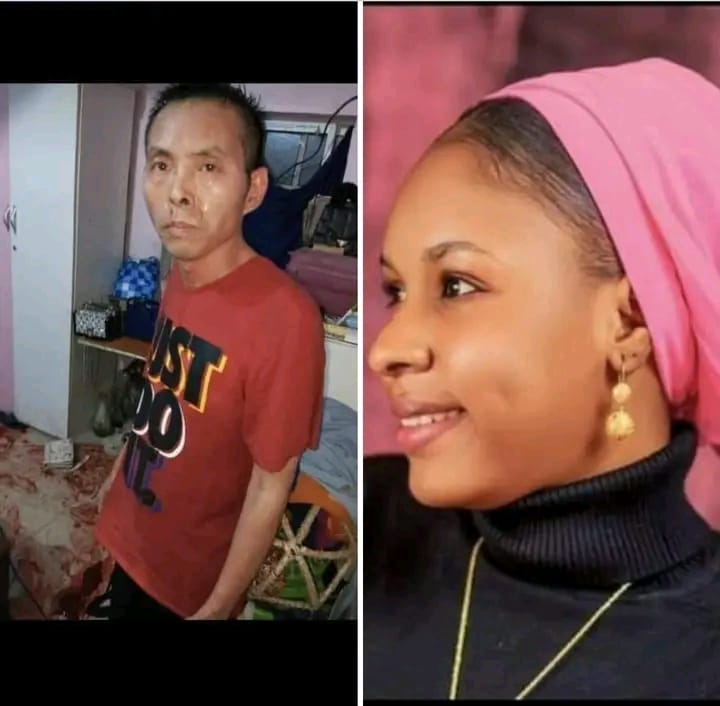
Lastly, they arrested a prostitute, Sadiya Haruna, because they can arrest transgressors like her and alhamdulillah they did. Whoever has complaints should please take a lawyer for Sadiya. Finally, I pray may these Muslim detractors of Islam come to their senses before it is too late.

Mubarak Ibrahim Lawan writes from Kano.

Kano State Police Command disrespects court’s order on PCRC executive committee

By Muhammad Abdurrahman

Despite the directive of court mandating the Kano State Commissioner of Police to continue to recognise the elected executive officers of the Police Community Relations Committee (PCRC) pending the determination of the substantive case, the Kano State commissioner of police, Mr Sama’ila Dikko, has allegedly refused to obey the court’s injunction.

On July 7, 2021, the Kano State High Court handed down an interim order restraining Police and the National Executive Council of the PCRC from dissolving or purporting to dissolve the leadership of the State committee. The said order also restrained a supposed caretaker committee members or anyone else from parading themselves as new executives. However, the state’s commissioner of police, who findings reveal is heading a state command for the first time in Kano, is yet to obey the High Court’s order despite evidence of service.

Reports gathered by The Daily Reality also revealed that the Police Commissioner, Mr Dikko, has been served with the court order. The said commissioner sued as the 8th Respondent in the suit has even filed several applications before the court through the command’s chief counsel Mr Sunday Ekwe.

On two different occasions after the court’s order, one at Kwalli Division and the other at Takai local government, the Kano Police Commissioner has frustrated functions organised by the PCRC to foster synergy and understanding between police and community. The commissioner of police was also alleged to have gathered all his Divisional Police Officers (DPOs) and instructed them not to recognise the court recognised executives of the PCRC.

Speaking on this, Police Public Relations Officer, DSP Abdullahi Haruna Kiyawa said, “Kano Police command has no hand in what is happening in PCRC. The conflict is between the suspended chairman of the PCRC and the national body. Some members of the PCRC wrote a complaint letter to the national headquarter about the gross misconduct of their chairman. After reading the complaint, the national body suspended the chairman, dissolved the entire executive members and appointed a caretaker committee.”

“You also asked about the alleged sale of PCRC ID cards. This is not true; I don’t issue ID cards. Police don’t issue ID cards. So I don’t know where you got this information. This is grievous,” the PPRO protested.

When contacted to comment on the matter, the suspended chairman of PCRC, Dr Saleh Jili, said, “Firstly, DSP Kiyawa was the root cause of all this conflict. He, alone, being the secretary of the PCRC, wrote a complaint against me to our national headquarter for my resistance to his unauthorised issuance of PCRC without proper account and coordination. What he did was an outright contravention of the PCRC Constitution as well as the National Executive Council directive. We caught a suspected thief with a PCRC ID card, and he told us where he got it and who gave him.”

“Secondly, all the allegations he made against me were false, misleading and frivolous. And about my suspension, PCRC National Executive Council has no such power to suspend me and stated by our constitution because they were not the ones who elected me. It is like to say President Muhammadu Buhari impeaches governor Abdullahi Umar Ganduje of Kano State. Can this be possible?”

Counsel to the embattled state chairman, Abba Hikima Esq., said, “The Kano Police Command is out to strangulate the Federal Government’s effort toward effective community-based policing in Kano at a time when Nigeria is bleeding with criminality. The PCRC has, for the past 37 years, championed Nigeria’s community policing project in Kano and Nigeria. Therefore, we shall follow all legally allowed means, including commencing contempt proceedings against the person of the commissioner of police. He is about the only one resisting the order of Kano High Court to ensure that he does not disrespect our courts and get away with it.”

Barrister Hikima added that “The Commissioner’s actions are clearly arbitrary and contemptuous and if not urgently checked by either the hierarchies of the police or the court itself would herald chaos and anarchy. Same also posses a threat to Kano’s community policing program.”

The PCRC is Nigeria’s oldest community policing based organisation, established in 1984 to foster partnership and understanding between police and community members. The committee in Kano State has procured several vehicles for the police, built police outposts and supported the police in various ways.

Earlier this year, the Kano State PCRC organised a state-wide security summit massively attended by dignities, security experts and artisans from the 44 local government councils of Kano state. During the meeting, people received training on “How to report crimes and criminality without getting victimised.”

Fani-Kayode replies critics on photos with Pantami at Yusuf’s wedding

By Muhammad Sabiu


The former Nigerian Aviation Minister, Femi Fani-Kayode (FFK), has come under fire for posting pictures of him with Minister of Communications and Digital Economy, Dr Isa Ali Pantami, at the wedding of President Muhammadu Buhari’s son in Kano.

FFK, a staunch critic of President Buhari, had some months ago described Pantami as an “unrepentant jihadist, cold-blooded beast, a psychopathic and clearly insane individual.”

Attending President Buhari’s son’s wedding by Mr Fani-Kayode took many people by surprise.

Responding to his critics via his verified Facebook account, FFK said politics“is not war.”

“Buba Galadima with Ahmad Lawan, GEJ with PMB, GEJ with VP & Atiku with PMB. Politics is about bridge-building regardless of your differences.

“It is not war. You can be friends with your political adversary & still disagree. It’s called politics without bitterness & being civilised,” he wrote.

Isa Abba Adamu: the unsung hero

By Salisu Yusuf

Sunday, 8th of August, 2021 was a black day for the family of Malam Isah Abba Adamu, the BBC Hausa Service, its listeners, Kano people, the Hausa community in London, and the Hausa community globally over the sudden death of the Kano-born, renowned broadcaster, Malam Isa Abba Adamu. He was the first Black person to have headed the BBC Hausa Service. He was also the Executive Editor of BBC Africa Service.

Malam Abba Adamu has made an enormous contribution in the Hausa language policy formulations, which are policies put forward by ethnologists for language sustenance against language attrition (waning and death). For example, it’s a well-known fact that the Hausa Service has contributed a lot in the lexical modernisation of some new words to Hausa, especially the recent computer terminologies: kwamfuta, na’ura maikwakwalwa, megawati, etc.

Nowhere has late Isa contributed than in areas of translation. Millions of Hausa users will miss his voice, translation skills and interpretative nuance, especially from English news and reports to their exact Hausa versions.

Stations like BBC Hausa (in which Malam Isa was a figurehead and contributor) have attracted many non-Hausa speakers to news in Hausa. This has contributed to the increase in the Hausa speech community. Ethnologue estimated that over 47 million people now use the Hausa language as second language users. Language prestige is another factor in language development because a language attracts more users worldwide. The Hausa language enjoys high patronage as one of the most widely used mediums in the world. People such as the late Malam Isa are among the factors responsible for the prevalent use of the language in Nigeria and all over the world, where it’s used for literacy and information dissemination.

Lastly, the BBC Hausa is also involved in Hausa corpus planning. This involved creating a standard variety of language in spelling and grammar. BBC Hausa uses the Kano dialect in its broadcasts as it’s considered more standard even though with some modifications.

Late Malam Isa Abba Adamu will be remembered for his sonorous voice and more for his catchphrase during broadcasts: “Ana sauraron Sashen Hausa na BBC ne daga tsakiyar London, ni kuma nine Isa Abba Adamu.”

May the Lord in His infinite mercy forgive Malam Isa Abba Adamu and grant him Jannatul Firdaus, amin.

Salisu Yusuf writes from Katsina. He can be contacted via salisuyusuf111@gmail.com.

Arewa Today: Shari’ah for the masses, democracy for the elite

By Ibrahiym A. El-Caleel

Northern Nigeria, Arewa launched her Shari’a project on the eve of the third millennium, precisely in 1999. The project was cheered by Muslims, who are the larger share of the Arewa population. But, on the other hand, the project became a thorn in the flesh of liberal Muslims as well as Islamophobes. Therefore, this generated heated discussions within the Arewa intelligentsia, from the mosques’ pulpits to traditional media pages.

Immediately Shari’a was launched, additives were added to strengthen its influence over the years. The Shari’a courts appeared visibly effective and powerful in their jurisdictions. On the other hand, they were feared due to their initial charisma. Shari’a hudud (penalties) were unapologetically executed in states that subscribed to the project. In 2003, Kano State impressively established the Kano State Hisbah Corps to deepen Shari’a application further. All these were efforts that every conscious Muslim found impressive. Nigerian Muslims were able to leverage democracy to re-establish their lost treasure of Islamic Law. It was a sort of blessing in the eyes of conscious Muslims. Today, however, things are beginning to fall apart.

In recent years, we see rather poor management of the Shari’a project. Convicts in Shari’a courts now find a way to evade justice, leveraging the weak points in the project. More problematic is the visible selective application of Shari’a among Arewa Muslims. Concerning the Shari’a application, Arewa currently operates a caste system. Masses are prosecuted under Shari’a for the slightest offences, but the elites commit big offences and get away with impunity. The Shari’a practised by the earliest Muslim generations was egalitarianism, where everyone was equal before the Islamic Law. But in Arewa today, Shari’a is an elitism that only applies to the nobodies in the society, while the elites break the code and fingers are not raised at them.  

Kano Hisbah is famous for coming into the spotlight with all sorts of amazing arrests and “Shari’a law enforcements”. There are pictures of them randomly stopping youths and cutting their hair because they have kept bushy and unkempt hair. To me, this should be a minor thing that should bother Kano Hisbah, when every week, men and scantily dressed women converge at costly-rented event centres, dancing and freely mixing in the name of celebrating weddings. Kano Hisbah never shows up in such Shari’a noncompliant events because they might be meeting the last son of a commissioner, the wife of a minister or even the nation’s First Lady herself. Apologists of this caste system might say perhaps Kano Hisbah never comes across these numerous events that happen frequently and simultaneously. But the answer is, after concluding the events, these “untouchables” audaciously flaunt the immoral pictures and videos on social media to the public glare. And nothing still happens.

Shari’a in Arewa will continue to be feeble because Arewa leaders are not genuinely committed to executing it. Only Allah knows the hearts of men, but the body language we are seeing is that these leaders use Shari’a in the spirit of populism; to woo political fandom. If we have Shari’a, then everyone must come equal before it. In a sane society, everyone comes equal before the law. This is called “the rule of law”.

It was narrated that during the reign of Caliph Umar bnul Khattab, Amr bnul Aas was the governor of Egypt. This governor had a son who entered a horserace with an Egyptian man, and the Egyptian man won the race. This defeat angered the governor’s son, so he decided to flog the Egyptian man. The man left Egypt and travelled to Madinah to complain to Caliph Umar. Umar summoned Governor Amr bnul Aas and the son to appear before him. When they showed up, Umar asked the Egyptian man to flog the Governor’s son as he had flogged him. Then he said to the governor, “when did you start to enslave people when they were born free?”. This incident indicates that Caliph Umar, as one of the most influential leaders in history, never allowed impunity and elitism to prosper in the land.

Secondly, when a lady from Bani Makhzum committed theft, the people of Quraysh requested Usama bn Zayd to intercede for her with Prophet Muhammad (Peace be Upon Him). When Usama spoke about it to the Prophet (Peace be Upon Him), the Prophet said, “Do you try to intercede for somebody in a case connected with Allah’s Prescribed Punishments?” Then he got up and delivered a sermon saying, “What destroyed the nations preceding you, was that if a noble amongst them stole, they would forgive him, and if a poor person amongst them stole, they would inflict Allah’s Legal punishment on him. By Allah, if Fatimah, the daughter of Muhammad stole, I would cut off her hand.”

Prophet Muhammad (Peace be Upon Him) is the grand patron of all leaders executing the Shari’a. This is him (Peace be Upon Him) saying if his own most beloved daughter were found guilty, he would apply the laws on her with no regard to her exalted status. May Allah’s salutations be upon him. He indeed is our ultimate role model worthy of emulation.

Until Arewa leaders take the Prophet (Peace be Upon Him) as a role model in the Shari’a project, we will continue to be a laughingstock. It is quite shameful that daughters of Arewa governors and emirs dress immodestly at their weddings. We have seen the daughter of former Kano Emir Mallam Muhammadu Sanusi II taking a handshake from the Vice President, an ajnabi (strange man), in front of her father. The daughter of Kano State Governor Khadimul Islam, Dr Abdullahi Ganduje, dressed immodestly on her wedding day. She wore a sleeveless wide-necked gown that almost revealed her chest. As if that was not enough of breaking the Shari’a code, she danced in this outfit to the visuality of strange men. The daughter of former EFCC Czar Mallam Nuhu Ribadu also made a similar appearance some months back.

This week, the trending topic on Arewa Facebook centres around another Kano princess, Zahra Nasir Ado Bayero, who is getting married to the President’s son, Yusuf Muhammadu Buhari. In her bridal shower event in Abuja, the princess appeared in a tight wedding gown, exposing the upper part of her torso. Of course, her hair was styled and opened to the public like her fellow sisters in the Shari’a code-breaking. People are wondering how Kano Hisbah is not seeing all this and issuing a press release.

The amoralism is getting institutionalised by the children of Arewa leaders. It speaks volumes to why Shari’a is still a baby in Arewa despite spending more than 20 years in the system. People who could give us a formidable Sharia are issuing licenses to their children to abuse the code and go scot-free. This is why even convicted blasphemers these days do not end up suffering the penalties. Anyone with some copper coins in their pockets and a little political network can find a way out. Only the poor and the unconnected can be convicted and be eventually punished. This is the caste system we have awaken to in Arewa today. Unfortunately, leaders are not ready to walk the talk. We need a leveller to be able to have an effective Shari’a system. What is good for the goose has to be good for the gander. Else, we are all joking around.

Ibrahiym A. El-Caleel is a Civil Engineer by training with an interest in public and social commentary. He writes from Zaria and can be reached via caleel2009@gmail.com.

Sheikh Abduljabbar Kabara is a blessing in disguise

By Abdurrahman Nasir Salis

The emergence of Abduljabbar Kabara is a blessing and not entirely a curse to the Muslim Ummah from this part of the world. Abduljabbar is a common enemy to variegated clans of foes, to wit Izala, Tijjaniyya, Qadiriyya and Salafiyya, among other sects, who could neither share a shade to rest, mosque to preach and pray nor a home to shelter.

The aftereffect of fighting the common enemy has taught all the clans that the commonalities they share as Muslims far outweigh the differences. It taught all the sects that they have for long overtired themselves on trivialities that are neither a passport to paradise nor a ticket to hell.

Yesterday, I saw three or four different sects I mentioned hereinbefore, who, to an extent and often attribute infidelity or disbelief to each other gathered amicably in a mosque in Kano belonging to one sect (Tijjaniyya), preaching together and praying together. I saw their guards, “Yan Agaji“, working side by side in complete harmony and feeling of togetherness, considering themselves brother’s keeper.

From the onset, seeing Izala guards together with Qadiriyya’s and Tijjaniyya’s “Yan Agaji” at the doors of Tijjaniyya Mosque named SHEIKH IBRAHIM INYASS MOSQUE bewilderedly caught my eyes and attention. Despite the saying that curiosity kills the cat, I entered the mosque with no fear of being killed as the cat. I saw scholars of all the sects on a single table and a crowd of onlookers, the loud cheerers, from all the sects, listening to their Sheikhs filled with feelings of togetherness and inclusivity, and above all, seeing each other as Muslim with Islam at the top of the priority scale and pushing all other considerations to the bottom of the scale.

Life is indeed the best teacher. This happening is not just an ordinary incident that will pass by time. Muslims and their Sheikhs should take this as a lesson that should symbolise how we should behave like Muslims. Unity shall be our sigil. Let me conclude by the saying of the Almighty Allah in the Holy Qur’an Chapter 8 Verse 73: “The Unbelievers are protectors, one of another: Unless you do this, (protect each other), there would be tumult and oppression on earth, and great mischief”.

Abdurrahman Nasir Salis writes from Kano.

abdurrahman00800@gmail.com

+234 806 578 7324

Yes-man

By Muhsin Ibrahim

Religion is one single thing Nigerians of whatever dispensations take in high esteem. Religion is often viewed as the opium of the subjugation of the masses or as their Achilles’ heel. To Rahama, the story is different; religion means nothing to her. It is simply an identifier that she’s a Muslim lady. One might think having grown up in a multi-religious house would intuitively teach her to have respect of some sort for religion, wrong. Her Imams and pastors do not use Qur’an or Bible.

A 28-year-old, stout Rahama Tsoho belongs to a disreputable family of three. Her father, an ex-serviceman, divorced their mother when she was only two. She stays with the father, and her sister with the mother. She had longed to marry since her teenage, but she couldn’t. She always attributes this to her look and family. So, she vows to live a better life in the future by hook or crook and begins to use highly effective and expensive bleaching creams to brighten her skin. She also hunts for a suitor via dubious ways such as flaunting her bosoms and derrière at the workplace and visiting the so-called Malamai, fortune-tellers and sorcerers.

After long and tedious trials and retrials, she meets a fine young man in their office, a newly transferred staff from another state. Without a doubt, she knows he’s beyond her league, but she believes it’s worth a try. But, as feared, the fine-looking new staff turned down her offer right away.

“I swear I will marry that guy by all means”, she declares. Soon after that, she starts consulting her fixers for the aid of whatever nature. “All I want”, she confesses to one of them, a mighty sorcerer who lives atop a high mountain, “is to marry him”.

“That’s easy for us as drinking water”, he assured her. “There are, however, rules, as you well know”.

“I am more than ready to abide by them. All of them, provided my wish will be granted”.

For a start, she’s instructed to visit their family house, which is far away, which is uncommon in the culture of that locality. She unhesitatingly goes. She introduces herself as his colleague. Simple. She, throughout her stay, behaves the most innocent girl-type and spreads greetings to his stepmother and siblings and everyone who cares to respond.

Oga Rabiu has been very helpful”, she warily announces. “I, therefore, felt duty-bound to visit his family as I am here for another reason, actually a relative’s wedding”.

In the evening of the same day, I saw Rabiu looking bothered and lonely. I was about to ask him what was up when he told me about Rahama. He said she was a magic-savvy lady who shamelessly told him their marriage would yield many blessings. When he asked her how she knew that, she said her Mallam told her.

I was bewildered. I quite well know that she’s neither fit for him nor his scholastic family. He halts my busy mind, which is trying hard to dissect the whole scenario: “Muhammad”, he calls my name, “marrying Rahama would be the greatest mistake in my life”. That relieved my besieged mind, for I was contemplating whether or not I should tell him not to accept her proposal. “So, rest assured; I will avoid it like the plague”.

A few days or weeks, I can’t recall exactly, passed by, and I heard nothing from my dear neighbour cum friend, Rabiu or about Rahama’s blunt, in fact, unheard-of proposal. I had just started thinking the issue was dead and buried for good when he came to me with a bombshell.

“I am getting married next week”.

Wow! I said. I know he and his younger brother have been searching for a fitting life partner for him in the neighbourhoods. I also know he’s rich enough to solemnise his marriage within a few days if both parties agree. Thus, I ask:

“Who’s the lucky girl?”

His look changed from thrilled to timidity in a split second. I wish I could retract my question. But, in this deportment, he managed to respond: “Rahama”.

After calculating the atmosphere, I feel convinced that there is no need for any further explanation on how it comes to that. Her magic, shameless pursuit and insincere insistence have ultimately worked out. Therefore, I pray for the Almighty to bless the union and call it a day.

A few years later, I began to think that we all, who earlier condemned her, were proven wrong. She seems a wife everyone would want to have: caring, loving, dutiful, and generous towards him and his family. Yet, her significant frailty remains in how she handles religion. That too, we reason that she’s from a different background. Therefore, we shouldn’t expect her to behave the way we do or as we want.

Unbeknown to us, she’s simply buying time to portray her authentic self. She’s a wolf in sheep’s cloth. She is now doing the unthinkable; Rabiu has literally been her “yes man”. He worships her; he does everything to please her and parts with everyone she doesn’t like, including his brothers and sisters. He’s, to sum it up, blanketed in her world.

Rabiu is known for much discretion, but not any longer. You dare to tell him your undisclosed secret; you would hear it spoken of in the neighbourhoods. If you ask who told them, they would say Rahama.

Uncharacteristically enough and against Islam, Rabiu has, on several instances, bequeathed his wealth to be given to her should he die, as they don’t have any children yet. He cannot even reflect or recall that his father, who should rightly get the lion’s share, is still alive.

There is a single path to get to Rabiu now, and that’s through Rahama. Rabiu is for Rahama, and Rahama is for her family and pocket. He sees, but he cannot decipher. So everyone believes that he’s conjured. And that doesn’t last forever.

Muhsin Ibrahim is a student and staff at the Institute of African Studies, University of Cologne. He can be reached via muhsin2008@gmail.com.

Mastermind of Kano kids abduction, trafficking to serve 104-year jail term

By Muhammad Sabiu

Paul Owne, the suspect who stood trial on charges relating to the abduction and sale of some nine children from Kano, has on Friday been sentenced to serve a 104-year jail term by the Kano State State High Court.

Pleading guilty to the 38-count charges against him, Mr Owne was convicted accordingly by Justice Zuwaira Yusuf, who ruled that there was no any option to pay a fine.

However, reports have indicated that other suspects who stood trial alongside Mr Owne pleaded not guilty.

Pronouncing the judgement, Justice Yusuf stated, “I find Owne guilty on counts two, eight, nine, 27 and 34. I hereby sentence him to seven years imprisonment on each of the counts without an option of fine, in addition to paying the sum of N100,000 fine.

“The court also found Owne guilty on counts three, five, 10, 11, 22, 28 and 38. I sentence him to seven years in a correctional centre on each of the counts,” she added.

According to the justice, the convict was also found guilty on counts four, 12, 13, 29 and 38. Therefore, he was sentenced to serve a 4-years jail term on each of the counts without giving him the option to be fined.

Therefore, the years for each charge put together equal 104 years.

Recall that in October 2019, a hashtag #JusticeForKano9 had trended on social media, especially Facebook, in the aftermath of the abduction and trafficking of the nine kids from Kano to Anambra. They were also alleged to have been forcefully converted to another religion.

This later led to the arraignment of Mr Owne alongside six others on November 13, 2020.

Official: Kano rebuts trending story on women driving ban

Press Release

Kano state government has described as fallacious a trending story on social media platforms on a purported plan to officially disallow women regardless of any faith from getting behind the wheel.

The state commissioner for Information, Malam Muhammad Garba who made the clarification in a statement issued on Thursday, said government had at no time contemplate on the matter.

He said the story, which could not be traced to any credible source, was nothing but the imaginary thinking of the authors.

“The trending story lacks any credibility and that is why it is wholly attributed to a source that cannot be substantiated,’’ it added.

Malam Garba pointed out that if at all there was such plan, the state government does not have to be involved in any secretive meeting to decide on a critical issue that has to do its teeming populace.

The commissioner stated further that even Saudi Arabia which for decades had laws that sanctioned women from driving has, after all, lifted the ban in 2018.

He said it was interesting that some of the scholars quoted to have supported the alleged ban have already dissociated themselves from the story.

MALAM MUHAMMAD GARBA

Hon. Commissioner for Information, Kano state

Railway Projects: Buhari praises minister of transport Amaechi

By Muhammad Sabiu

President Muhammadu Buhari has on Monday patted his Minister of Transportation, Rotimi Amaechi, on the back over what he described as a “task of transforming and modernising every aspect of Nigeria’s national transport infrastructure.”

This is coming four days after the president visited Kano and performed the ground-breaking ceremony of the segment of the Kano-Kaduna railway modernisation project.

Commending the minister via his verified Facebook handle, the president said, “I commend the Minister of Transportation, Rotimi Chibuike Amaechi, the Ministry, and all the project implementation partners contributing to this national effort of railway infrastructure development.”

Recall that on June 10, the president was also in Lagos to commission the Lagos-Ibadan Standard Guage Rail Line. He also inaugurated its “full commercial operations.”