Kano Thuggery

Kano State under siege by thugs 

By Abbas Datti

Our beloved Kano State has now become a nightmare of unprecedented violence, lawlessness and phone-snatching all courtesy of thugs’ criminal activities. Once-peaceful communities now live under the shadow of fear as ruthless and armed gangsters unleash a reign of terror daily. These assailants, wielding deadly local weapons, have maimed, killed, and left countless families in mourning.

The attacks often strike without notice. Some places have now become theatres of war in the dead of night, forcing residents, young and old, to flee into the darkness with nothing but the clothes on their backs. Homes must be locked in broad daylight for fear of being a victim of some happy, menacing marauders. 

The cruelty has engulfed so many metropolitan places of Kano State, with no concerted effort to stop the horrendous activities of those brutal thugs. We wonder when these horrible experiences will stop? Thugs have become a significant threat to the collective well-being of the people of Kano. 

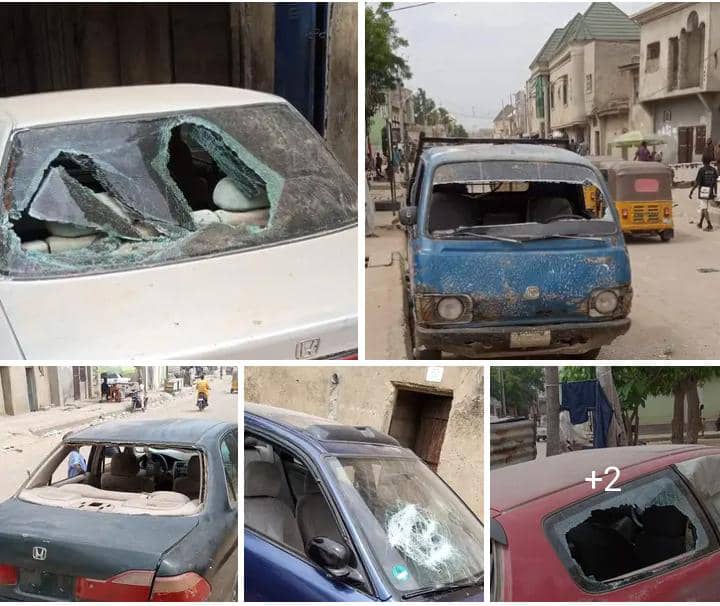
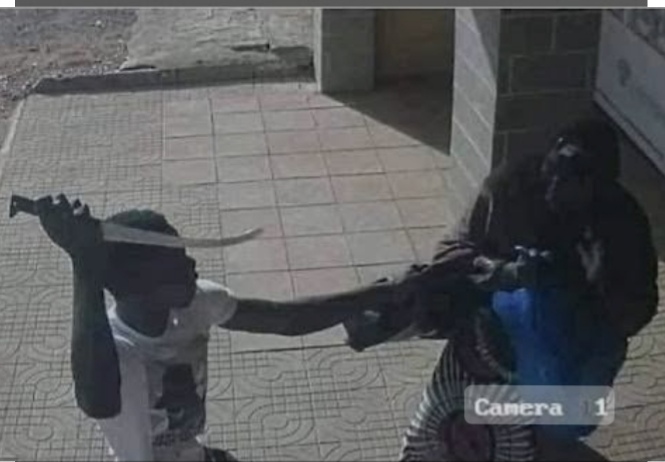
In the chaos, the gang of thugs attack with no mercy. Men are butchered as they defend their families; they have no scruples to attack even women and children as they attempt to escape. Residents speak of the horror of seeing loved ones hacked with machetes, swords and other local dangerous weapons. They destroyed properties, smashed buildings and cars parked outside houses and buildings. 

As this wave of violence rages on, we call for urgent and decisive action from security agencies. Moreover, the Inspector General of Police is to dispatch a special intelligence unit to analyse the situation on the ground and subject it to a holistic review of the present strategy. 

The people of Kano demand not only the arrest and prosecution of the perpetrators but also the establishment of permanent security posts in the most vulnerable areas. Although some security posts were built in some places for that purpose, they are yet to be fully operational, leaving residents with only the building structures. Without swift intervention, Kano risks slipping further into lawlessness, and the fragile threads of peace may be torn beyond repair.

This is not merely an attack on individuals; it is an assault on our shared humanity and our future. We ask for definite action before the fires of thugs consume us all. We ask for an end to this bloodbath that has been threatening the peace and stability of Kano and its people. 

Abbas Datti writes from Kano via comradeabbasdatti@gmail.com.

The alarming rise of thug violence and phone snatching in Kano State 

By Alhassan Hassan Salihu

The shocking surge of thuggery and phone snatching in Kano State has evolved into a grave crisis. This escalating violence threatens the safety, security, and well-being of residents, particularly in the metropolitan areas.  

Despite the overwhelming fear gripping communities, remaining silent is not an option; silence could very well mean becoming the next victim of these ruthless gangs preying on innocent people.

Kano’s Youth Violence

From the streets of Kurna to Dorayi, and Rijiyar Lemo to Gwagwarwa, chilling reports of violence have become commonplace. Street clashes, stabbings, daylight robberies, and innocent lives traumatised by gangs wielding machetes, stones, and knives have turned these areas into unsafe zones. 

The brutality of these gangs is more devastating. Social media platforms are inundated with graphic videos and images depicting these violent incidents. 

Terrified bystanders film young thugs attacking victims who resist having their phones snatched, with many victims bleeding from multiple stab wounds. 

These violent encounters are no longer isolated incidents but part of an alarming pattern that threatens the peace and stability of Kano.

A Personal Near-Miss in Dorayi

Just days ago, a student narrowly avoided becoming a victim during a routine trip from Zoo Road to Dorayi in a commercial tricycle (Keke Napep). 

Two young men suddenly jumped into the vehicle; one sat beside them, the other beside the rider. Despite explaining that it was a private drop-off, one of the youths became aggressive. 

Thankfully, the presence of a nearby police outpost likely deterred any violent intentions. They dropped off at a university gate without incident.

This encounter serves as a sobering reminder that violence can erupt anytime, anywhere. Such an incident was lucky, not guaranteed. For many others, it ends in tragedy.

Violence Spreads Beyond Kano

The wave of thuggery and phone snatching extends beyond Kano State. In neighbouring Kaduna, the tragic stabbing of a naval officer, Lieutenant Commander M. Buba, shocked the region. 

While changing a flat tyre in the Kawo area, he was attacked and stabbed in the chest after he refused to surrender his phone. Despite intervention by local vigilantes, he was pronounced dead on arrival at Manaal Hospital.

Authorities have since detained at least 13 suspects and initiated covert operations to dismantle gangs terrorising Kaduna’s streets. Yet the spread of this violence signals a regional issue that calls for coordinated responses beyond the borders of individual states.

 Tragic Loss of a Community Leader

Closer to home, Kano mourned the brutal murder of Alaramma Jabir Lawan Abdullahi, a respected Islamic teacher and tech expert. 

On the evening of May 17, 2025, near Gidan Sarki, he was attacked while travelling in a commercial tricycle amidst heavy traffic. When he resisted attempts to snatch his phone, he was stabbed multiple times by suspected thugs and left to die on the roadside.

This horrific act has ignited outrage across Kano. The fact that a well-known and respected educator could fall victim so brutally sends a clear message: no one is safe in the current climate of violence. 

Arrests Made, Yet Violence Continues

According to the Kano State Police Command, over 200 suspected thugs and phone snatchers have been arrested over the last six months. 

In March 2025 alone, the police paraded over 85 suspects from hotspots such as Kofar Ruwa, Dan’agundi, Zango, and Dorayi. Weapons, stolen phones, and illicit drugs were seized.

Despite these efforts, the menace persists, the gangs’ deep-rooted networks rapidly replenish lost members, highlighting the inadequacy of enforcement alone. 

Underlying socio-economic challenges, including high unemployment, widespread drug abuse, and poor educational opportunities, fuel the cycle of crime and violence.

Steps Taken, But More Must Be Done

The Kano State Government has made commendable strides in tackling this crisis. 

Rehabilitation centres in Kiru and Dorayi, alongside the National Drug Law Enforcement Agency’s (NDLEA) facility for addiction treatment, are important tools in combating the link between substance abuse and violent crime.

However, these centres require urgent expansion and increased funding to meet growing demand. With rising numbers of youths affected by drugs and crime, scaling rehabilitation services is essential, and more compulsory.

Need For Holistic Action

Security agencies cannot rely solely on arrests to solve such enduring crises, which require a community-based approach. 

Strengthening community policing, empowering neighbourhood vigilante groups, improving local surveillance, and fostering trust between residents and law enforcement are critical for restoring safety. Equally important is addressing the root causes of youth involvement in crime. 

The government must urgently invest in job creation schemes, vocational training centres, and youth empowerment initiatives such as sports and cultural programmes. 

Idle youth are more vulnerable to gang recruitment and drug addiction. Productive engagement is the key to prevention. Moreover, effective rehabilitation programmes and mental health support for addicted offenders must be prioritised. Without this, many youths will remain trapped in a vicious cycle of crime and incarceration.

Lastly, the justice system must be reformed to ensure quick and fair prosecution. Many arrested criminals return to the streets quickly due to weak legal follow-up, undermining deterrence and public confidence. Stronger, faster legal processes and appropriate sentencing are necessary to break the cycle, as it was previously demonstrated.

Conclusion

The menace of “fadan daba and phone snatching” in Kano has reached a tipping point. No one is immune, from students and traders to community leaders and law enforcement.

The Evolution of Yan Daba: From warriors to thugs in Kano

By Salisu Uba Kofarwambai

“Daba” comes from the Hausa term for a gathering place where people would sit and converse during their leisure time. Over time, the term took on a different connotation, referring to a spot where idle individuals would congregate, discuss, and plan their criminal activities, often fueled by drug addiction.

Historically, Hausa society had warriors known as Yan Tauri. These brave adventurers possessed magical powers and charms that made them nearly invincible in battle. They were also skilled hunters, often engaging in fierce competition over their prey. However, the Maitatsine crisis in the late 1970s to early 1980s marked a turning point for Yan Tauri. The crisis erupted when the followers of the heretic preacher Maitatsine clashed with the Nigerian government. 

Maitatsine, a Quranic teacher from Cameroon, had attracted a large following in Kano before beginning to preach against orthodox Islamic teachings. He started labelling people as infidels for merely watching TV or drinking tea with milk. When his son was killed at the street fight in Sabon Gari, Maitatsune started attacking people and killed many Kano residents.

The federal government refused to intervene, mainly due to party rivalry and Governor Abubakar Rimi’s criticism of the ruling party, NPN, and President Shehu Shagari. Thus, the Kano state government was left to handle the crisis on its own. The state government enlisted Yan Tauri’s help to combat the Maitatsine followers. Yan Tauri fought bravely, killing many followers, but this exposure to violence and bloodshed had a profound impact on them.

Following the Maitatsine crisis, Yan Tauri began to metamorphose into Yan Daba, a group notorious for their thuggery and violence. Politicians exploited Yan Daba for their gain, employing them as enforcers and thugs. During Governor Rimi’s tenure, the divide within the People’s Redemption Party (PRP) in Kano State further exacerbated the situation. The party split into two factions: the Santsi group, led by Governor Rimi, and the Tabo group, led by Malam Aminu Kano. Both factions employed Yan Daba thugs, leading to a deadly fight between the two groups.

Notorious Yan Daba members during this period included Gogarma, Mal Hadi, Gambo Cooperation, Sarki Change, Sabo Wakilin Tauri Mai Adashin Sara, Uba Dala Bala Turu, and many others. These thugs were known for their brutality and willingness to do whatever it took to achieve their objectives.

The reign of terror by Yan Daba continued until Major General Muhammadu Buhari came to power in 1983. Buhari’s administration cracked down on Yan Daba, arresting, killing, or forcing many of its members to flee Kano.

Then, in 1989, during General Ibrahim Babangida’s effort to transition Nigeria back to civilian governance, the Social Democratic Party (SDP) and the National Republican Convention (NRC) were established. These parties significantly influenced Nigeria’s move towards democracy. However, they also, perhaps unintentionally, aided the revival of Yan Daba in Kano as politicians continued to manipulate them for personal gains.

Yan Daba’s activities plagued Kano, with members engaging in robbery, assault, and other forms of violence. The emergence of notorious gangsters marked their reign of terror.

With the return of democratic rule in 1999, Yan Daba continued to pose a significant problem in Kano. Politicians continue to exploit them for their own gain, and their activities remain a major challenge for law enforcement agencies. Over time, Yan Daba has evolved, with many members now engaging in phone robbery and other forms of cybercrime.

Today, Yan Daba remains a challenge, with members engaging in various forms of criminal activity. Their history should be a cautionary tale about the dangers of exploiting violence and thuggery for political gain.

Salisu Uba Kofarwambai wrote from Kano via salisunews@gmail.com.

Perpetrators of the Kano protest violence: Politicians or the youth?

By Anwar Usman

The nationwide protest organized by Nigerians purposely to highlight the sufferings and hard times that Nigerians are going through was later turned into thuggery, which resulted in vandalizing government properties and stealing people’s belongings.

Everyone who attends the gathering knows precisely what happened and who is responsible for the vandalization during the peaceful protest. It’s unfortunate that some people who didn’t even partake in the protest but only witnessed some part of the event on social media concluded that the protesters were the ones responsible for the vandalization of government properties and went ahead to fault this same youth who is agitating for good governance and food security.

I joined the peaceful demonstration as a citizen to exercise my democratic and civic rights. The demonstration began peacefully, with youth raising placards containing various inscriptions telling the government what was necessary. I also witnessed many instances where the same youth advocated for a peaceful demonstration by warning those trying to cause havoc or unnecessary problems.

It was not until after the address by the governor of Kano state that some angry youth were said to have joined the demonstration and vandalized the NCC office that’s yet to be commissioned. How is it possible for people who want the government to listen to their yearnings and aspirations to end up in this barbaric act? 

A lot of misinformation on social media claimed that this youth initially organized the demonstration to loot. But this opinion is strictly for those who think citizens should not tell the government the difficulties they’re going through through protest. These people are very well aware of the situation in the north and Nigeria.

In reality, these thugs were hired to disrupt the demonstration process. Is there any place that one can find rocks of the same size on a state road? How do the rocks get there? How could there be a political gathering while the protest is ongoing? This tells you that these uneducated thugs were hired to fault and disrupt the demonstration process due to some political reasons I wouldn’t like to mention here.

Look, this demonstration tells you how angry and hungry people are, especially the youth around 20-25 years of age. Although this is a planned demonstration, a time is coming when no one can stop these youth from expressing their anger. Youths were coming out in thousands to express their concern about what has been happening for a year now.

If you think the protest is the main cause of what happened, does that mean people should not participate? Everyone knows the danger of following the Kaduna-Abuja road due to kidnapping and banditry, but does that stop people from following the road? Don’t they want their lives? What about the people of Katsina who are now friends of bandit? 

The vandalization shouldn’t be the yardstick for generalizing these youth who are out to secure their future. If the protest is a means to express dissatisfaction over the government’s inability to meet certain demands, then people must partake,even if that can change their lives. 

Even in the US, the mother of democracy, during the protests, people carried out such acts (not stealing). Assume I’m lying, but fact-check what I said.

The question left unanswered is, where do you think Nigerian youth can find hope, and through what process? This is a democratic era. People must exercise their democratic rights before their leaders can listen to them.

Imagine a country where the president is publicizing that he has no CABAL or a SPONSOR! That is to say, the moment he assumed office, Nigerians were sold to him by the delegates of his political party, and no one could influence his decisions, positively or negatively.

I sympathize with the victims who lost their properties and some lives in the process of the protest, but this shouldn’t be the end. You must lose something to get something, and hopefully, the end of the struggle will yield a positive result.

It’s a time for Nigerian youth to abstain from drugs and vandalism. Do not let anyone use you to cause havoc and dump you in a dustbin. Think for yourselves, attend school, and build your future because success is yours.

The people behind this thuggery sent their children abroad, schooling in the world’s first-class universities, whereas the sons of the common person are dealing with drugs, joblessness, and uncertainties of life.

The government should use what happened in Kano as a case study. It’s always said that “a hungry man is an angry man.” The government should try to listen to Nigerians’ yearnings and provide immediate solutions to their sufferings. If not, no one can dare stop these youth the next time they’ll be on the street in the name of protest.

God bless Nigeria. May Nigerian succeed, amin.

Anwar Usman Hassan wrote from Kano via usmananwarhassan@gmail.com.

Our peace is becoming a history

By Dansaleh Aliyu Yahya

Fighting and terrifying others’ peace for no logic might be the nastiest thing one could ever see. I presumed those who do it should be characterised as ridiculous, merciless and barbaric from all angles—their fights are always loathsome. Our parents and we are doleful!

Diso of Gwale local government has now become the meeting juncture of the indigenous hoodlums of Kofar Na’isa and Hausawar Cikingari. They disturbed our stability for the last three-plus days—making us quiescent.

We were skittish yesterday, too, for their infamous masquerades. They arrived when we were with the children at our “Night Islamiyya (Makarantar Dare)”. The students included many girls and women who were there only to study the Qur’an and other Islamic knowledge specialisations. They coerced us to return with their pandemonium and holding weapon fights—it was not the first day.

Furthermore, they (the thugs) sabotaged many road-parked cars yesternight. I saw more than ten cars that had their mirrors shattered this morning. They took many people belonging after distracting the people’s shop entrances. They even stole three 25-litre petrol bottles from a fuel seller I know—75 litres of petrol. I was told that they used it to intimidate people in their homes when they refused to allow them into the houses to steal. They even removed doors. So annoying!

In addition, the policemen constantly blaze tear gas on our faces to bring peace and stability. However, it ends up troubling it—leaving us with sobbing kids, runny noses and eyes. They don’t even arrive to stop it when it’s occurring.

Nevertheless, they come after the criminals go away. Sorry for saying that; they might have their rules for doing things that I might not know (the police). But, for my life, I could not understand those rules. Maybe you do. But, I think they must be coming earlier—from my boyish imagination.

To cap it all, I would like to request the government, the police forces and any other form of peace personnel to help us eradicate those sagacious criminals from harming us, our parents and our siblings. We want a stable, peaceful living environment for ourselves and everyone. I hope my message will go to its intended destination.

Combating thuggery in Kano: What is your contribution?

Najeeb Ibrahim

Peace is not just a state of mind which is personal but also that which could be an inter-personal, inter-communal, inter-regional, and global phenomenon.

Kano State is free from bandits and kidnappers in contrast to other northern states like Zamfara, Sokoto, Katsina, and Kaduna. Thus, the state becomes an asylum for many people from different parts of Nigeria. A single issue that bedevils the tranquillity of the state is thuggery (dabanci).

Thuggery has been a threat to the people of Kano for an extended period. It costs many people’s lives and prompts the distraction of many properties. Recently, the abominable act has arisen, forcing people indoors before dusk.

In parts of Gwale local government, two warring parties from Hausawa quarters and their opponents in Kofar Naisa disrupt our peace. They have been fighting each other for a long time. Very recently, Hausawa thugs ventured into the community of Kofar Naisa around 1 am to take revenge for their brother, who was wounded by one of Naisa’s ruffians.

Police tried to quell the fight. They fired several tear gases. One of the tear gas canisters dropped fell in our neighbourhood. The family of the house, including children and a two-month-old baby, wept; the baby even fainted at night. Many car wind glasses were broken, several kiosks were burgled, and the thugs stole many things.

The Kano State police commissioner has been working hard to ensure that thugs and thuggery have no hidden place in the state. In the last two weeks, the commissioner announced some names of thugs’ leaders to surrender themselves. Otherwise, he resolved to fish them out by himself. We are deeply in debt to the enormous effort of the commissioner.

Civilians also have roles to play to surmount the situation in the state:

First, if anyone is known to be in the dirty business of thuggery, offer a piece of useful advice to him. Cite him some references with those who have long been in the messy business. Ask him whether they achieve anything worthwhile in life or not. Tell him soothingly that most end their lives in misery and sycophancy.

Second, if you have the means, help him go back to school. If it is a financial problem that refrains him from furthering his education and he decides to enrol into the school of thuggery, but apart from you, you are not financially stable to assist him, tell someone whom you know can hepl him. It says, “Knowledge is light, and it guides us to the right path”.

Also, avoid dissociating from him, and advise your friends not to do so. Many thugs decry dissociation from their friends; they neither talk to them nor invite them to events like wedding ceremonies and so on.

A similar case happened in Makasa quarters. A retired thug got frustrated by his friends. They dispersed and left him alone if he joined them in their setting place (majalisa). Nobody showed him an appreciation for his withdrawal from his former self.  He became incommunicado in his society.  In the end, anxiety and depression led him to murder himself.

Second, to last, form a youth organisation in your locality. Assemble at least once in a fortnight. Discuss your problems, and offer solutions and pieces of advice to yourselves. Let everyone feels at home with one another.

And finally, report any thugs’ meeting point you know to the police station near you. Do not hesitate. Because as long as thuggery persists in our society, our lives and properties will never be safe.

May Allah guide us to the right path and guide those who have already gone astray amin.

Najeeb Ibrahim wrote from Kano. He can be reached via inajeeb08@gmal.com.

Tens injured, vehicles destroyed as thugs attack NNPP supporters in Kano

By Muhammad Aminu

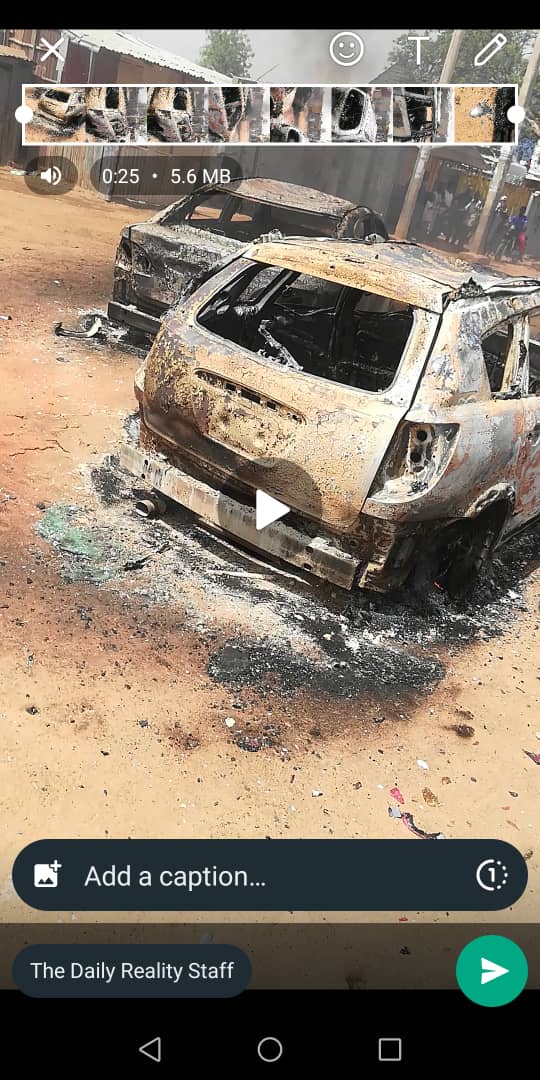
At least ten vehicles have been destroyed and many injured as thugs attacked supporters of the New Nigeria Peoples Party, NNPP, in Kano Thursday afternoon on their way to welcome NNPP’s presidential candidate, Rabi’u Kwankwaso.

The vehicles filled with the NNPP’s Kwankwasiya movement supporters have been vandalized, among which three were burned to ashes.

An eyewitness, Tasiu Lawan, said he escaped death as hundreds of thugs attacked them and wounded many people.

Lawan further confirmed that many people had been injured while vehicles were touched.

NNPP’s presidential candidate Rabi’u Kwankwaso was billed to hold his grand finale campaign in Kano, where he enjoys a massive following.

Earlier in the morning, Kano State Police Command, through its spokesperson, Abdullahi Kiyawa, advised the trio of All Progressives Congress, Peoples Democratic Party and New Nigeria Peoples Party to put on hold their planned rallies in Kano due to the possible clash between their supporters.

Recalled that in 2019, the Kano Commissioner of Police barred Kwankwaso from holding a political rally in Kano ahead of the general elections, which his members see as clear discrimination and siding with the ruling party in Kano.