Kano State

Gender and the Disappearing Hausa Intangible Heritage: A Study of Shantu Music

By Prof. Abdalla Uba Adamu

Hausa Intangible Heritage Revival – Overture to the Symphony

When Gillian Belben, the British Council’s new Director in 2004, wanted to introduce a truly unique project in enhancing the cultural relations between Britain and Nigeria, a series of initiatives were proposed. One of them was Connecting Futures – a project that linked youth in Britain and Nigeria through music, films, debates, social advocacy and the arts.

I was involved in the film and music projects. In the music domain, we wanted to create a music ensemble that would revolutionize traditional Hausa music – an endangered performing art. The reason for its endangerment was its griot-based nature. Traditional Hausa musicians were seen basically as praise singers – singing the praises of rich, famous, infamous patrons who pay them a lot of money. The changing Hausa society in the 21st century saw the disappearance of such griot musicians – as no one had the money (or the gullibility) to pay to hear their praises, except politicians – thus making such performances short-lived and, fundamentally, non-artistic. I was the Chairman of the defunct Center for Hausa Cultural Studies, based in Kano. The Center and the British Council liaised to develop a project to create a sustainable focus for Hausa traditional performing arts, at least for as long as the Connecting Futures project lasted. There was no government input in this – we did not seek any, nor do we expect any, despite the existence of the History and Culture Bureau (HCB) in Kano.

Gillian and I were interested in contemporary European music of multiple-instrument ensembles and decided to recreate an ensemble of Hausa musicians playing different instruments. This was unheard of in Hausa ethnomusicology since, traditionally, Hausa griot musicians tended to stick to only one instrument (stringed or percussion). However, with the advent of ‘modernity’ in traditional performing arts, some Hausa club musicians started combining string instruments (kukuma mainly) with percussion – drums and calabashes. Examples include Garba Supa and Hassan Wayam. For more on this, see Jacqueline Cogdell DjeDje’s brilliant Fiddling in West Africa.

We were not interested in modern synthesizer music with its sampled sequencers of sounds that modern Hausa ‘nanaye’ singers arrange to form melodies and then transposed lyrics over the beat, often with female autotuned voices – all mimicking Indian film soundtrack singers. This production mode earned their genre the name of ‘nanaye’ – girlish (not female, incidentally!) music.

In our project, we envisaged four different instruments working in harmony to produce at least an acceptable ‘post-modernist’ Hausa traditional griot music – without the praise singing. We sent out notices requesting expressions of interest from interested musicians, mainly griot. Many ‘nanaye’ singers came, and we turned them away – we wanted musicians, not singers –none of the nanaye singers could play any traditional instrument. Auditions were held with those who can play a specific traditional instrument, and we first chose three: sarewa (flute), kukuma (fiddle), and kalangu (drums). Because there were many varieties of drums, we added duman girke ‘conga’ drums. All were to be played by males, as was traditional in Hausa traditional performing arts. That was when Gillian decided to up the ante by insisting on a female musician join the four young men.

This was a tall order for many reasons. Hausa women are not accustomed to playing musical instruments, especially in public. There were, of course, exceptions. The late Hajiya Sa’adatu Barmani Choge and Hajiya Uwaliya Mai Amada both had ‘calabash orchestras’ and performed in public. You can find further readings on her life and performance at the end of this. Currently, in 2022, Choge’s children and former bandmates have continued the tradition of performing in public – mainly at weddings and naming ceremonies. They used to perform during political campaigns, but the bad publicity and accusations of improper behaviours put paid to that.

Both Uwaliya and Barmani were in advanced age and could get away with pretty much everything. Getting a young Muslim Hausa woman to join young males and perform in public was genuinely challenging. However, Gillian was determined to do it, so we focused on the instrument the female band member could play. The only viable one was shantu – an aerophone. This was a female musical instrument, which, together with the bambaro (mouth harp), has all but disappeared.

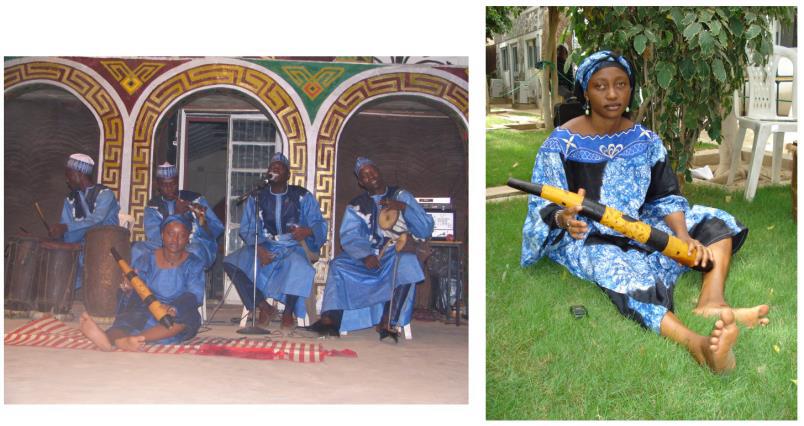
Eventually, we found Fati Ladan, a lady living in Kano but originally from Niger State, who was one of the ƙoroso dancers attached to the History and Culture Bureau (HCB), Kano. The HCB already have a shantu ensemble, made up of much older women who perform during opening ceremonies at government events – adding a bit of classic flavour to the settings before the long speeches start.

Fati could not play the shantu herself but was willing to learn, especially from the existing shantu ensemble at the HCB. She eventually became adept at it. In the next stage of our project, we added her to the earlier group of four male musicians and called the group Arewa. But since the fronts man of the band was Nasiru Garba Supa, the son of the legendary kukuma player, Alhaji Garba Supa, we later referred to the band as Nasiru Garba Supa and Arewa. You can watch Fati’s solo performance, which I recorded and edited in 2014 in Kano, at https://bit.ly/3DF1Hfk.

The shantu, a percussion tube used by Hausa women, found its way to North Africa due to the trade in enslaved women (for more, see Ames and King, Mercedes). The Kanuri ganga (double-headed cylindrical drum) and the Hausa and Songhai instruments of the same name are North African borrowings from West Africa. An extremely large variant of the shantu, called languru (sharing a name with a language learning and dictionary app) and also referred to as shantu, is played by male Fulɓe.

Interestingly, the languru is similar to the alphorn, a wind instrument that is a national symbol of Switzerland. It has been used by Alpine farmers for hundreds of years as a form of communication in mountainous regions, although now it is simply a musical instrument. During the 18th centuries it was regarded as a beggar’s horn, since it was most often played by impoverished shepherds in the cities, obviously using smaller versions. The Fulɓe languru is also a wind instrument and played during festivities in gatherings of the Fulbe in the evenings after the cattle has been squared away either in corrals or designated areas. The smaller shantu used by women is a tubular shell of a long, narrow gourd, open at both ends; often decorated with patterns burned on, or cut into, the outside shell. It is held in the right hand and beaten in a variety of ways by the seated player, including the following:

  • Stamped with its lower end against the inside of the right thigh, or against the calf of the right leg.
  • Stamped with its upper end against the open palm of the left hand
  • Tapped with its outer shell against the shin bone of the right leg
  • Tapped with the lip of its lower end against the ground
  • Tapped on its outer shell with rings on the fingers of the right or left hand
  • Used singly or with one or more other shantuna in the statement of zambo (innuendo), as in waƙar kishiya (song of co-wife), karin magana (proverbial sayings), etc., through the imitation of speech tone and quantity; used solo or with one or more other shantuna in the accompaniment of song
  • Used by women for social comment (e.g., by a co-wife in criticism of her partners) or for informal music-making.

Nasiru Garba Supa’s Arewa and Fati performed many concerts for the British Council over a period of two years, generating a lot of interest and accolades due to Fati’s often solo slot given during any performance. Since the concerts were family affairs – involving the whole family to attend – many young people were fascinated by Fati’s shantu playing.

Gender Rebellion and Shantu music – The QAC Troupe in Historical Perspective

Generally restricted mainly to elderly women playing it to amuse themselves, the shantu was made a choice of musical performance in all-female secondary schools in northern Nigeria in the 1970s. For the most part, they performed during school activities – graduation, cultural days, national events, etc. Once the students graduate from the secondary schools, they simply retire the shantu to what would pass for attic. However, perhaps remembered by people in their sixties, the prominence of shantu as an instrument in public performance was catapulted into legitimate public entertainment in the early 1980s by students of Queen Amina College (QAC), located in Kakuri, Kaduna, northern Nigeria, especially the 1984 graduating class. They were encouraged to use it as part of the then cultural revival in secondary schools. The main reason for their popularity was rehearsed perfection. Perhaps not surprisingly, they were more frequently featured on NTA Kaduna cultural variety shows.

However, soon enough they started drawing criticisms due to their increasingly bold, and what was seen as anti-cultural, performances. Perhaps carried away by their popularity, they became more experimental in their choreography. One of the performances on their setlist was Gantsare Gaye. Accompanied by the deep bass-like hollow sound of about 10 shantus, the dancers energetically move their derrières in an obscene movement of sexualized dance routine (mainly referred to as ‘gwatso’/thrust). Although the 1980s was a liberal decade (and almost twenty years before Sharia was launched in Islamicate northern Nigeria), the sight of teen girls performing such obscene dance routines on public Television drew critical reaction and condemnation in newspapers and from Muslim clerics in Kaduna and Kano. The QAC girls were undaunted, however, knowing fully well that they had the full protection of their powerful parents, the girls themselves eventually marrying into equally powerful influential homes, with quite a few of them becoming powerful themselves. QAC was an elitist school and thus created a cultural disjuncture in the performance of the girls. Interestingly, it evolved from a Catholic missionary educational tradition – thus giving multiple readings to the girls’ performances. The college was established as the Queen of Apostles College Kaduna by Catholic Missionaries in 1940, becoming Queen Amina College when it was taken over by the Kaduna State government in 1970s following government takeover of missionary schools.

Their defining creative moment was at the International Market for Film and Television Programmes, organized by the Nigerian Television Authority, held at Durbar Hotel, Kaduna, from 27th to 31st March 1983 (NTA IMPT ’83). Part of the festival included performances by various artists – and the QAC girls were requested to perform on stage for 15 minutes. Their troupe consisted of 22 performers – 12 call-and-response vocalists and dancers, and 10 shantu players who also called the chorus. There were no percussion instruments, with the bass sound of the shantu being sufficient enough.

Through trawling various Facebook postings, I have been able to identify some of the performers – now all grandmothers and in their mid-50s! They included Fatima Umar Wali, Halima Waziri Digma, Maryam Tinau, Maryam Adamu, Hauwa Suleiman, Aishatu B Musa, Rabi Tinau, Binta Tukur, Binta I Kaita, Fatima Musa, Fatima Usman, Mairo Mu’azu, Amina Musa, Zuwaira Abubakar, and of course, others, actually mentioned in some of the verses.

Their setlist for that festival was made up of five songs, plus intro and outro skits. The main songs were Karyamaye, QAC, Alhaji Lawal Kalabayye, Ko da Rabo, Gantsare Gaye. The song structure of their performance did not fall into the classic intro, verse, pre-chorus, chorus and bridge, associated with modern, basically English songs. They adopted the framework of chorus, verse, chorus – in a call-and-response pattern, typical of traditional songs in northern Nigeria. The chorus was also the song’s hook. Only one song had an opening doxology of one line (Karyamaye). Sleuthing on Facebook comments about the uploaded videos of the performances reveal that Alhaji Lawal Kalabayye was named after their food contractor! He apparently did a good job to warrant having a whole song devoted to him!

The opening song of the performance, after a few seconds of the intro skit, was their masterpiece: Karyamaye (a made-up word to provide vocal harmony). This was an invective song targeted at their public culture critics. The first (and actually, the main) verse is transcribed below:

To bismillah, jama’are, Arrahmani/People, we start in the name of Allah

Mu ƴan Hausa, da mu ƴan Shantu/We, the Hausa and Shantu club

Da ba ruwan mu da kowa/ Those who are not bothered

Ba ruwan mu da kowa/We are not bothered

Sai dai a gan mu a bar mu/See us, and leave us alone

Sai ko hararar  nesa/Your dirty looks only at distance

A cikin duniyar nan, Wallahi/ In this world, by Allah

Muna da masoya, kana muna da maƙiya/We have fans and we have haters

An ƙi jinin mu, kamar a sa mana kananzir/They hate us, wishing to pour kerosene on us

A ƙyatta ashana a jefa/And lit [the fire to burn us]

Ba’a san mu kamar a kashe mu/The haters want to see dead

Ga rijiya a saka mu /Or throw us in deep wells

Ko a samu warin gwano/Or make us stink like black stink-ant

Daga hange sai leƙe sai ko harar nesa/Watching afar, hating with dirty looks

Wataran sai labari/It’d be all over one day

…       

Ku san mai san ku/ Kana kusan mai ƙin ku/Know your fans/ Know your haters

Koda dare ko rana/ koda cikin ƙabari ne/Night or day, even in the grave

Koda ruwa ko iska/ koda cikin duhu ne/Through storms, even in the deepest darkness

Karyamaye, with full booming sound of 10 shantuna (pl.) with outside air energetically sucked down the aerophone provided a perfect percussion to their voices, and really demonstrated the power of the shantu in well-skilled hands. It is this rehearsed, almost flawless perfection that stood them better than other girl troupes in their immediate vicinity (e.g., Kurmin Mashi girls shantu troupe, also in Kaduna). Their verse was full of insouciance, defiance and pride in their art and identity; for instance:

Mu ƴan Hausa, da mu ƴan shantu/We, Hausa and shantu players

Perhaps, even aware of their delectable beauty, they cocked a snook at their unapproving but silent admirers:

Sai dai a gan mu a bar mu/ Sai ko hararar  nesa/

The line is basically saying, look, but we are untouchable – you can only hate from afar. As I indicated earlier, the second performance, Alhaji Lawal Kalabayye, was named after the school’s food contractor, as confirmed by a former Home Economics teacher at the College, Mrs Lasfir Tasalla Andow, in 2019. The song, however, did not mention Alhaji Lawal himself, although the first lines of the song salute farmers – an obvious reference to food, and tangentially, to Alhaji Lawal!

Ina jin hausin mutumin ba ya zuwa gona/I am annoyed at a person who detests farming

Sai ya zauna a tsakar gida sai ka ce turmi/Always at home like some fixture

The song, however, further reaffirms the Hausa identity of the performers because they went through a cycle of profiling various ethnic groups – essentially pointing out the bad character traits of the groups, justifying their unwillingness to allow their daughters to marry them because of the profiled reasons they gave. For instance:

Ina da ƴata ni baza na bai wa Zagezagi ba/I will not marry off my daughter to Zaria people

Fate da safe, fate da yamma, kamar mayu/Yam porridge all day, like hexers

Ina da ƴata ni baza na bai wa Fulani ba/I will not marry off my daughter to the Fulani

Uwa a daji, uba a daji kamar kura/Both mother and father in wilderness, like hyenas

Ina da ƴata ni baza na bai wa Beriberi ba/I will not marry off my daughter to the Kanuri

Uwa da tsagu, uba da tsagu kamar ƙwarya/Both mother and father with facial marks, like calabashes

Ina da ƴata ni baza na bai wa Yoruba ba/I will not marry off my daughter to the Yoruba

Suna da kuɗi, amma a kwano suke kashi/They are wealthy, but they poop in their dishes

Ina da ƴata ni baza na bai wa Katsinawa ba/I will not marry off my daughter to Katsina people

Uwa masifa, uba masifa kamar sauro /Both the mother and father are too fiery, like mosquitoes

Ina da ƴata ni baza na bai wa malamin bana ba/I will not marry off my daughter to modern Malams

Yana wazifa, hannunsa na shafa ƴan mata/While being devotional, they also fondle little girls

These stereotypes, of course, fall within the purview of joking relationships in forms of playful taunts between citizens of various cities that made up the old kingdoms of northern Nigeria. Such relationships are often based on ancestral pacts forbidding conflict or war between specific communities, and imply that the members must love one another and provide assistance where needed. The lyrics were therefore not meant to condemn or belittle any community or groups.  

It was surprising that Kano, with its almost manic commercialism, escaped this stereotyping – even though most of the girls were not from Kano, but perhaps their songwriters (most likely their Hausa subject teachers) were from, or affiliated with Kano! Whatever the case, their trenchant, non-politically correct lyrics cast them with an independent and spirited veneer that demands either acquiescence or indifference from the public. The ethnic groups of Yoruba, Kanuri and Fulɓe each came under their taunts. The Yoruba came into the picture because of Ilorin, considered one of the ‘bastard seven’ Hausa city-states (banza bakwai), although the historical narrative used Yoruba as a generic term; but it was only that Ilorin had a historical connection to the core Hausa states. Even respected Islamic teachers did not escape their barbs – – being accused of alleged sexual abuse of children under their care. This created a picture of betrayal of trust by those in charge of child care. Perhaps due to the constant radio criticisms of the girls by the cleric establishment in especially Kaduna and Kaduna, the performers felt obliged to point out that everyone has a bad spot, no matter how morally upright.

Alhaji Lawal Kalabayye ended with an acknowledgement of the support of their establishments in their art:

Teachers ku lura ku gane/Our teachers, be wary

Ƴan gulma suna nan/Gossipers abound

Yan baƙin ciki na nan/Haters are present

Gasunan dan su rabamu/Wanting to divide us

Wallahi baza su iya ba/By God, they will not succeed

They closed their performance with the song – and dance – that drew the ire of the public culture in northern Nigeria: Gantsare Gaye. The refrain was:

Gantsare gaye, gaye never go straight/

The sexual innuendo was clear in the ‘straight’ part of the chorus, and performing it in public took their art to a new level. The performance is available at https://bit.ly/3Eh0dYJ, with the ‘gantsarewa’ starting at tc1.01. ‘Gaye’ referred to what might be called ‘the dude’ – urban, transnational, metrosexual and sophisticated young man. Influenced by African American superstars such as Michael Jackson, young men in the north of Nigeria took to Jackson’s fashion and street cool. The Hausa ‘gaye’ (stylized from guy) was immortalized by the griot, Ɗan Maraya Jos in his song, ‘Ɗan Gaye Mugun Bawa’/The Badass.

Each of the girls was called out in the chorus to come and do the obscene gwatso dance – something that would probably make them blush later in their middle age years! Indeed, an unverified anecdote I once heard in Lagos decades after the event, was that one of the participating ladies phoned NTA requesting the TV station to stop repeated showing of the clip (which was part of archival cultural entertainment) because she said it was embarrassing.

The stage performance of Gantsare during the festival was more energetic than in the muted TV studio versions and an additional defiance to their critics – with total approval of their school.

Overall, regardless of the judgement on their performance, they did reflect an authentic female, and what I may even refer to as proto-teen feminist defiance. Certainly, the QAC girls had lent flair and elegance to a tradition of gendered performing art which counts as an intangible cultural heritage. Their granddaughters, by 2022, were the Gen Z cohort, and armed with TikTok, Snapchat and Instagram, rather than the shantu, carried the self-expression and defiance to a whole new level as petulant, entitled generation, and certainly without the cultural authenticity their grandmothers had.

Shantu Jazz Fusion and the Mezcal Jazz Unit

The Kano State History and Culture Bureau (HCB) subsequently established its own shantu troupe, made up of more mature ladies and keeping the spirit of intangible heritage alive. I had the opportunity to watch them perform live at the Emirates Palace Hotel, Abu Dhabi, UAE, on 1st October 2009 as part of the preparations to the conference on preservation of musical heritage of various cultures, Hausa being one of those chosen. I was with them in the dressing rooms backstage where I interviewed them, and later recorded their performance. A little bit of it is at https://bit.ly/3GBaSQG. A second Hausa act at the concert was Nasiru Garba Supa, who also performed, although without Fati and her shantu because by then Fati had left the band after getting married, although HCB retained her in some capacity.

Earlier in February 2009, the French Cultural Centre in collaboration with Alliance Française, Kano, organized a Kano Music Festival, Kamfest 2009. This was to bring French and Nigerian artists together for a three-day music festival. One of the French bands was Mezcal Jazz Unit, a jazz band formed in Montpellier, France. The band had established a reputation as being a fine jazz band and creating crossover fusion recordings with artists from various cultures worldwide.

The HCB shantu troupe was also featured at Kamfest 2009. While each band performed separately, a segment was created where a jam session was performed fusing MZU’s jazz improvisations with the HCB shantu sounds and vocals from the players. This creation must be seen as a real bridge between the two cultures via both authentic and peaceful exchanges, through music. Two cultures, two countries, one music!

Mezcal Jazz Unit, whose identity is maintained by regular confrontation with musical groups from all horizons, was one of the rare groups capable of engaging in smooth and fluid artistic collaborations that appear spontaneous. Their quartet was based on the clearly established principle of openness, allowing for a continuous invitation of “jazz” and “non-jazz” artists. This spirit inspired Mezcal Jazz Unit to formally record with the shantu ensemble in February 2009, just before the KAMFEST festival. The result was a CD, recorded in Kano, but mastered, pressed and marketed in Paris. The CD was simply titled Shantu. Released in 2010, it is available at https://apple.co/3zEMdGR, although some videos of the performance are also available at https://bit.ly/3DBDLcm.

Recently, the shantu has started coming back as part of female entertainment, especially during wedding ceremonies, as reflected in quite a few TikTok uploads of various shantu performances during ceremonies. Perhaps tired of the synthesizer love songs typical of modern Hausa singers (not musicians, since the singers rarely create the music accompanying their song) a revival of Hausa intangible cultural heritage is probably happening.

Preservation of the Hausa Intangible Cultural Heritage in Performing Arts

According to UNESCO, intangible cultural heritage includes the practices, representations, expressions, knowledge, skills – as well as the instruments, objects, artefacts and cultural spaces associated therewith – that communities, groups, in some cases, individuals recognize as part of their cultural heritage. Hausa female musical performance certainly are part of this heritage and is fast disappearing. There quite a few reasons for this.

First, music generally is frowned in Hausa societies. It is widely considered a low-class occupation (Smith has a good thought on this) – despite the immense popularity of both traditional griot and modern electronic (synthesizer) performing artists. This has the unpleasant outcome of relegating music and musicians to the background of any debate on social development.

Secondly, the subject matter of most musical performances also creates a distaste in the genre. With extremely few exceptions, Hausa performers are basically praise singers – singing the praises of politicians who pay them millions to praise them or denigrate their political opponents. This has contributed to lowering the image of musicians in the society. Rarely do musicians approach the art as an aesthetic process independent of client or patronage status.

Third, and mainly for women, public performance in predominantly Muslim communities is frowned upon because the audiences are not her muharrams – i.e., males with whom there is no possibility of any marriage. Salamatu Mai Gurmi, a female gurmi player, found a way around this by taking her husband along to her performances with his full permission. After all, the performances do put food on the table, as it were.

Fourth, the preservation of musical heritage requires a sustainable input in terms of concert dates, tours, record deals, publicity, distribution and marketing, etc., processes with not only required expertise that is absent among local, especially female, performers but also exposure – with attendant security risks – that will not make it possible for women to participate, no matter how talented. Currently, Barmani Choge’s female grandchildren have sustained their grandmother’s musical heritage in Funtua, Katsina State, but living in penury and lack of both individual and government support. I have instituted a project to get one of them to a studio and record her songs – which will be uploaded to YouTube for all to hear. Salamatu Mai Gurmi, from Bauchi, plays the gurmi on invitation to naming and wedding ceremonies, accompanied by her husband and playing to mainly female audience. She performed solely for the camera at https://bit.ly/3gkPKDS

Five, private female-only performances do take place in various places – for instance, the Sakaina (broken calabash as instruments) performance in the Kano Emir’s Palace in the past. However, such performances are not public, even though they are part of the intangible heritage to be preserved. There is a need to create public equivalents, even if restricted to private female audiences, of these performances, especially among older women.

As we focus on the preservation of the Intangible Cultural Heritage in the performing arts domain of the Muslim Hausa female, the main thrust of such preservation falls on the National Institute of Cultural Orientation (NICO), a UNESCO country partner representing the Federal Ministry of Information and Culture.

Thus, NICO can sustain its revival movements as a form of cultural activism that uses elements from the past to legitimate change—change comprising not only a reversion to past practices but innovation. Therefore, a series of initiatives are needed to preserve the intangible heritage of the shantu performance.

The Institute could initiate a policy dialogue involving public culture representatives – clerics, youth organizations, community leaders – that will fashion out an acceptable re-insertion of shantu music as accepted public performance. This is because the issue of the public visibility of the female within Islam has to be balanced out. Of course, there are many young women in Hausa societies who are currently performing as singers (though not as musicians) in the public domain. Yet, traditional instruments, in the hands of women and in public arena does tend to rub some people in the Islamicate culture of northern Nigeria the wrong way. Dialogue is critical to everyone being on the same page.  

At the same time, NICO could institute a competition among girls and young women and clustered by age for shantu playing, with prizes for the best three within each group. The songs needed not be on relationships – they could over all spectrum of human behavior, with prizes awarded for the best performance in each category – and such rewards to include marketing and promotion of the output.

Finally, the success of the crossover genre embarked by the Mezcal Jazz Unit and shantu clearly points to the future of such crossover improvisations. For instance, amada performers can be integrated with both shantu and gurmi players for a series of fusion concerts. This will create new innovations in Hausa female music and certainly provide a welcome alternative and exposure to a performance genre that is fast being smothered by synthesized sounds.

Select Bibliography

Adamu, Abdalla Uba. “Tribute to Hajiya Sa’adatu Ahmad Barmani Choge, Griotte, northern Nigeria, 1948-2013.” The Annual Review of Islam in Africa, University of Cape Town, South Africa, Issue No. 12/13, pp. 166-172, 2016.

Adamu, Abdalla Uba. “Womanist ethos and Hausa domestic ecology: A structuralist analysis of Barmani Choge’s operetta, Sakarai ba ta da wayo (Useless woman).” In S. Abdu (Ed.). Poetry and Poetics: Proceedings of the 5th Conference on Literature in Northern Nigeria. Bayero University Kano: Department of English and French, pp. 93-120, 2008. 

Almajir, Tijjani Shehu. 2022. Sigogin Waƙoƙin Shantu da Tasirinsu a Rayuwar Hausawa. Bayero University Kano. Kadarkon Adabin Hausa: A Festschrift in Honour of Professor Sa’idu Muhammad Gusau. Forthcoming, 2023.

‌Ames David Wason and King, Anthony V. Glossary of Hausa Music and Its Social Contexts. Northwestern University Press, 1971.

Ames, David Wason. “Professionals and Amateurs: The Musicians of Zaria and Obimo.”  African Arts, vol. 1, no. 2, pp. 40-45+80+82-84, 1968.

‌DjeDje, Jacqueline Cogdell. “West Africa: An Introduction.” In Ruth Stone (Ed.). The Garland Handbook of African Music. New York: Routledge, pp. 166-197, 2000.

DjeDje, Jacqueline Cogdell. Fiddling in West Africa: Touching the Spirit in Fulɓe, Hausa, and Dagbamba Cultures. Bloomington: Indiana University Press, 2008.

Erlmann, Veit. “Notes on Musical Instruments among the Fulani of Diamare (North Cameroon).” African Music: Journal of the International Library of African Music, vol. 6, no. 3, pp. 16-41, 1983. https://doi.org/10.21504/amj.v6i3.1166.

Jatau, Phoebe. “Shantu Songs: An Example of the Oral Heritage of Hausa Women in Kaduna State.”  In Saleh Abdu and Muhammad Badmus (eds.), Writing, Performance and Literature in Northern Nigeria. 2nd ed. Kano: Bayero University Press, pp.166-182, 2006.

Kassam, Margaret Hauwa. “Some Aspects of Women’s Voices from Northern Nigeria.” African Languages and Cultures, vol. 9, no. 2, Gender and Popular Culture, pp. 111-125, 1996.

Kofoworola, Ziky and Yusef Lateef. Hausa Performing Arts and Music. Lagos, Nigeria: Department of Culture Federal Ministry of Information and Culture, 1987.

‌Mack, Beverly Blow. Muslim Women Sing. Bloomington: Indiana University Press, 2004.

MacKay, Mercedes. “The Shantu Music of the Harims of Nigeria.” African Music: Journal of the African Music Society, vol. 1, no. 2, pp. 56–57, 1955. https://doi.org/10.21504/amj.v1i2.255.  

Musa, Umma Aliyu. “Promoting women empowerment through songs: Barmani Choge and her performances.” Journal of African Languages and Literatures, vol.1, 2020, pp.89-109, https://doi.org/10.6092/jalalit.v1i1.6735.  

Smith, Michael Garfield. “The Hausa System of Social Status.” Africa, vol. 29, no. 3, pp. 239–252, 1959.
Poor sanitation painting a bleak future in Kano State

By Usman Ibrahim Na’abba

Ahmad Sulaiman’s face is cheerless as he continues to grapple with thoughts of how poor sanitation and adequate hygiene bother his community. Ahmad lives in one of the densely populated communities in Nassarawa LGA, Unguwar Gaya, in Kano State. Not only does he lament that their community efforts are all in vain, but he is not hopeful about the well-being of his community in the coming years.

Sanitation and proper hygiene have been among the critical focus areas for governments at all levels in Nigeria. Hence, prominent international organizations carrying out activities across developing countries have factored these challenges into their projects and programs.

Organizations like United Nations Children Emergency and Fund (UNICEF) have been present in Nigeria for decades delivering projects in child health and WASH. The priority given to Water Sanitation and Hygiene (WASH) is so because poor hygiene and sanitation advance the spread of child killer diseases like communicable diseases such as Cholera, Diarrhea, Typhoid, etc. Moreover, it allows for the continuity of Malaria, a disease Nigeria has grappled with for a long time.

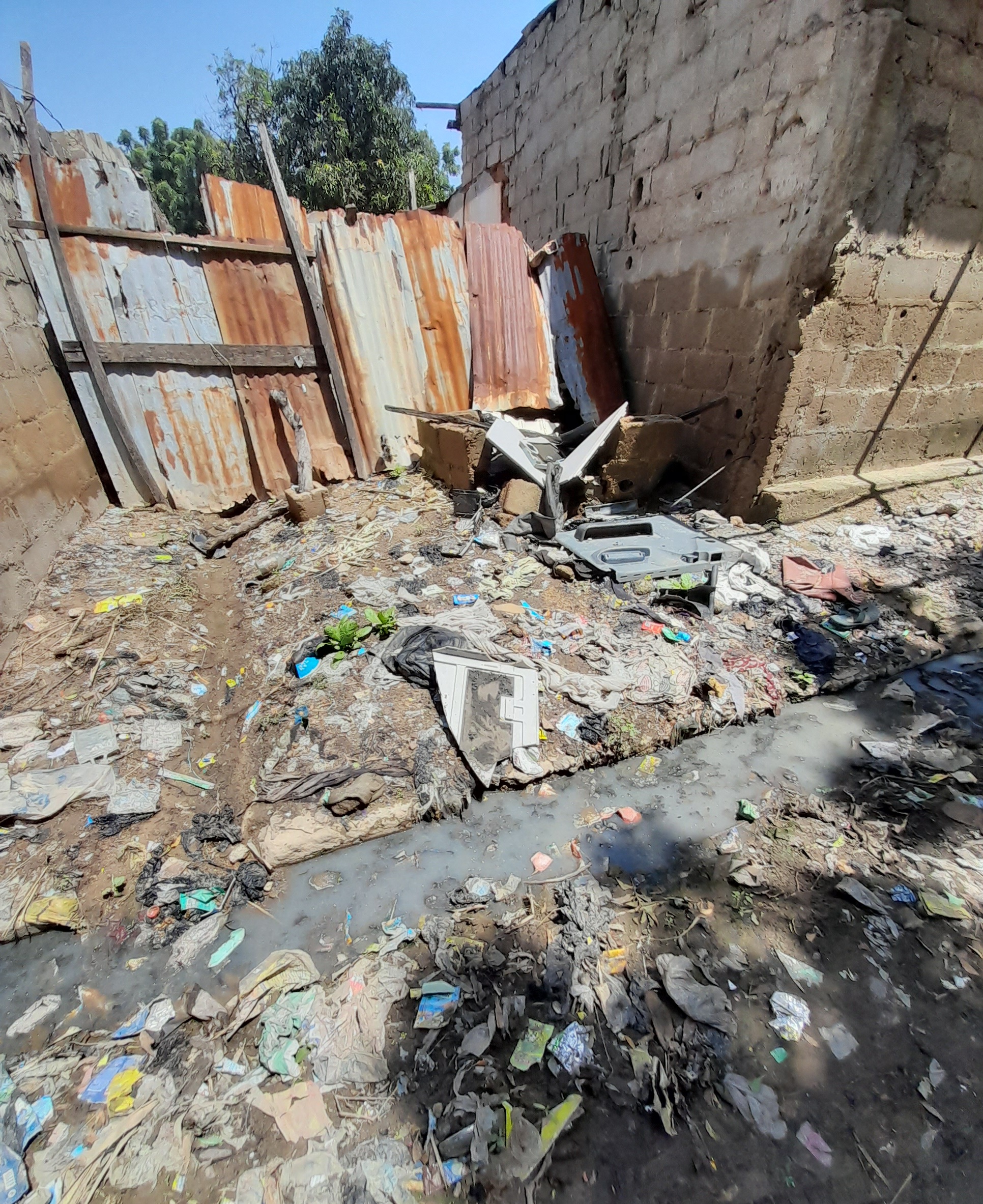
For Ahmad, the dream of having a disease-free community continues to run farther as they continue to chase after it. For over a year, his neighbour’s soak-away pit has filled up to its brink, releasing some of its contents to an open culvert close to it in his community.

Sanitation has deteriorated over the years due to negligence. It is the responsibility of both citizens and the government to have a clean environment. He admits that “passing by the open is extremely excruciatingly nauseating and terrifying, not to talk of neighbouring the area”.

In the past administrations, Kano State has formally declared every last Saturday of the month for general cleaning of markets, motor parks, culverts, hospitals and surroundings around communities with strict restrictions on movement. The session ends by 10:00 am, and it’s almost always expected that proper sanitation of surroundings is effectively discharged – dumping of refuse is executed correctly, and drainages are cleared, among others.

People like Ahmad have now become more aware of the utmost importance of hygiene and are more responsible in ensuring they keep tidy surroundings to combat diseases. However, the current overflow of a soak-away neighbouring dramatically contributes to environmental and health menaces that his community battles.

“Every member of this neighbourhood is at risk of contracting a health problem. Even passers-by aren’t spared of the stinking smell coming out of the unkempt soak-away”, he said. The pit also leads to an open culvert linked to many houses around his community. Hence, the danger of the odd combination is incomprehensible.

“I have tendered complaints to the mayor of the community countless times. It has been over one year, and nothing has been done. Tenants occupy the house, and I’ve observed that they don’t really care about the impact of what their negligence would cause,” he admitted. Upon understanding the dangers associated with improper sanitation by the tenants, he also proceeded to meet them one-on-one, but that hasn’t been helpful either.

Tenants occupy a significant number of houses around the area, which is why there are numerous hygiene and sanitation problems. However, he explains that “only a few people are concerned about the health impacts of overflowing soak-away and refuge problems. This is because tenants often feel it is the responsibility of house owners to take care of such things rather than themselves”.

Towards the end of July, Ahmad’s concern rose due to the anticipated heavy rainfall and possible flooding by the Nigerian government through the Nigerian Meteorological Agency (NIMET), which he believed could deteriorate their health plight because of the unkempt soak-away pit. He then, together with a friend, who is also his neighbour, collaborated and submitted a written complaint to the Kano State Ministry of Health through the office of its secretary.

Only after their report did the ministry of health send officials to their neighbourhood to check the extent of the problem. Because the property belongs to tenants, the officials from the hospital that visited said that “if they didn’t repair it, they would sell some part of the house that will be equivalent to the money to repair the hazardous soak-away for them since they are not ready to take any action”. As I speak, the soak-away pit is as it is now. Ahmad tried to call the officials again, but they couldn’t respond to him or come back to the community and take the action they intended.

Usman Ibrahim is a 200-level student of the Department of Information and Media Studies, Bayero University Kano.

2023 elections: NGOs hold interactive sessions with Kano guber candidates

By Habibu Maaruf Abdu

21 Kano-based Non-Governmental Organisations have organised interactive sessions with the aspirants for Kano state gubernatorial position ahead of the forthcoming 2023 elections. The two-day event took place on the 9th and 10th of November 2022 at the Babale Suite conference hall in Kano.

Convened by Dr Aminu Magashi Garba, the interactive sessions allowed the candidates to share their campaign blueprint with the NGO community and have a dialogue with them on critical thematic areas such as; Health, Education, Environment, Commerce and Industry, Agriculture, Technology, Women and Youth Development, among others.

Sessions with PRP candidate Salihu Tanko Yakasai and Bala Muhammad Gwagwarwa of SDP were held on the first day.

The second day saw sessions with ADC’s Mal. Ibrahim Khalil, LP’s Engr. Bashir I. Bashir, and ADP’s Sha’aban Sharada.

It was said that plans are on the ground to organise sessions with other major contenders, such as the NNPP, APC and PDP candidates, in the coming days.

Recall that the Kano Civil Society Organizations and Nigeria Medical Association (NMA) held similar sessions with the candidates a few weeks ago.

Open Letter to His Excellency Gov. Dr Abdullahi Umar Ganduje, OFR, (Khadimul Islam)

With all sense of honour, respect and humility, your Excellency, I humbly write this letter to convey a fundamental message (worth noting) to you and members of your executive council as well as other relevant stakeholders.

Your Excellency, as you know, Kano State is among the most consequential and venerated African lands. The state hosts international and influential clerics of high repute that promote Islam and the sunnah of our beloved Prophet Muhammad (SAW) to all domains in the north and beyond. Moreover, Kano has been the African commercial hub since the nineteenth century and the centre of learning and administration. For that cause, Kano is always at the front line of religious development and other aspects of human life. In addition, after the re-introduction of Shari’ah in early 2000, Kano embraced it in haste. Muslims have welcomed the development in good faith and unwavering conviction that if Shari’ah is appropriately implemented, life will become good and better in this world and have good fortune in the future existence.

Alhamdulillah! For the said development, the Kano state government established agencies to oversee Shari’ah affairs and ensure its implementation. Shari’ah commission was inaugurated as the apex body for Shari’ah matters and related business. Shari’ah courts were instituted and equipped. Well-trained experts were employed as Shari’ah judges. Zakah and Endowment (Hubusi) was founded and systemized to regulate the collection and distribution of Zakah wealth as stipulated by Allah and manage the waqf properties in the best interest of beneficiaries. The social reorientation directorate (Adaidaita Sahu) came into existence to ensure moral compliance by Muslims. The mighty Hisba Board was incorporated to complement the task of the Shari’ah Commission. The Office of Special Adviser on Religious Matters was created to support the Governor in dealing with Shari’ah functions. Above all, Shari’ah penetrates all government agencies and parastatals to the extent that it’s considered in all decision-making.

At districts and wards levels, the good people of Kano have cooperated. Groups of concerned Muslims constituted robust committees to compliment the government’s effort, namely Zauren Sulhu and its likes. They have significantly impacted the lives of ordinary people. Many such initiatives are in existence to this moment for their monumental works.

People believe that if such strategies are correctly implemented, they will bring sustainable socio-religious and economic development. It will curtail the ongoing bribery and corruption in civil service, robbery, burglary and phone snatching, immorality and other social vices. It will improve productive economic activities and reduce the high rate of poverty. It will promote Zakah awareness and boost the collection of Zakah wealth that, if used efficiently, will cater to the needs and demands of vulnerable widows and orphans as it did in history. This gesture will please Allah the Almighty; in return, He will bless Kano abundantly and ease the affairs of the state.

Your Excellency, the considerable success and giant achievements that Hisba is recording from its inception to date are commendable. Hisba is meeting its objective, mission and vision despite the factors hindering national progress. The support you are giving to the agency is laudable.

Your Excellency, what motivates and triggers me to write this letter is that the high poverty level, with over 55 per cent of the citizens being poor, is a matter of concern, according to the National Bureau of Statistics. Thus, it may not be a surprise that beggars are trooping and roaming the streets today, begging and occupying masjids and other public gatherings, pleading for assistance in various forms. In addition, radio and Television stations are becoming typical to hear the voices of people echoing for help due to poverty and other reasons for the financial predicament.

Besides, I am aware that the state government created a body responsible for looking after the vulnerable and impoverished per the saying of Allahu (SWT) in the Qur’an suratul Tauba verse number 103. The matter of contention is that; is the state government aware of this situation and giving all the necessary support and attention to Kano State Zakah and Hubusi Commission to execute its responsibilities, or is the commission just becoming worthless?

Your Excellency, it’s a known fact that in early 2022 your administration engaged about 600 people in civil service as tax collectors. It’s indeed a wise decision, for it reduces youth unemployment. However, one may wonder how many zakah workers were recruited to support the activities of zakah and consolidate it to achieve its overall objective.

Your Excellency, sincerely, Kano is lagging regarding zakah collection and distribution in modern times while its neighbouring states and emirates are thriving in this noble course. For instance, in Jigawa state, Dutse Emirate alone is mobilizing zakah wealth that eclipsed that of Kano in multitude. The narration is still correspondingly in Kazaure Emirate and Hadejia Emirate, among others. By extension, Sokoto State Zakah and Endowment Commission (SOZECOM) under Malam Lawal Maidoki, Sadaukin Sakkwato, is providing leadership in the country. In other countries, poverty and unemployment are reduced to the barest minimum. These exciting stories signify that Kano state could also join the race and achieve a lot, as it has immense potential.

Your Excellency, this is a gentle reminder hoping to reach you and praying to Allah to grant you the ability to use it and make it among your legacies. Undoubtedly, instrumental Islamic economic policy will help you lay a solid foundation for uplifting the well-being of the good people of Kano state. Zakah will be a panacea to poverty, unemployment, corruption and all forms of vulnerability in Kano state. I, therefore, wish to submit that our emirates have vital roles to play in the reformation. Moreover, collaboration with key stakeholders is necessary at this stage.

Last but not least, I applaud your efforts to improve security affairs in Kano State despite worsening scenes in the country and other neighbouring countries. May Allah guard and preserve our dear Kano State and Muslim communities in Nigeria and beyond. May Allah support you and grant you maximum success in your reign and beyond. Ameen.

Yours

Aliyu Ɗahiru Muhammad

Department of Economics

Bayero University, Kano

alitahir797@gmail

4/11/2022

Kano Censorship Director marries Kannywood star, Rukayya Dawayya

By Habibu Maaruf Abdu

The Executive Director, Kano State Censorship Board, Alhaji Isma’ila Na’abba Afakallah, has tied the knot with veteran Kannywood actress, Rukayya Umar Santa (Dawayya).

The wedding fatiha took place on Friday, November 4, 2022, at Tishama Jumu’at mosque in Kano, after months of speculations about their relationship on social media.

The 37-year-old actress, who is also the founder of Dawayya Movies Nigeria Limited, appeared in hundreds of films in a career which spanned 22 years. Her last production, Ummi Sambo was released in Cinemas on 6 December, 2019.

This is her second marriage as she was previously married and has a son.

The roadside discussions

By Abdussamad Ahmad Yusuf

It was Wednesday evening, and the clock was ticking to 6:00 pm. Alongside two friends, we were joined by another friend’s friend reminiscing my 44 days stay in Abuja, the Federal Capital — the longest I have stayed off Kano.

It’s a roadside discussion, and all topics have the freedom to cross our minds. So we present, discuss, argue and analyze. We sometimes even pass verdicts and judgments.

In Kano, it is Majalisar Bakin Titi, the roadside parley. It is a local gathering of men. In the local roadside parleys, unless in some exceptional circumstances, there is segregation of age, group, social and even economic status. While there is Majalisar Attajirai, the wealthy’s parley, there is that of the humbles, nobles to that of ‘Yan caca, the gamblers’. Men branched in the majalisa after work or after market hours in the evening. For the youth, joblessness and idle-mindedness have made their conversation almost an all-day affair.

It’s easy when you talk of youth or a range of bachelors, rest assured, women and girls have to find a way to dominate the discussions.

Habu would begin showing the girl in blue that her Atampa cost six thousand, the bag two, her veil eight hundred; putting everything she wore averagely kept at Fifteen thousand. She was of humble background and not suitable to be “settled with”, he concluded. Marrying her means you have to struggle all your life to satisfy your needs and hers’ and expect nothing from her side or her parents. Is it crass materialism or the new normal? Anyway, it’s a roadside parley, not an academic or intellectual forum.

Until the beginning of the 1990s, marriage is contracted on the mutual friendship between two families of the intending couples, for settling disputes, generally to stiff bonds or forge new ones. Therefore, the material benefit does not count as much, even at the community, not a familial level, where crowd-achievement due to communal lifestyle is more prevalent than the individualist materialism in prevalence today. 

This permeation of a materialistic viewpoint of life has degraded the standard of familial life seen manifest in roadside discussions, more unfortunately, stemming from the Manyan Gobe, leaders of tomorrow who are nurturing an ignorant standpoint for the nucleus of society: the family.

The Habu thesis painted above shows the complexity of young man’s  ‘misthinking’ wealth, status and rank for fancy and expensive dress and accoutrements. Sadly, it has reduced young girls of marriageable ages to racing for material possessions; an iPhone – the latest in the market, expensive ‘Vatik’ Atampa, posh shoes for kece raini, ‘being above equals’.

These are the ‘yan mata Roadside Discussions extolled to the high heaven, and about-to-marry young men internalize as the best description of a woman to seek her marriage. It is no longer about the Ladabi (obedience, and I am not being apologetic to the ‘alpha’ men), kunya (modesty and good manner), hankali (sobriety), mutumci (humanity toward others) and  Karamci (generosity), in addition to what zamani, current dynamic brings; industriousness, economic dexterity, education (in the western sense or the karatun boko) and may be tech-friendliness.

The Roadside parleys are a hub to discuss which girl has the curviest hip, who has a bosom chest and who walks beguiling, and identifying who has Girman kai, ego in the community. The one egoistic, closely when interrogated, one would discover she is the one who is not trading her teeth for beautiful smiles at any of these near-jobless men, what they will turn out to brand Rashin kamun kai, not modest. The best of the times, if any,  is one that discusses, often prejudicial perspectives, who is mutuniyar kirki, a good girl and who is not.

Many girls dodge passing by roadsides parley to skip their topic brought up unsolicited and to evade the roadside social appraisals and analyses of their lives.

What I will not close, however, without telling you; beautiful marriages have been tied from Roadside Discussions, even though, one may argue equally, many have been dissolved thanks to Roadside Discussions. But, the paradox notwithstanding should not deter young men and women from being the best they can be so that the best comes their way.

Abdussamad wrote in from Kano and can be reached at Abdussamadahmad69@gmail.com

CAN is trying to create artificial food scarcity, worsen hardship – MURIC 

By Uzair Adam Imam

Investigations by the Muslim Rights Concern (MURIC) revealed that there had been massive purchases and hoarding of paddy rice across the country by the suspected members of the Christian Association of Nigeria (CAN). 

A statement by the MURIC chairman, Kano State Chapter, Mallam Hassan Sani Indabawa, disclosed on Friday, calling on the Nigerian authorities to look into what it described as the ‘unwholesome attitude by the Christian association. 

The Muslim body also revealed that CAN is deliberately trying to create artificial food scarcity to discredit the Federal Government by making its efforts in the agriculture sector look like a failure. 

The statement read, “Series of investigations conducted by MURIC has revealed a disturbing trend of massive purchase of paddy rice across the rice producing belt, cutting across the three northern agricultural ecological zones of the country. Several reports from the field established that a huge number of strange people are massively buying the commodity in bulk in Kebbi, Niger, Benue, Kaduna, Kano, Jigawa, Bauchi and Yobe states.

 “The eight northern states account for over 70% of the rice being produced in the country. Nigeria is currently the largest producer of rice in Africa with a production capacity of 5.0m metric tonnes per annum.

“With the onset of the current harvest season, the unusual high demand for the commodity has already spiked the price upwards, aiming for the roof. While farmers may be happy with a good price, however, the rush for the mass purchase of the commodity is enough to raise some genuine concerns.

 “Farmers and other stakeholders noticed an organized and coordinated purchase of the commodity in large quantity. From Kebbi State, down to Gashua in Yobe State, the story of the influx of people, mainly Christians, is the same. They came for massive purchases of tons of rice, both milled and paddy.

CAN make the purchase in large quantity

“Our investigations further point to a high likelihood of the Christian Association of Nigeria (CAN) being involved in this orchestrated mass purchase of rice produced for all Nigerians particularly because the buyers in large quantities are all Christians. They come with their weighing scale and tons of money. It is very suspicious.

 “Apart from the existing aggregating centers, new ones have emerged where the commodity is bought at a higher price. This has already made the price of the commodity to jump up at an alarming rate.

“While farmers and local dealers are happy with the new buyers, many are, alarmed by the disturbing trend. Many of the “new rice merchants” admitted to have been mobilized for the exercise. While it is obvious that the ordinary farmer is happy that he is getting ready buyers, the discerning mind must ask the question: Why are they all Christians?

CAN is plotting against Nigeria, Muslims

“The questions begging for answers are: What is the game plan of CAN? Why is the Christian body desperate to make the bulk purchase and hoard the commodity? And why at this crucial time, a few months to the general elections? Their action has already created unnecessary fear and anxiety, as no one is sure of CAN’s motive.

“Is CAN deliberately trying to create artificial scarcity, or is the Christian umbrella body preparing for a worst-case scenario? Or is it trying to discredit the Federal Government by making its efforts in the agriculture sector look like a failure? We all know how food is being weaponized in modern conflicts. Is CAN driving Nigerians to a stage when everyone will be forced to go to church for before they can get rice to buy?

“We call on the Nigerian authorities to look closely into this desperate move. Both the apex body of Nigerian farmers, the Apex Farmers Association of Nigeria (AFAN) and the Rice Farmers Association of Nigeria (RIFAN) admitted to the unusual demand and the unprecedented hike in the price of the commodity at the peak of this year’s harvest season. 

“The Federal Government should do the needful by preparing adequately and timely to forestall possible hunger due to mischievous hoarding of this essential commodity by some evil forces. FG can evolve a counter-purchase plan to save Nigerians from the Shylock merchants in CAN. We warn CAN to eschew any diabolical plan it may have with the massive purchase of the commodity,” the statement added.

HUP: Beneficiaries stranded as officials abandon posts

By Uzair Adam Imam

The beneficiaries of the Household Upliftment Programme in Nassarawa Local Government of Kano State are stranded as officials abandon posts without explanations.

The Federal Government had in May 2022 commenced the distribution of debit cards to the beneficiaries of the scheme.

Household Upliftment Programme aims to provide access to targeted cash transfers to poor and vulnerable households as captured from the National Social Register (NSR) based on standard eligibility criteria.

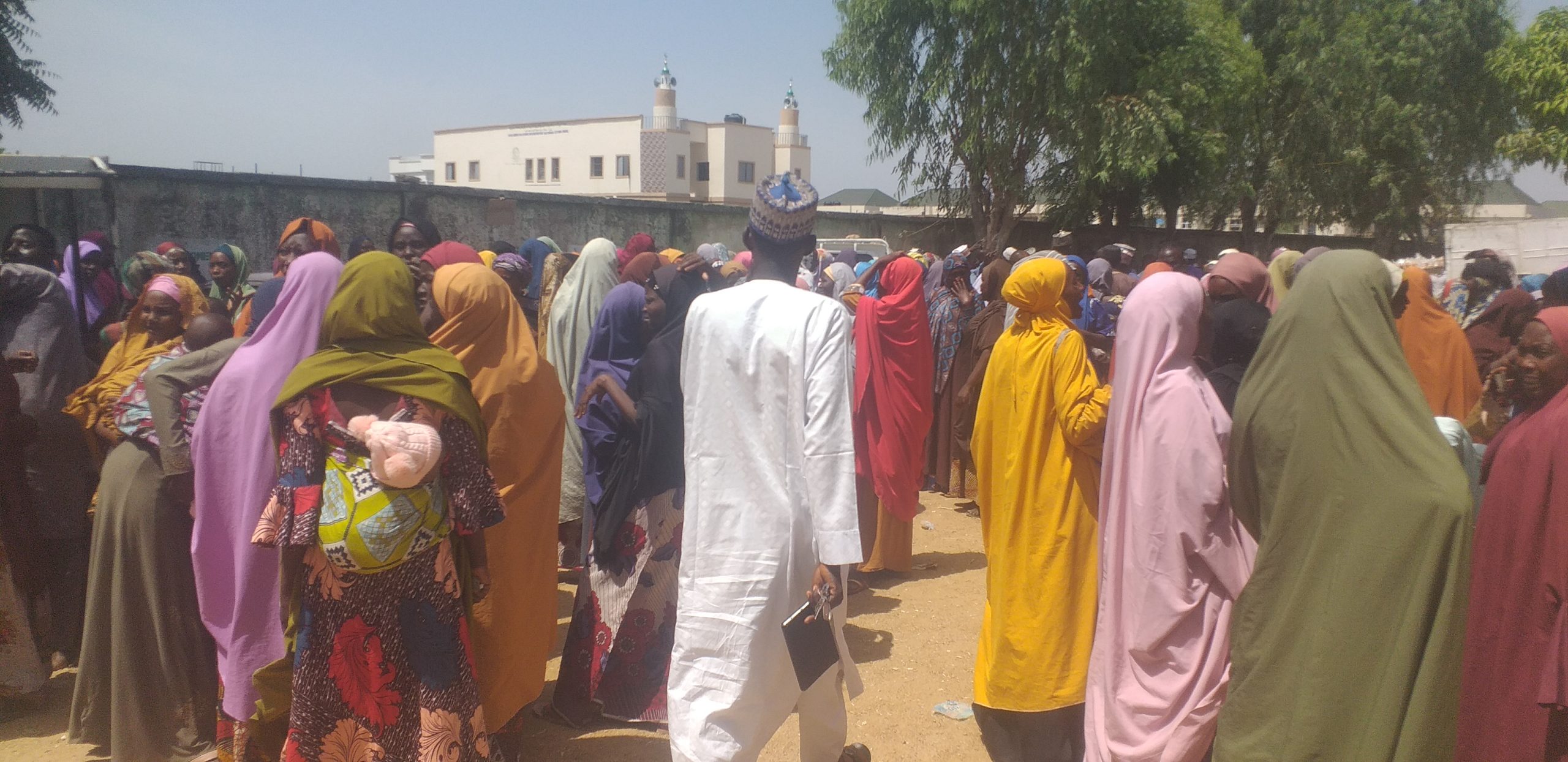
However, some of the beneficiaries expressed worries over how they spent three days going to the distribution centre located at Jigirya in the local government without being attended to.

Our reporter, who visited the Kano State Hisbah Office, Gigirya, where the beneficiaries trooped in hundreds to collect their automated debit cards to withdraw their cash, observed how disappointed they looked.

However, despite arriving at the place early in the morning, the beneficiaries bitterly complained that the officials did not come until around 1 pm.

The Daily Realityreporter gathered that the slowdown in attending to the beneficiaries was due to the failure of the officials to deploy enough staff to handle the issue smoothly.

Zenith Bank, which was in charge of distributing the debit cards to the verified beneficiaries, deployed only six of its staff to handle the people of the local government.

Tension as infant suffocates, paints

An elderly woman at the venue narrated to The Daily Reality how a newly born baby almost died because of the heat and congestion.

She said, “yesterday, we witnessed how a newly born baby of one of us that has been coming here for three days suffocated because of heat and painted.

“We all gathered to see for our eyes the fate of that baby. But at long last, God saved,” she said.

‘Our agent abandons us’

A household, Malam Ibrahim (not real name), who said he was from Tudun Murtala, said today (Friday) was his fourth time at the place, saying he was not attended to.

He said, “It is almost one o’clock, but the agent assigned to our ward has not arrived. Therefore, I think none of us will complete their verification and collect their ATM.”

The Daily Reality learned that a man, identified as Malam Aminu, was said to have caused the delay in attending to the people of Tudun Murtala as he was their agent.

Another household said, “We would have collected our ATM if our agent was around, but he has not arrived yet.”

However, when contacted, Malam Aminu said he was not authorized to speak to journalists.

Discrepancies in benefits noticeable

Efforts by The Daily Reality to know the exact amount of money from one household to another were unsuccessful as the officials refused to speak on the matter.

The officials have kept it a secret to themselves that even the beneficiaries are confused, as they don’t know how much they will get until they pay them.

Some of the beneficiaries have received N70,000, N57,000 and some others N40,000.

One of the households told our reporter, “My sister received N70,000 naira yesterday. What you get depends on the information you give them during registration.”

Another woman said her friend received a sum of N57,000 Friday.

However, when our reporter contacted the woman in charge of the program to comment on the matter, she said she was not allowed to speak on it as they were busy making arrangements to fast-track the distribution.  

An official, who does not want his name in print, said the discrepancies were a result of what he called “old and new systems.”

He said those on the old system were paid a sum in the past. Therefore they will not receive the same amount as those on the new system.

Engausa Global Technology Hub launches library to enhance reading culture

By Uzair Adam Imam

Engausa Global Tech Hub (EGTH) has launched a library to enhance lifetime reading culture among youths at its school premises in Kano State, Nigeria.

The founder and chairman of the technology hub, Engineer Habu Ringim, disclosed this in a statement he made available to journalists on Saturday. 

Ringim said the library is named Maisuga Ringim Library and has both hard and soft copies of reading materials for the apprentice of the technology hub. 

He also stated that the Maisuga Ringim Library project aimed at bridging the wide gap between academic and vocational education in society.

He further explained that the effort was to break the barriers of language impeding the cognitive aspect of learning in almost all African education systems. 

The statement read, “Launching Maisuga Ringim Library is a big step towards cultivating a rational lifetime reading habit among our youths by making the scarce library resources available to our apprentices at both entry and professional levels of learning hard and soft skills.

“The main objectives of EngausaHub.com, as our motto reads, ‘breaking barriers and bridging gaps’, is to entrench an inclusive technical skills acquisition and entrepreneurial skills among our teaming youths, against all language barriers and technical gaps bedevilling the human capital development at the grassroots.

Engausa was founded in 2019 and has recorded numerous successes in teaching people various scientific and technological skills to depend on themselves and become employers of labour.

The Daily Reality recalls that over two thousand people, including university lecturers and students who have never had formal education, such as Almajirai, graduated from the Engausa Global Technology Hub just recently. 

The graduates were trained in various skills to become self-reliant and job providers.

ECWA Hospital, CMB Global offer free eye surgeries in Kano, Jigawa

By Muhammad Aminu

The ECWA Eye Hospital (EEH) Kano and Christoffel Blinden Mission (CBM) Global will offer a comprehensive and inclusive eye health (CIEH) programme targeting residents of Kano and Jigawa States.

Thousands of individuals are billed to benefit from the programme that will run for four consecutive years in the selected states.

The Chief Medical Director, EEH, Dr Atima Mayor, who disclosed this at the launch of the project in Kano, said that the project was born out of efforts to tackle visual impairment and break the circle of poverty in the states.

According to Dr Mayor, the project, which is supported by CMB UK and Australia, has over 80000 other beneficiaries who will benefit from different tests and services within the timeframe for the project.

He further explained that issues of disability, especially visual impairment and poverty among persons with disabilities, have been affecting the quality of life.

“North West has the highest number of blindness. As population increases, it’s expected that the number of blindness will also shoot up hence the need to act,” he said.

He called on the two states to collaborate with ECWA to continue with the project even after this 4-year intervention project to ensure the efforts is sustained to tackle the challenge in the States.

The CMD further explained that Kaduna and Katsina States, which were initially part of the project, were temporarily put on hold until the security situation improves before the project can be expanded to the states.

In his address, EEH Administrator STEPHEN NUBOBGA who was represented by CMB Project Coordinator Phillip Ode noted that between September 1, 2022, to August 2026, the project targets over 90,000 beneficiaries in the project in the selected states.

“500 children will be operated on for cataracts, 1000 adults, 250 children with glaucoma and other major surgeries, 400 adults with glaucoma, 250 other children with minor surgeries and 50 retinoblastomas.

“2000 individuals for spectacles, 5000 for refraction, and  80, 000 others for free eye screening,” he disclosed.

In her earlier opening remark, CBM Global Country Director, Ms Ekaete Umoh, said that the historic project launched is aimed at targeting individuals in hard-to-reach areas in the selected states to help persons with visual challenges and break the cycle of poverty in their ranks.

She said that CMB Global is concerned with the rising cases of visual impairment in Nigeria, specifically North West Nigeria, where there is a high concentration of visually impaired persons.

“As the prevalence of blindness in Nigeria is 4.2%, it is estimated that 4.25 million adults aged 40 years and above have moderate to severe visual impairment or blindness.

” Available statistics show that 28.6% (14 million of all adults living in the North West Nigeria have a visual impairment. As a result, the majority are unable to work, are excluded from many community activities and require additional support, which impacts on their families and trapped them in the cycle of poverty,” he stressed.

According to Nububga, 100 persons living with disabilities (PWDs) will be empowered with means of livelihood as a component of the project.

Representatives of the Federal Ministry of Health, Kano and Jigawa States, as well as the Joint National Association of Persons with Disabilities (JONAPWD), commended the donors and partners for working together to address the issue.

Also speaking, the royal father of the day, Alh Mohammed Bashir Mahe, commended the EEH and CMB for helping the needy in society, adding that traditional institutions are always ready to support such a noble cause.