Kano State Government

Outrage trails brutal flogging of Almajiri in Kano 

By Uzair Adam Imam 

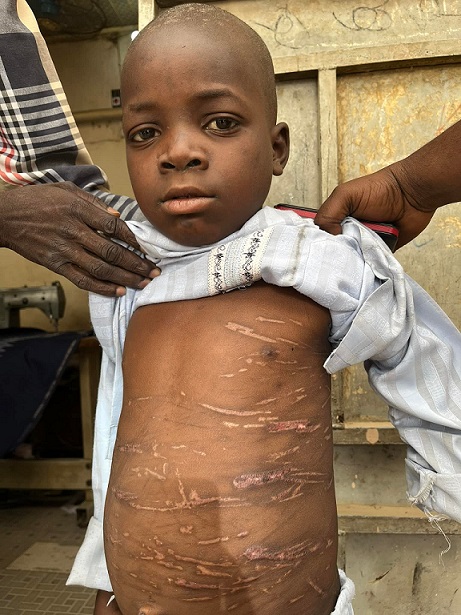
Many people reacted with shock over a viral video showing an eight-year-old Almajiri beaten mercilessly by his ‘Tsangaya’ Quranic teacher.

The Daily Reality gathered that punishment was due to the kid’s failure to bring food to the teacher, which is an age-old practice in many Tsangaya schools.

A source told our correspondent that the kid was found roaming the street after running away from the school.

The source added that a relative brought the victim to Kano from Magamar Gumau Local Government Area of Bauchi State for Qur’anic studies after his mother’s demise.

“I don’t want to go back to the school. The teacher will kill me. I want to return to my father,” said the kid.

Begging outlawed in Kano

Kano State is becoming a haven for beggars, despite the state government’s ban on street begging and subsequent measures the government to enforce the order.

In 2019, the Ganduje administration banned street begging, introducing new approaches to improving the education of the almajiri system.

In a statement, the Chief Press Secretary to Governor Abdullahi Umar Ganduje, Malam Abba Anwar, said the effort was to consolidate the free and compulsory primary and secondary education fully.

“If an Almijiri teacher thinks he cannot accept the new policy, he has to leave the state. 

“When Almajiri are caught begging, it is not only that beggar is caught but also his parents or guardians. Such parents or guardians would be taken to court to face the wrath of the law,” the governor threatened,” the statement said.

But despite the ban, street begging has held to its position in the state, as beggars are still on the state’s streets. 

Citizens blame government 

Some people blame the government for not consolidating its position of improving the  Almajiri education system to mitigate the menace of bagging in the state.

A former president of Foundation Against Child Abuse, Abdulmalik Shu’aibu Sani, blamed the government for playing politics with the menace. 

Abdulmalik Shu’aibu said, “Government decides to play politics in handling this issue. If the government had actually banned or changed the Almajiri education system in the state, this boy wouldn’t have been beaten like a slave.”

“I believe this will surely be a joyous and celebratory idea if the government could implement the new system or at least tax parents to pay for school fees. With that money, their children will be fed.”

Amina Shu’aibu said, “I know the government will not do this. Anything about it is political.”

Some concerned citizens described the punishment as disheartening, stating that the system is not what it used to be.

Abdulmalik Shu’aibu Sani said such heartless people should be brought before the law to reap what they sow while calling on the government to take action.

He lamented that the kid was too small for that brutal beating, saying he could not take responsibility for himself and his teacher. 

Adam Zahraddeen, one of the active members of the Almajiri Foundation in the state, said that in the past, Almajiri parents paid a certain amount of money and “that money will be used to feed his child by the Malam.

“It is heart-touching to see such forsaken small kids wandering on streets searching for what to eat. 

“The government should by now end the Almajiri system of education and rethink how to reform the system. 

Amina Adamu, who said she almost cried on watching the video, stated that she felt sorry for the boy.

She said, “Seeing the picture of this boy in this situation, I feel bad, sad, and sorry for the kid. He looks so pathetic. I feel like no matter what this boy has done, he doesn’t deserve to be beaten mercilessly like this.”

We are not heartless 

Auwal Ilyas, one of the senior students at an Almajiri school in the state, said what happened was entirely contrary to what is obtainable in the system. 

He stated, “The person who did this beating was very wrong. I believe a true teacher who answers his name will not do the same. So it must be a gardi (a senior Almajiri) that committed such a pathetic and regretful thing. I know gardi used to ask for food but not Malam.

“How will a teacher ask this very small kid to bring him food? In our school, our teacher, my father, take responsibility for any Almajiri. Malam provides two square meals for them, breakfast and lunch,” Auwalu added.

On the need for mass transit in Kano

By Kabir Shariff

Kano city is the largest city for inter and intra-state migration in Nigeria. Yet, a city with over 6 million inhabitants is still scrambling for an efficient mode of transport in 2022. It is time for Kano to respond to the delinquent call for urban city mass transit. The commercial hub for Sub-Saharan states should be in a better position in terms of a good transportation network.

A significant milestone was accomplishment back in 2013 when the state government banned the operation of the reckless motorcycle taxis alias Dan Achaba. It’s time the government build upon that by making an informed decision to set the city in the right direction to improve mobility.

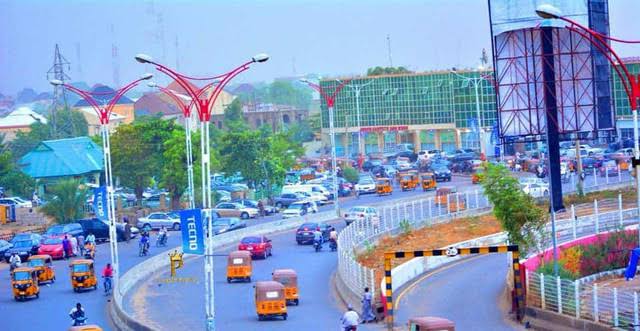
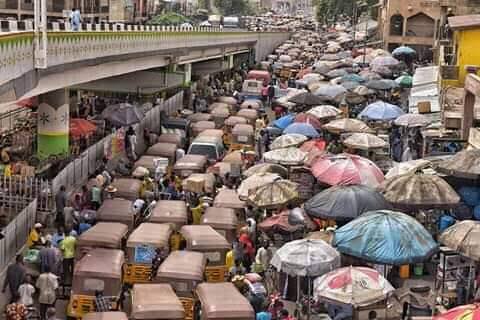
An efficient public transportation system is an essential social infrastructure that fast-growing cities like Kano should have to contribute to blossom economic and social activities in the state. But, unfortunately, although Kano city has become a champion in constructing flyovers, overhead and underpass tunnels in Nigeria since 2013, the city is flooded with thousands of tricycles that make life miserable for road commuters.

A prerequisite to having a good transportation system is to have a decent road network in the city. The decent road network in Kano since 1999 is the work done mainly by the state administration of 2007-2011. Although the administration did not construct any fancy flyovers, the Kanawas enjoy the roads built more than the flyovers. The central boulevard in Kano will be in good condition for some years to come, but Kano’s streets and minor roads are in poor condition.

The thousands of tricycles plying the busy roads of Kano need to be checked and regulated. Without proper transport regulation, Abuja will have been in a similar condition as Kano at the moment.

A few ideas that might assist in easing transportation difficulties is by mass transit buses. Developed cities worldwide, including London, Paris, and New York, are still using the basic mass transit buses despite several more developed alternatives like subways, trams, and cable car transport. Developing cities like Mumbai, Cairo, Pretoria and Djibouti are well known to have efficient mass transit buses. It’s time for Kano to lead the way in providing a safe and practical mobility network for the millions of Kanawas.

Firstly, the government should prioritise the rehabilitation and construction of intracity roads to ease mobility and reduce unwanted traffic in the city, especially at peak hours.  The government should also invite private investors to supply and monitor mass transit buses with operations limited to the major boulevard in Kano.

The buses should have an affordable flat rate per trip, say N50. The registered tricycles should be limited to ply only small streets and avenues. This will put Kano in a better position in commerce and transportation. A coordinated transport system will reduce the high level of criminal activities carried out on tricycles daily.  This approach can only be practical if the government can make strict laws to regulate to assure investors confidence and minimise the risk of reverting after the administration leaves office.

Kabir Shariff writes from Cherbourg, France. He can be reached via kbshariff@gmail.com.

Boat Mishap: Kano State Gov’t bans use of commercial boats in Bagwai

By Uzair Adam Imam

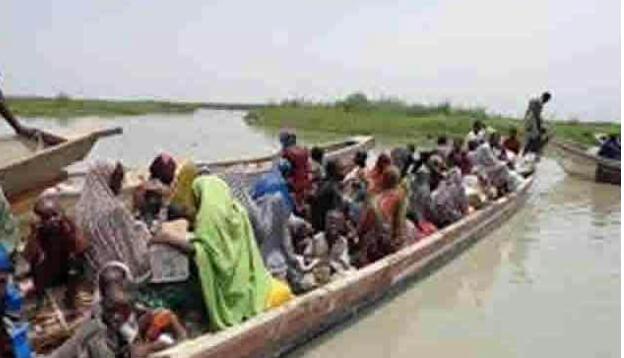
Following the boat mishap on Tuesday, 30th November, 2021 in Bagwai Local Government of the state, the Kano State Government has announced a ban on the use of commercial boats in transporting passengers in the river.

The Daily Reality has reported the incident that had claimed the lives of twenty nine people. Adding to that development, Kano State governor, Dr. Abdullahi Umar Ganduje disclosed the ban in a statement issued to journalists by the State Commissioner for Information, Malam Muhammad Garba.

In her effort, the Kano State government has provided two buses for passenger shuttle between Badau and Bagwai, while three new boats would be procured for effective water transportation in the area.

He added that: “Other control measures are expected to be instituted when the investigation committee set up by the state government submitted its report for implementation.”

Kano deploys modern technology to tackle insecurity – Ganduje

By Uzair Adam Imam

Kano State Governor Dr. Abdullahi Umar Ganduje has stated that his administration has deployed modern technology gadgets such as CCTV to tackle the challenges of insecurity and ensure safety of its citizens and their properties.

The governor made this disclosure in a release signed Monday, 15th November, 2021 by the Chief Press Secretary to the Deputy Governor of Kano State, Hassan Musa Fagge.

It was gathered that Ganduje, who was represented by his deputy, Dr. Nasiru Yusuf Gawuna, was said to have stated this while receiving the General Officer Command of the one division of Nigerian Army Kaduna, Major General Kabiru Imam Muktar who paid him a visit at the Government House, Kano.

According to him, installation and deployment of modern technology has assisted greatly in curbing the criminal acts that before are bedevilling the state.

Ganduje also noted that, Kano is today one of the most peaceful states in the country due to prayers and synergy between the government and all the security agencies.

The statement read: “In Kano we hold regular security meetings so as to analyse our operations and chart ways foward, infact we have included paramilitary agencies into the state security council”.

“The Commander 3 Brigade, I am sure will brief you about our efforts in provision of adequate logistics,” Ganduje said.

He then assured of continued support and cooperation to the Nigerian Army towards ensuring peace and safety of Kano citizens.

Speaking, the General Officer Commanding of the One Division,Nigerian Army Kaduna, Major General Kabiru Imam Muktar said he is on a visit to the Army units and formations under his command in Kano State.

He explained that the first hand information they received from the citizens has assisted them alot in combating crimes.

“The cooperation and support given to us by Kano people has helped tremendously in our effort to contain criminality to the bearest minimum”.

“We are grateful to the traditional rulers and the citizens for their role in curtailing the farmers and herders conflict in the State”.

“I am indeed happy with the cordial relationship between the 3 Brigade and Kano people,” he said.

Major General Muktar while reiterating their commitment towards ensuring security of lives and properties of Kano people, commended the Governor for executing laudable projects in the State.

The fallacy behind free education in Kano

By Salisu Uba Kofar-Wambai

It might sound obnoxious, as bitter as gall, if I may say this free education program by the Kano state government may not see the light of the day. Often, politicians politicise education. The concept of free education has been with us for quite a long spell. Our education has always been free. The token amount collected from the students isn’t the actual school fees. Students only pay 700 Naira per term. Is this the school fees?

And hardly could you find where a student is deprived of attending classes because he fails to settle his payment.

In fact, the school heads face punishment if they send away a student or pupil who can’t pay his fees. The only way is to persuade the student to do the needful or grant him an exclusion considering his financial plight. The money raised is always spent in the school under the watch of the PTA, and auditors come from the education ministry to ensure the money collected isn’t embezzled and is used wisely and judiciously. Prudence is always the watchword.

The school heads usually run into trouble if they’re found wanting in the area of class furniture problems, paucity of teaching aids, unrepaired broken windows and doors, non-provision of markers and chalks and what-have-you.

Now, the government has directed the schools’ authorities to stop collecting such peanuts to maintain, sustain and administer the schools in the name of free education and claimed to be giving out money to the schools as upkeep to take care of them.

The bone of contention here is that: could the government continue to provide this fund? In case of delay or non-payment by the concerned authorities, what will happen to the schools? It will be very hard if they can continue supporting the schools.

This was a similar scenario under Engr. Rabiu Musa Kwankwaso administration. He stopped the tertiary institutions and universities from collecting fees in the name of “free education” and couldn’t provide enough funds to run the schools.

I am not hoping and praying to have problems with the program, but at least we shall embark on something feasible. Unfortunately, the politicians are only trying to be popular with the program, to impress voters, to the detriment of the system.

Many outside the system may not get me right. And our society will see me as someone who has no sympathy or don’t like to see the children of the poor getting education, NO! It isn’t. Rather am doing this for the betterment of their education.

Sa’adatu Rimi college to be upgraded to university status – Ganduje

By Uzair Adam Imam

Following the lingering request by Sa’adatu Rimi College of Education (SRCE) management, Governor Abdullahi Umar Ganduje has revealed that the institution would be upgraded to the university status with the National Universities Commission (NUC).

Ganduje stated this when the management team of the institution led by Prof. Yahaya Isa Bunkure, the Provost of the College, paid him a courtesy visit.

In a release issued by the Chief Press Secretary to the Governor, Abba Anwar, Ganduje said: “I am happy that the College is now a degree awarding institution. Therefore, the call for the upgrading of this College to university, is without much financial commitment.

“Because most of the facilities needed are already there. Even lecturers we need to employ Professors.

“We can see how we can pursue this, so that we can actualize it. The only thing is, it will not continue awarding Certificate of Education. But we can still move all NCE Courses to other institutions. Just as some of our institutions have already started awarding NCEs,” Ganduje said.

Phone snatching exacerbates in Kano

By Hussaina Sufyan Ahmed

Kano is one of the states that records fewer security challenges in the northwestern part of Nigeria. The relative security in the state is an indication that not all northern states experience insecurity like the current happenings of kidnapping, banditry and armed robbery, as seen in Kaduna, Zamfara and Katsina. However, this calm is coming to an end considering the most recent menace of stabbings in the state.

Recently, people have been victims of phone snatching in Kano. This has become general mayhem in the state in that people do not take out their gadgets when going out on night strolls, and for some students, no more night out strolls anymore.

This problem is gradually becoming a national one. Families continue to bereave as their loved ones are brought to their end in their pool of blood due shed by snatchers of phones, laptops, wallets and other portable valuables.

According to the Daily Post, on July 4, 2021, an event occurred at the bridge undergoing construction close to Kantin Kwari market. The phone snatching brought about the death of a man called Umar Muhammad, staff at the National Commission for Museums and Monuments.

The most recent victim was Muhammad Sulaiman, a newly-wed schoolteacher stabbed to death in front of his wife around the Sharada industrial area on September 20, 2021.

These happenings continue to occur despite the various safety measure of the government, such as Karota agents, vigilante groups, others. Thus, people wonder what these security personnel do daily.

Phone snatching is usually carried out at night and around isolated pathways. In rare cases, it happens in broad daylight. The crimes occur in places like under the bridges, lone paths that lead out of POS points, ATM stations, children parks, corners of streets and even on roads without lamp-lights.

For the above reasons, security experts suggest some preventive measures that include:

When walking, stay very conscious of who is trailing you and of the environment around you. During this period, one needs to be very aware of who is behind, beside or ahead of them. Often, when at a crowded place, crime culprits hardly succeed or they get apprehended for it.

Another precautionary measure is to have an alternative phone which is very cheap and look simple.

Beggars still on Kano streets despite govt’s ban

By Uzair Adam Imam

Who could have thought that the lingering issue of street begging would still be persistent despite the imposition of an outright ban on begging by the state government? Likewise, who would believe that the state government will continue to be the captive of the past, allowing Almajiri parents to drop around their children for Qur’anic education without shelter, food or clothing?

This and many more have called into question the government’s effort to end street begging in the state.

Recalling the statement issued by the Chief Press Secretary to the Governor of Kano State, Abba Anwar, the Kano State Government announced the ban of street begging in the state. It said that the effort was to fully consolidate the free and compulsory primary and secondary schools education.

“The decision was meant to integrate the Almajiri system into the policy and address the lingering problem of street begging,” Governor Abdullahi Ganduje said in the statement. He further warned that Almajiri teachers must accept the newly introduced approach by the government and that “If Almijiri teacher thinks he cannot accept the new policy he has to leave the state. 

“When Almajiri are caught begging, it is not only that beggar is caught but also his parents or guardians. Such parents or guardians would be taken to court to face the wrath of the law,” the governor added.

The statement disclosed that the newly introduced system was meant to allow the beggars to continue their studies to secondary school and beyond.

But despite the declaration, promises and threats against beggars and their teachers, beggars are still on the state’s streets. They beg from car to car, tricycle to tricycle and from person to person freely and in the presence of security personnel.

Meanwhile, Almajiris in Kano were neither being thwarted from begging nor introduced to western education, as the governor promised.

One of the Almajiri teachers in the state who spoke with The Daily Reality said, “I had no idea of the new policy the state government introduced and no official of the government contacted him ok the policy.”

An educationalist, who prefers not to be named, opined that; “I believe this will definitely be a joyous and celebratory idea if the government could be able to implement the new system.

“But sometimes government plays politics, and I am afraid this might be one, considering the length of time since the assertion was made.” He observed.

Some beggars who were brought to the city from Minjibir explained to our reporter that they face no challenge from anyone. According to them, they move around freely in every nook and cranny, including Nassarawa GRA, where the Kano State Government House is situated.

“We are brought here for Qur’anic education from Minjibir Local Government. Our Tsangaya is situated at Rimin Kebe, Ungogo LGA, and we are not even aware of the ban on begging in the state.”

The lingering problem of street begging is known to anyone living in Kano and the North, or even the country as a whole. But it is worse than expected in the North. 

Kano State Government’s idea of banning street begging is an idea many residents applauded when launched. The ban was introduced to enable the Almajiri to acquire western education while undergoing their Qur’anic education. The ultimate goal was to empower them in society.

Sheikh Abduljabbar to undergo mental health evaluation

By Muhammad Abdurrahman

The hearing of the Kano State government lawsuit against Sheikh Abduljabbar Kabara over blasphemy ended with a new development today.

The court has ordered the cleric to undergo mental health evaluation before resuming its proceeding on September 16, 2021.

Recall that Sheikh Kabara was arrested and remanded in prison after he and some selected Ulama in Kano had a public dialogue over his teaching in July.

The Ulama and the presiding judge of the dialogue, Prof. Salisu Shehu, deemed parts of Kabara’s statements on Prophet Muhammad (SAW) and his companions as blasphemous.

Nassarawa community decries bad road, seeks government intervention

By Uzair Adam Imam

Traders at Kwanar Tifa in Tudun Murtala, Nassarawa Local Government Area of Kano State, have lamented the deplorable condition of the only road that passes through the community. They decry that this hampers business activities in the area.

The traders also called on the authority in the state to come to their aid.

Kwanar Tifa is a centre of commercial activities for the Tudun Murtala and the surrounding communities.

Apart from small scale industries that offer job opportunities to thousands of youths, men and women, there is a phone market that gives business opportunities for many more people in the area.

Hassan Ibrahim, one of the traders in the area, called upon the state government to rescue traders in the area. He added that many businesses might crumble if nothing is done.

“The reconstruction of this road will not only benefit us as it connects Tudun Murtala, Rimin Kebe, Dawakin Dakata and other areas, but also boost business activities in the area”, Hassan said.

He further added that sometimes trucks find it very difficult to convey goods to the area.

“Sometimes, the drivers would park a distance away or in the puddles created by the stagnant water.

“This costs us more money. You have to pay extra money to the labourers to bring the good here.”

Also, drivers complained of the nuisance faced while plying the road.

“Sometimes, when we come here, our trucks get stuck because of the erosions. The road is terrible,” said a driver, Haruna Idris.

The Daily Reality learnt that the Chairman of Nassarawa Local Government, Auwalu Alhassan Shu’aibu, alias Aramfosu, once visited the area to ascertain the level of damage on the road.

According to a trader, Abubakar U. Lawan, the chairman promised the traders that the road would soon be reconstructed.

He said, “There was a time when the Chairman of Nassarawa Local Government, Honorable Aramfosu, came here to see this road.

“At that time, he made promises, but those promises have not been fulfilled.”

All attempts made to hear from the chairman was proved abortive.