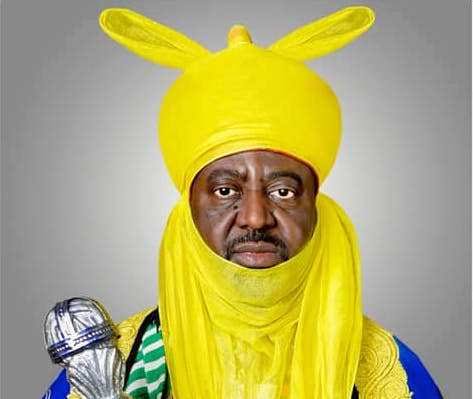
Wearing the turban, bearing the burden: The enormous task before the new Galadiman Kano
By Huzaifa Dokaji
The promotion of Wamban Kano Munir Sanusi as Galadiman Kano today, May 2, 2025, marks an important moment in the history of Kano’s sarauta institution. More than a ceremonial instalment, it is the continuation of a title whose symbolic and administrative significance has long anchored the cohesion of Kano; first as a kingdom, and since the nineteenth century, as an emirate. This moment is charged with expectation, arriving at a time Kano Emirate is caught in a vortex of political contestation, juridical uncertainty, and generational transition. It will be the day a man who is both brother and foster son to a former Galadima, and son-in-law to another, assumes such an important office.
The title of Galadima, derived from the Kanuri galdi-ma, meaning “chief of the western front,” emerged during the administrative reforms of Kano’s second Hausa ruler, Sarki Warisi dan Bagauda, in the 11th century. Over time, it evolved into one of the most powerful and senior princely offices across Hausa land. Until Emir Abdullahi Maje Karofi (1855-1882) appointed his son Yusufu as Galadima, the title had traditionally been reserved for the king’s/emir’s uncle, eldest brother or closest male kin: typically someone older and therefore unlikely to succeed to the throne.
Elsewhere, I have argued that Maje Karofi’s deviation from this established custom was one of the remote causes of the Kano Civil War of 1893. In essence, the appointment of a son to such a crucial position, naturally altered the institutional role of the Galadima, who historically functioned as a check on the emir’s authority. This explains Maje Karofi’s decision to depose his brother Abdulkadir, for expressing growing concern over certain decisions and practices at court the latter deemed inappropriate.
As demonstrated by the reigns of Galadiman Kano Daudu, Atuma, and the Fulani-era Galadimas Maje Karofi and Tijjani Hashim, the office has often wielded influence that paralleled or even eclipsed that of the king/emir. Until the 19th century, titles like Dan Ruwatan Kano were accorded to the kinsman or son of the galadima, while Dan Darman Kano was reserved for his cognatic kinsman.
Traditionally, the Galadima served as vizier, head of civil administration, and head of his own mini-palace, independent of the Emir’s court. Court praise-singers aptly describe bearers of the title as Daudu rakumin Kano, the camel that bears the city’s burden; Daudu gatan birni, the protector of the city; and Rumfa sha shirgi, the palace’s dust heap where disputes are deposited and resolved. In recent times, no one embodied such praise and function as the late Galadiman Kano Tijjani Hashim.
Widely regarded as the archetype of the modern Galadima, Tijjani Hashim redefined the office in an era when the sarauta was stripped of formal political power. He transformed it into a bastion of accessible influence, strategic mediation, and public service. His residence functioned as a daily court of appeals, open to aristocrats, commoners, and royal slaves alike. He was the man to whom a poor student could turn for a scholarship, a merchant for capital, a civil servant for promotion, a politician for sponsorship, and a broken family for reconciliation.
Tijjani Hashim died in 2014 and was succeeded by the charismatic Abbas Sanusi, whose reign as Galadima was cut short by a protracted illness. Abbas Sanusi was a disciplined and astute administrator, widely respected for his command of the emirate’s bureaucratic machinery. Yet his tenure was constrained by declining health, which limited his capacity to perform some of Galadima’s traditional roles, particularly inter-familial diplomacy. It is from Abbas Sanusi that the title now transitions to his younger brother, Alhaji Munir Sanusi, marking a rare case of intergenerational and intra-familial continuity, even by the standards of Kano’s dynastic politics. Their relationship was not merely fraternal; it was paternal.
Abbas raised Munir from infancy, shaping his worldview and instilling in him the refined fadanci he has mastered and discreetly used to his advantage. Adding further symbolic weight is the fact that Munir is married to Hajiya Mariya Tijjani Hashim, daughter of the very man whose name has become synonymous with the Galadima title in recent memory. Thus, the new Galadima stands at the confluence of two great legacies—bound by blood to Abbas, and by marriage to Tijjani.
Born on January 12, 1962, Munir Sanusi Bayero was the last son of Emir Sir Muhammad Sanusi I to be born in the Kano palace. Raised by his late brother, Galadima Abbas Sanusi, he later married his second cousin, Hajiya Mariya, a union that has continued to epitomise royal love and companionship. Alhaji Munir Sanusi received his primary education at Gidan Makama Primary School and his secondary education at Government Secondary School Dambatta from 1976 to 1981. He later obtained a degree in Mechanical Engineering from the Indian Institute of Technology in New Delhi.
Galadima Munir Sanusi’s career commenced in the Kano State Ministry of Social Welfare, Youth, and Sports, where he served as a Transport Officer from 1989 to 1991. He later joined Daula Enterprises Co. Ltd, Kano, from 1991 to 1993. He currently sits on the board of several companies, including Tri-C3 and Unique Leather Finishing Co. Ltd, the second-largest exporter of leather in West Africa.
In 2014, the Emir of Kano, Khalifa Muhammad Sanusi II, appointed him as Dan Majen Kano and pioneer Chief of Staff to the Emir in the Kano Emirate. He was elevated to the position of Danburam Kano in 2016 and Wamban Kano and district head of Bichi in 2024. Today, he assumes the prestigious title of Galadiman Kano.
Galadima Munir’s loyalty to Emir Muhammadu Sanusi II has earned him considerable admiration within and beyond Kano. When the Emir was deposed in March 2020 and exiled to Loko in Nasarawa State, Munir not only followed him into banishment but remained by his side through Lagos and back to Kano. Now that the Emir has rewarded that loyalty with the emirate’s highest princely office, Munir faces a challenge no less noble than the title he inherits.
For one, loyalty is only one pillar of what I call “the burdens of the Galadima”. The office demands generosity, accessibility, discretion, and the ability to shoulder the hopes of a people whose faith in the sarauta system is repeatedly tested. Here lies Galadima’s greatest trial. Like his predecessors, he must cultivate a public image as a patron of the weak, a reconciler of royal, noble, and common feuds, and a figure of last resort to both the high and the low. He must embody rumfa sha shirgi in practice: bearing the burdens of others, not just out of obligation, but with discernment, sincerity, and grace. His word must be his bond, for zancen Galadima kamar zancen Sarki ne: the word of the Galadima is expected to be final, unwavering, and free of bitterness.
The task becomes all the more urgent against the backdrop of Kano’s current emirship crisis. While Emir Muhammadu Sanusi II’s return has been celebrated in many quarters, it remains the subject of intense legal and political contestation. In this precarious climate, the Galadima must go beyond ceremonial visibility. He must be the Emirate’s anchor, bridging palace factions and translating the noble project of restoring the sarauta back to its sense to the wider public. Galadima Munir’s early efforts at reconciling estranged branches of the royal family and diffusing internal tensions suggest a promising political instinct. But history demands more than instinct; it demands an ethic of honour and sustained human investment.
To become a Galadiman Kano today is not merely to wear a turban. It is to accept a lifetime project of prioritising the interest of the Sarauta and the talakawa over one’s. It is knowing that one’s home inevitably becomes a revolving court and one’s influence becomes public trust. Any failure to wield it generously, the memory of that failure will linger far longer than any quiet success.
Alhaji Munir Sanusi ascends the title of Galadima with the wind of history at his back and the shadows of giants before him. He is son and brother to a Galadima, and son-in-law to the most revered of them. If he can merge these legacies with his quiet resolve and proven loyalty, he may yet restore the Galadima as the most vital conduit between the emirate and its people.
The title awaits its meaning, Kano welcomes its new Galadima.
Allah ya kama, Raba musu rana da hazo
Allah ya taya riko, Daudu kwatangwalon giye.
Allah ya taimaki, tomo jiniyar gari
Huzaifa Dokaji writes from New York and can be reached via huzaifadokaji@gmail.com.