The year 2022 has not been great for the Kannywood film industry. There was a substantial decline in feature film production as the popularity of series films soared, piquing the interest of more producers. Cinematic releases were at a premium throughout the year, with just nine films, making it a ratio of less than one release a month. The situation was so severe that no major production was shown at cinemas, even during the Eid ul-Fitr festivities.
However, while some of the few releases fell flat on their faces, others have managed to make it in the trying year. Find below the top 5 Kannywood films of 2022. Please note that only feature films were considered for this list.
Aisha
Directed by Hafizu Bello, the movie, Aisha, is critically and commercially successful. It beats Kayi Nayi (Dir, Gumzak 2021) to become Kannywood’s biggest grosser by earning over ₦5.5 million during its elongated run in two cinemas. This is not surprising as it’s a production of ‘the box-office king’ Abubakar Bashir Mai-Shadda. The story revolves around the eponymous character, Aisha (played by Amal Umar), who dies after being raped, and her parents’ struggle for justice. The plot is uncommonly twisted but perfectly pieced together. The film has a strong message and a realistic narrative. It exposes the grim reality in some higher institutions where students commit serious misconduct. It stars Amal Umar, Nura Hussaini, Adam A. Zango, Sani Danja, and Shamsu Dan Iya, among others.
Lamba
Before the premiere of this Ali Gumzak-directed comedy, there had already been an overwhelming craze for its title song. This has helped the film to rake in ₦1.32 million on the first day, beating the previous record first-day collection of ₦1.25 million by Fanan (Dir. Alolo 2021). Produced by Abubakar Bashir Maishadda, Lamba is a social satire set against the backdrop of ‘Audio money’ (a slang term for the fake display of wealth). It tells how some three young men (Adam A. Zango, Umar M. Sharif and Ado Gwanja) flaunt false riches to impress the classy girls they meet on social media. The unveiling of their true identity is later shown in brilliantly executed, hilarious scenes that get the audience laughing throughout. The film lacks an innovative script, but it’s an excellent comedy that succeeded in tickling the funny bone. Other casts include Aminu Sharif (Momo), Maryam Booth, Maryam Yahaya, Bilkisu Abdullahi, Aisha Najamu, etc.
Nadeeya
Although the eponymous movie Nadeeya wasn’t initially meant for cinematic release, it still managed to get a large audience while showing on the big screen. The film is an issue-based drama about ‘upbringing’. It depicts how some parents spoil their kids, specifically daughters, and the practical difficulties such children face in life. The story focuses on a pampered daughter, Nadeeya (acted by Rahama Sadau), who faces similar challenges after marriage. The film is hard-hitting and very meaningful. It shows that children’s first learning begins at home, and their personalities and morals depend largely on their upbringing. The actor’s performance is also impressive. It was produced by the leading actress Rahama Sadau and directed by Yaseen Auwal. Other casts include Umar M. Shareef, Rabi’u Rikadawa, Asma’u Sani, etc.
Hikima
This movie is a murder mystery specially made with a considerable budget to meet the requirements for showing on Netflix. It’s, however, yet to show on the online viewing platform. The film, which premiered in cinemas in late 2021, was released to the wider public in 2022. It tells the story of a philogynist lecturer, Sadiq (Nasir Naba). It begins from a court session with Sadiq being accused of murdering his female student. The film is richly suspenseful, but many audiences criticise it for having a convoluted plot. Moreover, the cinematography and actor’s performance, among others, place it ahead of its peers this year. Hafizu Bello directed it, while Mustapha Ahmad (Alhaji Sheshe) was the producer. It stars Nasir Naba, Ishaq Sidi Ishaq, Sarah Aloysius, Sani Mu’azu, Maryam Yahaya, etc.
A Bikin Suna
A Bikin Suna tells the story of Mustapha (Ali Nuhu) and his wife Ummulkhairi (Mommy Gombe). They have been married for five years without giving birth to a single child. This fact makes Mustapha’s relatives accuse Ummulkhairi of infertility. She becomes pregnant afterwards, and everyone begins to like her. However, a new conflict erupts when the young baby gets missing during the naming ceremony. The film is generally enjoyable. It’s directed by Yasin Auwal and produced by Danjuma Salisu. Other casts include Saratu Daso, Musa Mai-Sana’a, Maryam Yahaya, Shamsu Dan Iya, Rahama MK, etc.
It’s well known that series movies have recently dominated the Kannywood film business. As a result, some major producers in the industry have already abandoned features for the production of TV series. As the trend develops, the famous producer Abubakar Bashir Maishadda gets on board with the big TV drama Dan Jarida [The Journalist].
The hyped Maishadda debut series, directed by Hafizu Bello, is a thought-provoking thriller mainly about journalism. It is notable for featuring an ensemble of reigning stars in a never-before-seen avatar. A Duniya famed Daddy Hikima, who consistently portrays a villain, is playing a positive leading role in the latest series for the first time.
Launched on Sunday, 25 December 2022, the show will continue to be aired weekly on Arewa24 TV and Maishadda Global Resources YouTube channels. The first episode exposes a tiny part of the story arc. It begins with some crooks chasing a reporter Fauziyya (acted by Amal Umar), who videotapes them while killing and burning someone. They eventually catch and mutilate her to death. Everything keeps revolving around this conflict until the episode’s end…
The first episode is an auspicious start to what promises to be an exciting crime-thriller. It gathers momentum right in the few reels, taking viewers to the background of its major characters. They are; a criminal mastermind Madugu (Sha’aibu Kumurci), who disguised as a philanthropic politician, and Sadiq (Daddy Hikima), Fauziyya’s boss and a media company manager with dogged determination and integrity.
The drama is a delight to watch, at least by how it goes so far. It also promises to be more so when the rest cast of Lawan Ahmad, Tijjani Asase, and Isah Ferozkhan (Presido), among others, enter the next episodes. The camera work particularly captures the intense nature of the film, and the background score gives it full support in generating the desired tone.
Besides depicting the exhaustion, uneasiness and risks associated with journalism, DanJarida drama reminds journalists about the importance of doing their job right. It is also a great attempt to provide real insight into the causes of various crimes that are ubiquitous in our society today.
Beyond the positive aspects mentioned above, smoke, as used in the series to create cinematic depth, could be enhanced. For instance, there is little or no need for a smoke when Magudu and his henchmen capture Fauziyya. One may assume it is the exhaust of their cars, which cannot be. In other instances, the smoke is too thick, and its colour looks unnatural.
Finally, while recommending the new series to all and sundry, particularly the Kannywood audience interested in journalism and politics, we appeal to the makers to refrain from exploiting the promising story for commercial purposes. Moreover, they should refrain from extending it beyond reasonable length as producers of some contemporary YouTube series do.
Following the cheerful welcome received by the presidential candidate of All Progressive Congress, APC, candidate, Bola Ahmed Tinubu, when he visited Kano State, and the considerable role played by many members of Kannywood in his acceptance in the state, names of many members of the industry appeared in the list of the members of Tinubu/Shatima campaign committee.
The list was a part of an announcement made by the Director General of the APC presidential campaign committee, Governor Simon Bako Lalong. He confirmed the selection of Kannywood members among the Presidential Campaign Council, PCC, with producer Abdul Amart Maikwashewa, as its leader.
The announcement was signed by the Director of Press and Public Affairs to Governor Simon Lalong of Plateau State, Dr Makut Simon Macham, on 8th November 2022.
The PCC chairman, Governor Simon Lalong, beseeched the members of Kannywood to call all their fans, supporters, and every Nigerian to support their candidate and promote his good political agenda.
The members include Abdul Mohd Amart (Maikwashewa) as Director, Isma’il Na’abba Afakallah as Deputy Director, Jadda Garko as Deputy Director II, and Sani Mu’azu as secretary.
Other members include Malam Khalid Musa, an advisor to the Kano State Governor on the Kannywood industry, as an advisor of the committee; Bala Ahmad and Shu’aibu Yawale, also as advisors.
Others include a veteran actor in the industry, Ali Nuhu, as a director of actors’ affairs; Jamila Umar Nagudu as his Deputy I and a comedy actor, Sulaiman Yahaya (Bosho), as Deputy Director II.
A famous singer, Fati Nijar, was appointed as Deputy Director I, singer’s affairs; Ado Gwanja is her Deputy Director II; Dan Isa Mai Kaho is Deputy Director III.
A comedy actor, Mustapha Badamasi Nabraska, an advisor to Kano State Governor on propaganda, was appointed as director of Works, while Alasan Kwalle was appointed as his deputy.
Ahmad Salihu Alkanawy will be the operation director; Emmanuel will be his assistant. Tahir I. Tahir will be the program secretary; Adam A. Zango will be his Deputy I; Dailo Pam Lojok will be Deputy II.
Nasir S. Gwangwazo, a writer, film producer, and editor of Manhaja Newspaper of the Blueprint Media company, will be the News and Publicity Secretary. Hafsat Sulaiman from Kaduna State will be his assistant.
Hassan Shehu Kano will be the news coordinator on newspapers, radio, and television. Ibrahim Adamu will work as a social media news coordinator, where they will assist Gwangwazo.
Malam Ado Ahmad Gidan Dabino (MON) will be the director of technical works; Hamza Baban Muri as his Deputy I, and Ibrahim Maishunku as his Deputy II.
Ɗan Musa Gombe will be the studio’s matters, while Sulaiman Albankudi will be the coordinator. Auwal Big Time will be the assistant coordinator.
Mansura Isa will be the welfare officer; Nuhu Abdullahi will be her first assistant, while Abubakar Ndako Kutugi will be her second assistant.
Director Sadiq N. Mafia will be the program manager, Audi Sitin will be the first assistant, and Audi Boda will be the second assistant. Asma’u Sani will be the women’s coordinator I, while Maijidda Minna will be coordinator II.
Sadiq Sani Sadiq, transportation coordinator; Bello Muhammad Bello will be his assistant. Falalu A. Dorayi is the finance director, while Shatima Mansoor will be his assistant. Amina Adamu will be the chief coordinator, while Ibrahim A.I.T will be her assistant.
There is also the list of elders of the committee, which include: Sani Idris Moɗa, Magaji Ibrahim Mijinyawa, Muhammad B. Uwar Hankaka, Hajara Usman, Sa’idu Isa Gwaja, and Ɗan Azumi Baba which is also known as Kamaye.
List of general members of the committee includes Maryam Yahya, Husaini Sule Koki, Nura Ɗan Dolo (Yaya Dankwambo), Aminu Ari Baba, Fati Abubakar Das, Nazifi Shariff, Abubakar Sulaiman (Ɗan Auta), Umma Shehu, Yahanasu Sani, Hauwa Abubakar (Waraka), Aminu Mirror, Waziri Dabo, Anas Sulaiman Nasir, Sani Ɗangwari, Bala Kufaina Abuja, Hamza Badamasi, Hadiza Abdullahi Kabara, Aminu Dumbulum, Maimuna Abubakar (Momi Gombe), Hauwa Garba (‘Yar Auta), Aisha Mahuta, Musa Mai Sana’a, Binta Ola, Abdulrahman Alfazazee, Nasir Adam Salih, Adamu A.D Bauchi, Mudassir Kassim, and Tijjani Abdullahi Asase.
Kannywood Elders Forum, through its public relation officer, Kabiru Maikaba, has already congratulated Abdul Amat Maikwashewa and other members of Kannywood for the well-deserved appointments.
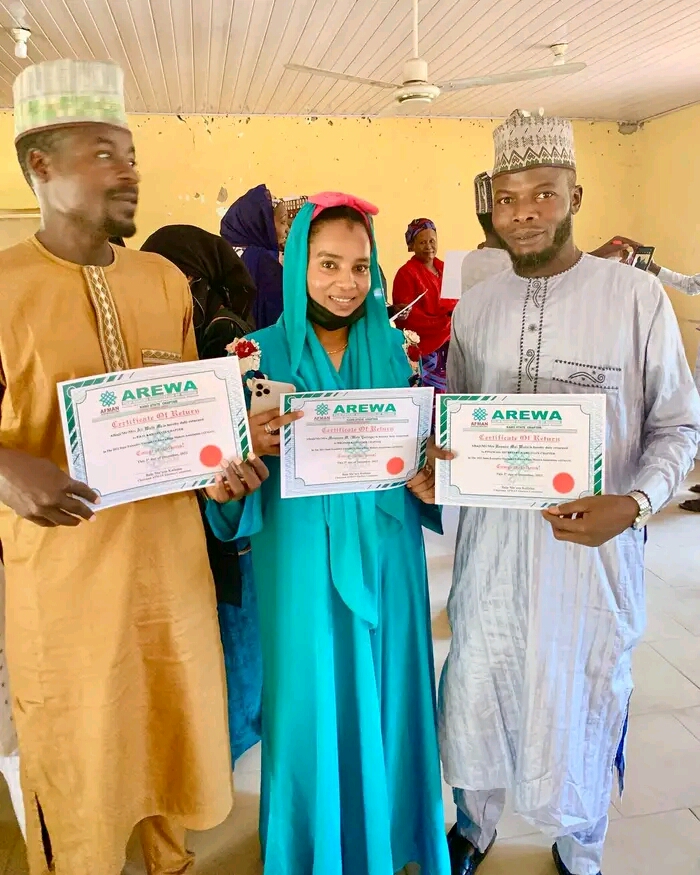
The Arewa Film Makers Association of Nigeria (AFMAN) Kano chapter has elected new executives to pilot its affairs for the next two years.
The ten-member exco were elected unopposed in an uncontested election held on Saturday, December 3, 2022, at the Social Welfare Centre, Court Road, Kano.
Captain Musa Gambo emerged as the union’s new chairman, succeeding Jamilu Yakasai who had been holding the position since 2019.
I read a post by someone who expressed his worry about the lack of unity of purpose (in fact, he said, unity of everything) among the Nigerian people. He was writing about the movie industry. He said Hollywood had been a household name for a country as vast as America. So also Bollywood for a country as big as India. Both countries are bigger and more economically prosperous than Nigeria.
However, despite the existence of Nollywood, we still have the Kannywood in Nigeria. He believes the existence and progression of Kannywood are retrogressive to the Unity of purpose in the industry in Nigeria. I reason with him. However, that is only when the matter is viewed from the surface. Scratch the surface a little, and you’ll see the bigger picture.
Both Nollywood and Kannywood emerged in prominence in the 1990s. Nollywood comes in English, pidgin, Igbo and Yoruba. The Kannywood comes mainly in Hausa and a few times in English. Looking at the Hollywood and Bollywood industries as both business and national projects, both Industries tend to project National Unity, National Pride and National dignity of their respective countries. And the business does not discriminate in the selection of protagonists.
However, in Nigeria, tribal, sectional and religious stereotypes continue to influence the industry, which makes it even more difficult to have a unified industry. To date, egg-heads of the Nollywood industry find it difficult to accept the fact that the industry needed to diversify and be all-inclusive in sourcing for their resource. For instance, African-Americans in the US are arguably the lowliest rated race in the US. However, the Hollywood industry does not believe so. The Industry became all-inclusive and explored for talents instead of being led by stereotypes. Now the negros are almost the best actors in the industry. That is how it grew to excellence.
In Nigeria, however, Nollywood, with the advantage of producing in English first, metamorphosed most of the vernacular protagonists into English productions but unwittingly limited the train to those from the South-East of the Country who saw themselves as the owners of the industry. For instance, the far Northern Nigerian does not deserve more than the role of a gateman in Nollywood films. If at all you hear the name Musa, Usman, or Bala, then, it’s the guy employed to look after the gate or wash the cars of Obinna, Ifeanyi or Chibuzo. The Lagos-based Industry is not making any genuine efforts to integrate with the Kannywood industry, even as the latter continues to grow in influence and affluence in the North and elsewhere.
However, the Kannywood, with its vast audience across the Hausa-speaking communities across the globe, also failed to grow in its intellectual capacity. It instead gets stuck to its money-making trash productions in the name of soyayya themes, which, apart from the sheer entertainment it provides, literally promotes empty value to the morale, capacity and quality of lives of the audience, not to even talk of national value, pride and dignity.
In Nigeria, the film industry has no idea or focus on National project but purely exist for business reasons. Hollywood has developed over time to become an agenda setter for the United States policymakers and implementors. It has now become a platform and potent avenue for increasing the influence of the United States over other nations and peoples worldwide. The Indian Industry also helps that country placate the outside world with its numerous internal crises and contradictions by promoting a clean, prosperous and happy India.
In Nigeria, Nollywood promotes less national dignity and unity but corruption, indecency, cultism and disunity. It exposes more of the weak and bad sides of the country, its institutions, leaders and people instead of strengthening their good sides more. Why? Because they make better money doing that since their productions appeal more to the wrong side of humanity in us. The Kannywood, with its empty intellectual value, is simply vain. So, as the two continue to grow side by side like that, we may have to do with the fast growth of a two-left-legged maiden of an industry.
Zailani Bappa wrote from Bauchi State via zailanbappa@gmail.com.
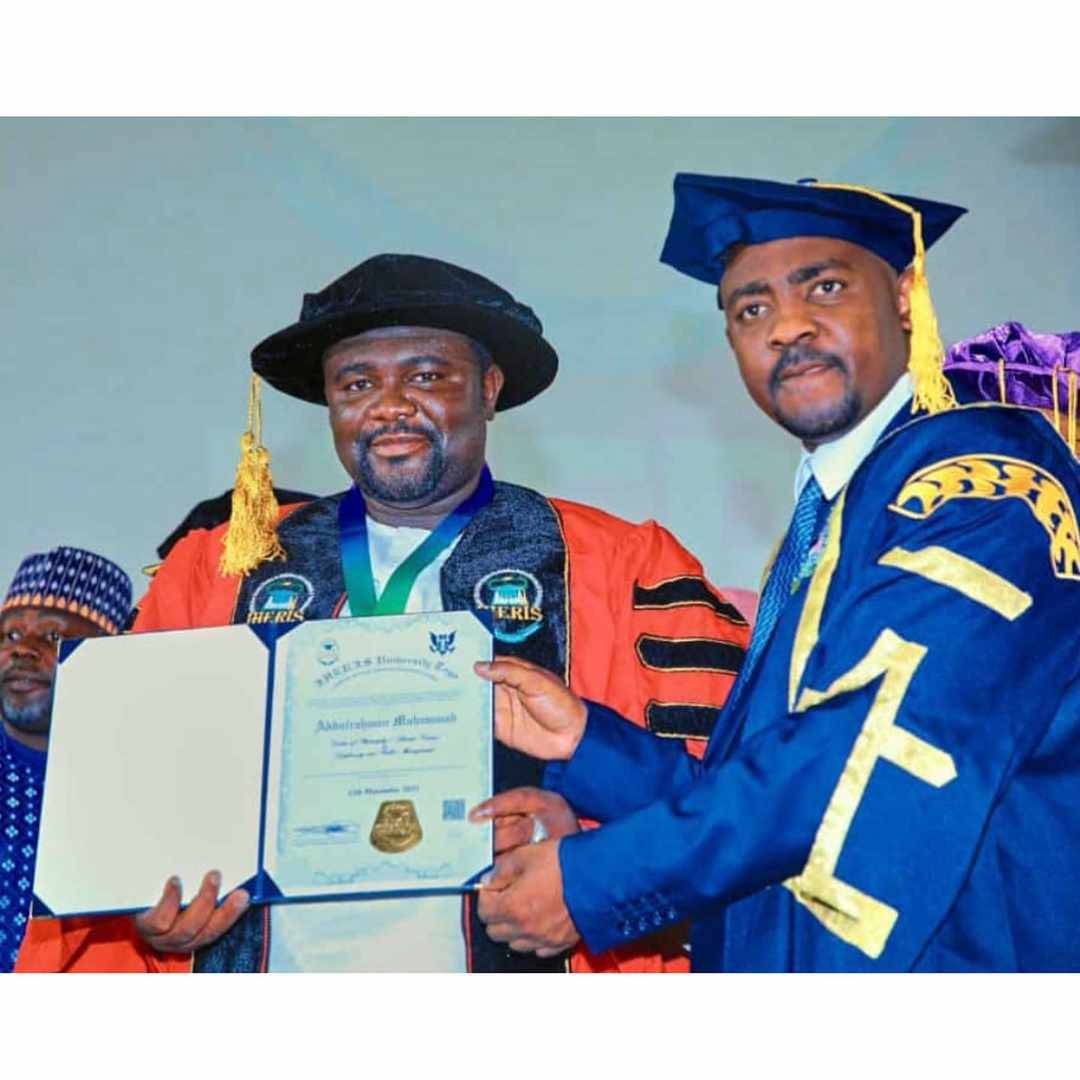
The famous Kannywood producer, Alhaji Abdurrahman Muhammad, popularly known as Abdul Amart Mai-Kwashewa, has received an honorary doctorate in Diplomacy and Public Management from IHERIS University, Togo.
This was disclosed in his Instagram post on Sunday, November 13, 2022.
“On the 12th of Nov 2022, I was honoured by the IHIRIS (sic) University Togo with a doctor of philosophy in Diplomacy and Public Management. It is indeed a great honour, and as such, I will like to thank the management of IHERIS university for this great honour. May Allah almighty make it useful for me and the entire Universe.”
Amart is the CEO of Abnur Films and the national president of the Yahaya Bello Network (YBN) group. He was recently appointed as the director of Northern Artists (Kannywood) for the Tinubu/Shettima Presidential Campaign Council.
This is IHERIS University’s second degree of honour conferment on a Kannywood personnel, having previously conferred producer-cum-actor, Usman Uzee, with a doctor of philosophy in Media and Communication Studies in 2021.
Recall that Ali Nuhu was the first Kannywood member to receive an Honorary Doctorate after being awarded a Doctorate in Entrepreneurship and Youth Development by the ISM Adonai American University, Cotonou, in 2018.
The All Progressives Congress, APC Campaign Council’s Director-General, Governor Simon Lalong, has approved select Kannywood members to join the council ahead of the 2023 presidential election.
Lalong made the comment in a statement published in Jos, the state capital, signed by his spokesperson, Dr Makut Macham.
The inclusion of film practitioners, according to the director general of the APC’s presidential campaign, was done to increase the involvement of artists from the northern region in the campaigns.
According to Lalong, Bola Tinubu, the APC presidential candidate, recently visited Kano and spoke with group members, which led to the approval.
He added that the APC presidential candidate had pledged to give Kannywood members a chance to participate in the campaigns, showcasing their skills while also aiding the party in winning the upcoming general elections.
The Kannywood group has Abdul Amart as Director, Ismail Afakallah as Deputy Director and Sani Mu’azu as Secretary, with other leaders heading different divisions.
The Executive Director, Kano State Censorship Board, Alhaji Isma’ila Na’abba Afakallah, has tied the knot with veteran Kannywood actress, Rukayya Umar Santa (Dawayya).
The wedding fatiha took place on Friday, November 4, 2022, at Tishama Jumu’at mosque in Kano, after months of speculations about their relationship on social media.
The 37-year-old actress, who is also the founder of Dawayya Movies Nigeria Limited, appeared in hundreds of films in a career which spanned 22 years. Her last production, Ummi Sambo was released in Cinemas on 6 December, 2019.
This is her second marriage as she was previously married and has a son.
The maiden edition of the Kano International Film Festival was held from 28th to 30th September 2022 in Kano, the iconic epicentre of Northern Nigeria’s Kannywood film industry. The festival, organised by Classical Film Modern Academy, is billed to hold annually to promote the film industry and build its personnel’s capacity. The Kannywood filmmakers have fully participated in the festival, which came a few months after their collective boycott against a similar event, the Zuma International Film Festival (ZUFF 2022).
Themed ‘Content Connectivity’, the festival received over 50 films from 15 countries. Among its 20 official selections are Harsh Living (UK), Wade in the water (US), The Irish Barn Dance (Ireland), Cemetery Hunt (Brazil), Everything collapses (Italy), I am a chance (Belgium), and Love trap (Cameroon).It also featured paper presentations, panel discussions, a masterclass, a film screening, and Award Ceremony.
The three-day occasion kicked off on Wednesday, 28th September 2022, with paper presentations and round table discussions at the Grand Central Hotel in Kano city. The first paper on ‘Film regulation’ was presented by the zonal director of the National Film Censorship Board, Mr Umar Fagge. It was followed by papers on ‘VFX technology’ and ‘English subtitle’ by Mal. Inuwa Tofa and Kabiru Musa Jammaje, respectively.
The second day of the festival saw its founder, Captain Musa Gambo, leading a masterclass at the Classical Film Modern Academy in the morning before the event later moved to Platinum Cinema to screen the Kannywood films nominated for awards in different categories. The films include Murjani (Dir. Sadiq N. Mafia, 2018), Sadauki (Dir. Hassan Giggs, 2019), Bana Bakwai (Dir. Ali Nuhu, 2020), Tsakaninmu and Sarki Goma Zamani Goma (both Dir. by Ali Nuhu in 2021), and more.
The historic film festival ended Friday, 30th September 2022, with an award ceremony at the Grand Central Hotel. The award event, hosted by Jamilu Yakasai, recorded a massive turnout of actors, directors, and producers, alongside dignitaries such as the SSA to the Kano state Governor on Kannywood affairs, Mal. Khalid Musa, and the industry’s pioneer trade analyst, Mr Usman Jibril (Solo). However, superstars like Ali Nuhu, Adam Zango, and Maryam Yahaya, who are also part of the award winners, were absent from the ceremony.
On the other hand, Kannywood’s highly respected elder, Alhaji Ibrahim Mandawari, whose name was alleged to be unjustly removed from the recipients of the ‘Life Time Achievement Award’ in this year’s edition of the Zuma Film Festival, has received the same ‘Life Time Achievement Award’ at the event.
Below is the complete list of winners:
Best Actor: Adam a Zango for Sadauki
Best Actress: Maryam Yahaya for Sarki Goma Zamani Goma
Best Supporting Actor: Alhassan Kwalle for Sadauki
Best Supporting Actress: Aisha Najamu for Sarki Goma Zamani Goma
Best Director: Ali Nuhu for Sarki Goma Zamani Goma
Life Time Achievement Award: Ibrahim Mandawari
Best Film: Sarki Goma Zamani Goma (Abubakar Bashir Mai-Shadda)
Best Series: Izzar So (Lawan Ahmad)
Best Screenplay: Yakubu M. Kumo for Sarki Goma Zamani Goma
Best Cinematograhy: Murtala Balala for Sarki Goma Zamani Goma
Best Production Design: Mairo Abdullahi for Sadauki
Best lighting: Usman Usee for Sarki Goma Zamani Goma
Best Sound: Shamsu Glo/Sani Candy for Sarki Goma Zamani Goma
Being a keynote at the Kannywood Foundation film training workshop, on 2nd October 2022, Kano
Opportunities of Digital Technology
By 2012 the Hausa film industry has entered into the doldrums I have just described. There was a lot of head-scratching about the next moves. In the meantime, many individuals had formed YouTube channels and were uploading Hausa films with or without the knowledge and consent of the producers. Most of the films were old and were subscribed by internet newbies who had just acquired Smartphones and taking advantage of the cut-throat competition among Nigeria’s main service provers (MTN, 9Mobile, Airtel, Glo) were buying data and watching films on their phones. The DVD and CD players faded away, and although kids were still selling what were clearly outdated CDs at traffic junctions in the city of Kano, the process of watching free films on YouTube made the CD market non-viable. Then Arewa24 came along.
An initiative of the US Government, Arewa24 was part of the anti-terror and anti-radicalization program of the US State Department’s Bureau of Counterterrorism. The task was contracted to Equal Access International (EAI), which eventually established Arewa24, the first Hausa language satellite station rooted in peacebuilding and entertainment, in 2013. One of the ways the station revolutionized Hausa cinema – and thus succeeded beyond its expectations was the introduction of TV shows, hitherto a neglected entertainment segment in Hausa cinema. Broken into seasons and episodes, the first TV show on Arewa24 was Daɗin Kowa, a weekly drama about a melting pot city somewhere in the north of Nigeria containing a diversity of ethnicities, religions, languages and social classes. Of course, there are actual Daɗin Kowa settlements in Gombe and Kaduna State, but that did not deter the Series filmmakers. It was massively successful on multiple fronts.
First, it deconstructed the then-current Hausa cinema based on Hindi cinema with a lot of choreographed singing and dancing as well as romantic storylines, which was tiring to Hausa audiences. Second, it reconstructs Hausa TV shows of the 1970s, so beloved by cultural purists of Hausa storytelling. Third, as VOD (video on demand), Arewa24’s Daɗin Kowa blazed a new digital trail in film marketing for Hausa filmmakers. Being heavily subsidized, the producers can afford to load the entire series on an easily available platform of YouTube.
Yet, the second TV show on Arewa24, interestingly, was by an independent studio, Saira Movies, and the series was Labarina, made a year before Arewa24 took off in 2015. The novelty of Labarina as a series had a massive impact on online viewing of Hausa communities. Armed with Smartphones and cheap data from competing ISPs, millions tuned to Arewa24 to watch the series and later download it when it shifted to YouTube. It was the success of Labarina as a TV show that provided a backstory to the audience receptivity of Daɗin Kowa.
YouTube is an American online video sharing and social media platform headquartered in San Bruno, California. It was launched in 2005 and has become the main avenue for African cinema distribution. It is important to emphasize its American roots and origins to draw attention to the fact that the censorship regulations in any country do not apply to it. The Google-owned video service is also a major tool for self-distribution, as illustrated by the proliferation of web series in local languages in countries such as Ethiopia, Kenya, Rwanda, Senegal and Nigeria.
Kano filmmakers were quick to jump on the TV show bandwagon by cloning the success of Daɗin Kowa as a series broken up into episodes. Not only are the story arcs captivating, but they also provide a deeper script philosophy that is often critical analysis of the anthropology of contemporary Hausa societies. Although coming earlier than Labarina, Daɗin Kowa was more successful than Labarina, which was based on basically Bollywood soap operas. Daɗin Kowa was an authentic reflection of the contemporary realities of Hausa communities.
Other YouTube channels quickly followed. Table 1 shows a few of the channels and their overall viewership.
S/N
Series
Channel
Subscribers
Date
Channel Views
Izzar So
Bakori TV
969,000
2014
119,764,682
Kwana Casa’in
Arewa24
469,000
2014
84,222,468
Labarina
Saira Movies
468,000
2013
48,726,390
Aduniya
Zinariya TV
413,000
2018
38,632,116
Bakori TV, which hosts Izzar So, has the highest number of channel views followed by Arewa24, then Saira Movies and Zinariya. These metrics, as indicated, reflect the overall channel views rather than the series – but provide an idea of the popularity of the series hosted by the channels.
Izzar So is a very popular TV show, judging by the audience metrics of each episode. Yet it was hard to determine its overall playlist metrics on YouTube. This was because the channel is so poorly organized that it does not even shift its individual episodes into an effective Playlist grouping. The channel has only two Izzar So playlists; Season 1 with 13 videos and Season 2 with 3. This, of course, is inaccurate since in the main listing of videos, the Channel listed episode 100 in the series at the end of September 2022, although it is unclear which season it was. The average views for the latter episodes are slightly over one million. Even their Facebook page does not promote the series in the light of providing information about the series, the stars or the stories.
Similarly, while Aduniya has a playlist, it only listed 33 videos in the list, whereas the list of videos with the episodes has the latest episode being number 73 with over half-million views. Labarina did not fare much better, with three playlists listing less than 30 episodes, when Season 5 EP1 was released in late September 2022.
While most of the TV shows streaming on either Hausa VOD or YouTube are romantic soap operas, Aduniya stood out because of its focus on the gritty urban life of a Kano city – exposing what I call ‘corruption from below’. It competes only with Daɗin Kowa but surpasses it in its presentation of the harsh, tough and ruthless social culture that operates below the radar of public spaces.
It is clear, therefore, that Hausa filmmakers are gradually favouring the TV show format, but their lack of digital skills to effectively present the contents limits their appeal. Further, with millions of views, the TV show filmmakers have not been able to provide adequate information on either the series or the synopsis of the episodes anywhere on a dedicated website (for which there is none, except Arewa24) or even Wikipedia entry.
Besides the challenges of poor digital marketing skills of the TV shows, filmmakers in Kano also faced the problems of censorship from the Kano State Censorship Board. In a bizarre revenue-driven focus, the Kano State Censorship Board demands that TV show series must be submitted to it for censoring before being uploaded to YouTube. Yet the servers are not based in Kano nor under Nigerian government control, so it is difficult to see how the Board will have authority over the contents on a server located in California.
Towards a Cultural Film Policy
The key objectives of film policy are to promote new artists, create new jobs, increase investments in film production, attract foreign producers and enhance the outward-looking character of Hausa cinema. So far, the only film policy available in the country is the policy of regulation from both the National Film and Video Censors Board (NFVCB) for the nation and the Kano State Censorship Board for Kano State.
The regulatory focus of these bodies was to ensure cultural specificity in film production in whatever language it is produced. The usual focus was on avoidance of foul language, nudity, and reproducible behaviour, especially for impressionable viewers and religious sensitivity. It would appear, therefore, that any policy would have to revolve around the cultural and religious frameworks of the audiences.
This issue had been a sore point with Hausa filmmakers right from the halcyon days of the industry from 1998 till its eclipse in 2007. Market-driven Hausa filmmakers are focused on commercial rather than an artistic success. Arthouse films like Kazar Sayan Baki, and Ibtila’i, did not sell because they had no commercial motifs of singing and dancing. And once the studio feels it is not selling enough to remain afloat, it simply closes shop and moves to selling essential commodities.
This is where the Kannywood Foundation comes in. A training program such as this will pave the way to the future after emerging from a cloudy and rocky past. I will not presume to give a policy here because it is a group effort. However, while thinking about the policy directions of Hausa cinema, the following might be points to ponder:
Move away from commercialization to professionalization. Other professions include specific, targeted and focused entry points and exits. You don’t wake up one day and claim to be a doctor. One has to go through a rigorous process of certification. This should be the same with the film industry. It is not to say, ‘I am creative, and I have money’. You have to demonstrate competency since what you do is representation.
Seeking storylines in community arcs. A policy should demote the idea of transnational copying of films that focus on blindly copying Indian or Western films. It should focus on the anthropology of our experiences – of which there are myriad ways of getting story arcs. A policy can, therefore, effectively reward those ethnographically based films, through additional funding, rather than ineffective ‘film awards’, most of which were bought by the filmmakers
Any training program that would be part of a policy should include cultural studies. Scriptwriters, directors, actors and production designers must know what constitutes public culture – beyond what they experience. They need to be aware of it from the structural perspective of a research process. Production designs, therefore, must be not only accurate enough to the period being recorded but also aesthetic enough to convey a sense of elegance and pride in cultural tradition
A greater focus of the policy and training should be on digital marketing. It is not enough to simply open a YouTube channel and upload films. Practitioners need to be aware of how to drive traffic to their channels and organize their content in a structured and easily accessible form.
Reaching out to the larger world. While it is pleasing that many Hausa TV shows are now flooding YouTube, most have no subtitles in an international language that will communicate to international audiences. This is clearly a misuse of the social media platform – where although open to the world, Hausa TV shows are restricted to Hausa audiences. If there is anything to copy from Hindi cinema, it should be its marketing strategy. With their subtitles, their films are seen and accepted as cultural products worldwide – for language is the best representation of culture.
Careful attention must be given to Hausa VOD services, particularly Northflix and Kallo. While still in their early stages, these VOD streaming services effectively show the way to the future.
Cultural commodities – whether tourism-related or popular culture – are marketed with the assumptions of their impact on the daily lives of their consumers. Marketing determines the success of especially media industries, often with a disregard for the content. The commodification of the Hausa popular cultural industries was premised on profitability motives, not art or aesthetics. Financiers are ready to continue investing in the industries as long as they can make effective profits. It is this profit motive that commoditizes art and elegance to common supermarket products with a short shelf life.
Prof. Abdalla Uba Adamu wrote from the Department of Information and Media Studies, Bayero University Kano, Nigeria. He is, among many other things, the former Vice-Chancellor of the National Open University of Nigeria (NOUN). He can be reached via auadamu@yahoo.com.