Kannywood

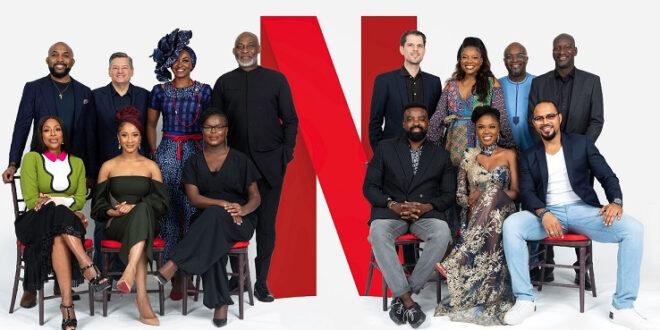
Dear Netflix Naija, there are films and filmmakers in northern Nigeria

By Muhsin Ibrahim

Nigeria’s diversity cuts across many things, chiefly cultures, ethnicities, religions and regions. Although several commentators consider the northern part more Islamic and the southern one more Christian, Muslims and Christians, followers of traditional belief systems and non-religious folks may be seen everywhere. Due to these complexities, the country is home to two significant film industries – Kannywood and Nollywood – with many smaller ones operating under these brands.

Kannywood, the name given to the “local” Hausa film industry with Kano State as its epicentre, is a distinct and autonomous film industry in northern Nigeria. Nollywood has its roots in the South, has mainly Christianity and Western-influenced motifs as themes and produces films primarily in English or other southern Nigerian languages. For Kannywood, however, Islam is arguably the trademark, and the East remains their vital source of influence and inspiration. Nonetheless, many people and institutions, including Netflix, see Nollywood as “the default” Nigerian film industry.

Lumping Kannywood and Nollywood or seeing the former as merely a Hausa branch of the latter is problematic. Hence, a prominent Kannywood scholar, Carmen McCain, points out that “In most scholarly discussions of Nollywood, Hausa films are footnoted as an ‘other’ to Nollywood.” The implication of this is enormous. It, among other things, leads audiences and potential investors like Netflix into failing to see and understand Kannywood films in their peculiar socio-cultural and religious contexts. But, yes, Kannywood operates differently from and is independent of Nollywood.

On the one hand, Nollywood, now the second-biggest film industry globally, succeeds because it faces little or no challenge from its audience or any censorship board. On the other hand, despite being arguably older than Nollywood, Kannywood struggles a lot. Kannywood was inaugurated in 1990 with a film entitled Turmin Danya(dir. Salisu Galadanci). Two years later, in 1992, Living in Bondage (dir. Chris Obi Rapu) began what became known as Nollywood.

Subsequently, the editor of Tauraruwamagazine, Sunusi Shehu, coined the name ‘Kanywood’ [with a single “n” before several authors later on added the second “n”, the version that is more recognised globally today]. It appeared in the magazine’s August 1999 issue. “Nollywood” appeared for the first time in a New York Timesarticle titled “Step aside, Los Angeles and Bombay, for Nollywood” by Norimitsu Onishi in September 2002. The Nigerian newspaper, The Guardian, republished the article a few days later. The rest, they say, is history.

Moreover, the “local” Hausa language has more users than any other West African language. The possible shortage of professionals in Kannywood is due to a lack of support from the government, other stakeholders, and investors. Despite all these and more challenges, the film industry stands on its feet, and I believe a little more push will catapult it to the promised land.

Delineating the glaring yet ignored differences between Kannywood and Nollywood is only part of the aim here. The primary objective is to remind Netflix Naija that for “Africans [to] take charge of African stories”, the message its parent Netflix emphasised when launching the local franchise, all Africans – and, of course, all Nigerians – deserve to be carried along.

Nigeria’s entertainment industry is a lot like India’s. Mumbai-originated Bollywood does not represent all films produced in the vast country. Netflix India understands this truth early on and thus accommodates that diversity so beautifully in its rich library collection of Indian films. There are arguably several exciting films from all India’s nooks and crannies on Netflix today. We earnestly wish the same to happen in Nigeria.

Of course, Netflix Naija may argue that Kannywood’s films are generally below their standard. No one can dispute that adequately. However, there are exceptions. Thus, they should get in touch with those exceptional productions. An anonymous top-notch Kannywood director told me some producers have already approached Netflix Naija. Quite regrettably, they have been, at best, told to go and fix this and that, which they did and, at worst, summarily snubbed.

Another way to embrace all is via commissioning movies. Netflix Naija can engage Kannywood filmmakers to see if it is possible to sponsor films or series. Northern Nigeria is rich with stories, perhaps more than other parts of Nigeria, thanks to its fantastic mixture and, admittedly, unfortunate incidents like the Boko Haram insurgency. The famous films Voiceless and The Milk Maid are only two examples based on a single event – Boko Haram’s abduction of Chibok schoolchildren in the northeast. Netflix can and should have originals from northern Nigeria. I bet that will be a commercial success.

Filming in the North is different from telling Northern stories. Thus, having films set in that region is not the same as having filmmakers from the area telling their stories. I am not an agent of division, not at all. Instead, I advocate fairness and inclusion of all, regardless of their culture, ethnicity, region, or religion, among other diversities. Therefore, northern Nigerian filmmakers and their films should equally be aboard the ship Netflix captains in Nigeria.

Muhsin Ibrahim is a PhD student and staff at the University of Cologne, Germany. He can be reached via muhsin2008@gmail.com.
Film Review: Risala

By India Biró

How far would you go in order to be forgiven? Would you send a text message? A letter? Flowers, or a gift? Would you track down the person you hurt and beg them to forgive you, even if it required a two-month journey?

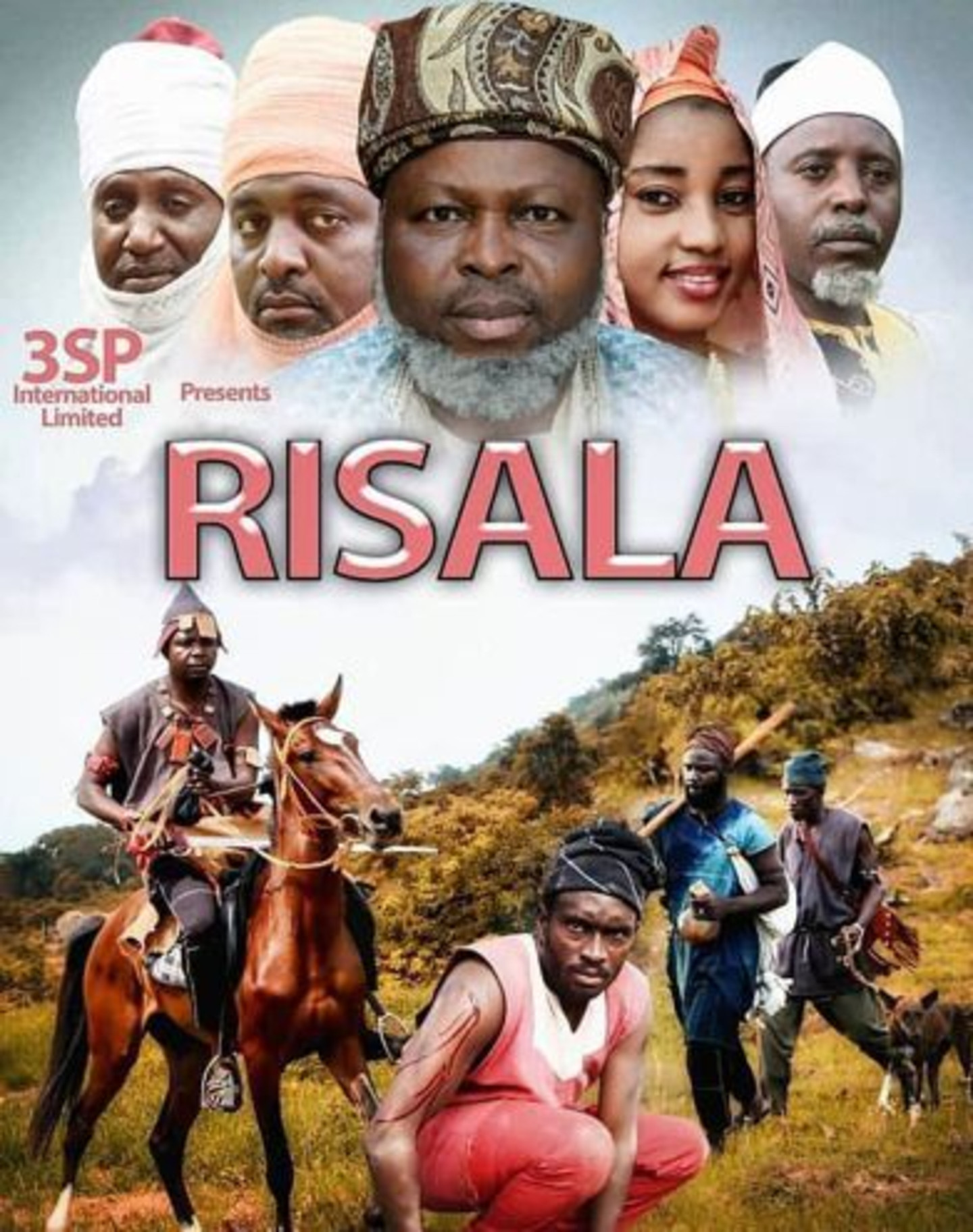
For Zakariyya, the hero of Abubakar Shehu’s Hausa-language film Risala, his desire to be forgiven for eating fruit from a stranger’s farm sends him on a week-long journey on foot to the village of Baihan to ask the farm’s owner to absolve him of his sin. Throughout this journey, he encounters unsavoury characters, is repeatedly beaten up, almost dies of thirst, finds a fortune and loses it, and ultimately meets the love of his life.

Zakariyya is the perfect hero: modest, handsome, determined, faithful, never straying from his morals. Even when he is accused of being a robber, beaten, and insulted by the village’s men, he remains calm and only defends himself by explaining the misunderstanding. When they realize their mistake, he simply forgives them and moves on without holding a grudge. His character seems so genuinely good; it makes you wonder if you would admire him or be annoyed by his constant perfection if you knew him in real life. Surely there must be something that makes him angry or tempts him to sin? However, his strength of character throughout the movie is reminiscent of noble mythical or legendary characters known to Western audiences, such as Robin Hood. This is further reinforced by the pre-colonial setting when modern amenities were not yet present in Nigeria.

When Zakariyya finally encounters the farm’s owner, he appears unwilling to forgive him at first. Yet, because Zakariyya is such a noble person, he senses the opportunity to marry off his daughter to a worthy man. So he proposes to Zakariyya that he marry his ugly, deformed daughter Ummulkhair (sometimes also referred to as Ummu Salma). Zakariya, being the modest man he is, immediately accepts Ummulkhair and promises to treat her well. However, when we see her, she turns out to be exceptionally beautiful.

We learn that the farm’s owner in Baihan has been looking for a suitable husband for his lovely daughter for quite some time, yet every man he has encountered was too enamoured with her beauty, which he considers superficial. Thus, to test Zakariyya’s good faith, he tells him his potential wife is horrendously ugly. The fact that Zakariyya still vows to marry her proves he is not a superficial man and that he is truly worthy of marrying her. In the end, he is rewarded for all his troubles with a beautiful wife. Zakariyya questioning his wife’s integrity by asking her about her relationship with her parents proves he is still not superficial and really is interested in marrying a righteous woman, not just an attractive one.

The fact that Ummulkhair’s beauty is treated as a detriment to her father, resulting in her spending most of her life indoors, as well as her treatment as a prize or commodity for a man (especially her virginity), is unsettling to feminist viewers, yet reminiscent of Western fairy-tales such as Sleeping Beauty, Rapunzel, Snow White, etc., as well as being very fitting for a story set several centuries ago. While Zakariyya’s “test” of his wife before accepting her reeks of sexism, it is probably a very realistic portrayal of the treatment women faced (and continue to face) in many societies.

Another theory about Ummulkhair with regards to the many fairy-tale and magic-like elements in Risala is that she is, in fact, not conventionally attractive and that it is Zakariyya’s reward for being a good man that she appears beautiful to him. This theory can be discounted because, after revealing herself to him, Ummulkhair tells Zakariyya she was barred from leaving the house because of her beauty, so apparently, she really is beautiful and not ugly. However, disregarding this, one could come up with a hypothesis:

Before unveiling her to see her for the first time, Zakariyya says, “everything created by God is beautiful. Only people make distinctions between the good and the ugly.” Perhaps, Ummulkhair is somehow cursed with an ugly outer appearance, and Zakariyya’s words acted as a spell that lifted the curse and made her appear beautiful to only him. So, because his heart is pure and he has good intentions, he sees a beautiful face instead of an “odd-looking” one and instead of a hunchback, he sees a striking woman. Because he is deserving, he sees the beauty in her while others do not. Had he approached the situation differently, perhaps thinking, “poor me, to be stuck with an unattractive bride”, she would have appeared ugly to him.

Ultimately, regardless of the specifics of Zakariyya’s marriage, the message is clear: Those who are good-hearted and seek forgiveness for their sins will be rewarded for it. As such, Risala is a very wholesome film worth watching for its retro charm reminiscent of fairy tale films or Bible stories and its interesting storyline. In addition, the acting and editing manage to steadily capture the viewer’s attention, something unfortunately not always a given in Kannywood cinema as it is still a developing industry and production quality is often low.

While I consider Risala to be one of the better Hausa films I have seen, do not expect a lot of character development since Zakariyya is a perfect hero right from the start and other, more sinister characters like the robber Gambo die before they get a proper chance at reform. There is also some slightly unnecessary bloodshed coupled with overly dramatic and unrealistic special effects reminiscent of low-budget Japanese anime. On the other hand, the music may not be to everyone’s taste (especially Western audiences), but I found it rather pleasant and meshed well with the action rather than distracting the viewer. Subtitles for the final song would have been helpful for non-Hausa speakers, but the song was still fascinating and enjoyable, especially the dancing and colourful Hausa clothing. Overall, while the film could have easily been condensed into one part instead of two, the storyline is gripping, and the acting is done well. I would recommend this film to anyone new to Kannywood cinema.

India Biró is a student at the Institute of African Studies and Egyptology, University of Cologne. She can be reached via ibiro@smail.uni-koeln.de.