Jobs

Sahara Reporters charades again against Prof. Bugaje: Setting the records straight

By Ibrahim Mustapha

I read a story entitled “Fraud, Job racketeering scandal rocks Nigeria’s Technical Education Board,” carried out by Sahara Reporters, an online media outlet, on August 14, 2025, with great shock. Ordinarily, one should not have bothered to reply to the tissues of lies, misrepresentation of facts, and poor grasp of public service rules by Sahara Reporters and its co-sponsors. However, considering the weight of allegations and how gullible minds can be negatively influenced, it has become pertinent to set the record straight. 

Though one had expected Sahara Reporters to produce a balanced story by contacting the executive secretary of the board, Professor Idris Bugaje, who remains accessible to share his side, this has never happened. The online media is so desperate to give a dog a bad name in order to hang it. The online media has discarded professional ethics and turned into a willing tool to smear the good image of Professor Bugaje and NBTE through fictitious allegations.

To accuse Professor Idris Bugaje of fraud and so-called jobs racketeering is nothing but lies, vendetta, and a deliberate campaign of calumny aimed at tarnishing his reputation, which he has built over many years. Government organisations carry out recruitment to fill vacancies created by staff death, retirement, and other circumstances.

Those organisations also recruit to meet their workforce demand. NBTE, like any other government organisation, is not exceptional. It carried out its recruitment exercise after vacancies had been identified, a waiver had been granted, and the Head of the Civil Service of the Federation had approved. There has never been any recruitment conducted without due process and the extant laws duly followed. 

Another lie concocted by the Sahara Reporters and their sponsors is that Professor Idris Bugaje is bypassing the Minister of Education in all the recruitment he carried out. There is no iota of truth, as the executive secretary ensures that he consults widely with the Minister of Education for seamless policy implementation and recruitment exercises. Therefore, their allegations are nothing but a figment of their imagination.

The sponsors of the publication have spent considerable energy on “wild goose chase” allegations that Professor Idris Bugaje has made staff redundant and opted for a few to work with them. I think these people are rushing to blackmail Professor Idris Bugaje and cannot even stop to see some of his reforms that have transformed the board. For instance, upon assumption of office, Professor Idris Bugaje unbundled the NBTE by opening regional offices across the country. The “raison d’être” was to simplify work and assign more responsibilities to staff. If Bugaje wanted to make staff redundant, he would not have opened new offices across the country. 

Regarding the allegation of rapid promotion for transferred staff, Sahara Reporters and its co-travellers have also gotten it wrong. Professor Idris Bugaje will never approve of illegality. He ensured the proper placement of staff. You cannot expect a staff member on level 14 to be demoted to level 13 because they have transferred their service to NBTE. That is why those who have been promoted to directors are eminently qualified.

Professor Idris Bugaje has been transforming NBTE in various aspects of human development. He is poised to achieve sound and qualitative technical and vocational education in line with Mr President’s renewed Agenda. Under his watch, NBTE has achieved great success through the monitoring and evaluation of vocational and technical institutions. It is sad to note that some unscrupulous people are bent on tarnishing his hard-earned integrity through spurious and blatant lies. 

No amount of blackmail can distract Professor Idris Bugaje from initiating and implementing policies in line with the NBTE mandate.

 Ibrahim Mustapha Pambegua, Kaduna State, via imustapha650@gmail.com.

Fame, fortune, and fallout: The Peller paradox that’s stirring Nigeria

By Haroon Aremu Abiodun

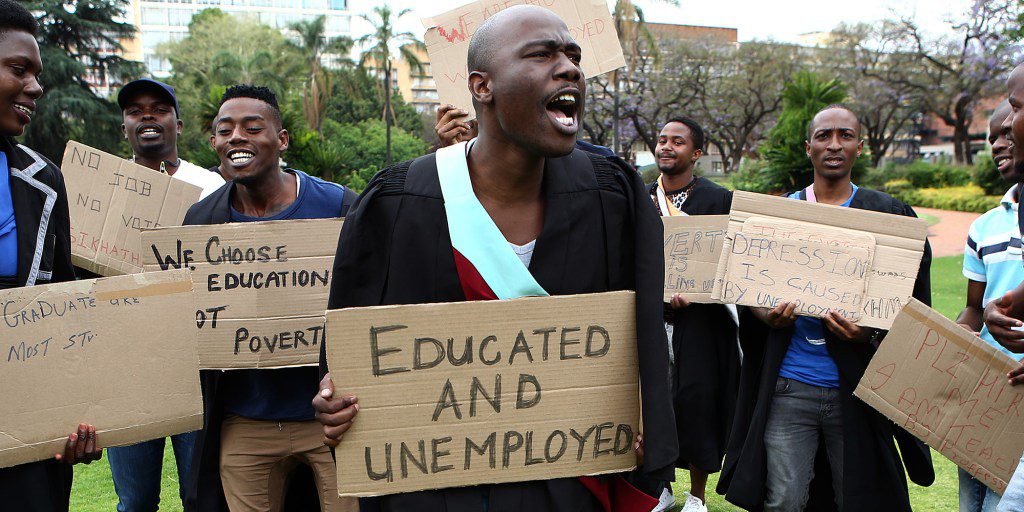
It all began like any other viral moment on Nigerian social media, but then it took a turn. Popular TikTok sensation Hamzat Habeeb Adelaja, popularly known as Peller, shocked followers recently with a post that seemed almost too generous to be true. He was hiring a cameraman for a monthly salary of ₦500,000. The news spread like wildfire, and in no time, graduates, yes, university graduates, trooped in for interviews, hoping to clinch the role under the young entertainer’s banner.

But beneath the glitz of that social media post lies a stark irony, a brutal reflection of Nigeria’s current socioeconomic reality: a secondary school certificate holder interviewing degree holders for a position in the gig economy. Is this a triumph of hustle over education or a symptom of a failing system?

This scenario has ignited widespread controversy. Should someone with Peller’s academic background employ graduates? Is he flaunting success in a way that undermines the value of formal education? Or is he, in his own unorthodox way, contributing to job creation in a country where unemployment is a ticking time bomb?

Regardless of where you stand, one truth remains: Nigeria’s youths are not only unemployed, they are disillusioned.

But, beneath the glamour, is Peller’s youth the key to his controversial rise? At age 20, can Peller truly shoulder the weight of fame, fortune, and the emotional toll that comes with being in the public eye? Fame is a double-edged sword, and wealth earned in the public space, especially in a country like Nigeria, where social values matter, can either elevate or destroy a brand.

Some have attributed his behaviour to immaturity, a lack of exposure, or poor guidance. Others question the roles played by his management and inner circle. Are they enabling his excesses or helping him stay grounded?

Peller’s youth and maturity seem to be dancing to different tunes at times in sync, at other moments, sharply distinct. While his age brings the energy, creativity, and audacity that fuel his rise, it may also limit the depth of judgment that comes with lived experience. Despite his fame and financial success, one thing remains true: maturity isn’t measured by wealth or followers. 

He may be richer or more popular than his advisers, but that doesn’t make guidance obsolete. In fact, the higher one climbs, the more essential wise counsel becomes. No matter our age or status, we all need mentors, correction, and continued learning because growth, like fame, should never outpace wisdom.

This is not Peller’s first brush with public criticism. During the heated JAMB controversy months ago, he was branded a poor role model. Critics say he misuses his influence. Admirers say he is just being himself. But the question is not just what Peller does, it’s what he represents.

When individuals like Peller become the aspiration of thousands of young people, what message are we sending? That fame, regardless of how it’s earned, trumps knowledge, experience, and decorum?

One might ask, is this a systemic failure or a personal flaw? But the deeper question is this: Can we really blame Peller for being a product of a broken system? Or should we point fingers at the society that created him, a society where education is devalued and unemployment drives graduates to accept roles from entertainers with no formal qualifications?

This is a national dilemma. Young people are no longer looking to engineers, doctors, or scholars as role models. They now look to influencers, many of whom may lack the maturity or training to handle such responsibility.

This isn’t just about Peller; it’s about perception, power, and public influence.

The Brand at Risk: PR Implications

From a public relations perspective, Peller’s every move is now under a magnifying glass. As a brand, his current trajectory presents both opportunity and risk. He is loved by many but also watched with scrutiny by an equal number. His brand power lies in his authenticity, but even that must be managed with intentionality because one viral moment can either grow his brand or ruin it.

In a society where cultural norms still dictate public perception, Peller must understand that his brand isn’t just about content; it’s about conduct. His platform gives him power, and with that comes responsibility.

PR experts warn that failing to manage this carefully could result in brand erosion, reduced partnerships, and a gradual loss of public trust. A sustainable career in entertainment requires more than charisma—it demands discipline.

Beyond the Buzz: What should Peller do? It’s easy to dismiss these concerns as envy or moral policing, but that would be a mistake. Peller is a Nigerian pride, a self-made entertainer who carved a niche and created employment. That in itself is commendable. But with influence comes expectation. With status comes scrutiny.

This article is not to tear Peller down. It is to offer a lens of accountability, reflection, and growth. The same media that celebrates must also question, not out of hate, but out of hope that Nigeria’s influencers will see themselves not just as entertainers, but as leaders in a generation gasping for direction.

Peller can choose to be more. He can use his platform to elevate the values of integrity, hard work, and education, even as he continues to thrive in entertainment. He can show that success does not require disrespect, and that influence is not a license for irresponsibility.

Whether he likes it or not, Peller is not just a content creator. He’s a movement. And movements, when misdirected, can lose their magic or worse, mislead millions.

Final Thought

Peller’s story is still unfolding. He is talented, young, and full of potential. This is not a final verdict, but a cautionary tale. The camera is rolling, the nation is watching.

The real question is: What will Peller do next?

Haroon Aremu Abiodun, An Author, public Affairs Analyst. He wrote in via exponentumera@gmail.com

Unemployment: Nigerians shock firm with flurry of applications, force closure of vacancies

By Ishaka Mohamed

Edge Research Services Ltd has stopped accepting job applications just within 24 hours after advertising vacancies for data collectors across Nigeria.

The firm had called for applications on Thursday, January 2, 2025, and set January 20 as the deadline. However, an update by its LinkedIn handle in the early hours of January 4 declared the window closed after receiving over 2,000 applications.

Part of the statement reads: “WOW! We’re overwhelmed with gratitude! A huge thank you to everyone who commented, shared, and applied! We received over 2,000 applications in just 24 hours!”

After expressing gratitude and surprise, the firm stated its resolve to review only the applications received. “Due to this incredible response, we’re closing the job advert earlier than planned. Our recruitment team will now focus on reviewing applications and selecting the best fit…”

Edge Research Services Ltd, headquartered in Lagos and with a field office in Kano, Nigeria, is a data collection, research, and evaluation firm that offers qualitative and quantitative research services in sub-Saharan Africa.

It’s noteworthy that this is not the first time Nigerians’ interest in jobs has shocked an employer. A recent example was when the Nigerian National Petroleum Company Limited (NNPC Ltd) application portal glitched just a few hours after calling for applications. “Due to unprecedented traffic to the NNPC Ltd. career page from applicants applying for vacancies, the site is currently experiencing slow load times,” the company said in a statement.

FrieslandCampina calls for applications from graduates 

By Muhammad Sabiu

FrieslandCampina WAMCO, otherwise known as Peak Milk in Nigeria, has opened its job application portal for recent graduates.

The company, on its website, stated that an ideal candidate for the job offer should have a bachelor’s degree or a Higher National Diploma, also abbreviated as HND, and must have graduated with an upper second class honours degree or an upper credit.

An ideal candidate must have also completed the NYSC and should not have more than two years’ work experience.

Leading worldwide dairy cooperative FrieslandCampina strives to cultivate high-potential new people so they may contribute to something greater and take on leadership roles in the future, enabling us all to succeed in the market both today and in the future.

Interested candidates are advised to click this link and apply: https://careers.frieslandcampina.com/global/en/page/graduate-professional-scheme-gps

Agony of underpaid workers and suggested reactions

By Ishaka Mohammed

Illusion. Yes, that’s what I see in many fellows who consider themselves optimists. Denying the existence of a sad situation doesn’t portray optimism; rather, it depicts a glaring loss of control in an ocean of illusion. However, believing that the situation will change for the better is optimism.

There’s no gainsaying that poor remuneration is an undeniable feature of a typical Nigeria’s workplace. Considering the conditions of service and state of the nation, one can irrevocably say that many employees are grossly underpaid in almost every organisation in Nigeria.


From media houses to fuel stations, schools and other organisations, you find journalists, pump attendants and teachers who work for no fewer than eight hours per day but go home at the end of the month with a paltry sum of N15,000 or something lower than that. In fact, I heard from a lecturer of mine who used to be a practising journalist (now a communication lecturer) that a certain publisher of a national newspaper told some of his employees that their identity cards were their meal tickets; he had nothing to pay them. This is one of the reasons why some journalists not only expect but also demand brown envelopes from organisers of events.


This underpayment issue is like asking a man to walk fast on an alley filled with banana rind. Considering the slippery nature of the rind, it’ll be a great achievement for such a person to avoid staggering, that’s if he doesn’t fall outright. As an employee, I feel your pains, but you need that achievement; you must stand tall. Avoid waiting for others to change things for you.


Many underpaid workers are forced into recording unsatisfactory performances. That’s one thing you must resist. Once you’re sure that your remuneration is poor, look for where you may attract more value to yourself; otherwise, consider upscaling your competence.


Martin Luther King’s speeches often inspire me. He insisted that we must be the best of whatever we are. As a classroom teacher, I become more critical of myself each time I read the following lines. 


“If a man is called to be a street sweeper, he should sweep streets even as Michelangelo painted, or Beethoven composed music, or Shakespeare wrote poetry. He should sweep streets so well that all the hosts of heaven and earth will pause to say, ‘Here lived a great street sweeper that did his job well.'”


So, dear teachers, being underpaid must never turn you into cheats. Instead, research, teach and evaluate your students appropriately. Those kids under your tutelage don’t belong to your employer; they’re future leaders. Even if they don’t end up in public offices, they’ll at least lead their families. And, as we all know, it’s difficult for banditry and terrorism to thrive in a society where a significant percentage of members possess quality education.


Beware, o you health workers. In your dealings with your patients, avoid being influenced by the unfair treatment you receive from your employers or the government. If you fail to control yourself, you may murder innocent people or cause them lasting deformities.


My dear journalists, we’re aware of the meagre sums you take home as salaries. But such should never be your justification to feed your society with false stories. A mass communication lecturer at Ahmadu Bello University, Zaria, Dr Muhammad Hashim Suleiman, once said, “The deliberate mistakes of journalists…lead to mangled human bodies, orphaned children, burnt cities, poverty…and general societal retrogression.” I’m sure you wouldn’t want to be responsible for chaos in your society.


O fellow Nigerians, here’s a passionate appeal to you. Aim for excellence in whatever you do. Regardless of your workplace or salary value, make diligence and fulfilment your hallmarks and watchwords. If a thing is worth doing, it’s worth doing well. Be mindful of posterity; do your level best today so that the people of tomorrow will mention you for good.


And in case it becomes necessary to resign your position in an organisation, remember to quit honourably. Even after submitting your resignation, make your presence noticeable by offering your very best until your last day there; such might make your employer feel your absence. Due to the unpredictability of life, avoid burning your bridges.


On a final note, dear Nigerian workers, bear in mind that your actions and inactions have earthly and heavenly consequences. Being guided by professionalism will do you a great deal of goodness. So, strive always to be the best version of yourself. On the above premise, therefore, as an underpaid worker, you’re expected to solve your problem. You’re the best person to change your situation for the better.

Ishaka Mohammed wrote from Kaduna State. He can be reached via ishakamohammed39@gmail.com.