Job Opportunities

Life after NYSC: Navigating Nigeria’s tough labour market

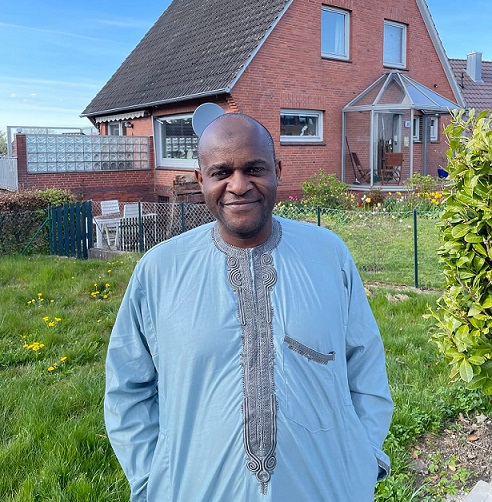
By Usman M. Shehu

One of the most unsettling realities for any corps member post-NYSC is the harshness of the Nigerian labour market. I know this firsthand—we had our Passing Out Parade (POP) on 18th December 2025. 

Finishing NYSC brings not just doubt, but real anxiety and fear: fear of losing the monthly allowance, and the daunting task of distributing your curriculum vitae (CV)—via email or in person—to companies, agencies, and contacts.

The dynamics of the job market have shifted dramatically. It’s no longer just about what you know (your skill set), but increasingly about who you know (your connections). This is driven in part by the sheer volume of graduates entering the market each year. 

Take my field, geology, for example: it’s not one of the most competitive courses, yet about 80 students graduated from my class alone, with degrees ranging from first class to second class (upper and lower), and third class. This pattern repeats across faculties, from the sciences and engineering to the humanities. When you do the math, thousands of graduates flood the market annually, far exceeding the combined absorption capacity of the public and private sectors.

This oversupply is a major reason why many graduates and even their guardians rely on connections to secure jobs. It’s an affront to the merit-based ideals of our educational system and a key factor behind the public sector’s declining efficiency. When nepotism and connections trump competence, institutions suffer. The civil service is already crumbling under this weight, as we see today. Fixing it remains a hot topic in public discourse, but the goal should be clear: employment, public or private, must prioritise what you know over who you know.

Another major challenge is the age barrier. Since 2009, the NYSC certificate prominently displays your date of birth to prevent age falsification. This makes it harder for anyone over 28, whether due to late entry to university or academic delays, to secure interviews or even apply. Most job portals and advertisements specify strict requirements: age limits, degree class, skills, and years of experience. Often, if you’re above the age threshold, you can’t even access the application portal. These restrictions hit hardest in white collar jobs.

The Way Forward: Despite these systemic hurdles, individual agency matters. To move forward, we must be enterprising and proactive: work hard, strategically build in-demand skills (like digital marketing, data analysis, coding, or entrepreneurship), and stay humble while relentlessly pursuing opportunities, whether through networking, job hunting, or starting your own business.

That said, this moment isn’t entirely bleak. We’re excited about the transition and earning our certificates. It opens doors to jobs that require completion of the NYSC. And if we take these steps seriously, upskilling, staying resilient, and thinking creatively, we won’t just be employable; we’ll become highly sought-after prospects.

Happy POP to my fellow ex-corps members, Batch C Stream 2 2025! Let’s step into this next chapter ready. For by failing to plan, we are planning to fail.

Usman M. Shehu wrote from Kano via usmanmujtabashehu@gmail.com.

NJFP 2.0: Free labour for employers, 150K for young graduates

By Ishaka Mohammed

As a business owner in Nigeria, you can employ graduates to work for you for free, while each of them receives N150,000 from the European Union. Your role is to create a conducive environment for these young people to learn and grow over the next 12 months.

This is a marvellous opportunity created by the Federal Government of Nigeria, funded by the European Union and implemented by the United Nations Development Programme (UNDP).

The Nigeria Jubilee Fellows Programme (NJFP) was launched on August 31, 2021, to address Nigeria’s unemployment challenges by connecting talented graduates with job placement opportunities in organisations across the country—offering experience and building skills.

In the first phase of the programme, 20,000 graduates under 30 years were shortlisted in 2022, but official reports indicate that many of them were not matched with organisations due to a scarcity of interested and qualified host organisations. 

For those who were matched with organisations between 2022 and September 2025, each person was entitled to a monthly stipend of N100,000—now N150,000, effective from October 2025.

The portal is now open for NJFP 2.0. If you have an organisation registered with the Corporate Affairs Commission (CAC), this programme will greatly benefit you by boosting your visibility, providing free labour, and helping some young people in your host community achieve financial success. Visit https://host.njfp.ng/registration/, complete the application and check your email regularly.

With a reasonable number of interested and qualified host organisations, NJFP 2.0 is expected to be more successful than the first phase of the programme.

As for Nigerians under 30 who graduated not earlier than 2022 and possess the NYSC discharged or exemption certificate, this might be worthwhile. The application link is https://portal.njfp.ng/registration/.

By the way, many of those who were shortlisted in 2022 were delisted in 2025 without being matched with organisations. Consequently, interested applicants are advised to explore other means of upskilling and generating income even after being shortlisted.

NELFUND plans to launch job portal, expand student loan support by 2026

By Hadiza Abdulkadir

The Nigerian Education Loan Fund (NELFUND) has unveiled plans to launch a national job portal by 2026, designed to connect student loan beneficiaries with employment opportunities both within and outside Nigeria.

Speaking at a press briefing, NELFUND Managing Director Akintunde Sawyerr stated that the platform will serve as a bridge between graduates and employers, featuring job listings from both the public and private sectors, as well as international recruiters. “Though we cannot guarantee employment, we aim to ease the job search process for our beneficiaries,” Sawyerr said.

He clarified that student loan repayment will commence only after a beneficiary secures a job and completes their National Youth Service Corps (NYSC). Repayments will be deducted at a flat rate of 10% from monthly salaries. In the event of unemployment, deductions will be suspended, and in the event of death, the loan will be written off entirely.

In response to recent complaints from students who paid tuition before receiving their loans, NELFUND has directed institutions to refund the affected students or return the funds to the agency. The Economic and Financial Crimes Commission (EFCC) and the Independent Corrupt Practices Commission (ICPC) are currently investigating defaulting institutions.

NELFUND, which manages over 3.2 million student records, expects an additional one million loan applications by the end of 2025. The agency also announced the rollout of a new vocational loan programme, with a pilot phase launching in Enugu. The initiative will finance training, transport, stipends, and tools — all interest-free.

The diminishing value of formal qualifications in Nigeria’s labour market

By Isah Kamisu Madachi

The ubiquitous use of social media and other online platforms, marking the advent of the digital era facilitated by technological advancements, has revolutionised the Nigerian economy and labour market. The longstanding tradition of obtaining certificates and waiting for office work is declining, leading to a paradigm shift in the Nigerian certificate-based economy from valuing certificates to emphasising skills, akin to the trend in developed countries. It is silently moving from your paper to what you can offer. 

While I was not born in the 1970s and 80s, I believe it was difficult, if not impossible, to find someone with a certificate from a Nigerian institution engaged in skilled trades such as carpentry, tiling, wiring, and plumbing. During that period, when a certificate was earned, the expectation was to be employed by the government or a private organisation. However, the contemporary scenario is different, as it is common to find individuals with higher degree qualifications still actively engaged in such work. The emphasis on the value of practical skills is evident almost everywhere, including social media, classrooms, public lectures and capacity-building seminars.

Drawing from my sociology background, I am engaged in various activities such as YouTubing, blogging, essay writing, and video editing. A friend of mine, a law graduate, works with a radio station because of his oratory prowess. My mentor, who graduated years before I joined the university, now works with a leading newspaper in Nigeria because of his ability to write well. It is a common misconception among Nigerians to equate education or skill with certificates.

As a student, I have witnessed how things have changed. An internationally respected lecturer from my department who also worked in the same profession in the United States of America for many years remarked that nobody had ever inquired to see his certificate for the time he spent there. He only lists his certifications and compliments them with the knowledge and skills attached.

This shift from certificate-based to skill-based education is affecting the Nigerian education system because, despite the evolving changes in this endeavour, it seems to have found it difficult to adapt to the new reality. In schools, the focus is still highly on the certificates and theoretical aspects of the courses offered instead of skills. This continues to create discrepancies between what the job market needs and what schools produce.

Seeing overwhelming numbers of unemployed Nigerian graduates roaming the streets led frustrated Nigerian youth to conclude that school is a scam, chanting the famous “school na scam” phrase. This conclusion descended on even those who have yet to experience the reality of life after graduation. Gradually, it has become popular to the extent that overwhelming youth in Nigeria today choose to behave as if they just come to school to acquire the certificate but to learn nothing, despite the seemingly irrelevance of the certificate in the job market. 

To adapt to the changing global trend, Nigeria requires education reform to address the production of half-baked graduates, which is a consequence of the unfavourable learning conditions created by underfunding education. Many experts have raised alarms about the outdated nature of the Nigerian education curriculum, pointing out its mismatch with the needs of the Nigerian labour market. Effective reforms are necessary to address these issues.

Isah Kamisu Madachi, a fresh sociology graduate, writes from Katagum L.G.A, Bauchi State, and can be reached via isahkamisumadachi@gmail.com.

Businesses you can start with less than 10K capital

By Aisha M Auyo

Introduction

With the rise in the cost of living, the removal of fuel subsidies, and other factors affecting the average Nigerian, I thought about how we could do something to augment our income. A business or service that will bring more into our account, known as a side hustle, depends on our skills and capital.

In this write-up, I will start with a business idea that requires ₦10,000 or less, and I plan to progress to a more complex skill and larger capital investment.

So, what’s a side hustle? A side hustle is an additional employment opportunity unrelated to a person’s full-time job that provides supplemental income. In other words, a side hustle is a way to earn extra income in addition to a full-time job. With the extra money, it may be easier to pay bills, contribute to savings, or assist with other expenses.

The additional income could also help turn your side hustle into a growing business. Unlike a part-time job, a side hustle usually offers more freedom and more control over what a person does, when they do it, and how many hours they devote to it.

Individuals can usually pursue a side hustle that involves their passions and talents, and some may eventually make their side hustle their primary career. If you’re interested in making extra money outside of your full-time job or want to explore a new career, consider starting a side hustle.

To pursue one successfully, it is helpful to choose the type that matches your interests, skills, and professional goals. Learning more about side hustles might allow you to earn money while doing something that engages you and gaining professional experience in a new field.

Benefits of having a side hustle

1. Gaining flexibility: Individuals typically manage the time they dedicate to their side hustle, making it easier to integrate into their existing schedule as full-time employees. By controlling their schedule, they can make their side hustle accommodate other events or commitments they have while still earning additional income. This may help them gain flexibility and maintain employment in their existing role while also pursuing their passion.

2. Improving your finances: A side hustle is a way to earn additional income in addition to a full-time job. With the extra money, it may be easier to pay bills, contribute to savings, or assist with other expenses. The additional income could also help turn your side hustle into a growing business.

3. Exploring Your Passions: One advantage of a side hustle is the opportunity to pursue a career you’re passionate about. Pursuing your passions as part of a side hustle may allow you to develop your side hustle into a career. You can also develop specific skills that may help make your side hustle successful.

In this article, I’ll discuss 16 ideas for side hustles you can try with a capital of ₦10,000 or less. They are as follows:

1. Tutor/Lesson Teacher: Many families seek extra help with their children’s schoolwork. Offering tutoring services can be a successful side hustle, and helping students can be rewarding. This side hustle may accommodate a full-time job since many tutors only work before or after school hours. I advise you to find students near your area so you can walk or commute for less than 500.

2. Babysitting: With many nursing mothers going to work or other engagements daily, the need for a babysitter has risen. Also, the lack of relatives and extended family households has given rise to mothers depending on others to help with their children. You can stay at the person’s home and look after their children, or the baby could be brought to you if you live in a baby-friendly environment.

3. Cleaner: This side hustle offers a variety of options, including cleaning residential homes and commercial businesses. Additional service options could include cleaning the interior, exterior, or both aspects of buildings. You may offer as many or as few of these services as you wish, and you could charge different prices depending on the service.

4. Car wash: Offer to wash cars in your neighborhood or find a local car wash where you can assist the owners when they’re overwhelmed.

5. Technology repairer: If you have an affinity for technology, a potential side hustle could be repairing technology. This could include fixing computers, laptops, smartphones, or tablets. These devices are a big part of many people’s lives for work and leisure, and some pay for repairs on these devices. You may have the option to control how these repairs come to you, such as having them sent through the mail, having clients bring them to you, or picking them up yourself.

6. Rental property manager: If you own a residential or commercial space, renting it out could be a successful side hustle. Whether you rent it out short-term or long-term, and for businesses or vacations, there are many options and potential clients. You can either advertise on your own or use real estate sites or companies that can help you reach potential renters.

7. Personal trainer: Helping others reach their fitness goals can be a very rewarding side hustle. You can maintain a schedule of clients around your availability, and you could work at a public gym or park your facility if you have one. There are certifications and licenses you may be interested in earning as you enter this job field.

8. Tailoring: If you have experience in tailoring and sewing, another side hustle could be doing alterations. This is when a customer visits a tailor to have their garments altered to fit their bodies. A common example is wedding dresses, as many brides order dresses and have tailors alter the dresses to their exact measurements.

9. Plaiting hair: If you have the skill of plaiting hair, you can do this in your free time. If customers aren’t coming, you can offer to do home service in your neighborhood or places not far from your area. Home service also allows you to meet others who might want their hair done.

10. Henna design: In this era of women wanting to look their best, henna design has come to stay. Women want to adorn themselves with this natural product. If you have the skill of either red henna, dye, Rani, or Sajem design, offer to do it at your place or provide home services. These things sell and don’t cost a lot.

11. Manicure and pedicure: Working-class women and men want to pamper themselves and look their best. So, getting their nails, feet, and toes done is something they will need. The tools for this service may not cost up to 5k. Also, home service will work just as well if one doesn’t have space.

12. Roasting corn/plantain/yam: This business is ubiquitous, yet we can’t get enough of it. Try roasting on the roadside along a busy route in your area when you are free. Buying corn, plantain, or yam for a start-up won’t cost more than 2k, then add coal and a rack for roasting.

13. Making snacks: Making small chops or snacks for events or daily for schoolchildren and workers is another way to get a steady income. Parties and social functions are always coming up. You can even offer a home service where the client buys all the ingredients, and you make the snacks for them to refrigerate.

14. Selling drinks/Zobo/kunun aya: Depending on the weather, cold drinks always sell. But with the advent of health awareness and the vices of carbonated drinks, people are opting for natural drinks. Nonetheless, one can combine natural and carbonated drinks in a bucket with ice. This will cost less than 10k.

15. Selling fruits and vegetables: Fruits and vegetables are always needed, and not everyone has the luxury of going to the market or store every day. So, bringing these to their location will always be welcome, from cucumbers, bananas, plantains, peppers, carrots, or onions. One can always get a customer needing one of these.

16. Online advertisements: If you are an internet user, you can help with social media posting or managing business accounts. You can take videos or pictures of items and advertise them, then get paid for your efforts. If you have many contacts on WhatsApp, you can advertise products and services on your status and get paid for doing so.

Which of the above businesses sounds appealing or doable to you? Is this feature helpful? In what ways? Please share your thoughts with us.

Aisha Musa Auyo is a doctoral researcher in educational psychology, a wife, a mother of three, a homemaker, a chef, and a parenting/relationship coach. She can be reached via aishamuauyo@live.co.uk.

How investing in shares, mutual funds can help you become financially independent

By Aminu Mohammed

The inspiration for this article came from a short Facebook post by Bashir Abubakar Gazaki, who advised young people to invest their money in shares of good companies to attain financial independence. His followers’ lack of financial awareness caught my attention, as evidenced by the comments below the post, where many people asked him to explain the stock market. 

It is not surprising that personal finance is not taught in universities. I learned about stock investments through books such as “The Richest Man in Babylon” by George Samuel Clason, “Rich Dad Poor Dad” by Robert Kiyosaki, and “Rich Dad’s Guide to Investing: What the Rich Invest In That the Poor and Middle Class Do Not.” I read these books shortly after graduating from Ahmadu Bello University, Zaria. 

The books gave me insight into why some people, despite working for many years, still struggle in life. The inspiration from these books led me to purchase my first share during my service year in Adamawa state. Similarly, a fellow corps member from the southwest who knew the stock market advised me to invest in good companies.

Invest money in assets Instead of liabilities 

Investing your time actively and your money passively is an excellent way to secure your financial future. Passive income refers to the money you earn from your assets, such as property, shares, mutual funds, Treasury bills, etc., while you sleep. Unlike your job, assets generate income for you, whether you work or not. So, it’s crucial to avoid wasting your money on liabilities and start investing in assets.


If you earn a salary or own a business, it is best to save at least 10 per cent of your income and invest it wisely. Investing in shares doesn’t require a large sum of money. Suppose you know about stock trading. In that case, you can invest in the United States stocks or the Nigerian stock market, even if you start small with a low amount.


However, it is understandable that many individuals are scared of investing their money in the stock exchange, given the capital market crisis in 2008, where several people lost a significant portion of their funds. I have experienced losses in the stock market myself, particularly with the shares I bought in the defunct Oceanic Bank and Bank PHB. But I have also gained from stocks like Dangote Sugar, GTBank, and Zenith Bank. Life is all about risk; sometimes, we win, while other times, we lose due to unforeseen circumstances. But that shouldn’t stop us from exploring new investment opportunities, no matter how little.

Investigate companies before Investing

Investing in the stock market is a business that requires a long-term strategy and patience rather than a quick way to get rich. Having a good understanding of the companies you invest in is crucial. According to Warren Buffet, the Chairman of Berkshire Hathaway, one of the most successful investors in the world, the best way to achieve greater rewards is to think long-term. Buffet recommends holding stocks for at least five to 10 years to accumulate wealth. However, some traders still profit by trying to beat the market daily.


If you are hesitant about investing directly in stocks, you can consider mutual funds, designed for people who want to minimise risk but have lower returns. You can contact your local banks, such as First Bank, GTBank, UBA, Stanbic IBTC, and others that offer asset management services. These companies manage various types of mutual funds under the guidance of experts.


As a salaried worker, unforeseen circumstances such as job loss or a downturn in business can be devastating. Therefore, it is important to have a safety net in the form of investments to help you recover in case of any unforeseen circumstances.

Consult a stock broker before buying any Shares

It is important to conduct thorough research and seek expert advice before investing in shares. Look for stocks with strong fundamentals and invest in them wisely. Diversifying your investment across different sectors and companies is recommended to maximise your returns.

It is crucial to emphasise that individuals with little knowledge about the stock market should educate themselves on basic financial concepts before investing in shares. The companies mentioned in this article are for illustration purposes only and to encourage young people to take control of their financial future through smart investments. Investing in shares is not a quick way to get rich, and seeking professional advice before investing is highly recommended.

I wish you the best as you strive towards financial independence and personal growth.

Aminu Mohammed wrote this article from Ingolstadt, Germany. He can be reached at gravity23n@gmail.com.

Artificial Intelligence: The good, the bad and the ugly

By Haruna Chiroma

Artificial Intelligence, commonly known as AI, has recently garnered significant attention in mainstream media outlets such as BBC, CNN, Al-Jazeera, Daily Trust Newspaper, Forbes, New York Times, Wired, and others. It is widely considered to be the most talked-about scientific discipline globally at present. AI is like a smart and helpful digital friend. It’s a computer system trained to perform tasks that usually require human intelligence, such as learning, understanding language, and solving societal problems.

The AI-based computer system learns from experience and adjusts to new information, making it a bit like a digital wizard that can handle various tasks independently. Siri on Apple devices, Google Assistant on Android phones, Amazon’s Alexa, facial recognition capabilities, Facebook’s language translation feature, friend suggestions on Facebook, and language translators are examples of AI systems in operation. These are some of the few AI systems that illustrate how AI impacts everyday tasks.

The influence of AI on our daily lives is increasing across various domains, including security, small and medium enterprises, education, communication, health, business, entertainment, transportation, homes and workplaces. The realm of AI is a double-edged sword. While we have elucidated the opportunities and benefits, there are growing concerns surrounding risks, ethical considerations, job displacement, potential threats, and legal conflicts. Here, I will delve into the positive aspects, reserving a discussion of some negative dimensions later in the article.

AI is the foundation for transformative technologies like the widely discussed ChatGPT, which has over 18 million active users daily. Now, the GPTs store has been launched for business. An AI non-invasive device has been invented to read what a human is thinking in his mind, convert it to text and display the text on the computer screen for everyone to read. The research has been conducted and pilot-tested at the University of Sydney. Such a device has a multifaceted benefit to humans. For example, anyone with speech impairment can use the device to communicate his thoughts and wants with people without talking.

There is an AI tool for converting text to video that only requires the user to write a story in text, then prompt the AI tool with the story and a video based on the story will be generated. I foresee the possibility of rapidly integrating the text-to-video converter on phones in the near future. Imagine with a simple request like, “Hey Siri, Alexa or Google assistance, turn my story into a cool video,” you’re on your way to experiencing your tale in vibrant animations and vivid scenes. With her AI prowess, Siri makes storytelling not just a written adventure but a visual journey for all to enjoy. The text-to-video converter can potentially revolutionize the movie industry by reducing the cost of production and time for making movies. Content creators like skit makers can utilize such an AI tool to create short videos to post to engage their followers.  

In a remarkable leap forward for technology, a cutting-edge AI device has emerged, revolutionizing how we experience videos by effortlessly transcending language boundaries. A cutting-edge AI tool that seamlessly translates video-spoken words into different languages, showing the same person speaking in different languages, opening up new possibilities for global communication. The device operates as a user-friendly interface where videos are uploaded and transformed into a linguistic tapestry. The device not only translates spoken words but also adapts captions and subtitles, preserving the original intent and emotions of the content. Filmmakers and content creators worldwide have already begun incorporating AI devices into their creative process, providing viewers a more inclusive and immersive experience. As stories seamlessly unfold in multiple languages, the device adds a new layer of depth to digital storytelling.

Let’s now turn to the dark side of AI: Should AI systems attain or surpass human intelligence, there exists the potential for these systems to make decisions that could lead to the extinction of the human race on Earth or decide to go to war with humans. A recent incident in South Korea exemplifies the risks, where an industrial robot designed to identify boxes mistakenly perceived an industrial worker carrying a box as a box, leading to a fatal outcome – death. Legal conflicts further highlight the challenges posed by AI advancements.

The New York Times has initiated a court case against OpenAI, the owner of ChatGPT, in which Microsoft holds a significant investment. The lawsuit alleges copyright infringement by ChatGPT, prompting OpenAI to assert that developing a powerful system like ChatGPT without some level of copyright implications is unfeasible. This legal dispute initiates discussions on copyright issues in the AI era. Google is also facing legal action related to AI, with a patent infringement suit filed by Singular Computers against the Tensor Processing Unit, an AI-based processor.

Concerns about job displacement loom large, with an estimated 800 million jobs expected to be replaced by AI in 2024 alone. Additionally, the unethical use of AI tools to generate false or misleading information disseminated through social media raises significant concerns about potential threats to coming democratic elections in Asia, the USA, South America, and the UK, potentially leading to civil unrest.

On a final note, criticisms have emerged regarding AI tools employed in recruitment processes, with accusations of introducing bias and ethical concerns. In a recent publication by Shelton Leipzig on the responsible use of AI systems, she categorizes AI systems into three groups: low risk, high risk, and prohibited. The classification is based on the varying levels of risk associated with each AI system. Certain situations are deemed inappropriate for deploying AI systems, as exemplified by their exclusion in voting during elections.

Some AI systems are considered very low risk, such as those employed in video games or product recommendation systems on e-commerce sites. However, most AI systems fall into the high-risk category, including those used in recruitment and financial applications; 140 use cases were identified within this classification. These multifaceted challenges underscore the complex landscape surrounding AI development and deployment.     

Haruna Chiroma, University Professor of Artificial Intelligence, wrote from the University of Hafr Al Batin, Saudi Arabia, via freedonchi@yahoo.com.

ABU announces multiple jobs for students, calls for applications

By Ishaka Mohammed

The management of Ahmadu Bello University (ABU), Zaria, has created numerous job opportunities for its current students. This is contained in a special bulletin dated Tuesday, January 9, 2024.

According to the director of the Counselling and Human Development Centre, Dr Sa’adatu Makarfi, the initiative named Students Work/Study Scheme aims to provide financial support to needy students and enhance their educational experience.

The scheme welcomes interested and capable students to work in areas such as coaching (for primary and secondary school students), research assistance, computer operation, harvesting, babysitting, laundry and car washing. Students can equally work as masters of ceremonies, and those with other specific skills are also encouraged to apply.

Interested students are to visit any of the Guidance and Human Development Centre offices at both the Samaru and Kongo campuses for registration or more information.

The Daily Reality gathered from some ex-students of ABU that the Centre has been assisting needy students who can work while studying, but this is probably the first time it is publicly calling for registration.

Can AI surpass human intelligence?

By Muhammad Ubale Kiru

Whether Artificial Intelligence (AI) can surpass human intelligence is a complex and debated topic. Many scientists, AI users, and observers have argued whether what we see in movies regarding AI surpassing human intelligence will come true. I have asked this question several times, and colleagues at work and friends on social media have asked me whether this myth can be true. Since then, I have been gaining momentum, strength, and proof to be able to answer this question.

However, something triggered my urge to share my thoughts on this question today after I received a notification from OpenAI. This company developed the famous ChatGPT, informing users about their new “Terms of Use and Privacy Policy.” One of their newly updated clauses says, “We have clarified that we may collect information you provide us, such as when you participate in our events or surveys.”

The above statement has directly or indirectly revealed that if you agree to use ChatGPT, you must surrender to the fact that OpenAI will collect personal user information for research and training purposes. A non-specialist will not understand the implications or consequences of that. One may think it is an ongoing activity because social media companies like Facebook, X (formerly Twitter), etc.) collect users’ personal information for business and quality assurance purposes.

So, what is the real implication here?

It is simple. AI and machine learning algorithms are like weeds on a plant. They rely heavily on data to learn. The more data they consume, the more intelligent they become. Most of us are already using AI to solve our day-to-day activities and problems. For instance, tasks that used to take me seven days to complete can now be done in 10 minutes. I am handing over my tasks to AI to handle them for me.

Each time I ask AI to handle my task, AI is learning the task more and more. Humans perfect their skills through constant and regular learning. Now, I’m handing over most of my tasks to AI; AI learns while I lose because previously, I learned from my work experiences, and now AI does the work for me. AI is becoming more intelligent and capable, while I am becoming less intelligent and less capable. By the way, I’m not the only one in this mess. Nowadays, even programmers who rely on constant practice to improve their coding skills are also using AI to generate codes or programs that used to take months to complete.

ChatGPT, for example, is used by millions of users daily. When it was first developed, they used random internet data to train its learning models. Now, they are using real-time human input (data) to train the AI. If you look at the core foundation of any AI in the world, it is designed to capitalise on learning from its environment. Our phones are AI-enabled, laptops are AI-enabled, web apps, games, calendars—everything is now AI-enabled. The more we use AI, the more AI learns about us.

Today, your phone keypad knows more about your words and thoughts than you know yourself. As you begin typing, it completes the rest for you. So, with time, your AI-enabled devices would learn more about you than you could ever learn about yourself. Thus, what is left of us if AI has learned everything about us? In Sun Tzu’s book, The Art of War, he says, “Knowing your enemy is akin to winning half the battle. Understanding their strengths and weaknesses provides a strategic advantage that can pave the way to victory.”

The question of whether AI can start a revolution or take over the world, as we have seen in movies, is another debate for another day. The Tesla CEO Elon Musk and AI guru Lex Fridman are among the few people in the world who are always concerned about the potential danger of AI and have continued to call for regulations before AI gets out of hand. The technology has very speedy and staggering growth potential. It is growing at a breakneck pace right now.

To this end, I urge policymakers and regulatory bodies to take necessary precautions before AI gets out of control. AI is undoubtedly powerful, and if unleashed without caution, it can create devastating chaos.

Let me hear your thoughts in the comment box.

(c) Muhammad Ubale Kiru

Young Nigerians, turn your ideas into capital

By Kamal Alkasim

In these tough economic times in Nigeria, young people, your ideas are more valuable than you think. They can be your ticket to success if you present them well. You can start small or go big, online or offline. Don’t start a business without knowing the ropes. Here’s some straightforward advice: Begin a small business, regardless of your education. Education helps but doesn’t limit you.

If you want to make it, learn from the experts in your field. Avoid diving into something you don’t understand. Ignorance won’t get you far. Remember, being a job creator is better than being a job seeker.

Procrastination is your enemy. Act on your ideas quickly. As Pastor Reno Omokri wisely said, “Your mind is your supercomputer.” Believe in the power of positive thinking, as Islamic Scholar Malam Ibrahim Khalil noted: “A rich person grows through investments, and a poor person through positive thoughts.”

Don’t believe opportunities are scarce. Every day is a chance to work on your ideas wisely and diligently. Even the slightest idea can lead to something great. Small steps pave the way for significant achievements.

Always remember that your ideas hold immense potential. The choice is yours: build on them or let them go to waste. Your future is in your hands. May God bless the brilliant young minds of Nigeria as they turn their ideas into reality!

Kamal Alkasim writes from Kano via Kamalalkasim17@gmail.com.