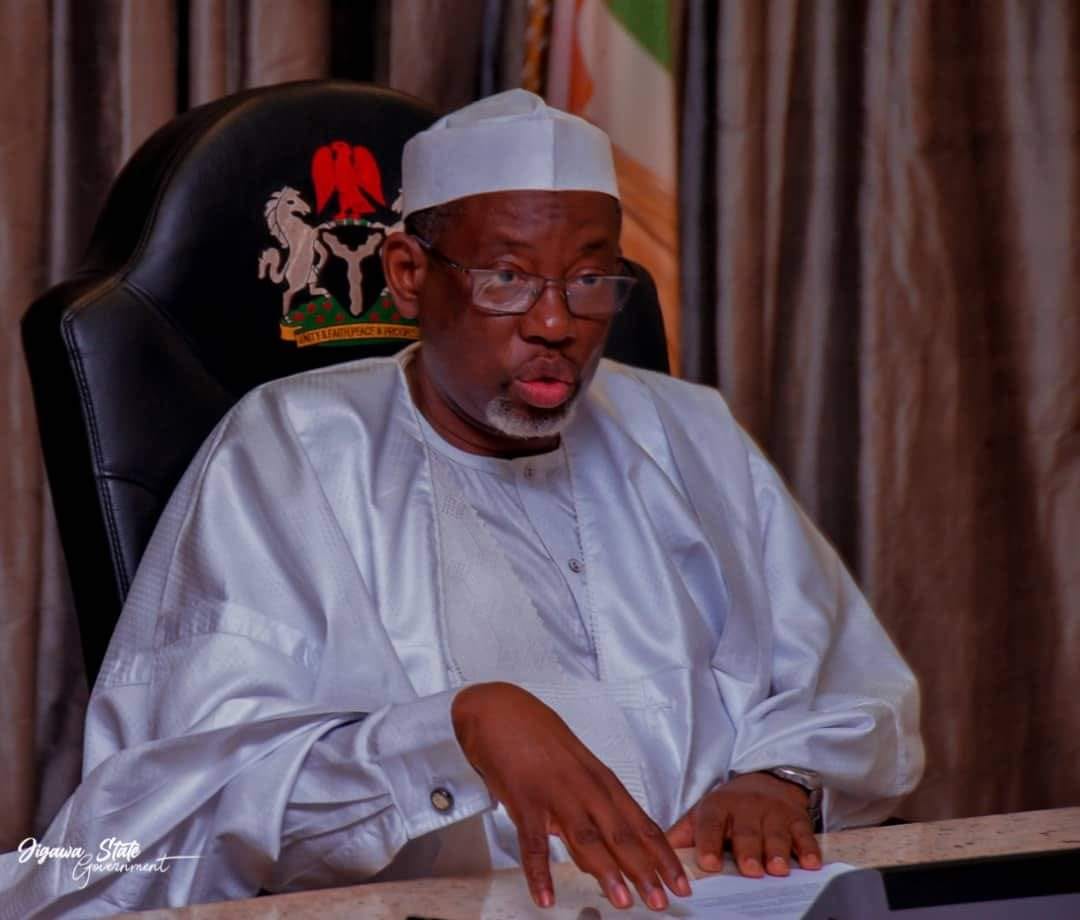
Jigawa State

Jigawa judiciary sacks three, forces judges to resign over misconduct

By Uzair Adam

The Jigawa State Judicial Service Commission (JSC) has taken disciplinary action against several judicial staff for misconduct, including the dismissal of three officers, advising three Shari’a Court judges to resign, and reprimanding two others for dereliction of duty.

This was disclosed in a statement by Abbas Wangara, Director of Protocol and Publicity, Jigawa State Judiciary, on Sunday in Dutse.

According to the statement, the disciplinary measures were approved during the commission’s 178th meeting, held on January 7, following investigations into violations of judicial procedures and rules.

“In the outcome of the meeting signed by Auwalu Dan’Azumi, Secretary of the JSC, the commission received the report of an investigation committee from the High Court department in respect of two officers,” the statement said.

The affected officers, Iyal Ibrahim, a Higher Registrar on Grade Level 08, and Baffa Alhaji, a Principal Registrar on Grade Level 14, were found guilty of the illegal sale of two vehicles, exhibits of the Federal High Court, Dutse.

The commission terminated their appointments in line with Rule 5 (4) & (6) of the Jigawa State Judiciary Scheme of Service 2006 and Section 41 of the Judicial Service Commission Law, Cap. 20 Laws of Jigawa State 2012.

Additionally, the commission dismissed Abdu Aujara, a Chief Clerical Officer, for suppressing N965,000, a litigant’s deposit in a case of recovery filed by Ja’iz Bank before the Chief Magistrates Court Jahun. His dismissal was also in accordance with Section 41 of the Judicial Service Commission Law.

The commission further acted on reports from the Judiciary Public Complaint Committee (JPCC) against several Shari’a Court judges. One of them, Adamu Farin-Dutse, was accused of abusing judicial powers and misapplying the law.

Despite previous warnings, he was found liable for misconduct and advised to resign within two weeks.

Similarly, Muhammad Usman, another Shari’a Court judge, was accused of issuing a writ of possession before delivering judgment, thereby violating due process. He was also advised to resign within two weeks.

In another case, Judge Usman Zubair was found guilty of judicial irregularities, including mishandling inheritance cases and allowing unauthorized individuals to benefit from rulings.

He was similarly advised to resign. Two magistrates were reprimanded. Magistrate Munnir Abdullahi received a warning for improperly converting a civil matter to a criminal case and acting in a partisan manner.

Magistrate Yakubu Ibrahim was warned for abusing power and making derogatory remarks toward a litigant at Chief Magistrate Court Maigatari.

Wangara emphasized that these disciplinary actions reflect the commission’s commitment to ensuring a corruption-free judiciary and upholding professionalism and discipline among judicial staff.

He assured that the JSC would continue to take necessary measures to maintain standards and foster a fair working environment.

The commission reiterated its dedication to promoting a transparent and efficient judiciary in the state.

In defence of Sule Lamido and Nasir El-Rufa’i

By Saifullahi Attahir

In 1984, during the second term of former US President Bill Clinton as Governor of Arkansas, he was alarmed by a damning report on the decline in educational standards in the state. He, therefore, constituted a committee headed by his wife, Hillary Clinton, to go around the state and come up with resolutions on how to rescue the State Educational sector.

He introduced robust proposals, including more time for academic work, mobilising more funds, increasing the school year, special opportunities for gifted children, a maximum class size of twenty pupils up to third grade, and more recruitment of Mathematics, History, and Science teachers.

The most controversial proposal required all teachers and administrators to take and pass the National Teacher Examination. Even in the US, this proposal was met with backlash from interest groups and misinformed teachers that the governor was trying to hijack their means of livelihood. But in reality, there is no way that a reform in education can be successfully achieved without looking at the guardians of that knowledge.

 Teachers are the backbone of any school. No matter how beautiful the school building, how few students per class, or how good the curriculum, if the person imparting the knowledge is not well-prepared, problems will continue to arise.

In President Bill Clinton’s case, he recommended that teachers who failed be given free tuition to take regular courses and be able to take the test as many times as possible until certified to be able to teach.

This same scenario occurred during the tenure of two visionary governors in northern Nigeria. Former Jigawa State Governor Alhaji Sule Lamido used the same strategy to improve the state’s education, which was then on life support. I can count the number of primary school teachers I knew who were allowed to return to the College of Education (COE) Gumel to obtain an NCE Certificate fully funded by the state.

In the case of former Kaduna State Governor Mallam Nasir Elrufa’i, we can remember the giant effort he tried to impose to rescue the educational sector in Kaduna. This included a massive purge of school teachers who could not pass their Aptitude test. The former governor was met with a heavy force of resentment and protest, including a mass media campaign in which he was simply trying to retrench workers from their source of livelihood.

These three cases were almost similar, although different States, different personalities, at different times, and nearly different approaches. But history will judge…

Saifullahi Attahir wrote via saifullahiattahir93@gmail.com.

Namadi’s SSA was wrong: A clarification concerning students’ allowances

By Isma’il Alkasim

Since the Jigawa State government announced a 100% increase in scholarship allowances for state students, it has served as a beacon of hope and high expectations. This timely intervention comes amid the economic hardship caused by the removal of fuel subsidies and the subsequent increase in registration fees at tertiary institutions. 

The government emphasised that Governor Umar A. Namadi understands the challenges students face. To support their education, the state’s scholarship board was instructed to disburse scholarship payments before the start of each academic session. This directive has undoubtedly restored hope and brought joy to the students.

The State Executive Council approved a series of memos and tags to supplement the payment, but only to a few institutions. Although the state government boasts of having paid all students, over eighty percent of institutions have not received any payment from the board. We have repeatedly read that the government approved a substantial sum for the payment, but to no avail. This has engendered mistrust and left a deep scar in our memory, raising concerns that heartless and corrupt opportunists may have stolen the funds.

Moreover, in an interview with Radio Jigawa, the Senior Special Assistant on Students Matters to the Executive Governor of Jigawa State claimed that the government had given scholarship allowances to all Jigawa State students. This claim either demonstrates his inability to represent his office truthfully or suggests his complicity in misappropriating public funds intended for student support. 

Furthermore, to strike a balance and provide an honest treatment of this issue, we attempted to reach Ambassador Muhammad Salisu Seeker, the SSA, to clarify his ill-founded assertion. However, despite our numerous text messages, he arrogantly refused to answer our calls. He did not even have the courtesy to respond. This arrogance is unbecoming of a public servant who represents the government in students’ eyes. 

As a concerned student, I find the SSA’s claim offensive and insulting. To date, Ahmadu Bello University, Zaria students have not received any payment from the Jigawa State Scholarship Board. The Senior Special Assistant has abused the trust bestowed on him by the Governor, demonstrating sheer incompetence and a monumental failure in public service.

Finally, as a concerned citizen of Jigawa State, I call upon Governor Umar A. Namadi to investigate this matter thoroughly and ensure that anyone found guilty faces the full force of the law. I also urge him to address the misconduct of his Senior Special Assistant on Students Affairs, Amb Muhammad Salisu (Seeker), who has demonstrated a pattern of abusing his office through gross incompetence.

Isma’il Alkasim is a student at Ahmadu Bello University in Zaria. He writes from Garki Jigawa State and can be reached at kogasgarki@gmail.com.

Prof. Suwaiba Sa’id Ahmad: Tribute to the Iron Lady

By Adamu Isah Babura

I want to congratulate Professor Suwaiba Sa’id Ahmad on her promotion to the exalted rank of Professor by the Governing Council of Bayero University, Kano.

Prof. Suwaiba is a pioneer. After 20 years in academia, she became the first female professor from Babura, Jigawa State. She progressed from Graduate Assistant to Professor, holding leadership roles like Head of the Science and Technical Education department and Director of the Gender Studies unit.

Her expertise extends beyond the university. She served as the Provost of Jigawa State College of Education. Currently, she holds the esteemed position of Minister of State for Education, Federal Republic of Nigeria, leveraging her vast experience to shape the country’s education landscape.

Prof. Suwaiba, the current Nigerian Minister of State for Education, is an exemplary academic and a shining star in the field of science education. Her unwavering dedication, unrelenting passion, and uncompromising commitment to excellence have left an indelible mark on the lives of countless students, colleagues, and the academic community at large.

As a renowned scholar, Professor’s contributions to her field of Science Education have been groundbreaking, insightful, and profoundly impactful. Her research has not only advanced our understanding of critical issues in the education sector but has also informed policies, practices, and innovation.

Prof. Suwaiba, a gifted teacher and mentor, inspires generations of students to pursue excellence and cultivate a love for learning. Her rare ability to connect with, listen to, and guide students nurtures their growth and earns her deep admiration and gratitude from all who learn from her.

Throughout her illustrious career at Bayero University, Kano, and outside, Professor Suwaiba has demonstrated remarkable leadership. She collaborates with colleagues, institutions, and communities to advance the cause of education, promote social justice, and foster a culture of inclusivity, equity, and excellence.

As we celebrate Prof. Suwaiba’s achievements at this incredible milestone, we honour her remarkable accomplishments,character, values, and unwavering commitment to making a positive difference in education. She is a true treasure, a beacon of hope, and an inspiration.

Adamu Isah Babura wrote from Bayero University, Kano, via adamubabura@gmail.com.

Governor Mallam Umar Namadi loses mother

By Muhammad Sulaiman

The Governor of Jigawa State, Mallam Umar Namadi, mourns the loss of his mother, Hajiya Maryam Namadi Umar, who died in the early hours of Wednesday, December 25 2024.

The late Hajiya Maryam was a respected matriarch known for her compassion and dedication to her family and community. Her passing has left a significant void in the lives of her loved ones and the people of Jigawa State.

Under Islamic traditions, the burial rites are scheduled to take place later today at 4:30 PM in her hometown of Kafin Hausa. The family has called on well-wishers to join them in offering prayers for her eternal peace.

In a statement from his Chief Press Secretary, Hamisu Mohammed Gumel, the Governor prayed for Allah’s mercy to grant his mother eternal rest in Jannah and comfort the bereaved family.

The people of Jigawa State stand united with the Governor in mourning, reflecting on the cherished memories and legacy of Hajiya Maryam Namadi Umar.

May her soul rest in peace.

Fueling social media firestorm: How a national tragedy turns into national hate

By Kabir Fagge Ali

As the country mourns the unfortunate and catastrophic tanker explosion that claimed over a hundred lives in Majia town, Taura local government, Jigawa State. The circumstances leading to this devastating event, and its unfolding discourse on digital space leave a bitter taste.

If past events of such nature didn’t serve as a pointer, one would have been forced to argue that the deleterious economic hardship Nigerians are currently undergoing played a significant factor in the circumstance warranting people to desperately attempt to scoop up fuel from a fallen tanker that is highly flammable. However, one cannot, in all honesty, overlook the impact of economic hardship instigated by the “so-called reform” of this administration.

While the explosion was a profound tragedy, what followed on social media turned a devastating accident into a platform for spreading hate. Netizens took to various platforms to condole, analyze, obfuscate, sympathize, and attack the dead in a typical Nigerian fashion of ethnicizing, religionizing, politicizing and regionalizing events. What should have been a space for empathy, turned into a hub for anger, with users blaming specific ethnic groups for what they called “ignorance” and “greed.” 

The horrific event became weaponized by those seeking to stoke division and deepen the fractures within Nigerian society. One @AdemolaSola38048 on X wrote, “E no go better for their dead body”, another, @Peterojueromi posted “Well, I no pity them sha, na their stupidity kill dem”.  How does a tragedy of this magnitude turn into an avenue for deriding others?

Instead of offering sympathy or proposing solutions, many used the incident as an opportunity to fuel long-standing ethnic, regional, and religious tensions. Blame was cast on entire communities for the reckless actions of a few, with harsh, derogatory terms being used to describe those who were simply trying to survive in an environment where economic opportunities are scarce.

Speaking on this incident, the former Head of the Department of Mass Communication at Skyline University, Nigeria, and an expert on hate speech and digital media, Mr. Abdulhameed Olaitan Ridwanullah noted that “social media is like a two-edged sword. It can draw the attention of relevant rescue teams and government agencies to the event and at the same time serves as an accelerant for the societal divide”.    

He warns:

“From the Nigerian experience, one shouldn’t be surprised that even in tragedy, some Nigerians cannot conceal the hate in their hearts. With social media in the hands of some of the worst among us, and the anonymity and herd mentality that comes with it, it is not surprising to read comments on social media space that shouldn’t have made it out of the thought process of whoever posted them.”

Mr. Ridwanullah added that “in the wake of national disasters like this, it is not surprising that some elements of division will weaponize such a tragedy”. He emphasized that it is important for Nigeria to look into legislation on digital media that will not only guarantee freedoms provided by digital platforms but ensure the sanity of the digital space.

“At this critical time in our digital journey, scholars should start looking beyond the usability of these platforms but understanding how their affordance reflects on our society. This kind of event and the rhetoric we saw on X underscores the importance of my research on nexus between online hate speech and offline hate crime” he surmised.

It is time for social media platforms to step up and recognize their role in monitoring and curbing the spread of hate speech. At the same time, it is also up to users to approach these platforms with responsibility and empathy. While frustrations with governance, inequality, and resource scarcity are real, targeting those who suffer the most with hateful rhetoric is not the solution.

The Jigawa tanker explosion should serve as a reminder of the fragility of life and the dangers of living in a world where safety nets are often nonexistent. But more importantly, it should remind us that in moments of tragedy, we should seek to uplift each other rather than tear each other down.

As Nigeria continues to navigate complex social, ethnic, and economic challenges, we must remember that unity, empathy, and constructive dialogue are far more powerful than any message of hate.

Kabir Fagge Ali, is a Writer with PRNigeria center and write via faggekabir29@gmail.com.

Prodigal Daughter – Now, proudly my Boss: Dr Suwaiba Sa’idu Ahmad, Minister of State, Education

By Prof. Abdalla Uba Adamu

It is not often that one gets the rare opportunity to witness the birth of a star. I count myself to be privileged to have done so. 

In 1980, I started my employment as a Graduate Assistant in the Department of Education at Bayero University, Kano. As was the case at the time, I was allocated a housing apartment on Zoo Road. Two of my neighbors were Isma’ila Abubakar Tsiga and Sa’idu Ahmad Babura. I was a bachelor, and both had families who treated me with the utmost respect despite the age gap. Both were older than me, and both became my lifelong friends. So much so that they opened up the doors of their homes and minds to me and got me deeply involved in literature (they were both in the Department of English BUK). If you are looking for the precise moment the seeds of my literary tree were watered, it was on Zoo Road. 

In 1981, Sa’idu’s wife gave birth to a stunningly beautiful baby girl and was named Suwaiba. I remember holding her in my hands and saying the prayers I could for her long life and prosperity. We later went to the naming ceremony in Baɓura —it was the first time I was in the town, and the serenity of the place struck me.

That child soon bloomed into an undergraduate B.Sc. Ed Chemistry student. Incredibly brilliant and emerging at the top of her class. There were no surprises there – she and her other siblings were simply at the top of their class wherever they found themselves due to the incredibly liberal but supportive family atmosphere that pervades the house. Although there was firmness, for instance, she wanted to study medicine after high school, but her dad insisted on her studying education. She came to me crying to intervene. I tried, but he was adamant it has to be education. After going back and forth, we decided she should obey her father and study education. She agreed but vowed to return to school to study Medicine after she had finished her Education. 

I can easily sympathise in reverse. My father wanted me to study medicine, but I didn’t! So, I ended up in Science Education—just like Suwaiba. Look where she is—following parental counsel, she was blessed to be at the top of the game. Oh, she decided not to come back for Medicine after all—education was just too good. 

Employing her in 2005 after she graduated from the Department of Education under the able leadership of (now) Prof. Abdulrashid Garba, the current Vice-Chancellor of Khalifa Isyaku Rabi’u University (KHAIRUN), was a boon to the Department. She was quickly the hardest-working staff member, always eager to be part of a team and often taking leadership control if the ship seemed rudderless. 

In 2007, the University created the Science and Technical Education Department. I, together with Suwaiba, (now) Prof. Sagir Adamu Abbas (current Vice-Chancellor, Bayero University Kano), and a few others, were deployed to the new Department. She started her Master’s degree under my supervision. I could barely keep up with her ballistic enthusiasm, a trait she inherited from her father, Prof. Sa’id Ahmad Babura. 

As my “daughter” (her reference to me has always been “Baba Abdalla”, endearing me further to the family), she became my protégé. I became her Head of Department from 2010 to 2013, and we got heavily involved in NGO activities in teacher training, for she is highly dedicated to teacher education. She spent 15 years in international NGO activities in improving teacher education programs. 

She finished her Master’s degree in record time and almost immediately rolled over to a PhD, but this time at Ahmadu Bello University Zaria, finishing in 2014. She was the first female from Jigawa State to obtain a PhD in the rare field of Science Education. Her Google Scholar profile profiles her impressive research in Chemistry Education, Science Education, and Gender Studies. Her ResearchGate profile highlights one of the first experimental uses of AI ChatGPT in Organic Chemistry Classrooms, demonstrating her future-oriented focus on embracing AI in high school education. 

In every workshop setting, I would just sit down and watch her proudly as she explained the various teaching techniques to Kano and Jigawa States teachers. She developed a series of teacher training modules for international NGOs used in teacher training refresher programs. When she finished her doctoral studies in 2014, I had already migrated to the Department of Mass Communication in October 2012. She was visibly unhappy about my moving away because we taught a course on the Philosophy of Science together, which she really enjoyed. I assured her I would always be around the corner. 

Administratively, she also earned her laurels. From 2018 to 2020, she became the first female to become the Head of Science Education, then Sub-Dean Academics in the Faculty of Education, and eventually Associate Professor of Chemistry Education. Due to her brilliant performances, she was appointed Director of the Center for Gender Studies from 2020 to 2024, a position she impressively held, forming a womanist rather than feminist focus on gender issues, especially education, in a traditional society. She was mentored by Prof. Ruqayyah Ahmed Rufa’i, the former Honorable Minister of Education (2010-2013), also from Jigawa State. Bayero University remains proud of its women Education Ministers –all from the same State!

From there, she became the Provost of Jigawa State College of Islamic and Legal Studies, Ringim, in March 2024. In October 2024, she was nominated as the Minister of State for Education. 

At 43, she is young. That’s for sure. That is also her biggest advantage. She promises a fresh breath of future learning with her demonstrable competencies in field-tested qualitative research, Artificial Intelligence, and a focus on scientific learning among young people, particularly young girls. 

I am proud of Suwaiba as a daughter. Proud of her as a colleague. Proud of her as a protégé. As the recently appointed Minister of State, Education, I am proud of her as my boss. Allah Ya ƙara basira da albarka, amin.

If wishes were horses: Tribute to Prof. Musa Auyo

By Khaleed Suleiman Abdul

We thank Allah for a life well spent. Indeed, from Allah we come, and to him we shall return. Professor Musa Abdu Auyo’s death is undoubtedly one of the few transitions that shocked Bayero University Kano and the entire academic circle within and outside Nigeria. 

The Comrade, as we fondly called him, was an unrepentant freedom fighter and social justice crusader. His uncommon spirit of tolerance and forgiveness earned him popularity among different classes of people. In fact, he is a man of the people, and the turnout of people from all walks of life who paid their last respects during his internment testified to that.

My first close encounter with him was when he and a few other individuals helped me secure admission into Bayero University. That was about three decades ago, 1993 – 1994, to be precise. From then on, the relationship knew no boundary and continued to wax stronger until his death.

I always recall with joy how he facilitated the securing of admission for ten qualified candidates in different departments and faculties whose credentials were forwarded to him by my humble self.

His simplicity and sense of accommodation enabled him to act or respond with dispatch to any request I put before him, particularly on student admission or counselling issues.

He once said, “As a lecturer, I don’t have much financially to give, but when it comes to securing admission or imparting knowledge to people, I must do my best”.

Comrade was always ready and willing to help you irrespective of your tribe, religion, class, or age. He believed that society must change positively through education and the creation of public awareness. 

His exemplary, simple lifestyle contributed immensely to our conduct. 

He taught us the spirit of accountability, answerability, patriotism, and sympathy in the common person.

The late academic guru was bereaved by two wives and nine blessed and educated children. One of them is completing her PhD, and others have or are doing their master’s degree and undergraduate programs in different fields of human endeavour. May God Almighty protect and guide them, ameen.

Professor Musa Auyo graduated in library and information sciences from the prestigious Bayero University Kano, received a master’s degree in the same field from Ahmadu Bello University Zaria, and received a PhD from BUK. He has also been a professor from the same institution lately.

He was the Head of the Department of Library and Information Sciences, Dean of the faculty of education, Bayero University librarian, one-time pioneer librarian at Federal University Kafin Hausa, and, very recently, chairman of the Board College of Education, Gumel, Jigawa State.

Despite all these academic responsibilities, the late professor still found time to belong to associations within and outside the university walls. 

I remember as a student, whenever a symposium was organised, and comrade Auyo and the likes of Prof. Ibrahim Bello-Kano (IBK), late Auwalu Umar, and Auwalu Kawu of sociology were to make a presentation, the theatre always appeared too small to accommodate the mammoth crowd of students anxious to hear words of wisdom from the effervescent cum erudite scholar.

His belief in public education and enlightenment led him to champion the establishment of the Auyo Youth Association (AYA), Hadejia Youth Organization, and Literacy Club Society of Bayero University (LICSOBUK) in which I worked closely with him to champion the cause but was short-lived immediately after we graduated.

He was a great pillar, a beacon who nurtured and groomed students and intellectuals within and outside the campus. Some of his students today are professors doing well in their chosen professions. They include professors Abbas Mai Dabino and Baffa Abubakar, to mention a few.

I recall with pride how the late Professor Auyo, as a crusader of social justice and other sound-minded intellectuals in the Senate, saved many students from rustication for merely embarking on a lack of electricity and water protest in the new campus, where the Vice Chancellor insisted that the students must be punished. 

However, these noblemen, including the late professor, stood their ground to ensure no student fell prey to victimisation.

In conclusion, filling the vacuum created by your demise will be very difficult. Your contribution to education, community development, social justice, mentoring, and nurturing within the university perimeter and across society will remain indelible in our memory.

We pray to almighty God to grant you the highest level of Jannah, peace, and everlasting Rahma in your grave until we meet and part no more. Alhamdulillahi!

Khaleed Suleiman Abdul (Sardauna of Gwagwarwa) wrote via akhaleed431@gmail.com.

Tragedy strikes in Jigawa as three teenage girls drown in Buji pond

By Uzair Adam 

Three teenage girls tragically drowned in a pond in the Buji Local Government Area of Jigawa State on Saturday. 

The Spokesperson for the Nigeria Security and Civil Defence Corps (NSCDC) in the state, ASC Badaruddeen Tijjani, confirmed the incident in a statement released in Dutse on Sunday.

The girls, identified as Fatima Sule (12), Nasiya Sale (12), and Huwaila Sa’adu (13), all from Tulla village, were reportedly cutting grass to feed their livestock near the pond when the accident occurred around 11 a.m.

According to the NSCDC, they received a distress call from the Tulla community shortly after 11 a.m. They quickly responded by sending officers, including divisional disaster management officers, to the scene for a rescue mission. 

Community members and NSCDC personnel worked together and were able to recover the bodies after approximately 30 minutes of searching.

The girls were taken to the nearest health centre, where they were pronounced dead. 

The investigation indicated that the spot where they were gathering grass was the same place where they drowned.

The NSCDC Commandant in the state, Mr. Muhammad Danjuma, expressed his condolences to the families of the victims and urged parents to monitor their children closely, especially during times when ponds and rivers are swollen, to prevent such tragedies.

Five dead, 15 missing in Jigawa canoe accident

By Anwar Usman

The police in Jigawa have confirmed the death of five persons and 15 others missing in a canoe accident that occurred on Thursday in the state.

The Police Public Relations Officer (PPRO) in the state, Lawan Shiisu, confirmed the incident in a statement issued to news men in Dutse.

Mr Shiisu stated that the incident occurred at Nahuce in Taura Local Government Area (LGA) of the state.

“Today, at about 1200hrs, information from a reliable source revealed that a canoe conveying 20 passengers to cross over Gamoda River at Nahuce Village capsized.

He identified the deceased passengers as Abdurra’uf Mohammed, aged 15, Suleman Ali, 20, Shafiu Mohammed, 25, Ado Nafance, 7, and Alasan Mohmmed, 16, all from Taura LGA.

Mr Shiisu said the Commissioner of Police in the state, Ahmadu Abdullahi, had prayed for the restfulness of the souls of the deceased and for Allah to give the family the fortitude to bear the irreparable loss.

The Dail Reality (TDR) gathered that the incident was coming one month after a similar incident in Kwalgai Village, Auyo LGA, leading to the death of two persons and the rescue of 18 others.