Jews

Israeli military occupation: Nigeria’s suggestion

By Bilyamin Abdulmumin

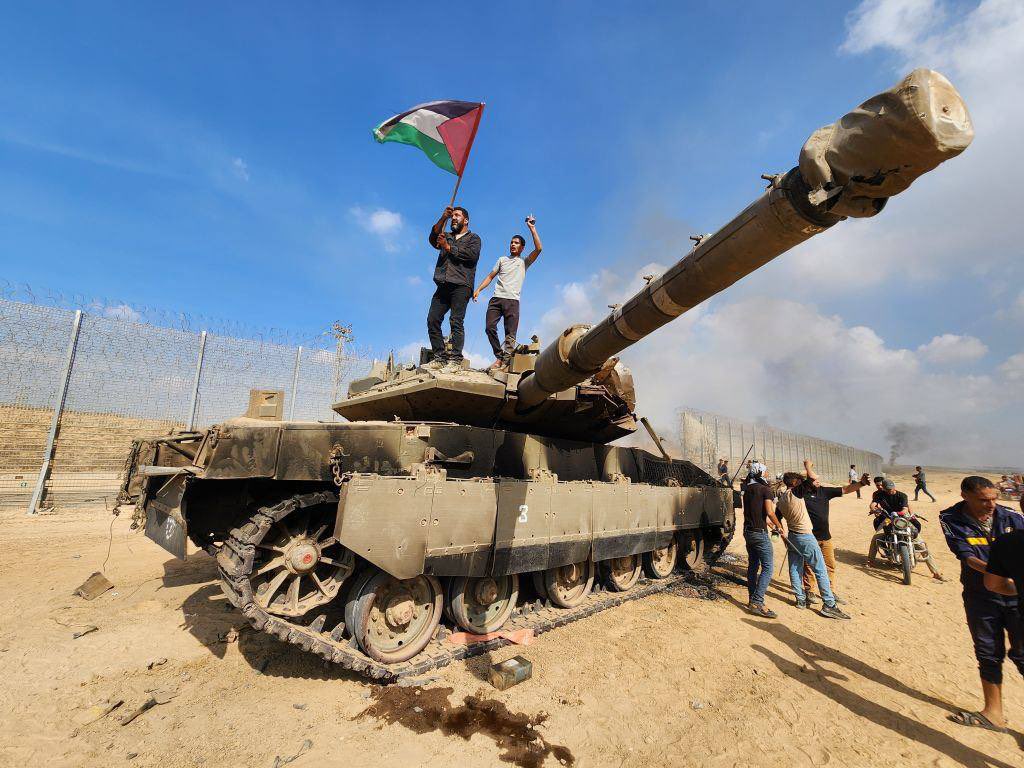
Last quarter of 2023, 7th October to be precise, the patience of Palestinians on the forceful occupation and increasing encroachment of Israel in the Gaza Strip, Westbank, and East Jerusalem reached the breaking point, as the voice and heartbeat of Palestine in the Gaza Strip, Hamas, launched a devastating attack on Israel in the occupied areas. The coordinated attack was said to bypass Israeli intelligence and caught their security off guard. But in a swift reaction, Israel has since been responding brutally, threatening the annihilation of not only Hamas but Palestinians in Gaza.

This article is the second from my reading of the book that Dr Muhsin Ibrahim generously shared: They called me a lioness.

 As far back as the beginning of the 19th century, the geopolitical entity now known as Israel did not exist. Instead, the Jewish population was scattered globally (this is a topic for another day); their population would be dispersed across Europe, America, and even our continent, Africa, as some reports claim. 

The clamour for Israel to settle in Palestine first gained traction after the First World War. When the Ottoman Empire collapsed, the control over Palestine fell under British rule.  Regardless of how one will view the situation,  the genesis of the Palestine-Israel turmoil must go back to the British. Because they sought both the help of Israel and Palestine during the war,   promising  Israel to establish a state for them on one hand and agreeing to get independence for Palestine from the Ottoman Empire on another, the British eventually sided with Israel.

So, in 1917, the British issued the Balfour Declaration, pledging to establish “a national home for the Jewish people” in Palestine. This marked (substantially) the beginning of a series of ongoing conflicts between Israel and Palestine.

 The Second World War saw the Zionist movement get even more traction.  According to Hitler’s fascist ideology, for humanity to attain Utopia, all forms of inefficiency must be removed, including problematic races and even physically or mentally challenged individuals. In Hitler’s vision, Israel fell in the former category,  so they have to be eradicated. In this regard, about six million Jews had been said to have met their brutal end. The individuals with discounts, either physically or mentally, should also have allied nations to thank for ending the fascism ideology; had Hitler succeeded, it would have been the beginning of their eradication, too.  But for Palestine, their predicament increased. Hundreds of thousands of Holocaust survivors fled Europe, with tens of thousands seeking refuge in Palestine.

It appears that Hitler’s apprehension against Israel had some element of truth because all European countries closed their doors to Jews both before and after the World War. The Jewish population seemed a burden, and the world grappled with an approach to address the puzzle.

In 1947, the United Nations formalised Zionism by approving a plan to partition Palestine into a Jewish state and a Palestinian state, with Jerusalem remaining under international control. This marked a triumphant year for Israel, the culmination of the Zionist struggle. Conversely, for Palestinians, it was a time of national mourning and sadness.

A whole new chapter of the standoff between Israel and Palestine would ensue as Arab nations united against Israel to stop the partition. However, the coalition achieved limited success, with only Jordan managing to capture East Jerusalem and the West Bank and Egypt taking control of Gaza after the 1948 war; Palestinians referred to this war as the “Nakba” or catastrophe, reflecting the extent of devastation that was inflicted on them by Israel.

Again, in the 1967 war, known as the Six-Day War, Israel got the upper hand, capturing Gaza, the West Bank, and East Jerusalem and initiating what Palestine currently fights with their heart in their mouth: the military occupation of Palestinian territories. In this process, Israel implemented various methods to relegate Palestinians to second-class status, including the construction of a separation wall, the issuance of green identification cards, and the assignment of white license plates to Palestinians, a sort of apartheid-style.

The fact that both Israel and Palestine are descendants of a common ancestor, Abraham, with the former tracing their lineage through Isaac and the latter through Ishmael, is significant and, at the same time, intriguing. To paraphrase former US president W. J. Clinton, dear brothers and sisters Shalom, sheathe the sword and make a sacrifice to accept the common deal beneficial to both sides like the one Nigeria offered.

 Through the then Ambassador/Permanent Representative of Nigeria to the UN, Tijjani Muhammad-Bande, Nigeria gave the suggestions: “We encourage Israel to take concrete steps to freeze and reverse all settlement-related activities in the West Bank and East Jerusalem. On their part, Palestinian leaders must also signal their readiness to return to the negotiating table, and we reaffirm our unwavering support for a two-state solution, with Israel and Palestine existing side-by-side in peace.” 

Bilyamin Abdulmumin is a doctoral researcher in chemical engineering at ABU Zaria.
Fulani as Endangered Species in Nigeria (I)

By Ahmadu Shehu, PhD.

It is generally considered an impossible hyperbole when the current trajectory of ethnic profiling against the Fulani people in Nigeria is linked with the road to Kigali. But, except something drastic is done, for most dispassionate observers, this is as sure as the sun rises from the east. Therefore, as Mbororo (i.e. a herdsman), I write from experience to call the attention of Nigeria and the world to the danger facing not only the Fulani but also millions of Nigerians who look like them. With this article, I hope to save the world from escapism and blame-game when our negligence eventually allows the deed.

Let me quickly disabuse the minds of my audience. I do not stand for any criminal, regardless of ethnic, religious or regional background. I do not also hold excuses, whatsoever, for any form of criminality. However, the world needs to understand that the unfolding events in Nigeria are beyond ordinary and are very alarming, even intimidating for every Fulani person of whatever background and socioeconomic status. We are all sinking into a dark hole, scared of what tomorrow may hold for our children or us for simply being Fulani and herders.    

The Rwandan, Bosnian and Burmese genocides, and indeed the worst human tragedies in history, such as the Holocaust in Europe, are all events no one anticipated as possible outcomes of “simple” stereotypes, ethnic and social profiling. For instance, when the Rwandan actors of genocide characterised the Tutsis as cockroaches, not even the victims of that profiling imagined that they were meant to be crushed and eliminated like cockroaches without a drop of human sympathy. But such is the power of language. Its control over our minds and worldviews means that our emotions and worldly experiences are conceptualised, i.e. conceived, and coded, i.e. expressed, based on metaphors that underlie our bodily experiences. This is the subject of Conceptual Metaphor theory[1]

The world looked on as the influential media of Nazi Germany propagated hateful stereotypes against the Jews, poisoning the minds of the majority, providing a fertile ground for the emergence of one of the most despicable men in history, Adolf Hitler, as the Chancellor of Germany. Coming to power under these circumstances, Hitler had all he needed to implement his long-desired goal of “cleansing Europe” from the Jews.

It began by implementing bigoted policies, such as boycotting Jewish businesses and isolating the Jewish population in segregated ghettos, followed by the policy of extermination fondly described as “the solution to the Jewish question” in Europe. The so-called “Jewish question” tells you that Jews were objectified, problematised and removed entirely from the human society of Europe. It went to the extent that most people saw them as a nuisance, a source of their problems, and therefore, unsympathetic to their course. Today, there is seemingly a sad “question of the Fulani problem” in Nigeria, on which the dubious media and politicians thrive.

Today’s Nigeria is to a Fulani what Rwanda of the 1990s was to a Tutsi. The prerequisites for the looming disaster have been met and are consistently, persistently and comprehensively being propagated, promoted and disseminated. Of this, the world must not claim ignorance. Despite their historical contributions to the Nigerian and African civilisations, the economic value chains they have helped sustain and subsidise for centuries, the scholarship they have institutionalised on the continent, and their passionate, patriotic contributions in the creation and growth of this entity called Nigeria, the Fulani are today being commodified and dehumanised in deliberate ethnic profiling.

Like the Jews in Europe, Fulani folks are the herders of Nigeria, holding the largest share in the country’s livestock sector. Unfortunately, this cultural means of livelihood has fallen under persistent attacks and other bigoted attempts to impoverish the herding population. Once the most prosperous, most self-reliant and wealthy in northern Nigeria, millions of the Fulani people have become destitute, impoverished by the twin evils of bad governance and climate change. The results of this are apparent: many have turned to criminality as means of survival. Instead of treating the root causes of this menace, the Nigerian governments at all levels have resorted to criminalising every Pullo and whoever that looks like “them”.  

At every checkpoint of the Nigerian security agencies, one demography is a primary target: The Fulani. The state that has deliberately refused to educate and enlighten them, despite being the highest tax-paying single ethnic group, has turned its security agencies into lions that hunt and extort these vulnerable citizens without discrimination. Police stations, prisons and other detention centres around this country are filled with innocent, young Fulanis without being charged or tried.

The results of this indiscriminate maltreatment are blanket distrust, anxiety and hopelessness that eventually provide the basis for these people to see no reason to abide by the law. Such people are hardened and no longer fear the law, for whatever the law was to do against them for being criminals have been meted against them as innocent citizens. They have lost their livelihood and now their dignity. They have nothing to lose for being a criminal or even a terrorist. This natural law of social injustice applies to all human beings, regardless of ethnic, religious or other backgrounds. 

Similar policies to those deployed to ensure the exclusion of Jews and their final settlement into ghettos designed for their final extermination have long been propagated in Nigeria. It is no coincidence that ethnic warlords who gained political power in Plateau and other middle-belt states in 1999 orchestrated the indigene–settler dichotomy deeply rooted in the hatred for peace-loving neighbouring ethnic groups, perceived as prosperous minorities.

False stories of dominance have been normalised and entrenched in the minds of unsuspecting innocent citizens for political purposes. This deliberate and dangerous xenophobia have plunged these areas into endless ethnoreligious crises, animosities and restlessness. The far more dangerous outcome from this is the reactionary tendencies that have continued to be the basis for the emergence of ethnic chauvinists and bigots as leaders, ala Jonah Jang and that buffoon called Samuel Ortom, the governor of Benue State.

The decades of cattle route blockades across the country has confided herders, who are mostly the disadvantaged category of the Fulani people, to the deserts. More than anyone else, livestock herders cannot do without water and green vegetation. Those are the only sources of livelihood for their stock and subsequently their only means of subsistence and culturally the essence of their lives. But, of course, a country such as Nigeria that cannot help cater for its human population may not be expected to care for its environment – forests, waterways, trees, vegetation have all disappeared, leaving us on drylands. These social and ecological factors have pushed millions of Nigerians whose livelihoods depend on the livestock to possible extinction. I will show you how.

My father had three herds of cattle and two of sheep. Each pack was around 70 to 80 heads of cattle. Each cattle would approximately sell for 80 – 100 thousand naira. Do the math. From the late ’80s to the early 2000s, less than ten cattle were left in my extended family. Add this to family growth and needs. Now you can imagine! Our family had moved thousands of kilometres through these years, from Maini in Niger to Dapci in Yobe, up to the Mambilla Plateau, down to Banyo, Doualayel in Cameroon, and finally Mamukan in Jada LGA, all in search of pastures to nurture the cattle.

With everything lost to the criminal state actors, ethnic discords, climate change and economic instability, an ever-growing family of four is now over twenty and can no longer sustain its only means of livelihood. Sad as this may sound, my story is humane and less tragic than what the herders go through today. The rate at which herders lose their means of subsistence is alarming. By a stroke of a police pen or at gunpoint by cattle rustlers or kidnappers, a Fulani may lose everything he ever worked for to escape detention or rescue himself or his loved ones. Why are we surprised at the natural consequences of this cruelty?       

What has been discussed so far may seem to be based on the unintended consequences of a dysfunctional state, corruption, population explosion, climate change, and the failure of the Nigerian state to implement developmental and social programs for its citizens, which arguably affect all citizens, albeit disproportionately. However, the resulting crises have provided fertile ground and ample opportunity for bigoted politicians to seize power and deliberately formulate and implement desperate, dangerous, racist, chauvinistic policies aimed at ethnic cleansing of the herders’ population. Mind you, herders, not Fulani population, for now, because the road to Kigali is systematic. This is the subject of the second part of this essay.        

Dr Ahmadu Shehu is a nomad cum herdsman, an Assistant Professor at the American University of Nigeria, Yola, and is passionate about the Nigerian project. You can reach him at ahmadsheehu@yahoo.com.


[1] If you are interested in the details of this theory, read Lakoff & Johnson, 1980.