Jaafar Jaafar

The Pantami experiment: Morality in the politics of grime

By Ibrahiym A. El-Caleel

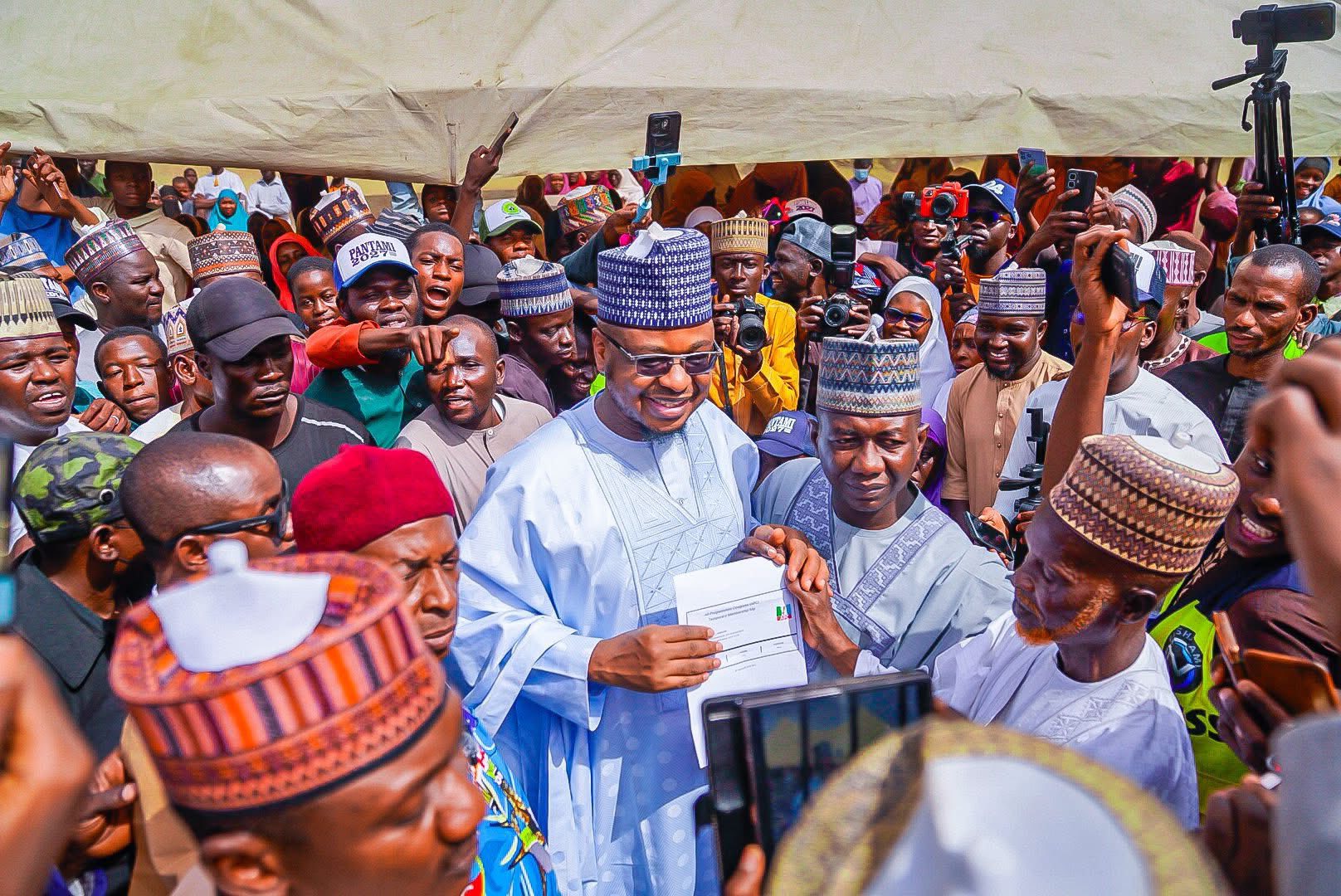
Given his profile as an Islamic scholar and public servant, Imam Dr Isa Pantami’s aspiration for the Gombe State governorship continues to attract attention from multiple quarters. What caught my attention yesterday were the closing lines of Jaafar Jaafar, the publisher and editor of Daily Nigerian, in a brief social media post on the candidature. Jaafar remarked:

“Nigerian politics is grimy. You cannot work in a sewer line and expect to come out clean. Mallam (Pantami) should prepare to mudsling, dip his paws in a cookie jar, dance to the tune of Rarara songs, shake hands with female foreign investors and diplomats, visit churches, steal some billions from security vote, divert public funds for political activities, hire thugs during rallies, lie during campaign, rig during election, take kickbacks after contract award, etc.”

Jaafar is clearly not endorsing these practices; he is only highlighting the grime and immorality that dominate Nigerian politics. Yet I disagree with the implicit suggestion that Mallam Pantami must get his hands dirty simply because he is now in frontline politics. No, he does not.

Pantami does not need to embrace corruption to win elections, nor must he compromise his morals to win or govern successfully after victory. These practices do not constitute the winning formula for elections even in Nigeria. Their dominance in our politics are symptoms that our political system has been hijacked by the morally bankrupt over the years.

Unfortunately, many Western philosophers and some Eastern philosophers have theorised a political thought that sidelines morality. They present it as if power must always be ruthless and corrupt. Niccolò Machiavelli, in his famous work The Prince, famously separated politics from conventional morality. He argued that the end justifies the means and that a ruler should be prepared to use deception, force, or cruelty to consolidate power. Better to be feared than loved, he asserted, if both cannot be achieved.

We see the same philosophy from the likes of Friedrich Nietzsche, Max Weber, Henry Kissinger and even the famous Robert Greene of our age. Their common premise is that politics is about power and domination; that stability and the balance of power matter more than moral ideals; that leaders may employ force, deception, and unethical means to maintain authority; and that some, like Nietzsche, even suggest that morality is a human invention of the weak.

The consequences are visible across the globe. Leaders who internalise these philosophies often govern through ruthlessness, corruption, and moral compromise. In so doing, they have soiled their hands in blood, sex scandals, human rights abuses, economic sabotage, and corruption. This is why, for example, several prominent world leaders have skeletons in Jeffrey Epstein’s wardrobe. They have abandoned morality in their pursuit of power. Today, they are prisoners of their actions.

In contrast, Islamic political philosophy teaches that a ruler must be powerful yet morally accountable, serving as a role model for society. Consider Umar ibn al-Khattab (Umar I), the rightly guided caliph, whose governance was a masterclass in combining justice, authority, and compassion. Umar I punished governors publicly, enforced the law even on the elites, maintained military discipline, and ensured state stability. Yet he was profoundly compassionate: during a famine, he refused to eat butter or meat until the people were fed, and he personally delivered food to the hungry. This was not a democracy; it was a caliphate, yet moral leadership reinforced his authority rather than undermined it.

Umar ibn Abdulaziz (Umar II), the Umayyad Caliph, provides another striking example. Before his ascension to power, the Khutbah (Friday sermons) were often laden with political propaganda, and some rulers ordered preachers to insult and curse Caliph Ali bn Abi Talib from the pulpit in political rivalry. They turned the khutbah into a tool for political rivalry rather than moral guidance. Umar II stopped this vile practice immediately he became the Caliph. He banned curses and political abuses from the revered pulpit of sermons and replaced them with Qur’anic verses. This was exemplary moral courage.

However, Umar II returned the stolen wealth of his predecessors and officials to the national treasury. He reformed corrupt systems gradually because he believes moral change is institutional, not emotional. He abolished oppressive taxes and unjust land confiscations, redistributed state wealth to reduce inequality, and institutionalised meritocracy. Under this meritocracy, he appointed governors and officials based on competence rather than family or tribal loyalty. He removed corrupt and incompetent officials even from his own Umayyad family. Therefore, he revived Islamic ethics in governance.

The last example I will cite here is the famous Abbasid Caliph Harun al-Rashid, who was cited by Chinua Achebe in his book, The Trouble with Nigeria. Harun al-Rashid is another classic example of a leader who combined political power with moral conscience. He was known to travel incognito at night among Baghdad’s citizens to hear complaints directly and make amends where needed. Despite his moral inclinations, the Abbasid dynasty reached its political and cultural peak under Harun al-Rashid. His reign kicked off what later became known as the “Islamic Golden Age”, which gave the world an intellectual gift, the Baytul Hikmah (House of Wisdom).

These examples make one point crystal clear: moral corruption is a choice, not a prerequisite for leadership. The more the world internalises Machiavellian philosophies, the more it empowers the ruthless and morally bankrupt. For Imam Dr Isa Pantami, his candidature is a litmus test. Should he compromise his ethical standards, he risks tarnishing decades of personal integrity. Yet he also has the opportunity to carve out a niche in Nigerian politics by leveraging his clean record, focus, and moral credibility. If he can win ethically and govern without succumbing to corrupt pressures, he could make history, embodying the same fusion of power and moral conscience exemplified by Umar ibn al-Khattab, Umar ibn Abdulaziz, and Harun al-Rashid.

I wish him success and look forward to observing whether he can translate his reputation into leadership that blends authority with moral responsibility, setting a new standard for governance in Nigeria. He is a specimen we should observe; let us see how morally upright people swim against the black tides of our politics. If he succeeds, more morally upright people need to enter politics and help us fix this broken country as early as possible, before it’s too late.

Ibrahiym A. El-Caleel wrote from Zaria, Kaduna State, via caleel2009@gmail.com.

Kano DG Protocol sues Jaafar Jaafar over “Thieving Aide” tag

By Muhammad Abubakar

The Chief Magistrate Court No. 15 in Kano has ordered police to investigate Daily Nigerian publisher, Jafar Jafar, and a staff of the newspaper, Audu Umar, over allegations of criminal defamation against the Director General of Protocol, Government House, Hon. Abdullahi Ibrahim Rogo.

Rogo filed the case, accusing the duo of maliciously describing him as a “thieving aide” to Governor Abba Kabir Yusuf in two reports published on August 22 and 25, 2025. He argued that the stories, carried by Daily Nigerian, were deliberately crafted to tarnish his reputation and portray him as corrupt.

One of the reports, titled “Gov. Yusuf Defends Thieving Aide, Says Protocol Directorate Under Ganduje Spent N20 Billion in 3 Months”, and another alleging that anti-graft agencies traced ₦6.5 billion to his office, were cited as damaging to his image.

The complaint, filed under Sections 106 and 107 of the Administration of Criminal Justice Law 2019, and Sections 114 and 393 of the Penal Code, seeks prosecution for defamation and breach of public peace.

Chief Magistrate Abdul’aziz M. Habib subsequently directed the Assistant Inspector General of Police, Zone One, to launch a full-scale investigation.

Meanwhile, Rogo has also filed a civil suit at the Kano State High Court demanding damages for defamation.

Dan Bello: A true comrade and fighter for justice

By Gaddafi Yusuf Young Journalist 

Someone who stands up for justice and rejects ineptitude and injustice in all facets of his people’s lives is considered a comrade. 

Dan Bello is a well-known character who appears everywhere. He uncovers a secret: the Nigerian government is embezzling and laundering money. Despite being abroad, more precisely, born in the United States of America, where everyone is entitled to freedom, and living in China, the birthplace of major global advancements.

Dan Bello conducts in-depth research and analysis to spit out everything the Nigerian government is doing. He affects all three branches of the government, clerics, and the populace at large.

Although he had few views when posting his skits on social media, his consistency helped him grow over at least two years. He raises awareness of the hardships and unrest occurring in Nigeria, particularly among the northerners, as well as the bribery and corruption that have become ingrained in the country’s citizenry. 

Despite his abundance of knowledge, he made the Nigerian people aware of what was happening outside their doors—the waste and theft of the country’s natural resources and wealth by providing them with factual and empirical reports.

Unfortunately, he is being attacked, mistreated, and vilified by a few ignorant and disloyal young people in the north just because he exposed their political ancestors, who exploited the nation as a prop for themselves and their progeny. 

It touches my heart more, but I understand how our youths have turned to beggars for food without thinking about the consequences in their lives. All they need is their boss’s appreciation and happiness, regardless of how others are torturing and tormenting by their action. 

Even now, our people still find it difficult to embrace the harsh reality of their religious beliefs, political opinions, and relationships with loved ones. 

I felt compelled to appeal to Dan Bello because it hurts to fight for the people you love and those people to fight back because they are self-centred and ignorant. But I beg of you, Dan Bello, and your men, including Barr. Bulama Bukarti, Jafar Jafar, Salisu Zango, Barr. Abba Hikima and the rest of your team have taken me as mentors and role models for journalism and freedom fighters, not to mention them. I promise to work tirelessly alongside you and your team to uncover the truth no matter where it may be found, all the way to the end of this incredible journey to liberate ourselves from the oppressive leaders that rule us.

I pray to Almighty Allah to provide you success, direction, and safety wherever you are. I hope that my beloved Nigeria will soon be restored and revitalised.

Gaddafi Yusuf is a Mass Communications student from A.M.T Massive College and can be via gaddafiyusuf240@gmail.com. 

Questions for Jaafar Jaafar 

By Mukhtar Jarmajo 

In a surprising turn of events, veteran journalist Jaafar Jaafar, who wrote a scathing article against Emir Muhammadu Sanusi II in 2017, appears to be either neutral or even supportive of the emir’s reinstatement last week. This shift in stance has raised questions about Jaafar Jaafar’s change of heart.

In the famous 2017 article, Jaafar Jaafar accused Emir Sanusi II of squandering N4 billion inherited from his predecessor, the late Emir Ado Bayero, and criticized his lavish spending on foreign travel, cars, and internet bills. He also condemned the Sanusi’s remarks about the Kano people, which he deemed abusive. The article concluded with a warning to Emir Sanusi II, reminding him of the consequences of his actions.

Fast-forward to 2024, and Jaafar Jaafar seems to be singing a different tune. His recent support for Emir Sanusi II’s reinstatement has left many wondering what prompted this change of heart. Has Jaafar Jaafar reevaluated his stance on Emir Sanusi II’s leadership and policies? Has new information come to light that challenges his previous assertions?

As a respected journalist, Jaafar Jaafar’s opinions carry weight. His initial article sparked intense debate and scrutiny of Emir Sanusi II’s actions. His apparent support for the emir’s reinstatement raises questions about consistency and credibility.

Jaafar Jaafar should clarify his stance and provide insight into his change of heart. What prompted this shift in perspective? Has Emir Sanusi II demonstrated significant growth or change in his leadership style and policies? Jaafar Jaafar needs to address these questions to maintain transparency and accountability in his journalism, upholding the principles of fairness and truth-seeking that underpin his profession.

Jarmajo wrote from Lobito Crescent, Wuse 2, Abuja, via dattuwamanga@gmail.com.

Nigerian leaders and the call to save our country

By Yusuf Yusuf 

Sometimes, even the starry-eyed optimist must give up on Nigeria. The way things go from bad to worse in the country today is appalling. The great novelist Chinua Achebe had diagnosed our problem as a nation where he said, “The trouble with Nigeria is simply and squarely a failure of leadership.” The leadership of this country is not doing enough to save us from what experts call a “failed” to a “collapsed” state. We fervently pray for God’s intervention. 

The recent revelation by an ace investigative journalist and maverick writer, Malam Jaafar Jaafar, is mindboggling! It highlights Nigerian leaders’ new joint venture in unrelenting efforts to run this country aground. It shows their insensitivity to the suffering of other Nigerians. How will a government that berates the payment subsidy of basic stuff for its citizenry and whose minimum wage is among the lowest approve such an unsubstantiated rise in the salary and allowances of only a “select group”?

I cannot unravel our leaders’ craze to undermine this nation’s progress. Sometimes, I feel like believing conspiracy theories about them being stooges of other groups with vested interests in our nation. Our leaders fail to grasp that when you cause your country to fail or collapse, you will spend the rest of your life a stranger, the life of a Black Hermit (apologies to the great Kenyan writer Ngugi wa Thiang’o).   

White-collar crimes are threatening the existence of Nigeria. Once upon a Giant of Africa is now a baby learning to crawl. Ironically, a country blessed with human and natural resources will become a poverty capital. The way these resources are mismanaged points an accusing finger to its leadership.

The level of suffering in Naija these days is monumental. The dream of having a meaningful life is becoming a mirage. The hopes of the young people are being shattered by daily reality in the country. Hunger and poverty have become our co-tenants—businesses, whatever the scale, are crumbling. Young graduates with both certificates and functional skills are roaming about our streets.  Sensible minds are afraid of what may happen next. You know, poverty always breeds crimes.

This trend needs to be reversed. More than anyone else, the Nigerian leader has a lot to do to reverse the rot and change the status quo. We can all borrow a leaf from other people’s books.  Nigerian leaders are very good at making allusions to attitudes which promote development in other climes. 

Charity, they say, begins at home. The best way the Nigerian leader can help his people catch up with progressive worlds is by renewing our hopes of the noble decision to cut the cost of governance, as leaders of these nations have done. 

Cutting undeserved official allowances and estacodes, unnecessary long laundry lists of aides and stopping duplicity, inflating figures and collecting kickbacks when issuing contracts could help save now the slim chance of the survival of the nation. 

The earlier the nation’s leadership makes the above noble decision, the better for our collective future. This has the potential to prevent the furtherance of the untold hardships that the majority of Nigerians are going through. These hardships, I am afraid, could make many citizens easy prey to international criminal syndicates, especially young and inexperienced minds, with mere food and money handouts. Nigerian leaders, individually and collectively, need to act swiftly to avert the arrival of our doomsday. 

May God save Nigeria from Nigerians.

Yusuf Yusuf can be contacted via yusufyusufgamji@gmail.com.

Lessons from Ganduje dollar videos

By Muhammad Muhammad Khalil

Since Dr Abdullahi Umar Ganduje’s dollar video surfaced on the internet, I have been keenly pursuing its happenings, from Ganduje’s fierce denial to the latest court order barring his arrest by the Kano Anti-Corruption Agency. I will highlight some critical lessons from this whole saga in this article.

1. Despite the former governor’s persistent efforts to dismiss the clip as bogus and doctored, many people still believe in its authenticity. In many people’s view, and thanks to the video, he is a greedy politician whose craze for money is beyond comparison.

Although Ganduje is ultra-rich, they say, he does not reject a fifty thousand naira kickback. Several stories are widely circulated demonstrating this. This shows us the importance of doing good and avoiding any act that can soil one’s reputation. Ganduje is Khadimul Islam to some people; to many others, he’s a dreadful, unrepentant bribe-taker.

2. The authentic or fabricated videos keep reminding us that what one holds hidden can be brought into the open and even grab the headlines. The fact that we do some terrible and disgusting things in the secrecy of our rooms shouldn’t make us feel we are wise; instead, we should never forget that nothing escapes the sight of Allah. The truth is that we sometimes fear creatures more than we fear the creator.

3. The same Ganduje who defied and has little or no respect for court orders is now desperately struggling to be shielded by the court orders he used to flout in broad daylight. Power is intoxicating.

4. Journalists who have the itch to blow the whistle on people in power should realise the danger of their boldness and prepare for what might trail their decision to speak out against corruption and corrupt politicians. It can cost one his dear life.

I don’t know if President Muhammad Buhari’s administration did anything to protect journalist Jaafar Jaafar from the threat to his life that forced him to seek asylum in the UK. The Buhari Mai Gaskiya claimed to have placed fighting corruption atop his priority. Wonder shall never end.

Muhammad Muhammad Khalil wrote from Kano. He can be reached via muhdmuhdkhalil@gmail.com.