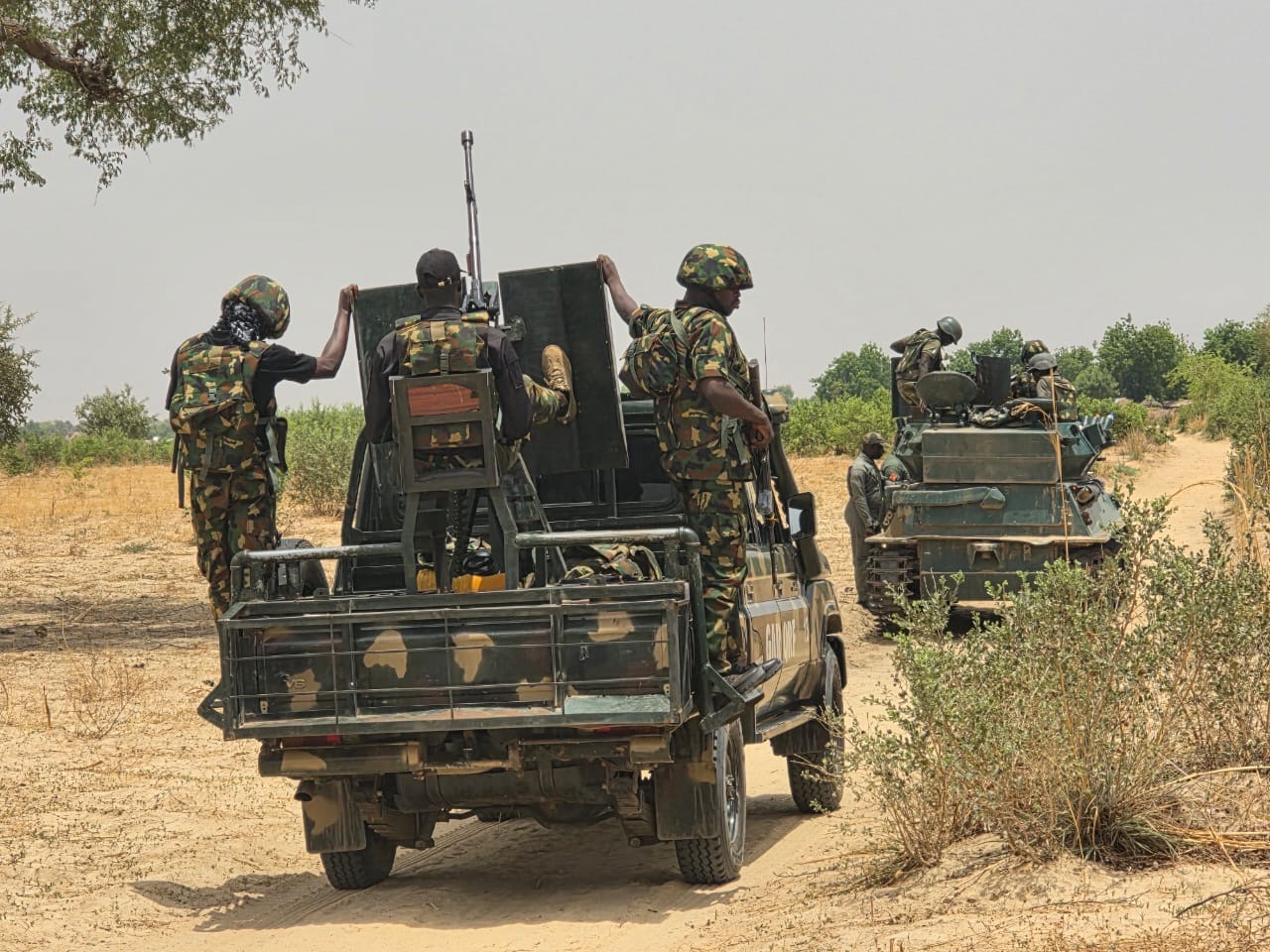
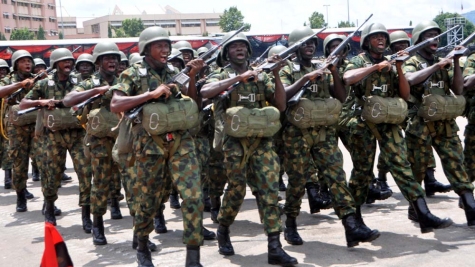
ISWAP

How careless news and posts shaped the fate of Brig. Gen. Uba

By Lawan Bukar Maigana 

The growing hunger among media organisations and young people to publish exclusive news has created a climate where speed is valued more than truth and its consequences. Many rush to break stories without verifying details, flooding the digital space with noise and carelessness.

This reckless chase is more dangerous than it appears. Insurgents and criminal groups quietly monitor social media ecosystems. They sit behind screens, study posts, and gather intelligence that was never meant for them. A single careless update becomes an open door for those who wish to harm the nation.

The tragedy of Brigadier General Mohammed Uba stands as a painful reminder of how information can be weaponised. His initial capture, his escape, and the later recapture that ended with his execution reveal how ruthless these criminal networks have become. While many sympathised with his ordeal, few understood how online chatter influenced the events.

These groups constantly scan conversations, comments, and reactions. They interpret patterns and extract clues from citizens who treat every issue as content. The story of General Uba should teach the country a life-saving lesson. Silence is sometimes safer than speed. Enemies are listening and active online, and every careless post strengthens their hand.

They learned from social media chatter that he was still in the bush after escaping. Thoughtless updates provided them with clues. They mobilised fighters, tracked him again, recaptured him, and executed him. This is the heavy cost of posting without restraint.

Security matters require silence more than spectacle. Media organisations must recognise that operational secrecy protects lives. Sensational updates during crises do not inform, but they endanger. The right to know cannot outweigh the need to safeguard ongoing operations. 

This protection is not just for soldiers but also for citizens. Insurgents study community movements, market patterns, celebrations, and tragedies. Careless information helps them identify the weakest points. 

If anyone must share information during sensitive times, the only safe place to do so is with the authorities. Security spokespeople exist to process information responsibly. They verify claims, filter sensitive information, and ensure that outsiders cannot track anything that could compromise national security.

Despite these realities, many still chase virality with reckless boldness. A recent incident exposed this trend when a fabricated story circulated about a young lady in  Gubio Local Government Area of Borno State, who allegedly took her life because she was forced into marriage. Influencers shared it widely without verifying a single detail from her family or the authorities.

The emotional weight of the story carried it across timelines. People blamed parents, culture, and religion. The story was false, yet the damage was already done. The truth moved more slowly than the lie. Later, those who invented the news were arrested, and they confessed that they had shared the information without any verification after a whole LGA had been demonised.

This incident reflects a troubling social habit. People now prefer drama to accuracy. They prefer emotional reactions to factual clarity. They prefer virality to responsibility, at the expense of people’s lives, especially among northern netizens. 

This culture feeds insecurity and weakens the nation’s sense of truth. When false alarms dominate the digital space, real warnings become harder to identify. When emotion overshadows fact, society becomes vulnerable.

Young people must understand that social media is no longer a playground; it is a battlefield for attention and a monitoring ground for criminals, organisations, and individuals with exclusive access who read everything posted online.

Editors and influencers must rise above the chaos and set a standard. They must insist on verification before publication and accuracy before speed. Their platforms should become places where truth is valued and rumours are filtered out. If they uphold responsible reporting, their followers will learn to do the same.

They must also use their influence to educate the public. People should understand that clicks are not worth the life of a soldier or a citizen, and shares are not worth the shame of an innocent family. Only through responsible reporting can society rebuild trust, strengthen security, and protect the dignity of those whose stories are too important to be mistreated or used to strengthen news agencies’ visibility.

Lawan Bukar Maigana wrote via lawanbukarmaigana@gmail.com.
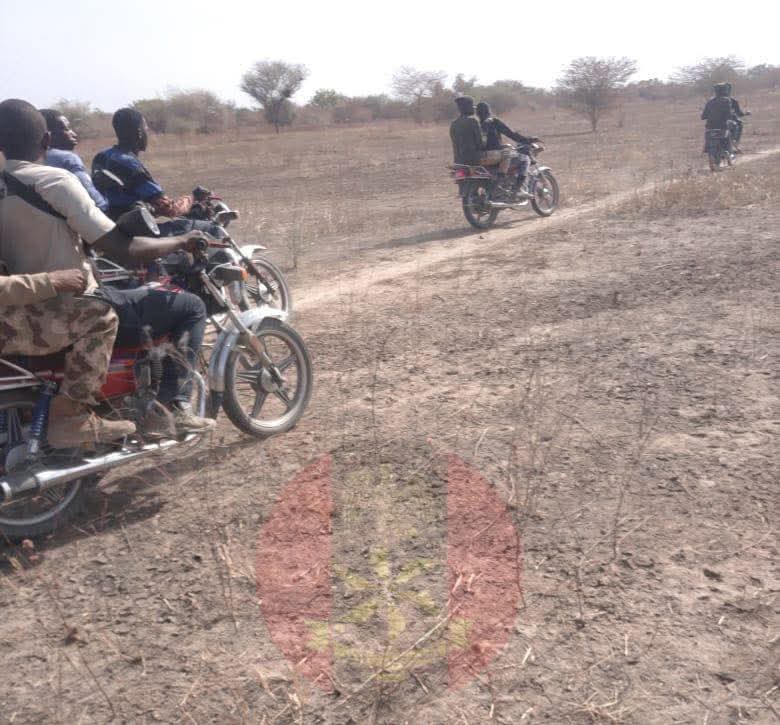
Brigadier general’s abduction, killing by ISWAP confirmed despite Army’s earlier denial

By Sabiu Abdullahi

Fresh details have confirmed that ISWAP terrorists assassinated Brigadier General Yu Uba during an attack in Borno State, even though the Nigerian Army initially rejected reports about his capture.

Uba was travelling in a convoy with troops and members of the Civilian Joint Task Force near Sabon Gari in Damboa Local Government Area on Friday when insurgents launched a heavy assault at about 5 pm.

Two soldiers and two CJTF operatives were killed in the ambush.

Shortly after the incident, the army dismissed early reports about the abduction. One of those reports was published by HumAngle.

On Saturday, Appolonis Anele, director of army public relations, issued a formal rebuttal.

His statement said in part, “The Army Headquarters also wishes to debunk the fake narrative going round some media platforms online alleging the abduction of the Brigade Commander. The general public is hereby advised to disregard the fake news regarding the incident while praying for the continuous success of our gallant service men and women.”

Following this statement, several online pages circulated claims that the senior officer had safely returned to base.

That narrative shifted on Monday when ISWAP released a photo of Uba in their custody and declared that they had killed him afterwards.

Sources within the military told FIJ that the image was genuine.

They explained that the denial issued on Saturday was premature.

One of the insiders said, “Uba had taken videos to show he was alive and on his way back from the ambush. However, he never made it. These videos were what we relied on originally, but nobody waited to see him first before going to discredit.”

Another source confirmed that insurgents captured the senior officer only minutes after the initial attack.

Uba is now the highest-ranking Nigerian military officer ever taken by ISWAP since the group’s emergence.

Military airstrikes hit ISWAP, Boko Haram hideouts in Sambisa, Mandara mountains

By Sabiu Abdullahi

The Nigerian military has recorded significant victories against Islamic State of West Africa Province (ISWAP) and Boko Haram fighters in recent coordinated operations in Borno State.

The raids, carried out through combined air and ground assaults in Sambisa Forest and the Mandara Mountains, forced the insurgents into confusion and led to the emergency burial of dozens of their fighters.

The offensive followed last Friday’s attack by ISWAP gunmen on Darajamal village in Bama Local Government Area, where about 60 civilians were killed.Residents reported to Zagazola Makama that the terrorists stormed the community, shooting indiscriminately before retreating toward the forest.

Their movements, however, were detected by military Intelligence, Surveillance and Reconnaissance (ISR) aircraft, which guided airstrikes against them.

“The ISR platforms picked up multiple terrorist movements. The Air Component swiftly engaged them with devastating precision, instantly neutralising more than 30 fighters,” a senior security source told Zagazola.

Following the air bombardments, ground troops from nearby Forward Operating Bases entered Darajamal to restore calm and provide support to survivors.In another phase of the operation, armed drones targeted terrorist hideouts and movement routes within the Mandara Mountains.

At least four locations were struck, leading to the deaths of several commanders and fighters. Survivors fled in disorder, leaving behind both weapons and corpses of their colleagues.

Intelligence further revealed that the Ali Ngulde faction of Boko Haram, which has been weakened by sustained military pressure in the Sambisa axis, buried not less than 47 bodies of slain members in hurried ceremonies at scattered sites.

Nigerian troops kill 24 BH fighters in week-long Northeast offensive

By Abdullahi Mukhtar Algasgaini

Nigerian military forces operating in the restive northeast have killed at least 24 Boko Haram and Islamic State West Africa Province (ISWAP) insurgents during a series of intense offensives conducted between July 4th and 9th, the Army announced Wednesday.

Troops from Operation HADIN KAI (OPHK), supported by air power and local forces including the Civilian Joint Task Force (CJTF) and hunters, executed multiple successful ambushes, patrols, and clearance operations across Borno and Adamawa states.

According to a statement by Captain Reuben Kovangiya, Acting Deputy Director Army Public Relations for the Theatre Command, the operations targeted terrorist movements, logistics networks, and hideouts.

Key engagements included:

1.Ambush at Platari (July 4): Troops killed 3 insurgents on bicycles moving from Sambisa Forest towards the Timbuktu Triangle.

2.Ambush near Komala (July 4):One terrorist was neutralized; troops recovered motorcycles, sprayers, pesticides, and food.

3.Night Ambush near Kawuri (July 4): 2 terrorists transporting logistics were killed; salt, seasoning, and detergents seized.

4.IDP Camp Interception, Madarari (July 5): Troops prevented terrorists from accessing a camp, killing one and recovering ammunition.

5.Fighting Patrol at Leno Kura (July 5): 3 insurgents killed during an assault on their enclave.

6.Night Ambush near Ngoshe/Gava (July 6): One terrorist neutralized at a suspected crossing point.

7.Ambush near Sabsawa (July 7): 2 logistics suppliers killed; bicycles, slippers, torchlights, and other items recovered.

8.Clearance Operation at Bula Marwa (July 8): One insurgent killed, gun and uniforms recovered, camp destroyed (air support involved).

9.Joint Patrol at Pambula, Adamawa (July 8): One terrorist killed; four motorcycles and a weapon captured.

10.Tangalanga & Bula Marwa Clearance (July 9): 3 insurgents killed; camp destroyed; six AK-47 rifles, 47 magazines, and 90 rounds of ammunition recovered (air support involved).

11.Ambush at Ngailda, Manjim, Wulle (July 9): 6 terrorists killed; motorcycles and bicycles seized.

Captain Kovangiya emphasized the significance of air support and collaboration with local forces like the CJTF and hunters in the success of the operations.

He stated the offensive demonstrates the troops’ determination to cripple the insurgents and restore security for socio-economic activities in the region.

Exploitation of the areas after clashes led to the recovery of significant weapons, ammunition, logistics supplies, and the destruction of terrorist camps and life-supporting structures.

ISWAP attacks Gajibo military base in Borno, kills 6 CJTF members

By Abdullahi Mukhtar Algasgaini

The Islamic State West Africa Province (ISWAP) has released a chilling video confirming its deadly attack on a military base in Gajibo, Borno State, on Thursday.

The footage, published by the Islamic State’s Amaq News Agency, shows two military vehicles engulfed in flames and six motorcycles seized by the terrorists.

Local sources report that six members of the Civilian Joint Task Force (CJTF) were killed in the assault.

The attack appears to be part of a coordinated operation, as another ISWAP unit was simultaneously headed toward Damboa.

Security experts warn that ISWAP is growing increasingly bold, capitalizing on security vulnerabilities in northeastern Nigeria.

The latest assault highlights the persistent threat posed by the terrorist group in the region.

Authorities have yet to issue an official statement on the incident as tensions remain high in the area.

Jihadist resurgence in Northeastern Nigeria raises alarms

By Muhammad Abubakar

A recent surge in jihadist attacks in northeastern Nigeria has sparked concerns over a potential comeback of extremist groups in the region. Over the weekend, at least 48 individuals lost their lives in coordinated assaults across Adamawa and Borno states, marking one of the deadliest periods in recent months.

Security analysts attribute this uptick in violence to a reduction in infighting between Boko Haram and its splinter group, the Islamic State West Africa Province (ISWAP). The groups have reportedly adopted advanced tactics, including the use of armed drones and roadside explosives, indicating increased tactical support and funding from the Islamic State.

In Borno State, Governor Babagana Zulum has warned of militant regrouping in the Lake Chad and Sambisa Forest regions, noting a lack of strong military response. The Nigerian military has yet to comment on the situation.

The resurgence of these extremist groups poses a significant threat to the stability of northeastern Nigeria, a region that has endured over 15 years of insurgency.

Analysts caution that without a robust and coordinated response, the region may witness a return to the heightened levels of violence experienced in previous years.

Shocked by ISWAP attack, Tinubu calls for enhanced military measures

By Abdullahi Mukhtar Algasgaini

President Bola Tinubu expressed his condolences to the soldiers who lost their lives in an attack on a military base in Sabon Gida, Damboa, Borno State.

Members of the ISWAP (Islamic State West Africa Province) group launched the attack at dawn on Saturday, using heavy military vehicles and motorcycles. The attack targeted the military base in Sabon Gari, located in Damboa Local Government Area, Borno State. They set the base on fire, including military vehicles, as confirmed by several military sources who requested anonymity due to restrictions on speaking about the matter.

Fighter jets dispatched from Maiduguri, located 100 kilometres (62 miles) away, retaliated against the attackers as they tried to flee.

In a statement released by the President’s spokesperson, Bayo Onanuga, Tinubu expressed deep sorrow for the loss of six brave soldiers who died in the terrorist attack on January 4th. The President has ordered a full investigation to determine the cause of the incident and ensure that it serves as a lesson to prevent future occurrences.

“The actions taken by the military demonstrate our strength and readiness to confront threats and eliminate them for the safety of our country. This operation highlights our commitment to fighting terrorism and banditry and working towards a peaceful and secure future for all Nigerians,” the President stated.

Tinubu further expressed his gratitude and sympathy to the soldiers and other security personnel on behalf of the grateful nation. “Your dedication and sacrifice will not be in vain. We stand with you 100% in this fight against these threats,” he affirmed.

The Chief of Army Staff also commended the military’s swift and decisive response, particularly the air support, which successfully struck many of the terrorists and destroyed their equipment as they attempted to escape.

According to Tinubu, the airstrike resulted in the killing of several terrorists and the destruction of their resources. The President urged the military to take further steps to launch direct assaults on bandits and terrorist camps.

He emphasized that special attention should be given to the North-Western region, where these criminal groups continue to pose a threat to the lives and property of innocent rural communities.

Tinubu also called on Nigerians and the media to support the military’s efforts to restore peace and security in the country.

UNICEF nurse escapes ISWAP captivity after six years

By Uzair Adam 

A nurse abducted by ISWAP terrorists in 2018 has regained her freedom after enduring six years in captivity.  

The nurse, Alice Loksha, was taken alongside two other female health workers on March 1, 2018, while working at a United Nations Children’s Fund (UNICEF) facility in Rann, Kala Balge Local Government Area of Borno State.  

Speaking to journalists at Maimalari Cantonment in Maiduguri on Friday, Kenneth Chigbu, Deputy Theatre Commander of the Joint Task Force (JTF) Operation Hadin Kai, disclosed that Loksha escaped from captivity and was found in Geidam, Yobe State, on October 24, 2024.  

Chigbu revealed that the 42-year-old endured forced marriages with two ISWAP commanders and faced severe conditions during her captivity.  

“She was initially held in Tumbuma for two days before being relocated to Kwalleram, where she spent seven months and was forced into marriage with a terrorist leader named Abu Umar. 

“This marriage resulted in the birth of her son, Muhammad. Abu Umar was later killed during a gunfight with troops in 2022,” Chigbu said.  

After Abu Umar’s death, Loksha was forced into another marriage with an ISWAP commander named Abu Simak in 2022. However, he was later banished by his fellow terrorists to the Dogon Chukwu camp. 

Loksha managed to escape from this camp through the Diffa axis and reach Geidam, where she reported to JTF troops on October 29.  

“She has since undergone medical evaluation and received humanitarian support,” Chigbu added. 

Chigbu also confirmed the escape of Fayina Ali, the younger sister of the late Samuel Andrew, a soldier who served under the 212 Battalion. 

Fayina was abducted by ISWAP on October 19, 2022, while travelling to Maiduguri to process her late brother’s death benefits.  

“Fayina was held captive in Kangarwa for nine months before being transferred to Tumbuma for four years. She was later returned to Kangarwa, where she remained for another year before escaping,” he said.  

Both women were received by Zuwaira Gambo, Borno State’s Commissioner for Women Affairs and Social Development. 

Gambo assured that they would undergo psychosocial support and rehabilitation before being reintegrated with their families.  

“This marks a significant step in their recovery and reintegration process,” Gambo said.

Nigerian army kills 11 ISWAP terrorists in Sambisa forest

By Anwar Usman

Troops of the Nigerian Army, deployed for a special operation in Sambisa Forest, have eliminated 11 Islamic State of West Africa Province terrorists.

The Nigerian Army, in a statement on its official Twitter handle, disclosed this on Saturday.

It said the feat was achieved in coordinated special clearance operations with a hybrid force against a terrorists’ enclave in Jongo Village within the notorious Sambisa Forest.

It stated that the troops targeted the portion and engaged the terrorists in a fierce gun battle, killing some while others fled in disarray.

The army stated that its troops conducted further exploitation ahead of the enclave, leading to the capture of some weapons.

According to the post, the arms include 99 rounds of 7.62 x 54mm on a metal link, 19 rounds of 7.62 x 39mm, 3 AK-47 rifle magazines, two 36-hand grenades, and two locally made guns.

“This successful operation showcases the operational effectiveness of the Nigerian army in combating terrorism and securing in the region.

“The neutralisation of ISWAP terrorists and the confiscation of their weapons will undoubtedly contribute to enhancing security and stability in the area.

The post added that, “This further demonstrated the commitment of the Nigerian military to eradicating terrorism and protecting the citizens”.

NAF decimates terrorist leaders, 28 fighters in Borno airstrikes

By Uzair Adam Imam  

The Nigerian Air Force announced on Tuesday that its air component of Operation Hadin Kai (OPHK) had successfully neutralised over 30 militants, including two high-profile leaders, Ali Dawud and Bakurah Fallujah im Borno State. 

Air Vice Marshal Edward Gabkwet, Director of NAF Public Relations and Information, disclosed that the airstrikes, carried out over the weekend, targeted the hideouts of ISWAP terrorists nestled within Kolleram village along Lake Chad’s shores.  

The precision strikes, executed on April 13, 2024, resulted in the destruction of numerous vehicles, motorcycles, and logistical assets, severely disrupting the terrorists’ operational capabilities. 

Gabkwet reported that the Battle Damage Assessment (BDA) post-strike revealed the elimination of key figures such as Ali Dawud, Bakurah Fallujah, and Mallam Ari.  

Additionally, intelligence gathered indicated the effective obliteration of a vital facility within the Kolleram enclave, disrupting the terrorists’ food processing activities. 

The success of these airstrikes shows  the NAF’s unwavering commitment to eradicating terrorism and safeguarding Nigerian citizens.  

By neutralising top terrorist operatives and dismantling their logistical infrastructure, the operation has significantly weakened ISWAP’s presence in the region. 

The airstrikes, complementing ground forces’ ongoing efforts on the Lake Chad flank, mark a crucial advancement in Nigeria’s counterterrorism endeavours, signalling a resolute stance against extremist threats.