Israel Occupation

Macron criticises Trump’s Gaza relocation plan in CNN interview

By Muhsin Ibrahim

French President Emmanuel Macron has strongly criticised U.S. President Donald Trump’s plan to evacuate Gaza, calling it a humanitarian crisis rather than a political manoeuvre.

“You cannot come and tell two million people to leave. It is a humanitarian issue. Human beings. This is not a real estate issue; it is a political issue,” Macron said in an interview with CNN.

Macron added that, “We have to respect the willingness of the Palestinian people to have a state.”

The French leader’s remarks come amid ongoing international debates over the future of Gaza and the Israeli-Palestinian conflict.

Many people described Trump’s proposal as ethnic cleansing and condemned it, while Israel’s far-right politicians welcomed it.

Gaza ceasefire agreement reached amidst mounting tensions

By Sulaiman Abdullahi

A ceasefire agreement was reached late Tuesday between Israel and Palestinian factions in Gaza after months of bloodshed that left thousands of civilians dead and injured. The truce, brokered by Qatar and the United States, aims to halt hostilities and restore a calm region.

The recent conflict, which erupted following the October 7 attack on Israel by Hamas militants last year, rapidly escalated into the deadliest episodes in the Middle East. Rocket barrages from Gaza were met with retaliatory airstrikes by Israel, displacing thousands and prompting widespread international condemnation.

“We have agreed to this ceasefire to prevent further bloodshed and suffering for our people,” said a spokesperson for Hamas, the group governing Gaza. Israeli officials confirmed the ceasefire but stressed that the agreement hinged on “absolute quiet” from Gaza.

The United Nations welcomed the truce, with Secretary-General António Guterres urging both sides to engage in meaningful dialogue to address underlying issues. “This cycle of violence will only end when both parties commit to a sustainable political solution,” Guterres remarked.

Residents expressed cautious optimism. “We are tired of war; we just want to live in peace,” said Mariam Al-Khatib, a mother of three in Gaza City. However, the region remains tense, with many fearing the fragile agreement could unravel.

As the international community continues to call for restraint, the focus shifts to ensuring that the ceasefire holds, offering a glimmer of hope for a long-term resolution to the decades-old conflict.

Dual Disasters: LA wildfires and Gaza war

By Sulaiman Abdullahi

Los Angeles is currently experiencing severe wildfires that have burned over 26,000 acres. This has led to a state of emergency and mandatory evacuations for approximately 150,000 residents. 

The Palisades Fire has caused significant destruction, including the loss of numerous buildings and the deaths of at least 16 people. High winds and limited firefighting resources have complicated efforts.

In contrast, Gaza is enduring a humanitarian crisis due to prolonged conflict, resulting in over 46,000 Palestinian deaths and extensive damage to infrastructure, including water and sanitation facilities, due to Israel’smassive attacks on the enclave. The United Nations estimates that recovery and rebuilding will take years and require billions in funding.

While both regions are experiencing severe destruction, the causes differ: Los Angeles is facing a natural disaster, while Gaza’s devastation stems from military conflict. The recovery for both areas will demand substantial resources, time, and international assistance.

Several social media users share pictures of the two devastations. Many also make comparisons. Some view the LA fire as punishment for U.S. support of Israel, while others see it as a natural disaster that can affect anyone, anywhere.

In his place, many more Sinwars would rise

By Ismail Obansa Nimah

The Israeli military killed Yahya Sinwar.  A picture of Sinwar in a military vest, with a sniper shot at his forehead, with one arm cut off and the other holding an AK-47 riffle, his body under enormous concrete from a collapsed building, circulated online.

Hamas confirmed the news of Sinwar’s death, fighting alongside his comrades for his people, his land, his home and the liberation of Palestine. Until his death, Israel had tagged Yahyah Sinwar as the most wanted man in Gaza and, by extension, the whole of Palestine. The Israeli military has been on the hunt for him for years. 

Born in Khan Younis refugee camp in 1962, after the infamous massacre and Nakbah that saw the newly formed state of Israel exile more than 750,000 Palestinians from their homes and livelihood, Yahya Sinwar spent his life as a refugee in Gaza and was quick to join the Palestinian resistance forces, after being a witness to the miserable treatments and denial of the rights and freedom of Palestinians by Israel.

He lived through the 1967 Arab-Israeli war and was a bedrock in the Hamas resistance movement founded 20 years later, in 1987. 

In 1989, he was arrested by Israel on the accusation of orchestrating the killing of two Israeli soldiers and was given four life sentences. Sinwar went on to spend 22 years under brutal conditions in an Israeli prison. He maximised his stay in prison by becoming fluent in Hebrew and acquiring various diplomas aimed at understanding the Israeli colonial entity, Jewish history and Zionism. He was subsequently released following a prisoner swap in 2011 and was elected the leader of Gaza following Hamas’s political win in the 2007 Gaza elections.

Until Ismail Haniyeh’s death, Yahyah Anwar was the de-facto ruler of Gaza and was second in command regarding Hamas after late Hamas Chief Ismail Haniyeh. Following the assassination of Ismail Haniyeh in Tehran in August of this year, he became the ultimate leader of Hamas and has, since October 2023, led a principled and steadfast fight against Israel in its war in Gaza.

In the last year, the Israeli government has manufactured countless falsehoods and made widespread propaganda about its war on Gaza, Hamas and the leadership of Hamas, particularly Yahyah Sinwar. Israel, through numerous outlets, claimed that Sinwar was hiding in tunnels, surrounding himself with wealth and using hostages and Palestinian civilians as human shields. And even though these claims have been debunked countless times, the Israeli military became the ultimate belier of itself when it released a droned footage of Sinwar’s last moments. 

The intent behind the footage release was to mock Sinwar and the entire Palestinian resistance, but the footage did the opposite. Instead, it propelled Sinwar to become a legendary figure. It showed Sinwar, sitting honourably on a couch, putting on a keffiyeh, debris around with his comrades down; after being fired on by a tank, a missile and sniped on the forehead, he used his remaining arm, in one last act of defiance to throw a stick at the filming drone. He was side by side with his comrades on the front lines, defending his lands and fighting for the liberation of Palestine and every Palestinian.

Sinwar’s entire life has been an inspiration and a huge source of strength for the resistance axis against the apartheid state of Israel. His story bears many sacrifices and losses for the Palestinian front. He was born a refugee and brutally raised as a refugee in his land amidst an unwavering magnitude of oppression and apartheid. 

Regardless of what the U.S.-led West and Israel wanted the world to believe about Sinwar, he died a hero, one that his greatest adversary inadvertently publicised. Even in his death, he continued to inspire the many more Sinwars who would ultimately rise in his place.

Ismail Obansa Nimah wrote via nimah013@gmail.com.

Israel-Hamas war: Has diplomacy failed?

By Hajara Abdullahi

The long reoccurring war between Israel and Palestine spans decades which can be traced to the Balfour Declaration of 1917  that led to the creation of a national home in Palestine for the Jewish people fleeing the Nazi Holocaust in Europe. After the creation of the zionist state in 1948, the Arab states went to war with Israel, which led to the first Nakba (Catastrophe) that led to the killing of hundreds of Palestinians and thousands of others fled their homes. Israel won the war, and the reality surfaced that the Zionist state had come to stay, especially with unwavering support from allies like the US, France, Germany and other European countries.

Since the creation of Israel, Palestinians have been subjected to the worst form of apartheid and dehumanisation, as well as the forceful annexation of their lands to establish Jewish settlements, which the U.N. have described as illegal under international law. Peace accords and diplomatic efforts have done little to address this decade-long conflict from Camp David to Oslo.

On October 7 2023, Hamas launched an unprecedented attack on Israel that led to the loss of about 1,139 lives, while about 250 were kidnapped, according to the BBC. This attack sparked rage worldwide, considering the strong support Israel enjoys from powerful allies like the U S and the U.K. This attack had led to the launch of a full-scale wall on the besieged Gaza Strip that has claimed the lives of at least 45,000 people, and almost 100,000 have been injured. It has also led to the displacement of nearly the entire population of 2.3 million, a hunger crisis and a genocide case at the World Court. Even the occupied West Bank is not spared, as IDF have carried out airstrikes and shellings that have killed civilians and displaced thousands. The U.N. has described 2024 as the deadliest year for Palestinians in Gaza, with the IDF offensive reducing the enclave to rubble.

Since the outbreak of the conflict, The U.N., E.U., U.S. and other world leaders have condemned the Hamas act and called for restraint to avoid escalation. Diplomatic efforts have been put in place after months of fighting with Iran-backed resistant groups Hezbollah and Houthi launching solidarity attacks against Israel. On October 18 2023, U.S. President Joe Biden visited Tel Aviv to make a peace deal between the warring parties. Similarly, the G7 leaders also met in Tokyo in June to push forward for a ceasefire to avoid a wider regional conflict.

On May 31, U.S. President Joe Biden announced a three-phase proposal to the U.N. Security Council to end the war in the Gaza Strip. He called, first, for a temporary ceasefire tied to partial withdrawals of Israeli forces, limited hostage exchanges, and an influx of aid. Negotiations would then begin and, if successful, lead to the second phase, involving a permanent cessation of hostilities tied to total withdrawals and complete hostage exchanges. The final phase would see reconstruction efforts being set up, but Israel’s refusal to accept the conditions witnessing the withdrawal of Israeli troops from Gaza a total setback amidst protests by families whose relatives are held as hostages in Gaza. However, the ceasefire plan was short-lived when Israel, with the assistance of intelligence support from the U.S., launched a deadly attack that led to the killing of at least 200 Palestinians while  4 Israeli captives held in Nuseirat camp in Central Gaza were rescued, according to the BBC.

Hopes were lit when U.S. Secretary of State Anthony Blinken, in his 11th trip to the Middle East on August 15 to avert a wider conflict after the killing of top Hamas leader by Israel, told a gathering of reporters while departing Tel Aviv that the ball is in the court of Hamas to accept the conditions as Israel has accepted the bridging proposal for the ceasefire to work. Unfortunately, Hamas said it won’t be part of a new proposal, saying it will only accept the initial proposal put forward by President Biden.

While Israeli Prime Minister Benjamin Netanyahu vehemently opposes the release of Palestinian prisoners held in Israel in exchange for captives held in Gaza, the withdrawal of IDF from Gaza while Hamas has not been dismantled, as well as leaving the strategic Philadelphi corridor  ditched the last hope of the ceasefire which two key mediators Egypt and Qatar have been working on.

Marwan Bishara, a senior political analyst with Aljazeera, said, “Both parties understand that they cannot achieve in diplomacy what they couldn’t achieve in war” This implies that the Israelis won’t get the captives back on a platter of gold, neither would Hamas get Gaza free of Israeli soldiers free of charge.

The  Wall Street Journal, in an exclusive article it published on September 20 2024, said it’s unlikely for a ceasefire to be reached in Gaza, citing top-level officials in the White House, State Department and Pentagon without naming them while explaining two obstacles will make it difficult: Israel’s demand to keep forces in the Philadelphi corridor between Gaza and Egypt and the specifics of an exchange of Israeli hostages for Palestinian prisoners held by Israel. In the recently concluded 79th session of the UNGA, world leaders called for restraint in Lebanon as tension heightened.

In the end, diplomatic efforts may produce little or no results because, as Tim Marshall explained in his book Prisoners of Geography, the map of the region is being redrawn in blood, and the current fault lines emerged from the artificial lines drawn by Europe. Therefore, the U.N., U.S, Arab League and other world leaders must work hand in hand for a two-state solution agreed upon in the Oslo Accord of 1993, as well as press Israel and Hamas to accept the conditions laid down for the ceasefire to work which will ensure a peaceful coexistence in the Middle East region as well as prevent a wider regional conflict the region risk facing with the recent clash between Hezbollah and Israel on the Lebanese southern border.

Hajara Abdullahi wrote from the Dept of Mass Communication, Bayero University Kano.

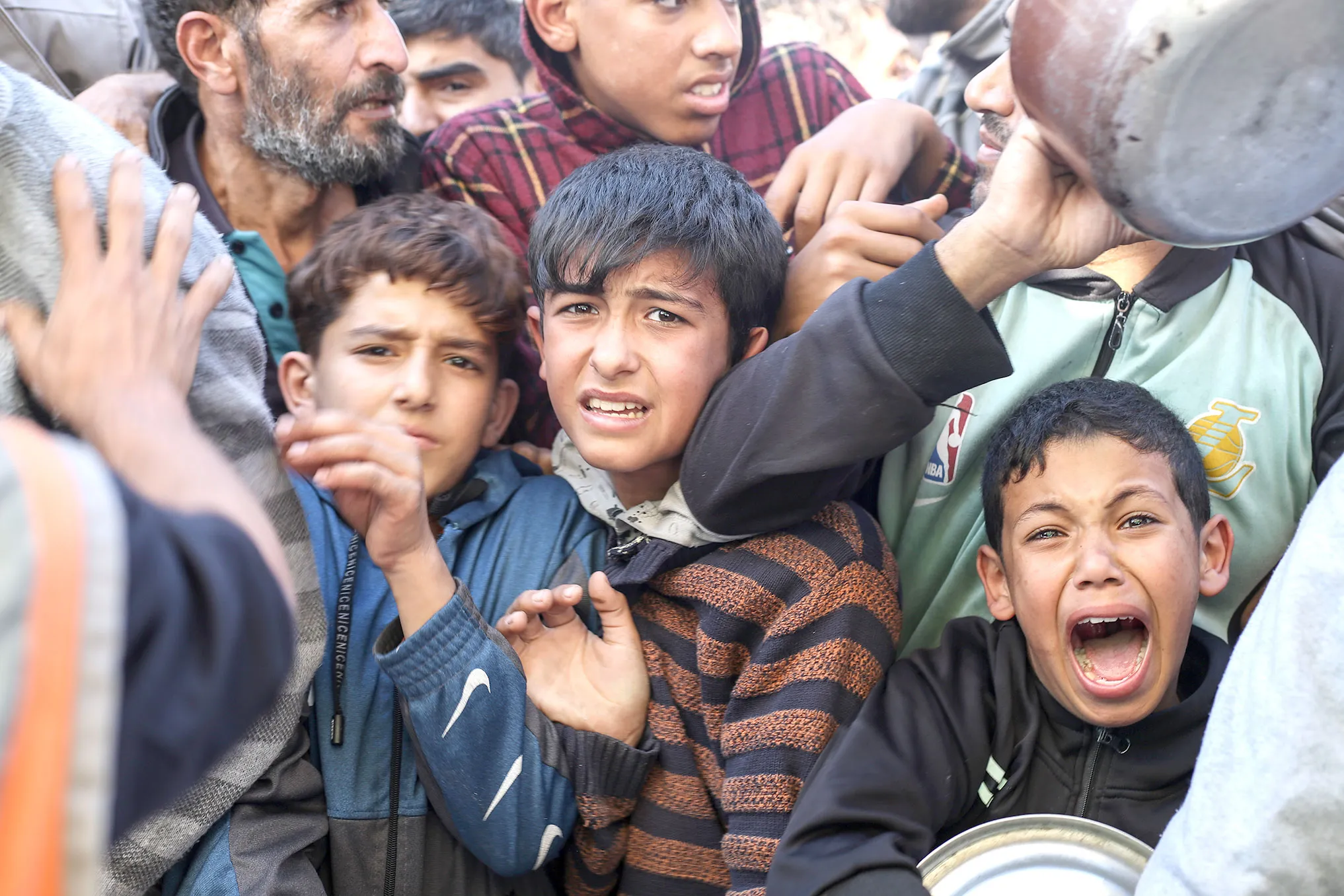
Tragedy: Children starve to death in Gaza hospitals

By Uzair Adam Imam

According to reports from Turkish TRT World, a recent aid mission to two hospitals in northern Gaza by the World Health Organization (WHO) has uncovered horrifying scenes of children dying from starvation. 

Dire shortages of food, fuel, and medicines exacerbate the situation.

WHO Chief Tedros Adhanom Ghebreyesus described the findings as “grim,” particularly highlighting the dire conditions at Al Awda Hospital, where one of the buildings has been destroyed. 

The Kamal Adwan Hospital, the only paediatrics facility in northern Gaza, struggles to cope with the overwhelming number of patients. Tedros revealed that the lack of food has tragically led to the deaths of 10 children.

Meanwhile, the Geneva-based organization Euro-Med Human Rights Monitor has released a statement presenting disturbing evidence of Israeli tanks deliberately running over Palestinians. 

Describing these actions as part of Israel’s genocide against Palestinians in Gaza, Euro-Med reported several cases of Israeli forces intentionally running over Palestinian civilians, including incidents on February 29, January 23, December 2023, and February 20.

The organization has called for an independent international investigation committee to address Israel’s ongoing military actions in the Gaza Strip.

The deadly offensive initiated by Israel following a cross-border incursion by Hamas on October 7, 2023, has resulted in significant casualties. 

As the Israeli bombardment continues into its 150th day, TRT casualty counts estimate that at least 30,534 Palestinians, mostly children and women, have been killed, with 71,980 others wounded due to mass destruction and shortages of essentials.

Gaza War: Might is Right

By Dr Raji Bello

I have no intention of aggravating anyone’s feelings over the war in Gaza. I also feel bad about it, even though I don’t write much on the subject. The main reason for this is that nothing surprises me about what is happening. I have completely anticipated what Israel would do as well as the reaction of the Western countries to Israel’s conduct. No UN vetoes or abstentions by the Western countries is a surprise or a shock to me. 

My interest in history and current affairs for over 40 years has taught me two uncomfortable truths, which I have written about a few times:

1. Might is right. Powerful civilisations, kingdoms or countries have always done as they wished and will continue to do so until the end. Most other countries would either accept or at least not confront what the powerful countries do.

2. Relations between human societies or countries have never been based on moral considerations and will never be. They have always, and will always be, based on interests. Morality only becomes a consideration when there are no compelling interests to pursue.

When these two truths have been understood, two conclusions can be made:

1. no level of horror of human suffering would make powerful countries stop pursuing their interests. This is why the US and the UK behave like they do at the UN.

2. While it is incumbent upon the less powerful countries to also pursue their interests, they should never get in the way of a powerful country’s pursuit of its interests. 

Human beings are not as mentally sophisticated as we might think. We are technically and materially advanced, but the ancient rules still apply. For less powerful countries to survive and flourish, tact is essential. They could get what they wanted through tact but would risk being crushed if they stood in the way of a powerful country. 

The only feasible way to take on a powerful country directly is by acquiring more power than them. Until a less powerful country acquires more power, its strategy should be tact, and tact only.

They Called Me A Lioness: Tamimi’s rise and fame

By Bilyaminu Abdulmumini

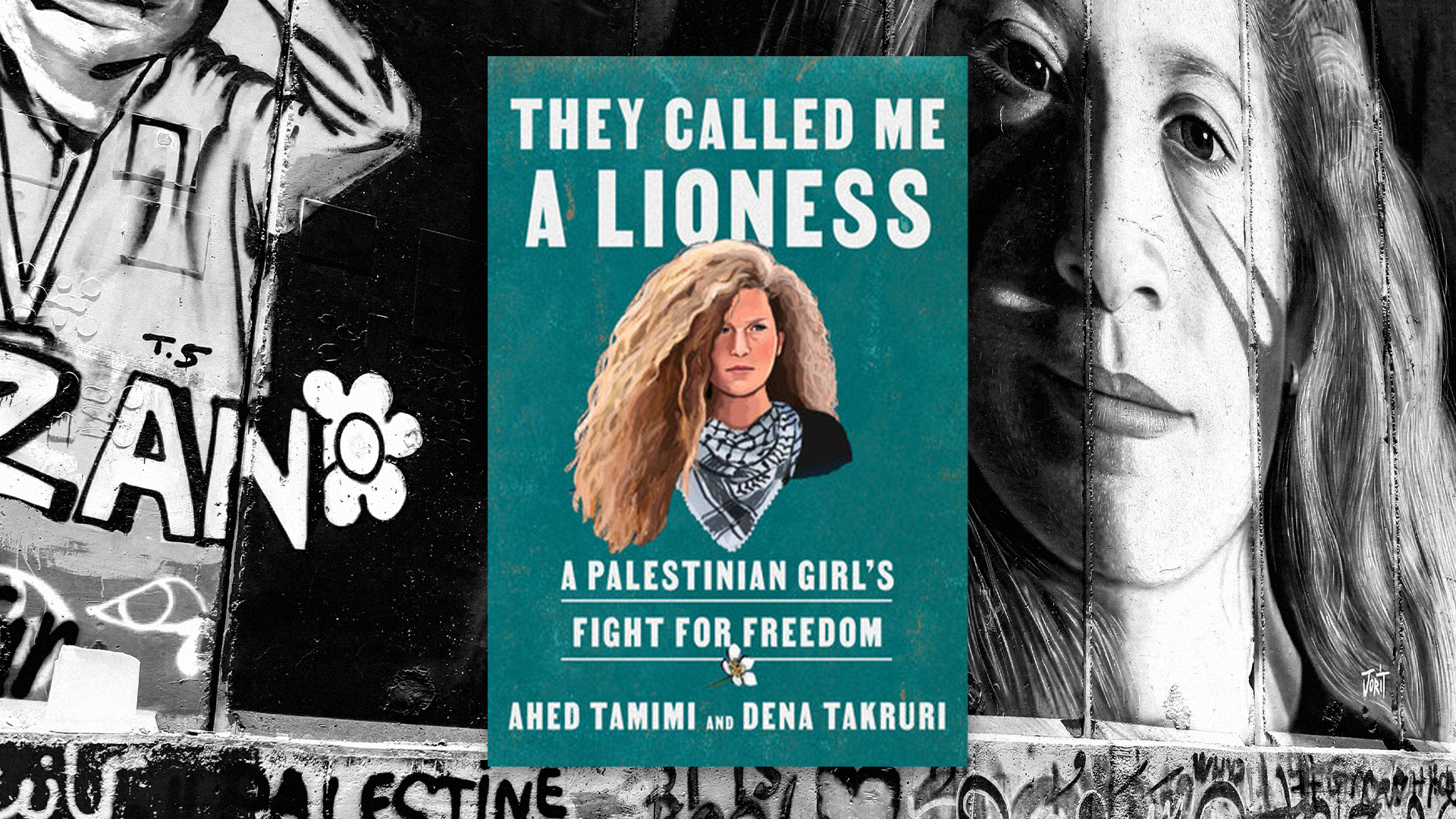
One of the four books I read in 2023 was They Called Me A Lioness, which I read courtesy of Dr Muhsin Ibrahim, who shared the soft copy. The book’s true-life storytelling and the author’s command of the English language captivated me, keeping me glued to its pages.

Ahed Tamimi, the book’s narrator (written by Dena Takruri), was born and raised in the village of Nabi Saleh, northwest of Ramallah, a city known for its flashes in the Israel-Palestine conflict in the West Bank. Nabi Saleh gained notoriety for its resistance system, characterised by coordinated processions that garnered local and international attention every Friday. Journalists, sympathisers, and NGOs witness these Friday processions. Nabi Saleh vehemently opposed the Israeli occupation (I reserved the history and Israeli occupation saga to another article).

While the protests in Nabi Saleh were generally considered peaceful, occasional outbreaks of violence were not unheard of, though they were one-sided. While Palestinians employed stones, the Israeli soldiers were armed with superior weapons such as water cannons, tear gas, rubber-coated steel bullets, and sometimes even live ammunition.

Amid these sporadic instances of violence, Ahed would witness her mother being shot in the leg by a soldier, her younger brother pinned to the ground by another soldier, her favourite uncle bleeding to death, night raids, and the repeated arrest and imprisonment of her father.

To say that this series of events paved the way for Ahed’s transformation into a brave individual, as her nickname implies, would be an understatement. Ahed’s courageous resistance and fearless confrontations with Israeli soldiers earned her both local and international acclaim.

Tamimi first gained international recognition when she was just a child, under the age of 10, for confronting Israeli soldiers who had abducted her brother. This confrontation, captured on film, went viral, captivating people worldwide. She was seen as a symbol of the bravery of Palestinian children and the spirit of their resistance against the Israeli occupation. Early during the Ukraine-Russia war, the video resurfaced, and the usual social media misinformation circulated it to be a Ukraine child protesting against Russian inversion.

Tamimi’s next international spotlight was intriguing. She engaged in a confrontation with soldiers to prevent them from arresting an Israeli, Miko Peled. Few expected this turn of events. Miko is the son of the famous Israeli general Mattityahu Peled, a celebrated hero who fought in the 1967 war on the side of Israel. However, he later retired from the army and became a tireless peace activist, advocating for Israel’s withdrawal from the occupied territories. 

The last straw that broke the camel’s back was when Tamimi lost her temper and slapped a uniformed, armed Israeli soldier. As expected, this action went viral, leading the Israeli authorities to imprison her for eight months. A prison, even run by one’s country of citizens, might be full of provocations, rights abuses, and infringement, let alone a prison run by an arch-rival. Tamimi and many Palestinians who got under the net of Israel had to endure a series of incarcerations. 

Ironically, imprisonment is one of the most successful ways to achieve fame and knowledge. While someone may be imprisoned as a deterrent, it can inadvertently lead to greater recognition and public sympathy, drawing attention to their cause. The same happened to Tamimi; her imprisonment further elevated her fame and the cause she advocated for. In Nigeria, imprisonment got sympathy from both former presidents Muhammadu Buhari and Olusegun Obasanjo; the former Ghanaian president, Jerry Rawlings, would change the course of history from a death sentence to being a president; and in this regard, no one remained fresh in the memory like Nelson Mandela.

Beyond fame, Tamimi, alongside her mother, who was also incarcerated, completed her high school education. This accomplishment was particularly telling in the mother’s case because she had been unable to complete her education since her marriage. This fact resonates well with Nigerian correctional service centres where many inmates complete online degrees, which, of course, like Tamimi’s Mother, might not achieve the feat without imprisonment. 

Last month, a Turkey legislator slumped in a chamber (and died later in hospital), challenging the president’s seeming “accomplices”. Excerpt from the opposition legislator to Tayyip Erdogan: “You allow ships to go to Israel, and you shamelessly call it trade. … You are Israel’s accomplice”. This reminded me of the Tamimi encounter with Erdogan. 

While Tamimi was visiting Turkey to receive the Handala Courage Award, Erdogan sought an audience with her. In their meeting, he would express how much he loved Palestine, indicating that Turkey would always support the Palestinian people. In response, the iron lady, who never minced words, threw a hammer directly in the face, “How can you say you love us when we have to enter your country with a visa, but Israelis can travel here with no visa?” Erdogan became speechless.

Bilyamin Abdulmumin is a doctoral researcher in chemical engineering at ABU Zaria.