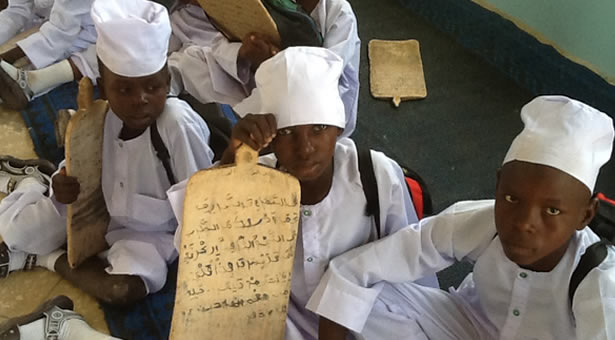
Islamiyya

Islamiyya System: A perfect replacement for the archaic Almajiri system

By Muhammad Dattijo Kabir

Islamiyya system has been proven to be an alternative to the Almajiri system. In the Islamiyya system, it is easier to commit the Qur’an to memory within the shortest period with decency. And it also allows the children to seek other knowledge that will aid them in confronting the present challenges. Almajiri system can only be insisted to be reformed when it is proven that that is the only way to learn the Qur’an. The system poses a lot of danger to the children, such as health challenges, inferiority and, of course, most of them become morally debased in the end.

Reforming this system alternatively means rewarding irresponsible parents for their irresponsibility, creating unsustainable programs which cannot see the light of the day. Instead, the government should ban and criminalise the system and absorb all the already enrolled Almajiri into formal schools. Then any other parent that wants his child to learn the Qur’an by traditional means must first provide shelter, food, and health facilities for the welfare of the child and must ensure that the child goes to school to at least get primary education.

No one is saying karatun allo should be banned. Karatun allo differs in content and operation from the Almajiri system. While the former entails learning Qur’an by the traditional design by all and sundry, the latter entails recruiting young persons to learn Qur’an by traditional means without provision for food, shelter and medical facility for children recruited. The said recruited army of children relies only on begging leftover food and tattered clothes for subsistence.

It requires no second thought to believe that this system of taking young children away from their parents at the ages they need their parents the most should be stopped and criminalised. No child under the age of 12 should be taken away from his parents’ house in whatever guise. There is nothing good in the Almajiri system as practised today. The system has served and outlived its usefulness. It became archaic and, to some extent, barbaric considering the conditions of the children involved in the system.

There are more decent systems which are alternatives to the already abused system. The system indirectly supports irresponsible parents to breed bundles of children they know they cannot cater for. The parents use the system to abdicate their parental responsibility of feeding, clothing, educating and sheltering their children.

Also, the half-baked Malllams use the system as a means of income. The activists are using it to get themselves employment from international NGOs. The nagging question is, can Qur’an be learned through a more decent system than this child molesting system? The answer is yes. Thousands of children have committed the entire Qur’an to memory through the modern Islamiyya system.

Let’s move on; the system is not viable in the present era. The era of dogma has passed. Let every child be supported by his father and take Quranic education before his parents while attending school. Any system that encourages parents to take their children to the street is barbaric and should not be encouraged.

Muhammad Dattijo Kabir. Muhammad is a lawyer, a human rights activist and a public affairs commentator. He lives in Kaduna and can be reached via jibrilmuhammad27@gmail.com.

Firm, Cynox IT limited, unveils $500m Education Intervention in Kano

By Uzair Adam Imam 

A non-governmental firm, Cynox IT Limited, has unveiled a 500 million US Dollar educational development intervention project aimed at reducing the number of out-of-school children in Kano.

The Daily Reality gathered that the project would focus more on basic and secondary education. 

The project titled Education Strategic Investment and Development Initiative (ESIDI) is said to have also intervened in the areas of western, Islamiyyah and even Almajiri/Tsangaya schools.

It was reported that the project is in collaboration with the state’s ministry of education.

The Cynox Vice Chairman, Abdulrahman Abubakar Yabo, disclosed that the project came up as part of their attempt to address education challenges in entire northern Nigeria, starting with Kano.

He added that “Our ultimate goal is knowledge value revolution by increasing school enrolment in Kano and even training teachers.

“We are also working towards making students self-reliant after leaving school. The project will also focus more on Science, Technical, Engineering and Mathematics. We will collaborate with international tech giants such as Microsoft and Google in that aspect.

“Cynox is working in raising $500 million from local, national and international donor agencies, philanthropists and the host state (Kano) in raising the money.”

Yabo also explained that the Kano Government would provide 30 per cent of the amount.

Also speaking, Kano State Commissioner for Education, Muhammad Sanusi Sa’id Kiru, said the state had signed a memorandum of understanding with the firm. 

He said, “this will go a long way in complementing the state’s free and compulsory education.”

Waqf would have saved the situation!  

By Abdullahi Abubakar Lamido

Alhaji Abdullahi (not a real name) is a rich man from Northern Nigeria, famous for his multidimensional philanthropy. He was, at a time, among the three richest men in his town. He came from a polygamous family and was the 14th child of his dad. He was the only rich man. Being polygamous himself, he has close to 20 children from three wives. As the only well-to-do in his extended family, his house is like a local government secretariat, always jam-packed with visitors from among family members. This is in addition to dozens of his “sons and daughters” born by his brothers and sisters, who reside in his house, under his total care. But Alhaji takes care of them all; feeding, clothing, education, healthcare, Sallah clothes, etc. He does that with all pleasure. After all, he has the means, and of course, the heart, as a wealthy businessman.

Here is a religious, wealthy man and an influential politician cum Islamic scholar. He has built several schools and mosques, sponsored the education of many orphans, given capital to many people, sponsored the marriages of many poor girls, and sponsored dozens of people to hajj. He is one of the best philanthropists you can think of. After all, that is what is expected of an affluent Islamic scholar. His school was once among the best two primary and secondary schools in the town. When he singlehandedly built it about two decades ago (he had built others much earlier), he would pay teachers’ salaries, buy uniforms for the students, and give them other learning materials. He loves the Qur’an, being also a hafidh himself. And he would provide copies of the Qur’an to all the hundreds of his pupils. This is in addition to dozens of people who rely on him for their livelihood.  

As time went by, the “law of diminishing returns” began to affect his fortunes. Gradually, he began to withdraw the subsidies from the school due to continually decreasing income and ever-expanding family financial pressure. But he wanted to maintain the good deeds. Now the school needed expansion while his pocket had experienced contraction. He gave his big land close to the school for the purpose. But no funds to build it. So, he sold another land and built it. Note that the school fees could, at best, pay salaries and take care of the running cost. Every student pays. But it is a middle-class school, so the charges cannot be high. So, he went and sold another asset, built the classes. He sold another one again and again until virtually all the sellable assets became exhausted.

One day, while sitting at home, he saw his children returning before the school closing hours. “What is going on”? He asked them. They were sent home because they did not pay school fees. This happened when he was battling with how to feed his family and settle many other bills. Alhaji never envisaged a day when his fortune would dwindle to that level. Therefore, he did not save nor invest for that rainy day. He thought he would continue to secure contracts and earn considerable resources to fund his schools and even establish more. He, in short, did not benefit from the advice of a waqf expert who could have shown him the simple way of establishing an investment waqf, using a portion of his assets, that would perpetually generate a flow of revenues. The revenues could sustainably fund his schools and other charitable interventions. 

Waqf offers a variety of ways for planning the future of your family and supporting other charitable projects sustainably. For instance, the idea of an investment/productive waqf would have perfectly saved Alhaji Abdullahi from selling and reselling his properties to expand his school. As it is, there are two forms of waqf; direct and invest waqfs.

A direct waqf is one created to provide direct welfare and societal development services. Examples are mosques, boreholes, and tuition-free schools that offer direct benefits to designated beneficiaries. An investment waqf is a money generating waqf whose revenues are dedicated to financing defined welfare and socio-economic development projects. An investment waqf can be made to fund and maintain a direct waqf.

For instance, a well-managed orchard can be dedicated as waqf such that the revenues generated from the sale of its fruits will be used to finance a tuition-free school. So, when Alhaji Abdullahi built his school, which he wanted to be a subsidized one, he could have established an investment waqf that would mature and, within some time, continue to finance the school from its proceeds. His other assets would have been saved for other equally important purposes. He could as well have saved himself from the embarrassment of the failure to pay children’s school fees later in his life when the recession hit him.

For instance, nothing stops this rich man from building rentable shops or apartments and dedicating them as waqf, such that what they generate would be divided into two; half reinvented and the other half injected into supplementing what is generated as school fees. He could as well have purchased shares of a halal company and dedicated the investment as a waqf for funding the school waqf. This way, the waqf corpus would continue to expand, and its revenues would grow sustainably. What started as a small waqf can grow into a megaproject that benefits society on a larger scale. Not only subsidies, the investment, if properly managed by trustworthy investment experts, would have funded the construction of more and more schools and the provision of scholarships, among others.

 So, if he provided subsidies at the beginning of the school, part of such funds would have been invested, and gradually he could withdraw the subsidies as the returns from investment take over the funding of the school. This way, his children could have become permanent beneficiaries of the scholarship provided by the waqf of their formerly wealthy father. Better still, he could have simply established a family waqf (a topic for another day) specifically for his children. Waqf, in short, could have saved the situation

Abdullahi Abubakar Lamido is the Chairman, Zakah and Waqf Foundation, Gombe. He can be reached via lamidomabudi@gmail.com.

On teenage girls and the house help business

By Maimuna Abubakar

The house girl business is ancient in Nigeria and the most common one in my area. I am from the north-central part of Nigeria, also known as ‘The Middle-Belt’.

It is common among women here in my local government area to keep girls at home as house helps, girls who, in most cases, are between the age of 13-18 while some may even be younger.

The idea of keeping young children as house helps has always eaten me up, and I have probed a lot of people regarding the rationale behind it. And because I am familiar with a number of these girls and even one of the parents, I decided to ask directly from the horse’s mouth.

For the sake of privacy, I will name the girls after colours. The first house girls I know are Violet, Lavender and Purple. They were about the same age, 12 or 13, I guess. They were brought to the city by a man from their village, who works in the city and became the supplier of these girls. These three girls stayed with people I know, and their job description involved doing all house chores and hawking.

In addition, the girls took care of the domestic needs of their madam’s children, such as the washing of clothes, sweeping and tidying of their rooms, making their meals etc., including children that are older than the girls. Their case, except for Lavender, is a bit favourable compared to others because these madams treated them almost the same as their children. They bought whatever they got for their children and enrolled them in Islamic schools (Islamiyya).

When I asked Violet who I was closest to why they don’t attend a school like the children of their employers did, she told me their parents are against it and asked that they should be enrolled in skill acquisition instead. Unfortunately, the reason these parents are against their children going to school was not disclosed to the wards concerned, as Violet told me.

However, she was very curious to learn. She would always ask me to teach her how to spell things or say when speaking to someone who doesn’t understand Hausa. As Violet got older while staying with her madam, she began to lose interest in her job. Every time she came back from their two-week annual break – they got to see their parents for only two weeks in a year – Violent kept telling me that she wished she never returned, that her father is an older man who she believes needed her assistance. Still, her stepmother insisted that she be married off with nothing from her family if she didn’t return to her job. So she was sent out to the city to fetch money to get her married to a man chosen by her family. Violet later told me that she kept coming back even though she hated it because it was the only choice she got if she didn’t want to get married at such an early age.

The story is the same for Purple. Although, unlike Violet, who was very enthusiastic and ready to learn, Purple always stayed home and watched movies while her madam was at work and the children had gone to Islamiyya. 

On the other hand, Lavender was not as lucky as Violet and Purple. Her mistress owns a local restaurant. She woke up as early as 5 am and slept as late as 12 am, and the cycle continued. She often faced sexual harassment from her madam’s customers, but she could not report them because the first and the last time she did, she was beaten black and blue after being accused of lying. So she had to learn to protect herself by cursing them and drawing others’ attention when anyone tries something inappropriate.

Lavender didn’t attend any school, nor did she acquire any vocational skills. She later ran back to her village and never returned. But I heard from Violet that she was taken to another state different from ours. These three girls were later called back home by their parents and were married off.

Blue is another girl I know who was brought to the city by a woman from her village. She worked with this lady who didn’t allow her to eat with the rest of the family, wash her clothes along with the lady’s children’s or even sleep on the same bed even though they were almost Blue’s age or younger. She couldn’t eat if the children didn’t eat because she was supposed to eat only the remnants of the family’s meal. She got beaten for slight mistakes like accidentally destroying anything from the lady’s home, even if it was as small as a plate. The lady always threatened to deduct it from her annual payment.

I asked Blue why she stayed despite this visible maltreatment, and she said it was because she had to earn to support her family. She never returned after she left this lady’s house, but I am almost certain that she was taken to another home.

On the other hand, Ash is a bit older than the rest of them, and she is the one whose mum I know. Financial hardship made Ash’s mother send her to her neighbour’s house as a house help in exchange for Ash’s school fees. When this neighbour decided to relocate to a new environment, Ash’s mother pleaded with her to take her daughter along to get an education. But this neighbour is a difficult one.

If Ash doesn’t finish her chores on time, she won’t be allowed to go to school. If the neighbour’s children don’t go to school, Ash won’t go too. If they are sick, Ash cannot go to school. Ash will also have to miss school if their school is on break. And because Ash does everything in the house, including cooking for about eight to ten kinds of dishes a day since the neighbour loves varieties and always have guest around, Ash is consistently unable to do her homework and often fails her tests and examinations. Not considering all the extreme labour Ash is carrying out, this neighbour told Ash’s parents that she is a dumb girl and only wastes her money on Ash’s education. She refused to allow her to attend extra lessons organized for students like Ash, who are left behind academically, especially since they are about to write their SSCE. Ash was only enrolled in Islamiyya when the neighbour’s kids were old enough to attend. 

Ash felt she couldn’t take it anymore, so she sought respite in marriage. She decided she wanted to get married as soon as she completed her WAEC and NECO, so she brought home a man she chose for herself. He is a young man who owns a kiosk close to Ash school. He asked Ash out when she was in SS2. But Mrs Neighbor said that Ash could not marry an illiterate. That Ash should either bring an M.Sc. or at least a degree holder or no one. She told Ash’s parents that it is in the girl’s best interest that she is trying to make sure Ash has both social and financial security.

Although Ash is not very far from her parents’ house, she seldom visits them because, according to this neighbour, no one will do the house chores while she is gone. Therefore, if Ash’s parents wanted to see her, they would go to the neighbour’s house. Ash’s mother, on several occasions, goes to this neighbour’s house while the neighbour is at work to relieve her daughter of the overbearing labour.

These are a few out of a hundred horrible stories of such girls. I’m not saying there are no house helps who have attained success or are in the process of achieving their life goals with their initial job as a stepping stone. There are!

I know someone who owns a fashion designing shop. I also know someone who has graduated from a higher institution and is already starting a career. Some are still pursuing their education at different levels. But, there are only a handful of such girls, they are rare, and their rarity proves the point that house help business as conducted in my locality especially is just typical child labour and abuse.

How do we curb this dangerous abuse that has been going on in almost all parts of the country?

Since the growing number of working-class women in our society means that mothers can no longer take care of their children 24/7, entrepreneurs can use this opportunity to create niche markets. They can then form a house help agency in or around areas where mothers with such needs are residing.

Again, we have thousands of graduates from the department of ECCE (Early Child Care Education) both from our various colleges of education and our universities. These entrepreneurs can implore their services. These agencies can then employ older women willing to take care of children. Young individuals, both men and women, can also be engaged as either part-time or full-time employees depending on such a person’s financial needs.

The agency can also run a temporary employment program for college students who are on holiday to earn money before resumption. These agencies can have two or more departments; those involved in housekeeping, those responsible for babysitting etc. That way, hopefully, these teenage girls whose parents have been taking advantage of them can also have a life of their own. 

Maimuna Abubakar is a Sociology Student at Ahmadu Bello University, Zaria. She sent this article via maimunaabubakar200@gmail.com.