Islamic Republic of Iran

Iran labels European militaries ‘terrorist groups’

By Anwar Usman

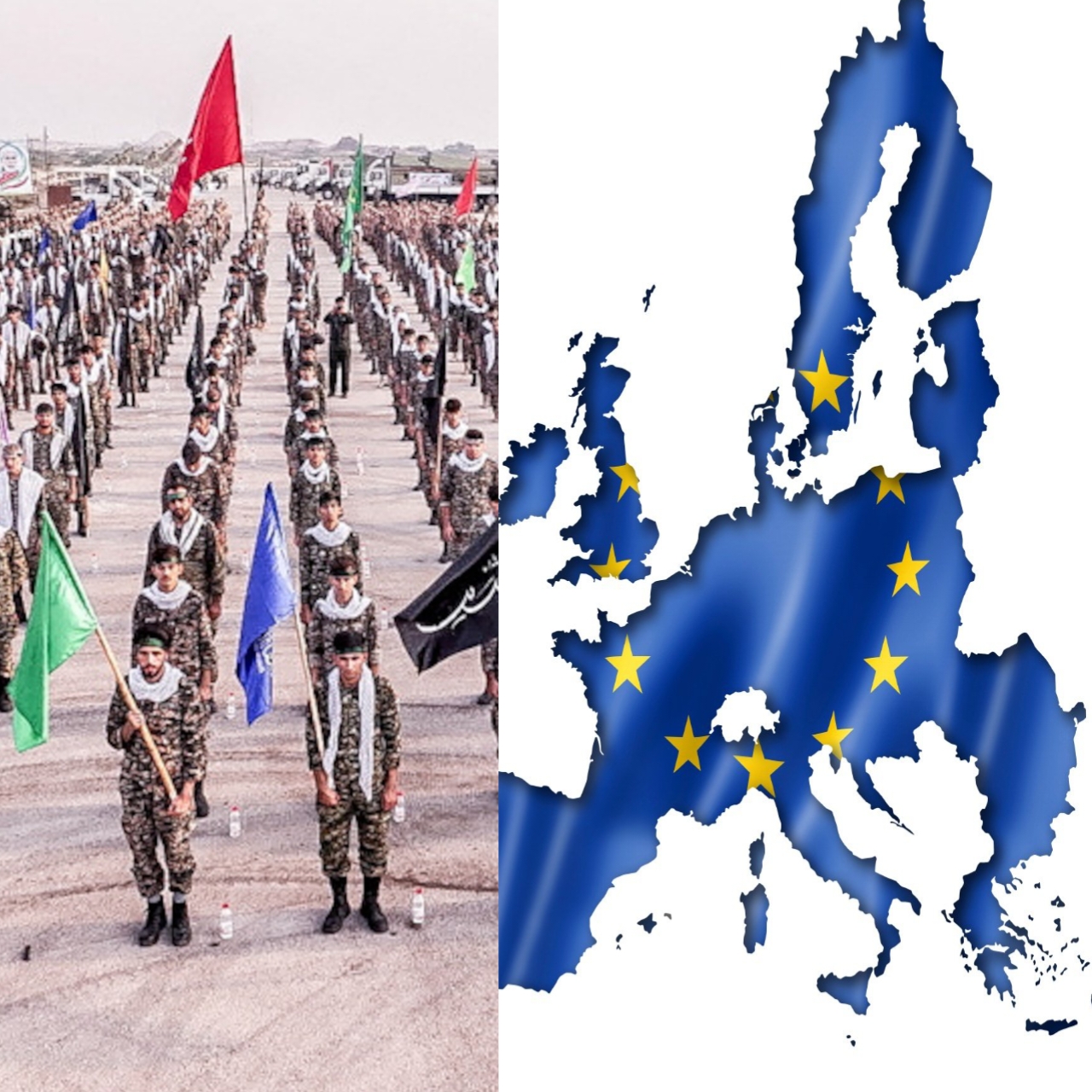
Iran has labelled European countries’ armies “terrorist groups”, its parliament speaker said Sunday, following the EU’s decision to apply the same designation to the Islamic Revolutionary Guard Corps.

Lawmakers wore the green uniform of the Guards in a display of solidarity at the legislative session, where they chanted “Death to America”, “Death to Israel,” and “Shame on you, Europe”, state television footage showed.

Slamming the bloc’s “irresponsible action”, speaker Mohammad Bagher Ghalibaf said that under “Article 7 of the Law on Countermeasures Against the Declaration of the IRGC as a Terrorist Organisation, the armies of European countries are considered terrorist groups”.

Recalled that, the law was first passed in 2019, when the United States classified the Guards as a terrorist organisation.

The Sunday’s session was held on the 47th anniversary of the return from exile of the late Ayatollah Ruhollah Khomeini, who founded the Islamic Republic in 1979.

The Guards are the ideological arm of Iran’s military, tasked with safeguarding the Islamic revolution from external and internal threats.

They have been accused by Western governments of orchestrating a crackdown on a recent protest movement that left thousands dead.

Tehran has attributed the violence to “terrorist acts” fomented by the United States and Israel.

The European Union agreed on Thursday to list the body as a “terrorist organisation” over the response to the protests.

The step matched similar classifications enacted by the United States, Canada, and Australia.

The legislative session came as Iran and the United States have traded warnings and threats of potential military action.

Tehran’s response to the protests prompted US President Donald Trump to threaten to intervene, dispatching an aircraft carrier group to the region.

In recent days, however, both sides have insisted they remain willing to talk.

“Contrary to the hype of the contrived media war, structural arrangements for negotiations are progressing,” Ali Larijani, head of Iran’s Supreme National Security Council, said on Saturday.

Trump later confirmed that dialogue was taking place, but without withdrawing his earlier threats. He told Fox News that Iran was “talking to us, and we’ll see if we can do something, otherwise we’ll see what happens… we have a big fleet heading out there”.

Iranian President Masoud Pezeshkian said Saturday that “a war would be in the interest of neither Iran, nor the United States, nor the region”, during a call with his Egyptian counterpart Abdel Fattah al-Sisi, according to Pezeshkian’s office.

AFP

EU labels Iran’s revolutionary guards as terror group amid escalating US-Iran tensions

By Sabiu Abdullahi

The European Union has officially designated Iran’s Islamic Revolutionary Guard Corps (IRGC) as a “terrorist organisation”, a move that further deepens tensions between Tehran and Western powers amid rising military threats from the United States.

The decision followed a meeting of EU foreign ministers and was announced by the bloc’s top diplomat, Kaja Kallas. The designation came as US President Donald Trump renewed warnings of possible military action against Iran.

Iran’s Foreign Minister, Abbas Araghchi, responded with a sharp warning, saying the country’s armed forces were ready to respond “immediately and powerfully” to any attack by the United States. His remarks came hours after Trump said Washington was prepared to act with “speed and violence”.

In recent days, the US has strengthened its military presence in the region. Among the assets deployed to the Arabian Sea is the USS Abraham Lincoln, a nuclear-powered aircraft carrier.

Alongside the terror designation, EU foreign ministers approved fresh sanctions against Iran. The measures include travel bans and asset freezes targeting Iranian officials accused of involvement in the killing of thousands of antigovernment protesters since late December last year.

From Tehran, the General Staff of Iran’s Armed Forces condemned the EU’s decision. In a statement, it described the move as “illogical, irresponsible and spiteful”, and accused the bloc of acting in line with US and Israeli policies. The statement warned that “the dangerous consequences of this hostile and provocative decision will be directly borne by European policymakers”.

Iranian officials noted that the United States had already taken a similar step in 2019, when it designated the IRGC as a foreign “terrorist organisation”.

International reactions quickly followed the EU’s announcement. United Nations Secretary-General Antonio Guterres urged restraint and called for diplomacy to prevent further escalation.

“We believe that it’s important that there is a dialogue allowing for an agreement in relation, namely, to the nuclear question and that we can avoid a crisis that could have devastating consequences in the region,” Guterres told reporters.

In Washington, US Defence Secretary Pete Hegseth said Iran still had an opportunity to reach an agreement with the United States, but warned that the Pentagon stood ready to act if talks failed.

“They have all the options to make a deal,” Hegseth said. “They should not pursue nuclear capabilities.”

He added: “We will be prepared to deliver whatever this president expects from the war department, just like we did this month [in Venezuela].”

Iranian President Masoud Pezeshkian also engaged regional leaders as tensions rose. According to a statement from the Iranian presidency, Pezeshkian spoke with the emir of Qatar and the prime minister of Pakistan, stressing “the importance of strengthening unity among Islamic countries” and the need for continued diplomatic efforts to reduce regional tensions.

The statement added that Iran had chosen “the path of dialogue and dignified diplomacy”, while warning that the country “will not hesitate to defend itself if necessary”.

Germany welcomed the EU’s decision, with its Foreign Office calling the move “overdue”.

“The decision taken today sends a strong political message,” the ministry said. “We as the EU are thus showing that we see what is happening in Iran. We stand side by side with the Iranian people. We stand up for humanity and we oppose repression.”

Germany also confirmed that new individual sanctions had been imposed on officials accused of responsibility for what it described as the “brutal suppression of the protests”.

European Commission President Ursula von der Leyen echoed that position, calling the designation “long overdue”.

“‘Terrorist’ is indeed how you call a regime that crushes its own people’s protests in blood,” she said. “Europe stands with the people of Iran in their brave fight for freedom.”

Israel also praised the EU action. Israeli Foreign Minister Gideon Saar described it as an “important and historic decision”, claiming it would deal a “powerful blow” to the legitimacy of Iran’s government.

Meanwhile, Tehran summoned Germany’s ambassador after Chancellor Friedrich Merz said the Iranian government’s “days are numbered”.

“It could be a matter of weeks, but this regime has no legitimacy to govern the country,” Merz said.

Iran has also issued warnings of upcoming military drills in the Strait of Hormuz, a critical waterway through which about 20 percent of global oil supplies pass, raising further concerns over regional stability.

The IRGC, established after Iran’s 1979 revolution, operates alongside the regular army and reports directly to Supreme Leader Ayatollah Ali Khamenei. It plays a central role in Iran’s defence strategy and regional influence and remains deeply embedded in the country’s political and economic structures.

As diplomatic pressure mounts and military posturing continues, analysts warn that the situation carries high risks, with the potential for serious consequences across the Middle East if tensions spiral further.

Iran reportedly breaks diplomatic contact with US as tension grows

By Sabiu Abdullahi

Direct communication between senior officials of the United States and Iran has reportedly come to a halt as diplomatic relations between the two countries continue to deteriorate.

A senior Iranian official disclosed to the Reuters news agency on Wednesday that discussions between Iran’s Foreign Minister, Abbas Araghchi, and the United States special envoy, Steve Wittkof, have been suspended.

The development comes at a time when President Donald Trump has issued threats of possible intervention as Iranian authorities intensify actions against protests within the country. In response, Tehran has vowed to strike United States military bases in the region if it comes under attack.

Over the past year, the United States and several European allies had pursued renewed diplomatic engagement on Iran’s nuclear programme. However, the Iranian official indicated that the current climate has erased any chance of meaningful progress.

He said the threats from Washington have weakened ongoing diplomatic initiatives. He added that proposed meetings between Araghchi and Wittkof, which aimed to address the long-standing nuclear dispute, have been called off.

The official also revealed that Tehran had asked United States allies within the region to “prevent Washington from attacking”.