IPOB

Igbonomics in Northern Nigeria

By Ahmadu Shehu, PhD.

My previous article titled If there was Biafra generated debates around Biafra’s disadvantages (and advantages) to the Igbo people. Many of these comments were very insightful, and in line with the thoughts I presented. While I cannot respond to all the commentators, I will briefly address the most salient rejoinders. But, once again, let me quickly state that this conversation does not target the Igbo as an ethnic group. Instead, I aim to provide an outsider view to these pressing issues of national unity on which all Nigerians share equal rights and responsibilities to tell ourselves the home truth.

Some commentators say that the article was biased as I only focused on the disadvantages and neglected the “obvious” advantages the Igbo will gain from Biafra. However, I do not see a single demographic, economic, geographical or even political advantage the Igbo will gain by simply seceding from Nigeria. That is the thesis of the previous article. In fact, the post-exile writings of Odumegwu Ojukwu, the architect of Biafra himself, buttress this point.

The most critical observations from many prominent Igbo elites and friends claim that as much as the Igbo people enjoy Nigeria’s unity from both economic and political perspectives, we should equally be thankful to the southeasterners for the jobs they create for other Nigerians. In other words, the Nigerian market saturated by Igbo traders is also lucky to have the Igbo money as capital for the employment of other Nigerians.

Well, this claim might seem valid at face value. Still, it may not be entirely accurate when Igbonomics – a term I use here to refer to the economic strategy of the Igbo people – is subjected to a critical view. In the said article, I noted that one of the weaknesses of the southeastern economic model is that it is closed to other Nigerians. The resentment the Igbo folks have against the majority of Nigerians do not allow “strangers” from any region of the country to freely establish or run businesses in Igboland. That is why most Igbo billionaires today were made one hundred per cent in and by other regions of this country, but not the other way round. There is hardly a non-Igbo billionaire made by or in the southeast.

This xenophobia is not only applied against the Hausa-Fulani northerners or the Yoruba south-westerns but also their closest cousins, the Niger-Deltans. This approach is based on three exclusionist strategies of Igbonomics: First, the market and product, and indeed the value-chain must strictly remain an Igbo affair. Second, other regions’ markets, their products and value-chains must be proportionately shared with the Igbos. Third, to drift public attention from this ongoing reality, maintain the victim card by crying louder than the bereaved – the real victims of marginalization. While the first two tenets are lawful but greedy, the third is a clear case of hypocrisy. Here is a simple example to foreground this scenario.

The Igbo form the largest group of Nigerians in the diaspora. Since Nigeria is an import economy, the Igbo people in diaspora serve as business agents for their brethren in Nigeria. Therefore, the import business is basically an Igbo – Igbo transaction. Here in Nigeria, these goods are transported mainly to the southeastern markets, such as Abba and Onitsha. Instead of Lagos or Port Harcourt, most Igbo traders, who are widely dispersed across the nooks and crannies of this country, buy their goods mostly from Igbo distributors in the southeast. Another Igbo – Igbo transaction.

Up here in the north and other parts of the country, the Igbo employ strictly Igbo artisans, mostly from their own villages or communities in the east, and in some cases, the so-called northern Igbos. From sales girls and boys to messengers, marketers and suppliers, the Igbos domiciled in the north only trust their own ethnic brothers regardless of the opportunities employing locals might portend to their businesses.

For instance, you find a single Igbo shop owner in a village. By the following year, s/he has brought two, three or four Igbo artisans, thereby growing in population, manipulating the resources and seizing the business opportunities further away from the local people.

In most cases, the deal is that a separate business in the same line is established for the younger artisan, expanding further the grip of the Igbos in that line of business in the communities they are domiciled. Thus, the profits, gains and resources of the business in any of these communities become an Igbo affair entirely. Therefore, in this arrangement, the Igbo create jobs primarily for themselves while other sections of Nigeria serve as their consumers.

While the Igbos living in the north own properties and investments in the region, they return their proceeds to their homelands. Thus, I can bet my last penny that Igboland has more properties and investments built from profits and wealth acquired outside the Igboland than those made from the businesses run within the Igboland. Moreover, I had said earlier that businesses domiciled in the southeast largely depend on the larger Nigerian market to thrive.

Therefore, it should be clear from the foregoing that Igbonomics in the north is an Igbo economic affair that largely – if not only – benefits the Igbos. The brutal truth is that the Igbo are NOT marginalized in Nigeria. Instead, they are playing a victim card to maintain the economic status quo. While the various sections of this great country have a lot to thank one another for, none of these sections should claim any superiority. Neither should any of these play a gimmick of marginalization. We are equals in the hands of God and our country.

Dr Ahmadu Shehu is a nomad cum herdsman, an Assistant Professor at the American University of Nigeria, Yola, and is passionate about the Nigerian project. You can reach him via ahmadsheehu@yahoo.com.

If there was Biafra

By Ahmadu Shehu, PhD.

It is no longer debatable that Nigeria, despite its crippling challenges, may never disintegrate, at least geographically. Of course, the animosities, hatred and distrust between the ethnic and regional nationalities might worsen, but Nigeria’s elasticity is exemplary and uncommon. However, I still do not accept the convenient folktale deployed by politicians that our country’s unity is non-negotiable. By now, our experience as a nation should have liberated our minds to begin a conversation on any topic of national interest, no matter the controversy or emotional delicacy.

As we approach the 61st birthday of our beloved country, I find it imperative to discuss this controversial but important issue. From the outset, let me clarify that this article is not about the Igbo as an ethnic group or the southeast as a region. Given the rise in pro-Biafra sentiments and agitations at the moment, this article is only meant to provide an outsider view of some arguments espoused by the secessionists in their attempt to generate sympathy and popularity.

When you think of Nigeria’s disintegration, the first thing that comes to mind is Biafra – a defunct Igbo separatist nation in the country’s southeastern part. The attempt to curve this region from Nigeria in 1967 remains one of the most gruelling experiences of our country. A barely six-year-old nation was thrown into chaos by a set of greedy politicians and unscrupulous military officers who wanted power at the centre. Within those thirty months, millions of innocent citizens lost their lives, got injured or lost their possessions. In addition, Nigeria lost a large chunk of its national treasury meant to set the country on the right footing. The rest, as they say, is history.

Instead of learning from our past mistakes to avoid the recurrence of this destructive, reckless and unnecessary event, Nigerians of this generation seem to be oblivious of the necessary truth. As with most factual historical events in the Nigerian psyche, this painful experience, its true causes, and damning consequences are not well-known to the younger generations. The biased narratives in various country sections ensure that our population only hear the stories that suit their mindsets without alternative facts that would open their minds to self-criticism.

In the case of Biafra, most of the young Igbo folks have a pretty false image of their fate as a people if Biafra had happened. This skewed imagination is not unconnected with the biased, often imaginative stories these young Nigerians were told about their defunct “nation”. The Igbo popular culture and the intelligentsia depict a fictional image of Biafra as a dream-nation where the Igbos shall live in peace and prosperity devoid of challenges.

They imagine, albeit naively, that Biafra will be unlike Nigeria and that their lot would have been better than it is today. These unsuspecting chaps are led into believing a mirage of living in a nation flowing with honey and milk. They are also told that other ethnic and geopolitical sections of Nigeria are responsible for all their woes. They argue, albeit ignorantly, that if not for the North, the West, Hausa, Fulani, Yoruba, etc., theirs would have been a heaven on earth. These ignorant tales conclude that a united Nigeria does not help their course as a people.

Well, I think that these views are simplistic. I also believe that it is our responsibility to tell our brethren the truth that they need to hear. Firstly, the creation, proclamation of Biafra was not in the interest of the ordinary Igbo people. It was the last-ditch by Igbo politicians to hide their faces from problems they caused and ensure they stayed in power. Secondly, our brethren are mischievously told that the Igbo were so rich that the Igboland was the largest economic contributor to the federation. Unfortunately, the falsity of this assertion is not far-fetched, as the southeast was and is still the least contributor to the Nigerian GDP. Moreover, during the attempted secession, Nigeria’s GDP was mainly from the agricultural sector, predominantly from the North.

Thirdly, it seems that many people are misled into believing that Biafra would be an oil-rich country even though none of the Southeastern states is truly oil-producing. The Niger Delta, Nigeria’s oil pot, was not and will never be part of Biafra.

Fourthly, young Igbo people tend to believe that the southeast was Nigeria’s cash-cow at independence. The bitter truth is that even in the ’60s, the perceived strong Igbo economy depended entirely on other regions. This scenario is worse today as there are probably more Igbo people and Igbo businesses in other parts of the country than in Igboland. Worse still, the Igboland is closed and unfriendly to Nigerians, making external investments impossible.

The most supposedly intelligent argument advanced by the secessionists hinges on the current centralized federal system. They claim that the centre is too powerful and that Igbo states are marginalized. This is an argument of convenience, at best. Nigerians are not oblivious that the current unitary system was the handwork of Igbo politicians who saw a unitary arrangement as the answer to their political agenda. Today, the tides have turned, and these very people are calling for the system they abolished. Restructuring this country – whatever that means – might be a good idea, but only after a genuine debate that will ensure we do not return to the same vicious circle.

People with secessionist tendencies have used the challenges in northern Nigeria as reasons for disintegration. However, Biafra will by no means be a safer or better place. Currently, some of the most terrible crimes bedevilling this country are not unconnected with the southeast. From drugs to internet fraud, armed robbery and kidnapping to arms smuggling, if not worse, the southeast is not holier than other parts of this country.

Another commonplace argument is that the industrious nature of the Igbo people is enough evidence that Biafra will be a great country. But this argument, too, has failed to account for the fact that the wealthiest and most successful Igbo people and their businesses owe their success significantly to Nigeria and not Igboland. The Igbo people are traders, and the economic success of trading lies in the customer market, not the number of sellers. What do the Igbo people actually produce or sell that does not rely on the larger Nigerian population?

On the one hand, there is nothing that the southeast offers that cannot be produced or sold by other Nigerians. But, on the other hand, everything from food to livestock, energy, and the market for everything sold depend on the other regions. The southeast is asking to leave under this situation is the most absurd strategic blunder of the century.

Similarly, Igbo politicians and administrators have not distinguished themselves from the rotten Nigerian public servants. We do not see a difference between southeastern institutions or southeasterners in Nigerian public offices and their counterparts in other regions or ethnic groups. The same crop of people will lead Biafra. So, nobody should be enthusiastic.

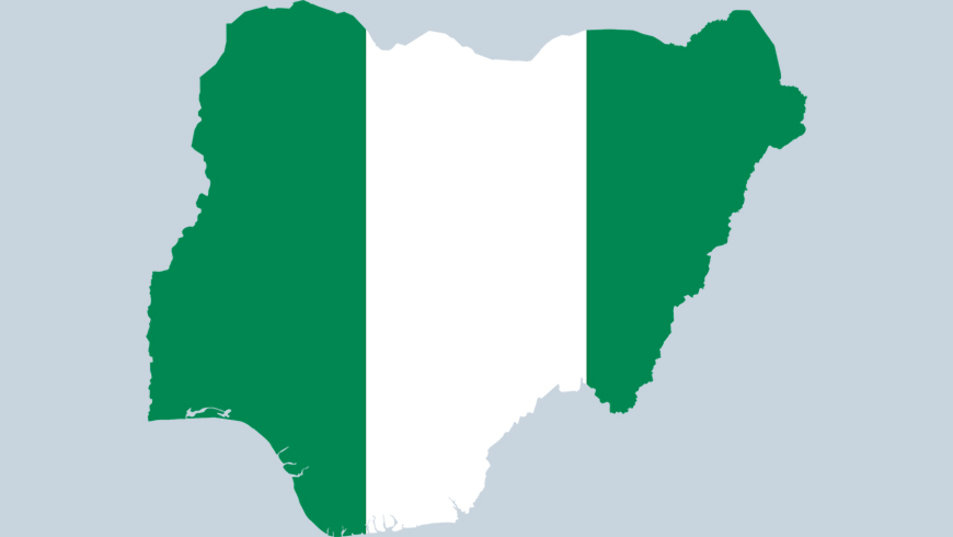
Therefore, it is evident from the preceding that the viability of Biafra as an independent state is not assured. For one, it will be a landlocked, forty-one thousand kilometres square piece of land, which is just a half of Niger state and less than the size of Kaduna state. Worse still, it will be circled on all four corners by its biggest adversary, the Nigerian state. Secondly, it will depend on its biggest adversary for nearly everything except air, including waterways, food, and labour. Third, it would be one of the most overpopulated countries vis-à-vis its landmass and population.

The bitter truth is that these ecological, geographical, demographic and economic factors do not support the presupposition that the Igboland is better off as a separate entity than it is within the Nigerian federation. Therefore, it is safe to conclude that even if Biafra was to happen on a platter of gold, it is not going to be the rose garden these populists have configured our brothers to believe. Thus, we should all look before we leap!


Dr Ahmadu Shehu is a nomad cum herdsman, an Assistant Professor at the American University of Nigeria, Yola, and is passionate about the Nigerian project. You can reach him at ahmadsheehu@yahoo.com.
October 1: IPOB declares sit-at-home, urges removal of Nigerian flags in region

By Muhammad Sabiu

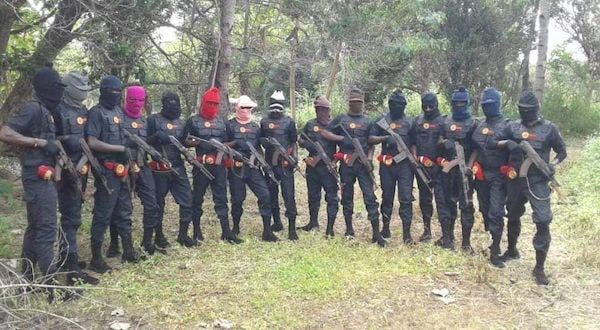
The Indigenous People of Biafra (IPOB), a proscribed secessionist organisation agitating for the breakaway of Nigeria’s southeast, has declared that the 1st of October would be a sit-at-home day.


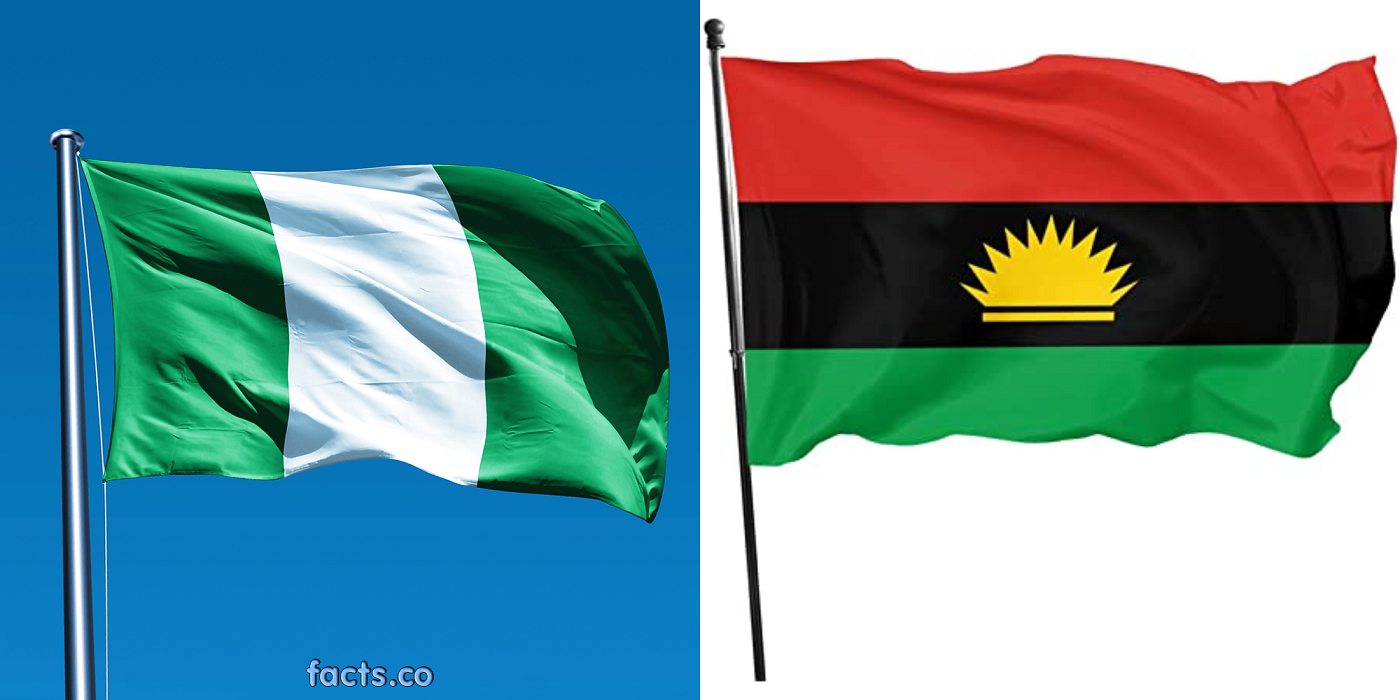
The group has also ordered all Nigerian flags in the region to be removed.


The proscribed organisation, in a statement by its spokesman on Saturday, Emma Powerful, stressed that it had commenced its “no Nigerian flag in Southeast” campaign.


“IPOB has declared 1st of October 2021 total shutdown in Biafra land as a sign of our rejection of the evil construct called Nigeria and there shall be no movement in Biafra land on this day.


“Also, IPOB has declared from today 25th September 2021 that all Nigerian flag mounted anywhere in Biafra land must be brought down, Banks exceptional, IPOB leadership will communicate to Banks directly and give them reason they must peacefully bring down Nigeria flag in their banking premises before we do it ourselves in our own way.


“Every body must strictly adhere to this directives from IPOB leadership, we want to let the world know you that Biafraland is not Nigeria and shall not be. Don’t say I don’t know, a word is enough for the wise,” the statement reads.


Recall that IPOB leader, Nnamdi Kanu, is currently awaiting trial on charges relating to treason, illegal possession of firearms.


He was in recent months reportedly arrested in Kenya and later repatriated to Nigeria after spending years in the United Kingdom as what could be described as an “asylum seeker.”

Dear Nigeria: Don’t fall prey to the false promises of war

Like the mid-1960s, the early 2020s has been heated and filled with war rhetoric. This rhetoric has been well oiled by claims of nepotism, corruption and everything that has been proverbial fertilisers for conflict in post-independence Africa. From Freetown to Kinshasa, the story has always been the same. And intriguingly, the results have also been similar. Deaths and more deaths, reconciliation, then business as usual. Hardly any lessons learnt!

Let’s retake this: the science of war in Africa is essentially a story of frustration, then misinformation, then delusion, then deception, then destruction, then reconciliation and finally rehabilitation. But, except maybe for places like Rwanda, the root causes never get addressed, the warlords never die, the corrupt politicians/soldiers mostly come back wealthier and more confident to assume the mantle of leadership. And the masses who fought and killed one another are further plunged into disillusion and poverty.  

Why then does this story keep repeating itself if data tells us that the investment always ends in red and that the returns are always intertwined with regrets? Here are a few observations, supported by both learning and experience:

Violence is a Political Statement

The old saying that where gentility fails, brutality prevails holds true today as it did in Nigeria’s 1960s, Liberia and Sierra Leone’s 1980s, and Rwanda’s 1990s. Politicians have basically two tools: debate and violence. In climes where one ceases to be effective, the other is automatically activated. And because both do not really take much from politicians by way of casualties, both have been greatly valued assets in their political estates. To change this, the citizens must be enlightened enough to see beyond the rhetoric. And usually, this mass education has to be ultimately championed by concerned and more enlightened citizens outside the political class.

The War Mongers Mostly Have a Contingency Plan

Suppose the chances of death for both leaders and masses in a civil conflict are equal. In that case, the apparent possibility is that wars will hardly be fought, and misinformation will get as little funding as possible. Unfortunately, the truth is that leaders usually have collaborators outside the borders of their countries and these collaborators typically stop at nothing to rescue their friends when things get worse. So, with this in mind, leaders at both ends of the divide beguile their cannon fodders to get the job done while they await the desired if ominous outcomes.

War Promises Freedom and other “Sweet” Things

History is replete with people taking the path of violence and war to regain their freedom. And beyond freedom, war promises access to places, bodies, resources and positions that were otherwise inaccessible. In a strange turn of things, Foday Sankoh of Sierra Leone rose to a position almost as powerful as the President after his rebellion that led to the loss of reportedly 50,000 lives, including hundreds of Nigerian and other ECOMOG/UN Peacekeeping forces.  He committed the crimes, then, for the sake of peace, got rewarded with laurels! Who is going to bring back all those lives, especially those of his loyal foot soldiers? Most of these people willingly took arms because they dreamt of enjoying what only Sankoh could enjoy, while their ultimate lot was destruction. War promises a lot of prosperity, ironically, but delivers a lot of destruction in reality.

The Crux of the Matter: it’s Difficult to Find a Suitable Alternative to War

Not that people want to lose routine or the calm of home. Not that they like to see the hacked body parts of loved ones or wade through the blood of a beheaded or gunned down neighbour in search of safety, not that they like to be refugees and be treated as slaves in strange lands, just that in the heat of the burning issues, with the accusations and counter-accusations and the mutual acrimony that ensues, it’s “difficult” to find a suitable alternative. Or better put, the other options have been abused and exhausted. Elections and coup d’état are the usual alternatives to war in our postcolonial political dispensation, but the two have hardly ever provided the desired outcomes. Therefore, it is safe to say the fault is not in our enemies; the fault, rather, lies in us. People are willing to change evil until they become beneficiaries of such evils. And how quickly do their fans often forget this fact!

In the final analysis, people plan for wars, heat the polity, sponsor misinformation, make promises of victory, but then war is so creative that it hardly subjects itself to anybody’s plans. And when the gruesome scenes of death and destruction start being plastered all over the media, and mercenaries and warlords start gaining unfettered access to national resources and the treasury, when hunger subdues the strongest amongst us and ruins the future that is so dear to us, when ammunitions are in short supply, and the enemy forces are about to be in total control, that’s usually when it becomes clear that it is not really the war we wanted, but the promises it offered from a distance. Too late!

AF Sesay is a writer based in Lagos. He can be reached via amarasesay.amir@gmail.com.

Southern governors should prepare for boomerang

By Muhammad Mahmud

Even as the nation is struggling to bring an end to the Boko Haram crisis, which could’ve been effectively tamed but for the inane and complacent manner the leadership of some Northeastern states treated the issue initially, we could not but gape at the myopic decision of the Southern governors to fly the kite of moral support to their organized thugs who were recently suppressed by the authorities. 

At their meeting on Monday, July 5 2021, the southern governors “resolved that if for any reason security institutions need to undertake an operation in any State, the Chief Security Officer of the State MUST be duly informed.” (Emphasis mine).

It is unmistakable that the governors were referring to the recent success recorded by the nation’s security agencies in arresting many IPOB members, including their “supreme leader” Nnamdi Kanu, and the arrests at the residence of a tribal warlord, Sunday Igboho.

One cannot but wonder how on earth these governors will be so insensitive to the flights of their people. The gory stories emanating from the arrested members of IPOB, where 2000 fresh skulls of innocent southern girls were targeted and how lives of fellow southerners who never aligned themselves to the “cause” were to be wasted, are enough to galvanize the governors into taking stern action against those terrorists. But to the shock of the whole nation, these governors, who never even found it worth their time to give a one minute silence to mourn souls of the ten brutally killed girls, have the temerity to demand that they must be informed whenever the criminals are to be arrested. 

Perhaps the support for IPOB and Igboho militia by the southern governors has everything to do with what Rochas Okorocha said, in an interview with BBC, that it was the fear of what the IPOB boys could do to them that stops Igbo elders from speaking against them. This gives a picture of caged and gagged elders who have no option but to simply watch as the boys took their entire region into uncertainty. This means that Kanu’s group has evolved into a monster that no Igbo could dare criticize even from afar. 

Maybe the southeastern leaders fear that what happened to the four Ogoni chiefs could befall them if they dare oppose IPOB. On May 21 1994, four Ogoni chiefs were beaten to death by angry Ogoni youths. The victims’ names were Edward Kobani, Alfred Badey, Samuel Orage, and Theophilus Orage. Their crime was that they were suspected to be against the MOSOP. Perhaps the Igbo leaders fear the Ogoni chiefs’ treatment from IPOB; that’s why they are backing them. 

But suppose Igbo elders are so terrified with the IPOB to the extent that they are hypnotized into submission, or they are so emotionally sympathetic to the “cause”. In that case, it is very dumbfounding that the south-southern governors couldn’t see the danger of backing IPOB for the simple fact that they (IPOB) made it categorically clear that any non-Igbo will be, and shall remain, a third-class citizen in the region. Suppose the south-western governors found it strategically right to support IPOB in supporting their tribal warlord, Igboho; what exactly is in it for the south-southern region? Their governors seem to be either coerced/harangued into submission or too foolish to figure this out for their people.  I believe if a south-southerner like Reno Omokri is among the governors, he will object to this. 

It appears as if the southern leaders are no longer in control. They seem to be tele-guided by the prevailing emotions in their regions instead of playing the leadership role of directing towards a better future for their people. 

Notwithstanding some of their failures and the resentments of their people, Northern elders are more in control and seem to be leading. When some northern youths issued a quit notice to the Igbos, in a reaction to the IPOB’s agitation, the leaders of the north rebuffed them. Governor El-Rufa’i even ordered their arrest. When some northern youths initiated “Shege Ka Fasa” as an answer to south-western governors’ backed “Amotekun”, the leaders of the north stopped them, and they complied. Even Boko Haram, with their firepower, did not frighten northern leaders into opposing the federal government to support them!

If the southern leaders are publicly backing their criminals with a kind of moral encouragement by attacking the federal government’s crush on them, they should, rest assured, know that it will boomerang. They should have taken lessons from what happened during the early stage of Boko Haram in the northeast.

During the initial stage of Boko Haram, they enjoyed massive support from their people. This is partly because they appeal to their people’s sentiments. All they need is to list eloquently, in a highly sentimental manner, the ills and backwardness that bedevilled the people in addition to hunger, poverty, diseases etc. and finally quote relatively congruent verses of the Qur’an and sayings of the Messenger of Allah (peace be upon him) to drive home their point that “Jihad” is the only way out and they, as the conveyors of that message, are the ones to lead. It was full of promises of a utopian state that will replace the current dystopian state. And that appealed to many, more especially as most of the movement members were children of the elite. What a perfect gulp of toxic will that be on the gullible, the strata of his/her social status notwithstanding.

It was only after the actual road to Sambisa was taken that the people realized, albeit too late, how wrong they were and how naive they behaved.

Now the IPOB and the tribal warlord, Sunday Igboho, are getting the support of the southern governors because they appeal to the sentiments of regionalism and tribalism (or drum up support for their political agenda), only time will reveal the sour fruits that will shower down. I hope some leaders will be blunt enough to put aside political correctness and act appropriately before that happens.

Malam Muhammad writes from Kano. He can be reached via meinagge@gmail.com.

DSS confirms raiding Sunday Igboho’s house, declares him wanted

Department of State Services has declared Yoruba activist Sunday Adeyemo alias Sunday Igboho wanted. The declaration followed rumours that men in uniform carried out a midnight raid on his residence in Ibadan, Oyo State, which led to the death of two people.

The DSS Public Relations Officer, Peter Afunnaya, disclosed this Thursday night during a press briefing and parading of suspect arrested during the raid at the national headquarters of the secret police. He further advised Igboho to turn himself in to the nearest security.

“Those cheering and eulogizing him may appeal to or advise him to do the needful,” Afunnaya said. “He should surrender himself to the appropriate authorities. He or anyone can never be above the law.”

Afunnaya added that the raid on Igboho’s residence was a response to an intelligence report that he had stockpiled arms in the place, some of which were now recovered.

“On approach to the residence, the team came under heavy gun attack by nine men, suspected to be Igboho’s guards. Six of them were armed with AK-47 guns and three others, with pump-action rifles,” the DSS spokesman added.

After a gun duel that lasted for an hour, during which Igboho escaped, “The [DSS] team procedurally searched the house and subsequently recovered the following seven 7 AK-47 assault rifles, three pump action guns, 30 fully charged AK-47 magazines, 5,000 rounds of 7.62mm ammunition, five cutlasses, one jack knife and one penknife”, among other items.

In June, Igboho declared that Yoruba would break away from Nigeria latest by December 2021 to form the Oduduwa Republic. He was also alleged to have led attacks on Fulani herders and Hausa traders in the southwestern states of the country.

The Nigerian government have stepped up action against separatist recently. Igboho’s attempted arrest came a few days after the leader of proscribed Indigenous People of Biafra (IPOB), Nnamdi Kanu, was arrested and extradited to Nigeria. He has been charged for treasonable felony, evading arrest and inciting violence at the Abuja Federal High Court.

Igbo group disowns Kanu

The apex Igbo socio-cultural group, Ohanaeze Ndigbo, has stated that the arrest of Nnamdi Kanu, leader of the Indigenous People of Biafra, will mark the end of violent agitations in the South-East.

This was contained in a statement issued on Tuesday by Okechukwu Isiguzoro, the group’s General Secretary.

Ohanaeze said Kanu’s arrest will serve as a deterrent to others, warning that self-determination should not be used to garner wealth.

The group also noted that Kanu’s refusal to adhere to the advice of leaders and elders in the South-East is responsible for his misfortune.

The statement read, “Ohanaeze Ndigbo calls for calm and cautions Igbos to desist from any form of protests and processions that will bring more catastrophe for Southeastern Nigeria.

“The re-arrest of Nnamdi Kanu the leader of IPOB is the beginning of the end of violent agitations in southeastern Nigeria and a lesson to others that deviation from the nonviolent agitations contradicts what Igbos are known for, and self-determination should not be used for purposes of fortune and fame-seeking.

“Nnamdi Kanu’s refusal to adhere to the advice of Igbo leaders, elders, and political leaders is the outcome of what had befallen him. He made a lot of enemies, especially those that would have saved him and Federal Government will never loosen its grip on him again. We don’t think that any Igbo leader will stick out his/her neck for him, his re-arrest will eventually bring peace and stability to the region and avert another civil war that was raging on.”

The group urged the Nigerian government to handle the situation carefully to prevent violent revolts because of Kanu’s many followers. 

It added that “his trial should be strictly based on the laws of the land. They shouldn’t kill him because it will destabilise the entire country.”