Insecurity

Over 50 bandits neutralized in Birnin Gwari

By Abdurraman Muhammad

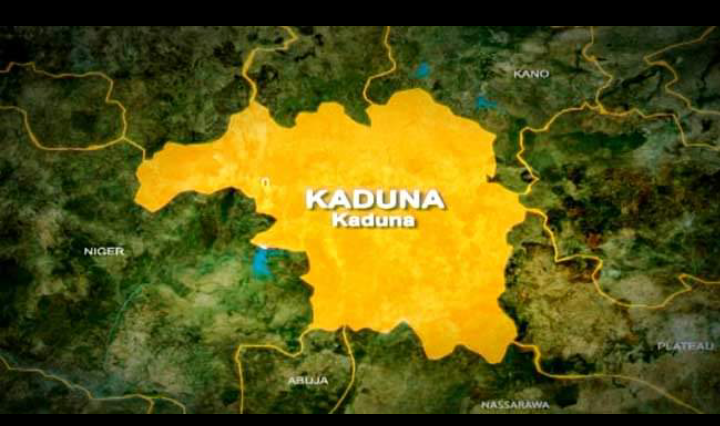
Following the sustained operations against the bandits in Kaduna State, in another success for the security forces, over 50 bandits have been neutralized during a combined ground and air assault in the Saulawa-Farin Ruwa axis of Birnin Gwari LGA.

In a press release on security updates signed by the Commissioner, Ministry of Internal Security and Home Affairs of Kaduna State, Samuel Aruwan who narrated how the operation was successful stated that, “the Command of the Joint Operations, a Nigerian Air Force helicopter gunship provided close air support to ground troops advancing from the Dogon Dawa-Damari-Saulawa axis.”

“Following extensive scans, bandits were spotted on five motorcycles, about 4km east of Saulawa, waiting to ambush the ground forces. They were engaged vigorously by the helicopter gunship, and were wiped out.”

Mr. Aruwan added that, “After armed bandits on about 50 motorcycles were sighted fleeing towards Farin Ruwa, and were struck effectively by the gunship. Fleeing remnants were mopped up by ground forces.”

“A second helicopter gunship joined the operations, and many more fleeing bandits were neutralized by precise strikes. Assessment revealed that more than 50 bandits were neutralized during the joint operation.”

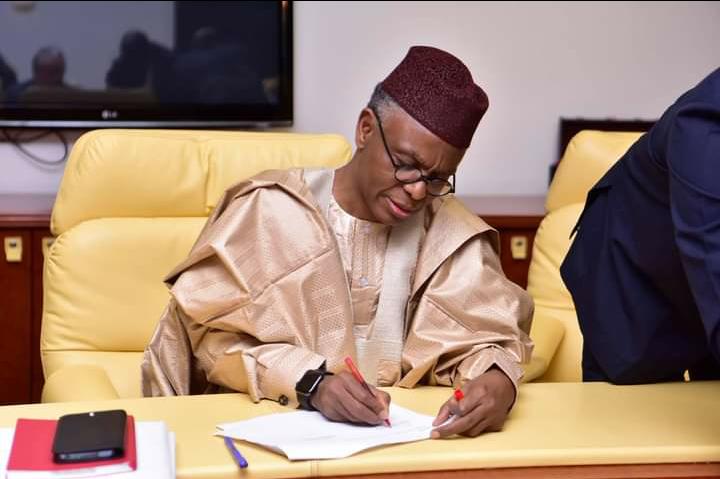
On his part, Governor Nasir El-Rufai expressed his satisfaction at the operational feedback, and congratulated the ground troops and gunship crews on the rout. He urged them to sustain the momentum and bring even more bandits to their bitter end.

Nigeria and the need for food security

By Mukhtar Ya’u Madobi


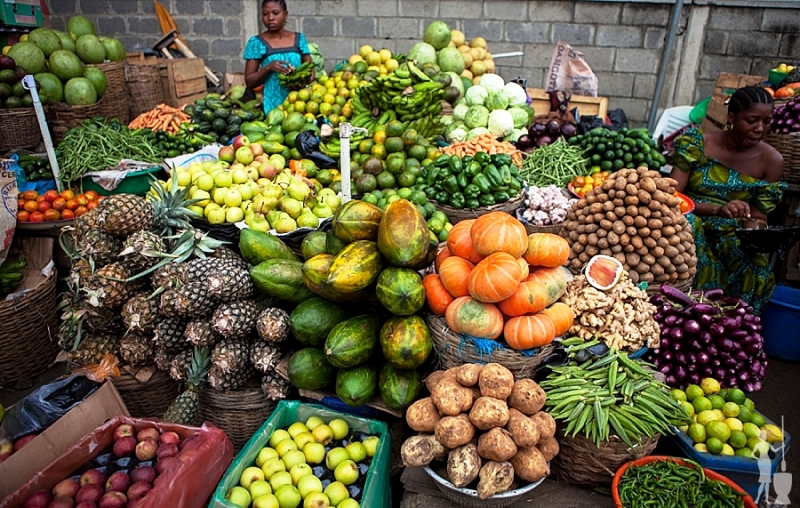
The right to sufficient food is enshrined in the Universal Declaration of Human Rights and subsequent international law. Food security is regarded as a situation whereby all people at all times have physical, social and economic access to sufficient food to meet their dietary needs for a productive and healthy life.  Food security is ensured when food becomes available, affordable and accessible.


However, it is good to note that food security is not simply having sufficient quantities of various staple foodstuffs. It also entails access to the entire citizenry to these food items at affordable prices. It further means that we must not only engage in mass food production but also ensure that Nigeria has sufficient purchasing power to acquire food items that guarantee good feeding and nutrition.
Food security has to do with the absence of threats of hunger or malnutrition people face in their lives. In a broad sense, it entails safety from basic physiological needs. The lack of safety will be manifested in chronic hunger or starvation and malnutrition.

The majority of the rural populace depends on Agricultural related activities for their livelihood. The appraisal in the past showed that successive administrations in Nigeria had initiated programs towards ensuring food availability and accessibility for the teeming population in the country.

These include; the National Accelerated Food Production Program (NAFPP) by Gen. Yakubu Gowon, Operation Feed the Nation (OFN) by Murtala/Obasanjo Administration; River Basin and Rural Development Authority (RBRDA), Green Revolution and World Bank-funded Agricultural Development Project (ADP) by Shehu Shagari and Babangida’s Directorate for Food, Road and Rural Infrastructure (DFRRI) among others.

Despite these efforts, Agriculture has been constrained by numerous challenges such as rural-urban migration, insufficient infrastructure, poor agricultural inputs, reliance on oil economy, over-dependence on rain-fed farming, environmental degradation, inadequate funding, poor socio-economic status of farmers, poor mechanization, climate change, corruption and poor commitment to the implementation of agricultural policies.

Yet, the most grievous bottleneck facing the agricultural sector today in Nigeria is the mass abandoning of arable land by farmers due to security challenges. These security threats include but are not limited to insurgency, banditry and kidnappings, killings and farmers-herders’ clashes. Consequently, all these turmoils lead to a deficit in agricultural production.

Nigeria still has the potentials to be food-secure through the adoption and implementation of strategic measures for the peasant farmers to operate in their farming activities through ensuring rural development, provision of easy access to basic farm inputs, adequate budgetary allocations to agriculture, particularly to the food crop sub-sector, enunciation of appropriate policies for food crop sub-sector, political stability, reduction in rural poverty, and peasant farmers’ education among others.

In response to that, the current administration of President Muhammadu Buhari has initiated multiple agricultural programs aimed at ensuring food security in the country. Notable among them include the Anchor Borrowers’ Programme (ABP) that commenced in 2015, which provides farm inputs both in kind and cash to smallholders farmers to boost the production of agricultural commodities. Tremendous success stories were achieved through this program, especially with breakthrough rice production in Kebbi State. The Presidential Fertilizer Initiative (PFI) was launched in 2016, a partnership between Nigeria and Morocco to make fertilizer available to the farmers. In addition, farm Youth Lab (FYL) is another Initiative of the Federal Agricultural Ministry to train Nigerian youths on livestock production and sustainable urban agriculture.

Additionally, the Presidential Economic Diversification Initiative (PEDI) was also launched in 2017 to support the revival of moribund industries, especially agro-processing ones, through facilitating investment, reducing regulatory bottlenecks, and enabling access to credit.

Moreover, in March 2018, President Muhammadu Buhari inaugurated the National Food Security Council (NFSC). The council was mandated to develop sustainable solutions to farmers and herders clashes, climate change, piracy and banditry, as well as desertification and their impacts on farmland, grazing areas, lakes and rivers. All these efforts are aimed towards increasing food production in the country.

The latest version of National Security Strategy 2019, a document released by the Office of the National Security Adviser (ONSA), Retired Major-General Babgana Monguno, noted that with the drastic reduction of food importation, the government would continue to develop agricultural potentials to attain self-sufficiency in food production as well as exportation. “The government will further consolidate investment in agricultural mechanization, irrigation and infrastructure to mitigate the risk and uncertainty occasioned by seasonal rainfall. In addition, modern techniques will be adopted to improve beef and dairy production and consolidate strategic food reserves to ensure that the nation is prepared for major emergencies and shortages”.

The latest Federal Government directives on the establishment of farm estates in 109 Senatorial districts across the nation deserves an accolade. This mandate is to be realized by the recently resuscitated National Agricultural Land Development Authority (NALDA), which has already commissioned its first integrated farm estate in Katsina and other states. Across the country, each farm is expected to engage in the rearing of poultry, fish and livestock, apiculture, crop farming, packaging and processing, respectively.

With this development, it is hopeful that the country will achieve food security and self-sufficiency in food production within the near future.

Nonetheless, even if all the policies mentioned above are implemented unless strategic measures are put in place to curtail the rising security challenges bedevilling the country, otherwise, the wish of the country to become a food-secure nation will never be realized.

Thus, peaceful environments should be created for farmers to resettle and muster more strength towards cultivating the vast abandoned arable lands in order to boost agricultural production in the country.

Mukhtar Ya’u Madobi writes from Kano. He can be contacted via ymukhtar944@gmail.com.

Irate residents in Sokoto lynch six terrorists

By Muhammad Sabiu

Reports coming from northwestern Nigeria have stated that angry people in a Sokoto community, Tangaza, took the bull by the horns, traced suspected bandits in detention and subsequently lynched them.

This is coming barely 12 hours after the bandits launched an attack on the community, which left two persons killed and two others abducted.

Premium Times reports that, first, it was vigilante members armed with locally-made guns and cutlasses in conjunction with the police that went after the bandits, killed two and apprehended about four others.

After their arrest, they were put behind the police net.

The state’s police spokesperson, Sanusi Abubakar, confirmed that in an attack meant to cart away foodstuffs from the community, the bandits launched a raid Friday night.

They were also said to have kidnapped two persons, who were later killed.

Angered by this attack and kidnap, youths in the community planned to join the police in an effort to crush the suspected bandits.

They followed them and successfully killed two and the other four arrested, who were detained in a police station and killed by the angry youths.

The youths insisted that the bandits must be killed, otherwise they would torch the police station.

A resident said, “The youths were angry and despite pleas from the DPO and the local government chairman, they insisted that if the policemen did not kill the bandits in their presence, they would burn down the police station.”

Sokoto State is also one of the northwestern states badly hit by the activities of bandits.

Nomadic Education: panacea for banditry

By Tajuddeen Ahmad Tijjani

As long as ignorance becomes the norm, insecurity, instability, lawlessness, and all sorts of violence will continue to erode, escalate, and nibble in every nook and cranny of Nigeria. According to statistics, the country has spent 6 trillion Naira on defence over the last ten years, with no end in sight. 

If a small fraction of this enormous sum of money had been spent on training the young people in the forest, the result would have been positive, with greater output and revenue for the country. Likewise, if herders were taught to raise cattle like Brazilians, Americans, and the rest of the industrialised world, the result would have been productive enough to cover the country’s domestic demands while increasing our foreign reserve.

Multiple flaws in the country’s administrative system and social values appear to be the source of these archaic sorts of violence. The federal government seems to have lost effective control over the North-West, particularly in relation to bandits and cattle rustlers, who have become more militarised and destructive in their operations, which have destroyed a significant portion of the economy and resulted in the deaths of an untold number of people with impunity. Lack of knowledge and cultural orientation are the causes of many forms of violence and insecurity. Education is the key to showcasing the human psyche’s behaviour pattern.

In fact, the vicious cycle of violence perpetrated by these hoodlums, murderers, and godless animals stands condemned by all well-meaning Nigerians. However, this shouldn’t allow us to forget that they are Nigerians who deserve a better life with the expectation of contributing their quarter to the country’s development. Unfortunately, they are brainwashed to take up arms against the state. Positive outcomes would have been much more likely if they had received adequate education.

These pastoralists are within our communities. It baffles me that ballot boxes reach them during elections, but they are hardly seen where Western and Islamic education is being taught. Perhaps they are considered second class citizens, but their ignorance has affected everyone in Nigeria. Only when they are well-informed educationally they can rationalise reasonably and be softhearted people who find it hard to deny any boon, whether it be for a friend or stranger or just general feelings towards humanity. 

Lastly, I would like to appeal to the government to consider educating these folks to reintegrate them into society. Thus, the hostility they have towards the Nigerian populace would indeed vanish, and innovations would emerge that could be of immense benefit to not only our country but the ‘world’ in general.

 Tajuddeen Ahmad Tijjani writes from Galadima Mahmud Street, kasuwar-Kaji Azare, Bauchi state.

Insecurity is corruption-in-motion

By AF Sessay

The data you don’t talk about comes back to haunt you!  And when it does come, it comes violently. Many years of corruption, nepotism and neglect of the basic rights of citizens quickly metamorphose into all forms of crime. While government inaction is not and cannot always be the cause of citizen-on-citizen crime, yet research suggesting the correlation between corruption in public places and crimes on the streets should not be taken with a pinch of salt.  

This is also true for the failings in high places and the ugly effect this has on battlefields. Because beyond artillery and manpower, there is a great need for strategy, intelligence, consistent supply of food, effective and top-notch communication and above all, sincerity of purpose. Unfortunately, in the situation where the cankerworms of embezzlement latch and sucks blood out of any of these in the security value, the figurative blood usually becomes pools of real blood. So, when it lingers, question the data. Who does what, and where are the numbers to say they are really doing it? 

Nigeria currently stands on a tripod of corruption, injustice and hope (no matter the percentage of that hope). 

Corruption keeps the corrupt healthy and well-nourished to perpetrate more acts of corruption with hands, heads, tongues and minds.

Injustice keeps the people blind to the truth. It is an essential spear in the hands of many African leaders and former leaders to strike and blind the advocates for truth, make deaf the masses, and cripple the nation.

As for Hope, it is always a ‘good’ magic wand, or opium, or weapon (depending on who is defining it) to mobilize the people for elections, discourage them from revolting and contain them till the next election.

On top of this tripod rotates the head of change. In every season, every decade, every century, there is always one head dressed with a different colour to match the epoch and circumstance. The change of this era is the change from a corruption-ridden nation to a corruption-free state.

Now, how many people are not corrupt so that they can serve as models of integrity for the corrupt? It seems this is a difficult question; let’s turn it the other way round. How many people are corrupt and ready to serve as models of corruption to others? The statistics here are too terrifying to betray the calculus of any optimist on the future of Nigeria and the African continent.

While the masses shy away from their responsibility to come out and spearhead this journey to a reformed Nigeria, the corrupt are on the other side of the divide, ever determined to embolden their fingerprint on the face of civilization! No wonder they get most of the honours, most of the honorary degrees, most of the titles, most of the praises, most youths ready to die for the “good cause”, most of the best universities for their children…

Are you surprised? Why should they not be determined and willing to sacrifice their wealth and might to fight for the continuation of corruption? See! Listen! They were born in it, bred and nourished in it, educated in it, employed in it, voted in it and possibly wish to die in it.

They are not scared of sitting on the corpses of millions of their brothers if that is the only throne they can find to sustain their Kingdom of Corruption. They are very okay with the fact that the millions awaiting their grave permit languish and die in scarcity, adversity, poverty, obscurity – you name it. This is nothing compared to losing a single day in their lives to integrity and probity.

They will fight, hire the best lawyers, get the cruellest thugs, sponsor many false reports to raise public ire and angst against the people who seek to “unjustly” drive them from their ‘paradise.’ They will make many human sacrifices. They will even invent new smart devices of iniquity. Don’t underestimate their ingenuity when it comes to protecting corruption. Never underestimate them.

Alas, how long will they fight before they run out of vim? How long will they endure against the harsh winds of change? How long will they live to eat the billions they have amassed over seasons and seasons of rot, corruption and cruelty in this farmland of the world. How long will they procure mass graves for hundreds of citizens so as to exercise their will to power? They call our youths to their graves while their duplexes and children and girlfriends enjoy the loots of Nigeria in Dubai and London.

They will fight, but the people will also fight back. And as far as I know, no Empire or force or fight is powerful enough to stop the might of the people when they are determined for reform.

Do you want to join this fight? In which army will you prefer to fight? If you must join the side of those who want reform in the polity, then you must do so while you are well armed with patience and firm belief in God then the leader’s ability to bring change. Don’t be carried away by the plots and ploys of the corrupt. Correct when mistakes are made, tell the truth where and when needed, be just and bold in your assessment but never be a recruit (though subconsciously) in the army of the corrupt!

AF Sessay writes from Lagos. He can be reached via amarasesay.amir@gmail.com.

1 person killed, 1 other injured as gunmen storm Bauchi community

By Muhammad Sabiu

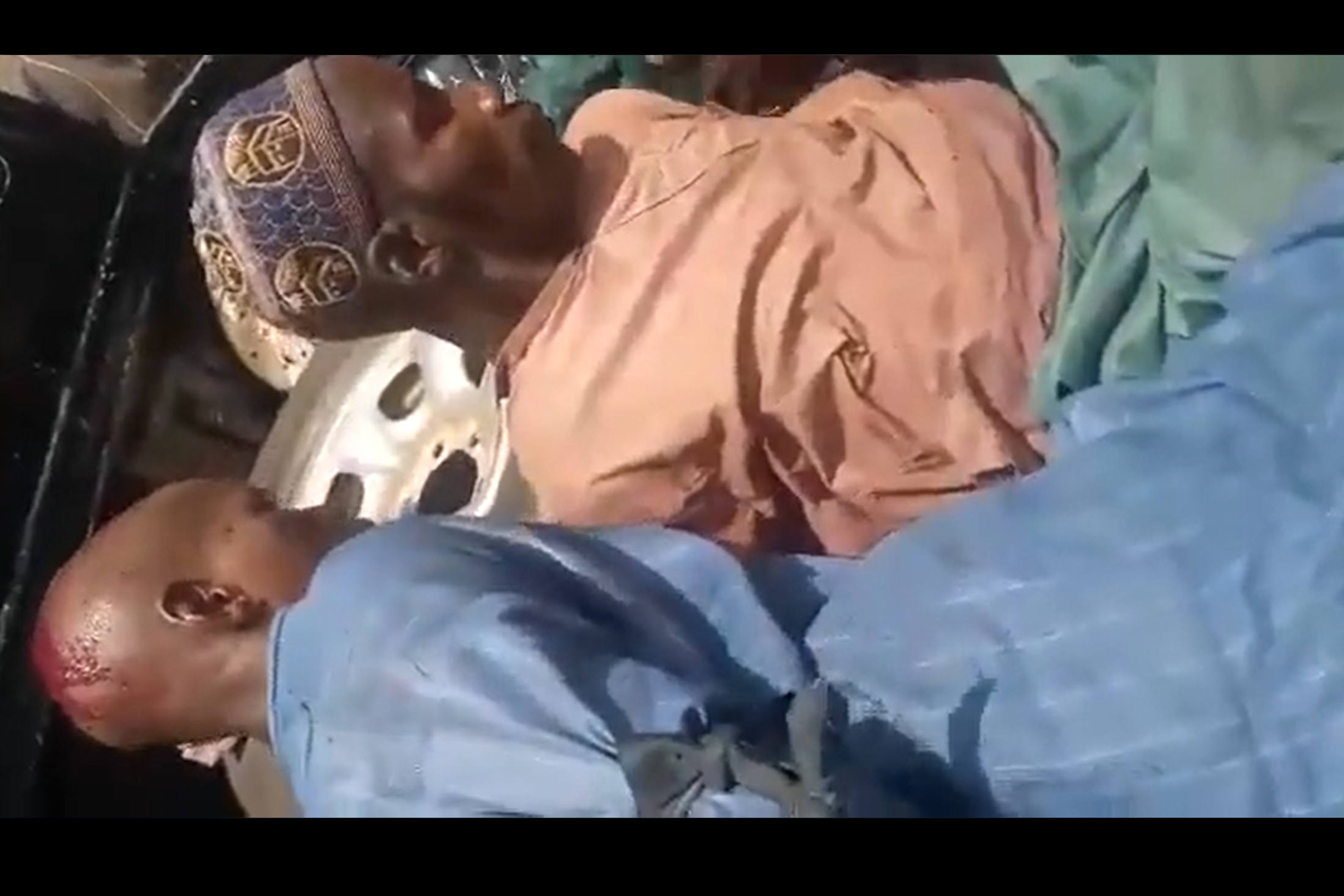
The Bauchi State Police Command has confirmed an incident that led to the killing of one person and injuring of another by some unidentified gunmen on Saturday in Burshin Fulani, a community on the outskirts of Bauchi metropolis.

Confirming the incident, a police spokesperson in Bauchi, Ahmed Wakil, told journalists that the deceased was a senior staff at the Federal Polytechnic, Bauchi.

He was quoted as saying, “Gunmen attacked Burshin Fulani village and killed one, Abubakar Muhammad, a senior staff of the Federal Polytechnic, Bauchi.

“He was shot on the neck and died on the spot. Policemen who rushed to the scene evacuated the victim to the Abubakar Tafawa Balewa University Teaching Hospital (ATBUTH), Bauchi, where he was certified dead.

Mr Wakil added that policemen stationed close to the scene of the incident quickly responded on hearing gunshots of the gunmen.

He said, “Our patrol team stationed at the polytechnic gate on hearing gunshots from the direction at about 4:000 am quickly rushed to the area, on sighting the light of the patrol van the gunmen fled.

“The deceased came out to rescue his children who were struggling with some people at the gate, and immediately he emerged, they shot him.”

We are herders, not terrorists

Ahmadu Shehu, PhD.

Once upon a time, the Fulani were the aristocrats of West Africa – the wealthiest, most intellectual hegemony in the West African sub-region. They were and still are the traditional rulers, Islamic scholars, leaders of the black civilisation, a melting point of the Arabian and Western cultures assimilated into the river of African traditions. These are the most physically appealing, Caucasian-like Africans; skinny, silky-haired, relatively light-skinned and tall. These were the kings of Africa, founders of the Sokoto, Futa Jalo and the Masina empires.

Back in history, the Fulani conquered kingdoms, took over cities and established polities across the region, for those were the days of war and conquests. But, they have also found cities that are capitals of states and nations, which have become business enclaves of all kinds, and for all Nigerians, nay Africans. From a barracks, they founded Sokoto; from a valley, they created Gombe, and from a hill, they established Yola. They went across mountains, and on the rocks, they found Jalingo. In the deserts, they founded many other cities, talk of Niamey, the capital of Niger, Maroua, Garoua, Ngaundere, etc., in the southern end of the Fombina empire. In these urban centres lie the fortress of fortunes for the Igbo, employment for the Yoruba and civilisation for the Hausa. From these cities comes the livelihood of all Africans, education for everyone and sustenance for all folks. The Fulani provided beef, the manure on which most of the Nigerian crop production relies. These are the employers of millions of people, teachers for many and mentors for others.

The triumvirates and their disciples, such as Nana Asma’u, bequeath West Africans the richest traditions of scholarship, the most valued native literature and a civilisation that has been resilient for centuries. This academic scholarship bequeaths northern Nigeria a space on the world map, drawing global scholarly attention, indigenous metalanguage, indelible history and a proud place in the comity of nations. At inception, the Fulani were the key and lock of the sub-Saharan economy, providing, subsidising, protecting and developing Nigeria with all that was needed. Like other ethnic groups, the Fulani gave their lives for Nigeria – Premier Ahmadu Bello, who inspired Prime Minister Sir Abubakar Tafawa Balewa, Murtala Muhammed, the Yar’adu’as and Shehu Shagari, to mention a few of the Fulɓe folks who served this country with distinction.

They served as the first line of defence for cities, the defenders of our religions and traditions. Even today, they are the leaders of most local security outfits that lay their lives to protect Nigerians against Boko Haram, kidnappers, armed bobbers and other terrorists bred by the failed Nigerian justice system. They are found at most gates of the elites, protecting the lives and property of Nigerians from Sokoto to Port Harcourt and from Maiduguri to Lagos. They are trusted with arms and ammunition to defend their Christian Igbo, Hausa or Yoruba bosses and are brave enough to lay their lives for the unknown passersby. 

But where are these people today? How did they become the villains in the lands, cultures, civilisations, nations and economies they helped build and sustain? The answers to these questions lie in the historical injustice, failure of leadership and sustained discrimination and demonisation of the most essential, most conservative section of the Fulani population. The travail of the herding Fulani began right at the peak of the Fulani empires. First, the hegemony created centuries ago recognised this category of its population for being good at military matters. Then, subsequent traditional administrations continued on the same lane, deploying the same people for warfare and nothing more. The results? They continued in the traditional ways of life and became even more sophisticated at combat.

The colonial rulers neglected this population, focusing only on the taxes, which they significantly contribute more than anyone else. Instead of the native authorities to reinvest these taxes in the integration, education and socioeconomic emancipation of this population, they squandered the resources. So, for our grandparents and parents, and indeed our brothers and sisters still on the cattle routes, nothing has changed in their lives since the 1900s. For us, no change has happened!

Then came the natural discord between herders and farmers, regardless of ethnicities. Then population explosion; sixty million people became two hundred million in sixty years, cohabiting the same 923768 Km2, sharing the same forests, water and other natural resources.

Again, climate change and environmental degradation took over most parts of the Sahel. Major grazing fields and waters, such as Lake Chad, have dried up, and herding folks have multiplied by dozens. Ethnoreligious crises have overtaken much of the Lake Chad region, pushing herding populations down south, searching for water and green pasture. Over there, farms have encroached all lands, including major highways, food insufficiency, joblessness, and economic degradation have forced families into the deeper forests in search of livelihood. Resource control sets in, and crises become inevitable.

Unfortunately, no one came to our rescue on time, as our sedentary brothers moved to modernity, leaving us at the mercy of the forests. Although we are one ethnic group, bound together by language and traditions, the socioeconomic and modern (dis)advantages have created a strong barrier; distinct kinship emerged, often leading to animosities and hostilities. They got the power, wealth, knowledge and resources. But, they have disassociated from us, laughed and called us Mbororo, “the unenlightened”, as stories of our perceived naiveté go viral in cities and communities.

Our closest friends – the farmers – with whom we enjoyed cordial relationships due to mutual economic interests have become enemies of necessity. Just as our lives depend on our herds, their own lives depend on their farms. Call it the clash of economic interests! With this, crises set in; lives lost, and livestock diminished. The large, vast country becomes a small spot, as we were chased away wherever we went. Our cattle were rustled both by our own impoverished, unemployed youth and neighbours. For any slight provocation or disagreement, our means of livelihood – the livestock – are targeted and killed, often leading to reprisals.

But, this situation has been stage-managed until governments in some northwestern states began ceding ancestral grazing lands to farmers and urban development. When herds diminish, herders settle down to crop farming. Thousands of people came out of this economic depression but woke up to landlessness without notice. Add this to the historical aspects, social deprivation and economic dislocation, you find that criminality is the natural turn of events. As usual, the Nigerian governments are ad-hoc, simplistic, never interested in long-lasting solutions and even scared of reality. Instead of addressing these issues head-on, criminals were made political thugs, monies and weapons provided, all for political greed.  

The natural promise land for such a criminally profitable business is more membership, innovations, and recruitments. Similarly, the natural candidates are those with similar backgrounds, social and cultural affiliations and mental dispositions. In this way, the Fulani folks are made the majority in the ongoing banditry and kidnapping. Therefore, the old circle is repeated.

Evidently, the fire-power in the hands of these bandits is far beyond their reach. The economic strength, resources and sophistication are not the kinds obtained by mere herders in the bush. That says a lot about their masters in cities, higher places and strong networks from other ethnic and social backgrounds. So, like they were deployed as foot soldiers for warfare centuries ago, and then as a conduit for taxations and money-making in cooperate Nigeria, they are today deployed as the bush soldiers, arm-bearing, front-raw men in the terrible enterprise that is kidnapping and banditry in northern Nigeria.

Look at it this way. If the billions made in this wicked trade were to be traced, they indeed wouldn’t be found in a ruga or a Fulani settlement. They might, instead, be found in dollar, pounds and naira accounts held by the very ethnic groups that are so quick to demonise millions of the herders’ kinsmen.

When it is elections circle, politicians would turn to the criminals, deploy them and win elections, and promise afterwards, to end them. When the security agencies arrest them, their bosses and other beneficiaries pay huge monies to get them released, damning the justice system and the nation’s well-being. Therefore, the truth is that just like Boko Haram are not Kanuri, Maitatsine not Hausa, IPOB and drug pushers not Igbo, Yahoo-Yahoo not Yoruba, these criminals are NOT Fulani. They are Nigerians and must be treated as such. Because we, the Fulani herders, are not terrorists. We are victims of socioeconomic circumstances. 

Dr Ahmadu Shehu is a nomad cum herdsman, an Assistant Professor at the American University of Nigeria, Yola, and is passionate about the Nigerian project. You can reach him at ahmadsheehu@yahoo.com.


Insecurity: Kaduna bans transportation of livestock

By Sumayyah Auwal Ishaq

The Kaduna State Government has banned the transportation of livestock from the state to other states in the country and the transportation of livestock into Kaduna state from other states with immediate effect.

The directive was contained in a press release signed by the state commissioner for Internal Security and Home Affairs, Mr Samuel Aruwan. The Government also reiterated that the transportation of donkeys into the state is a criminal offence, and anyone found engaging in this will be prosecuted accordingly.

Furthermore, “the Kawo weekly market which usually holds every Tuesday in Kaduna North LGA has been suspended with immediate effect. The previous directives suspending weekly markets, and selling of petrol in jerrycans in Birnin Gwari, Giwa, Chikun, Igabi and Kajuru LGAs, as well as banning the felling of trees for timber, firewood and charcoal and other commercial purposes in Birnin Gwari, Kachia, Kajuru, Giwa, Chikun, Igabi and Kauru LGAs, are still in force” Aruwan said.

Niger State confirms abduction of commissioner for information

Niger State Government has confirmed the kidnap of the Commissioner for Information, Mohammed Sani Idris.

The Commissioner was said to have been kidnaped by bandits at about one o’clock in the early hours of today from his home at Baban Tunga village in Tafa local government of the State.

Security agencies are however already on the trail of the bandits to hoping to apprehend them.

Mary Noel-Berje
Chief Press Secretary
to the Governor of Niger State.

Massive extortion on Nigerian highways: A travelogue

By Tordue Simon Targema

Although extortion by security agents mounting roadblocks on Nigerian highways is not a new phenomenon, the trend has assumed an alarmingly worrisome dimension recently. A foreigner plying Nigerian roads in a commercial vehicle would think Nigerian security agents are double-tasked to be collecting taxes as well from drivers! Perhaps, the confidence which the officers demonstrate while collecting the illegal money and the coercive techniques which they deploy in doing so will dispel any doubt from the foreigner that such money is illegal and extortionist in nature. Sadly, this is the situation motorists and commuters on Nigerian highways have found themselves in.

I have extensively travelled across Nigeria. As an academic staff of a university, I have the privilege of travelling across the country. For instance, after obtaining my bachelor’s degree in the northeast, I moved to the northwest and obtained a master’s degree, and am currently pursuing my doctorate degree in the south-south. This has given me extensive exposure to Nigerian roads. Also, I have attended several academic conferences in each of the six geopolitical zones. My experience on Nigerian roads is a very horrible one, made so by a multiplicity of factors such as the deplorable nature of the roads and massive extortion by security agents. These have made the thought of travelling in Nigeria by road a dreaded one even to people who are extremely adventurous by nature, to talk less of those who have a phobia for travelling.

My experience on a recent trip to one of the south-south states from the northeast spurred me to pen down this piece. In what appeared to be a painfully interesting drama series, we watched cheerfully, albeit in deep anguish as our driver bargained with our security agencies who, I learnt, have raised the charge from the normal 50 naira to 100 naira, a development that did not go down well with commercial drivers. My driver was highly agitated paying the new charge but could not help it. He devised all possible gimmicks to resist it which could not help out. First, he attempted evading as many of these checkpoints as he could- army, police, civil defence, immigration, road safety and vigilante, custom, produce tax force ….name it! But this strategy usually backfired, as each of the checkpoints he evaded would call the very next checkpoint ahead and ask them to bundle us right back.

In no time, he realized that this was not by any means a workable strategy, and with intense pressure from the equally agitated passengers, decided to cooperate. Of course, he had to, because the few experiences we had with the checkpoints he evaded were terrible, as the security agencies were utterly aggressive and would at each of such instances traumatize him, heap up charges against him and intimidate him as much as they could to coerce him into submission. Worst of all, each of those checkpoints he evaded demanded – and actually collected from him – far more than their normal 100 naira. To cap it all, he nearly had an accident in the process of evading one of such checkpoints! Obviously, evading the checkpoints was not the way to go; a different strategy was, thus, imminent.

Mind game, pleading, teasing and joking with the security agencies was the next strategy. At each of the checkpoints, he would use any of these he felt was the most appropriate. For instance, if he had discovered by virtue of experience, appearance or instinct that a certain officer was a northerner, he was sure to use emotional appeal as a way to escape the payment. Language would have been a formidable force in this regard but for the obsession of our officers with money who would still insist he tip them after the pleasantries. You would feel their whole being and soul depend squarely on the illicit money they collect from drivers! Well, on a handful of occasions, this strategy worked and he was waived the charge.

Teasing and joking with the security operatives was the next strategy, but after it, they would always ask: anything for the boys? In such cases, our driver would retort: oga, when I de return, I’ll see you. At this, some would let go, but most would remind him that that is what he said while he was coming down! In such unfortunate cases, he would have no escape but to cooperate.

Another strategy he adopted was to tell them he had no change. In such cases, he would give them a thousand naira note to prove he has no change. This was a counterproductive strategy and in no time, he had to drop it, perhaps, forced by pressure from passengers because it was time-wasting. Why? Upon receipt of the thousand naira note, the officers would not let him go with it, but reluctantly look for change from their previous collections and give him. In the event they did not get it there, they would have to wait until collections from other drivers coming behind us complete the change! This generated intense condemnations of the passengers who felt that he was wasting their time and asked him to be cooperating or if indeed he had no change as he claimed, look for change at a filling station. Of course, the driver himself was pissed off with the attitude of the officers and had no choice but to change strategy.

Next was the use of prospective NYSC members as a bargaining point. This strategy worked for him significantly- not without difficulties though. Luckily for him, he had about four prospective NYSC members from the south-south deploying to their orientation camp as his passengers. Trust our smart driver; it took him no time at all to activate this as a point of a bargain! Oga, na kopas I carry ooo, he would tell each officer that rudely returned his 50 naira. Boom! Questions from all angles would start pouring out: kopa never pay for their transport? Na for free you carry them? Blablabla. At these, he would strongly insist that the prospective corps members were government properties, that the car he was driving is a government vehicle (the car actually had SURE-P inscribed on it), and that the officers too are government agents, hence, there is no point collecting much from him for conveying the corps members to their orientation camp. This would usually weaken the officers who would never give up but instead, as a final push, return to us: where are the kopas? At this we would all chorus: na we ooo! Of course, even those of us that were not corps members would join in to add to the echo. They would then tease us, ask us some few jovial questions, collect the 50 naira and then we move.

This was one of his most effective strategies. Despite its seeming efficiency, some of the rude officers would outrightly reject his 50 naira, ask him to go and park and delay us until he gets the sense in his head to give them their rightful 100 naira. Indeed, it was their entitlement. A look at the manner in which it was being demanded and collected dispels every doubt that such collections are illicit. At some of the checkpoints, the officers would, without saying anything else, ask the driver to go and park. At such points, he would oblige, park his vehicle, come down and walk up to them to give them their due. I found this arrogant and irritating too. Why? If you are shameless enough to descend so low and extort poor commercial drivers, then you should be prepared to keep aside all silly notions of pride and dignity and take it right there on the road before the prying eyes of passengers and all onlookers. But some of our pompous officers feel they are above this, and would rather the driver park, walk back and pay them their dues. No thought of the delay such would cause the commuters, no. they simply wanted their money and nothing else!

In one of the states in the north-central region, this worrisome trend has assumed yet another funny dimension. Trucks (used for pushing water and other commodities) are used at checkpoints, perhaps, because they are easier to push and much more flexible than logs of woods. Still in the same state, the officers- almost at each checkpoint- have engaged the services of jobless young men who stand on the road and coordinate the illicit deal for them. At these points, such young men are as pitiless and brutal as the sun or heavy rain on a lone traveller in the heart of a desert. They would neither listen to any plea nor get amused by the jokes of the driver. Never would they give in to any of his antics or gimmicks, worst of all, they have scant or no regard at all for NYSC! If anything, the mention of it gets them irritated. They got our driver really hard at this. Who be kopa? Na weting kopa de give me? They would ask him. And their gallant officers were ever ready to step in should any driver underrate them. Perhaps, the driver understood that they are traps to lure the wrath of the officers. He would oblige, give them the 100 naira once all tricks fail and then they would pull away their trucks and we would move on.

As we drove deeper into the night, the due increased. Rightfully, it increased to 200 naira, then 300 naira. It got to a point where we had to go down and collectively beg the officers that we are NYSC members deploying to our orientation camp, that they should give us consideration. They first turned deaf ears at us- perhaps, out of guilt- but later allowed our driver to pass. Clearly, our infuriated driver saw that he would not continue at that pace. He had to find a town nearby, parked at a filling station and we passed the night there.

You would think the proliferation of security checkpoints on our highways is an assurance of safety! At this, I bet my last kobo that you are woefully wrong. Around 4:30 am, we hit the road again. At the first checkpoint after we took off, an officer- after collecting his due – whispered to the driver that the road was not safe. Armed robbers were on operation some miles away! Armed robbers with this heavy security presence? I asked myself. The driver had to stop again. At first, we thought it was a lie but could not take the risk of defying the caution, so we stayed there till daybreak. Around 6:00 am, we continued and, lo and behold, came to the spot of the armed robbers’ operation! Two 18-seater buses stood there, their front tires flattened with bullets and the windscreen pierced through with bullets too. No passenger was wounded, even as they stood there, traumatized. They were unlucky. They got robbed. An old woman who could not stand the trauma fainted and was rushed to the nearby hospital afterwards. We stopped by and the stranded passengers eagerly narrated their ordeals. We couldn’t help out because our vehicle had no space for more passengers, and so, we only kept them solidarity companionship of about five minutes and moved on.

No doubt, the rising tide of insecurity contributes significantly to the deployment of security operatives on the highways. This explains why their presence is most conspicuous in conflict-tone and banditry-ridden states. Little wonder too that they feel their services on the roads are indispensable and they should be handsomely appreciated or rewarded by the people they protect. Now, I am not disputing this fact, neither I’m I underrating their importance. But I feel strongly that the government whose primary prerogative is to secure the lives and property of citizens should saddle the responsibility of catering for the welfare and incentives of the security operatives they deploy on the highways squarely, and not to push it to vulnerable drivers and commuters.

Of course, commuters bear the financial burden too, indirectly through arbitrary increments and hikes of transport fares. A friend of mine boarded a commercial bus and was charged 6,050 naira as transport fare. Curiously, he asked what the 50 naira on top is meant for and was promptly told it will be used for settling security operatives at checkpoints. I do not envy Nigerian commercial drivers, I really don’t. Jalingo to Porthacourt for instance has way over a hundred security checkpoints. Imagine giving 100 naira at each of the checkpoints, that’s way over 10,000 naira. In essence, an average commercial driver uses the transport fare of about two passengers just for settling security operatives at checkpoints. This is outrageous and really unfortunate, to imagine that the cost of spare parts has skyrocketed to an unprecedented degree. I won’t talk of fuel and lubricants required to service the vehicles. I began to ponder: what do the drivers take home after giving returns to their companies, fuelling the vehicles, minor and major repairs here and there, and settling our officers on the highways? No answer came in handy. I simply shook my head and redirected my thoughts to the music in my earpiece. That made more sense and in no time, I got engrossed in my thoughts and forgot about the security men as though they never existed.

It is sad to admit that although our security operatives deserve our daily prayers due to the danger they face daily confronting bandits and terrorists here and there, this extortionist tendency has taken away the public sympathy they deserve and earn them a curse and disrespect from commuters and drivers. This is very bad. It is about time the government checked the rising trend. In the interest of our commercial drivers and commuters, all forms of extortion on the highways must be abolished. Government should be prepared to shoulder the responsibilities of our officers on the highways and when that is done, deal decisively with officers found extorting vulnerable passengers.

I must confess that this is one area president Muhammadu Buhari’s administration has dashed my expectations woefully. In 2015, just before his inauguration, I recall travelling to another part of the country. A security officer was boisterously threatening to beat up our driver for refusing to give him his due. The sharp reaction of our young driver created a scene and in no time, the officer trumped up charges that never existed on the young man- driving licence, manifest, vehicle papers, commuters’ national identification documents, bla-bla-bla. He eventually got the driver who succumbed to the pressure that was already mounting and paid the due.

After we passed, I told the elderly man seating beside me with an air of confidence: the General has come, let me see how they will do this come next month. The old man chuckled and asked me: you think so? I replied in the affirmative. He smiled again and, with a tone of indifference, told me that nothing would actually change. In fact, he charged me to expect the worst. A conversation ensured and I tried my best to explain to him that although I was not president Buhari’s fan and did not think I will ever be, I was confident that once he takes over, all forms of extortions- especially the obvious ones like those on the highways would cease with immediate effect. The old man simply dismissed my argument in a predictive tone:  well, time shall tell better. I affirmed his submission and hoped for a day when extortion on the highways would become a thing of the past in Nigeria, a day that has refused to, and seem never to arrive anytime soon.

Concerned authorities should note that while this day delays its arrival, the effects on commercial drivers and commuters are, at the moment, unbearable. The time to end extortion on our highways is now. By the way, the deplorable condition of our roads is one other thing that usually stress-out life from commuters! In my next article, I shall relieve my experience on the Jalingo-Numan and Odukpani-Uyo roads. I am sure you will find it heart touching too, for now, I leave you in peace.

Tordue Simon Targema writes from the Department of Mass Communication, Taraba State University Jalingo. Email: torduesimon@gmail.com.