Insecurity

Is the Buhari-led government on holiday?

By Shafi’i Sheikh Jr.

I tried to resist the temptation to speak on matters that fringe around governance and government policies. This is because there are things that an observer can only see if he resists the temptation to jump into the fray and become an actor himself. But recent happenings have reawakened my enthusiasm to march to the stake like the man my mom had always desired me to be and take the bullet in the chest should the need arise. 

In 2015, we supported APC with our sweat and money chanting “change” wherever we found ourselves so much that it caught every household’s mood. Why? Because we thought a Buhari-led government would have no trouble handling the heaps of problems bedevilling our mettlesome Nigeria. 

Now, let’s get down to the nitty-gritty of why we-the masses brought Buhari to power in the first place. 

First of all, Nigeria, Africa’s biggest oil-producing country, was rapidly growing its economy, but the wealth had not been shared appropriately. Half of Nigeria’s population was living below the poverty line. The corruption that was partly to blame was eating into every fabric of Nigeria’s being. 

Secondly, the menace of Boko Haram was spreading wider than it started and had already claimed over 20,000 people and forced out some 3 million others from their homes. We accused the previous Goodluck E. Jonathan-led administration of not taking the menace seriously and posited that Buhari, who’s from the region, would do better if given the opportunity. 

We, therefore, came out en masse to vote Buhari into power. The 2015 election was and still is of massive significance in Nigeria’s turbulent history because, for the first time in Nigeria’s history, an opposition candidate won a presidential election free and fair. 

The president-elect (as he then was) told his supporters that “We have proven to the world that we are people who have embraced democracy. We have put the one-party state behind us.”

“You, Nigerians, have won. The people have shown their love for this nation and their belief in democracy,” He mentioned. 

It was the beginning of a new era. Nigeria and Nigerians refurbished a new hope. But these hopes were soon quashed by his incompetence to constitute a cabinet after 100 days in office. It was opined that a leader who couldn’t form a cabinet for that long is ill-prepared for the most important job in the country. 

Albeit hinging his voter appeal on waging war against corruption, fighting terrorism, and revamping the economy, the Buhari-led government had nothing to show except a plethora of controversies that embroiled his first 100 days in office. 

Today, the government only succeeded in pulling us from the shackles of Boko Haram into a dungeon full of kidnappers, IPOB and the so-called Unknown Gunmen. 

Ours is a country where lives are no longer sacred. Education has been exiled, social amenities are declared “extinct”, and food! Well, you’ll have to take a bank loan if you want to eat healthily. These terrorists attack and operate in broad daylight. 

Even after the president’s declaration in 2019 that Nigeria has “technically won the war” against Boko Haram, the country is still ravaged by insurgencies ranging from kidnappings to coordinated attacks on security forces and population centres. 

The recent attack on the Abuja-Kaduna train is a clear example that Nigerians will not forget for a very long time.

If holiday refers to that time of the year when one usually takes time away from home, work, or business to travel and relax, then this so-called government has betrayed Nigerians and gone on a holiday! 

Shafi’i Sheikh Jr. is a student of the Nigerian Law School, Kano Campus. He writes from Jos and can be reached via talk2sheikh.esq@gmail.com.

APC leader Bola Tinubu admits Nigeria is bleeding, calls for joint action

By Muhammadu Sabiu

Bola Tinubu, a former governor of Lagos State, warned on Tuesday that Nigeria is bleeding due to the recent wave of killings.

The All Progressives Congress’s National Leader asked everyone to join hands in the fight against banditry.

This comes as Governor Nasir el-Rufai stated that Nigeria is at a fork in the road and that the country must make a difficult decision by 2023 on who will lead the country out of its various problems.

Tinubu, who was in Kaduna for a condolence visit following the terrorist attack on a Kaduna-bound train from Abuja on March 28, donated N50 million to help the state government repair and care for the victims.

“We are facing the current challenges seriously, and we have to do more. Nigeria bleeds on behalf of everybody.

“We need to fight terrorism with all our energy and whatever we have. It’s not shameful for people to be poor, but it’s unacceptable to accept poverty as a norm.

“It’s shameful to be callous, wicked and be a bully or terror to instil fear in humanity, and it’s not acceptable,” Mr Tinubu was quoted as saying.

Worsening Insecurity: Our lives latter 

By Najeeb Maigatari 

The recent attack on travellers along the Abuja-Kaduna road is shocking. The fact that those ‘terrorists’ could now detonate explosives before killing and kidnapping innocent people is damming and quite alarming. It says a lot about our security system. 

It also sends a clear message to everyone that no one is safe. We are all in this mess together; the ordinary people and the ‘elites’ alike. No transportation system is secure in the country. One could now be attacked when travelling by road, railway or even by air. 

The unfortunate train attack is not the first of its kind- and will seemingly not be the last unless the needful is done. The only difference is that this time around, unlike other attacks before, the ‘terrorists’ appear well-armed, more audacious with the hunger to kill, which shows their daunting strength. 

Those terrorists have been attacking villages and killing people, especially in the northern part of the country, where such attacks have become the order of the day. They have established themselves as an authority with several villages under their control. Some of their brutal attacks and heinous crimes are underreported in the news media. 

According to the Nigeria Security Tracker (NST), in a report published from January to February, at least 1761 people lost their lives across the country in incidents related to insecurity and protracted armed violence. 

Under our noses, our beloved country, once a nation of peace and tranquillity, is gradually turning into the likes of Somalia, Libya, and Afghanistan or worse; today’s Nigeria has become a slaughterhouse, and its citizens turned into walking corpses. 

Even worse, most of those killed are people trying to make a living for themselves and their families. People are killed in their homes, offices, markets, on roads, and virtually everywhere. It’s practically killings everywhere at every turn under every circumstance. 

It suffices to conclude at the moment that there’s seemingly the creation of ‘a state within another’. On the one hand, there’s almighty sovereign Nigeria – that continually fails to protect its citizens – and on the other hand, the hypothetical terror nation ruled by such terrorists as Boko Haram, bandits, kidnappers and the likes. 

The government is evidently failing – woefully so – in its fundamental responsibility of securing the lives of citizens, as they swore to do before taking over from the previous administration. 

Therefore all hands must now be on deck to nip in the bud this issue that threatens our existence irrespective of gender, ethnicity, religious or political affiliations. 

To begin with, the government should be bold enough to fish out and address the ultimate cause of all these crises, such as answer the question as to the genesis of the terror groups, their sponsors, financial channels, sources of arms and weaponry, contacts in the community, etc. 

In addition, such factors that tend to inflame the situation as poverty, social injustice, illiteracy, etc., should also be proactively addressed by devising measures to assuage people’s suffering and displeasure. 

Furthermore, the security forces should be well equipped with state-of-the-art weapons to take the war to the terrorists’ camp. They should also engage the public as people. If people can get trained, they can be utilized for intelligence gathering, informant tracing, reporting suspicious activities, etcetera. 

In conclusion, the people should also cooperate and work hand-in-hand with security forces and other relevant government agencies in every way legally possible in order to curtail the worsening insecurity crisis ravaging the country once and for all. 

Our lives must matter as long as we continue to call this our homeland. We should not allow those ‘terrorists’ to take over our homes and rule our lives in perpetual fear. If those in authority cannot secure our lives, they should honourably step aside and let competent individuals take over the helm of affairs in the country. Enough is enough! 

Najeeb Maigatari writes from Jigawa State and could be reached via maigatari313@gmail.com.

An unpopular view of the post-conflict dilemma in Sokoto and Zamfara

By Khairat Suleiman Jaruma

I sat down in the car, slightly annoyed that the Corolla 2003 didn’t have a Bluetooth connection. I love to listen to music when travelling and I was tired of using my AirPods. I was travelling from Kano to Kaduna, and the driver had stopped at Zaria to pray. We parked inside an obsolete filling station.

I was getting bored in the car, so I decided to get out and stretch my legs. So, I walked to the roadside; many people were standing. They seemed to be waiting for travelling cars, so I went closer and figured they were all going to Abuja. Considering the road condition, especially these days, I wondered why someone would be heading to Abuja from Zaria by 4 pm. Anyway, I walked back to the car and sat down, and the driver came, and we continued our journey.

We kept on seeing more people that would scream “Abuja” if the car slowed down. Finally, I could not hold it anymore, so I decided to ask the driver since he travels a lot. I asked him why there were so many people (mostly youths) desperately going to Abuja at this unsafe hour. He said they were all “yan cirani,” meaning unskilled “migrants”.

I kept quiet for a moment, then I went ahead to ask him where they were migrating from, and he said most of them were youths from Zamfara and Sokoto who had lost their families and means of livelihood. Some were even students who could no longer afford to pay tuition fees or even feed themselves. I felt a sharp pain in my heart.

But then, I was wondering why Abuja? We all know the cost of living in Abuja is high; why not Kaduna or Kano? Unfortunately, I have not been able to answer these questions. The main point here is that you will agree with me that there are no jobs for these people in Abuja. The number of people I saw was alarming, and I was told by the driver who plies the road every day that sometimes there are even more people than this number. These people are most likely to become a nuisance to society if they eventually arrive in Abuja and are forced to face the reality of unemployment.

Another sad part is that these are youths that are expected to push this country forward with their innovative ideas. These are the young people we want to see as part of governance. But these young people have been failed and abandoned by their government. So while trying to end insecurity, it is imperative that the government addresses unemployment and creates an effective post-conflict reconstruction for affected areas. Prevention, they say, is better than cure.

Khairat Suleiman Jaruma wrote from Kaduna via khairatsuleh@gmail.com.

The bleeding North and the executive inaction of its leaders 

By Mohammed Baba Goro

God knows how hard I’ve been suppressing this uncontrollable urge to write about the damning insecurity, especially that of the bandits. Yes, our hues and heys do not matter, but the sigh that comes with someone pouring the biting grief of his heart out is a relief! Again, I wouldn’t want to get emotional in doing that, but the situation of insecurity is enough to cause any well-meaning leader to lose sleep.

I felt cold when all northern leaders could give President Muhammadu Buhari (PMB) during the convention as pass mark was hearty cheers, especially the remarks by the Senate President and Governor Atiku Bagudu of Kebbi State. The governor just lost over 60 vigilantes in one ambush, alongside police officers and a DPO. Yet, it all sounded like all was well with the North and the country.

The economy, insecurity, and corruption are the hallmarks promises of this administration, yet these are the areas the regime has failed the most. Even when you try to tinker with them because of some sparsely built infrastructures – though this is typical of every administration; the high economic numbers that have dragged more people into poverty keep staring at you in the face to have a second thought.

The recent attack on the Abuja-Kaduna train reaffirms that we don’t learn a lesson. The government is inactive, and this is an outright failure of leadership that has deserted the masses on the mercies of the Almighty.

All these tell us that, on the one hand, there is a disconnection between what those in the president’s echo chamber tell him and the reality the masses face. And on the other hand, the executive inaction of its leaders. If not, their remarks to Mr President at the convention shouldn’t have been praises alone but a mixture of some honest and collective concerns about the bleeding North and the urgent need to get to grips with it. 

I hope and pray Mr President will write his name in gold, at least for his last days in office, to exterminate these destructive elements and redeem the promise of peace and security he made amidst tears to his Northern kith and kins, and for him to have a befitting retirement.

Mohammed Baba Goro writes from Mokwa in Niger State. He can be reached at: mohammedbabagoro3@gmail.com.

Drivers: Insecurity is killing our business

By Uzair Adam Imam 

Drivers in Nigeria decried the current security challenges bedevilling particularly the northwestern part of the country, saying the situation is gradually killing their business.

The Daily Reality report that bandits activity has claimed thousands of lives, destroyed property worth millions of naira and sacked many villages.

Some analysts believe that the incessant security challenges are politically motivated.

The recent Abuja-Kaduna train attack is one of many bloody attacks by bandits that forced the citizens to remain deeply pessimistic, not to mention commercial drivers plying roads in the restive region.

Our correspondent gathered that those abducted during the infamous train attack were taken to nearby bushes by the notorious, heartless bandits. 

Twenty-four hours later, bandits blocked the Kaduna-Abuja highway and abducted dozens of travellers.

Drivers who spoke to The Daily Realty said the situation had done significant damage to their business, saying they are still in the business because they do not have an option.

A driver, Haruna Lawan Ahmad, recounted his bitter experience in dismay, saying sometimes they had to descend and run for their dear life on sighting the bandits. 

Ahmad said, “We used to see terrible things on our way. Sometimes we have to alight and run away to save our lives after sighting bandits and come back later to take our vehicles after they finished their operations and abducted the ill-fated individuals.”

“There are roads that we can no longer follow, such as Birni Gwari of Kaduna State. Before, the drivers used to team up with the security personnel escorting them.”

“But sadly enough, even the security personnel stranded and accelerated their vehicle at high speed and run away from bandits.”

“Many of my colleagues and I remain in the business not because we are still passionate about it, but because we don’t have anything to do other than this driving,” he recounted. 

Another driver, Idris Bamba, urged the government to come to their aid as the situation was getting out of hand.

He said, “Insecurity in the country is worsening day by day. We usually drive with uneasiness of mind. Before, I used to leave Abuja for Kano by 5 am and arrived around 11 am. But due to security issues, I no longer do that. Some of my friends have even moved to other businesses.”

‘Insecurity sponsored’

A lecturer at the Department of Business Administration and Entrepreneurship, Bayero University, Kano, Dr Mu’az Hassan Mu’az, said the incessant security challenge in Nigeria is quite unfortunate and sponsored by some scrupulous elements. 

He said, “It’s quite unfortunate that these things are happening to the most peaceful and hospitable people in this country. Words cannot express how saddened our people are by the recent experience of attacks on innocent Nigerians.”

“The continued insecurity situation in this part of the country, mastered by people who are illiterates (Islamic and Western) and is sponsored by some scrupulous elements in our society who are selfish and never cared about their people, who worship money and have given up on the hereafter.”

“It’s quite unfortunate that the situation is getting worse day by day in spite of the huge investment in security by the federal government.” 

“Many people see the train as the last resort and safe haven for the common people. He thought the warning attack on the train was treated with glove hands, and security was beefed up on the train operations to prevent subsequent attacks.”

“But it happened again, in a very terrible manner. Painfully, the minister of transport was quoted to have said he envisaged the attack but Federal Government did nothing to prevent it from happening. Our leaders should come back to their right senses.”

Dr Mu’azu added that the leadership of Nigeria is responsible for every Nigerian’s life. They must come back to their senses to face the problem squarely to the end. 

He urged the authority concerned to provide aerial surveillance of the train routes from Kaduna to Abuja, engage every security stakeholder in the discourse of solutions to the menace of banditry n kidnapping, negotiate with the culprits and later deal with them silently, declare war against their residency in Nigeria and kill them all.

He said, “Let the authority concerned track and block their supplies of weapons, send a few security personnel on a secret mission, i.e. to be amongst them for some time, recruit locals to join in the fight against the bandits and block all their food supplies and medications.”
Of criminality, economic stability, birth control and northern Nigeria

By Zakari Abubakar

It is evident that whenever there is an upsurge in criminal activities in parts of northern Nigeria, a perennial debate usually rears its head among those interested in the root causes of the problem. This is understandable. Without identifying the cause of a problem, its solution may not be in the offing. Like virtually every year, this debate is also gaining traction in this early part of 2022.

Admittedly, this view adds to the existing number of discussions on this topic. Those who are following the debates are not unaware that there are a group of people who link the rise in criminal activities in the north and the rate of excruciating poverty among its people, mainly to the large number of children born in virtually every family in the region. This group of people base their argument SOLELY on the superficial and generalised assumption that people with a large number of children, more often, engage in irresponsible parenting.

Another reason why this group of people see an individual with a large number of children as a potential source of criminality and economic stagnation is that Nigerian authorities have for long been finding it difficult to provide social services such as education, electricity and other life essentials to these growing number of citizens which leads to more people becoming poor. This is where I find their argument too simplistic. Because the same authorities are providing these services to themselves, their families or their cronies.

Going back to their first argument, it is glaringly verifiable that for every individual with many children who fail to cater for them, hundreds, if not thousands, bore many children and saw to their responsible upbringing. This example is on the level of individuals. There are many more such examples on the societal level. For instance, several countries and regions of the world have nearly the same population as northern Nigeria or are more populous but are not facing the same challenges.

Those societies have considered such a phenomenon as a gift and therefore utilise it positively. To buttress this point, the five most populous countries in 2021, according to sources, are China, India, the United States, Indonesia, and Pakistan. Although these countries may be facing their security and economic challenges, the standard of living in those societies is by far more robust than what is obtainable in northern Nigeria.

To cite a specific example: about 90% of China’s population is Han Chinese. They are over a billion people, yet, there is no accusation from the rest of the population in that country or the Hans themselves that the Hans are a potential source of poverty or criminality. Similarly, the most populous state in India is Uttar Pradesh, with over 200 million inhabitants. But go to India. How does Uttar Pradesh fare compared to the rest of Indian territories in terms of economic prosperity?

No one is disputing that northern Nigeria is recently replete with a high rate of criminality occasioned by poverty among its growing population. But to solely link this problem with the region’s birth rate is to accord the topic attention that is less than it badly desires. For example, what about the other seemingly systemic problems that have to do with governance and political leadership?

One may say, why do people resort to adding problems for themselves by producing more children since the government failed to sustain their needs? Then I would say, instead of blaming those who fail to provide those essentials (though they are providing them for themselves and their families), we resort to blaming the poor, despite his effort to always get himself out of the effects of poor/bad political leadership?

Elsewhere, other regions of the world are complaining of a decline in their population. Thus, they outsource other remedies for their problems, like encouraging men and women to engage in economic activities. Therefore, no matter how small, we should demand accountability from our political leaders and seek other possible options that are more viable than resorting to birth control, which has its implication on man’s overall health.

Zakari Abubakar is with the Department of Physical and Health Education, Aminu Saleh College of Education, Azare. He can be contacted via zakariabubakarnng@gmail.com.

Haneefa’s Death: A true reflection of our society today

By Usama Abdullahi

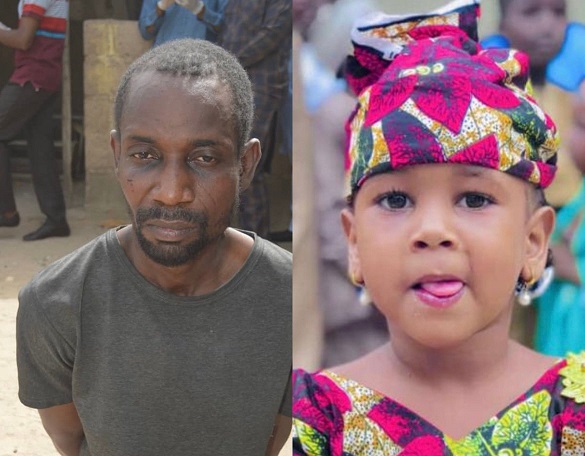
The media is filled with the tragic story of the deceased Haneefa, who was abducted a couple of months ago in Kano State and later killed in a gruesome manner by her teacher—the abductor. When I came across the story, I couldn’t help but weep for the little pretty, innocent child. The shock in me is unbelievable. But did this happen for the first time? That was the question that popped up in my mind when I first read the news of her demise. 

That wasn’t the first occurrence, and I guess it wouldn’t be the last. A lot of babies have been killed for the past years. Still, more are being killed daily too. Sometimes we don’t hear about it because the abominable act is being done in private, hence beyond the reach of media. Unfortunately, irresponsible parents discard newborns like rotten cabbages; some get abducted while others are buried alive. Moreover, others are being sold as goods meant to be exchanged.

What is this telling you? Simple; it tells you more about our society and how unsparing we are today. This is a true reflection and clear proof of our today’s society. Indeed, we are a money-driven society. We crave excessive wealth badly. And we seek to get that in such venturesome and unacceptable ways. Unfortunately, some of us have turned beasts and cannibals in the process, thereby assassinating and eating the flesh of the unfortunate victims. 

This society stoops so low beyond imagination. Disturbingly, no possible help in sight to redeem such despicable acts and to tame or neutralise the evil-minded monsters doing these. Don’t we have leaders? You may perhaps ask. Yes, we do, but they are not helpful at all. Most of our leaders don’t deserve to live with us, let alone rule us. They are mostly the ones sponsoring these evils.

Imagine a so-called leader who hires hoodlums, feed them, rent five-star hotels for them so that he could assign them to abduct or take away the lives of those he wishes dead. When I was growing up as a kid, I used to deny the existence of “ritualism”. I thought that exists in fairy tales that we were taught at schools or watched on TVs. But, contrary to my kiddish thoughts, “ritualism” truly exists. It’s, in fact, become the norm.

As kids, our parents used to caution us against strangers, that we shouldn’t even exchange words with them. Because most of them are bad, they can wile us by giving us gifts, and when we take those gifts from them, we would be unconscious shortly after, and they would disappear with us to another world where they would waste us for their devilry reasons.

Our parents are damn right. But what our beloved parents need to know today is: it’s no longer strangers but our relatives; it’s now those we trusted and confided our care to. We might even feel more secure in a stranger’s abode than in some of our relatives’. Disgustingly, an uncle rapes his niece; a father kills his daughter; a mother copulates with her biological son, all these for worldly gains.

This is what we are now. One who’s supposed to protect and cater for you now turns to be your enemy. Our society is no longer safe. There are a lot of wolves in sheep’s clothing amongst us. Thus, we need to be extra careful because human lives aren’t sacred anymore. Sadly, humans are often hunted like wild animals in the jungle. Worst still, there’s a market for human organs, where every human body organ is available for sale.

Usama Abdullahi wrote from Abuja, Nigeria. He can be reached at usamagayyi@gmail.com.

Osinbajo describes Sardauna as man of peace at memorial lecture

By Hussaina Sufyan Ahmed


The Ahmadu Bello Memorial Leadership and Governance 2022 event hosted in Kano state government house earlier today was themed “Reviving the Northern Traditional Institutions: Imperative for Peace and Security in Northern Nigeria”. 


The Ahmadu Bello Memorial Foundation organized the event in collaboration with the Kano state government on January 18, 2022. 


During the occasion, Vice president Yemi Osinbajo (SAN) commended Sir Ahmadu Bello Sardauna, adding that “[He] was a man of peace and courage, as well as a nurturer of traditional institutions, who demonstrated fairness and justice.”


Concerning insecurity bedevilling the North, the Vice President said that the federal government would employ technology in surveillance to fight the increased terrorism and insurgency in the country effectively.


He said: “We will also continue to ensure collaboration between the Federal Ministry of Justice, state counterparts and law enforcement agencies – to ensure that those apprehended for terrorism and violent crimes are effectively and speedily prosecuted.”


“This is a fight for this nation, and we are determined to win by the grace of God. All these evil forces will be eliminated.”

Beyond Pantami’s tears

By Ahmad Deedat Zakari

I am not unmindful that weeping public officials and politicians are viewed with the lens of suspicion. However, the ineptitude of politicians and activists who cried their way to public offices is the main reason critics dismiss their weeping as mere optics and grand hypocrisy. In the case of the Minister of Communication, Isah Alih Pantami, I think most of his critics are only disappointed, having held him to a higher standard of character. Most of them think he should not be silent amidst our many challenges, particularly in the North. Therefore, they view his outburst of tears as giving attention to a lesser evil.

Pantami wept for what he deemed moral decadence while passing a message in a religious gathering. The sincerity of his tears was questioned and debated, but the concerns raised with those tears remains incontrovertible. As unpleasant as it sounds, a nation whose youths and citizens stole from a mall consumed by fire has lost its moral compass. Pantami acknowledged this sad reality with those controversial tears. We should all cry for our collective woes. 

Like it is common with almost all societal problems, finding solutions starts from the sober admittance of the anomaly’s existence and recognizing the need for deliberate actions. In this situation, orientation is the way to go; it is necessary to teach the youths with model examples from leaders that life should not solely revolve around the craze for illegal acquisition of material things. And that there are nobler causes that make the world a better place. To be fair to Pantami, his message in that gathering was not less of an orientation. However, there is a need for a larger and more diverse platform for a more significant impact. 

There are many issues worth our tears and palpable concerns in today’s Nigeria. For instance, we are riddled with devastating security situations up North and secessionist threats down South. Moreover, young people who should be under the warm protection of their parents and in classrooms roam the streets freely, demonstrating what extreme poverty is. All these amidst a biting economy, and governments at various levels appear to be in slumber. 

It is undeniable that nations worldwide have challenges and problems peculiar to ours. The only difference lies in the actions of the governments and citizens of these nations. Sadly, we dwell more on trivialities than issues that uplift our country from the abyss of wreckage done to us all, especially our leaders. As thought-provoking as Pantami’s tears became, the genuineness or otherwise should not elicit serious attention; because we have more problematic issues that bother our survival as a nation. 

It undoubtedly remains our right to express our misgivings and hold our leaders accountable for all their actions. However, building a dream country is far beyond talking too much and minor actions. Simply put, we are yet to captain our ship and take our nation’s destiny into our own hands, at least by my honest measure. Just like Pantami wept over what he considered offensive, we express our dismay regarding every issue we believe our country’s problem all the time.

But like JF Kennedy poignantly postulated, “Ask not what your country can do for you, ask what you can do for your country” He used this historic sentence to call on Americans to civic actions and responsibilities. I believe the mindset of patriotism and owing one’s country civic obligation, plus deliberate actions like registering to vote and encouraging others to do the same, is the catalyst that will propel Nigeria to greatness.

Ahmad is a 5th-year Law student at the Faculty of Law, Ahmadu Bello University Zaria and can be reached via ahmadzakari@gmail.com.