INEC

PDP crisis: INEC explains decision to convene feuding factions

By Sabiu Abdullahi

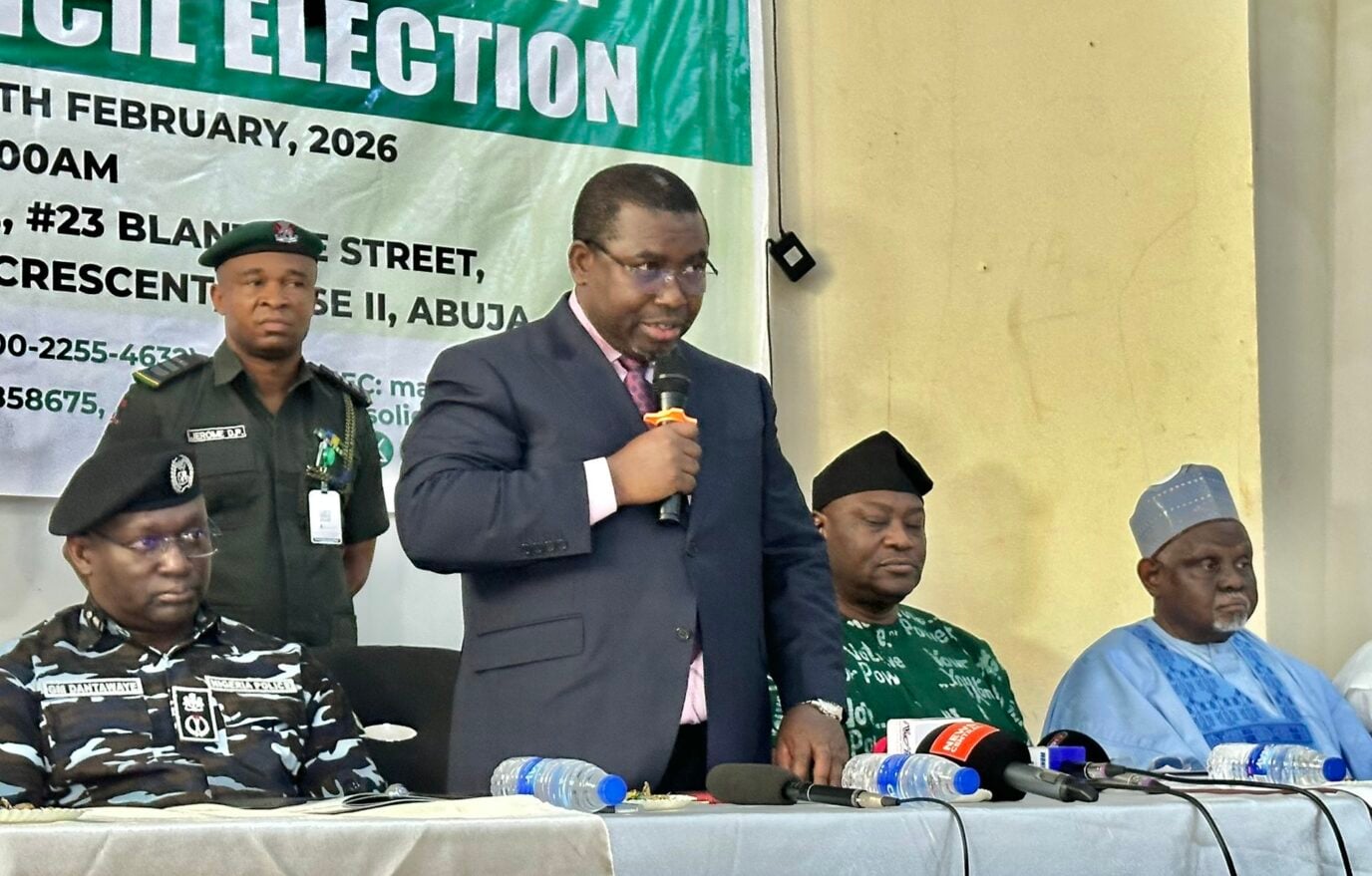
The Independent National Electoral Commission, INEC, has explained why it invited the two rival factions of the Peoples Democratic Party, PDP, to a meeting amid the leadership dispute within the party.

The Commission stepped into the internal crisis after summoning representatives of both camps to its national headquarters in Abuja on Friday. The intervention followed growing tension within the opposition party.

INEC Chairman, Prof. Joash Amupitan, said the decision became necessary after the electoral body received contradictory letters from the factions involved in the dispute. He noted that the conflicting communications made it important for the Commission to hear directly from all sides.

According to Amupitan, the meeting was intended to provide a platform for dialogue and clarity ahead of future electoral activities.

“We felt that by rubbing minds together, it’ll be a good opportunity for us to forge the way forward concerning the elections,” Amupitan said.

He also stressed that INEC remains guided strictly by existing laws in carrying out its duties.

“Actually, INEC sits on the tripod of three legal regimes, the Constitution, the Electoral Act and the regulations that have been made,” he said.

Amupitan further assured that the Commission would act within the limits of the law in addressing the situation.

“So we are determined to ensure that we follow the provisions of the various laws, the Constitution, and the regulations that we have made.”

The PDP has been grappling with internal disagreements, which have raised concerns about its preparedness for forthcoming elections. INEC’s move is seen as an effort to ensure order and compliance with electoral regulations as political activities intensify nationwide.

How courts are becoming the final arbiters in West Africa’s elections

By Abu Turay

Across West Africa, a silent but powerful transformation is taking root: the judicialization of politics. The courts, once arbiters of constitutional order, are increasingly the final arbiters of electoral contests. Nowhere is this trend more visible than in Nigeria, where nearly every major election ends not at the ballot box, but at the bench.

This expanding role of the judiciary in electoral outcomes raises complex questions: Are the courts rescuing democracy from flawed elections? Or are they replacing the people’s will with judicial verdicts, thereby shifting the center of gravity in democratic governance?

Courts as Electoral Arbiters

In Nigeria, the 2023 general elections showcased the scale of post-election litigation. Dozens of gubernatorial, legislative, and even presidential results were contested, with tribunals and appellate courts deciding outcomes. In some states, candidates initially declared losers were later declared winners by judicial rulings.

This is not unique to Nigeria. Ghana, Senegal, and Sierra Leone have all witnessed major electoral disputes resolved by courts. The judiciary has become both a battleground and a battlement—a place where democracy is either affirmed or redefined.

At face value, this suggests a maturing democracy where the rule of law reigns supreme. But the implications are not always reassuring.

Why Judicialization Is Rising

Several forces are driving this trend.

First, the deterioration of electoral credibility. When institutions like the Independent National Electoral Commission (INEC) are accused of logistical failures, transparency lapses, or bias, the courts become the last hope for justice.

Second, electoral malpractice, including voter suppression, ballot snatching, vote buying, and misinformation, creates fertile ground for legal contestation.

Third, the increasing legal codification of elections means that technicalities—like improper nomination, overvoting, or irregular result collation—can overturn popular mandates.

Finally, the high stakes of public office in West Africa create desperation. Access to state power can mean access to wealth, immunity, and patronage. In such a zero-sum environment, litigation becomes not just a legal process but a political strategy.

The Benefit and Risks of Judicialization

There’s no denying that courts have played a vital role in correcting flawed elections. In theory, their intervention strengthens democracy, punishes rigging, and reinforces accountability. For disenfranchised voters and honest candidates, the courts can offer justice.

However, the risks are real—and growing.

  • Erosion of Voter Confidence: When elections are routinely overturned or validated by judges, citizens may begin to see voting as irrelevant. If judges, not voters, decide winners, what incentive remains for civic participation?
  • Perception of Bias: Even when courts follow the law, public trust can erode if verdicts appear to favor the ruling party or lack consistency. Allegations—often unproven—of judicial compromise further deepen distrust.
  • Political Pressure on Judges: With so much at stake, courts may face overt or subtle pressure from powerful actors. This politicization of the judiciary undermines its independence and the democratic process.
  • Weakened Electoral Bodies: Overreliance on courts can take pressure off electoral commissions to improve. If every error or illegality is expected to be “fixed” in court, institutional reform stalls.

Striking the Right Balance

The solution isn’t to remove the judiciary from politics, but to restore balance in democratic governance. That starts with a few key reforms:

  1. Strengthen INEC: Electoral commissions must be empowered and insulated from political interference. Technology, transparency, and real-time result transmission should be prioritized.
  2. Judicial Reform: Appointments should be merit-based and transparent. Courts must deliver verdicts speedily, especially before swearing-in ceremonies, to avoid situations where incumbents retain power during prolonged litigation.
  3. Public Legal Education: Citizens must understand the legal basis for judgments. Civic education can prevent misinformation and temper partisan outrage.
  4. Political Party Reforms: Many disputes begin with flawed primaries. Strengthening internal party democracy would reduce court cases tied to candidacy irregularities.
  5. Pre-election Dispute Resolution: Early intervention by courts—before elections—on candidate eligibility, party symbols, and procedural concerns can limit post-election chaos.

Democracy in the Dock

The growing judicial role in elections reflects both the fragility and resilience of West African democracies. It shows that, although the ballot may be compromised, the Constitution still carries weight. Yet, democracy must not become a perpetual courtroom drama.

The judiciary is not an electoral umpire. It is a guardian of law, not a generator of legitimacy. When citizens believe their votes don’t count, the social contract frays. When politicians believe they can win in court what they lost at the polls, the democratic ethic decays.

Ultimately, a nation where every election becomes a lawsuit is one where democracy risks death by litigation.

To end this piece, I ask: Do we want a democracy that is judicially rescued or an institutionally reliable democracy? The difference will shape not only our politics but our future.

Abu Turay is an Embedded Technical Expert on Electoral Affairs at the Electoral Assistance Division of ECOWAS Peace, Security and Governance (EPSG) Program. He can be reached via bainam2010@yahoo.com.

INEC cannot walk into 2027 with this crisis hanging over its Chairman

By Yakub Aliyu

Nigeria has entered dangerous territory. The country has appointed as Chairman of the Independent National Electoral Commission (INEC) a man whose most prominent public writing is an 80-page brief accusing whole communities of committing genocide. That document, published in 2020, framed national violence almost entirely through a Christian-victimhood narrative and presented sweeping, contested claims that many Nigerians find offensive, incomplete, or simply inaccurate.

Today, the author of that brief is the referee of our national elections. And yet, the political class, from the Presidency to the Senate to the parties, is maintaining a silence so absolute that it borders on negligence.

It is this silence, not the controversy itself, that is now the real danger.

The Integrity of Elections Is a National Security Issue
Every Nigerian knows elections in this country are not routine administrative events. They are national security operations involving millions of citizens, overstretched security agencies, and volatile political identities. The neutrality of INEC is therefore not optional. It is foundational.

When the person leading that institution has authored a highly divisive document, which is now weaponised against the country by some foreign powers, the question is no longer academic. It becomes a matter of national security.

If the chairman once wrote that a section of the country was engaged in “genocide,” how will those communities trust him? How will they interpret his decisions? How will they accept results in a tight contest? And what happens if the outcome of 2027 is close enough for suspicion to matter?

These are not theoretical questions. They are national security scenarios.

How Did This Appointment Pass Through Screening?
The more the issue is examined, the more troubling the answers become.

  1. The Executive Vetting Was Inadequate.
    It is difficult to believe that the Presidency did not know about the 2020 brief. It is publicly available and widely circulated among advocacy groups. If the government did not know, it raises questions about the quality of its due diligence. If it knew and ignored it, that is an even bigger problem.
  2. The Senate Screening Was Superficial
    A nomination of this magnitude requires hard questions about ideology, neutrality, and past publications. No such questions were asked. The Senate treated one of the most sensitive constitutional positions as a formality. This is a failure of oversight.
  3. Political Actors Fear Religious Backlash
    Many southern politicians do not want to appear to be “attacking a Christian advocate.” Many northern politicians do not want to inflame tensions by addressing a document they consider deeply inaccurate. And politicians on both sides fear being dragged into arguments that can harm their coalitions.

The easiest solution for them is silence.

  1. Some Actors Prefer a Weak INEC
    A chairman under suspicion is easier to pressure. A weakened INEC is more pliable. Some forces benefit from an institution whose credibility can be questioned but whose cooperation can be secured.

This is the cynical logic but it must be acknowledged.

Why the Silence Is Dangerous

The real risk is not that the chairman is personally biased. The risk is that millions of Nigerians may believe he is, especially when political temperature rises.

Nigeria’s democracy cannot run on suspicion. If a northern, Muslim candidate loses narrowly, the chairman’s own words from 2020 will be used immediately:
“How can the election be fair when the umpire once accused us of genocide?”

This single sentence is enough to delegitimise an election. In a fragile environment, it is also enough to trigger unrest.

Nation-states collapse not from the actions of one individual, but from the inability of institutions to command trust. INEC cannot afford this weakness. Nigeria cannot afford this gamble.

The Moral Issue Cannot Be Ignored
Beyond politics lies a moral question. Every section of Nigeria has suffered from violence. Christians in some regions have endured brutal attacks. Muslims in others have buried thousands. Any narrative that elevates one community’s pain while erasing another’s deepens division.

The brief published in 2020 was not balanced. It did not acknowledge the wide pattern of atrocities across faith and region. That lack of balance is precisely what raises concern today, not whether the author meant well or not.

Leadership of INEC must be above suspicion. It must be acceptable to all parts of the country. At present, that foundation has been shaken.

Why Is Everyone Silent?
The Presidency is silent because acknowledging the issue means admitting an error in judgment. The Senate is silent because speaking now exposes the weakness of its oversight. The political parties are silent because taking a position risks angering key religious blocs. Security agencies are silent because the moment they comment, the crisis appears larger.

But silence does not preserve stability. Silence delays conflict. Silence leaves the field open for extremists, propagandists, and opportunists.

Nigeria cannot enter 2027 with a question mark hanging over the referee.

What Needs to Happen

Three things are necessary.

  1. The INEC Chairman must address the Brief publicly. He does not need to renounce his past or apologise for advocacy, but he must clarify:
    —that INEC belongs to all Nigerians,
    —that all communities have suffered, and
    —that his role demands strict neutrality. Not making this clarification would mean he has lost the moral authority to remain in that office.
  2. The government must break the silence.
    Here, the Presidency must explain whether the brief was vetted, how it was evaluated, and why the appointment proceeded. Nigerians deserve transparency.
  3. Political leaders must safeguard the integrity of elections. If trust cannot be rebuilt, other constitutional options exist. The aim is not punishment but protection of national stability.

A Final Word

Nigeria stands at a crossroads. This issue will not disappear. It will resurface at the most dangerous moment: during the heat of the 2027 elections. The silence of today will become the crisis of tomorrow.

The country cannot sleepwalk into an avoidable disaster.

If INEC is weakened, Nigeria is weakened. If trust in the umpire collapses, no winner will have legitimacy. And if political leaders continue to pretend that this controversy is insignificant, the consequences will arrive at a cost far higher than the discomfort of speaking the truth today.

It is time to speak. It is time to act. And it is time to protect the Republic.

Senate confirms Prof. Amupitan as INEC chairman

By Uzair Adam 

The Senate has confirmed Professor Joash Ojo Amupitan, SAN, as the new Chairman of the Independent National Electoral Commission (INEC).

The confirmation followed a three-hour screening session at the Senate Chamber on Thursday, during which lawmakers grilled the nominee of President Bola Tinubu on several issues regarding electoral integrity and independence.

After the session, Senate President Godswill Akpabio put the confirmation to a voice vote, and the “ayes” carried the day without any objection. Akpabio, thereafter, urged Amupitan to ensure that votes count under his leadership.

During the screening, Amupitan dismissed claims that he served as Legal Counsel to the All Progressives Congress (APC) during the 2023 Presidential Election Petition Tribunal or at the Supreme Court. 

He noted that the law reports of those proceedings were publicly available for anyone to verify.

The new INEC Chairman pledged to ensure credible elections where losers would freely congratulate winners, stressing that such outcomes would strengthen democracy and national development. 

He also vowed to prioritise logistics, safeguard election materials through technological innovations, and intensify voter education.

Amupitan entered the chamber at 12:50 p.m. after a motion by Senate Leader Opeyemi Bamidele (APC, Ekiti Central) was seconded by Minority Leader Abba Moro (PDP, Benue South) to suspend Order 12 and admit him into the chamber.

Before the questioning session began, Akpabio informed his colleagues that Amupitan had been cleared by the Office of the National Security Adviser (NSA), the Department of State Services (DSS), and the Inspector-General of Police, confirming he had no criminal record.

President Bola Tinubu had earlier written to the Senate seeking Amupitan’s screening and confirmation as INEC Chairman in accordance with Section 154 (1) of the 1999 Constitution (as amended).

In his letter, Tinubu urged the Senate to expedite action on the confirmation process, attaching Amupitan’s curriculum vitae for consideration.

Akpabio subsequently referred the President’s request to the Committee of the Whole, which concluded the legislative process with the confirmation on Thursday.

New INEC chairman approved, awaits senate confirmation

By Abdullahi Mukhtar Algasgaini

The National Council of State has unanimously approved Professor Joash Ojo Amupitan (SAN) as the new Chairman of the Independent National Electoral Commission (INEC).

The nomination of Prof. Amupitan, a 58-year-old legal scholar from Kogi State, was presented by President Bola Ahmed Tinubu to fill the vacancy left by the departure of Professor Mahmood Yakubu, who served from 2015 until October 2025.

President Tinubu highlighted that Amupitan is the first individual from Kogi State to be nominated for this position and described him as apolitical.

The nomination received strong support from council members, with Governor Ahmed Usman Ododo of Kogi State endorsing the professor as a man of integrity.

In accordance with constitutional requirements, President Tinubu will now forward Amupitan’s name to the Senate for screening and confirmation.

A professor of law at the University of Jos, Amupitan specializes in Company Law, Evidence, and Corporate Governance.

He became a Senior Advocate of Nigeria in 2014 and currently serves as the Deputy Vice-Chancellor (Administration) at the University of Jos. He is married with four children.

Court orders arrest of ex-INEC chairman Mahmood Yakubu for contempt

By Abdullahi Mukhtar Algasgaini

A Federal High Court sitting in Osogbo, Osun State, has ordered the arrest and imprisonment of the former Chairman of the Independent National Electoral Commission (INEC), Professor Mahmood Yakubu, for contempt of court.

Justice Adefunmilola Demi-Ajayi issued the order on Monday, September 29, 2025, after ruling that Yakubu and the electoral body had disobeyed a prior court judgement mandating the relisting of national officers of the Action Alliance political party on INEC’s website.

The court ruled in favour of a suit filed by members of the Hon. Adekunle Rufai Omoaje-led executive of the Action Alliance.

The plaintiffs alleged that INEC unlawfully removed the names of 30 state chairmen aligned with their faction from its official portal.

In suit number FHC/OS/194/2024, the plaintiffs — Action Alliance, Professor Julius Adebowale, Engr. Olowookere Alabi, Barr. Chinwuba Zulyke, Oladele Sunday, Simon Itokwe, and Araoye Oyewole — sought an order compelling INEC and Professor Yakubu to reinstate their names and respect previous court judgments recognising their leadership.

The court granted the request and further ordered the Inspector General of Police to arrest and initiate contempt proceedings against the defendants within seven days.

Justice Demi-Ajayi also imposed a cost of ₦100,000 against INEC and Professor Yakubu, ruling it be paid to the plaintiffs for injuries suffered due to the acts of contempt.

The order was issued just before Professor Yakubu stepped down from his role as INEC Chairman on Tuesday, having completed his tenure.

He has been succeeded in acting capacity by Mrs. May Agbamuche-Mbu.

This latest development marks a legal and reputational setback for Yakubu, who had overseen Nigeria’s electoral body for two full terms.

INEC sets August 16 for Chikun/Kajuru by-election, 15 others

By Abdullahi Mukhtar Algasgaini

The Independent National Electoral Commission (INEC) has scheduled by-elections for 16 vacant legislative seats, including the Chikun/Kajuru Federal Constituency in Kaduna State, for Saturday, August 16, 2025.

The polls follow the death of Hon. Ekene Adams, the former representative of Chikun/Kajuru.

The elections will cover five federal and 11 state constituencies across 12 states.INEC Chairman, Prof. Mahmood Yakubu, announced the date during a meeting with political parties in Abuja.

Over 3.5 million registered voters in 32 LGAs, 356 wards, and 6,987 polling units will participate, with 30,451 officials deployed for the exercise.

Yakubu assured that INEC remains committed to conducting a free, fair, and credible election to fill the vacant seats.

Tinubu appoints Jega as adviser on livestock reforms

By Hadiza Abdulkadir

President Bola Tinubu has appointed former INEC chairman, Professor Attahiru Jega, as his adviser and coordinator forthe Presidential Livestock Reforms. This was announced by Special Adviser Bayo Onanuga. 

Jega was the INEC chairman from 2010 to 2015 and previously co-chaired the Presidential Livestock Committee alongside Tinubu.

In July, Tinubu established a new Ministry of Livestock Development to address the farmers-herders crisis, based on the recommendations of the National Livestock Reforms Committee. 

Jega, 68, is also a member of the International Elections Advisory Council and chairs the Governing Council of Sa’adatu Rimi University of Education in Kano State. 

Jega’s appointment aims to support ongoing livestock reforms in Nigeria.

Suspended Adamawa REC Hudu Ari seeks indefinite adjournment in court

By Uzair Adam

The suspended Resident Electoral Commissioner (REC) of the Independent National Electoral Commission (INEC) in Adamawa State, Barrister Hudu Yunusa Ari, has appealed to the Adamawa State High Court to adjourn the case against him indefinitely.

During a hearing on Thursday, Ari, through his counsel, M. Tijanni, submitted an application requesting the court to stay proceedings in the case pending a decision on his appeal filed at the Court of Appeal, Yola Division.

The Daily Reality gathered that the application, dated January 21, 2025, urged the court to put the trial on hold.

However, the state’s counsel, Chief L. D. Nzadon, strongly opposed the plea, describing it as a challenge to the rule of law and the administration of criminal justice.

He argued that the law does not permit such applications in criminal matters and called on the court to dismiss Ari’s request.

Following arguments from both parties, Justice Benjamin Manji Lawan adjourned the case to January 30, 2025, for a ruling on the application.

Ari’s legal troubles stem from his controversial actions during the 2023 governorship election in Adamawa State. While serving as INEC REC, he declared a winner before the collation process was concluded, bypassing the Returning Officer’s authority.

The incident sparked widespread criticism and led to his suspension by the Federal Government under former President Muhammadu Buhari.

He now faces charges for the alleged electoral offence.

INEC seeks to expand voter access, move beyond PVCs

By Anwar Usman

The Independent National Electoral Commission, INEC, has recommended that those without Permanent Voter Cards (PVCs) use computer-generated voting slips ahead of future elections in the country.

INEC Chairman, Prof. Mahmood Yakubu, made this known while speaking yesterday in Abuja during the quarterly consultative meeting with Resident Electoral Commissioners RECs, said PVCs should no longer be the sole requirement for voting, especially with the inception of the Bimodal Voter Accreditation System, (BVAS).

He explained that the commission had released its 524-page main report on the 2023 general elections and had consulted widely with its officials and externally with all major stakeholders.

Yakubu disclosed that from the internal and external engagements, the commission had identified 142 recommendations dealing with the general state of preparedness, voter management, voter education and public communication, political parties and candidate management, electoral operations and logistics management.

Others include election officials and personnel, partnership and collaboration, monitoring and supervision, election technology, voting and result management, election security, electoral offences and the electoral legal framework.

He further asserts that out of the 142 recommendations, 86 require administrative action by the commission.

“This is followed by 48 recommendations that require action by a variety of stakeholders, including security agencies, mobile network operators, statutory bodies, political parties, transport unions, civil society organisations and the media.

“Among the major highlights of the commission’s recommendations is the imperative of legal clarity in result management, with regard to manual transfer versus the electronic transmission of results.

“The commission also believes that with the introduction of the BVAS, the use of PVC as the sole means of identification for voter accreditation on election day should be reviewed”, the chairman stated.