Independence Day

Nigeria at 65: What exactly are we celebrating?

By Muhammad Umar Shehu

As Nigeria clocks 65 years of independence, one would expect a moment of pride and reflection on remarkable achievements. Yet, the reality on the ground tells a different story. 

The country continues to struggle with corruption, poverty, unemployment, inadequate infrastructure, insecurity, and a range of other social issues. These issues cut deep into the daily lives of ordinary Nigerians, making access to basic necessities and opportunities for growth a constant struggle.

For many citizens, there is little reason to roll out the drums. Independence anniversaries are usually a time for celebration, but how can we truly celebrate when millions remain jobless, when insecurity still holds communities hostage, when hospitals lack basic equipment, and when roads remain death traps? The weight of these problems overshadows whatever progress has been made.

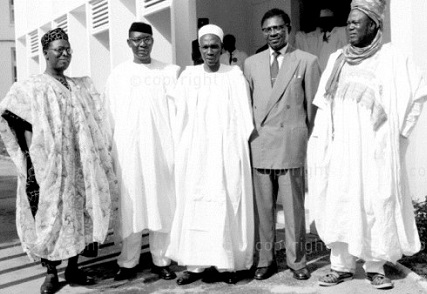
This does not mean Nigeria has no potential or that the sacrifices of our founding fathers should be ignored. Leaders like Sir Abubakar Tafawa Balewa, who gave Nigeria a voice of dignity on the global stage, or the Sardauna of Sokoto, Ahmadu Bello, who worked to strengthen education and unity in the North, envisioned a better future for this country. 

Chief Obafemi Awolowo’s free education policy in the West and Chief MKO Abiola’s ultimate sacrifice for democracy remain powerful reminders of what true leadership and patriotism demand. These men stood for a Nigeria that could rise above selfishness and mediocrity.

But after 65 years, Nigerians deserve more than repeated promises and underdevelopment. We deserve a country where leadership prioritises people, where accountability is more than just a slogan, and where citizens can genuinely take pride in the flag they carry.

So, if there is something worth celebrating at 65, perhaps it is the resilience of Nigerians themselves —the spirit that refuses to give up despite everything. Beyond that, the truth is clear: the road ahead requires serious action, not mere rhetoric.

May Nigeria succeed and prosper. Amin.

Muhammad Umar Shehu, who wrote from Gombe, can be reached via umarmuhammadshehu2@gmail.com.

64 years after Nigeria’s independence

By Rabi Ummi Umar

A few weeks ago, Nigeria marked its 64th independence anniversary, commemorating more than six decades since gaining freedom from British colonial rule on October 1, 1960. However, this year’s celebrations were unusually subdued, devoid of the usual fanfare, pomp, thrills and frills. 

The once-familiar scenes of face painting, jubilant crowds, and flags waving in patriotic pride were replaced by an eerie silence that echoed across the nation. Despite this significant milestone, many Nigerians found little reason to celebrate. The mood was sombre, reflecting a collective sentiment that these are not times for revelry.

Instead, citizens believe it is a time for reflection and a renewed commitment to steering the country back toward prosperity, as envisioned by the men and women who fought for the independence we now enjoy. In the eyes of most Nigerians, the celebration only serves as a distraction from the harsh realities of daily life.

The more one reflects on the state of the nation, the more troubling it becomes. What exactly are we celebrating? Is there anything genuinely worth commemorating at this point? After the fireworks, what awaits us—more suffering? The unspoken truth is that the situation has grown so dire that it is almost impossible to ignore the country’s challenges, no matter how much we might want to.

One of the major concerns plaguing citizens is the aftermath of the subsidy removal, which continues to wreak havoc on lives and livelihoods. While the minimum wage has been signed into law, its implementation remains uncertain, casting doubt on the government’s ability to deliver on promises and its tendency to prioritise talk over tangible action. 

These discrepancies raise questions about the effectiveness of policies aimed at alleviating the struggles of Nigerians. Our leaders have made numerous promises, but despite their assurances, little has been done to address the suffering of the people. Take the much-touted Compressed Natural Gas (CNG) buses, for example. Despite promises, these buses have failed to materialise in significant numbers. Even the few introduced fall short of addressing Nigeria’s transportation challenges. 

How much progress can we realistically expect from such initiatives? Unemployment remains a persistent issue, exacerbating the nation’s woes. Although the National Bureau of Statistics (NBS) reported an unemployment rate of 5.3%, many believe the actual figure is much higher, especially given Nigeria’s struggle with accurate population data.

Insecurity is another critical concern. Terrorism, banditry, and kidnapping for ransom plague every region, with countless lives lost, even after ransoms have been paid. Nigerians are grappling with hunger as the crisis reaches alarming proportions. Starvation, suffering, and even death from hunger have become stark realities.

According to the Food and Agriculture Organization (FAO), 80 to 82 million Nigerians are at risk of severe hunger if the current trajectory continues. Given our vast agricultural potential, how did we reach this point? Politics in Nigeria remains largely a curse, with politicians exploiting religion, region, and ethnicity to garner support. 

Instead of uniting to solve the nation’s problems, they engage in ridicule, even on pressing national issues, as seen in the aftermath of the President’s October 1 address. Poverty also remains a major concern. The NBS reports that 63% of the population—approximately 133 million people, or six out of every ten Nigerians—are trapped in multidimensional poverty. 

It is little wonder that Nigerians are not in a celebratory mood. So much has gone wrong recently that even wishing someone a “Happy Independence” feels offensive. What, after all, have we indeed achieved in these 64 years? Nigeria has the potential for greatness, and the government can and should do better. President Tinubu, please, we are begging—Nigeria deserves better.

Rabi Ummi Umar is an intern at PRNigeria and a student at Al-Hikmah University, Ilorin. She can be reached via rabiumar058@gmail.com.

Nigeria’s Independence Day: The journey so far

By Usman Abdullahi Koli

Nigeria, often called the “Giant of Africa,” celebrates its independence day on October 1st each year. This significant day marks the country’s liberation from British colonial rule in 1960. Over the past six decades, Nigeria has experienced a tumultuous journey characterized by both achievements and challenges. 

Nigeria’s quest for independence was a long and arduous journey spanned several decades. The seed of nationalism was planted in the hearts of Nigerians during World War II, as they contributed significantly to the British war effort but received little in return. This sparked a desire for self-determination and freedom.

Key figures in Nigeria’s independence struggle included Nnamdi Azikiwe, Obafemi Awolowo, Abubakar Tafawa Balewa and Ahmadu Bello, who advocated for self-governance and pushed for constitutional reforms. In 1960, their efforts bore fruit when Nigeria finally gained independence from British colonial rule, with Sir Abubakar Tafawa Balewa as its first Prime Minister.

While independence brought newfound freedom, it also presented significant challenges for Nigeria. One of the most pressing issues was the need to unite a diverse nation of various ethnic groups, languages, and religions. The delicate balance of power among these groups has often led to ethnic tensions and conflicts.

Additionally, Nigeria has grappled with political instability, military coups, and periods of military rule. The Biafran War (1967-1970) and subsequent coups disrupted the nation’s stability and led to a loss of lives and resources.

Economic fluctuations have marked Nigeria’s journey since independence. Despite being blessed with abundant natural resources, including oil, the country has faced challenges in managing its economy effectively. Over-reliance on oil exports has left Nigeria vulnerable to fluctuations in global oil prices, resulting in economic instability.

Corruption has also been a persistent issue, hindering economic growth and development. The mismanagement of public funds and the lack of transparency have impeded progress in various sectors, including education, healthcare, and infrastructure.

Despite the challenges above, Nigeria has achieved noteworthy progress in several domains. The nation exhibits a lively cultural landscape abundant in traditional practices, artistic expression, and literary works.

In recent years, there have been efforts to diversify the economy away from oil dependency. Investments in agriculture, technology, and entrepreneurship have begun to yield positive results, with a growing number of startups and innovations emerging.

Nigeria has also played a prominent role in regional and international diplomacy, contributing to peacekeeping missions and serving as a key player in the African Union and the United Nations.

Both progress and challenges have marked Nigeria’s journey from colonial rule to independence and beyond. As the country celebrates Independence Day each year, it is an opportunity to reflect on the past, acknowledge the struggles, and look forward to a brighter future. Nigeria’s rich cultural heritage, economic potential, and resilient people continue to be sources of hope as the nation strives for unity, stability, and sustainable development in the years to come. 

Usman Abdullahi Koli wrote via mernoukoli@gmail.com. 

Nigeria at 63: A country of possibilities that is suffering

By Muhammad Umar Shehu & Usman Muhammad Salihu

Nigeria, located in West Africa, is often considered a land of immense possibilities. It is home to over 200 million people, making it the most populous country in Africa and the seventh-most populous country in the world. The country is blessed with vast natural resources, including oil, gas, coal, iron ore, limestone, and many others, which have the potential to power a thriving economy.

Despite these abundant resources, Nigeria faces many challenges that have hampered its growth and development. One of the most significant challenges is poverty. The country has one of the highest poverty rates in the world, with over 40% of the population living below the poverty line. This is mainly due to a lack of job opportunities, inadequate infrastructure, and an uneven distribution of wealth.

Nigeria is grappling with various socio-economic issues, including poverty, unemployment, inadequate infrastructure, and insecurity. These challenges directly impact the well-being of its citizens, hindering their access to basic necessities and opportunities for growth. Acknowledging the gravity of these challenges and the urgent need for solutions is essential.

Another challenge that Nigeria is facing is corruption. Corruption is a pervasive problem in the country, affecting all sectors of society. It has led to a lack of transparency and accountability, which has hindered the country’s growth and development. Corruption has also contributed to the widening gap between the rich and poor, as the wealthy use their influence to gain unfair advantages over others.

In addition to poverty and corruption, Nigeria is also grappling with insecurity. The country has been plagued by various forms of violence, including terrorism, banditry, and ethnic conflicts. This has resulted in the loss of many lives and the displacement of millions of people. The insecurity has also had a significant impact on the country’s economy, as businesses and investors are hesitant to invest in an environment that is not stable.

The educational sector in Nigeria is also facing several challenges. A lack of funding, inadequate infrastructure, and a shortage of qualified teachers characterise the country’s educational system. This has resulted in poor quality education, which has limited the potential of the country’s human resources.

Education plays a vital role in empowering individuals and communities. By supporting initiatives that promote access to quality education, vocational training, and skill development, we can equip Nigerians with the tools they need to thrive. Empowered individuals can contribute to the growth and development of the nation.

Some potent unions have been fighting for quality education in  Nigeria. However, our successive governments have not accorded priority to the sector, resulting in the country’s education system suffering from many deformities and deliberate neglect.

Despite these challenges, Nigeria has enormous potential to become a prosperous nation. The country has a vibrant and resilient population known for its entrepreneurial spirit. With the right policies and investments, Nigeria can harness its vast resources to create a thriving economy that benefits all its citizens.

The Nigerian government must take bold and decisive actions to address these challenges. It must prioritise the fight against corruption, invest in critical infrastructure, create job opportunities, and promote good governance. The government must also prioritise security and ensure all Nigerians feel safe and secure in their communities.

Nigeria deserves a brighter future, and it is up to us to make it a reality. By standing together, raising awareness, supporting organisations, advocating for change, and promoting education and empowerment, we can inspire positive transformations in Nigeria. Let us remember that every successful person was once in a similar position, and through personal growth and collective action,

What is here to celebrate at 63?

To conclude the assertion, Nigeria is a country of immense possibilities that is currently facing significant challenges. However, with the right policies and investments, Nigeria can overcome these challenges and become a prosperous nation. The government, private sector, and civil society must address these challenges and create a bright future for Nigeria and its people.

The above, if considered, Nigeria’s challenges will not only end but will forever be a thing of the past.

Muhammad Umar Shehu and Usman Muhammad Salihu write from Gombe and can be reached via umarshehu887@gmail.com.

Tinubu unveils temporary N25k salary increase amidst economic hardship

By Sabiu Abdullahi 

President Bola Tinubu has announced a crucial step to ease the financial strain on workers following the recent removal of the fuel subsidy. 

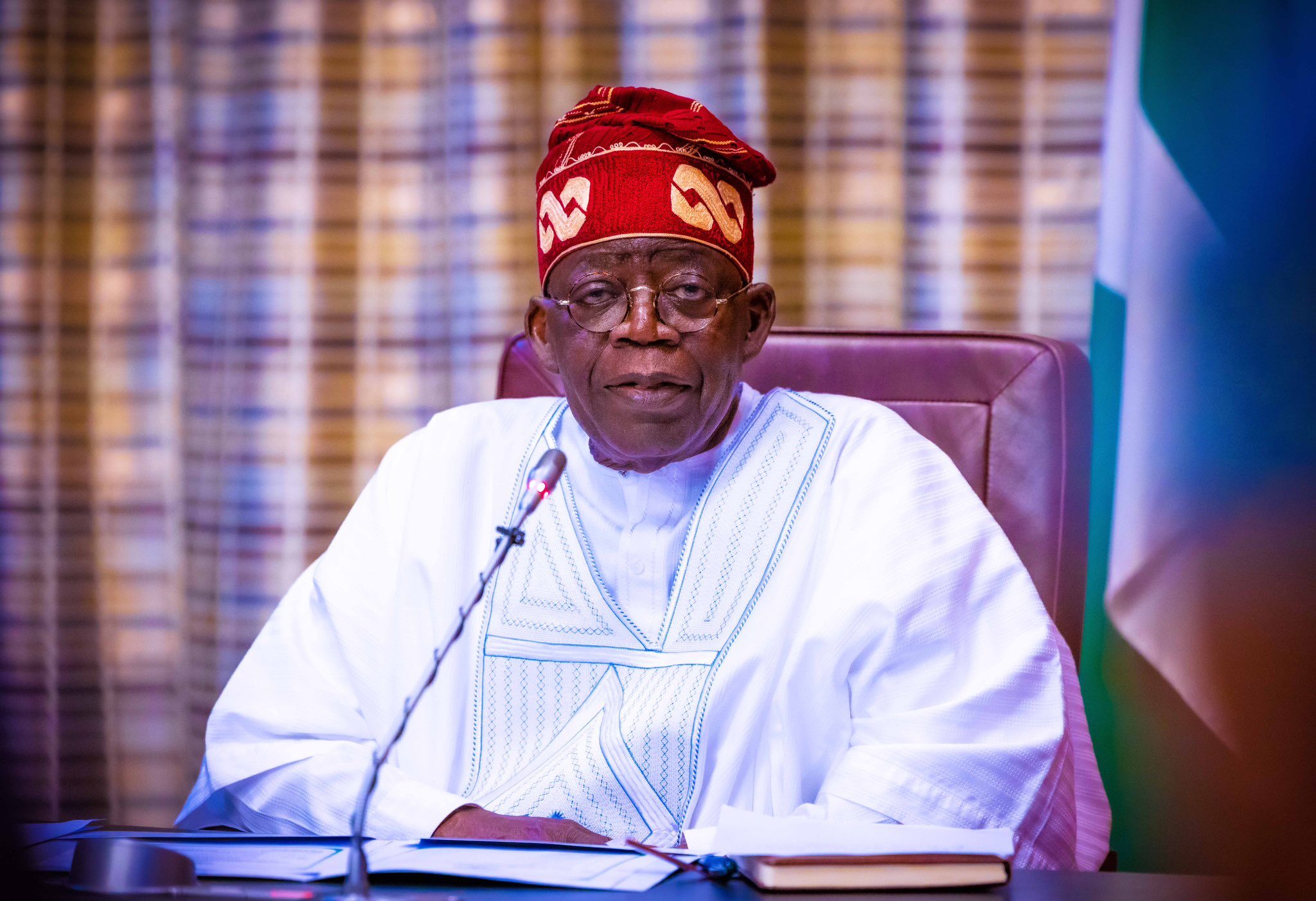
In his Independence Day speech on Sunday, President Tinubu revealed a temporary wage increase designed to counterbalance the surge in living costs resulting from the policy change. 

The President stated, “For the next six months, the average low-grade worker shall receive an additional Twenty-Five Thousand naira per month,” emphasising the government’s commitment to supporting vulnerable income groups during this transition. 

As the nation adjusts to these economic shifts, the temporary wage boost is expected to provide immediate relief, enabling workers to manage their finances more effectively amidst the changing economic landscape. 

Ongoing dialogues between the government, labour representatives, and business leaders will continue to shape future policies, ensuring a balanced and sustainable approach to economic reforms.

Nigeria at 62: Which way forward?

By Habibu Maaruf Abdu

Nigeria gained independence from Britain in 1960. That’s 62 years ago. Unfortunately, however, the country has made no significant advances since then. In my opinion, it takes the collective efforts of all Nigerians to change the story. Nigeria’s ethnically diverse people must agree to unite and develop a sense of working together to move the country forward. In other words, Nigeria must first be united to reach its destined greatness.

To achieve a united Nigeria, the government of the federation must endeavour to command a ‘national loyalty.’ That is, to get support from the people of every part of the country. The government could get this if it gives members of all the parts an equal opportunity in the government and its agencies. This will send a sense of belonging and satisfaction to them. The government should also treat all Nigerians equally, regardless of their regions, religions, tribes, and political affiliations.

Another thing that can bring Nigeria together is leadership rotation across the six geo-political zones. This should be regarded considering the reality in the southeast today. There are grumblings, and even mass agitations, from the southeasterners, mainly because they have never produced a president since the second republic. This fact makes them feel as though they are treated as outcasts in the country and therefore agitate. When leadership rotation is implemented correctly, such agitations will unlikely arise again. Also, the federal government should ensure that no region is envious of the other by making fair zoning of capital projects and equal distribution of resources across every part of the country.

For the peaceful coexistence of ethnically and religiously diverse Nigerians, all ethnic and religious groups must reject their prejudices against one another. They must also understand their differences genuinely. This is necessary for them to have a common ground for respecting and tolerating their differences (cultural, ethnic and religious). It will also help them to live in harmony and build a society with strong human potential and economic progress.

‘Discipline’ and ‘patriotism’ are also areas of emphasis. No nation can be great without these values instilled in the psyche of its citizens. This is why many countries, like china, have a whole ministry for national orientation. Nigeria should copy these countries and launch a massive and consistent campaign for the ethos of civic behaviours and responsibilities in Nigeria. This will help to build discipline, respect and love of the country, as well as national pride, in the society. When these values are present in society, the people will uphold discipline and patriotism. They will reject corruption and all other harmful habits that could cripple their dreams and inhibit their country’s development.

On another side, economic diversification should be considered to put Nigeria on the right track. The country’s economy is, at present, heavily reliant on the revenue derived from the export of crude oil. This leads to low economic growth, which, in turn, favours poverty as there is no room for massive job creation. But the diversification of the economy will certainly change the story. Therefore, Nigeria should diversify into areas like agriculture and industrialization. The agricultural sector, which was the mainstay of the country’s economy before the discovery of oil, has a long value chain. And a firm industrialization policy can create thousands of manufacturing jobs for people.

Nigeria should also make policies that will attract more foreign investors, especially those who produce different kinds of products and machines. This, together with reasonable provisions for private enterprises, will go a long way in reducing unemployment and alleviating poverty in the country.

Notwithstanding the above, Nigeria should do better for the education sector. The saying, “No country can really develop unless its citizens are educated,” cannot be more correct. Unfortunately, Nigeria spends very little on education (less than 8% of its total GDP). The number of out-of-school children is high, and universities remain closed for over seven months due to an indefinite strike by the Academic Staff Union of Universities (ASUU). To save education from this mess, Nigeria should increase its expenditure on the education sector; map out a plan for revamping it, and see the plan through with maximum commitment.

At this juncture, I want my fellow Nigerians to remember that; all the developed countries we currently admire have, at some point, been where Nigeria is today. It’s therefore valid to believe that Nigeria can equally develop. Fortunately, the country is blessed with both material and human resources to facilitate the process. However, it is rightly said that Rome wasn’t built in a day. Progress is made with sustained effort over time. Therefore, we need to unite, do our patriotic duties, uphold discipline and get professional and morally upright leaders to drive the country.

I will conclude by quoting Chinua Achebe in his book The Trouble with Nigeria, published in 1983, where he opined that “Nigeria can change today if she discovers leaders who have the will, the ability and the vision. Such people are rare in any time or place. But it’s the duty of enlightened citizens to lead the way to their discovery and to create an atmosphere conducive to their emergence. If this conscious effort is not made, good leaders, like good money, will be driven out by bad.”

It takes our collective efforts to move Nigeria forward.

Habibu Maaruf Abdu wrote from Kano, Nigeria, via habibumaaruf11@gmail.com.

At 62: Nigeria’s independence and the future we desire

By Babatunde Qodri

It can be argued that ever since Nigeria got her independence in 1960, the country hasn’t gotten worse like it’s today. Every year is filled with insurmountable challenges beyond the control of both leaders and citizens. It appears, sincerely, as if the country has been cursed. Every opportunity to believe in Nigeria’s prosperity is dashed by a litany of crises ranging from insecurity, poor education and health systems and economic downturn. The country seems to have been brought to her knees.

The occasion of independence does not move people from different corners of the country. On the contrary, the convention of this remarkable celebration is a history remembered with joy and happiness. Many other African countries celebrate their independence with scores of impressive feats, despite avoidable crises. Unfortunately, the case isn’t the same here in Nigeria, where leaders expected to make people proud resort to disappointing charades to the country’s detriment.

The ongoing industrial action by university lecturers says a lot about how blighted Nigeria has been. Students have been away from classrooms for months. One would expect that a 62-year-old country should have grown past deleterious distractions capable of creating barricades in the way of her education system. It hurts that a sector as eminently necessary as education can be allowed to suffer while the Government continues to fund frivolities. The question is, which country develops or has developed without serious attention to education? 

In other words, education in Nigeria is now in a comatose state. It’s hard to believe that this is Nigeria where Sir Ahmadu Bello, Obafemi Awolowo, and others once lived and governed. Nigeria’s present predicament, evident in her leaders’ shameless willingness and obsession with greed, has ruined those past years of free education packaged to liberate Nigerians for genuine patriotism. What used to be, in terms of quality, transformative education now constitutes a culture of abandonment, taking a heavy toll on the survival and growth of the country.

Insecurity is another problem. Severalerians have been in captivity for years. We are now the headquarters of banditry and kidnapping for ransom. Non-state actors have taken advantage of the country’s vulnerability to unleash horrors daily. And the complete loss of strength by people constitutionally paid and expected to protect lives and property heightens fears. Because of this unwholesome reality, the country has become a no-go area for foreign investors who should have helped her economically. The fact that people are becoming strangers in their homeland explains the mass migration of Nigerians out of the country in search of averagely better and more peaceful climes. Internal unrest, sadly, continues to drag the country backwards.

This reality is worsened by intractable corruption. Despite being an oil-producing country, it’s still disgusting to hear that Nigeria cannot refine her oil, which makes the country hugely indebted. While other OPEC countries leverage the international market amid restrictions posed by the ongoing Russia-Ukraine crisis, Nigeria is wallowing in a financial crisis resulting from endless oil theft. Isn’t it funny that the country has to borrow to service her debt? This is indicative of the depth of mess in which Nigeria is in.

Unarguably, Nigeria needs urgent solutions through the diversification of its economy. We must take advantage of modern agriculture to produce what we consume and vice versa. The country should stop wasting funds meant for critical goods on exotic cars for politicians. Our Government must invest in the education sector, health care system, and others.

Plus, effective legislation is paramount. Nigeria is in dire need of a fresh set of leaders with brand new ideas, leaders who are committed to viable plans and collective change. The issue of climate change must also be given urgent attention. Climate change and poverty have the exact root cause, and their impact contributes to the national underdevelopment the country is witnessing.

As we move into 2023, Nigerians should understand that our country deserves a befitting future. So we must be interested in candidates who will focus on doing the right thing at the right time. We must go for candidates with clear readiness and vision to transform our education system and uphold justice and transparency. We must do away with activities capable of fueling the embers of disunity in the country. 2023 should be about these.

Babatunde Qodri can be reached at babatundelaitan@gmail.com.

Nigeria @ 61: I will not celebrate sickness

By Aliyu Nuhu

At 61 years of age the only progress Nigeria made is in population growth, something that is not properly managed. It jumps from 36 million people formerly, we are now approximately 200 million. A clear case of quantity without quality.

What do we have to celebrate while Nigeria today is in company of Somalia, DRC, Sudan, Zimbabwe, Afghanistan, Niger, Iraq, Pakistan and host of other failed states in terms of development?

According to UNICEF about 20 million Nigerian children are not attending primary school, about 6 million that are attending will still come out illiterate due to poor quality of teaching. The worst is that the government pretends that all is well and is doing nothing about it. Almajiri system of education is still in practice and not properly managed. It is one of the indicators that Nigeria is not serious about its future.

Another tragedy is that, around 80 million Nigerians are unemployed, in fact about 98% of Nigerian youths are all without job or any form of social and economic engagement. Suddenly, Covid-19 came and made matters worse as more people are losing their means of livelihood. Banditry and kidnapping have chased people away from their farmlands.

Nigeria is without electricity, roads, railways, good airports, clean water and sanitation, public toilets and all other critical social and economic infrastructures.

The government naively claimed that the economy is growing forgetting the relationship between economic growth and job creation. How can growth be justified with 80 million unemployed citizens? How can growth be justified with 3000mw of electricity? That is far below what South Africa generates from renewable energy. According to the Ministry of Energy, South Africa’s total domestic electricity generation capacity is 51,309 megawatts. About 91.2%, or 46,776 MW comes from thermal power stations, while 4,533 MW or 8.8%, is generated from renewable energy sources.

How can growth be justified with industries failing, the entire Northern Nigeria is without viable industry! All the critical sectors that make a nation strong are either absent in Nigeria or in shambles. The chemical, commercial, communication, manufacturing sectors, dams, defense, emergency services, energy, banking and other financial services, food and agriculture, health care, information technology, nuclear reactor, material and wastes management, transport and waterways, all and sundry are either not working or completely corrupt and dubious.

Don’t roll the drum to celebrate, as a matter of fact we should remain in our houses and mourn our collective failure as a nation.

The Mo Ibrahim foundation just placed us among the 10 worst governed countries in Africa. The Economic intelligence Unit (of the London Economist) placed us among the world’s failed nations. And these institutions are not the opposition, it is not PDP that is giving this grim picture of our country.

It is easy for Nigerians to rise and say we are not a failed state, but going by the definition of state failure, a nation that fails to discharge its obligation to its citizens, is indeed heading to the direction of a failed state.

Everyone knows Nigeria cannot provide basic security to its citizens. We have hundreds of thousands of people displaced by insecurity. This is the kind of story associated with state failure because the state, after failing to secure lives, will also not be able to bring the criminals to justice.

We are never worse in terms of security, people are killed daily in our cities. They are kidnapped and attacked in their homes. Corruption has never been worse, yet the courts have simply joined the thieves. In Nigeria today, nobody gets jailed for corruption.

To me there is no need to celebrate, we should all put our hands on our heads and cry. Our leaders, both past and present should bury their heads in shame for bringing our country to its knees.

Nigeria is also practically not good for the poor and vulnerable. If you can’t get plum government appointment, just be rich.The rich are allowed to claim fuel subsidy, evade tax, have import duties, manipulate commodity prices, bet on stocks with privileged information they get from golf clubs. The equivalent of all these or even less, when done by the poor, is called stealing. And the poor also had their bad ways as well. Leaders looting by example while followers learning by instinct.

Nigeria allows great deal of latitude to the rich. The courts are even scared of them. This is our way of making up to them for creating a society in which everything can be done for money, while nothing is worth having at all.

I can only say happy independence to the Nigerian rich, they, along with our leaders, help in ruining this nation. They are now reaping the fruits of their labour. As things get so bad, there is no peace for them to enjoy their wealth. They are an endangered species on the highway. Kidnappers are looking for them the way hunters look for antelope. At home there is no peace. Even behind heavily fortified walls, they sleep with open eyes. It will continue to degenerate because peace exists only in a society that has shared prosperity among its people.

Sadly again, Nigeria is the most badly governed and mismanaged nation on earth. Most poor and backward countries owe their present condition to war, natural disasters, geography and size, but it is not the same with Nigeria. It is its people in the hierarchy of the leaders, the rich and the poor masses.

Vietnam was in a state of war for 20 years. Korea was at war for three years. Today they are developed economies.

Nigeria only witnessed civil war for three years and remained in peace for the best part of its 61 years existence, earning about $1 trillion from sale of oil. Yet with all that money it achieved nothing in terms of development. Most of it has been shamelessly mismanaged or stolen!Today Nigeria is 61 years old. Here are some reasons for sober reflection and adjustments by our leaders.

1. In 1960 Nigeria has only 2 universities. Today it has 40 federal universities, 40 state universities and 61 private universities. However its people have to run to Ghana, a country with only 9 universities to study. The reason is because the 141 universities in Nigeria are below international standard due to corruption, mismanagement and neglect. The country, according to UNICEF has 10.5 million children outside primary school. It means in 20 years, about 30% Nigerians will not be able to secure employment as security men, because the job will require basic literacy as qualification. Public primary and secondary education system has collapsed in Nigeria. Parents spend their earnings to educate their children. This goes to say adding weight is not equal to good health.

2. Twenty years ago India has the largest number of pure scientists in the world but it was considered a poor country compared to China because the number of scientists did not transform India into net exporter of goods and services. It was until India changed its ways and started producing technicians like China that it began manufacturing goods and earned the respect of the world. Numbers matter but vision matters most. The Indians were not seeing the world as the Chinese. Like India and China, Nigeria has abundant human and intellectual capital which have been wasted by neglect due to poor attention to education. And because of that our numbers produce nothing. In this age with our size we cannot produce needles, toys and bicycles. These are simple products that don’t require rocket science.

3. Today we have 193,600kms federal highway. Out of that length, only 28,200 kms are paved in the whole 60 years of the country’s existence. The paved highways are death traps killing hundreds of people daily. Meanwhile in 1960 Nigeria had 8,800km of paved federal highways in relatively good condition. The increase in the length without quality today does not translate to progress. Nigeria is considered the worst country among it’s neighbors in terms of road infrastructure. Quality matters more than numbers.

4. In 1960 Nigeria had 118 mission hospitals, and 101 government hospitals. Today it has 22 Federal Medical Centers, 23 giant teaching hospitals, about 46,000 state owned hospitals/health centers and hundreds of thousands private hospitals, clinics and dispensaries. But Nigerians run to Ghana to treat skin infection and UK to treat ear infections! For most heart and brain surgeries we have to go to India or Egypt. Some of us go to Niger and other neighbouring countries!

5. In 1841 Britain and Wales had a population of 15 million people. However Great Britain virtually held the entire world by the jugular, colonising all and every important nation and defining their destiny. Dynamites come in small sizes.

6. Today the US has a population of 325 million people but controls and sets standards for the world with a population of 8 billion. By contrast Nigeria has a population of 182m and military of 400,000 strength but is overwhelmed by a rag tag Boko Haram with a strength of 16,000 followers or even less.

7. Nigeria has 91 million hectares of arable land of which it is able to cultivate only 42% of it using crude and simple tools. Industrial scale holding is nonexistent in Nigeria. Despite being able to produce large quantities of rice, beans, sesame, cashew, cassava, cocoa beans, groundnuts, gum arabic, kolanut, maize (corn), melon, millet, palm kernels, palm oil, plantains, rice, rubber, sorghum, soybeans, bananas and yam; Nigeria is not a net exporter of agricultural products and it imports food to feed its population. FOA report put Nigeria slightly ahead of Niger, Ivory Coast, Liberia, Burkina Fasso and Sierra Leone in food security. Today Nigeria is facing food crisis due to inflation. Most households cannot feed. Those barely eat, eat poisonous, damaged or expired foodstuffs.

It is not how old you are but how well you are. It’s not your numbers that matter but the quality. I feel we have nothing to celebrate. Let’s not be a bunch of jokers!

Aliyu Nuhu, a public commentator, writes from Abuja, Nigeria.