IGR

Kano enforces tax compliance, targets N80bn IGR in 2025

By Uzair Adam

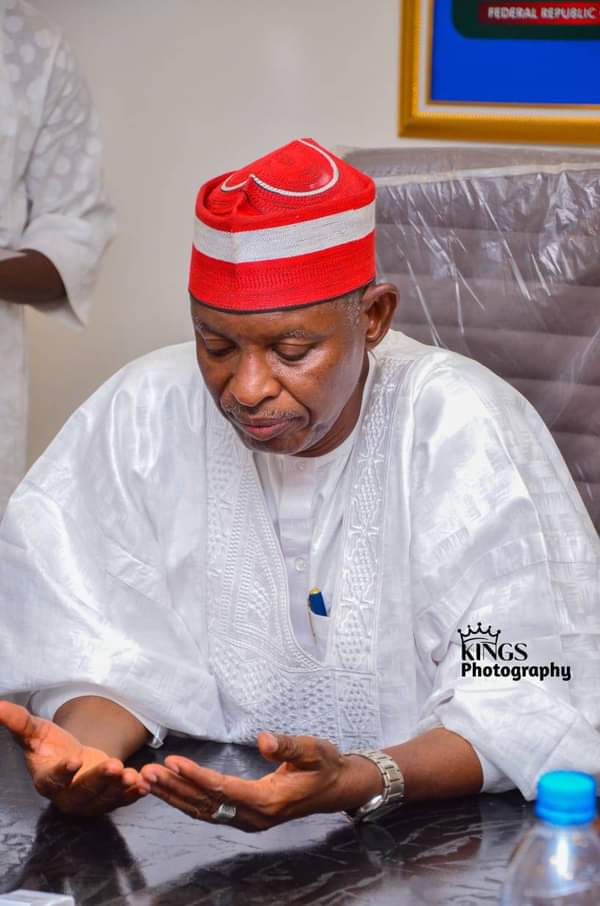
Kano State Government has announced plans to prosecute tax defaulters beginning in 2025 as part of comprehensive reforms aimed at enhancing tax administration and compliance.

The disclosure was made in a statement issued by Sanusi Bature Dawakin Tofa, spokesperson for Governor Abba Kabir Yusuf, on Saturday in Kaduna.

Dr. Zaid Abubakar, Executive Chairman of the Kano State Internal Revenue Service (KIRS), shared the update during a presentation to the Governor at a High-Level Retreat for top government officials.

According to the statement, the reforms are not intended to increase tax rates but to improve the efficiency of tax collection and ensure strict adherence to regulations.

Dr. Abubakar also revealed that the state is projecting revenue generation of over twenty billion naira per quarter in 2025, which would amount to more than eighty billion naira annually.

The statement highlighted that under Governor Yusuf’s administration, a significant restructuring of KIRS has already yielded positive results in the third and fourth quarters of 2024.

The Governor’s decision to replace the previous leadership of the revenue service and implement a new management structure was credited with improving the agency’s performance. Additionally, a new model for tax collection will be introduced in 2025.

This approach is expected to significantly boost revenue and support the government’s efforts to fulfill campaign promises across critical sectors of development.

Niger State allocates N1.2 billion to celebrations despite security, developmental challenges

By Uzair Adam 

A review of Niger State’s budget performance report has revealed that the state government allocated N1.2 billion to celebrations and special occasions in the first nine months of 2024. 

This expenditure represents about 4% of the state’s internally generated revenue (IGR), which totalled N29.2 billion from January to September.

The spending has raised concerns, particularly as the state grapples with severe developmental and security issues. 

Recently, Niger State has faced violent attacks by bandits, resulting in the deaths of ten residents and the destruction of homes. 

Additionally, widespread flooding has devastated over 300 communities, with reports indicating eleven lives lost and 245 schools damaged.

Despite these challenges, the budget shows zero allocation for capital expenditures within the Ministry of Rural Development and the Rural Water and Sanitation Agency. 

This lack of investment comes at a time when a cholera outbreak has claimed sixteen lives and left 165 others infected. 

Due to the absence of potable water, many residents have resorted to using stagnant water sources shared with livestock.

In contrast, the Ministry of Basic and Secondary Education received only N196 million in capital funds, while the state’s basic healthcare sector saw no allocation for critical infrastructure improvements. 

Reports indicate that 71% of households in Niger lack adequate sanitary facilities, and half the population lacks access to clean drinking water, underscoring the pressing need for investment in essential services.

Amid claims of limited resources, Niger State’s spending priorities have sparked concern. 

The state currently has 1.6 million people living in poverty and an unemployment rate of 38.8%.

Industrialisation of the North: The future

By Muhammad Sani Usman

Somebody was shocked that the revenue of Zenith Bank as of 2022, which is N945 billion, is greater than the internally generated revenue of northern states combined. Literally, Zenith Bank alone is more financially buoyant than northern Nigeria. And he was lamenting about the poor inclusion of northerners in such investments in their states.

Kaduna is taking the lead in investments in the North, but her (Kaduna) IGR is not up to one hundred billion Naira; it is half of that. Even the profit after tax of Zenith is bigger than the economic cities of Kano and Kaduna. These two states are not up to N100 billion altogether.

I told him, “Investing in banking is highly industrious. But our northern billionaires have no business with anything “Knowledge-based economy”. What they know is to hoard dollars, buy shares, and run over a baby company/factory, as in acquisition.

Prof Murtala Sagagi of the Economics Department of Bayero University, Kano, told us, “While conducting a survey about the percentage of non-inclusion of Kano people to most of the fine-investments in food and beverages, logistics, and Banking Industries, one manager of one famous company told him, “When they try to recruit graduates for trainee positions; they expect them to be meticulous in training before they think of absorbing them fully as staff.

But you’ll employ someone as an assistant quality control officer or sales personnel, but his/her performance index will shock you unless you change your mindset seriously. Industries require expertise to run; you can’t employ someone you can’t fire or are lazy.”

There was another testimony last week. I was discussing with an auditor of one of the best companies in Northern Nigeria. The guy told me they had recruited a new customer care representative, and he was deployed to that branch, but all the time, the guy was not working; even the invoice that he was supposed to do, he couldn’t.

Unknown to the guy, a letter was sent from the headquarter for monitoring and evaluation of his performance by the senior staff of that organisation. My guy is among the people to vouch for him, i.e., whether he would be retained as permanent staff.

However, this is not limited to banking or the mentioned industries; this is about the lackadaisical attitude of our politicians about not creating factors that will favour industrialisation in the North. The A-K-K gas project is among the hope we have for the future of the North. Let’s wait and see!

Muhammad Sani Usman an industrial chemist who advocates good governance and Sustainable development goals. He writes from Zaria via Muhdusman1999@gmail.com.

Nigeria: In need of El-Rufa’ism

By Tahir Ibrahim Tahir (Talban Bauchi)

Do you remember when Governor Nasiru El-Rufai chased bandits into the bush along the Kaduna/Abuja expressway as he encountered a bandit attack along the highway? He practically trailed the assailants into the bush, chasing the gunmen, along with his entourage of armed escorts. He wouldn’t stand aside and watch the security men put their lives on the line alone. They had no choice but to cover him as they pursued the bandits. Some were shot, and a few escaped with injuries.

El-Rufai is a hands-on man and practically chases the reality of things to the letter. If you were a Chief of Air staff, with El-Rufai as your C-in-C, you would probably be called to a scenario where El-Rufai is in one of your bases, manning a drone attack himself. I bet you, he could even be in one of the Tucanos, spitting fire on terrorists; and you would end up answering yes sir to him, over the mic, from the fighter jet. No garrison commander or head of any of the counter-terrorism operations would ever allow himself to be caught flat-footed by his irrepressible commander in chief. You can’t be in a command guest house somewhere while your Commander In Chief is in an MWRAP elsewhere on the battlefield, charging your soldiers on to carry the battle to the terrorists.

El-Rufai would not waste time naming the bandits as terrorists, so he wouldn’t be handicapped in annihilating their terror! If all the North-Western states’ governors had co-operated with El-Rufai’s plans long ago, they would have proactively put in place all the crunching measures — that would have ended the banditry plaguing the region today.

Do you know that Kaduna’s IGR of 13.6 billion in 2019 has grown to a whopping 51 billion in 2020? Anticipating a 60 billion IGR in 2021? This could mean that our monthly federation allocation of an average of 600 billion could be well over 1.5 trillion, to a probable 2 trillion naira monthly! Elrufai would find all those nooks and crannies of our economy that are not yielding fruits to the federation account — and make sure they matter to our economy. The Kaduna IGR example is a classic case of economic diversification, which is what Nigeria desperately needs. The President Muhammadu Buhari-led administration has laid the template for this, and what remains is the right lieutenant to take it to the next level.

States would be mandated to replicate the Federal template on revenue generation, and there would be less pressure on the federal purse. More viable states would be the elixir to the economic emancipation of Nigerians. Governance would be made to impact the local level, as revenue generated would reflect in the development of the rural areas. Under El-Rufai, revenue generation would not be a problem at all!

Have you seen how El-Rufai is developing a new generation of technocrats, entrepreneurs, and public servants? We have a Chief Executive in Kaduna state who is just 29 years old! Most of his commissioners are under 40 years of age. New metropolitan authorities have been constituted and are charged with the development of their base areas. All these executives are young indigenes who are representing the younger generation well.

El-Rufai is giving the youths a hands-on advantage of learning and gaining experience. He is grooming a new age of leadership in the state, which would never be bereft of ideas, and the zeal to implement those fantastic developmental ideas. This is aside from making youths SAs or SSAs only, as the highest offices they can attain. This is profiting from the abundance of technical knowledge that the youths can offer. This is harvesting youth IT knowledge and potential away from the yahoo-yahoo industry.

Nigerians aren’t so law-abiding and are fond of cutting corners and profiting from the lapses of our laws, as well as law enforcement. To date, no FCT Minister is missed, the way El-Rufai is yearned for in Abuja. The disarray and chaos in Abuja are unbecoming. It would take an El-Rufai to reset the city and make it a befitting nation’s capital. I’m sure the income that the FCTA would generate will be unprecedented — enough to manage itself, with or without any Federal interventions.

Kaduna has become one magnificent project site as projects run rampage across the state. A before and after picture of the Kawo bridge area is breathtaking. ‘Kasuwan Bacci’ is now a ‘Kasuwan Farke’ (a transformed and brand new metropolitan market).

I can only imagine the Mambila hydro project in the hands of El-Rufai or the Abuja/ Kano/ Maiduguri highway. The North-Eastern road networks’ deplorable situation would become history. I’m sure the South West and South East would be filled with light rail networks.

The industrialisation of our agro-allied processes would be in full swing, just the way agro-processing industries are springing up in Kaduna. We would then be ably competing with countries like Holland, in the production of milk. We could compete with Mexico in the export of tomatoes, where they make over 2 billion dollars. El-Rufai would make sure that Federal laws are respected and adhered to and would make real scapegoats to deter other goats from grazing on the wrong side of the law.

Nigeria desperately needs Elrufaism. If Nigerians can target their own national infrastructure and bring it down to a halt, who better to handle us?

Tahir is Talban Bauchi and can be contacted via talbanbauchi@yahoo.com.

VAT: Between common sense and critical observation

By MA Iliasu

The chart showing the performance of Nigerian State governments in internal revenue generation has done its part in unveiling the mixed performances of the state economies. As expected, the public reactions, which to me are warranted, carry both the weight of reason and emotion. And maybe for the first time in the history of the Nigerian political economy debates aren’t taken over by regionalism and ethnic jingoism. Instead, it seems that consciousness has succumbed after realising how laziness and incompetence have been fairly distributed among both the northern and southern ruling classes, governors mainly.

Having learnt the flow of sentiments from the day the revenue rankings were released to date, I conclude that the discussions around Internally Generated Revenue (IGR) and Value Added Tax (VAT) are more skewed toward the search for self-actualisation rather than exclusive state independence. For which I’m hoping to be correct. Because if I’m wrong, that’ll mean most of the commentaries are not more than unwarranted emotional outbursts on how the economy really works.

Critical observation will tell that states like Kano are painfully underachieving. Possibly because the government ignores countless taxable entities and many other revenue streams, or it doesn’t care to investigate the conduct of the revenue agencies, it’s very self inclusive. For it’s a fact that the government source massive revenue not only from taxation but from the sales of valuable assets, among others.

On the other hand, without even mentioning Lagos that no economy has come close to compete with, you’ve Kaduna and Rivers states. The economies that can quickly be agreed to be of similar strength if not inferior to Kano’s. Yet with the astronomical difference in IGR. The defining factor in that dilemma lies in their respective self-actualisation and economic competence. The same can be said on the other high-earning states against their low-earning counterparts. And where that’s concerned, questions are right to be asked on why should a state enjoy a sizable share of other state’s hard work when in itself it’s in a unique position to contribute as much if not more.

The way I see it, that’s where the conversation becomes critical. The high-earners think every state should enjoy as it earns. While the low-earners think the economic union should not be dissolved because they’re geographically and industrially rigged by nature. The indigenes of high-earners agree with their state’s notion. As do that of low-earners who think isolating their state expenditure with its earned revenue will awake them from the shameless slumber and make them more creative. The important of all is, does the economy work that way?

To begin with, governors who believe nature hinders their income stream must know that geography in an economic context is either an advantage or a symbol of unique opportunity. For example, it’s a fact that Lagos and Rivers, as the custodians of Nigerian ports, have found it easy, therefore, advantageous to source revenue. But it’s the same with Jigawa, that’s strategically positioned to be a massive tech-hub and schooling environment across Sahara, Yobe that’s agriculturally equipped to grow the most unique seeds and Delta that’s attracted to the non-fossils industry. Therefore, using nature as an excuse is beyond lazy.

Nevertheless, no matter what any state does to achieve economic supremacy, one state must earn more than another. Thus, one state must record a deficit in trade with another. It’s a simple law of nature that’s very sensitive in economic policy, especially in accounting internal trade.

For instance, it makes sense that Kano, the largest textiles market and importer in Africa, pays more to Lagos and Rivers, who are the custodians of ports than it receives. Likewise, if Kano, as the distributor of the shipment, receives more from Bauchi, a retailer, than it pays. The same line of argument can be asserted to the states that own what other states need more than it needs from them. And so, recording deficit by the paying state is inevitable because needs and economies of scale can never be the same.

Due to that vivid notion, the famous British economist John Maynard Keynes argued that economies must be bound together to solve the inevitable rigidities that’ll be caused by the unavoidable deficit bred by such economic interdependence. According to Keynes, crises can be redemptive and non-redemptive crises. The redemptive crisis is the type of crisis that’s capable of becoming its own medicine. In short, any problem that can paradoxically become its own solution qualifies as redemptive. While the non-redemptive crisis is the type of crisis that can’t solve itself.

For example, the ever prophetic General Theory explained how a trade-off exists between inflation and unemployment. That’s to say, by compromising inflation, unemployment often rises, which give rise to another wave of cyclical negativity. Meanwhile, inflation can be risked to reduce the level of unemployment. And the lower level of unemployment means higher employment which can help eliminate inflation. That way, inflation has laid the very foundation of its demise. The very redemptive crisis that Keynes had explained concisely.

The phenomenon with our state economies is that the internal trade between those respective states records deficit in the books of payers and surplus in the books of the receivers. The receivers are often the highest-earning in the ranking of VAT, while the payers are mostly the low ranking. And the intriguing dilemma is that where deficit and surplus are concerned, a serious tension occurs to the market flexibility that’ll need cohesive effort by those states to be released. And if they’re isolated from one another by warranting each state only to enjoy as it earns, it won’t be possible.

It’s like two siblings in a family of three. The older is a farmer who therefore is discharged with buying food and consumables. While the younger is an engineer, who’s charged with water and electricity bills. It was agreed that none should interfere with any’s responsibility. Interestingly a period of bumper harvest keeps taking place for the older. But sadly, the younger hasn’t been able to secure a job. Food has been available. But no water and electricity. The family eats, but it reaches the level where there’s neither the water to boil the food nor the electricity to power the oven. The bathrooms are inept too. Their mother becomes worried. Things begin to fall apart because the house has gone insane, and a family meeting gets summoned. A tension of similar magnitude will happen if state economies are left to their own mercy.

Firstly, in an economic context, Nigeria is a single-family because the states are bound by a single currency and enjoy free trade with one another. Secondly, the states must collectively pay for one another’s incapabilities like beloved siblings because they live within the same family. The flaw of one can devastate the situation of the other. Just like what happened when the above younger sibling couldn’t secure a job while the older enjoyed bumper harvests. Thirdly, all that has been mentioned doesn’t need to be accepted or agreed upon but must be complied with, whether one side is lazy or hardworking because it poses a direct threat to the economic stability of Nigeria. Moreover, it’s compensation for inflicting deficit in the event of a trade, which was why the US and its dollar have been more stable than Europe and its Euro; all because the same currency binds them.

It’s from that, therefore, that I learnt when Gov. Wike of Rivers suggested exclusive state supremacy on VAT, he was totally ignoring or ignorant of how the remittances among those states become what enables the highest-ranking states to record the surplus that they’re boasting about. It’s simple logic. As the lowest in the ranking, Bayelsa State is isolated with its small Internally Generated Revenue (IGR), its purchasing power would decline severely. And state’s purchasing power is the consumer’s purchasing power. If it drops, it’ll mean no buyers for the available commodities in the Bayelsa market, which will hinder restocking from the industries in Lagos and Anambra. When it persists, the commodity market will die. Deflation will strike, and consequently, the investment will disappear. Small enterprises will become bankrupt.

Trade deficit goes hand in hand with governments that are also in deficit. If an economic crisis occurs within any among the economies that are bound by the same currency, the fall in demand will trickle down to the deficit economies. Once the crisis began, whether in a surplus state or not, it would inevitably soon reach both the surplus and deficit states. Even if it arrived in the form of a slight downturn, some debtors would be made to feel that they were carrying too much debt. Keen to reduce their exposure, they would cut spending. But since, at the level of the national economy, society’s overall demand is the sum of private and public expenditure, when a large segment of the business community tries to reduce debt (by cutting expenditure), overall demand declines, sales drop, businesses close their doors, unemployment rises, and prices fall. As prices fall, consumers decide to wait for them to fall further before buying costly items. A vicious debt-deflation cycle thus takes hold.

Now that’s the question the Nigerian state economies must sit down and ask themselves; is this where we want to go?

From what we’ve learnt, recycling mechanisms are necessary to avoid the bubble from bursting. Likewise, it’ll be absurd to allow lazy economies to keep enjoying off the hard work of others. The best response, in my opinion, is to set a minimum threshold, one that each state must abide by. An evaluation of the state’s income streams must be made so that no state should source less than it should. Gubernatorial candidates must adequately explain henceforth how they intend to fund ambitious capital and recurrent projects. Both to the voters and intellectuals. Because the days of off-head projections are over. The truth is Nigeria is broke. And most states are lazy. While cutting them off will destroy the economy as a whole. The room for politicians who dreamt of becoming governors when they’re young is no longer there. What’s there is a capacity for difference makers. Policymaking bodies can no longer be filled with empty-headed pot-belly carrying nepotists. Trained economists must be engaged. For now, everything is up to the central authority; we shall see if it’ll tame the situation or sink the economy further.


MA Iliasu writes from Kano State. He can be reached via his email muhada102@gmail.com.

IGR, VAT controversies: a bright future for northern Nigeria

By Muhammad Sagir Bauchi

Adam Smith, in “Wealth of Nations”, while discussing what he tagged as “Canon of Taxation”, outlines some principles he describes as “Principles of Good Taxation”. These principles include fairness, certainty, convenience and efficiency. By the principle of fairness, he meant that the taxpayer’s condition should be considered before enforcing tax on him; this is in addition to the ability of the taxpayer to pay the tax. By certainty, the taxpayer should be informed on why he needs to pay his tax and how such taxes are levied on him. By the convenience, he refers to how the taxpayer finds the process of paying the tax as easy as it is. The final principle of efficiency described how the tax payment should have no negative effect on the distribution of resources in the economy.

In a short story, a man came to someone and asked him, “what should I be giving you every day?” He replied: “Sand”. So, as requested, whenever he meets that person, he picks up sand on the ground and hands it over to him. 

One day, that man came to him to collect the sand, but he looked at him abruptly and said, “Why can’t you bend down and fetch it by yourself? Why should I be giving you what you can have if you work hard?”

Recently, there has been an uproar between Federal Inland Revenue Services (FIRS) and Ekiti State Government. As a result, the state government came up with a law regulating Value Added Tax (VAT) collection. With the new law, the Ekiti state government will have absolute power to utilise the VAT generated from that state instead of the usual remittance to the Federation Account! Ab initio, a State high court granted an order to the Ekiti government to move on with their new VAT policy since they have already enacted a law to that effect. Still, a move by the FIRS through the Appeal Court blocked Ekiti State Government from putting the law into effect.

In the beginning, the will to challenge the Federal Government on VAT collection by the states was spearheaded by a single state. Still, by looking at the fruition that may come out from the success of such a legal battle, some states from the South-South joined Ekiti in the suit, thereby sending their representative to the Appellate Court.

Before going further, we need to understand what VAT refers to; for that, we will shed more light on the desperation and motives of these states to have the right to deduct VAT within the economy of their states.

According to FIRS, VAT is “a consumption tax paid when goods are purchased and services rendered“  to this, “all goods produced within or imported into the country are taxable except those specifically exempted by the VAT act”.The authorities responsible for the deduction of the VAT are; indigenous companies with non-resident companies within the country; government ministries, statutory bodies and other agencies of government; and companies operating in the oil and gas sector. These are the statutory bodies saddled with the responsibility of deducting the VAT in Nigeria.

From 2016-2020, Nigeria recorded more than five trillion naira from VAT deduction, but surprising, about three point nine trillion of that amount came from Ekiti and Lagos State. And as usual, the whole amount was shared between the three tiers of government with some amount given to the FIRS for its VAT deduction services! Naturally, human beings are similar to those two people mentioned that one gives sand and the other received, which at the end one expressed tiredness. 

Sentiment aside, it is hard to imagine how a state or region would work diligently harnessing such a hefty amount, in which, in the end, it will be shared with others that contributed little out of it.

Before discovering oil in commercial quantity, the Northern Region of Nigeria was the main contributor to GDP growth, which means that the agricultural sector was the primary source of foreign exchange to the country. But today, despite the contribution of agriculture to the GDP, Northern States rely primarily on what is given from the federation account. Today, it is no longer a secret that only some few Northern states can stand on their own to pay their workers salaries and wages, fulfil their financial commitments, not to mention financing their annual budgets. Most of them would go broke and insolvent if the federal government decided to withhold their monthly allocation for a single month!

To some analysts, the action of Ekiti and Lagos State Governments is nothing but a display of absolute selfishness. Still, to me, it is nothing but expressing their worth and importance to their counterparts.

Amidst this VAT controversy, a new statistical report on Internally Generated Revenue (IGR) of the 36 states of the federation for the fiscal year of 2020 was released. Lagos State is topping the list with about 418bn, Rivers with 117bn and Delta as the third. The report stated that only two Northern States are among the top 10 states with highest IGR, that’s Kaduna and Kano State. And it is not surprising since Kano is the commercial hub of the North. But, surprisingly, even the commercial nerve of the North is generating less IGR than Kaduna. Are commercial activities taking place in Kaduna greater than that of Kano? This shows that there’s transparency and accountability in Kaduna state more than that of Kano.

If one analyses that IGR statistical report and the five-year VAT table, he will weep for the sorry state of the northern states! And the implications of the possible ruling favouring those two states (Ekiti and Lagos) by the Appellate Court against the federal tier, then not only the northern states, but the remaining 34 states would find themselves in deep economic crises.

Then, what should the Northern policymakers do to improve their IGR and move away from dependence on monthly federal allocation?

I foresee a bright future for the northern states out of this development if only their policymakers pursue policies with a serious positive impact on the income of its majority (who are peasant farmers) other than policies that could only favour the wealthy and those in the government. For instance, if the agricultural sector will be given proper attention, thereby coming up with policies that could boost commercial farming through accessibility to quick/soft agro related loans, hybrid seeds with the ability to stand these ever-changing climatic conditions, mechanised farming equipment, setting up subsidised agro-allied chemical industries in the region, provision of good accessible roads connecting all the remote areas, all year round farming and a fair export zones, with these, its unemployed youths will surely seize that opportunity and venture into agro-businesses without looking up to the government for job opportunities in the government sector. But imagine an agricultural intervention program meant to cushion farmers difficulties is deeply flawed in I don’t care attitude of government officials, deliberate delays and nepotism, in the end, such interventions may not meet the majority of farmers on time!

Other regions in Nigeria cannot feed themselves without the support of the Northern farmers. So, why should we be panicking when they try to withhold their money? Why can’t the North stand up and bring out those opportunities? 

Despite the insecurity in almost all parts of the Northern region, one fact that can never be denied is that the area is blessed with arable land, enough for cultivating in dry and rainy seasons. Therefore, adequate farming inputs and machinery should be provided, either in loans or at a subsidised rate by the Northern states governments.

Curbing insecurity is another point that all the governors of the 19 northern states should work hand-in-hand to achieve.

Senators, Representatives and States Assembly members should focus on things that harmonise them with their governors to formulate policies that will boost their states IGR, rather than engage in their usual political war, which deprives millions of citizens of opportunities that may bring development to their livelihood and the region at large.

The impact of Small and Medium Enterprises (SMEs) in boasting every economy can never be neglected in every sound economy. But in northern Nigeria, those SMEs are either forced to shut down due to unfriendly tax policies or poor environment to carry out their activities. So, those SMEs should be given more reason to be alive than to seize to exist, thereby granting them soft loans with zero interest or a low interest rate and a friendly environment to carry out their activities.

Most of those states with high IGR have different means of gathering or sourcing revenue within their states. But in the North, both the tax collectors and taxpayers are not up to their responsibility. Therefore, a transparent and professional agency should be enacted in every state with the sole aim of creating awareness on the importance of paying tax, why they should be taxed and the transparent manner in which their tax is utilised.

Lastly, the principle of fairness, certainty, convenience and efficiency should be put into practice to generate more tax to boost IGR for those states.

Sagir writes from Bauchi State and can be reached via ibrahimsagir1227@gmail.com and 07019718681.