The Presidency for Religious Affairs at the Grand Mosque and the Prophet’s Mosque has launched a groundbreaking digital enrichment project using artificial intelligence (AI) to teach and correct the recitation of Surah Al-Fatihah.
The initiative, inaugurated on Saturday, is part of broader efforts to enhance the experience of pilgrims and visitors at the Two Holy Mosques.
It offers an advanced educational platform that allows users to enhance their recitation through AI-driven analysis, listen to model recitations from imams of the mosque, and explore translations of the surah in various languages.
According to the Presidency, this represents the pilot phase of the project, which is expected to expand in the future. The platform employs advanced algorithms to evaluate recitation in real-time, connecting traditional learning methods with modern technology.
As part of Saudi Arabia’s digital transformation strategy in religious education, the initiative aims to offer a seamless and enriching learning experience for visitors from around the world.
The recitation of the Glorious Qur’an is beyond anything people can think of or guess how it is limited in terms of positivity. It is everything and beyond. Yes, it is indeed! In addition, the rewards for its recitation are granted based on letters. Each letter recited in a verse is worth 10 rewards, and the rewards multiply.
The recitation of the Glorious Quran is the food that satisfies people to the ultimate satisfaction. It gives satisfaction to those reciting it day and night. While reciting it, the reciter gets satisfaction from it for his/her satisfaction in the thing he/she comes across. Through it, a Muslim can understand the blessings of Allah for all of humanity on Earth. Allah’s creatures were explained. The lives of our ancestors were told; how they lived on Earth before us. This explains the Oneness of the Lord, Almighty Allah.
The recitation of the Glorious Quran makes Muslims live peacefully, and their hearts find peace and composure. The beautiful recitation of the Glorious Quran heals the heart of anger. It does away with agony and temper. The Quran has explained this in Chapter 13, Verse 28: “Indeed, with the remembrance of Allah, hearts find peace.”
When a person starts reciting it, their attention becomes focused on the Almighty Allah and His words. Listening to the words of Allah is the best thing people can do to gain composure, and its recitation gives you everything and draws your heart to Him. You become happy. The world remains peaceful and harmonious for you as you begin reciting it. Therefore, do not stop reciting the Quran. It is the best thing to help you achieve everything on Earth.
Have you been in a dilemma or limbo? If yes, have you recovered? If not, you can recover from any kind of limbo by reciting the Quran. Keep reciting the Quran. It will help you recover and make you happy all the days. If you can’t recite it, listen to it online. There are different recitations of the Quran available online. Go to your Play Store and download it, and keep listening to it offline or online. It is, of course, the best medicine undiscovered by physicians!
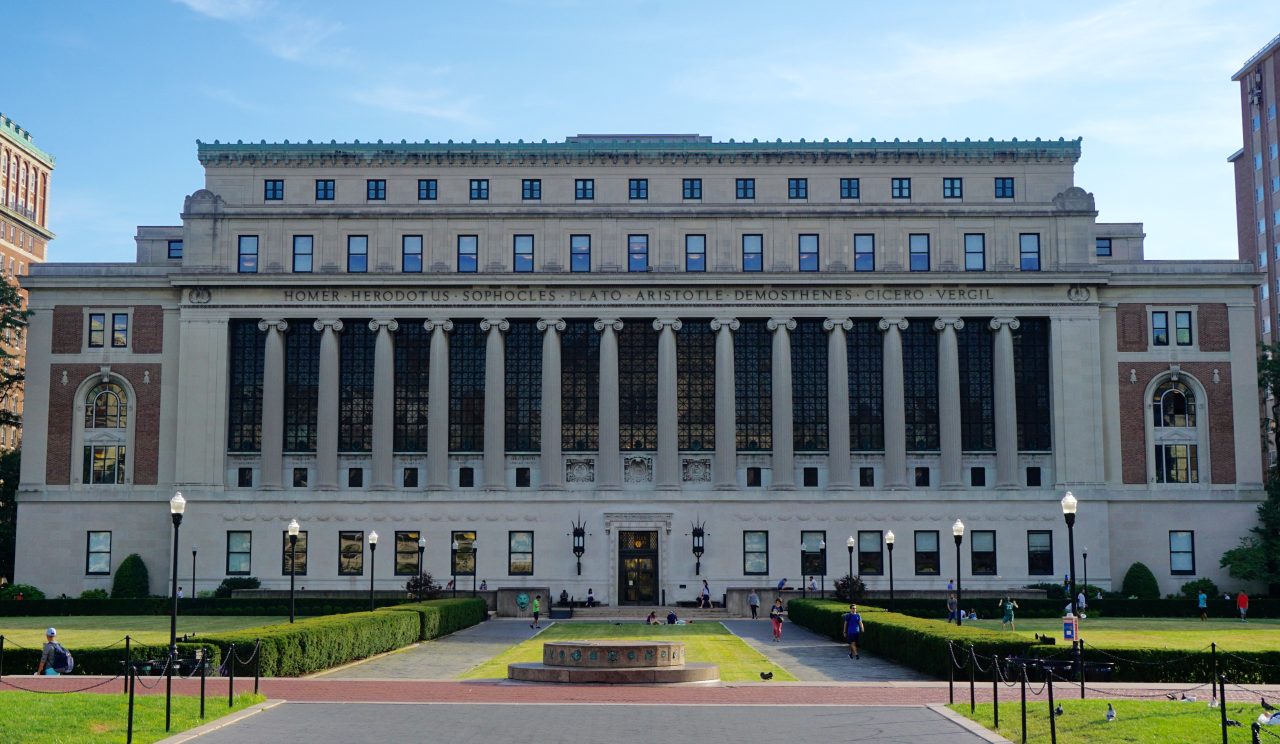
Columbia is an Ivy League University, one of the eight most prestigious institutions in the United States of America. Ph.D. students at this university undergo two years of coursework. One of the classes I took was Islam, Knowledge and Forms, which a visiting professor from Germany taught. Part of the course is a library visit to the exhibitions section under the project of Islamic Sciences, Science, Nature, and Beauty: Harmony and Cosmological Perspectives in Islamic Science (2022) at Butler Library, the largest library of Columbia University with millions of resources.
The exhibition contained objects, images, rare manuscripts, and other learning materials. Two materials, among others, became the most astonishing factors in the exhibition: one of them is a rare copy of the Holy Quran, and the second is a locally handmade wooden tablet (Allo).
The instructor asked everyone to talk about any material in the exhibition. Students gave their feedback on the experiences passionately; different things wowed everyone. When it came to my turn as someone who had known these items since childhood in my father’s private library, where we sneaked as children, which housed similar treasures. To us, these are the most useful items in his library as we do not read books; we only view images and magazines, such things that are not viewed as essential to the readers. Then, I shared my familiarity with these items, telling them I was exposed to most of the exhibited materials from my upbringing in Northern Nigeria, including “rare manuscripts” of the Quran.
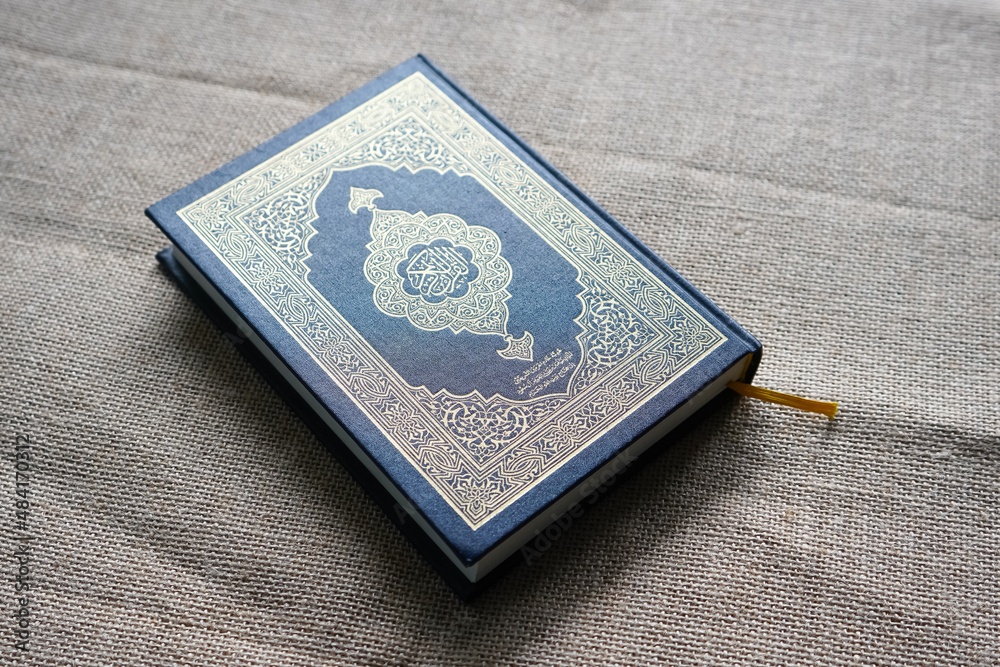
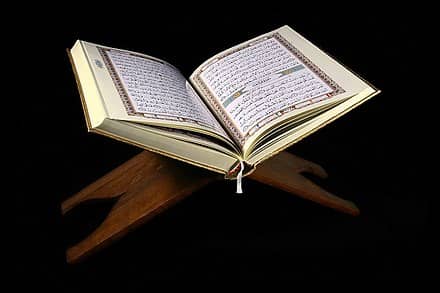
The Quran displayed was a giant copy of the original Uthmanic Quran, denoted to the third Caliphate of the Muslim nations who reigned (644/23H–656/35H). It was so amazing to all of us. As for me, the Quran is the most frequently read book in my entire life, and to their surprise, I can read this copy fluently without diacritical marks. I highlighted that memorising the holy Quran, even without understanding Arabic, is common in Northern Nigeria. Most of my fellows never knew that sometimes people memorise it at an early age. I did not shock them with that, as I am one of them.
In the second incident, Professor Brinkley Messick invited me to speak in his class on Islamic Shariah Law as someone with experience with an Islamic Madrasa background and went to Azhar University in Egypt. The theme of the class is the Islamic madrasa. He is interested in the Islamic tradition, as evident from the cover of his book, “Calligraphic State.”
Allo
The Professor brought Allo a wooden tablet to the class and circulated it to students. Everyone was looking at it with surprise. I named it to them as a personal tablet for inscription and memorisation of the holy Quran, and the students asked for more details. I said we write verses from the holy Quran for memorisation after repeating it several times; not everyone understands how that works, except those with Islamic background. However, when I told them when we wash the script, we drink it, everyone was left with open mouths, surprising our embodiment of the holy book, including the professor. They could not process as modernised individuals with high sensitivity to germs and bacteria. Again, as I told our class last semester, this is very common in Northern Nigeria.
Coincidently, one of the attendees from a Saudi background added that people used some scripts for Talismite and protection from Djinn (Ruqyā in Arabic or Ruqiyya in Hausa) by reciting some verses in water. I told her this is true; we have that part in our culture too, but the biggest part is that we drink washed script for the embodiment and show respect for not letting a drop of that water on the ground as a sacred word. As kids, we were told that whatever verses we memorise from the holy Quran and drink will stay in our hearts for a long time.
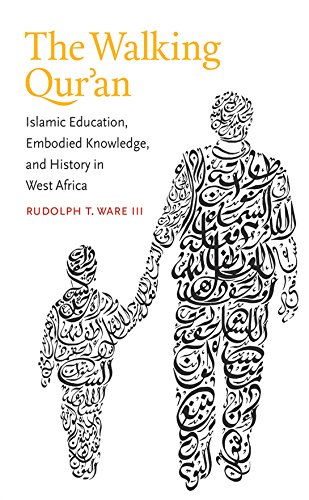
In reference to that, American Professor of Islam in Africa Rudolph Ware published his book Walking Quran on the Madrasa system in West Africa. He referred to those Quranic students’ embodiment as the Walking Quran in relation to the narration of the Hadith reported in the books of Hadith such as Ṣaḥīḥ Muslim; Aisha was asked about Prophet Muhammad’s PBUH character, and she said he was a Walking Quran.
Our cultural legacy, often undervalued by some of us in our region, gained recognition at Ivy League institutions. Those people appreciate a centuries-old Quranic educational tradition or Almajiri system and show their respect to our subregion. Even our way of drinking the washed script of the Quran mesmerised them.
A professor dedicated his projects to studying a school system called Daara schools in Senegambia or the Tsangaya schools in Northern Nigeria, making it evident that our legacy is an astonishing point to those communities. Then, as indigenous Africans who were introduced to the colonial system of Education less than a century ago in Northern Nigeria, we should be more proud of our system by appreciating those communities who choose to preserve it, as they make our subregion a central point of high intellectual conversation around the world.
We should not deny our legacy by stigmatising the Almajiri system of education. Instead, we should support it and create a way of modernising it to empower and preserve our centuries-old legacy. Whoever shows kindness to the Quran and its reciters will receive people’s applauses in this life, including Western intellectuals, and God’s reward in the hereafter. Thanks to those state governments in Northern Nigeria who support and recognise this system of education.
Umar Sheikh Tahir is a PhD student at Columbia University, New York, USA. He can be reached via ust2102@columbia.edu.
Saudi Arabia, often described as the Middle East powerhouse, and Iran have summoned Swedish diplomats to denounce the Stockholm’s permission for protests that meant to desecrate Qur’an, the Muslims holy book, on free speech grounds.
The calls by the two majority-Muslim countries, which came separately, were in statements made available late Thursday.
This is coming amid heightened tensions between Sweden and Iraq over a Sweden-based Iraqi refugee, who last month burnt pages of Qur’an outside Stockholm’s main mosque.
The Daily Reality learned that, in the latest such incident on Thursday, the refugee, Salwan Momika, stepped on the Qur’an but did not burn it.
Monika’s action was considered to be the reason that triggered the renewed condemnations and calls for protest across the Muslim world.
According to a foreign ministry statement, Saudi Arabia, it would hand the Swedish charge d’affaires “a protest note that includes the kingdom’s request to the Swedish authorities to take all immediate and necessary measures to stop these disgraceful acts”
Nasser Kanani, the Iranian Foreign Ministry Spokesman, said Sweden’s ambassador to Tehran had been called in to censure the permit granted to Momika’s protest and to warn Stockholm of the consequences of such actions.
“We strongly condemn the repeated desecration of the holy Koran and Islamic sanctities in Sweden and hold the Swedish government fully responsible for the consequences of inciting the feelings of Muslims around the world,” Kanani said.