Hisbah

Sokoto Hisbah seals hotel for accommodating underage girls

By Anwar Usman

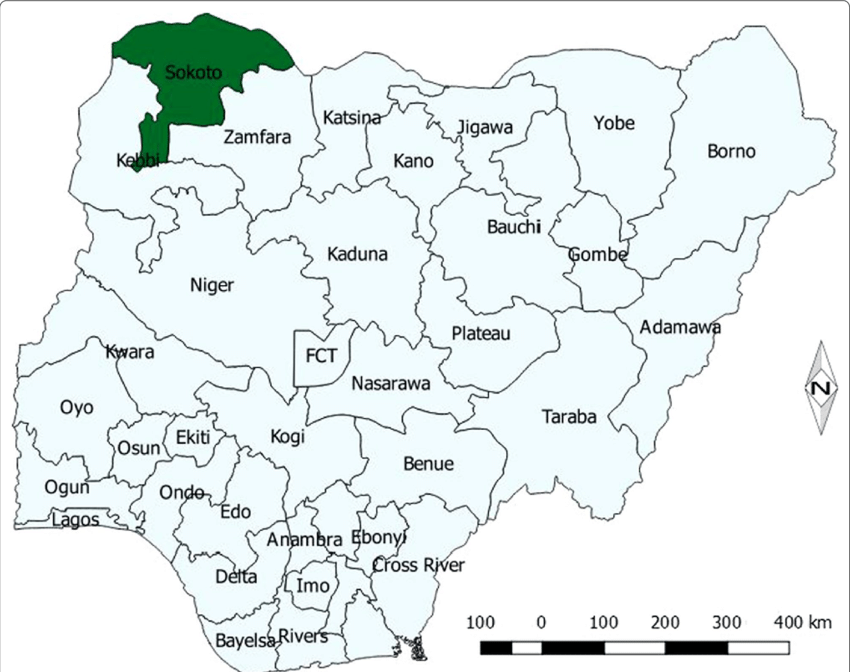
Sokoto State Hisbah Board has shutdown a hotel in the state capital over allegations of accommodating underage girls on its premises.

The incidence was confirmed by the Deputy Commander General of the board, Prof. Abubakar Usman Ribah, on Tuesday, saying that the action followed repeated violations by the hotel despite earlier warnings.

Ribah said the hotel was found to have breached regulations prohibiting the lodging of underage persons, describing the act as contrary to the moral and legal standards upheld by the board.

He stated that, the hotel had previously been cautioned and had also entered into an agreement with the Hisbah Board and other hotel operators in the state not to allow underage children to stay in their facilities.

“This is the second time such an offence has been recorded at the Executive Hotel, despite previous warnings and assurances by the management to desist from the practice,” he said.

He further explained that the decision to shut down the hotel was taken due to its failure to comply with the board’s directives and the conditions agreed upon during engagements with hotel owners across the state.

Riba further reiterated the board’s unwavering commitment to enforcing laws and would continue to enforce its regulations in line with the state’s religious and cultural values, emphasising that such measures were necessary to maintain public order and morality.

Hisbah nabs 25 for alleged same-sex marriage in Kano

By Uzair Adam 

The Kano State Hisbah Board has apprehended at least 25 persons for allegedly organising a same-sex marriage in the Hotoro area of Kano metropolis.

Deputy Commander of the Board, Dr Mujahedeen Aminudeen, confirmed the arrest in a statement made available to The Daily Reality on Sunday.

He said the suspects—18 males and seven females—were arrested at the Fatima Event Centre along Hotoro Bypass on Saturday.

“Today, Saturday, 25th October 2025, we received a report that some individuals were allegedly organising a same-sex marriage. 

“Our personnel immediately stormed the Fatima Event Centre, the venue of the illegal gathering, and successfully arrested 25 persons,” Aminudeen stated.

He added that the suspects, including the alleged groom, were from different parts of the state, such as Sheka, Yar Gaya, and Kofar Nassarawa.

Aminudeen cautioned that the Board would not tolerate any act capable of undermining the moral values of Kano State.

“We are calling on members of the public to support the Hisbah Board by reporting immoral activities across the state. 

“The Board will continue to clamp down on such gatherings that promote immorality,” he said.

Give honour to whom honour is due: Reflections on the conferment of an honorary doctorate on Sheikh Daurawa

By Murtala Uba Mohammed

Just last Saturday, September 6, 2025 (equivalent to 13th Rabi’ul Awwal, 1447 AH), the prestigious Usmanu Danfodiyo University, located in Sokoto—the historic seat of the Sokoto Caliphate—took the bold step of awarding an Honorary Doctorate Degree to Malam Aminu Ibrahim Daurawa, a renowned erudite Muslim scholar. Indeed, there could be no better place in sub-Saharan Africa to honour such a distinguished scholar than the city that once served as the headquarters of the Muslim Caliphate and home of the revered Shehu Usmanu bn Fodio.

Malam Daurawa, the current Commander General of the Kano State Hisbah Board, was born some 56 years ago in the ancient city of Kano. His birthplace, Daurawa, lies just east of the Kano City Wall near Kofar Mazugal. He studied Islamic sciences under many teachers, including his father, Malam Ibrahim Maitafsiri, who was celebrated in his lifetime for his expertise in Qur’anic exegesis. Malam Daurawa’s depth of Islamic scholarship is remarkable. In addition, he pursued formal education up to the college level.

Through his teaching and preaching, Malam Daurawa has commanded great influence among Hausa-speaking Muslims across Nigeria, Niger, Cameroon, Chad, and Ghana. His reach also extends to countries with sizeable Muslim populations, such as Saudi Arabia, Sudan, and Egypt. 

Right from his childhood, Malam Daurawa has been known as a person of truth, honesty, forthrightness, humility, and impeccable integrity. This was evident during his early involvement in the Islamic Tajdīd Islamy (JTI), known for challenging Ibrahim Zakzaky’s then-concealed Shi’ite identity. While JTI exposed the deception of Zakzaky’s movement, Daurawa eventually disagreed with some members due to his conviction that Islamic scholarship should embrace a wider horizon of jurisprudential schools and perspectives. His zeal for knowledge led him to step away from the group in pursuit of deep and extensive Islamic knowledge—a commitment that has contributed greatly to his current status as one of the leading voices in Islamic learning.

Even before the dawn of Nigeria’s Fourth Republic and the spread of private radio stations, Malam Daurawa has already established himself as a dedicated teacher of Islamic knowledge, nurturing countless study circles. My first encounter with him dated back to 1999, when he commenced lessons on Imam an-Nawawī’s Riyāḍ al-Ṣāliḥīn at our mosque, Sa’ad bin Abī Waqqās Masjid, in Zango, within the historic city of Kano. That experience left an indelible mark on me.

I vividly recall the year 2002, when, as a student at CAS Kano, I listened to him delivering a lecture on Islamic history and the Sokoto Caliphate. It was then that my admiration for him deepened. The ease with which he narrated history; so fluent and effortless, as if reading directly from an unseen manuscript,was nothing short of remarkable.

His scholarship reminds me of the words once spoken about Ibn Taymiyya by one of his contemporaries thus: “I saw Ahmad ibn Taymiyya as if he had a calabash filled with knowledge before him; he would give what he wished and withhold what he wished.” Truly, Malam Daurawa is a fountain of knowledge, a wellspring of wisdom that flows generously to all who care to listen. His presence is not merely that of a preacher but of a guide whose words illuminate minds and inspire hearts.

By 2003, Malam Aminu’s gift became even more evident, particularly through his teaching sessions in various study circles within Kano city. Among the most famous of these were Triumph Mosque in Fagge, where he taught Zād al-Ma‘ād by Ibn Qayyim al-Jawziyyah, later adding al-Shifā’ bi Ta‘rīf Huqūq al-Musṭafā by Qādī ‘Iyād. He also taught at Kawu Iliya Mosque at the Brigade area. I cannot forget his short-lived teaching of Imam Mālik’s al-Muwatta at Abdurrahman bin ‘Auf Mosque in Kofar Wambai. Unfortunately, that circle of al-Muwatta was disrupted by hired miscreants who came and attacked disciples. Despite the commotion and fitnah stirred against him, Malam Aminu was willing to continue teaching. However, as we later learnt that the elder patron of the mosques, Alhaji Yusuf Abdullahi, advised that the lessons be suspended. Even so, Malam once introduced teaching of Sharh al-Sunnah by Imam al-Barbahārī at Sa’ad Mosque in Zango.

With the proliferation of private radio stations, especially from 2000s onwards, Malam Daurawa rose to greater prominence through his program Kundin Tarihi aired on Freedom Radio in Kano. The program quickly became immensely popular because it introduced a unique style of narrating the history of the Prophet Muhammad (SAW), his family and companions and Islam. With a distinct approach, Malam Daurawa presented history with clear references to its sources and explained the lessons to be drawn from it. He also responded to questions in an engaging and captivating manner. This style of teaching and narrativity of Islamic history won admiration across doctrinal—even from those who did not always identify with his Salafi creed. Before long, people across the city eagerly tuned in to his lectures. As a testimony to this impact, I recalled that the Bayero University-based double Professor, Abdalla Uba Adamu, on more than one occasion, mentioned that two scholars stood out to him: Sheikh Ibrahim Khalil and Malam Daurawa. He explained that Sheikh Khalil impressed him with his fatwa (legal verdict) and cordial relationship with the university community, while Malam Daurawa captivated him with his Kundin Tarihi program.

Usmanu Danfodiyo University, Sokoto, made it clear that it was Malam Daurawa’s lifelong service and dedication to the community that earned him the honorary doctorate degree. Anyone familiar with the revival of the Hisbah Board under his leadership can readily attest to his commitment. At various times, when the institution became comatose, Malam Daurawa was always there to resuscitate it. He has served three separate terms as Commander General of the Hisbah: 2011–2015, 2015–2019, and from 2023 to date; the longest cumulative leadership in the board’s history. A clear sign of his competence is the way he successfully served under three different governors namely: Senator Rabi’u Musa Kwankwaso, Dr. Abdullahi Umar Ganduje, and Engineer Abba Kabir Yusuf.

Beyond the Hisbah, Malam Daurawa’s leadership qualities are reflected in his service as Imam of Friday mosques, most notably the Ansarussunnah Mosque in Fagge. During the month of Ramadan, for many years, he traveled to Gombe to conduct Qur’anic tafsir. He has also established schools where children learn Qur’anic memorization and Islamic studies. Those who know him affirm that wherever Malam Daurawa resides, he establishes circles of learning for children, women, and youth. Always innovative in his pedagogy and propagation, he once advanced the idea of translating Islamic teachings and recording them in Hausa, Fulfulde, and English in an attempt to extend Islamic propagation to the far and extreme ends of Nigeria and beyond. The blessings of his knowledge have touched not only the wider community but also his home and family.

Furthermore, Malam Daurawa is an accomplished author, with more than thirteen publications in different areas of Islamic studies. One of his works, Sa‘ādatul Muslim fī mattafaqa ‘alayhi Bukhārī wa Muslim, has become a widely used teaching text in Islamiyya schools. His concern with social reform also inspired him to author books such as Kimiyyar Aure (The Science of Marriage) and Sirrin Maza (The Secret of Men).

Anyone who reflects on the life of Malam Daurawa will recognize that he is a divine trust for the community; tireless, unyielding, and sincere in every responsibility he undertakes. Indeed, Usmanu Danfodiyo University has made a wise and deserving choice in honoring him. While I congratulate Malam Daurawa on this recognition, I also congratulate the University for seizing the opportunity to bestow honor where it is truly due. Malam Daurawa is not a man of wealth who dispenses riches, nor a man of political power who grants favors. What he possesses is his time and his knowledge, and the community has long been reaping the benefits of this priceless treasure. God willing, he stands among the very best of people—khayr al-nās man yanfa‘u al-nās (the best of people are those who benefit others). May Allah reward him abundantly, elevate Usmanu Danfodiyo University, and bless all centers of learning across our nation.

Dr. Murtala is a bilingual writer who holds a PhD in geography and teaches at Bayero University Kano

Censoring the uncensored: The irony behind Hisbah’s ban on Hamisu Breaker’s song

By Ummi Muhammad Hassan

Following the ban by Hisbah on a new song titled “Amana Ta” by Hamisu Breaker, social media went into an uproar, capturing the attention of the public.

In the early hours of April 24, 2025, social media was filled with reactions following a press statement issued by the Deputy Commander of the Hisbah Board, Kano State chapter, Dr. Khadija Sagir, announcing the ban of Breaker’s new song. The reason cited was that the song allegedly contains obscene language.

This announcement, however, triggered a counterreaction from the public. Many became curious to know more about the song and the so-called obscene content, with some taking to their social media handles to express their opinions.

The irony of the situation is that Hisbah unintentionally gave the song more prominence, causing it to go viral. Many people who were previously unaware of the song searched for and listened to it, just to understand the controversy.

In my opinion, after listening to the song, it contains no obscene language. Rather, the issue seems to lie with some young women who mimed the song in a suggestive manner after hearing that Hisbah had labelled it as indecent—as though to dramatize or reinforce the claim. Some even appeared as if they were intoxicated.

To me, this is both devastating and concerning, as it reflects the erosion of the strong moral standards once upheld by Hausa women. Many young people are now making videos lip-synching the song in indecent ways. It made me pause and ask myself: where has our shyness gone? I believe this question deserves a deeper conversation on another day.

In Breaker’s case, thanks to the Hisbah ban, he became the most trending Kannywood artist in April, and his song went viral—and continues to trend.

A similar incident occurred earlier this year when the federal government banned Idris Abdulkareem’s song “Tell Your Papa.” That action unexpectedly brought the artist back into the spotlight, causing the song to trend widely.

Social media has made censorship increasingly difficult. Once a movie, text, or song reaches the internet, it becomes almost impossible to control—even by the creators themselves.

While social media censorship remains a challenge, this recent incident highlights the need for the government to intensify efforts against the spread of indecent content—through Hisbah and agencies like the Kano State Film Censorship Board.

Clear guidelines should be put in place, requiring artists and filmmakers to submit their content for review and approval before public release. This, among other strategies, could help reduce the spread of inappropriate material.

Additionally, Hisbah should be more mindful of how such announcements are made, as they may inadvertently promote the very content they seek to suppress.

Ummi Muhammad Hassan, Ph.D., is a lecturer in the Department of Mass Communication at Bayero University, Kano. She can be reached via email at: ummeemuhammadhassan@gmail.com.

The erosion of values: How Hisbah’s decision to stop arrests is affecting Kano, by Muhsin Ibrahim

By Muhsin Ibrahim – Cologne, Germany

Let me say it aloud today: the Kano Hisbah Board’s decision to stop arresting people is quite disturbing.

Of course, I am one of those brave few commentators who criticised their method of arresting suspects some time ago, and I still stand by that view and criticism.

From Berlin to Baltimore, London to Lahore, Tel Aviv to Taipei, and Moscow to Muscat, security operatives sometimes manhandle individuals when arresting them. We are all humans!

If all arrests are halted, people will have free rein in Kano. Soon after Hisbah’s announcement, some socialites from other states and countries began relocating to Kano. They act freely and upload their videos on social media.

Kano is cosmopolitan but has unique norms, values, cultures, and religion that deserve respect. We cannot stop globalisation and cultural diffusion, but we should be concerned when our values are undermined.

Globally, countries still protect their “values” in one way or another. “Muhammad” can be – and is – the most popular baby name in England and Wales, but that doesn’t mean Muslims can, for example, legally practice polygyny. This is just but one example.

Kano State Government should reconsider how it manages Hisbah. You either have a functioning Hisbah or no Hisbah at all.

Hisbah should not be a toothless dog. Several clerics are already preaching (wa’azi, nasiha, etc.). It’s not Hisbah’s role to do just that; they need some power to use “force” at a certain level.

May we be guided, amin.

Muhsin Ibrahim is a Kano-born lecturer at the University of Cologne, Germany. He can be reached via muhsin2008@gmail.com.

Hisbah shuts down hotel for allegedly lodging underage girls in Katsina

By Uzair Adam Imam

The Katsina State Hisbah Board has shut down New Palace Hotel in Katsina metropolis for allegedly corrupting the morals of underage girls.

The hotel was found to have violated an agreement with hoteliers across the state by allowing underage girls to stay on the premises.

Despite previous warnings, the hotel management failed to comply with the board’s regulations, leading to the hotel’s closure.

According to Dr. Aminu Usman (Abu Ammar), the Hisbah Commander General, the hotel was found to have lodged two underage girls in the same room during a recent inspection, which contravenes the Hisbah laws.

This is the second time the hotel has committed this offense, despite previous warnings and a promise by the hotel’s management to stop such incidents.

The Hisbah Board had earlier reached an agreement with hotel managers across the state that no hotel would accommodate underage children.

The hotel’s failure to comply with this agreement led to its closure.

The Hisbah Commander General reiterated the board’s commitment to enforcing reforms and instilling discipline that aligns with the state’s religious and cultural values.

The closure of the hotel is part of the Hisbah Board’s efforts to enforce reforms and ensure that hotels in the state comply with moral standards.

The board has been working to prevent the exploitation of underage girls and promote a culture of decency and respect for human rights.

Hisbah saga: governor’s public condemnation, misstep in leadership

By Umar Sani Adamu

The recent public criticism by Governor Abba of the Hisbah board in Kano State has sparked controversy and raised concerns about leadership decorum and responsible governance. While it is crucial for leaders to address concerns and seek improvement within government agencies, the manner in which Governor Abba chose to express his dissatisfaction raises questions about his leadership style and the potential consequences of his actions.

First and foremost, criticizing a government agency publicly, especially one tasked with religious and moral enforcement like the Hisbah board, can create unnecessary tension and undermine public trust in the institution. Governor Abba’s decision to air his grievances in a public forum instead of handling them internally or through diplomatic channels demonstrates a lack of discretion and undermines the credibility of the Hisbah board.

Furthermore, by openly criticizing the Hisbah board, Governor Abba risks exacerbating existing tensions within the community and fueling resentment towards the agency. This could potentially undermine the effectiveness of the Hisbah board in carrying out its duties and could lead to a breakdown of law and order in the state.

Additionally, Governor Abba’s public criticism of the Hisbah board without offering concrete solutions or constructive feedback demonstrates a lack of leadership maturity. Effective leaders understand the importance of providing constructive criticism in a constructive and respectful manner, focusing on solutions rather than simply pointing out problems.

Moreover, Governor Abba’s decision to publicly criticize the Hisbah board instead of engaging in private dialogue with relevant stakeholders, such as Sheikh Mallam Daurawa, further highlights his disregard for diplomatic protocols and his tendency to prioritize personal agendas over the well-being of the community.

Adding the context of Murja Kunya’s situation provides further insight into the potential implications of Governor Abba’s public criticism of the Hisbah board. Murja Kunya, a social media influencer, has been accused by the Hisbah board of encouraging indecency and immorality. In this context, Governor Abba’s public condemnation of the Hisbah board could be interpreted as a form of protection for Murja Kunya.

By publicly criticizing the Hisbah board’s handling of the situation, Governor Abba may be perceived as undermining their authority and potentially shielding individuals like Murja Kunya from accountability. This not only weakens the effectiveness of the Hisbah board in enforcing moral standards within the community but also sends a troubling message about the government’s commitment to upholding moral values and protecting societal norms.

In light of these circumstances, Governor Abba’s public condemnation of the Hisbah board takes on an even greater significance. It not only raises questions about his leadership style and approach to governance but also calls into question his commitment to upholding moral standards and protecting the well-being of the community.

Therefore, it is imperative for Governor Abba to reconsider his approach and prioritize responsible leadership that fosters constructive dialogue and collaboration, while also upholding the values and principles that are essential for the well-being of society as a whole.

Umar Sani Adamu (Kawun Baba) 

Aminu Daurawa, Murja Kunya and the defeat of Hisbah in Kano

Isma’il Hashim Abubakar, PhD

If there is one government institution that citizens of Shari’a states in Northern Nigeria ought to regard as their personal property which cannot be politicised and subjected to jeopardy and machination due to its direct relevance and importance in preserving Muslim norms and values, that institution will undoubtedly be the Hisbah Board. 

In other words, by virtue of being Muslims, all Muslims in these states and, of course, in the rest of northern Nigeria are expected to regard themselves as natural and bona fide members of Hisbah, even if they do not wear the Board’s uniform, are not participating in its anti-immorality patrol and of course not in the payroll of government. This, therefore, underscores the collective and societal support and endorsement that Hisbah is supposed to enjoy since its creation and transformation during the tenures of Engineer Rabiu Musa Kwankwaso (1999-2003 and 2011-2015) and Malam Ibrahim Shekarau (2003-2011).

During the administration of Shekarau, the time when Hisbah was entirely transformed and formally mainstreamed into government bureaucracy, representing one of the major arms of Shari’a implementation agencies established by the state government, Hisbah Board confronted daunting challenges and opposition from all angles that only a sincere political will, uncommon determination and superior commitment would have saved it from being scrapped.  

Olusegun Obasanjo, Nigeria’s President (1999-2007) who opposed the transformation of Hisbah, sought to use all the presidential powers at his disposal to not only thwart the Hisbah from undertaking its task of sanitising the moral climate of Kano but also to proscribe it and mischievously label it as a terrorist organisation. Obasanjo’s wrath on Hisbah was merely a manifestation of his unsuccessful struggle to sabotage the implementation of Shari’a, whose winds had blown with an unprecedented force in 12 northern states. Even Obasanjo’s resort to legal machinery could not abort the Shari’a project. He, willy nilly, oversaw a federal government that had to allocate grants to states whose main priority was to promote moral values and eradicate vices that bedevilled the society, the hallmarks of the Shari’ah program as advocated by its proponents at the turn of the 21st century.

Obasanjo ultimately banned Hisbah through an announcement by his Inspector General of Police, who also shamelessly alleged that Hisbah guards were trained in Libya, and ordered the arrest of the Hisbah commandant, the late Shaykh Yahaya Farouk Chadi and his deputy Malam Rabo Abdulkarim. The Kano State Government headed by Shekarau gathered all its strength and entered into a decisive battle with the federal government, irrespective of whether this could culminate into a funny, fruitless and audacious fight between a rat and an elephant, leaving no one with a doubt as to where the victory and defeat ordinarily lied. 

After all, Shekarau was pushing for his second term as general elections were approaching, which explains how the attention of Shekarau and his government would be divided. This scenario could be juxtaposed with the climate of anxiety that befell the current governor, Abba Kabir Yusuf, who almost lost hope after the first and second rulings of the tribunal and appeal courts in favour of his opponent, Nasiru Yusuf Gawuna. The development necessitated a momentary pause in regular government activities. It brought about a wild and arbitrary push of things that could be interpreted as valedictory stages of a short-lived tenure. Stability was restored in the psyche of the government and its supporters only after the Supreme Court issued a final verdict that annulled the rulings of both the tribunal and appeal courts and affirmed victory for Abba Kabir Yusuf.

The Shekarau-led government, which, before institutionalising Hisbah, had followed the legislative procedures to get the Board appropriately legalised and signed into law, summoned enough courage to sue the federal government in court. The legal battle ended in favour of the Kano State Government after the court, in March 2007, a few weeks before the elections, described the arrest of the two top heads of Hisbah as illegal and forced the federal government to pay them damages. Nonetheless, allegations had gained currency in Kano by that time that Farouk Chedi, who died in 2010 after a protracted illness that made him look too frail and emaciated, was a consequence of an intravenous poisoning applied to him while in detention. This gradually ravaged him and eventually took his life.

Like Chedi, Chedi’s successor, Shaykh Ibrahim Maibushra, was also a professor at Bayero University, Kano. He built on the intrepid pedestal chartered by his predecessor and the government that recruited him. Maibushra displayed extreme gallantry by, as I was told by a Hisbah guard, going to the extreme of jeopardising his job when he detained an elite belonging to a royal family who was caught committing a crime. 

Maibushra’s zealousness to discharge his duty was, as evidenced by the report above, not limited to the poor whom his guards frequently chased but rather knew no discrimination between the poor and the elite or between the weak and the strong. The suspect remained in Hisbah’s custody, and even after the interference of bigwigs within and outside the royal family, Maibushra stood on his ground and refused to release the man. With the endorsement of the then patriarch and the most respectful royal figure within Nigeria and beyond, Maibushra continued to retain his detainee and treated him the way every Tom, Dick or Harry was ideally treated once he fell into the hands of Hisbah. 

Maibushra, I was told, was so fearlessly courageous to chase and catch not only low-ranking soldiers but also high-ranking officers like army colonels. Of course, needless to say, without the support of the government of the day, the Hisbah commandant would have been in greater trouble. However, it was likely that Maibushra would not have performed contrarily, regardless of whoever held the reins of power at the time.

When Shaykh Aminu Daurawa emerged as the new commandant of Hisbah after the election of Rabiu Musa Kwankwaso in 2011, only ‘pessimistic’ people would doubt his competence and preparedness to at least show equal sacrifice, even if not outshine his predecessors. After all, Daurawa was one of the most outspoken voices who denounced their membership in Shekarau’s Sharia-related committees, criticised the mode of Shari’a implementation of the Shekarau administration and rallied around Kwankwaso, culminating in the latter’s victory against Salihu Sagir Takai, the candidate of the then ruling ANPP. 

There were high hopes that Daurawa would build on Hisbah’s achievements and improve in the areas he criticised in the past administration. Interestingly, although Kwankwaso did not primarily campaign on the Shari’a mantra, the Islamic clerics within his circles, including Daurawa himself, had assured electorates that Kwankwaso would be more forthrightly supportive toward Shari’a implementation since he was believed to be more no-nonsense, fearless and invincible than his predecessor. 

Although there was a relative shortage in the money allocated to Hisbah for running costs and operations, Kwankwaso deserved commendation for reportedly giving Hisbah’s leadership adequate autonomy to carry out operations with little interference. A source from Hisbah confided in me that Kwankwaso admitted being callow about Shariah and Islamic knowledge in general and, as such, gave Islamic clerics within his circle enormous power to decide on any matter relating to religion, including issues affecting public religious institutions to whose leaderships Kwankwaso assigned the various clerics who campaigned for, supported or backed his election bid. With an intrepid head of government like Kwankwaso and with zero challenge from either the federal government or any other visible quarters, Daurawa was expected to leverage the available power and resources of government to improve in areas he unleashed censures on the past administration. 

Of course, mass wedding (auren zawarawa) was one of the main notable projects and inputs which Daurawa’s Hisbah championed. At the same time, all other ground operations and patrols were conducted not better than what was obtained in the Hisbah under the leadership he inherited. Meanwhile, Daurawa was behind the decline in sacrifice in the model of Chedi’s leadership or Maibushra’s flat and indiscriminate approach toward criminals and their cronies among influential partners. 

It was Daurawa who appeared in one video, which still circulates on social media and confessed that as Hisbah commandant, he deliberately avoided arresting the elite and concentrated on the poor because, according to him, the poor are powerless and easy to deal with, unlike the elite who could use their influence to manipulate his sack from the job. In my opinion, this public confession of weakness and a thirst to remain politically relevant, which Daurawa made, partly set the foundations of what Hisbah is going through at this trying moment. 

Daurawa has been the longest-serving Hisbah commandant since its institutionalisation. He served between 2011 and 2015 during Kwankwaso and was reappointed by Governor Abdullahi Umar Ganduje, serving for more than four years. Even as relations between Kwankwaso and Ganduje worsened, Daurawa, who belongs to Kwankwaso’s camp, was retained at the time. Politicians with political loyalty to Kwankwaso were not carried along. 

Similarly, after resting for only four years throughout the second tenure of Governor Ganduje, which distanced him from the corridors of power, Daurawa successfully reunited with his seat immediately after the emergence of Abba Kabir Yusuf as Ganduje’s successor in May 2023. Although it is an uncomfortable truth that cannot be denied, Daurawa has got so engrossed with his rank in Hisbah more than being too courageous enough to live by the dictates of his old credentials or even at least to maintain the tempo of his predecessors, one of whom had even lost his life in the cause of his Hisbah. In contrast, the second would have lost the job entirely had he not got a superior intervention.

It is precisely this stand and posture that Daurawa is expected to display when tired of the massive campaigns to turn the Muslim north immoral by impolite TikTokers, the Hisbah resorted to preaching and interacting with TikTokers a few months ago with the hope that they shun promoting lewdness and vices which contribute to moral degeneration of northern Muslim society. That was a good move since it would serve as a warning that would justify applying force in bringing TikTokers to order and sanitising the too much spoiled social media space. 

The recent arrest by Hisbah of Murja Ibrahim Kunya, a prominent TikToker, had restored some hope that Hisbah leadership did not only want to, at the time its activities are most needed, remain a timid institution principally different from how it used to be 20 or so years ago. Murja Kunya was taken and presented before the court. It was a relatively good move. Still, it would have been safer and better if she was presented to the court within Hisbah, and of course, this would have saved Hisbah from further disgrace and wanton defeat that resulted from what unfolded later. People woke up on a certain morning in February 2024 with the news that Murja, who was detained in prison and awaiting trial, was arbitrarily released in mysterious circumstances.

Whatever the case and whoever was responsible for her release, someone with even the slightest inkling of the sensitivity of the Hisbah Board and the foundations upon which the institution was set up would never expect a mere arrest of an immoral TikToker would attract the interest of some influential figures within the circle of Kano State Government. Most people rejoiced after Murja’s arrest that the development would mark the end of the ascendance of an empire of vulgarity and obscenity that has taken the grip of northern Muslim social media. 15 or 10-year jail term for Murja, which religiously inclined and Islamic-compliant people prayed Murja would be served with, would have deterred hundreds of TikTokers receiving inspiration from her from treading along her path. 

The release of Murja represents one of the most shameful artificial calamities that Hisbah would witness in its two decades of operation; unless all stakeholders, including the remaining figures in the past administrations and all concerned Muslims, have risen to this big challenge, the decline of Hisbah would be one of the last phases of the fall of Shari’a which started at the turn of the century and reached peak, only to fall to this too low level. Who is Murja Kunya, and how can one ever imagine that she would be an obstacle to Hisbah?  It is disheartening and regrettable that a responsible government in the past would challenge, fight and successfully defeat the Obasanjo-led federal government in a legal battle on Hisbah, but a different, less committed Hisbah leadership cannot fight a mere gullible TikToker.

Daurawa has, during one of his interviews with the press in the aftermath of Murja’s illegal escape from prison, commented that Hisbah has done all within its power, implying that it has no business whatsoever with what transpired afterwards. Although this is partly true, it is altogether unacceptable; Daurawa would have used every means possible to register his protest against the sabotage of Hisbah by a fifth columnist within the government that appointed him. 

There are two reasons for Daurawa’s protest, even though a voluntary resignation would have been a decent solution. Daurawa criticised the Shari’ah implementation process in the past because he was dissatisfied with the government attitude of the day. Now that he was put at the helm of affairs, it would only be reasonable if Hisbah’s principles and values were protected or if he took his leave. Secondly, continuing to remain in a government that has less commitment to eradicating immorality and vices, as illustrated by Murja’s release, would be equal to prioritising one’s position over preserving ideals that one has been preaching for decades.

Finally, although the ugly picture of the fate of Hisbah painted in this essay seems to be discouraging, Hisbah is yet the most visible of all government machinery that has been symbolically and, of course, practically reminding Muslims that Kano and other sister states are still legislatively covered by Sharia. A political will, which we hope will be revived by Kano power brokers, can anytime restore the tempo and spirit of Sharia and decisively tackle and fight the social media agents who have been hell-bent on depriving Muslims of their norms and values. Although very painful to admit, one can say that for now, immorality is gradually winning the war against morality in a society that used to prefer death rather than surrender to a violation and corruption of norms and values. 

One of the most cogent ways of tackling social media immorality, which I hope relevant government agencies like Hisbah will adopt, is having a unified network of a joint task force within Hisbah and similar institutions in some northern states and, if possible, to sign this into law after passing necessary legislative process. This would make it easy for Hisbah to detain criminals everywhere in these states without struggling with issues of arrest warrants and areas of jurisdiction.

Dr Ismail wrote this piece from Rabat, the Kingdom of Morocco and can be reached via ismailiiit18@gmail.com

Why we must eradicate the menace of campus prostitution

By Lawi Auwal Yusuf

Prostitution is a global phenomenon and not particular to one society. However, it’s a worsening problem in tertiary institutions as female students take it as a means of livelihood and accomplishing their academic objectives. Moreover, extravagant lifestyles, peer-group influence, and drug addiction are also reasons for such deviance in academia.

This is the business of providing relatively indiscriminate lustful services to another person who is not a spouse in exchange for immediate payment, valuables, or a contracted favour. The absence of deep emotional liking is an essential element of passionate relationships.

These students readily accept these benefits in return for services to virtually everyone willing to pay, with few exceptions of relatives. Hence, the basis for engaging in the act is the reciprocal material benefit or favour while the male partner participates for pleasure.

The immoral students provide these illegitimate services to nefarious staff, co-students and off-campus lovers. They exhibit themselves enticingly to get undeserved favours like altering the marks of their failed courses to pass, upgrading their CGPA, divulging examination questions and other confidential information or giving admission to unqualified candidates. Moreover, their indecent and seductive dressing, revealing sensitive parts of their bodies, is an open invitation to lure men.

It is incredible to see how boisterous female hostels are at dusk and the splendid cars that pick up girls to hotels, nocturnal occasions, jamboree parties, clubs, and other joyous night entertainment. Affluent clients are supplied with enough quantity to satisfy their amorousness as simple as pressing a button. Similarly, tourists, especially those travelling from foreign countries, also patronise them. These harlots are also hired for politicians at the expense of taxpayers.

The effects of this illicit trade are enormous. It should not be perceived just as a victimless crime. It leads to other heinous crimes and unpredictable consequences. Corruption, favouritism, infidelity and the spread of venereal diseases are also repercussions of prostitution. Similarly, it contributes to the precarious state of education and the nation at large.

Higher institutions churn out these incompetent graduates who are employed into various positions to provide services to the public which require expertise. Today it’s so sad that jobs are given to the highest bidders or these strumpets who engage in the wicked services with employers before they are recruited. Lack of specialisation leads to rendering poor services. Thus, meritocracy as a core principle of bureaucracy and a catalyst for Nigeria’s advancement is at its lowest ebb.

The proliferation of brothels is noticeable in the neighbourhood of most schools. Student-whores find men on campus and in town whom they may never meet again and contact STDs. They subsequently infect several others, which may include innocent wives or husbands. These dangerous or fatal ailments are impediments to a healthy and productive population. Furthermore, the used paraphernalia not correctly disposed of are potentially hazardous to public health.

Violent crimes are also perpetrated on campuses as prostitution attracts anonymous visitors and criminals who rape, assault, dupe or even slay their lovers and other students. These criminals also engage in drug dealing and addiction. Crime is so dangerous when rates of victimisation are high because communities become dismembered. People become distrustful of one another and prefer to stay indoors. This will make students and staff uncomfortable and hinder teaching and learning.

Prostitution facilitates corruption and favouritism in government whereby politicians and civil servants steal public funds or make unmerited favours in exchange for the services. Policing also worsens extortion and bribery as it creates opportunities for police and college guards to engage in unethical conduct like collecting bribes in exchange for non-enforcement.

Furthermore, it is a nuisance to uninvolved people. Legitimate businesses lose customers who avoid the area due to inconvenience and traffic congestion, affecting the local economy. In addition, married people engaged in these promiscuous activities seem lackadaisical about the consequences when their spouse realises. Indeed, they run the risk of separation, resulting in higher divorce rates and broken families.

The untainted students can develop an interest in prostitution by intermingling with tainted ones, especially intimate groups and friends. The senior prostitutes influence those close to them in the environment and serve as the source of learning for new ones.

Moreover, such activities give room for ungodly male students and staff to sexually abuse innocent female students. They put them under duress or undue influence to concede and give in.

This makes numerous parents and husbands apprehensive and reluctant to let their daughters and wives pursue further education. In addition, some hate and stereotype Western education, which causes significant setbacks to girls’ education and gender equality.

Many of these erring personnel are apprehended and their appointments terminated while others are prosecuted. Unfortunately, this punishment seems to have no appreciable effect because it is becoming more rampant nowadays.

Finally, I hope this article will attract the attention of all the stakeholders more to make concerted efforts to exterminate this menace from our campuses.

Lawi Auwal Yusuf wrote from Kano, Nigeria. He can be contacted via laymaikanawa@gmail.com.

On Kannywood and Sadiya Haruna

By Bashir Shu’aibu Jammaje

Some people or newspapers apply a form of persuasion that is often used in media to further some agenda, such as a personal, political, or business, by evoking an emotional or obligable response from the audience. That is, ‘propaganda’, in layman’s terms. 

Today, various amounts of modern media can be used to supply propaganda to its intended audience, such as radio, television, films posters, handouts, music, to name a few. It is perplexing to see a well-known media like BBC Hausa doing that. I became overwhelmed when I see their post on the case of Sadiya Haruna and the Kano State Hisbah Corps – and not ‘Board’. Kwankwaso removed them from being a board, some say, to intentionally make them less powerful. Why?

I have never seen Sadiya Haruna in a Kannywood film. I then got to the comment section of the BBC Hausa post and read Abba Almustapha’s words, asking them to give him an example of a single film she has ever appeared in. I gave him a call to confirm if she has ever performed in a Kannywood film. His answer was a definite no. 

I only know Sadiya as a popular online sex counsellor for men and women via her social media pages. And, she makes Wakokin Yabo, ‘songs of praise’ videos along with Hafeez Abdullahi.

Since the birth of Kannywood in the early 1990s, it is purportedly founded as a reaction to the imported foreign films, mainly from India and America, that the society, in general, sees as culturally and religiously unsuitable for them. The filmmakers are being accused of so many bad things that they try a lot to hide other nasty things that happen in our society – and we all know that. I’m not, in any way, standing up for them, just that it is high time some people brought their intense hatred towards Kannywood down. And besides, Islam is a social religion – its very purpose is to intervene in human affairs.

Finally, I think BBC Hausa and others should tell Kannywood they are sorry for coming up with a chance to paint them in a bad light.

Bashir Shu’aibu Jammaje writes from Jammaje Academy. He can be reached via bashjam90@gmail.com.