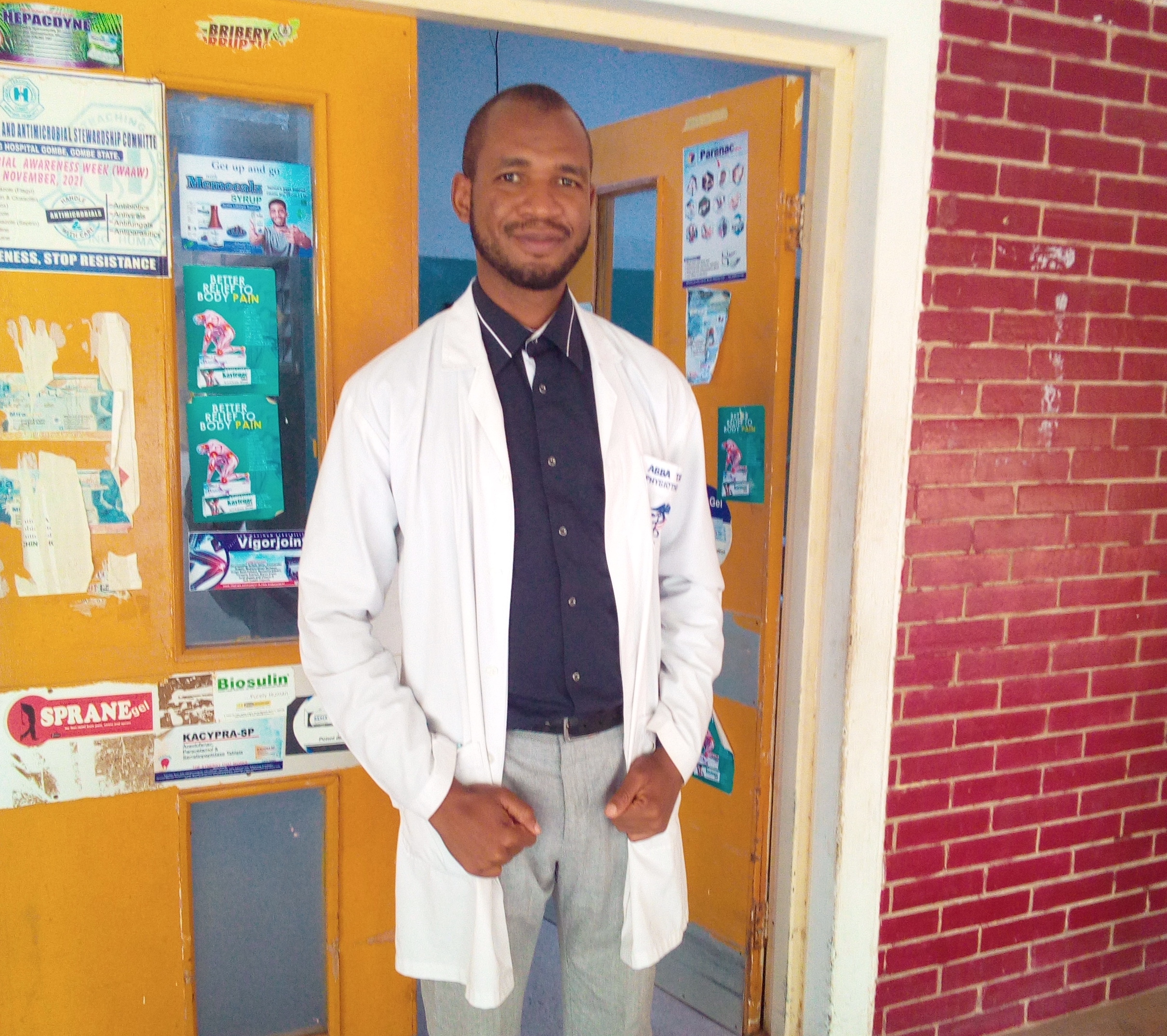
By Oladoja M.O
The Ministry of Health convened a timely, critical, and necessary gathering earlier last month: the National Health Financing Dialogue. A gathering with so much relevance and significance to address the almost comatose state of the Nigerian health sector. Reflecting on all said during the “dialogue,” there are just many thoughts creeping in here and there, which I feel compelled to just put up here for public consumption, and hopefully get across to the rightful authority to pick one or two important things.
The dialogue, as noted earlier, was undeniably timely. I was not disappointed at all at various thematic areas buttressed on, ranging from health financing, health out-of-pocket spending (OOP) reduction, call for increment of the Basic Health Care Provision Fund (BHCPF), accountability and budgeting, over reliance on external health funding, insufficient resources as needed in the health sector, the need for proper, timely data to guide government decisions, the role of the media, and civil society organization in health sector, and holding government accountable, inclusivity of citizens in the budgeting process, budget execution, status of LG autonomy, the gap between research and policy making, establishment of proper framework for mental health in Nigeria, amongst many other things the dialogue rallied around. Reiteratively, all of these are core and vital to ensuring a positive paradigm for the national health sector state and to delivering on the interests of the citizen at large. Indeed, it was a worthwhile and insightful meeting.
Though we still have quite a long way to go, I cannot help but acknowledge the works of the government of today on how far we’ve come in policies, increased allocation, investment in facilities, equipment, and a healthy workforce as regards health, captured in my work “Tinubu’s Healthcare Reforms: A Turning Point or Déjà Vu?”. During the course of the dialogue, a lot of observations kept creeping in, questions, suggestions, which there was not enough time to even express.
On observation
(1) We are unprepared to solve the country’s health problems, especially the issue of LG autonomy. The government focuses on superficial solutions instead of addressing root causes. LG autonomy is treated lightly compared to its importance. Primary care, which, if improved quickly, could significantly boost our health status. Unfortunately, the government is unable to do so. When I talk about autonomy, I mean actual, constitutionally granted autonomy, not superficial gestures like the Supreme Court’s jamboree. My writings, “LG: The Employed Man with no Office” and “Federalism and the Paradigm of Healthcare Accessibility,” elaborate on my views on this. The primary health issue affects p
(2) Make us talk truth, behind the blinking good intentions, health-related matters are often used for political publicity rather than long-term structural impact. Hence, many government interventions in healthcare are politically motivated rather than development-driven.
(3) Still on the LG thing, I am more than disappointed at the way and manner in which the ALGON representatives at the dialogue spoke. What do you mean that you, as a stakeholder, come to such a stage to complain like every other person?? Basically, no form of cognitively presented way forward or suggestion, just another “we are being victimised” rhetoric. So Shameful! I was expecting them to flare up, demand something meaningful, but chai! My expectations were shattered. I thought they would speak about actual autonomy, driven by the constitution, not some half-baked, almost non-enforceable liberation.
In fact, the LG people present were just disappointed. We are talking about how to mobilise money, generate revenue for development, generate more liquidity to fund health, fund infrastructure, and none of them could make a meaningful comment on how funds can be generated rather than “if the autonomy sets in, we will ensure that all the allocation from the FG will be fully maximised.” As cool as that sounds, it was just another “we cannot do anything aside from what the FG says” kinda statement, and it only made me feel like this autonomy thing sef fit be another set-up… God abeg….
(4) On the role of media, it is crucial to even lean towards the perspective that the media is a culprit for where we are. Unfortunately, many media outlets and media handles are so fixated on just saying something, rather than saying something correct, and something from a knowledgeable stance, which to me, is even more dangerous than no information at all. Notably, the media are failing to pass information effectively. Especially the way they handle headlines. It is unfortunate, but it is the reality of our Nigerian populace that we have less of a reading habit. Hence, it is easy just to pick a headline, usually different from the content of the post, and run with it. Which is causing more harm to available information in the media space? Careless or sensational headlines have the potential to mislead the public, especially regarding sensitive policies such as those related to health. The issue of meaningless government secrecy is another thing I observed… and much more the issue of partisanship in politics by various media platforms and handling is another very obvious issue, causing every bit of information, especially unfinished policies or updates that are still in the pipeline, to be twisted for “political goals.”
(5) In research, I observed that independent researchers and young passionate individuals in public health are often ignored, not encouraged, nor recognised, despite the need for data provision to help the government in setting priorities on health, and assisting in policy-making.
(6) There’s just little or no innovative lawmaking pursued to fix systemic problems, especially wasteful constituency projects.
(7) Also, there seems to be too much focus on “there’s limited of…” What happened to the effective and efficient usage of the ones available?? Both in resources and in data.
And upon all the gbogbo atotonu of the dialogue, I was able to curate some suggestions which might be found useful;
(1) One of the major highlighted themes of the dialogue is the need for health insurance. It cannot be overemphasised that the importance of awareness still needs to be emphasised, especially to get the informal sector on board, because even among the small number of health insurance adopters, the major participants are those in the formal sector, with government employment. This awareness is not just something that will be around; “there is health insurance, and it is good for you.” But down to explaining various packages and what they cover, which can help guide expectations, correct misconceptions, and promote positive word-of-mouth about health insurance.
To meet up the ambiguous target of 40 million by 2030 and get more people from the informal sector onboard, I think a referral model (like those used in Ponzi schemes or digital marketing) could be adopted, making Civil servants primarily to act as “agents of change” or in this case, referral ambassadors, with promise of small tokens as reward for each successful referral. Because these civil servants are friends of people in communities, and even in places where government jingles and banners cannot reach, they help propagate. No matter how we put it, the mouth-to-mouth campaign remains a powerful promotional strategy.
Another strategy is to tie health insurance enrolment to certain civic entry points, such as marriage registration. It can be mandated as part of the requirement to be submitted to the registry, where intending couples must show evidence of insurance. Procedural inefficiencies and bottlenecks should be removed to improve efficiency and ease the process, because I believe they are part of what discourages enrollees. Because even some who are already on health insurance coverage sometimes, because of long processes, delays, and stress, abandon the health insurance thing and pay out-of-pocket to get “sharp sharp” attention to their need. These negative experiences contribute to negative user feedback, and it spreads faster to non-users, worsening perceptions of health insurance enrollment.
(2) Though it may feel morally vexing, I suggest that health subsidies be tied to individual health behaviours. Those with risky lifestyles (alcohol, smoking) could face different treatment costs compared to people with unavoidable illnesses or accidents. This could encourage preventive lifestyles and behavioural change.
(3) On constituency projects, motorcycles, tricycles, food items… even outreaches) seems wasteful. I would suggest that a ban be placed, or at least regulations be given to what exactly these funds can be used to do… but then, who are those to impose that ban or restrictions, other than the actual people guilty of the bad behaviour? By direct analysis, these funds can be used to build facilities instead… whether school, or even hospitals, in this regard, left to the management of an independent body to be used efficiently and be used productively to generate money, money that can even be enough to run the operations and cover costs on its own, at least, and since the focus is to be able to generate liquidity to operationalize the facilities, the cost would be meager. They should not be free but rather run like a private entity to promote productivity. The billions lavishly spent on those meaningless things, if used in this manner, will result in more than 5–10 facilities at the senatorial district level or at whatever level of representation. Imagine if this number of facilities joined what we have??
(4) On the failure of some states in meeting their counterpart funding for BHCPF, they should not receive interventions from the FG. FG should publicly announce those states, carry the citizens along, and allow them to hold such state(s) accountable. There’s not enough funding. Therefore, the one we have must be spent in a way that is strictly tied to value and commitment.
(5) It is my suggestion that stronger media regulation be deployed to curb the spread of harmful and incorrect information (such as more dangerous than no information). And there should be a regulation/restriction on every journalist’s participation in politics. The place of media is quite sensitive, and they must remain sterile and neutral. Involvement in politics should be punishable by a ban on practising. This will give credibility to the profession and what their position is in the process of building a better state of the nation.
(6) On mobilisation of funds for health, I would suggest that the FG create something like a Health Bond, similar to commercial papers, to mobilise funds for health.
(7) Research should be given all the support it may ask for. A nation without accurate data is one with a lack of radar for progress… and I think one of the ways the government can support young, enthusiastic researchers (especially to gather young brains who are ready to help the government generate actual data for purpose of health policy and priorities) is to create access to platforms to show their works, something like a journal. We all know how much publications mean to researchers, and for young fellas like that, it can boost morale, knowing that their work is not wasted and is seen, whether it is to publish for free or at a very subsidised cost.
Lastly, I have been, and I remain, an advocate for the proper integration of the traditional health care system into the general healthcare system in Nigeria, especially at the grassroots level (Primary Health Care). My advocacy and thoughts are captured in some of my writings on Blueprint and HealthDigest. Health is people; people are culture. Nothing screams culture more than the traditional health care system. We cannot only tech-chase ourselves into a proper healthcare system in Nigeria.
Yes, technology is excellent, and AI is great, but the actual health burden we face requires that we not focus solely on these technologies. To me, I ask: why are we running? There’s a system that has been in place all this time; it should not be ignored. Many big economies have this included. The place of this traditional health system is beyond just provision of care (because, yes, a lot needs to be moderated). Still, these people can be brought in as agents, and their already established, patronised platforms can be used to promote government activities. Yes, they can assist in care provision. In fact, they have to. Knowledge of healing from generation to generation should not be neglected or allowed to die out.
Oladoja M.O writes from Abuja and can be reached at: mayokunmark@gmail.com.