Hausa language

My Language, my pride

By Abdurrazak Muktar Makarfi

Have you ever stopped to think about the language you speak and how awesome it is? Well, I’m here to tell you about the Hausa language, and let me tell you, it’s pretty amazing! As someone who speaks Hausa, I’m bursting with pride to share why this language is so special.

Let’s take a little trip back in time to the historical kingdoms of the Hausaland, nestled in what is now called Nigeria and some other neighboring countries. That’s where the Hausa language started to take shape, blending influences from trade, migration, and cultural exchanges over the centuries.

Now, here’s the cool part – Hausa isn’t just a local language. Nope, it’s a global superstar, ranking as the 11th most spoken language in the world! Can you believe it? From Africa and beyond, millions of people speak Hausa, making it a real powerhouse in the linguistic world.

But Hausa isn’t just about saying words; it’s a whole vibe, a cultural identity that connects people across borders. It’s like a treasure chest of traditions, stories and values passed down through generations. The Hausa language is the heartbeat of West Africa, pumping life into its rich cultural tapestry.

Okay, let’s talk on business and politics. Hausa isn’t just chilling in the background; it’s making things to happen. As a lingua franca in West Africa, it’s a language of trade, commerce, and diplomacy, bringing people together and driving progress in the region.

Now, let’s zoom in to education. Imagine learning in a language that’s close to your heart, that speaks to your soul. That’s what Hausa language education does for millions of kids, giving them a solid foundation in learning while celebrating their roots.

Sure, Hausa language faces challenges like any other, but it’s also full of opportunities. We’re talking about initiatives that promote awareness, document our language’s rich history, and bring Hausa into the digital age.

So there you have it – the awesomeness of Hausa language in a nutshell! It’s more than just words; it’s a celebration of culture, a bridge between people, and a source of pride for millions. As a proud Hausa speaker, I’m shouting it from the rooftops – Hausa language rocks!

From the pen of Abdurrazak Muktar Makarfi, a proud Hausa speaker

Hausa: Hantsi leƙa gidan kowa

By Muhammad Muhammad Salisu

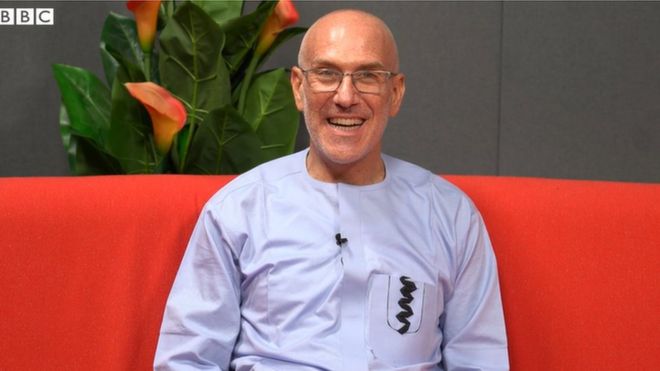
Meet Professor Rudolf Gaudio (he has adopted a Hausa name, Sani), a professor of anthropology at the State University of New York, who started learning Hausa in the US in 1986. He had never visited any African country, not to mention any Hausaland, when he started speaking Hausa. His first contact with the Hausa people was in 1991 in Sudan before coming to Nigeria. He started learning Hausa alongside Swahili.

This reminds me of an Igbo girl at Nigerian Law School, Yenagoa campus. She was awestruck when she saw me speaking Hausa with another Igbo girl. She retorted, “So you can speak that ‘thing’?” From her tune, I could see that she thought it an abomination for the person I was speaking to speak the ‘Aboki language’. The person I was talking to speaks the Hausa language fluently, though was born and raised in Bauchi.

Another incident was when I took a tricycle in Yenagoa. The driver told me the fare, which I bargained for. He told me, “Ka cika son banza.” I was surprised at how an Igbo man (he later told me he was Igbo) could speak Hausa, though with a heavy accent.

One day, I was at a restaurant alone at the Yenagoa campus. Another co-student was sitting by himself and three other female students from the northern part of Nigeria were at another corner gossiping. They, along the line, turned their gossip on the other lad. They were making jest of him, believing he couldn’t speak Hausa. When it was time for him to leave, he bade farewell to them in Hausa, saying, “Na gode [probably for making jest of him], sai an jima.” (Meaning, “Thank you, goodbye.”)

Muhammad Muhammad Salisu wrote via muhdibnmuhd@gmail.com.

Alcohol, ethanol and beer

By Bilyamin Abdulmumin

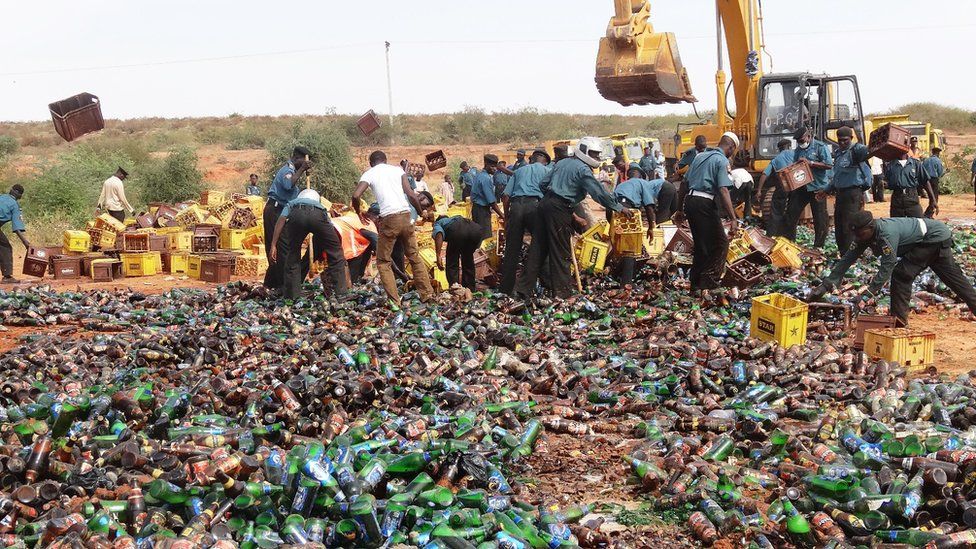
Days ago, a picture of a beer advert on a bus with the caption: “ba barasa a cikin wannan giyar” dramatically attracted public attention. First, it appears the translation was outright flawed. The English direct translation may read thus: the alcohol doesn’t intoxicate.

Every native or one conversant with Hausa would find it difficult to wrap his head around this Hausa translation. So, some think it was out of the sheer cheap labour that the South African wine industry relied on the online translator to land them into the translation comatose. It might also be the usual case of giving the advert to the wrong agent or hiring a non-native to advertise the product.

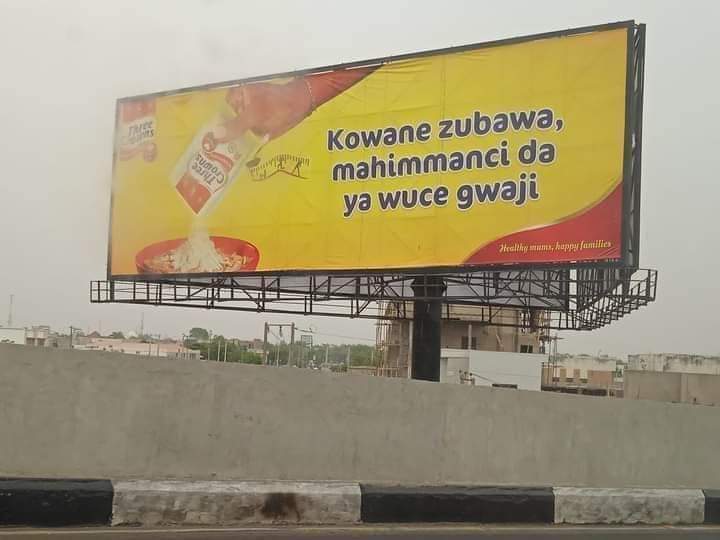
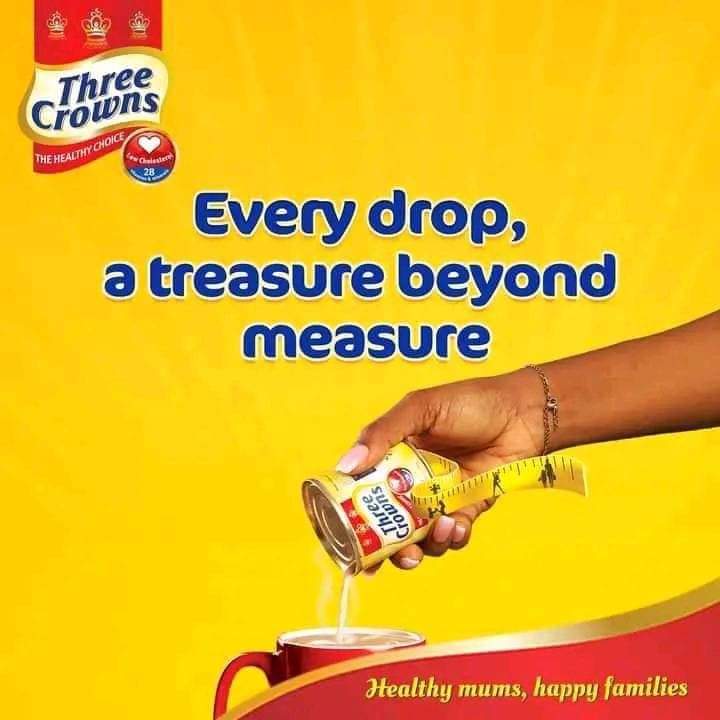
Forget it; even if you are a professor in a particular language but happen to be not native or brought up in that typical language culture you will end up harming the advert than promoting it. One such advert that went wrong recently was that of one famous company, which read: “ko wanne zubawa, muhimmanci da ya wuce gwaji”. The equivalent English version read, “Every drop treasure beyond measure” What a rape to language!

As promoters of products, one can never dare associate the advert with alcohol in Hausa or any Islamic land; else, the result will be a mass exodus from the product. The brewing companies are still recuperating from the wound their Maltina product suffered because the same company is producing it as beer.

One factor that even fans the fire of controversy is that alcohol, beer/wine, and intoxicants are used interchangeably as the same thing: giya/barasa. So it becomes meaningless to try to separate one from another: that is to say, the beer contains no alcohol, alcohol is not intoxicated, or the alcohol is non-drunken. In the Hausa language, as long as it is alcohol there is nowhere to turn around.

Notwithstanding, are alcohol, ethanol, beer/wine, and intoxicants the same or different?

Alcohol is a general term referring to any organic compounds with OH functional groups. Therefore, any organic chemical with -OH in its makeup is alcohol. Examples of alcohol (alkane series) are methanol, ethanol, propanol, butanol, and the list goes on…. Alcohol has been a subject of controversy, no thanks to one of its family members: ethanol.

This controversial member: ethanol, is composed of two carbon, six hydrogens, and one oxygen; because of the presence of OH (hydrogen bonding) in its makeup, ethanol enjoys a wide range of applications. It is next to water as a global solvent. In addition, where water fails in industrial application, ethanol as an organic chemical (with carbon in its makeup) swoops in.

The industries where ethanol easily finds its way include Pharmaceuticals, several medicines you can’t do without today owe themselves to ethanol; Paint Industry, where your favourite paint can’t exist without ethanol; Fragrances, ethanol, not water is the solvent for making many perfumes; the Medicinal Properties, ethanol is a death sentence to microorganisms so when next used sanitiser, know that ethanol is that potent content; Bakery Industries, yeast is used in the bakery to give the bread desired quality as a result of ethanol and carbon dioxide as a by-product; Electrical Repair, ethanol is used as spirit, take your gadget for repairs they use ethanol for cleaning; Oil and Gas, perhaps the most economical part of ethanol use is when employing as fuel, depending on the purity, ethanol can be used as complement or substitution to transportation fuel (PMS); Brewing Industry, now the most controversial part of ethanol is when used as a drink, such as beer or wine. In beer, starch, e.g. corn or maize starch, is acted upon by appropriate enzymes and yeast industrially to produce beer. In a similar passion, fruit instead of starch is used in winemaking. Ethanol in brewing is the most dominant public knowledge, so it has become synonymous with alcohol (even among native English speakers).

The beer and wine produced conventionally contain up to 15 per cent of ethanol. This percentage is quite enough to intoxicate the drinker. Islam has outrightly forbidden taking intoxicants, such as beer and wine. The consequence for the global brewing industries is that they can only bite their fingers to watch a market of a staggering 1.5 billion people impossible to penetrate. So this became the mystery brewing industry struggled to crack. They finally get a catch.

Because the prohibition in Islam said intoxicants, so by this view, the brewing industries can design beer and wines that contain quantities of ethanol that is not enough to intoxicate a drinker, making beer and wine halal. Some Islamic countries like Malaysia have already nodded to this explanation by setting 1 % ethanol as a limit. Perhaps this was the intention of the South African wine advert on the bus.

On the other hand, the ethanol prevalence is more than what we could imagine; we are as indispensable as ethanol is concerned. Because the enzymes, yeast, and starch/sugar necessary to make ethanol are ubiquitous and, by extension, the ethanol itself. The cups, plates, our hands, and system you are using currently to read this article are a community of microorganisms; among them are the saccharifying enzymes and yeast. So with food readily available in the form of rice (rice), kunu, zobo, pieces of bread, fruits, etc., the right contact is just required to get the ethanol. Fura is the breeding ground for ethanol. The longer the “fura da nono” takes (without refrigeration), the higher the quantity of ethanol will be in it. But this passive ethanol prevalence is non-intentional.

Bilyamin Abdulmumin is a Public Affairs commentator and a Doctoral candidate at the Department of Chemical Engineering, ABU Zaria.

Language is not a friend – I have bound my project

By Bilyaminu Gambo Kong-kol

Language is considered the principal method of human communication, consisting of words used in a structured and conventional way and conveyed by speech, writing, or gesture. It is a tool that establishes commonness between the sender and the receiver.

For the commonness to be established, the encoder must be well-grounded in the language he chooses to use and arrange his words systematically. He must also consider meanings such as denotative, connotative, reflected, and social, among others. 

The receiver must also do his part as interference is likely to occur from him, the environment, channel, or encoder.

However, language sometimes becomes a betrayer by betraying even the native speakers due to its rigid nature. The fact is that even if you are familiar with the rules, language may decide to disgrace you abruptly.

In this piece, Hausa, Fulfulde, and English languages will be used to explain my points.

In Hausa, it is a rule that most of the words that end with the letter “A” are feminine, and those ending with E, I, O, and U are masculine. But there are exceptions. For instance, words like kotu (court), gwamnati (government), and kwallo (ball) end with masculine vowels, but they are feminine. On one part, ruwa (water), zama (sitting), and kira (call) are masculine despite having feminine endings.

Hausa also demands that wherever possessives “Na” and “Ne” are used for masculine words, they should be substituted with “Ta” and “Ce” for feminines. For example, Jirgina ne (It is my plane), motata ce (It is my car).

Many Hausa speakers, including some of the natives in northwest Nigeria, are struggling to adhere to the rules. To get primary data on this, choose any state in Nigeria and listen to their radio stations or have physical interactions.

In Fulfulde, the law states that a word’s ending determines its demonstrative adjective. For instance, it is okay to say this horse, this room, or this pen in English, but the case is different in Fulfulde. Wamnde nde, sudu ndu, bindirgol ngol. To learn more, get a Fulani friend or wife.

This rule is giving headaches even to the LI in Yola, as it requires alertness and quickness of thought. It is normal to hear a typical Fulani man saying “Mi laari mo” instead of “Mi laari ngal” when he is referring to “I saw the hen”.

Another blunder is the introduction of the letter “V” in Fulfulde. In a standard Fulfulde setting, there is nothing like the consonant sound /v/. Hausa, too, does not have it. That is why some Hausa say bery good instead of very good. Just like the way some Hausa misplace V for B in English, some Fulfulde speakers misplace W for V in their first language. 

For example, “O vindi” instead of “O windi” (He wrote), “Mi vi” instead of “mi wi” (I said), “O va’i leggal” instead of “O wa’i leggal” (He/she climbed a tree).

One interesting thing about Fufulde is that, unlike Hausa and English languages, Fulfulde does not have pronouns that differentiate gender. Fulfulde’s pronoun “O” refers to he/she in English and Shi/ita in Hausa.  And Fulfulde’s pronoun “Ma” refers to Ka/Ki in Hausa. Maybe this was done to show our shyness and respect (Pulaaku). 

Another virus that is threatening Fulfulde is code-mixing and code-switching. Some Fulfulde speakers in Adamawa, Taraba, Gombe, and Yobe could not speak pure Fulfulde for an hour without borrowing from Hausa, English, Arabic, or their L2 words. This signifies a low level of grammar or lack of respect for Fulfulde language. It needs to be fought gallantly.

In English, rules of concord, tenses, syntax, and semantics are hectic for learners and L2 speakers. 

Concords like: “He says, I say, they say, he has, I have, they have, he does, I do, they do, he does not have, I do not have, and they do not have” are found to be confusing most especially by learners. Also, the sentences below, even though correct, may not convince learners as plural nouns could be seen nakedly. Shamsu, together with his wife, is coming to London or Maijama’a, along with Bilkisu, is coming to Cyprus. Think of “Neither Ghali nor the students are present” vs “Neither the students nor Ghali is present”. 

In tenses, the unjustified usage of the past in the present, the present in the past, or the distortion of the entire tenses is common. Moreso, the choice of words and sentence construction are influenced by speakers L1. You will see an English sentence given direct translation from Hausa, Fulani, Igbo, or Yoruba. Example: Haruna said it is for you and me.

In phonetics and phonology, words are pronounced mostly the way we hear others articulate them over time. Sometimes, Lll speakers localise the British accent. Consonant sounds like /θ/, /ð/, /ʃ/ /ʒ/, /ʈʃ/, /dʒ/, and ŋ/ are mispronounced in some words. Vowel sounds /ʌ/,  /ə/, /ɜ:/, /æ/ and the eight diphthongs play with the tongues of learners. Or should we say learns to play with them?

The topic is broad, but advisably, make sure you learn all the dos and don’ts of every language you want to communicate with people. This will pave the way for you to communicate effectively and earn your respect. By so doing, you minimise 70% to 90% of your chances of making mistakes. Don’t expect 100%; even the natives are still looking for that!

Nevertheless, always remember that language is not a friend. It may decide to disappoint you unexpectedly. I received mine on my last day as an undergraduate student at Bayero University, Kano. I was stuck fishing out whether the word “bind” is a regular or irregular verb. What is the past participle; binded, bounded, or bound? It had escaped my memory. I still don’t understand why English decided to misbehave on this special day of mine (04/05/2023).

Whatever the reason, I got a pitch that led to the writing of this article. Alhamdulillah! My appreciation to communication scholars, the Vice Chancellor of Federal University, Kashere, Professor Umaru A. Pate, and OPEC’s PR Coordinator, Dr Umar Jibrilu Gwandu, for drawing my attention immediately. I HAVE BOUND MY UNDERGRADUATE PROJECT!

Bilyaminu Gambo Kong-kol is a graduating student of the Mass Communication Department at Bayero University, Kano. He can be contacted via bilyaminugambokonkol20@gmail.com.
Three Crowns Milk producer under fire over ad in shoddy Hausa

By Muhammadu Sabiu 
 
FrieslandCampina, a multinational dairy producer of the famous Three Crowns Milk and many others, has come under fire over the wrong translation of a billboard advertisement from English to Hausa.
 
Many Hausa-speaking social media users, particularly on Facebook, have taken it to their handles to criticise the company for the unprofessional translation of the advertisement.
 
Several of them attributed the error to Campina’s unwillingness to hire professional Hausa translators, adding that it might have been a work of a machine translation.

Attaching pictures to his post about the advertisement, a Facebooker named Aliyu M. Ahmad wrote: “Have you seen the work of ‘Google Translate’?
 
“This is done as if we don’t have Hausa brand designers.
 
“Please, somebody should translate it into standard Hausa.”
 
Another one, Ashir, posted, “Three Crown[s], you’ve raped the Hausa language.”
 
The Daily Reality has gone through social media pages belonging to the company but has not seen any responses to the criticism yet. They were not reachable for a reaction either.

In the past, many Hausa social media users complained about similarly terrible translations seen on billboards adverting one or another product in northern Nigeria.

Others called on the Advertising Practitioners Council of Nigeria (APCON) to intervene. However, The Daily Reality has not seen such an intervention from the council as during this report.


TRT launches Africa service to counter Western narratives

By Uzair Adam Imam

The Türkish public broadcaster, TRT, has launched a new digital platform, TRT Afrika, to counter Western media narratives about Africa.

Mehmet Zahid Sobaci, leading the launching on Friday, decried the way Africa is underreported by the Western media today.

However, with the emergence of TRT Afrika, many interesting stories that have been silenced would be relayed to the global audience.

Sobaci added that the medium intends to showcase stories from Africa and put its unique values at the heart of the world’s events.

He added that Africans would have a voice to communicate their ideas, values and cultures to the world without any alteration and in their languages, such as Hausa and Swahili.

He further stated that the medium would also pay attention to the good stories of Africa that have been silenced or underreported by the Western Media.

TRT Afrika, which employed staff from fifteen different African countries, would, according to Sobaci, “be like a mirror to Turkey’s policy and its relationship with Africa.”

He further stated that this would enable TRT to find out about different stores from the continent.

Paradigmatic Shift in Literary Ignorance: Ajami on Naira Reloaded

By Prof. Abdalla Uba Adamu

As we enter into the ‘will they, will they not’ mode of uncertainty typical of Nigerian public culture about the change of Nigerian higher currency denominations announced by the Central Bank of Nigeria (CBN) on 25th October 2022, my mind went back to an article I wrote on 16th April 2007. This was in the wake of the removal of “Arabic inscriptions” on the Nigerian currency (the Naira) on 28th February 2007 in the new currency notes that removed the Ajami (Hausa written in Arabic script) writing that indicated the denomination of the respective currency note and replaced with the Latin alphabet. This is a ‘remix’ of that posting on the then-popular platforms of Blogspot. Mine was called Nishadin Hululu (Hausa Popular Culture).

The full historical overview of how the Arabic “script” came to become part of the essentially northern Nigerian Muslim Hausa educational package is given in Manuscript Learnability and Indigenous Knowledge for Development – Hausa Ajami in Historical Context. A version is available at https://bit.ly/3zoi7XN.

I rarely bother to visit Nigerian “Naija” websites on the web or any other group of politically motivated Nigerians. I know what I will find – the usual vituperative tirade against northern Nigerians, Muslims, Hausa, ad nauseum. Southern Nigerians have three fundamental articles in their crusade against northern Nigeria: Islamic fanaticism, conservative feudalism and their weird perception of the “born to rule” syndrome held by the ‘northerners’. No matter how many groups of Nigerians you interact with, these three form the main focus of the divide in Nigeria. They are the main reasons why Nigerian “unity” is virtually impossible.

I doubt if there is any other group of Africans who hang out their dirty ethnic laundry like Nigerians. Although, I accept, for the most part, such ranting is probably not personal; they are basically religious – the Christian versus Muslim divide, rather than any feeling of superiority of one ethnic group over the other. Any such feelings of superiority are part of a religious template that sees the acquisition of education as the central criteria for judging the value of a whole people. Thus education, not religion, is the central fulcrum around which the Nigerian nation wobbles.

Southern Nigerians acquired education through Christian Missionary activities from about 1849. Such education became the mainstay of acquiring Westernized modernity. Inevitably Western education brought by Christian missionaries to Nigeria became equated with Western Christian values. For the most part, Christian southern Nigerians are happy with this because it makes them “civilised” – in the absence of any cherished antecedent cultural values. Thus, any other worldview is considered barbaric.

Northern Nigerians, specifically the Hausa and the Kanuri, acquired education through conversion to Islam since 1250 and even earlier in the Kanuri kingdom. The constant eddy of scholars from north African learning centres throughout the 14th to 17th centuries ensured a sustained scholastic tradition in Muslim northern Nigeria. Muslim northern Nigerians, therefore, had a longer exposure to the concept of formalised learning and literacy than southern Nigerians. Universal basic education was indeed introduced around 1464 in the city of Kano when new methods of indigenising the Arabic script to Hausa phonology were created. This led to the creation of a novel way of writing out the Hausa language in a script that young scholars will understand. This method of indigenising Arabic script to the Hausa language became “Ajami”. It became one of the main ways of educating young pupils in northern Nigeria. Do you remember all those “Almajirai” you see in northern Nigerian cities? Well, most are fluent in Ajami writing. Currently, the most prominent modern Hausa political singer (though not the most talented or likeable), Dauda “Rarara” Adamu Kahutu, has an extensive catalogue of his songs, all written in Ajami which he reads as he records in the studio.

Ajami, therefore, is any literacy strategy in which any language is written in Arabic. Over 50 languages are currently written in the script. First, let us look at the parallel sphere. If any African language is written in Latin characters, it can be called Ajami. Ajami is not Islamic; any more than the Latin alphabet is Christian.

However, in a new era of reform, CBN decided to remove the “Arabic” script from the Nigerian currency in new currency notes launched on 28th February 2007. The removal of the Ajami script on the Nigerian currency reflected Nigeria’s deep-rooted religious divide because the Arabic script was seen as religious – and Nigeria is considered a secular country. This equates Arabic with Islam – ignoring the vast number of Arab Christians throughout the Middle East.

The logic of the removal of what the Nigerian economic establishment calls “Arabic inscription” on the Nigerian currency given by the Nigerian Government was premised on using a Latin inscription that is available to all Nigerians (even if in mutually exclusive languages), rather than an exclusive script tied down to a particular religious culture. According to the then Governor of CBN, Professor Chukwuma Soludo, during a sensitisation visit to the Sultan of Sokoto,

“I will also like to inform you that the removal of the Arabic inscription on the notes is not targeted at any group or religion but rather to promote our language and cultural heritage…As you can see, Naira is the symbol of our nationalism and our pride. It is pertinent to let you understand that Arabic is not one of our national languages, and it was inscribed on the notes forty years ago because the majority of people then could read it in the northern part of the country to the detriment of their counterparts in the South (ThisDay, 16th February 2007, posted to the web 19th February 2007 at https://bit.ly/3TQ4FEw.

Similarly, the CBN issued a rebuttal to the controversies by stating that the “de-ajamization” was to “conform (to) Section 55 of the 1999 Constitution, which recognises four languages, English, Hausa, Ibo and Yoruba as medium of conducting government businesses.” After all, as they claimed, after forty years of Western education, most people in Nigeria should be able to recognise Roman inscriptions. This, we believe, can strengthen our unity by ensuring equity and fairness. Indeed, the replacement was done in national interest and the desire to comply with the Constitution of the country.”

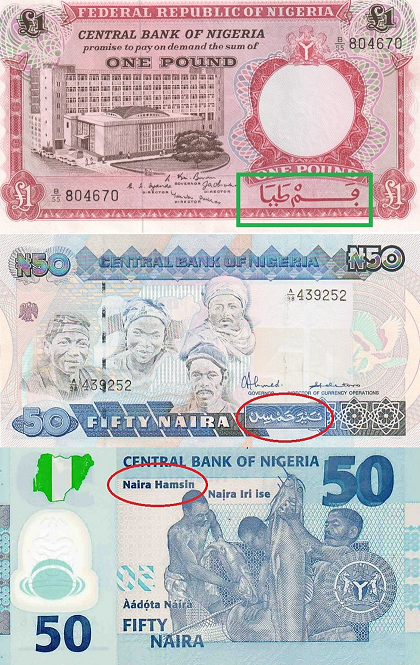
But how can national unity be attained when a large proportion of the country is still marginalised? To prevent this marginalisation, the British colonial administration introduced the Ajami letters on the first Nigerian modernised currencies, well aware of the large education gap – and therefore, the ability to read and understand Latin characters on the country’s currency notes. An example was the £1 note.

Fam daya” was prominently written to enable those literate in Ajami, but not the Latin alphabet, to identify the currency.

Interestingly, the main argument was that the presence of Ajami on Nigerian currency was seen to the “detrimental” to southern Nigerians (who presumably do not understand it) – yet the inclusion of the Latin alphabet is not seen as detrimental to non-Roman literate northern Nigerians (mainly Muslim Hausa, who presumably do not understand it). In this warped logic, it is, therefore, easier to alienate Muslim Hausa northern Nigerians than southern Nigerians, especially since a Christian was the President of the country (and a Christian Governor of the Central Bank facilitated the alienation). Of course, when a Muslim becomes the President, the arguments might be revisited – and reversed, which another subsequent Christian president will also revisit, and so on endlessly. Farooq Kperogi actually imagined a nightmare scenario that might come out of this in 2022 at https://bit.ly/3TOt2T1.

The inclusion of the script on the Nigerian currency by the British colonial administration was an acknowledgement of the rich literary heritage of a vast number of people in Nigeria who could not read the Latin script– and not a strategy to impose Islam on anyone in Nigeria. Indeed, the British colonial administration had no reason to propagate Islam. Yet on the currencies circulated by the same administration, the “Arabic inscription” was conspicuously present. This was maintained until 2007 when the despised Arabic inscription was removed and replaced with the much-loved Latin ‘inscription’. An example with ₦50 illustrates this.

The ₦50 with the ‘Arabic inscription’ of Ajami merely indicates that it is fifty naira in Hausa. In the redesigned ₦50, the Roman name for the Hausa was ‘naira hamsin’ instead of the Ajamized ‘hamsin’ in the old note. Yet, ‘hamsin’ means fifty in Arabic! So, like it or not, Arabic remains on the naira. To get rid of it, you have to get rid of the Hausa language entirely since about almost 45% of Hausa words are based on the Arabic language.

Further, other multicultural countries pay such homage to multiple literacies in their currency notes. The Indian currency, for instance, has 15 language scripts, including Urdu (Ajami) – despite Arabic not being part of its national languages.

And while not explicitly stated, the links made by the Nigerian economic establishment with Arabic to Islam seem to be part of a move to “de-Islamize” Nigeria – scoring a cheap point, particularly in the way most northern Nigerian states re-introduced Islamic Shari’a in their governance from 1999 led by Zamfara State, and the earlier issue of Nigeria’s membership of the Organization of Islamic Countries (OIC) in January 1986, which the Nigerian Christian (as well as Marxist Muslim) groups were against.

We look forward to the new currency notes in December 2022.

Prof. Abdalla Uba Adamu wrote from the Department of Information and Media Studies, Bayero University Kano, Nigeria. He is, among many other things, the former Vice-Chancellor of the National Open University of Nigeria (NOUN). He can be reached via auadamu@yahoo.com.

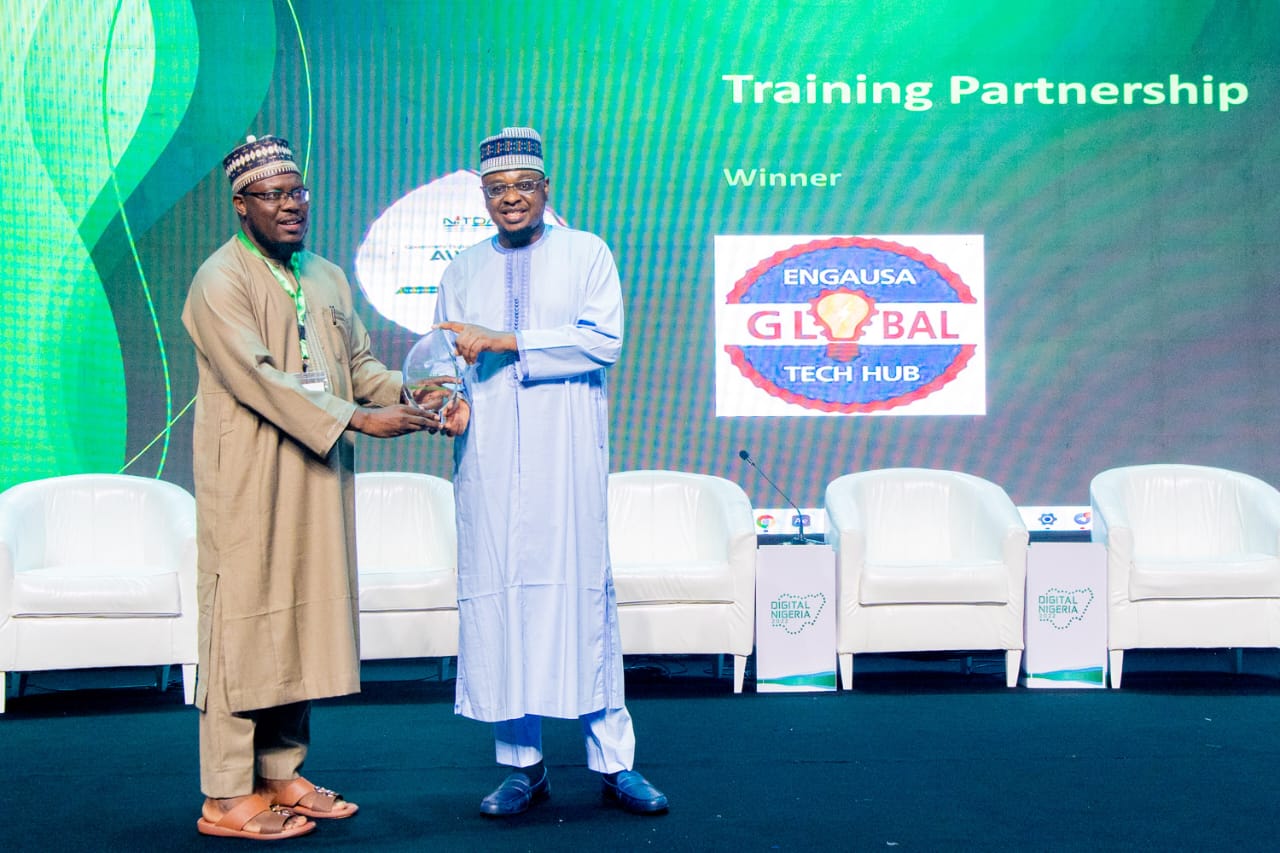
Ministry of Communications honours ENGAUSA Tech Hub with award of excellence 

By Muhammad Sabi’u and Uzair Adam Imam

The Nigerian Ministry of Communications and Digital Economy honoured the famous Nigerian technology training firm Engausa Tech Hub with an award of excellence as the “best trainer” among partners of the National Information Technology Development Agency in the country.  

The ministry disclosed this on Wednesday in a post shared on its official Facebook handle, adding that the award was pronounced at the Digital Nigeria conference of 2022.

The firm has established a name in the area of training youths in modern digital skills, primarily in Hausa and English and continues to record remarkable successes. 

The founder and chairman of the tech hub, Engineer Mustapha Habu Ringim, said the firm recently trained over 2000 young people in different skills, including digital skills, entrepreneurship, guidance and many more.

Ringim added that the graduates trained in various science and technology skills included the university lecturers, students, and Almajiri, who never attended any formal school. 

‘We teach in Hausa to break barriers English brings about in our education system’ – CEO 

The Engausa Global Technology Hub believes that knowledge can best be taught in a mother tongue (Hausa) to break the barriers impeded by the English language. 

In a statement he made available to journalists some weeks ago, Engineer Ringim said the technology hub had also launched a library to enhance reading among youths.

He said the effort was to enhance lifetime reading culture among youths, adding that the Maisuga Ringim Library has provided both hard and soft copies of reading materials for the apprentice of the technology hub. 

With its motto, ‘breaking barriers and bridging gaps’, the firm aims to entrench inclusive technical skills acquisition and entrepreneurial skills among the teaming youths against all language barriers and technical gaps bedevilling human capital development at the grassroots.

Engausa was founded in 2019 and registered in 2022 by Engineer Mustapha Habu Ringim. 

The menace of vernacular in our schools

By ImamMalik Abdullahi Kaga

The rate at which vernacular speaking is becoming rampant in schools (public and private) is so alarming. From elementary to secondary school, our children develop the ability to speak English or Arabic. But, without learning and practising it constantly, you can never be fluent in a language.

English is the official language in Nigeria, yet many people find it challenging to communicate with it. To convey your thoughts or ideas effectively and get well understood by others in many parts of the world, you must have the ability to communicate with the promising language – English because it’s a global language.

It’s regrettable and disappointing that a graduate with a bachelor’s degree or postgrad degree cannot speak or write in the official language appropriately. This, no doubt, results from one’s failure to learn it right from primary and secondary years (childhood). We cannot deny that most of us – northerners – have this weakness. But what could’ve led to this terrible mistake? First, the communication medium in our school days is often our mother tongue (Hausa).

Sadly, most schools don’t emphasise the need to use English to communicate among pupils or students. Some in question subscribe to the idea that (the English) language doesn’t determine one’s intelligence. Arguably, it is not, but we should consider the awful effect of not being able to use it correctly.

To be candid, you hardly find pupils or students communicating in English and Arabic (for bilingual schools) during school hours. For example, some teachers contribute to the escalation of this menace.

Some teach using vernacular, while others aren’t willing to prevent pupils or students from speaking it (vernacular). However, some unwisely claim that the students need a clear explanation of the treated topic. Hence, they use the local dialects to explain. This, however, doesn’t justify explaining lessons in local dialects because educationists have many teaching strategies.

Accordingly, teachers have this “disgusting” habit of speaking to students in the local dialects during class hours or break time. The students respond equally in the local dialects. During break hours, students communicate in the local languages without fear of being caught and penalised for that because the schools they attend don’t impose or simply disregard the rule.

If the abovementioned issue prevails, the coming generations will most likely succumb to the temptations to communicate in their mother tongue. Therefore, school proprietors and their managements should wake up from their deep slumber and confront this issue head-on, which helps deteriorate our education standard.

I believe teachers and prefects are the most powerful “tools” that could influence the students to comply with this because they play vital roles in shaping and correcting the students/pupils if they tend to stray.

ImamMalik Abdullahi Kaga wrote from Borno State University via abdullahiimammalik@gmail.com.

Social media users celebrate 7th anniversary of World Hausa Day

By Muhammad Sabiu

The Hausa-speaking community on social media, especially Facebook and Twitter, is today celebrating World Hausa Day for the seventh time.

However, Nigeria’s Twitter ban early this year has reduced much of the day’s celebration on the microblogging site.

The day was first introduced and celebrated in 2015, courtesy of concerned social media users such as Jamila Kabiru Fagge, Abdulbaki Jari, Bashir Ahmad, Salihu Tanko Yakasai, Faisal Abdullahi, Ila Bappa, Maryam Ado, others. The objective was to promote the Hausa language, its development and the challenges it faces as one of the major languages in West Africa.

The day allows Hausa users to come up and post witty Hausa sayings and make corrections as to how the language is used in conformity with its orthographical rules.

Hausa is one of the most spoken languages in Africa. It is spoken in about 30 African countries, with over 100 million speakers.

The language gathers momentum each day as several renowned media organisations broadcast in it. For example, media houses like the BBC, VOA, DW, Radio France International and the like broadcast in the Hausa language.

However, some social media users lament some challenges that the Hausa language and its people face today.

For example, Nurudeen Dauda wrote the following in his article: “Our people almost regarded begging as [a] profession. All well-meaning Hausas should and or must make [a] serious effort towards discouraging our people from begging. After all, we are not the only people suffering from poverty in Nigeria. It is among all!”