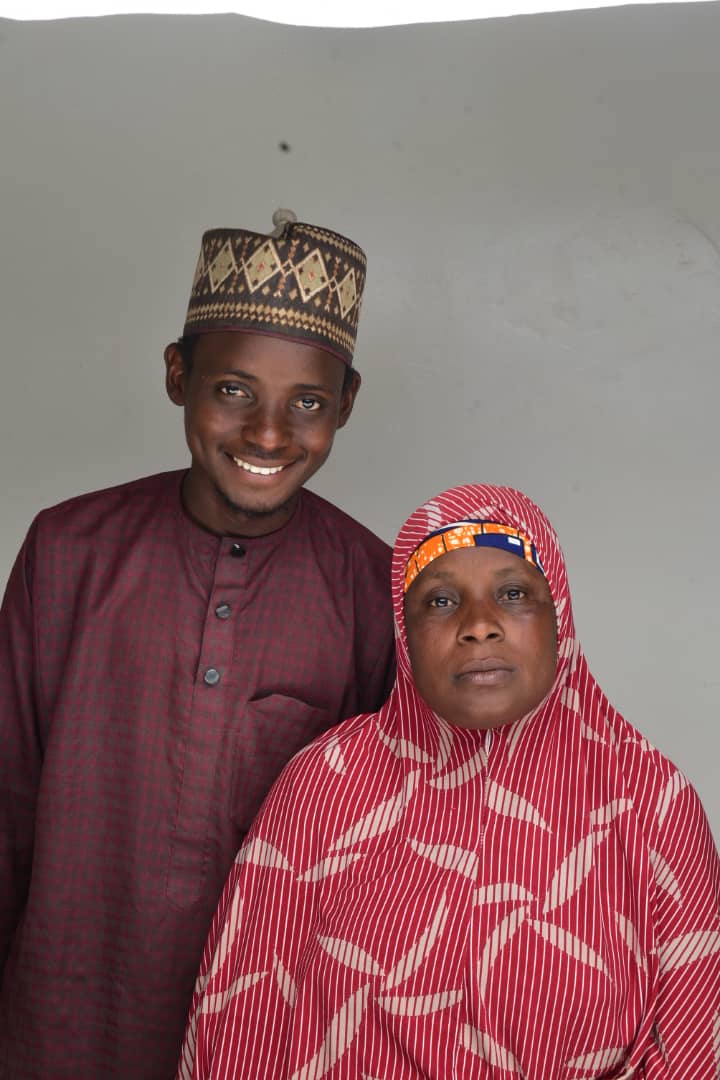
Physical attractiveness is recognised as one of the strongest societal currencies, with research suggesting it fosters confidence and can translate into personal and professional success for many women.
A 2023 study from the Journal of Social Psychology found that attractive individuals are perceived as more competent in initial social interactions, particularly in image-driven industries, which can be especially relevant in contexts like that of the Hausa/Fulani parts of Northern Nigeria, where cultural norms often emphasise appearance in social and marital roles. However, this focus can overshadow the importance of education, skills, and intellectual growth.
Consider the 2022 case of 5-year-old Hanifa from Kano State, who was tragically murdered by her head teacher tragically murdered. Her death sparked temporary outrage on social media, with behavioural psychologists attributing much of the reaction to her good looks, as noted in various analyses. This example, while digressive, highlights how attractiveness influences societal perceptions, even in tragic contexts.
While beauty can open doors, overemphasising it often has consequences. A 2025 LinkedIn report highlighted that women with advanced skills in fields such as technology, finance, or leadership earn 20-30% more than those relying on appearance-based roles, which often have shorter career spans. Investing in intellectual and professional growth not only leads to personal fulfilment but also challenges societal expectations, with confidence from career milestones being just as enduring, if not more, than that from physical enhancements.
Social media plays a vital role in promoting beauty standards over career-focused content. A 2024 analysis of TikTok content revealed that posts about Brazilian Butt Lifts (BBLs), Botox, and skin bleaching receive millions of views, often outpacing career-focused content. Influencers promote these aesthetic procedures by sharing recovery tips and glowing results, which normalise and glamorise them.
Meanwhile, women sharing career advice, skill-building tips, or educational opportunities are underrepresented, with a search for “career growth for women” on Instagram yielding fewer than 10% of the results compared to “beauty tips.” This imbalance creates a feedback loop, bombarding young women with messages prioritising looks over substance.
In the Hausa/Fulani parts of Northern Nigeria, career women face additional challenges due to stereotypes that suggest women’s value lies primarily in their appearance, undermining their professional and intellectual capabilities and hindering progress toward gender equality. An example is a female broadcaster from an international radio station who was ‘praised’ for her beauty while her professional qualities were ignored, with viewers even bullying and discrediting other broadcasters with equally laudable professional qualities for not meeting the ‘attractiveness’ standards. These stereotypes are rooted in cultural norms, thus often confining women to domestic roles and limiting their participation in many life-changing activities.
We need to amplify platforms and role models that celebrate diverse definitions of success. We need more women sharing skill-building resources, career tips, or educational opportunities, rather than BBLs, Botox, aphrodisiacs, and skin bleaching, which have surged in popularity. Self-care isn’t inherently harmful; the key is balance. Looking good should complement, not overshadow, a woman’s intelligence and abilities.
Khairat Suleiman can be reached via khairatsuleh@gmail.com.
May God have mercy on you! Your country’s name reminds me of abundance — the ceaseless and abundant flow of the River Niger. The great resource that is ever willing to serve Nigerians and non-Nigerians, like me, and countless others. It does not stop there; myriad resources – human, natural, and other— are scattered all over the “Niger-aria” that force the envy and admiration of many people who were not blessed with Nigerian citizenship.
Yet, here we are shedding tears in recognition of the waste it has suffered in the hands of those who have mismanaged it. The teardrops force their way out even more when we consider how ignorant the Nigerian youth is of the resources around him. Who are the successors to this great wealth called Nigeria?
The aspiration, needs, values and beliefs of the young ones are the key focus of every effective national curriculum. Youths should be more useful to their societies than mere patient seekers of white collar jobs. When values and character escape the curriculum, how will dignity and progress not escape the people? The hope of Nigeria is in its curriculum. If Nigeria is to present to the world those great nation-builders it once won the world’s attention with, it should be reflected in what is happening in the schools presently. The worst kind of slavery a country will ever suffer is to leave its abundant resources in the hands of ignorant successors.
What wrong could the people of Nigeria do to their blessed nation if they restrain themselves from those destructive desires that will ruin their owners and the country? Will Nigeria lose anything if it loses all its corrupt citizens? It is common knowledge to the corrupt and those who are not that nobody gains from harming fellow human beings. Surely, the criminals are running from the evil consequences of their crimes. What do we gain when all we have toiled and killed for is left in the hands of our enemies, and the only thing left with us is our graves? If we turn our backs on all opportunities for reform, what use will an enormous and deformed nation have in our modern world?
Despite the problems and conflicts Nigeria endures as a nation, no sane mind can deny that Nigeria holds great potential if its people cooperate in development and nation-building. When people become good neighbours to one another, they won’t suffer and perish in the midst of abundance.
I dream of a Nigeria that will no longer be Nigeria (in the sense that the word Nigeria is synonymous with crime and corruption) I dream of a Nigeria that will ever be Nigeria (in the sense of its blessings and beauty) When the people beautify their beliefs and character, they will achieve their aims, by God’s permission. Let the brave ones among the good-doers come forward wherever they are. Let the people’s hope reflect in the young ones’ willingness to embrace reform. There is great hope for Nigeria, and nobody should say there is no hope for Nigeria. Let it not be a cause of despondency to those sincere and diligent Nigerians that things are not going well in their beloved nation. Let them rejoice that nations with more problems than Nigeria have risen to great heights in the past. Let this awareness motivate them to start work at once.
Weak minds say: “There is no hope”. The strong and wise minds reply, “We have been appointed to a new office, and there is a lot of work to do” Nigeria is the office of every Nigerian. Its progress should be the concern of every worker, and whoever has good intentions for Nigeria has already entered his office; instead, he has begun receiving his remuneration. Why should we shed tears when we have all the resources to avert the pain and frustration? Is it not this same Nigeria that has served as the nourishing mother of many great minds in diverse fields and life endeavours?
I have spent what I consider to be the best of my life on earth in Nigeria. During this period, I have seen many things that signify hope for the future of Nigeria. As a student, I have encountered many young, intelligent, and morally upright Nigerians. As a neighbour, I have never encountered a situation that makes me feel like returning home; rather, everyone around me has done their best to make Nigeria a home away from home for me.
As a member of society, I have seen men with vision and energy to reform Nigeria. As a friend, I have met very kind and sincere Nigerians. As a teacher, I have seen students who have the potential of being nation builders, if provided with aconducive environment. In brief, there is a lot of good locked within the Nigerians we see around. All they need is somebody to awaken them and tell them, “Yes, you can”. Somebody to inspire and motivate. Are you the one?
If you are the one, then be patient about proving your worth. Do not let anger or frustration lead you to violence, lest you destroy the very lives you stood up to defend. Do not cry even when you feel powerless to reform society, and do good things for your people. Keep the good dream, and one day, you shall wipe away the tears of your people with your utility and services to them. Praise Him who made you a Nigerian, reform yourself, and be patient about bringing reform to society. Don’t let up, just go on!
It may take a long time to see the desired change, but your efforts will never be wasted, even if all the circumstances point to that effect. If you can change a single Nigerian, then we can’t quantify the benefit you would have brought to the world through that change. If you can’t change anybody and find people who are obstinate in crime and corruption, never give up.
Your goodwill, endurance, kindness and sacrifices are inspiring to the very people that have caused you so much pain. Also, your efforts are a strong foundation for those who will tread the path of reform after you. No doubt! You did not lose anything. Instead, you gained a lot and left a lot for others to gain from. So don’t give up! Continue to educate your people on what they stand to lose by not being upright nation builders. The people are not as bad as you think; they are just ignorant of the consequences of their evil actions. So educate them.
Mass Quality Education/Awareness, not violence, indifference, or migration, is the answer. If the people are enlightened, they will learn lessons from all the war-torn countries around them. Look around Africa and see where violence has led nations. In the end, somebody like me, born and bred in Sierra Leone, a war-torn country, realised that war, in most cases, means wasting All Resources.
Also, you can’t run away from what you have. You run, run and run, yet one day you will realise the need to return home. Take note and ACT NOW.
Amara Sessay can be reached via femohsesay@googlemail.com.
Citing the killing of an army officer by bandits in Katsina recently, Sheikh Musa Yusuf Assadussunnah shows the futility of military measures in resolving the pastoralist-peasant conflict in northern Nigeria. By this daring act, the insurgents have demonstrated that the military, much less the vigilante, cannot end the insurgency. According to him, the only solution is a truce. From other sermons by clerics and numerous online items from the conflict area, it appears Assadussunnah is misreading the situation. Not only are the insurgents receiving severe setbacks, but the signs are also ominous.
The army officer might have been killed not because the troops were weak or ill-equipped but because he exposed himself to unnecessary danger. The way the vigilante and locals praise his determination and commitment suggests he might have been motivated to sacrifice himself for Nigeria and significantly for a Hausa cause. In a way, the prolongation and viciousness of the conflict have started affecting the soldiers on the ground; as in any internal crisis, the armed forces, which are supposed to be neutral, are gradually and inexorably drawn into its vortex.
No group has drawn the wrath of most Nigerian groups, perhaps except for the Igbo during the Nigerian crisis of 1966-1970, like the ethnic Fulani presently. Anti-Fulani sentiments, always simmering below the surface mainly due to perceived historical wrongs, are now erupting due to the current widespread atrocities of mostly pastoral Fulani. An inchoate coalition of mostly Hausa youths and northern minorities is emerging based on shared grievances against the Fulani. Their violent rhetoric, both online and offline, reflects the extent to which the Fulani have slipped down from decent beings and citizens to savages and aliens. No amount of infractions against the ethnic Fulani is seen as grotesque or repugnant.
The troops on the ground and the Hausa vigilante have fused into a hardened armed fist against their perceived enemy. From diverse reports, a discernible pattern is emerging. As the soldiers attack the bandits, the vigilante form their rear, mopping up any stragglers and often dispersing or exterminating ethnic Fulani along their path. The vigilante are also at liberty to arrest, detain, and kill any ethnic Fulani or Hausa informers in an attempt to root out collaborators or destroy the bandits’ supply channels. When the bandits feel the heat, they attack, maim, and kill Hausa peasants randomly. They threaten to stop farming this season, forcing the government and the sedentary population into another truce. This only inflames the soldiers and the vigilante, resulting in more indiscriminate attacks against ethnic Fulani.
Some Islamic clerics still maintain that military operations will not end the insurgency and that the government should negotiate with the bandits to end the bloodletting. These statements make the bandits believe in their invincibility anddangerously encourage them to see their actions as serving an ethnic cause. In a bizarre twist, the bandits have come to link their survival with that of the ethnic Fulani. Since they no longer see themselves as the cause of the Fulani predicament, their removal from the scene is out of the question. This intransigence is further fueling the binary that currently pits the Fulani against the Hausa. Thus, instead of viewing the conflict as occupational and the bandits as criminals, some sections of the ulema have come to regard it as communal, with the insurgents seen as activists.
What some clerics and others fail to appreciate is that both the Hausa-speaking sedentary population of the Northwest and the pastoral Fulani have become one community through centuries of exchange. The pastoral Fulani are essentially an occupational and remnant group continuously absorbed into the general Hausa population. In other words, they do not exist as separate and closed groups. Like similar groups throughout history, the bandits are deviants that have emerged due to internal crises. They need to be tamed or destroyed, not hailed as vanguards of any ethnic group.
With the bandits vowing to fight to the bitter end, they risk dragging the rest of the ethnic Fulani into the abyss with them. The intensity and randomness of their attacks testify to this deranged stance. The indiscriminate reprisals from the other side are making life unbearable for the ethnic Fulani. As the noose tightens around them, there is little chance for their offspring to continue the fight as they hope. A war of attrition would only lead to their decimation; they cannot withstand the combined strength of the Nigerian state and the Nigerian masses.
Unlike the Igbo, who returned to their homeland following the pogroms in Northern Nigeria, the ethnic Fulani are losing their remaining sanctuaries. If the war becomes protracted or its viciousness intensifies, the country risks sliding into the fate of Mali and Burkina Faso. With the bandits terrorising almost half of the country and the army engaged in fighting them in about a quarter of it, hatred against the Fulani is increasing among the soldiers.
Like the inchoate movement developing among the ethnic Hausa and northern minorities online, a conspiratorial group with similar configuration and motivation could develop within the army. Given the toxicity across the land and the increasing hardship, they might attempt a putsch. As in Mali and Burkina Faso, where the raison d’être of the juntas is the containment of the Fulani in the case of the former and their destruction in the latter’s case, an idealistic junta in Nigeria would unleash its reign of terror not only against the ethnic Fulani but also against their symbols.
There is only one possible way to avert this Armageddon. Many groups before them have avoided this ruinous outcome. Recently, the Kanuri, who formed the bulk of the supporters of Boko Haram, quietly abandoned their weapons and dispersed among the general population as the magnitude of the catastrophe loomed. The followers of Maitatsine had followed the same course after realising the folly of confronting the state. After valiant resistance against Rabeh at the end of the nineteenth century, many Kanuri surrendered, and others fled. The leaders of the Sokoto Caliphate retreated in the face of superior arms. After their defeat at Burmi, a few withdrew from the territory and eventually submitted to the British authorities in Sudan. At the same time, the majority reconciled themselves to the new order in Northern Nigeria. When the Biafran secessionists realised that their intransigence would only lead to more destruction of the Igbo, they removed themselves from the scene to pave the way for surrender. These were the practical and noble paths taken in Germany and Japan at the end of the Second World War and countless previous conflicts.
The preservation of the ethnic Fulani must supersede the bandits’ ego, and only surrender would spare their kinsmen from possible destruction. They should give themselves up and be tried in a military tribunal. Like the Nuremberg trials at the end of the Second World War, they must be sentenced based on the gravity of their offences. The minors could be assembled and enrolled in a rehabilitation program. A bold resettlement and integration plan must be rolled out for the pastoral Fulani. Parallel communities should not be allowed to resurface; the pastoralists should be settled among the sedentary population to end mistrust and bigotry. The homogeneous, stable, and prosperous nation that would emerge would be the compensation for these painful sacrifices.
Rabiu Isah Hassan wrote from the Arewa House/Department of History, ABU Zaria. He can be contacted at rabiurafani@gmail.com.
Discussing trending and contentious topics has never been my preferred inclination, not because of a lack of opinions or the ability to articulate them but rather due to the potential conflicts it may engender with those who hold me in high esteem. Nonetheless, today, I shall delve into the trending and contentious subject matter that has generated a whirlwind of discourse on social media, polarising individuals along sectarian, regional, and religious lines and culminating in mutual vilification.
Specifically, I aim to scrutinise the 45-second video released by the Nigerian music sensation David Adeleke, famously known as Davido. In this video, men donned in white jalabia and caps dance boisterously in front of a mosque immediately after partaking in prayers. Adding further intrigue, Logos Olori, Davido’s protege, occupies a prominent spot atop the building’s roof.
Notably, even though the singer makes mention of the phrase ‘Alhamdulillah’ (praise be to God), the video and the accompanying song have been met with severe disapproval from many Nigerians and fans, particularly among the Muslim community, who perceive it as an affront to Islam. They vehemently demand an apology, accusing Davido of disrespecting their religious practices by intermingling sacred rituals with song and dance.
Despite the mounting pressure, Davido finally relents and takes down the video after two days of receiving criticism, opting for a predominantly silent stance and refraining from issuing formal apologies. Notably, Professor Wole Soyinka, in a surprising twist, urges Davido not to apologise for releasing the ‘Jaye Lo’ video, asserting that dancing in front of the mosque does not possess the provocative connotation purported by some.
Among the voices calling for an apology from Davido are prominent Muslim faithful such as Ahmad Ganga, Ali Nuhu, Ashraf Yaman, Ayaat Saeed, Basira Ugochi, and numerous others. Conversely, some Muslims have countered this demand, contending that the singer’s lyrics and actions did not overtly denigrate the Islamic faith. Furthermore, they argue that the video was not intended to ridicule Islam but reflected a cultural norm in Yoruba society.
Additionally, they highlight the existence of Islamic sects, such as the Tijjaniya and Shi’ite, in the northern region, who employ the Mandiri drums as part of their worship practices, thus, indicating that some Muslims themselves engage in similar expressions of religious celebration, with no objections from the community. Before delving into the sociological perspective of religion, it is imperative to recognise the profound significance of religion, particularly in Africa. For many Muslims, it is not merely the song or the jalabiya donned in the video that raises concern, but rather the potential mockery of prayer, a cornerstone of Islam, considered sacred and inviolable. It stands in stark contrast to profanity and warrants utmost respect.
Comparatively, other musicians like Naira Marley may espouse diverse perspectives, yet their words do not evoke similar anxieties. For instance, Naira Marley’s song proclaims, ‘God is the driver, while the Prophet (SAW) is the conductor,’ which, despite its unconventional nature, does not overtly trivialise prayer. Indeed, if Naira Marley had ventured into such territory, he would likely have faced a similar backlash. In response to the contention that some Islamic sects might engage in activities akin to the video’s content, it is essential to discern that while various expressions of worship exist, dancing during prayers remains absent from any Islamic sect. Moreover, the significance of the mosque, as elucidated in the Qur’an, holds paramount importance for Muslims, who regard it as the most sacred and cherished space in their lives. Thus, actions that appear to contradict the mosque’s sanctity are naturally met with vehement objection.
As for Professor Wole Soyinka’s intervention, his failure to fully grasp Nigeria’s religious and multicultural fabric, coupled with his atheistic beliefs, may have influenced his hasty entry into this contentious issue without considering the multifaceted perspectives. Thus, there seems to be an underlying layer of ethnocentrism at play, though it is crucial to clarify that this observation is not intended to belittle Soyinka in any manner.
Turning our attention to Durkheim’s Elementary Forms of Religious Life, the philosopher Charles Taylor’s elucidation of religion as a comprehensive system of beliefs and practices encompassing human existence and its relation to the ultimate conditions of being and other human beings presents a multifaceted framework for analysis.
Durkheim’s seminal work contends that religion is not confined to individual beliefs and practices but rather constitutes a sociological phenomenon that both shapes and is shaped by society. Central to his argument is the concept of ‘collective representations,’ which denotes shared symbols and ideas that foster cohesion among individuals, binding them together in a collective community. Collective effervescence, a cornerstone of religious experience according to Durkheim, entails the shared emotions and sense of unity that emerges when people unite for a common purpose, often manifested in rituals and communal activities.
Furthermore, Durkheim’s delineation of the ‘sacred’ and the ‘profane’ elucidates the fundamental distinction between holy or special elements (the sacred) and the mundane aspects of everyday life (the profane). The video in question seemingly breaches this sacred-profane dichotomy, incorporating elements considered sacred within a context that may trivialise their significance. To elucidate the connection between Durkheim’s ideas of the sacred and the profane, the concept of totemism emerges as an essential component of his thesis.
Totemism encompasses groups of individuals coalescing around a common totem, an emblematic object or animal that symbolises the collective community. The totem, imbued with sacredness, serves as a focal point in rituals and ceremonies, forging a shared sense of identity and unity within the group. By drawing this parallel, the video can be perceived as appropriating religious attire and symbols, potentially attenuating their original sacred import.
Moreover, Durkheim’s concept of ‘mana’ merits consideration of the video’s content. Mana constitutes a spiritual force or energy believed to inhabit sacred objects or spaces. Often linked to animism, the notion that objects and locations possess spirits or souls, ‘mana’ illustrates how the sacred imbue objects and places with special significance. Here, the video’s portrayal of dancing immediately after prayers may be construed as desecrating the sacredness associated with the mosque. As Durkheim transitioned his focus to modern societies, the idea of ‘mechanical solidarity’ comes into play, wherein traditional societies cohere through shared values and beliefs among relatively homogeneous groups.
Comparatively, ‘organic solidarity’ characterises contemporary societies, wherein specialised social bonds form through the division of labour, with various individuals and groups performing distinct functions. The video, juxtaposing modern entertainment (the dance) within the context of a sacred religious space, potentially mirrors the fragmentation and diminished shared values observed in present-day society, evoking notions of anomie.
As a sociologist and poet, I believe some may perceive the Muslim community’s response to Davido’s music video as an overreaction. While concerns are warranted, approaching the issue with knowledge and wisdom, as instructed in the Qur’an, would have been more constructive. Addressing Davido’s actions maturely and knowledgeably could have fostered a more amicable resolution. However, amidst the controversy surrounding the video, it is crucial not to lose sight of the pressing issues in the North, such as kidnapping, terrorism, and poverty, which demand urgent attention and resolution. Calling for uniformity in addressing these challenges alongside the concerns over the music video could have a more significant impact in addressing social issues and fostering a sense of collective responsibility.
Furthermore, it is essential for everyone, regardless of their religious background, to respect and understand the beliefs and cultures of others. Ethnocentrism and a lack of cultural relativity can perpetuate societal misunderstandings and divisions. Respect for all religions, and their sacred practices, should be upheld, emphasising the need for mutual understanding and harmony among diverse communities.
In conclusion, when scrutinising Davido’s music video from a Durkheimian sociological perspective, many potential issues concerning the sacred and the profane in religion emerge. The video’s portrayal of dance immediately after prayers and its use of religious symbols may be perceived as disrespectful and culturally insensitive by some Muslim community members. Moreover, its potential impact on social cohesion and integration in Nigeria’s diverse and multicultural society warrants introspection. Both sociologists and individuals must remain cognizant of religious sensitivities while striving for a profound understanding of different religious practices, fostering mutual respect and harmony within society.
While the controversy surrounding Davido’s music video persists, individuals and communities must engage in constructive dialogue, foster mutual respect, and address societal challenges with collective responsibility. Religion is paramount. It should be treated with reverence, regardless of the particular faith. Let us strive to uphold the principles of knowledge, wisdom, and cultural relativity in our interactions, aiming for a more cohesive and harmonious society. May we all be guided right in our actions and decisions.
His name was Sadik. Perhaps about 11 years old. He walked into my newly allocated office in the old Mass Communications building of Bayero University Kano (Nigeria) in 2013. I was startled. He was a tiny boy with deep dark skin, a beautiful face with intense eyes and a dolphin smile. He asked if I wanted to buy Fura (steamed millet balls blended in cow milk, often used as dessert, although it could stand on its own as a nutritious meal). He did not look like any of the usual urchins who thronged the corridors of the building look for odd jobs – run errands, empty trash, sweep office when those officially charged – and paid – to do so did not. Intrigued, I ordered one. He disappeared and returned some twenty minutes later with the Fura in a transparent plastic bag. I paid him, and that was that.
He returned the following day. When I declined to buy it because I didn’t feel like drinking the Fura, he insisted I buy it for others. When I asked why, he simply retorted that I appeared richer than other staff because, first, I was a professor, and second my office was larger. I was amused by his evaluation of my finances based on my position. And true, my office was the largest for staff, but I was a new bride in the Department – having been wedded to Mass Communication after an amicable transfer from the Department of Science and Technology (thus the ‘double’ professor tag), and all stops were pulled to make me welcome. Based on his logic of having a larger office, if not a deeper pocket, I bought about ten and asked him to distribute them to colleagues.
Sadik was to become a regular fixture in the corridor. Always after 2.00 p.m. One day he came with a blue checkered school uniform. Mentally, I thanked the boy who gave him the ‘hand me down’. The uniform was from Musa Iliyasu College, located along Gwarzo Road, a few kilometres from the New Campus of Bayero University Kano. This was a private and prestigious high school in Kano, attended by the children of the well-to-do.
I was told, however, that the uniform was his own and that he was indeed a student at the famous prestigious college. Curious about the human aspect of this development, I decided to delve further. What I found was what I want to share with you regarding the world of Hausa women.
Sadik did not come from an elite home. He was from a large Fulani family living in a ruga (a Fulani cattle encampment) near Janguza Army Barracks in Kano – itself a few kilometres from Bayero University Kano, New Campus, along Gwarzo freeway. The unit was a father, three wives and eighteen children. Sadik was the eldest in his mother’s room. They were herders. Indeed, Sadik was born near Tamburawa along Zaria Road in Kano when the family was on the move in 2002. They camped near Janguza Barracks, where they located their ‘hometree’.
The mother was the one selling the Fura at Bayero University Kano New Campus that Sadiq marketed. She had a ‘stand’ near the Faculty of Engineering. She had a lot of customers in all categories of the university community. After all, even professors love Fura. Her interaction with the university community enabled her to develop an interest in education, and she wanted to get Sadiq to attend a school and eventually a university. She did not want Sadik to follow the family herd. His father, however, wanted the child to join the family herding tradition. The mother then engaged one of her customers, a professor, to drive to the ruga and convince the father to allow the child to attend school, to which he reluctantly agreed. The mother then took over the process of educating the child.
She enrolled him in a local private primary school inside the Janguza Barracks. After he finished, she inquired which was the best high school around, and Musa Iliyasu came highly recommended. She enrolled him there. An exclusive private school. Paid for from the proceeds of her Fura business. She bought a bike for Sadik to make it easy for him to attend the school, some five kilometres from their tent. His legs could barely reach the pedals, but he was enthusiastic about learning. After school, he would go to her Fura stand, park the bike and then trample all over the BUK mega building advertising his mother’s Fura (even boldly entering the Vice-Chancellor’s office to market the Fura), all the way till 6.00 p.m. when they close ‘office’.
I interacted with Sadik for three years. He was so curious, bold, confident and always lifting books on my desk, trying to read them, asking endless questions, his eyes always darting and roving all other office. He was truly an inquisitive and intelligent child.
In 2016 I temporarily relocated my place of work to Abuja, and that was the last I saw of Sadiq. I did not fully return to Bayero University till 2022. In the intervening period, I had wistfully thought of Sadik and finally decided to find out what had happened to him when I returned. It was a massive success story of doggedness by a traditional woman.
When Sadik finished Musa Iliyasu College, he told his mother he wanted to be a pilot. She asked him to find out how much it would cost. Off he went to the Nigerian College of Aviation Technology (NCAT), Zaria, where he learned the fees could be as much as ₦7.5 million. He informed his mother, who immediately asked him to continue the process of getting admitted. She would pay the entire sum – after all, she was already a millionaire with the large herd she had. She earmarked the number of cows to sell to raise the pilot school fees. Sadik did the entrance exams but did not scale the final test. So, he was not admitted.
He then applied to BUK with his JAMB score of 201 for Computer Science but did not meet the Post-UTME requirements for the program. Again, he faced rejection. His mother initiated the process of getting him alternative university admission and was advised to take him to Al-Qalam University, a non-profit Islamic university in Katsina. He went there and inquired about the admission process and the fees. With his results, he was admitted. His mother sold two of her cows for ₦450,000 and gave him the money to pay for the school fees in Computer Science and his accommodation in Katsina. He enrolled and started his program.
When he relocated to Katsina, she sent him money every day. She eventually gave him ₦200,000, with which he started a Fura packaging business, employing his co-tenants in the house he was renting. Soon, he established a small business employing other students. Eventually, he vied for and succeeded in becoming the Vice-President of the Computer Science Students Association of the Al-Qalam branch.
Sadik became a dedicated student with a consistently high CGPA, which could eventually lead to either a good second upper or a first in Computer Science. He was eventually elected the President of the Computer Science Students of his university chapter. One day, the officers of the Association came to Kano for a function during a school break and decided to see his house, especially after he told them he lived in a ruga. They were astonished to discover he was telling the truth – their respect for his modesty raised higher.
In January 2023, I was in my office at the Faculty of Communication BUK when someone walked in. I was bent on my laptop but did notice the guest removing his shoes and coming and standing in front of my desk, waiting for a pause in my typing.
I looked up at a tall well-built young man. I immediately knew it was Sadik. At 21 years, everything about him has changed, of course, but not his dolphin smile. He told me he learnt I was asking of him and decided to come and greet me. I was so happy to see him, and it was he who related to me what I had written so far. I immediately connected him to Sunusi Ahmad Baffa Dawakin Tofa, Chairman of the Kano State chapter of the Fulfulde Development Association of Nigeria (FULDAN), of which I was a patron. They promised to come together and see how Sadik could be part of community mobilisation awareness and a role model, especially for youth. Sadiq owes his success so far to his mother.
Professor Abdalla Uba Adamu and Sadik
***
Sadik’s mother, Hajiya Hauwa Suleiman Dikko, was not an educated, entitled, privileged woman. She did not go to school. Her class was the hard knock of life. As a young girl, she missed going to school with lunchboxes and rucksacks festooned with stickers from the Marvel Cinematic Universe – Spiderman, Hulk, X-Men, and Fantastic Four. She did not attend a privileged landscaped school with paintings of Micky Mouse and Donald Duck on their walls. She had no driver to chauffer her to school in an airconditioned SUV. No TV to return to after school hours in a nice airconditioned living room. No iPads to play with. No Netflix to relax her hard stressful day. No extra lesson teacher (Uncle John or Auntie Funmi) to ensure she passed those horrible subjects such as Mathematics.
Her contemporaries who lived such life finished successfully from their expensive private schools (of course, no private school would allow mass failure, especially from children of the privileged) and had gatekeepers to ensure they got admission into the juiciest disciplines in the university of their choice. If at all in Nigeria – otherwise, it would be off to Ukraine (before it became too hot), some obscure countries in Eastern Europe, India, Cyprus, the UK or preferably, Malaysia.
When such contemporaries returned, they had cushy jobs waiting for them and a relatively easy path to the top. Eventually, they are celebrated as women of substance – given awards (which they don’t need) and celebrated in academic papers and opinion pieces as role models of female achievement and doggedness in a patriarchal society. I don’t mind their high-profile visibility. I just believe the accolades are wrongly placed, or at the very least, the Point of View (POV) should sweep around.
My female heroes? Those I will be celebrating today, the 2023 International Women’s Day? Let’s start with Sadik’s mother. And hundreds of others like her. I am sure you know one or two in your locality. They are women, often widowed, left alone, with little or no inheritance, and who, with the little they have, were able to provide much-appreciated services in their communities and keep a tight hold on their families. They don’t engage in endless and fruitless debates about gender identity or reproductive rights nor women’s representation in political representation and their share of hegemony. Rhetoric. Talking loud and saying nothing. As my main Man sang, “Like a dull knife / Just ain’t cutting / Just talking loud / Then saying nothing”. (James Brown, 1970).
Mainly, restauranteurs, these local women build people and impact their communities. With their business – restaurant (ƙosai, koko, tuwo, ɗanwake, wake da shinkafa, alkubus, gurasa, ƙashin rago, etc.), public transport (Keke NAPEP, buses, Acaba/Okada, Ƙurƙura), estate (properties, rental apartments, plots of land) – they are the role models who should be celebrated. They don’t feel entitled and are privileged in the peace of mind they have and the mentoring they do in their communities. They have no PAs, SAs, fierce dogs at the gates of their solar-powered villas and mansions, no frowning ‘maigad’ to intimidate and scare away panhandlers.
They have no SUVs as the cost of one could serve as capital for a whole year for their business. They don’t even have cars, despite some owning a transport business or so. They do not take their holidays in London or Dubai – they have no time for holidays as they are busy serving their communities. They marry off their daughters, not in grand style, with furniture imported from IKEA in China but from local makers – thus contributing to local economies.
So, what should be the concerns of women on International Women’s Day? For me, with a focus on Muslim Hausa women living in traditional communities, how about integrating them into the modern sector digital economy? Instead of empty rhetoric about gender representation, why don’t we focus on enabling them to acquire skills such as mobile phone repairs and POS services – in the comfort and safety of their homes? Many women are now engaged with mobile phones and online trading and payments. Muslim Hausa women feel unsafe in approaching service centres where clusters of men provide these services. Empowering them to be skilled in digital knowledge in the lungu and saƙo (alleyways) of our communities works better than hot-air rhetoric and genuinely can make a difference.
On this day, I, therefore, award accolades to Sadik’s mother, Hajiya Mai Ƙashin Rago Fagge (with a whole street named after her), and countless others whom I am sure Jaafar Jaafar knows more. They are truly women of substance.
Today, being International Women’s Day, please locate any in your community, go right up to her and appreciate her. Celebrate her achievements and her silent but visible impact in the community as the REAL woman of substance.
PS: Some have asked about Sadik’s whereabouts. He is in his final year at Al-Qalam, Katsina, Computer Science, and from his results so far, he is heading towards either a First Class or a very good Second Upper.
Professor Abdalla Uba Adamu can be contacted via auadamu@yahoo.com.
A huge global empire machination is afoot to put a wedge among major Nigerian nationalities, the Hausa and Fulani, to weaken the social and cultural fabric of the North and the Muslim Ummah, for eventual onslaught to take over the mineral deposits under our soil, now that oil and gas are no longer paying off as they historically used to.
Again, this kind of discussion that is promoted by tech giants like Twitter is deliberately orchestrated to lay the basis for putting Nigeria in a perpetual low intensity conflict, and warfare, meaning ba gaba, ba baya, and become incapable of confronting and dealing with the asymmetric war now being waged against the North, in the form of insurgency, via Boko Haram terrorism and armed banditry, by the global empire.
The objective is to distract the Nigerian state and pave the way for the continuous looting of our wealth and resources without invading us like Iraq, Libya, and Syria.
Now simple words like kaɗo and haɓe that have been used from time immemorial without disrupting the social harmony between the two nationalities are deliberately being given new meanings, misinterpreted, and weaponized. Firstly, for politics, and secondly to serve the purposes of the global agenda.
Fulbe and Hausa people have coexisted even before Hausa became the umbrella identity of the communities that existed right from Songhai Empire to the pre-existing Hausa states.
That process has been on-going even before the Jihad that brought about the Hausanisation of the Fulbe and the Fulanisation of the Hausa across the expanse of Northern Nigeria.
There are many dimensions to this process such that many have lost their previous identity and have taken on a new one. This transformation is about to be halted and replaced with internecine animosity, instigation, and reminders of distant unpalatable historical engagement.
The unity that has been seamlessly sealed and enabled by Islam is being shattered by flippant debates and enthroning ethnic identity over a more all-encompassing universal identity.
We are now regressing back to Assabiyya, the stage Ibn Khaldoun associates with primitivism, a stage we passed through well before the enlightenment brought to us by Islam and the exposure to local and international communities brought by trade and migration that have positively impacted our outlooks. All on the alter of the quest for political power.
The dimension this unnecessary nay abhorent online schism is taking has similitude with how some hatchet historians, some years ago tried to bifurcate the aspirations of the Kanuri from that of the Fulani through historical revisionism of the exchanges that took place between Usman bin Fodiye and Elkanemi of Borno at the beginning of the Jihad.
The Northerners of Hausa and Fulani stock who are also Muslims should be careful of the machinations of these merchants of carnage. We have not yet addressed our sectarian religious differences, and if we are not careful enough, we will be adding the altercations over who is Fulbe or Haɓe to the mix.
Okay, goodluck to us all.
Aliyu Yakubu writes in from Abuja and he can be contacted via his email address aliyakubus@gmail.com