Hadith

Against the Hadith Problem

By Ibraheem A. Waziri

My essay, Against Shaykh Masussuka: A Qur’anic Case for the Reliability of Hadith, stirred more interest than I anticipated. While many readers agreed with my central thesis, a number of them raised a pointed concern: why did I not address what is often called the “Hadith problem”? By this, they meant those reports that, at first glance, appear to contradict the Qur’an, or else propose rulings not congruent with Islam’s basic principles. Some go further, suggesting that certain hadiths diminish the Prophet’s sanctity or undermine the very values the Qur’an upholds. Others, from the opposite direction, are said to elevate hadith to a position of near-supremacy over the Qur’an itself, much as common law sometimes treats judicial interpretation as weightier than the statute it interprets.

To my mind, the reason I did not write directly about this so-called “Hadith problem”, but instead focused on why we must agree primarily on the existence of hadith as a legitimate vehicle for obtaining the correct principles of the deen, is simple: the problem is not new. No community, secular or religious, has documented and curated its tradition more carefully, rationally, and continuously than Muslims have with hadith. As such, Muslim scholarship has wrestled with these questions beautifully and intellectually more than a millennium ago. Much of what trends today on social media is only an echo of debates settled centuries earlier. My earlier essay, The Eternal Quartet: Understanding the Hadith Debate in Northern Nigeria, already sketched how the primary Sunni schools, both juridical and theological, addressed questions of hadith authenticity and authority. The framework they produced is so robust that it continues to guide our practice today.

The Method, Not the Myth

When a hadith seems to contradict the Qur’an, the real issue is not substance but method. Classical scholars approached every report through layers of scrutiny. First came the isnād: if a report’s chain of transmission was weak or fabricated, the discussion ended there. Second was Qur’anic alignment: no solitary report could overturn what the Qur’an had decisively established. Third was the Prophet’s sanctity: any report that appeared to impugn his character was re-read against the sīrah and the Qur’an’s testimony to his moral standing. Fourth came the tools of uṣūl al-fiqh: harmonising general and particular, weighing abrogation only with proof, and applying great maxims such as no harm and no reciprocating harm. Finally, scholars asked about context: to whom did the Prophet speak, in what situation, with what effective cause?

Regarding the sanctity of the Prophet of Islam, a deeper interpretation even suggests that each authentic hadith that seems to cross the Prophet’s moral standing should be understood as teaching something different, excluding the Prophet himself, even if he appears as the reference point. For example, the authentic hadith that says the Prophet’s parents are in Hell should not be read as condemning them personally, but as teaching that whoever dies in disbelief faces that fate. Likewise, the hadith of Umm Haram is not to be taken as evidence of inappropriate closeness but as a lesson on boundaries with one’s mahrams.

This is why many supposed contradictions dissolve under discipline. A hadith regulating a temporary abuse does not become a timeless principle. A narration that seems to permit harm is reined in by the Prophet’s own maxim forbidding it. The method resolves what appears chaotic.

Qur’an First, Sunnah Beside

Another anxiety is the claim that the hadith has been placed above the Qur’an. But this is more perception than reality. The Qur’an is always first in rank. The Sunnah explains and operationalises it. The Qur’an itself gives the Prophet that mandate: “We revealed to you the Reminder so that you may explain to people what was sent down to them” (16:44). It calls him “an excellent example” (33:21), insists that “whoever obeys the Messenger has obeyed Allah” (4:80), and commands: “Whatever the Messenger gives you, take it; whatever he forbids you, abstain” (59:7). These verses do not set up rivalry between Qur’an and Sunnah but complementarity. To say the Sunnah explains the Qur’an is no more than to rank it higher than to say a manual outranks the constitution. Both are necessary, each in its domain.

The Eternal Quartet

Why, then, do sincere scholars differ? Because difference is built into the system. Sunni Islam produced four major theological orientations — Muʿtazilī, Ashʿarī, Māturīdī, and Atharī — and paired them with four juridical schools — Ḥanafī, Mālikī, Shāfiʿī, and Ḥanbalī. This “eternal quartet” explains why equally devout scholars may reach different conclusions about solitary reports, analogy, or custom. Some demand mutawātir reports for theology, others accept sound solitary ones. Some lean on the practice of Madina, others on text alone. Yet all remain within the same qibla.

This plurality is not a weakness but a civilisational strength. No other intellectual tradition has institutionalised difference in this way while maintaining unity. Where others splintered, Islam built a square strong enough to hold its four corners together.

Empires on the Quartet

These paradigms sustained real societies. The early ʿAbbāsid caliphate ran on a Ḥanafī–Muʿtazilī synthesis during the miḥna era. The Seljuks, Timurids, Mughals, and Ottomans all thrived on Ḥanafī–Māturīdī orthodoxy, the Ottomans for nearly seven centuries. Across the Maghrib and the Sahel, Mālikī fiqh and Ashʿarī creed underpinned the Almoravids, the Marīnids, the Songhay under Askia Muhammad, and the Sokoto Caliphate. The Shāfiʿī–Ashʿarī pairing defined the Ayyūbids and Mamlūks in Egypt, spread to Yemen and the Horn of Africa, and later carried Islam to Aceh and Malacca. Meanwhile, Atharī–Ḥanbalī frameworks underpinned the First and Second Saudi states and continue to inform the Kingdom of Saudi Arabia today.

No other religious-intellectual system has produced such enduring political architectures across continents and centuries.

Survival Through Shock

Even more impressive is how these paradigms survived colonial disruption. Islamic institutions such as awqāf, market regulation, and family law provided continuity, enabling Muslim societies to withstand conquest and modern upheaval. The frameworks built centuries ago still help communities navigate modernity.

Take finance: much of today’s Islamic banking rests on Ḥanafī tools such as istiḥsān (juristic preference), ḥiyal (legal stratagems), and the use of custom. Mālikī reliance on maṣlaḥa (public good) grounds policy and governance contributions. What looks like accommodation is, in truth, tradition applying timeless principles to new realities.

Nigeria’s Sahelian Inheritance

Closer to home, Nigeria’s Muslim communities have drawn heavily on this inheritance. The Sahelian empires were governed through Mālikī fiqh and Ashʿarī creed. These frameworks enabled our communities to transition into the modern Nigerian state without collapse. Resident colonial and post-colonial scholars such as Shaykh Abubakar Mahmud Gumi, drawing on Mālikī usūl, issued fatwas that justified the abolition of slavery, the acceptance of modern banking, the embrace of Western education, and participation in political, military, and democratic institutions. His rulings were not departures but faithful applications of classical principles to new circumstances.

What To Do With a Troubling Hadith

Still, an ordinary believer may encounter a hadith that feels alien or offensive. The tradition offers a compass:

1. Verify authenticity, for many reports are weak or fabricated.

2. Read it alongside the Qur’an’s universals of justice, mercy, and tawḥīd.

3. Ask which domain it addresses: creed, law, or character, each with its own thresholds.

4. Probe its context: was it aimed at a specific abuse?

5. If two sound readings remain, prefer the one that safeguards the Prophet’s dignity and the Qur’an’s objectives.

That preference is not modern softness but classical orthodoxy.

 Continuity, Not Collapse

The so-called “Hadith problem” is not an unsolved crisis but a well-worked conversation. Classical Islam built methods strong enough to filter and contextualise reports, intellectual diversity broad enough to hold multiple paradigms, and social institutions durable enough to withstand colonial dislocation. Today, as Muslim societies grapple with modern institutions, these frameworks continue to guide us.

To imagine that the hadith undermines the Qur’an is to misread the tradition. To treat hadith as above the Qur’an is equally mistaken. The truth lies in the system: Qur’an as charter, Sunnah as manual, and juristic tools as governance.

The Messenger is trustworthy. The methods used to preserve his words are reliable. Our task is not to discard them under modern doubt, nor to exalt them beyond their station, but to apply them with the seriousness that once gave our civilisations their strength.

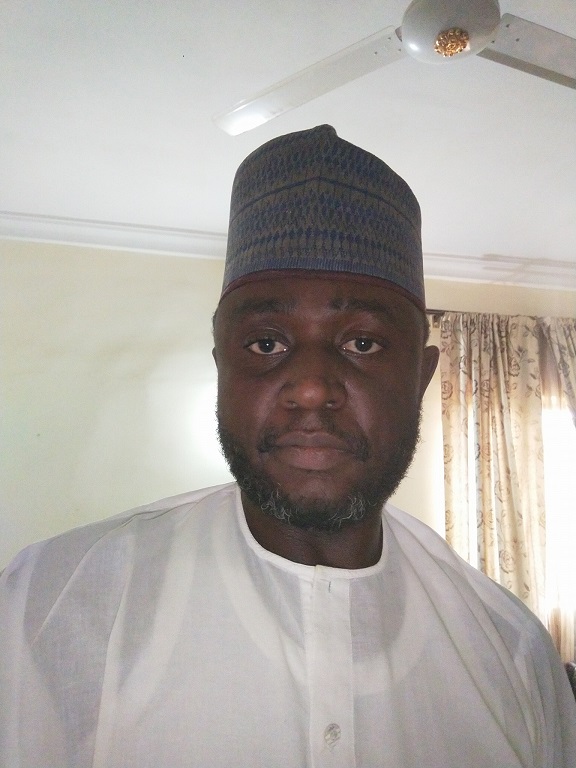
Ibraheem A. Waziri wrote from Zaria. He can be reached via iawaziri@gmail.com.

Against Shaykh Masussuka: A Qur’anic case for the reliability of Hadith

By Ibraheem A. Waziri

About three decades ago, at the beginning of my youthful years, around Bakinruwa, Sabongari, Kaduna, I first encountered the idea of “Qur’an-only” Islam. Shaykh Uthman Dangungu, who had passed through the Izala movement, began to promote it in our neighbourhood mosque near Kasuwan Gwari. He was not the first—Muhammadu Marwa Maitatsine had pushed something similar in Kano State in the 1980s, though in a harsher, less workable form. Since then, my philosophical self has wrestled with such currents—Wahhabism, Shi‘ism, Sufism, Boko Haramism, and more. Each encounter has been a struggle for clarity and stability, for faith, and for cultural continuity in our fragile postcolonial Nigerian modernity.

Now, with Shaykh Yahya Ibrahim Masussuka—my generational peer—reviving the Qur’an-only argument, it seems fitting to reflect again. This time, however, I do not begin from theology alone. I lean on the wear and tear of intellectual toil, and on the reflective gifts of experience—what philosophy, logic, and science have taught me about human beings and the trustworthiness of transmission.

Philosophy has long asked: Can knowledge survive without tradition? Plato, in The Republic, warned that truth severed from the teacher–student chain becomes mere opinion. Aristotle, more grounded, argued that reason itself grows from custom, habit, and inherited practice. If Plato guarded against instability, Aristotle reminded us that even rationality needs a body —a living community —to give it shape.

Modern science adds its own perspective. Research in psychology shows that while humans are prone to bias or fatigue, under structures of accountability and community, they are remarkably capable of fairness and truth-telling. Integrity, in fact, often comes naturally. In other words, people can be trusted, though they must be guided.

The Qur’an itself affirms this. It does not portray humanity as unfit to bear the truth. Instead, it honours our moral agency while calling for systems of verification. “And thus We have made you a just community that you may be witnesses over mankind, and the Messenger a witness over you” (2:143). To be a witness requires the ability to observe, remember, and transmit faithfully. Surah Al-Tawbah (9:122) goes further, encouraging some believers to remain behind, study religion deeply, and teach others. That is nothing less than a Qur’anic endorsement of scholarship—the very task Hadith scholars later undertook.

The Qur’an also acknowledges our dual moral compass— “By the soul and He who proportioned it, and inspired it with its wickedness and righteousness” (91:7–10). Hence, the command in Surah Al-Hujurat (49:6) to verify reports before acting. That balance between trust and scrutiny is the same principle that shaped the science of Hadith.

Even in worldly matters, the Qur’an demonstrates confidence in structured testimony. The long verse of debts in Surah Al-Baqarah (2:282) lays out detailed rules for recording contracts with witnesses. If humans can be entrusted with preserving financial records, surely they can also be tasked with documenting the Prophet’s words—so long as there is a system of accuracy and verification.

This brings us to the heart of the matter. The Qur’an-only stance insists that Hadith is unnecessary. Yet the Qur’an itself says otherwise: “We revealed to you the Reminder so that you may explain to people what was sent down to them” (16:44). The Prophet’s explanatory role is not contained in the Qur’an’s text—it lives in his sayings, actions, and approvals. Surah Al-Ahzab (33:21) refers to him as “an excellent example” for believers. But how would later generations know his example without the Hadith?

Other verses go further: “Whoever obeys the Messenger has obeyed Allah” (4:80); “Whatever the Messenger gives you, take it; and whatever he forbids you, abstain from it” (59:7). These are not time-bound commands. They apply to all Muslims across generations. And they assume access to the Prophet’s guidance—something only Hadith provides.

Seen this way, Hadith is not an intrusion upon the Qur’an but its necessary partner. The Prophet was sent not only to recite but to teach and model. His companions and the generations after them, through discipline and painstaking verification, preserved that model. The Hadith tradition is not perfect—no human endeavour is—but it was forged as a check from within Islamic culture, not imposed from outside. It is part of the Qur’an’s own vision of a community of witnesses.

At its core, then, the debate is not only about scripture but also about how we see human beings. If we assume people are too weak or biased to preserve truth, the Hadith collapses. But if we recognise—as both the Qur’an and science do—that humans, when guided and structured, can be reliable witnesses, Hadith stands on solid ground. The Qur’an-only position misses this deeper point. It mistrusts human agency in a way the Qur’an itself never does.

In Nigeria, where cultural streams converge and clash—Sahelian traditions meeting global influences—the Qur’an-only approach risks severing us from the rich heritage that has sustained Muslim communities through colonialism, civil strife, and modern pressures. My own journey—from that mosque in Kaduna to today—has taught me that certainty lies not in subtraction but in integration: the Qur’an as foundation, illuminated by the Prophet’s Hadith, upheld by our God-given moral agency.

As this debate resurfaces in our time, we would do well to remember: the Qur’an trusts us, commands us, and makes our testimony central to its unfolding. To follow the Qur’an, then, is to follow the Prophet. And to follow the Prophet is impossible without Hadith.

Ultimately, as Surah Al-Baqarah reminds us, we are called to be witnesses. Let us honour that calling by trusting the mechanisms Allah has provided—including Hadith, which brings the Prophet’s example to life for every generation 

A reflection on dimensions, death, and the eternal four: Ramadan 2025

By Ibraheem A. Waziri

MashaAllah. As the crescent moon rose to herald Ramadan this year, on this twentieth day of March 2025, a profound stillness has settled over me. The fast silences my body’s clamor, the long nights of prayer elevate my spirit toward the heavens, and my thoughts drift into the boundless expanse of the unseen. This Ramadan, I find myself wrestling with the nature of dimensions—what they signify, how they shape our fleeting lives, and how death might unlock realms beyond our earthly reach. 

The Qur’an unveils glimpses of this mystery: seven heavens layered in divine order, Jannah’s gardens of eternal serenity, Jahannam’s depths watched by stern guardians, and Allah’s timeless, infinite dominion. The number four—etched into our 4D reality and echoed in a hadith debate I explored last week—anchors my reflection, while the nineteen of Surah Al-Muddathir, mirrored in the nineteen letters of *Bismillahir Rahmanir Rahim*, stirs my soul. Could death guide us through a cosmic graveyard of stars into these dimensions, as some now ponder in awe?

Let us begin with dimensions as we experience them in this Duniya, this transient abode. We dwell within three spatial dimensions—length, width, and height. A minaret pierces the twilight sky; its shadow stretches wide across the sun-warmed earth, and its foundations sink deep into the soil. Time, the fourth dimension, flows relentlessly forward, a current bearing us from the first whispered adhan of Fajr to the tranquil hush of Isha. 

These four—three of space and one of time—form our 4D reality, a spacetime framework we navigate with every breath and every step we take. Yet science, with its insatiable curiosity, gazes beyond this familiar quartet, proposing extra dimensions—ten, eleven, or perhaps far more—coiled tightly at scales too tiny for our eyes to discern or sprawling across unseen planes our hands cannot grasp. These are not mere directions to wander but subtle layers, bending the forces of gravity, energy, or the very essence of creation in ways that stretch our comprehension.

In 2018, a Northern Nigerian Hausa broadcasting Television Station, Arewa24, in a documentary about space named black hole mutuwaren taurari (Mortuary of Stars), but I preferred mak’abartar taurari—the Graveyard of Stars—as a more evocative term. Here, death is a profound key, a passage to what lies beyond. In this 4D shell, we are tethered—our physical forms bound to the limits of space, our lives measured by the steady march of time. 

The Qur’an, however, assures us that the soul, the ruh, endures beyond this fragile vessel. When we die, might that soul break free, slipping into a fifth dimension, a sixth, or even further—realms where Jannah’s rivers ripple with mercy and Jahannam’s fires blaze with justice, domains veiled from us until Malak al-Mawt, the Angel of Death, carries us across the threshold? 

Physics offers a faint echo of this possibility: higher dimensions might surround us, omnipresent yet inaccessible, hidden behind a veil that only death can part. Some astronomers link each soul to a star wandering the cosmos; when a person dies, their star might collapse into this graveyard, bearing their ruh along. Could this black hole be a portal, a barzakh, where dimensions unfold beyond our sight?

The Qur’an sketches this vastness with strokes of majesty. “He who created seven heavens in layers,” proclaims Surah Al-Mulk (67:3), urging us to reflect on the nature of these layers. Are they celestial skies arching above our world, glowing in the twilight? Or could they be universes, dimensional planes, each distinct yet interconnected, ascending beyond our perception into a hierarchy only Allah fully comprehends? 

Our 4D reality, with its glittering stars and sprawling earth, might be the “lowest heaven,” as Surah As-Saffat (37:6) suggests, with its adorned lights, while six more heavens rise above, reachable only when death turns the lock. Time, too, bends in Allah’s presence—Surah Al-Ma’arij (70:4) likens a day with Him to fifty thousand years of our earthly counting. In these higher dimensions, time might not flow as we know it; it could stretch into an endless horizon, loop upon itself, or fold into an eternal now—a reality death alone might usher us into.

Yet it is the number four that steadies my wandering mind, a pattern I cannot unsee. Just last week, in *The Eternal Quartet: Understanding the Hadith Debate in Northern Nigeria*, I wrote of a debate stirring Northern Nigeria’s Muslim online space—Shaykh Prof. Ibrahim Saeed Ahmad Maqari and Shaykh Prof. Sani Rijiyar Lemo clashing over the degree of certainty in different categories of Hadith rather than dismissing their essence outright. 

I framed the scholars’ dispute through four lenses: reason, belief, doubt, and rejection, a quartet mirrored in Islam’s four legal schools—Hanafi, Maliki, Shafi’i, Hanbali—and four theological paths—Mu’tazila, Ash’ari, Maturidi, Athari. Maqari, with his Ash’ari and Maliki roots, demands the unshakable certainty of Mutawatir hadiths, those narrated by many, while Rijiyar Lemo, grounded in Athari and Salafi trust, upholds authentic Ahad narrations with strong chains, even if from fewer sources. Four emerged as a complete, balanced square: Maqari’s logic seeking widespread proof, Rijiyar Lemo’s faith in vetted tradition, the doubters’ hesitant questions, the rejectors’ outright dismissal. As I dwell in our 4D spacetime, I see it again—four as our foundation, the root from which higher dimensions might grow, a motif threading through faith, nature, and the human heart.

Then comes a piercing verse—Surah Al-Muddathir (74:30): “Alaiha tis‘ata ‘ashar”—“Over it are nineteen.” Nineteen angels guard Jahannam, their number stark and resonant, a mystery that stirs my soul to its core. Are these guardians confined to our 4D frame, or do they stride across dimensions, overseeing a hell that burns beyond our spacetime? This deepens when I count the letters in Bismillahir Rahmanir Rahim—ب س م ا ل ل ه ا ل ر ح م ن ا ل ر ح ي م—nineteen in all, the sacred invocation that opens every surah but one. Could this parallel—nineteen angels, nineteen letters—hint at more, perhaps 19 dimensions woven within or alongside the seven heavens? Science freely posits dimensions; string theory suggests ten or eleven, but the Qur’an’s seven and nineteen numbers carry a divine weight. From our 4D base, the seven heavens might rise as broad realms, each enfolding finer layers, totaling 19—a cosmic framework death unveils, where the nineteen serve as eternal watchmen.

Consider the black hole, this mak’abartar taurari. Could it be barzakh, a liminal space bridging dimensions? Does it cradle Jannah’s tranquility or Jahannam’s torment? Some wonder: might the Day of Judgment spring from this starry graveyard, an event science cannot yet name, where fallen stars—and souls—rise into new dimensions? We perceive only four in this Duniya, but black holes might harbor twelve, as some speculate. Add seven for Jahannam’s planes, and we reach 19—four we know, eight in Barzakh’s depths, seven in Saqar’s fire, guarded by nineteen, as Allah declares, “Alaiha tis‘ata ‘ashar”. Last century, scholars like Khalifa Rashad stirred debate with new readings of this verse—could it point to such a cosmic order?

Envision it: our 4D reality as the first heaven, rooted in four—length, width, height, and time. Six more heavens ascend, each a dimensional cluster, totaling 19 with Barzakh and Jahannam’s layers. Surah Fussilat (41:12) says each heaven has its command—unique laws across these planes, from fifth to nineteenth. His Kursi (Surah Al-Baqarah 2:255) spans them, the nineteen as sentinels in its scope. The Qur’an says the soul’s end wanders in the space between the dimensions of fire (dread) or peace (natsuwa). Death might thrust us through mak’abartar taurari into these 19, where nineteen angels stand guard.

As Taraweeh’s verses wash over me this Ramadan, I feel four and nineteen entwined. If 19 dimensions veil Jannah, Jahannam, or more, might they host others—angels, jinn, beings unseen? Science puzzles at silence; death might unveil a chorus. In sujood, fasting’s clarity sharpens this: the Qur’an bids us marvel. Whether seven heavens hold 19 dimensions via a starry graveyard, death is our key—a mercy cloaked as an end.

Breaking my fast, dates sweet with Jannah’s echo, I feel tethered to this vastness. Our 4D world—fourfold in dimensions and thought—is a breath, a shadow of Allah’s infinite craft. Ramadan 2025 is my pilgrimage—through hunger, hope, and “Alaiha tis‘ata ‘ashar”, mirrored in Bismillahir Rahmanir Rahim—toward a reality where death, from our fourfold root, opens the door to seven heavens, nineteen dimensions, and Allah’s eternal truth. Allah Shine masani.

The eternal quartet: Understanding the hadith debate in northern Nigeria

By Ibraheem A. Waziri

Last week, the Muslim online community in Northern Nigeria was abuzz with a debate between two prominent scholars: Shaykh Prof. Ibrahim Saeed Ahmad Maqari, Imam of the National Mosque, and Shaykh Prof. Sani Rijiyar Lemo, a well-known teacher and writer. They are discussing hadiths—sayings of the Prophet Muhammad—and their reliability. 

Maqari insists that only Mutawatir hadiths, which are passed down by many narrators, are certain. In contrast, Ahad hadiths, coming from fewer narrators, lack certainty; Da’if hadiths are doubtful; and Maudu’ hadiths are fabricated. Rijiyar Lemo argues that Ahad hadiths with strong chains—like those found in Bukhari or Muslim—are as trustworthy as Mutawatir hadiths, also rejecting both Da’if and Maudu’ hadiths.

This may appear to be a new split in Islam, but it isn’t. It’s an old debate reemerging, reflecting four fundamental ways we think: reason, belief, doubt, and rejection. Maqari and Rijiyar Lemo each adhere to one of four classic Muslim paths. Let’s simplify it to demonstrate that this isn’t a crisis—it’s just part of our nature.

The Scholars’ Stances: Old Roots, Modern Voices

Maqari aligns with the Ash’ari and Maliki approach. He’s cautious: only Mutawatir hadiths, widely shared and undeniable, confirm the Prophet’s words, especially for core beliefs. Ahad might be true but aren’t certain, Da’if are shaky, and Maudu’ are fabrications. His stance is logical, demanding solid proof.

Rijiyar Lemo takes the Athari and Salafi route. He’s straightforward: Ahad hadiths with strong chains are as good as Mutawatir—no need for a crowd if the narrators are reliable. He discards Da’if and Maudu’, trusting the vetting process.

This echoes a thousand years of Muslim thought, split into four theological groups—Mu’tazila, Ash’ari, Maturidi, Athari—and four legal schools—Hanafi, Maliki, Shafi’i, Hanbali. Maqari’s Ash’ari/Maliki; Rijiyar Lemo’s Athari/Salafi. The others linger in the background, forming four ways to see faith.

 The Fourfold Lens: A Universal Impulse

This isn’t just about hadiths—it’s how we view everything, through four lenses:

– Reason: “Prove it—how many narrators? Are they solid?” Maqari’s fans value his logic, insisting on Mutawatir’s wide agreement for certainty over Ahad’s limited sources.

– Belief: “My scholar says it’s true.” Rijiyar Lemo’s supporters trust a single Sahabi’s word if the chain is sound, no extra proof needed—just faith in the process.

– Doubt: “Are we sure? What if it’s wrong?” Questions linger for those unsure about either side.

– Rejection: “This is outdated nonsense.” Some walk away entirely.

Northern Nigeria’s Muslim online space shows all four: some cite Mutawatir facts for Maqari, others trust Rijiyar Lemo’s Salafi roots, a few question both, and some dismiss it outright. These align with the four schools, too. Picture a grid—reason on one side, revelation on the other—yielding four pairs:

– Reason + Reason: Hanafi and Mu’tazila  

  Hanafis use analogy and judgment for rules; Mu’tazila apply logic to beliefs like free will. They’re strict: theology needs Mutawatir or Ahad with three-plus narrators; rules use authenticated Azizi (strong Ahad). Reason leads.

– Reason + Revelation: Maliki and Ash’ari

  Malikis mix reason with Medina’s practices; Ash’aris back faith—like God’s traits—with logic. Maqari fits here: Mutawatir for beliefs, authenticated Ahad for rules like prayer times. Revelation guides reason.

– Revelation + Reason: Shafi’i and Maturidi

 Shafi’is prioritize hadiths and Qur’an, sorted logically; Maturidis use reason within scripture’s bounds. Mutawatir for theology, authenticated Ahad for rules like fasting. Revelation’s first, reason aids.

– Revelation + Revelation: Hanbali and Athari

Hanbalis stick to texts; Atharis take the Qur’an and hadiths as is. Rijiyar Lemo’s here: authentic Mutawatir or Ahad work for both beliefs and rules. Revelation rules.

Maqari’s Ash’ari/Maliki stance demands Mutawatir for certainty; Rijiyar Lemo’s Athari/Salafi view accepts authentic Ahad.

Four Across the Ages

Four isn’t just in this debate—it’s a pattern across time and cultures. In the West, psychologist Carl Jung saw four as a symbol of wholeness, like in mandalas or personality types—thinking, feeling, sensing, and intuiting. Stephen R. Covey’s four quadrants divide tasks by urgency and importance, offering a complete way to manage life. Game theory maps four outcomes—win/win, win/lose, lose/win, lose/lose—covering all possibilities in decisions, much like Karl Popper’s fourfold reasoning tests ideas through trial, error, doubt, and rejection. Four directions—north, south, east, west—guide us; four elements—fire, earth, air, water—once explained the world; four schools shape Islam. Even a Sudanese Sufi song by Abdurrahim Albur’iy, Misr al-Mu’mina, celebrates four in nature and Islamic history:

“We call upon You with the four and the four books,  

And the 114 surahs [Qur’an],  

With the six angels and the four noble ones,  

With our Prophet Muhammad and the four caliphs,  

And the six after them and the four imams,  

And the seven jurists and our four poles,  

The pegs of the earth in the four directions,  

The substitutes and the ten chiefs in four,  

Preserve my three and four limbs,  

And keep our four sides from the resting place,  

Remove the body’s illness in its four temperaments,  

Bless our week until Wednesday (fourth day),  

The ninety days of the year in four,  

And our seven seas and our four rivers,  

We are saved from four and gathered with four.”

Fours—caliphs, books, rivers—tie faith and life together across time.

Philosophy Meets Faith: Why Four?

Why four? It’s simple and complete. Two (yes/no) is too basic, three (yes/maybe/no) lacks balance, and five’s cluttered. Four’s just right: two ways to agree (reason, belief), one to question (doubt), one to reject. Like a square, it’s steady, covering all sides—seen in nature, history, and our debates.

Nothing New Under the Sun

Don’t let Northern Nigeria’s Muslim online space hype fool you—this is old news. Ash’ari scholars like al-Ghazali sought proof, like Maqari; Athari ones like Ibn Taymiyya trusted texts, like Rijiyar Lemo. Mu’tazila favored reason; Maturidi blended it with faith. Four schools, four views—same as today.

It’s loud now because Maqari’s at the National Mosque, and Rijiyar Lemo’s books reach many. People care about the Prophet’s words. But it’s not a new split—just two notes in an old four-part tune.

Takeaway: Embrace the Quartet

Don’t worry about this debate. It’s not Islam breaking—it’s alive, with views fitting four natural slots: Maqari’s logic, Rijiyar Lemo’s trust, plus doubt and rejection. Next time Northern Nigeria’s Muslim online space heats up—over hadiths or anything—spot these four: thinkers, believers, questioners, and naysayers, blending into many combinations. It’s how we work. Maqari and Rijiyar Lemo pick two corners of a square we’ve all been drawing forever. It’s not chaos—it’s our pattern.

Human rights in Islam

By Adamu Sani (Tj Chinade)

It appears that some people think of human rights was only theorised by the Western world and scholars. However, this perception proves inaccurate because Islam is the ultimate religion that left behind nothing in confusion. To understand this, Almighty Allah says, “…..We have neglected nothing in the Book (Glorious Qur’an).” (Qur’an 6:38). Given this verse, most of what the western people theorised has its roots in Islam. Meaning that if someone searches deeply into the topic, someone may easily trace its origin from the Glorious Qur’an and Hadith of the Prophet. Therefore, human rights have been discussed and recognised by some organisations as detailed in Islam, since Almighty Allah is the Creator of the universe.

What differentiates between human rights in Islam and the western perspectives is that Almighty Allah and all laws that give rights in Islam are derived from the primary sources. In contrast, in western perspectives, it is man-made laws, and the leaders provide the rights to their respective people of their States or Nations. It should be clear that human beings are all the same in the sight of Allah. The rights and privileges that Allah has granted to man as a human being will be enjoyed by all individuals, regardless of colour, religion, geographical location, nationality, among others. All the rights should be recognised and respected by every Muslim. The following are some of these rights.

1. Right to Life

The first and foremost fundamental right is the right to live and respect human life. The Glorious Qur’an states: “If anyone killed a person, not in retaliation of murder, or spread mischief in the land, it would be as if he killed all mankind…” (Qur’an 5:32). According to this verse, the punishment of taking life in retaliation for murder or spreading mischief on the earth can be decided only by a proper and competent court of law. In addition, if there is any war with any nation or country, it can be determined only by a properly established government. In whatever case, no human being has any right by itself to take human life in retaliation or for causing mischief on this Earth. In another place, Almighty Allah has condemned the killing of any soul without a reliable measure as He is saying;  “… and kill not anyone whom Allah has forbidden, except for a just cause (according to Islamic Law)…” (Qur’an 6:151).

2. Respect for the Chastity of Women.

In Islam, the chastity of women must be respected and protected under all circumstances, everywhere, regardless of her religion or even if she has no faith. A Muslim is forbidden to be in any illegal relationship with a woman. Almighty Allah emphasises this in the Glorious Qur’an, thus: “And come not near to the unlawful sexual intercourse. Verily it is Fahishah (i.e. anything that transgresses its limits)” (Qur’an 17:31).

3. Right to Basic Standard of Life.

The Glorious Qur’an enjoins upon the Muslims about the economic right. Allah says: “And in their properties, there was the right of the beggar and the Mahrum (the poor who does not ask the others)”. Qur’an 51:19.

4.Right to Freedom.

Islam has clearly and categorically forbidden the barbaric practice of enslaving a free man or selling him into slavery. Because of this, the unequivocal statement of the Prophet reads, “There are three categories of people against whom I shall by myself be a plaintiff on the Day of judgement. On this three, one who enslaves a free man, then sell him and eat this money”.

5. Right to Justice

It is also the most important and valuable right Islam has given to man as a human being. Almighty Allah calls upon humankind to respect justice in many places in the Glorious Qur’an. One of these places is where Allah says: “O you Who believed! Stand out firmly for Allah and be just witnesses and let not the enmity and hatred of others make you avoid justice. Be just: that is nearer to piety, and fear Allah. Verily Allah is Wel-Acquainted with what you do.” (Qur’an, 5:8).

The above verse clarifies that Muslims have to be just not only with ordinary human beings but even with their enemies. It is noteworthy that justice in Islam is not limited to Muslims but all people regardless of their race, colour, tribe, nation or religion – the entire humanity. This indicates the boundless mercies of Almighty Allah to his creators.

6. Equality of Human Being

It should be clear that Islam not only recognises and confers absolute equality between men irrespective of any colour, race, or nationality but makes it an essential and significant principle and a reality. To understand this, Almighty Allah says: “O mankind! We have created you from male and female and made you into nations and tribes that you may know one another. Verily the Honourable of you with Allah is that (believer) Who has Taqwa (Qur’an, 49:13).

The above verse suggests that the division of human beings into nations, races, tribes, and group is for the sake of distinction so that people of one tribe or group may easily recognise their partner once they meet. This further indicates that the superiority of one man over the other is only based on one’s faith, purity of character and high morals, not based on colour, nation, tribe and language.

7.Right to Freedom of Expression

Islam also gave human beings the right to freedom of speech, but with a limitation, this can be seen in one of the Hadith of the Prophet reads: “Say good, or be silent” This Hadith clearly shun away the spreading of fake news and hate speech.

By 

Adamu Sani (Tj Chinade)

07030045189

adamusani3828@gmail.com