Trump threatens to impose tariffs on countries opposing US annexation of Greenland
By Sabiu Abdullahi
United States President Donald Trump has warned that his administration could impose tariffs on countries that refuse to support Washington’s claim to control Greenland, as a bipartisan delegation of US lawmakers moved to ease rising tensions with Denmark and Greenland.
Since returning to the White House in January, Trump has repeatedly argued that the United States must control Greenland, a semi-autonomous territory under Denmark, which is a NATO ally.
Earlier in the week, he said any outcome short of US control of the Arctic island would be “unacceptable”.
Speaking on Friday during a White House event focused on rural healthcare, Trump recalled how he previously threatened European allies with tariffs on pharmaceutical products.
“I may do that for Greenland too,” Trump said. “I may put a tariff on countries if they don’t go along with Greenland, because we need Greenland for national security. So I may do that,” he said.
Trump has described Greenland as vital to US security due to its strategic position in the Arctic and its large mineral reserves. He has also refused to rule out the use of force to take control of the territory. This marks the first time he has openly linked tariffs to efforts to press US claims over Greenland.
Earlier in the week, the foreign ministers of Denmark and Greenland held talks in Washington with US Vice President JD Vance and Secretary of State Marco Rubio.
While the discussions failed to bridge major differences, both sides agreed to establish a working group, although Denmark and the White House later offered sharply different accounts of its purpose.
European leaders have maintained that decisions concerning Greenland rest solely with Denmark and the territory itself. Denmark also announced this week that it was strengthening its military presence in Greenland in coordination with allies.
On Friday, a bipartisan delegation of US lawmakers travelled to Copenhagen, where they met Danish and Greenlandic leaders in a bid to reduce tensions sparked by Trump’s remarks. The delegation sought to reassure officials that Congress views Greenland as an ally rather than property.
The 11-member group, led by Democratic Senator Chris Coons, held talks with Danish Prime Minister Mette Frederiksen, Greenland’s Prime Minister Jens-Frederik Nielsen, and members of both Danish and Greenlandic parliaments.
“There’s a lot of rhetoric, but there’s not a lot of reality in the current discussion in Washington,” Coons told reporters after the meetings, adding that the lawmakers planned to “lower the temperature” once they returned home.
Meanwhile, Trump’s special envoy to Greenland said he remained optimistic about reaching an agreement. Jeff Landry announced plans to visit the Danish territory in March and suggested negotiations could yield results.
“I do believe that there’s a deal that should and will be made once this plays out,” Landry said during a Friday interview with Fox News.
“The president is serious. I think he’s laid the markers down. He’s told Denmark what he’s looking for, and now it’s a matter of having Secretary [of State Marco] Rubio and Vice President JD Vance make a deal.”
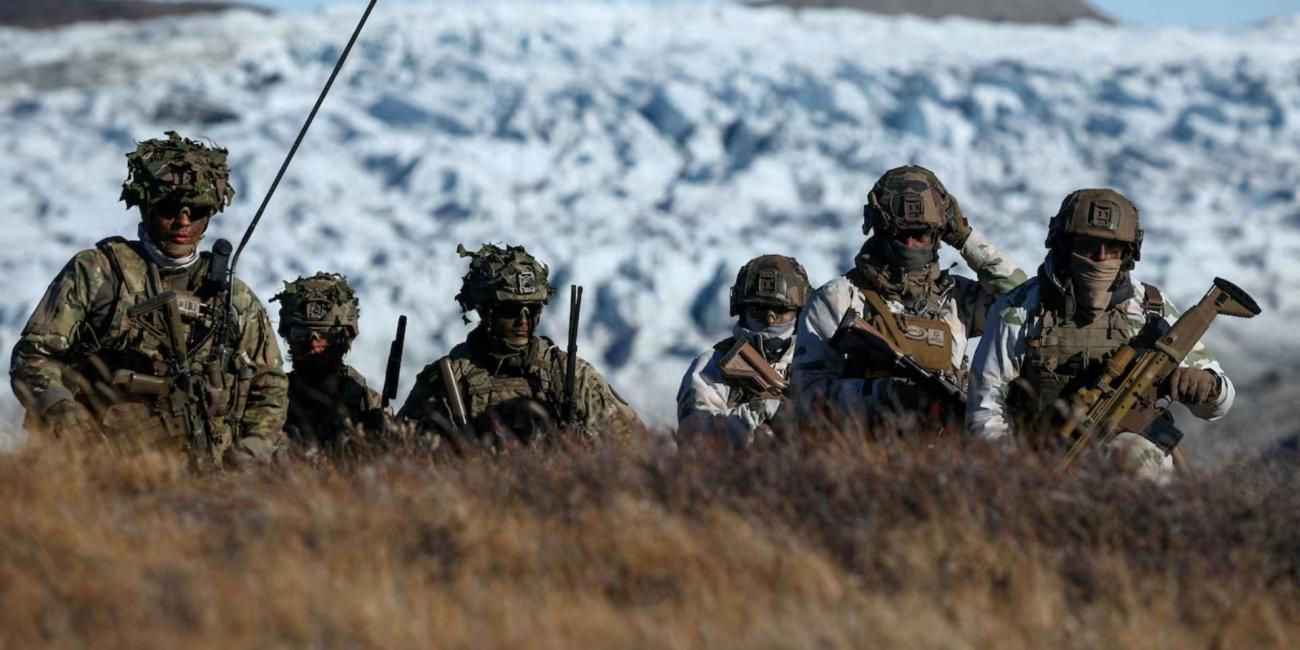
As diplomatic efforts continue, European countries have already deployed small numbers of military personnel to Greenland at Denmark’s request, underscoring growing concern over the dispute and its implications for NATO unity.