Gombe State

Sardaunan Samarin Gombe: A portrait of excellence

By Usman Muhammad Salihu

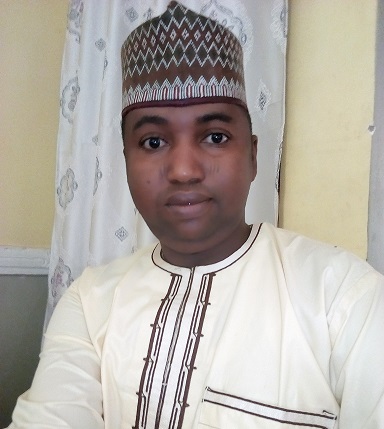
Usman Umar, also known as Sardaunan Samarin Gombe, is a figure whose name resonates not only within his community but also among his peers and colleagues. His persona is one of remarkable achievement, characterised by a relentless pursuit of excellence in every endeavour he undertakes.

From his formative years, Usman Umar has displayed an unwavering commitment to academic and personal growth. His journey as an exemplary student in secondary school paved the way for a trajectory marked by consistent success and distinction.

What sets Usman Umar apart is his academic prowess and innate ability to inspire and uplift those around him. Whether it’s through his words of encouragement or his actions that speak volumes, he has a way of leaving a lasting impact on everyone he encounters.

Beyond his academic achievements, Usman Umar is a shining example of resilience and determination. His unwavering dedication to his goals, coupled with his ability to overcome obstacles, serves as a source of inspiration for aspiring individuals.

Usman Umar’s commitment to service and community development is another defining aspect of his personality. He understands the importance of giving back to society and actively seeks opportunities to make a positive difference in the lives of others.

In essence, Usman Umar embodies the qualities of a true leader – someone who leads by example, empowers those around him, and remains steadfast in his pursuit of excellence. His story serves as a testament to the power of determination, resilience, and service in shaping a life of significance and impact.

Usman Muhammad Salihu writes via usmande5363@gmail.com.

Bugaje in Gombe, the question of competence

By Musa Kalim Gambo

To start with, it must be easily concluded that Usman Bugaje is an excellent speaker for any gathering that seeks to place Nigeria on a microscopic slide to analyse its minutest of details. Therefore, Gombe State University made the best choice when it invited Bugaje to serve as the keynote speaker for the 10th,11th, 12th, and 13th pre-convocation lectures of the university last week.

Given Bugaje’s multi-disciplinary background, there could have been no doubt about his competence to speak on the theme of the pre-convocation lecture “Education and Development: The Challenge of Content, Competence, and Character in Nigerian Universities”. While a topic of this nature may sound like a cliché-ic abstraction of the troubles in the Nigerian university system, Bugaje’s treatment and perspective of the topic are both fresh and passionate.

Bugaje was out on a journey to establish the nexus between education and development. With the oft-repeated argument that there can be no meaningful progress without education, it is clearly established that Africa has had a flourishing system of knowledge transmission until the coming of the colonials. When they came, they suffocated the existing system in favour of their own.

Among the gathering, mostly the graduating students who listened to Bugaje’s lecture, not many may be aware of Africa’s glorious past and pioneering role in the development of universities around the world. Indeed, not many may be aware that what the West regards as an Arab contribution to education is largely a veil over the combined Persian and African efforts. It is a clear attempt to obscure the true position of Africa as a pacesetter in the world of knowledge and the evolution of civilisation. As poignantly described in his citation, Usman Bugaje is a pan-Africanist. This simple description as a pan-Africanist will not allow him to deliver such an important lecture without exposing the true fallacies that represent Western intervention in African education.

In many respects, Bugaje’s generation of the past benefited from a functional, effective, and not defective education system. It was such a system that prepared them to be competent for a diverse set of roles within the country and around the world. As a matter of doubt, were they so well equipped or was it simply the scarcity of manpower at that time? I have listened to many elderly people, mostly those who studied in Nigerian universities in the ‘70s and ‘80s, who, in their critique of the education and governments of today, make mention of the number of jobs they had at their disposal when they graduated. What was the Nigerian population size at that time? What was the manpower needed? And what was the economic power of the country then? These are questions that must be answered before a comparison is made between the glorious past and the gloomy today of our nation.

With the bulk of information, and indeed knowledge at the disposal of the student today, competence should not be a problem. Unfortunately, it is in many areas of modern endeavour. Within the educational system, quality of content and competence of output are intertwined, like the Staff of Asklepios or the Caduceus Wand, a symbology of the healthcare background of Bugaje.

An educational system where teachers have problems of competence across all levels will definitely have to deal with the complex question of the quality of content imparted to the students. The issues at stake here are – the relevance of the content being taught and the capacity of the teacher to deliver.

A friend of mine from one of the first-generation universities in Nigeria narrated the difficulty of his lecturer. This lecturer has taught the same content in phytochemistry for almost twenty years. He was on the verge of becoming a professor in that field of chemistry. However, he has this handwritten note that has spanned his career in this field.

In spite of being an expert in this phytochemistry, any day his handwritten note was not with him, his class would not hold. There was a day my friend and his colleagues sat for a very tough test by this soon-to-be professor of phytochemistry. They were asked to draw the chemical structure of a certain phytochemical, which was passively mentioned as an example during one of their sessions. Most of the members of the class couldn’t get the correct structure. They, therefore, requested the lecturer to help answer the question. It was quite interesting that this soon-to-be professor of phytochemistry could not answer the same question he set for his students. This suggested that in spite of his years of experience teaching the course, he would have failed if he sat for the same test.

This interestingly sad anecdote paints the picture of the Nigerian university in response to the question of competence.

Kalim writes from Zaria via gmkalim@hotmail.com.

Malam Saidu Jibrin Kwani: A case study of a strong man vs strong institution debate

By Nasiru Manga

Anytime Nigeria’s myriad problems and challenges are raised in a discussion which also involves how to turn around the country’s fortune, it more often than not leads to a fascinating argument among intellectuals as to which is more important between establishing a solid institution which produces successive good leadership or having a leadership of strong men to engender strong institutions. In that instant, I find myself vacillating between the two opinions. I find both of them valid and very difficult to be disputed. It’s a case of a chick and an egg dilemma regarding which must have existed first, the chick which laid the egg or the egg from which the chick was hatched.

Reasoning with either of the points, I reflected on my teenage experience in secondary school more than two decades ago. I then relate the arguments with the leadership of five or six successive principals in my secondary school, Government Arabic College, Gombe. How these principals managed the school was a practical example of the validity of the two arguments depending on the side one takes.

One of the principals, in particular, stood out. He is Malam Saidu Jibrin Kwami. His exemplary leadership during his stint as the school’s principal afforded me the feeling of what good leadership can do, even in a small school environment. Before him, his predecessors couldn’t make any difference. The principal who succeeded him couldn’t equally build on his achievements. It’s also proof that without a vital institution, a strong leader’s efforts come to nought if he leaves the stage and succeeds by a weakling. For my readers to deeply appreciate why Malam Saidu Jibrin Kwami’s exemplary leadership towered above the rest of the principals, let me take you down memory lane of what was obtainable in the school.

The system was, and until we left the boarding secondary school in 2002, the principal, in addition to the daily management of the school, was in charge of students feeding. I didn’t know whether the funds for the feeding were released to the principal directly from the state ministry of education or the ministry provided the school with all foodstuffs. It released some funds to the principal for the daily running of the school and buying groceries. But I did know that the school store was getting restocked regularly.

The three square meals day in and day out consisted of mostly pap with sometimes two pieces of ƙosai served as breakfast. The pap had no sugar, and perhaps, due to how it was prepared, it had a sedative effect on students during school hours. Black tea with rumpled tiny bread was served as breakfast once a week. The lunch and supper were either tuwo made from processed maize, mostly half-done, called gabza by students or eba made from gari, served alternately for lunch and supper. The soup for the gabza or eba, mostly miyar kuka, was prepared with little to no spices and bereft of any accompanying protein in the form of meat. Rice which one couldn’t tell whether it was a jollof rice or simply white rice without soup, was served on Thursdays. The meat was served only once in a blue moon.

It is needless to say that the rations were not enough for students. Worse of it, many students used to end up not having their rations as what was given to the cooks to prepare was barely enough to go around. The service was, therefore, on a first-come-first-served basis, excluding senior students who needed not join queues. If one missed his share, that was all, and he would be told “ka bi Yerima“, an expression meaning “you have missed, there is nothing for you.” It was said that the cliché “ka bi Yerima” has its historical origin in one of the Gombe princes who sought and lost his father’s throne to then Emir of Gombe, Alhaji Shehu Abubakar. So “ka bi Yerima” means one followed in the footsteps of the prince, a loser. Ask me not about its authenticity.

To be fair to the principals of my secondary school, the situation was almost the same in all boarding public secondary schools, at least in Gombe and Bauchi states, around that time and even some years before that, as confirmed by those who attended the boarding schools before us. There were, of course, slight differences here and there occasioned by changes of different school administrators depending on their level of prudence and management of resources.

One incident I can’t forget during my first year was a riot in the school. The then-principal was unbelievably niggardly. Students’ rations which were, to start with, too little, only enough to feed a three-year-old baby, became so frequently inadequate to go around. Kun bi Yerima became the order of the day as more and more students started missing their rations at the dining hall. This was exacerbated by the fact that it was towards the end of a term when the foodstuffs brought from home by students and some money given to them by their parents to complement the school feeding programme had finished, thereby forcing many to rely on the food provided by the school which was not enough. There was also a shortage of water in the school.

So, one morning, some senior students from SS 2 and 3 woke up and said they had had enough. They took to the school’s streets chanting slogans that the principal should go and that he was a thief. After gathering, they headed to the school’s staff houses, where the principal lived. They started pelting stones at his house. He escaped by a whisker, and the school got shut down for a few weeks.

Upon resumption, we met a new principal and were informed that about seven (7) students, leaders of the protest, were expelled from the school. But still, there was no significant improvement in school feeding or academics. We only had three to four subjects maximum, out of the nine subjects we were supposed to have daily. The only exception was when we had teaching practice students from the Federal College of Education. And during that time, permanent teachers virtually abdicated their responsibilities, leaving everything to the student-teachers. Another two principals we had afterwards couldn’t effect any change. Their priorities were neither students’ academic nor their nutritional well-being.

Then came the revolutionary principal, Malam Saidu Jibrin Kwami. We were in SS 3, about five years after that principal against whom students revolted, and the fourth in the succession of principals since we enrolled in JSS 1.

The first thing he undertook was an improvement in our academics. He frowned at some teachers habits of sitting and chit-chatting in staff rooms without attending classes. He declared that he wouldn’t condone their flagrant negligence of duty. He insisted that every teacher must not miss his lesson twice weekly without a genuine reason. We then started having completed nine lessons on an unprecedented day.

How did he achieve that? He gave all class monitors notebooks to use as registers where each teacher would write their name and append their signatures at the end of their period. At the end of the class every day, the class monitors would queue up at his office, where he checked the register of each class to see if there was an absentee teacher. He also told us in the assembly that we should report any teacher we observed wasting away their period of 30 minutes or 45 minutes blabbering instead of teaching.

Malam Jibrin Kwami also introduced extra evening classes (which we called prep) daily, save weekends. Before him, there was not much importance attached to it by his predecessors. Only junior students used to attend it, and it wasn’t daily. But during his time, he supervised the evening classes himself; and he would personally go around hostels to chase out stubborn senior students who would rather stay put in the hostels while the prep was ongoing. If he sighted a student loitering about, he would shout from afar, “Who is that gardi?” He also ensured that all the classrooms and all the streets from students’ dormitories leading to the classes were fully lit so that students wouldn’t complain of darkness. There were no Discos then, and NEPA was genuinely faithful. How he achieved that, beat me.

You may be wondering what happened to our food, right? Suffice it to say that during his short period as the school’s principal, we also saw what our parents enjoyed in public schools in the ‘70s and ‘80s. He told us that he also finished in the same school in 1982, and it was unfortunate that things had deteriorated to that level.

Most days of the week, our breakfast became tea (not just black tea, but with milk) and bread as against pap. And we started feeling the taste of sugar in our pap too. White rice and stew, tuwo and eba started competing as our lunch and supper, with rice winning most times. Pieces of meat suddenly appeared in our daily meals, and the soup started having condiments.

One day, he summoned us as the school’s prefects, informed us that we would notice a change in our meal the next day, and urged us to survey and feed him about the change.  He told us the meat price was high, so he decided to alternate the meat with fish. So he wanted us to sample students’ general opinions on the fish substitute as he knew some people didn’t like fish. Such a thoughtful leader!

Unfortunately, as they say, good things hardly last; his tenure as a principal was short-lived. No sooner had we started enjoying his good leadership than he got elevated and appointed as the secretary of our state’s pilgrim board. The school was literally thrown into mourning upon hearing the news.

The man who succeeded him couldn’t properly step into his shoes. Things started deteriorating very fast. Before you know it, we were back to square one. This is the case of having a strong man without a strong institution. And the strong institution doesn’t exist in a vacuum; it has to be built by strong men.

Nasiru Manga can be reached via nasmang@gmail.com.

Waqf Foundation upgrades lives of Nigerians

By Abdulhamid Muhammad

Sunday, 25th December 2022, was a day of revelations and feedback from the Waqf Ambassadors of the Zakah and Waqf Foundation, Gombe, Nigeria. It happened during the Uncovering Potentials Workshop (UPW) organized by the Foundation for the 1st and 2nd sets of its Waqf Ambassadors, which was facilitated by Dr Najeeb A.A. Gambo, a researcher with the Microsoft Company and Nigeria’s 2nd Google Certified Trainer.

It was conducted a day after a 2-day intensive induction training for the 2022/23 Waqf Ambassadors at the Foundation’s Training Room. As usual, of all the year-long life-changing training that the Foundation organizes monthly for its 80 enrolled Waqf Ambassadors annually, the UPW was highly impactful, thought-provoking and action-triggering.

In the closing session of the workshop, scores of youth voluntarily gave their testimonies on how the sessions of the workshops they have gone through in the last 12 months have completely revolutionized the way they look at the world financially and intellectually.

One of the ambassadors narrated how excited she was after starting a business and discovering that she could now do a lot of things with her earned income without asking or waiting for someone to give her. It was a great discovery because she grew up in a society that programmed her to think that she could not make money for herself.

Another person said that it was a workshop in ZAWFOG on reading culture that ignited in him the habit of reading books, and that has completely transformed his life, making him more creative and more confident, and hopeful about life.

Another Ambassador, whose parents hitherto paid all his bills, revealed how as a result of the motivation he got from these series of lectures is now able to earn more than the national minimum wage every month despite being still a student. And many of the participants went on and on.

These are a few of the testimonies, and I wished the Chairman of the Foundation, Ameer Abdullahi Abubakar, was there at the closing session to hear how the Foundation is making an impact and transforming lives. It is clear that his model is working; the Waqf Ambassadors are fast moving from poverty (p) to prosperity (p) and soon to philanthropy (p) in sha Allah. As envisioned by the founders of the Foundation, we will soon have a generation of youth who are rich enough and committed seriously to building our society through Waqf.

May Allah accept this from all the people who have contributed in one way or the other in moulding the next generation to be a productive one, amin. May He continue to bless the Foundation and take it to greater heights.

Abdulhamid Muhammad is a 2021 Waqf Ambassador and wrote from Gombe State, Nigeria.

Hoodlums attack Gombe PDP campaign office

By Uzair Adam Imam

Reports coming from Gombe State Monday have disclosed how hoodlums attack the Peoples Democratic Party (PDP) campaign office in the state.

The Gombe State Commissioner of Police, Mr Oqua Etim, confirmed the attack to journalists and said it occurred last night.

He said the campaign office belongs to the state’s governorship candidate, Jibrin Barde.

Etim confirmed that, “Yes the attack happened and we will get full details before going public.

“We have started investigation because the attack happened in the night and it is too early to give details now.

“So just give me a little more time and we will get you the details,” he told journalists.

He also called on the political stakeholders to avoid chaos while carrying out their political activities.

Etim urged the youths to stay away from engaging in any acts that could breach peace, law and order.

“As you are aware we recently arrested and paraded some hoodlums causing disturbance in the metropolis,” he added.

Attacks on Gombe communities leave three dead, buildings razed

By Muhammadu Sabiu

Reports reaching The Daily Reality show that gunmen stormed certain towns in Gombe State on Friday night, leaving three people dead.

Unknown armed individuals assaulted the villages of Amtawalam and Pobaure in the state’s Billiri Local Government Area on Friday night, according to Adamu Kupto Dishi, the commissioner of homeland security for Gombe State.

Dishi confirmed the incident on Saturday following an emergency State Executive Council meeting chaired by Governor Muhammad Inuwa Yahaya of the state.

“We responded immediately to calls about the attack by mobilising security operatives, including the police, the military and our local vigilantes, to the area. So far, the State Emergency Management Agency (SEMA) has carried out assessment for immediate deployment of relief materials,” he said.

Security agents are presently conducting an investigation to identify individuals responsible for the heinous act, the commissioner assured.

The controversy behind oil discovery in the North

By Ibrahim Garba.

Since the announcement of the success of oil discovery by the Muhammad Buhari-led administration through Nigeria National Petroleum Company, NNPC Ltd., people from different parts of the country rejoiced over the milestone achievement.

However, the development came with many controversies by the citizens who are, in one way or another other, have a direct or indirect connection to the development that is from some groups of people and individuals from the host community.

Immediately after the ground-breaking ceremony, which was attended by his Excellency President Muhammad Buhari, Bauchi State Governor Bala Muhammed, the Group Managing Director NNPC Mele Kyari, among other dignitaries in Nigeria, an argument broke between the neighbouring states, Gombe and its mother state Bauchi, about who owns the Kolmani oil well.

Besides, Bauchi may be right to claim the ownership of Kolmani oil because the oil well is located in Barambu, a village under the Alkaleri local government area of Bauchi state. Bauchi cites the presence of their governor at the breaking ceremony as one of the reasons that they own the oil well.

Gombe state, on the other hand, has more than a reason to claim the ownership because of their closeness to the point where the oil was drilled. Therefore oil as liquid stuff cannot just be for Bauchi alone.

Unfortunately, farmers operating within the host community of MaiMadi, Kwaimawa, among the other 7sevencommunities, complained that they were not paid for the damage done to their farmlands during the oil drill.

Among them, one claimed the ownership of the Kolmani oil well, which according to him, was inherited from his father and yet to be compensated. Also, the report indicates that workers who served during the seismic operation were not adequately paid but only promised to be paid on unspecified dates.

Farmers and other people from the host community should be well informed about the operation of that kind to seek entitlement associated with the oil drill operation in their localities.

With the allegations above, one must note with dismay challenging the Public Relations section of that particular for failing the Social responsibility service expected to render to those communities.

Above all, what Nigerians need to know is how much we need to poster national development above our interest to build Nigeria of our dream. We should also learn from the experience of our people down the south. There is a need for cooperation and mutual understanding between the two states, the farmers, and the entire host community to benefit from such a remarkable achievement. 

Ibrahim Garba writes from Bauchi.

Inuwa vs Danbarde: The tricky side of the 2023 election contests in Gombe State

By Kabiru Danladi Lawanti, PhD

As the Independent National Electoral Commission (INEC) lifted the ban on the 2023 elections campaigns, attention has now shifted to analysing candidates’ policies and programmes. In Gombe State, like in many states, the governor seeks a second term. Governor Inuwa Yahaya of the All Progressive Congress (APC) is facing a tough battle with People’s Democratic Party’s Alhaji Jibrin Barde (Danbarde), a former banker turned politician. Danbarde was the first runner-up in the 2018 APC primary and was defeated by the incumbent Governor, Inuwa Yahaya. However, he defected to PDP in 2021, ascribing his action to bad governance in the state.

As the 2023 elections fast approach, the two leading candidates are gearing up to face each other again, not at primaries, but in the murky waters of campaigns and the general election in 2023. Already political permutations and predictions have started flowing from those in support or against the two candidates. With the reconciliation between the Governor and his erstwhile friend turned political enemy – Alhaji Danjuma Goje, many predicted that Inuwa Yahaya would have an easy sail in 2023. Coupled with incumbency and support from a political heavyweight in the state, the Governor seem to have no serious challenge going into the elections.

Things took a new turn some weeks ago when Goje appeared to have scrapped the earlier reconciliation efforts by the APC reconciliation committee weeks before the party’s National Convention. Instead, Goje remains as unpredictable as the weather in recent times. Some political pundits on conventional and social media believe Goje may support Danbarde in 2023. This was very clear when he insisted that all candidates seen as Inuwa’s supporters were to be dropped for his anointed candidates during the primaries. It took the intervention of some party stalwarts at the state and national levels to agree to allow these candidates to participate in the primaries.

However, for politicians, especially those who look to the future of who becomes Governor in 2027 in the state, support for who becomes the Governor in 2023 will be based on the odds for those contesting in 2027. For instance, since the return to democracy in 1999, Gombe state has had four governors, including the incumbent, Inuwa Yahaya. Three of these governors came from the Gombe North Senatorial District. These are Abubakar Habu Hashidu (Dukku LGA), Ibrahim Hassan Dankwambo and Inuwa Yahaya (Gombe LGA). Only Danjuma Goje came from Gombe Central (Akko LGA). On the other hand, Gombe South has never produced a governor, though all the deputy governors were from that senatorial district.

Suppose the other Senatorial Districts decided to support the PDP’s Danbarde, and eventually, he becomes the Governor. In that case, it means Gombe Central and Gombe South have to wait for another eight years to have a chance to present a candidate for the number one office. This is also tricky because they may decide to support Inuwa Yahaya, with the understanding that APC may consider zoning the Governorship position to either Gombe Central or Gombe South. Can Gombe South buy this mouthwatering offer and support Inuwa? Others think that Gombe South has nothing to lose on whoever becomes the Governor in 2023, as far as the Governorship position is concerned, because they are assured of the position of Deputy Governor for any election year. It is a tradition maintained by all Governorship candidates in both parties since 1999. 

This may leave only the Gombe Central Senatorial district with a serious dilemma. Already the district’s political heavyweights have started their permutations. Most believe that supporting Danbarde means handing over the number one seat to Gombe North for 18 years. Dankwambo 8 years, Inuwa 8 years and Danbarde 8 years. Therefore, support for Inuwa Yahaya in the forthcoming elections is like a national duty if any of their sons is aiming for the Governorship seat in 2027. The two local governments that made up the senatorial district are crucial and strategic in the state’s political equation. With the state’s highest number and registered voters, they had the highest voter turn-out in the 2019 general elections.

Whatever decision the politicians and the electorates take in the forthcoming elections in 2023, they should remember that it can either make or mar their chances of producing the next Governor in 2027. Therefore, Alhaji Danjuma Goje, Alhaji Usman Bello Kumo, Abubakar Mu’azu, Barrister Idris Umar Abdullahi and other politicians from the district need to look beyond their disagreements and think ahead for the senatorial district. This may sound like another push for regional considerations, but some of these choices usually guide rational choices in politics. While no one can doubt the good performances of Inuwa Yahaya in the last four years, Gombe Central’s support for him goes beyond his perceived performance and anticipation for a more common public good. Therefore, the votes from this senatorial zone should/must be used to negotiate a power shift to the senatorial district.

This is politics.

First oil drill in Northern Nigeria: a blessing?

By Ibrahim Sambo

On Tuesday, President Muhammadu Buhari commissioned the drilling of two oil wells on Kolmani OPL 809 & 810 at the Kolmani field sites in the northeastern states of Bauchi and Gombe. The two sites have about 1 billion barrels of crude oil reserves based on initial figures by the NNPC, with the potential to produce N32 trillion over 10years (at crude price of $73 per barrel).

From many angles in the North, this sparked a euphoric roar. This euphoria is quite understandable. Who would not want to have, at their disposal, tremendous quantities of the most traded commodity in the world, the mighty magical black liquid?

And even with all the green-economy and climate-smart drive by the West, the exit of the fossil fuel era is some distant away. Some months ago, the most foremost and practical evangelist of renewable energy, Elon Musk, stated in a conference in Norway that “civilization will crumble” if the world stops the use of oil and natural gas and called for continued drilling and exploration of fossil fuel sources.

Further, the concerns that the two sites where the reserves are located (Gombe and Bauchi states) are far from port terminals (at-least 700km away), hence a potential difficulty in exporting the crude oil has been laid to rest by the NNPC as they announced the plan to refine the crude oil around the oil fields by building a 120,000 barrels per day refinery. This is in addition to gas processing facilities and a power plant that could generate at least 150 megawatts (MW) of electricity.

But even with all these, there is still a great deal of pessimism as to whether we can derive the juices from the oil revenues, or we will be struck with what economists called the “resource curse”, a situation where a region has valuable natural resources but are still steeped in poverty.

A question that will linger on the mind of every discerning and concerning northerner would be, what future does this hold for the states involved, or the region, or even the country in terms of economic prosperity. A superficial answer would be that the oil and its byproducts will drive more revenue to the government for social and infrastructural development, provide employments for the youths and improve standard of living. While this is true on paper, it would not necessarily be so in practice.

For one, the resource-curse phenomenon is real. When the first oil wells in Nigeria were discovered in Oloibiri in 1958, jubilations filled the air, and it was assumed that within few years, this precious commodity will pick Nigeria up from the gutters of poverty and put her on the elitist list of wealthy nations. But 65 years down the line, Nigeria is still stuck deep in that stinking gutter. Similar thing is happening with oil-rich countries like Columbia and Venezuela for instance where they produce humongous volumes of oil but are still poor.

The second frightening thing is environmental concerns. Uncontrolled oil spill is a major threat in oil-producing areas, and a perfect example of these devastating effects we have seen in Ogoniland, where some 2.1 million barrels of oil was spilled into the land, adversely affecting their water, farming and fishing activities. Here too, this environmental fear was allayed—at-least verbally—by Gombe state governor, when he remarked during the flag-off ceremony that the region “will avoid mistake of the Niger Delta.” “With regard to the issue of the environment,” the Governor remarked, “our ministry of environment is working hand in hand with the Federal Ministry of Environment and the Nigerian National Petroleum Corporation Limited (NNPCL) so that we will avoid all the mistakes and pitfalls that have been the big challenge of oil exploration and implementation in the southern part of the country.”

But as oil has been a curse to some, so has it been a blessing to others. Petrodollars has created immense wealth in the middle-eastern Gulf countries such as never seen in history. There is nothing that can stop northern Nigeria from doing exactly so. Oil can turn the North, and indeed Nigeria into an incredibly virile economic powerhouse.

The two northeastern states of Bauchi and Gombe will now, potentially, have a share of the 13% oil derivation fund pie. And this fund is quite huge. For starters, in just 11years, the 8 oil producing states pocketed a whopping N6trn from this fund. This share of the 13% oil derivation fund, a petroleum refinery and a gas plant, a powerplant, a fertilizer plant, all exude odor of economic merriment.

The question now is how do we make these seemingly tremendous economic potential translate into real time prosperity. The answer lies in adopting the classic model that has worked for the middle eastern countries which is great, visionary leadership.


Leadership—and not an abundance of resources, is the foundation upon which prosperity lies upon, as we have seen time and again. It is that simple. Without good leadership, a society has zero chance of prosperity even if bars of gold gushes down the gutters of its towns and cities.

When Sheikh Muhammed Al-Makhtoum put a tiny desert nation, the UAE, on to the world map, it was through sheer vision and strategic implementation. The North needs to have Al-Makhtoums who would properly manage the money gotten from this venture and channel into well-crafted visions of development; of erecting technology infrastructures for a digital economy, of building mega industries that provide jobs, of constructing roads and state-of-the-art health facilities, of building modern schools and laboratories, of building structures for hospitality and tourism, and all the things that make for a modern economy. The money will be there and in abundance.

As the first oil drill takes place in the Northern region, can we get into power the leaders who would properly use the money from this venture into longterm projects that will finally liberate the North from extreme poverty that has so much traumatize us, and turn it to a modern economy, full of wealth and possibilities and opportunities, or are we leaving the money to go down the wire, into the pocket of the privileged few elites, just like our southern brothers, and just be bragging that we are now oil producing entities, with nothing to show? It is now left to us. In the words of the Hausa man, dabara ya rage wa mai shiga rijiya.

Ibrahim Sambo writes from Lagos. He can be reached at ibrahymsambo4@gmail.com

Buhari flags off first northern oil exploration in Bauchi and Gombe

By Ahmad Deedat Zakari

President Muhammadu Buhari is all set to flag off the exploration of oil exploration in Gombe and Bauchi states. The historic event is the first of its kind in the northern part of the country.

Amidst very tight security, the president and his entourage arrived in Bauchi on Tuesday, 22nd November, 2022 for the ground- breaking ceremony and inauguration of the first oil drilling in Northern Nigeria.

The ceremony is set to take place at the OPLs 809 and 810 sites in Kolmani, a border community between Bauchi and Gombe State.

The Nigerian National Petroleum Company, NNPC, had announced the discovery of oil in commercial volume in October 2019. Crude oil, gas were said to be discovered in the Kolmani River region at the community between Bauchi and Gombe State.