Gombe State

The Pantami experiment: Morality in the politics of grime

By Ibrahiym A. El-Caleel

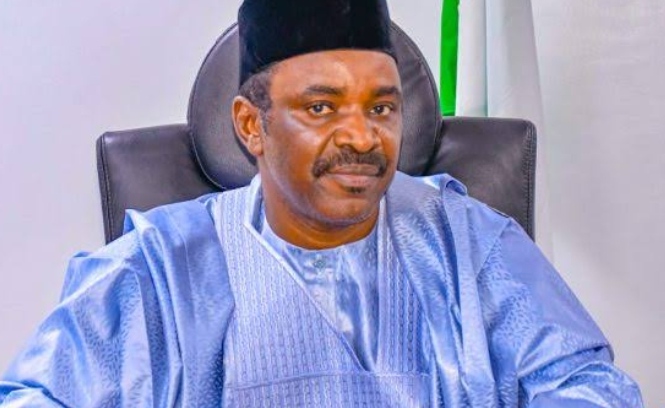
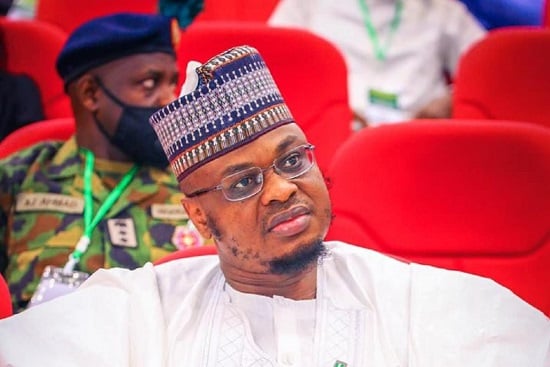
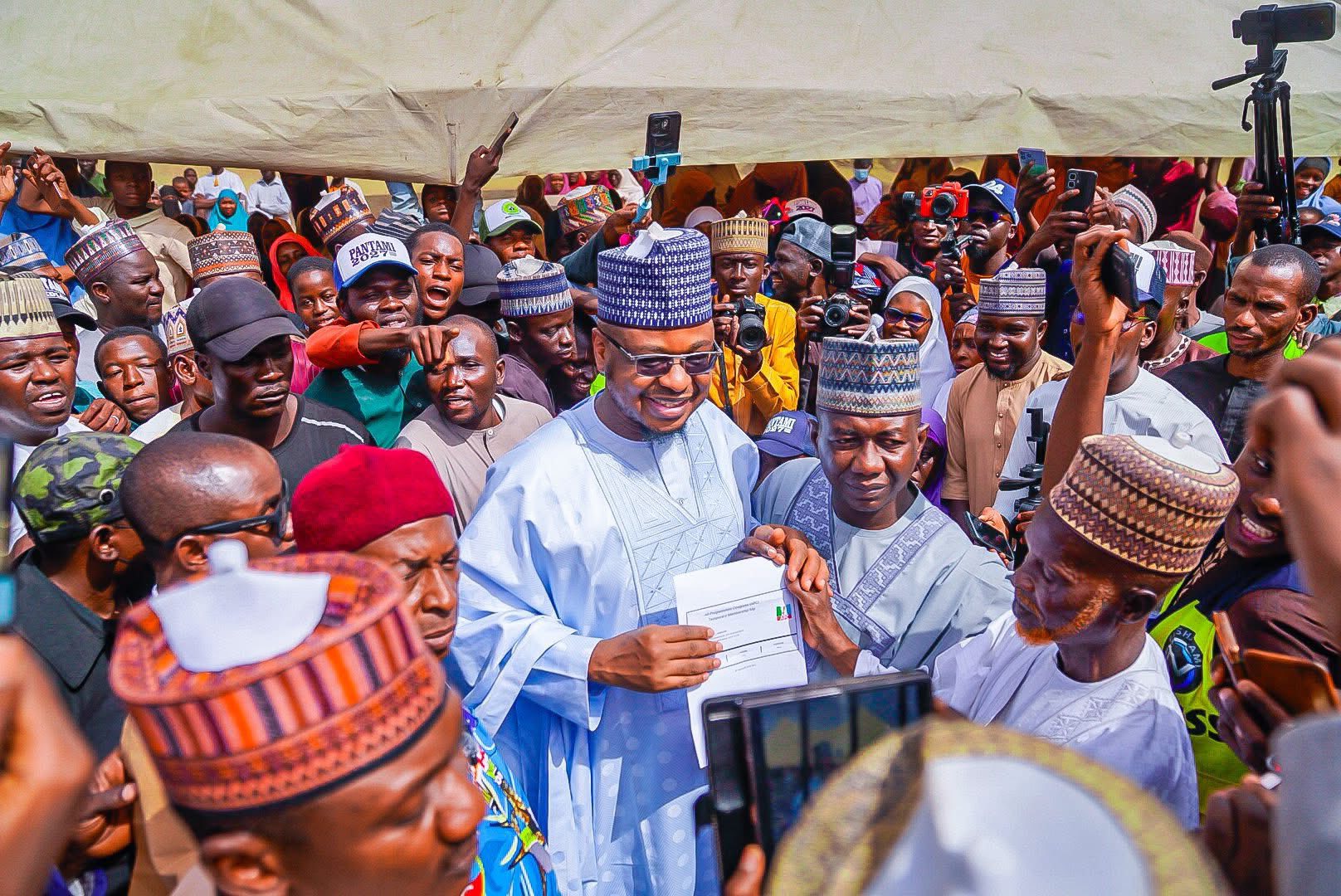
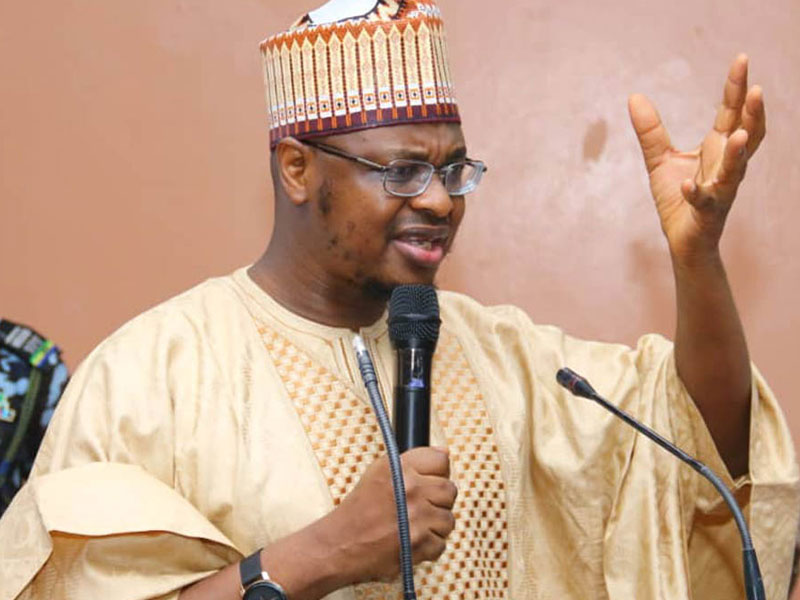
Given his profile as an Islamic scholar and public servant, Imam Dr Isa Pantami’s aspiration for the Gombe State governorship continues to attract attention from multiple quarters. What caught my attention yesterday were the closing lines of Jaafar Jaafar, the publisher and editor of Daily Nigerian, in a brief social media post on the candidature. Jaafar remarked:

“Nigerian politics is grimy. You cannot work in a sewer line and expect to come out clean. Mallam (Pantami) should prepare to mudsling, dip his paws in a cookie jar, dance to the tune of Rarara songs, shake hands with female foreign investors and diplomats, visit churches, steal some billions from security vote, divert public funds for political activities, hire thugs during rallies, lie during campaign, rig during election, take kickbacks after contract award, etc.”

Jaafar is clearly not endorsing these practices; he is only highlighting the grime and immorality that dominate Nigerian politics. Yet I disagree with the implicit suggestion that Mallam Pantami must get his hands dirty simply because he is now in frontline politics. No, he does not.

Pantami does not need to embrace corruption to win elections, nor must he compromise his morals to win or govern successfully after victory. These practices do not constitute the winning formula for elections even in Nigeria. Their dominance in our politics are symptoms that our political system has been hijacked by the morally bankrupt over the years.

Unfortunately, many Western philosophers and some Eastern philosophers have theorised a political thought that sidelines morality. They present it as if power must always be ruthless and corrupt. Niccolò Machiavelli, in his famous work The Prince, famously separated politics from conventional morality. He argued that the end justifies the means and that a ruler should be prepared to use deception, force, or cruelty to consolidate power. Better to be feared than loved, he asserted, if both cannot be achieved.

We see the same philosophy from the likes of Friedrich Nietzsche, Max Weber, Henry Kissinger and even the famous Robert Greene of our age. Their common premise is that politics is about power and domination; that stability and the balance of power matter more than moral ideals; that leaders may employ force, deception, and unethical means to maintain authority; and that some, like Nietzsche, even suggest that morality is a human invention of the weak.

The consequences are visible across the globe. Leaders who internalise these philosophies often govern through ruthlessness, corruption, and moral compromise. In so doing, they have soiled their hands in blood, sex scandals, human rights abuses, economic sabotage, and corruption. This is why, for example, several prominent world leaders have skeletons in Jeffrey Epstein’s wardrobe. They have abandoned morality in their pursuit of power. Today, they are prisoners of their actions.

In contrast, Islamic political philosophy teaches that a ruler must be powerful yet morally accountable, serving as a role model for society. Consider Umar ibn al-Khattab (Umar I), the rightly guided caliph, whose governance was a masterclass in combining justice, authority, and compassion. Umar I punished governors publicly, enforced the law even on the elites, maintained military discipline, and ensured state stability. Yet he was profoundly compassionate: during a famine, he refused to eat butter or meat until the people were fed, and he personally delivered food to the hungry. This was not a democracy; it was a caliphate, yet moral leadership reinforced his authority rather than undermined it.

Umar ibn Abdulaziz (Umar II), the Umayyad Caliph, provides another striking example. Before his ascension to power, the Khutbah (Friday sermons) were often laden with political propaganda, and some rulers ordered preachers to insult and curse Caliph Ali bn Abi Talib from the pulpit in political rivalry. They turned the khutbah into a tool for political rivalry rather than moral guidance. Umar II stopped this vile practice immediately he became the Caliph. He banned curses and political abuses from the revered pulpit of sermons and replaced them with Qur’anic verses. This was exemplary moral courage.

However, Umar II returned the stolen wealth of his predecessors and officials to the national treasury. He reformed corrupt systems gradually because he believes moral change is institutional, not emotional. He abolished oppressive taxes and unjust land confiscations, redistributed state wealth to reduce inequality, and institutionalised meritocracy. Under this meritocracy, he appointed governors and officials based on competence rather than family or tribal loyalty. He removed corrupt and incompetent officials even from his own Umayyad family. Therefore, he revived Islamic ethics in governance.

The last example I will cite here is the famous Abbasid Caliph Harun al-Rashid, who was cited by Chinua Achebe in his book, The Trouble with Nigeria. Harun al-Rashid is another classic example of a leader who combined political power with moral conscience. He was known to travel incognito at night among Baghdad’s citizens to hear complaints directly and make amends where needed. Despite his moral inclinations, the Abbasid dynasty reached its political and cultural peak under Harun al-Rashid. His reign kicked off what later became known as the “Islamic Golden Age”, which gave the world an intellectual gift, the Baytul Hikmah (House of Wisdom).

These examples make one point crystal clear: moral corruption is a choice, not a prerequisite for leadership. The more the world internalises Machiavellian philosophies, the more it empowers the ruthless and morally bankrupt. For Imam Dr Isa Pantami, his candidature is a litmus test. Should he compromise his ethical standards, he risks tarnishing decades of personal integrity. Yet he also has the opportunity to carve out a niche in Nigerian politics by leveraging his clean record, focus, and moral credibility. If he can win ethically and govern without succumbing to corrupt pressures, he could make history, embodying the same fusion of power and moral conscience exemplified by Umar ibn al-Khattab, Umar ibn Abdulaziz, and Harun al-Rashid.

I wish him success and look forward to observing whether he can translate his reputation into leadership that blends authority with moral responsibility, setting a new standard for governance in Nigeria. He is a specimen we should observe; let us see how morally upright people swim against the black tides of our politics. If he succeeds, more morally upright people need to enter politics and help us fix this broken country as early as possible, before it’s too late.

Ibrahiym A. El-Caleel wrote from Zaria, Kaduna State, via caleel2009@gmail.com.

Gombe government establishes 13 new LCDAs

By Sabiu Abdullahi

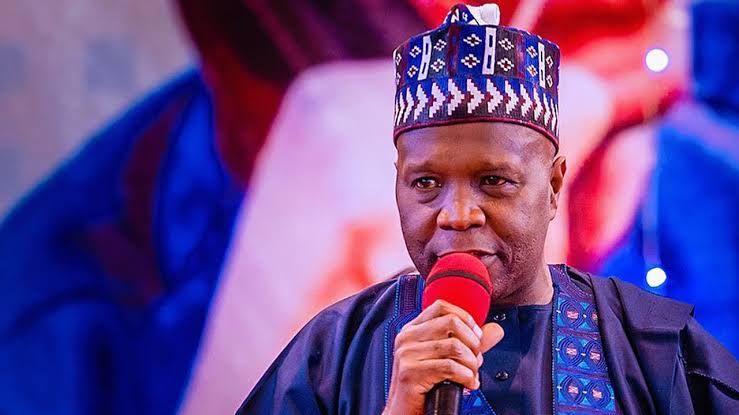
Gombe State Governor, Muhammadu Inuwa Yahaya, has signed a bill into law creating 13 new Local Council Development Areas (LCDAs).

Speaking during the signing ceremony at the Government House on Monday, Governor Yahaya explained that the initiative aligns with the 1999 Constitution and was designed to address the growing population while promoting grassroots development.

The new LCDAs and their administrative headquarters are: Akko North (Amada), Akko West (Pindiga), Balanga South (Bambam), Billiri West (Taal), Dukku North (Malala), Funakaye South (Tongo), Gombe South (Bolari), Kaltungo East (Wange), Kwami West (Bojude), Nafada South (Birin-Fulani), Pero-Chonge (Filiya), Yamaltu East (Dadinkowa), and Yamaltu West (Zambuk).

Governor Yahaya stressed that the long-term advantages of creating the new councils outweigh the costs involved.

He said, “Like the creation of Gombe State in 1996, these LCDAs will usher in a new era of progress for our communities and the state at large.”

An interim management committee and a transition technical team led by the deputy governor will oversee the establishment of the councils.

EFCC confiscates luxury items, arrests 21 for cyber crimes in Bauchi

By Anwar Usman

The Economic and Financial Crimes Commission (EFCC) has arrested 21 suspected internet fraudsters in Bauchi State.

The operation was conducted by the commission’s Gombe Zonal Directorate on Saturday, March 15, 2025, following acredible report on the suspects’ alleged involvement in cybercrime.

According to a statement from the EFCC on its X handle, the suspects were arrested on Monday in the Kaure New Government Reservation Area and Awala, Maiduguri Road, in Bauchi.

During the operation, several luxury vehicles were recovered, including a BMW car and a Toyota Camry, among others.

The EFCC reiterated that the suspects would be prosecuted when investigations are completed. 

“Items recovered from them at the point of arrest include one BMW and Toyota Camry cars, three PlayStation 5, 30 expensive phones, one flat-screen television set, six Point of Sale, POS, machines, four iPads, and five laptops,” the statement further revealed.

Governor Inuwa attends National Cybercrime Summit, stresses synergy for cybersecurity

By Abdullahi Mukhtar Algasgaini

Gombe State Governor Muhammadu Inuwa Yahaya, CON, participated in the National Cybercrime Summit held at the Presidential Villa in Abuja earlier today. 

The Economic and Financial Crimes Commission (EFCC), in collaboration with the Rule of Law and Anti-Corruption Programme (RoLAC) and the European Union, organized the summit, which focused on enhancing digital skills as a strategy to combat cybercrime.

The event’s theme was “Alternative to Cybercrime: Optimizing Cyber Skills for National Development,” a demonstration of commitment to building digital resilience and ensuring a secure online environment for sustainable national development.

 The First Lady of Nigeria, Senator Oluremi Tinubu, officially inaugurated the summit and launched a new Rapid Response Centre to address cybercrime emergencies.

Speaking to journalists after the event, Governor Inuwa Yahaya emphasized the importance of collaboration in combating the growing threat of cybercrime. 

The Governor commended the EFCC for organizing the National Cybercrime Summit, recognizing the event as a timely initiative to address the growing challenge of cybercrime. 

He emphasized the importance of multi-level cooperation, including leveraging technology and youth involvement, to promote positive alternatives to cyber activities.

“We appreciate the EFCC for bringing this important issue to the forefront. My government is ready to partner in this endeavour because we recognize that combating cybercrime requires partnership.

“We need to work together with the federal government, EFCC, and other relevant bodies to address this global challenge. Our youths must also be involved, as they are both the drivers of technology and the leaders of tomorrow.”

The summit brought together prominent figures, including the Chairman of the Nigeria Governors’ Forum, Governor Abdulrahman Abdulrazaq of Kwara State, Governors of Katsina and Zamfara, members of the National Assembly, the Sultan of Sokoto, His Eminence Saad Abubakar III, and other traditional rulers and diplomats.

Gov Inuwa approves new appointments for GSHC, Gombe United FC

By Abdullahi Mukhtar Algasgaini

Gombe State Governor, Muhammadu Inuwa Yahaya, CON, has approved the appointment of a new Chairman and Board Members for the Gombe State Housing Corporation to strengthen efforts in tackling housing challenges and providing affordable housing solutions for the people of the state.

The Secretary to the State Government, Professor Ibrahim Abubakar Njodi who conveyed the Governor’s approval, indicated that the newly constituted leadership of the Corporation includes representatives from the three senatorial districts of the state and key ministries. Those appointed are as follows:

Arc. Mohammed Habu Shinga – Executive Chairman

Mohammed Gurama Dukku – Representative, Gombe North (Member)

Saleh Ahmed Danmasani – Representative, Gombe Central (Member)

Abubakar Hussaini Cham – Representative, Gombe South (Member)

Representative from the Ministry of Housing – Member

Representative from the Ministry of Finance – Member

Similarly, the Governor has approved the reorganization of Gombe United Football Club with appointment of new leadership to align with the government’s objective of repositioning the football club for better performance and improving the management of sports in the state.

The SSG announced the new appointees as follows:

Mallam Anas Bamusa – General Manager

Mr. Ishaya Usman – Team Manager

Comrade Abubakar M. Maina (Dameji) – Secretary

Governor Inuwa Yahaya expects the new appointees to bring innovative ideas and leadership, as well as work in synergy with stakeholders to support the government’s agenda in housing and sports sectors respectively.

All the appointments are with immediate effect.

Governor Inuwa hails appointment of Prof. Ibrahim Garba as ATBU vice-chancellor

By Abdullahi Mukhtar Algasgaini

Gombe State Governor, Muhammadu Inuwa Yahaya, CON, has congratulated Professor Ibrahim Hassan Garba on his appointment as the new Vice-Chancellor of Abubakar Tafawa Balewa University (ATBU), Bauchi.

Prof. Garba hails from Yamaltu-Deba Local Government Area of Gombe State. His appointment, which takes effect from today, October 10, 2024, was approved by the ATBU Council at its 30th Special Meeting on October 9, 2024.

Reacting to the development, Governor Inuwa Yahaya praised Prof. Garba’s exceptional career and his commitment to academic excellence.

“We are proud of this illustrious son of Gombe whose elevation to this prestigious office brings honour not only to him but to our entire state. His wealth of experience and academic leadership will undoubtedly steer ATBU towards greater achievements, particularly in promoting innovative research, academic excellence, and international collaborations. We are confident that under his stewardship, ATBU will continue to be a citadel of knowledge and innovation in Nigeria and beyond”.

The Governor also assured the new Vice Chancellor of the solidarity and goodwill of the people of Gombe State, expressing confidence that Prof. Garba’s tenure will bring positive changes to the university and strengthen its reputation as a leading institution of learning in Nigeria.

Prof. Garba, a 1992 graduate of the University of Maiduguri and a renowned professor of biochemistry, has held various key positions at ATBU, including serving as the Dean of the Faculty of Science, Deputy Vice-Chancellor (Administration) on two occasions, Chairman of the Academic Staff Union, and most recently as the Center Leader of the ATBU-World Bank collaborative program, SPESSE.

Open letter to Gombe State Governor

Dear Sir,

I hope this message finds you well. I write to bring to your attention the constant road traffic accidents at the Malam-Inna junction along Gombe State University’s second gate. 

Sir, in less than two days, I’ve witnessed about two fatal road traffic accidents at that junction. Although no life was lost, the degree of injuries was sustained by the casualties. Some were taken to hospital in a stupor. 

Within my few weeks of staying in Gombe, I observed that Malam-Inna junction isn’t the only place witnessing incessant road traffic accidents but an extensively considerable number of roads in Gombe. This is because of motorists’ high rate of reckless driving in the city of Gombe. 

Motorists are driving at high speed, jeopardising people’s lives and properties daily. However, most road users in Gombe drive aggressively and don’t care about committing traffic offences. These problems are escalating daily, and if care isn’t taken, they will become a calamity to the good people of Gombe state. 

Sir, as a father and commander in charge of the affairs of Gombe State, I believe you have a responsibility to protect your people. Protection of people isn’t limited to exterminating criminality in society but also to eradicating every act that will likely affect the well-being of the people. Road safety legitimately falls into this category.

To sum up, your Excellency needs to create a legislative framework that will govern the behaviour of road users in Gombe State. This should be done by establishing a new agency that will be saddled with the responsibility of enforcing traffic laws among road users in Gombe State. 

The new agency should develop practical traffic laws that align with the Federal Road Safety Corps (FRSCN) to curtail reckless driving and traffic offences and enhance both motorists’ and pedestrians’ safety in Gombe State.

The creation of this agency will help promote a culture of respect and responsibility between road users. The agency should be charged with punishing traffic law offenders using fines, license seizure, and prosecution. This will improve adherence to traffic laws and, subsequently, the state’s IGR.

When established, the new agency will create jobs among the Gombe youths and play a vital role in managing the flow of vehicles and busy roads in Gombe State.

Traffic rules are necessities that governments must enforce to ensure a secure and orderly atmosphere for their people. 

Road safety is paramount. As a concerned leader who genuinely cares for his people, I am optimistic that you’ll urgently investigate this matter and take the necessary action. 

Thank you, and God bless.

Sunusi Abubakar Birnin Kudu wrote from Arawa B. Gombe State via muhammadsunusi29@gmail.com.

Staff Training: Gombe IRS to enhance staff efficiency

By Abdullahi Mukhtar Algasgaini

The Gombe State Internal Revenue Service’s weekly training, with the aim of strengthening staff members for service delivery, is taken to heart.

The training, which is a weekly activity in the service, is well-received by the staff members. Their dedication and submissiveness during the training are quite commendable.

The Gombe State Internal Revenue Service, focusing on improving staff efficiency through consistent training, is indeed second to none.

These sessions, led by the Human Resources and Intelligence Department, seem to be making a significant impact on the staff’s commitment and performance. The continuous dedication to training will probably enhance the overall service delivery in the state.

Gombe gov’t donates ₦50m for Mafa terror attack victims, flood disaster in Yobe State

By Abdullahi Mukhtar Algasgaini

Gombe State Government has donated ₦50 million to aid victims of the recent terror attack in Mafa, Tarmuwa Local Government and the devastating flood disaster in Yobe State. 

In a gesture of solidarity and compassion, Governor Muhammadu Inuwa Yahaya, CON, sent a high-level delegation led by the Deputy Governor, Dr. Manassah Daniel Jatau, to Yobe State to convey the heartfelt condolences and support of the government and people of Gombe State.

Dr. Manassah Jatau, speaking on behalf of Governor Inuwa Yahaya, expressed deep sorrow over the tragic incident in the community, calling it both sad and unfortunate. 

“We stand with you in this moment of grief as you face the double tragedy of the attack on the Mafa community and the devastating floods that claimed lives and destroyed homes and farmlands across the state,” he stated.

He said the N50 million donation will help the state government provide much-needed assistance to the affected victims.

While receiving the delegation, the Governor of Yobe State, Hon. Mai Mala Buni, CON, expressed profound appreciation for the support.

 He described the visit as demonstrating a strong bond of brotherhood and love between Gombe and Yobe States.

He emphasized that while the financial aid will significantly help the victims, solidarity and care in such trying times will be remembered as a remarkable show of unity between the neighbouring states.

Governor Buni noted that the donation and the visit are a source of immediate relief and a lasting symbol of the friendship and cooperation between the people of Gombe and Yobe.

Governor Yahaya donates food items, cow to NYSC

By Abdullahi Mukhtar Algasgaini

Gombe State Government has donated 2 Bulls, thirty (30) Bags of fifty (50) kg of Rice, twenty (20) Jericans of Ground nut oil, and ten (10) Bags of Beans to Corps members of the 2024 Batch B Stream two Orientation Course.

In a message, Governor Muhammadu Inuwa Yahaya CON, represented by the Commissioner for Youth and Sports Development Adamu Inuwa Pantami, said that the donation will augment the feeding of Corps members at the Camp and cushion the effect of the rising cost of food items.

The Governor, who wished the Corp members well, informed them that Gombe is hospitable, noting that the peace-loving people of Gombe state are eagerly waiting to receive them after orientation camp. 

While receiving the items at the National Youth Services Corp (NYSC) Temporary Orientation Camp, Amada, the State Coordinator NYSC Gombe State, Mrs Chinwe Nnenna Nwachuku, expressed gratitude to the Governor, Muhammadu Inuwa Yahaya, for the kind gesture. 

She said that she would inform the Director General and top Management of the Scheme of the Governor’s love and untiring support to the NYSC.

The elated State Coordinator also pledged to continue to work hard for the interest of the scheme, Gombe State and the nation at large.