Godwin Emefiele

Buhari launches Dangote Refinery in Lagos

By Ahmad Deedat Zakari

Barely seven days before the expiration of his final tenure, President Muhammadu Buhari launched the long-awaited Dangote Refinery in Lagos. The newly commissioned refinery is the first private-owned oil refinery in Nigeria. 

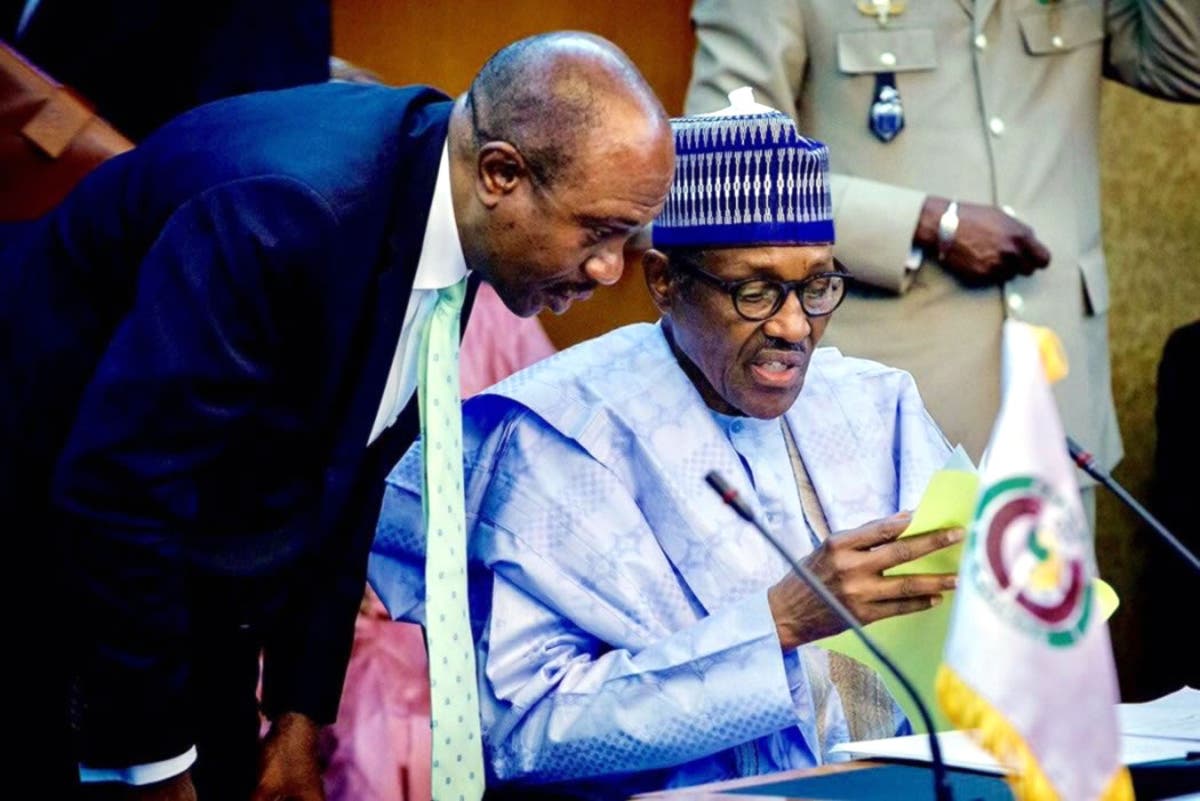
The President was flanked by many dignitaries from within and outside Nigeria during the unveiling. He described the refinery as a ‘game changer’ for the country’s economy. 

“This clearly makes this event a notable milestone for our economy and a game changer for the downstream petroleum product market not only in Nigeria but the entire African continent,” He said.

The accomplished businessman and owner of the refinery, Alhaji Aliko Dangote, gave the welcome remark at the unveiling ceremony.

He thanked President Muhammadu Buhari for his support and said he was his source of inspiration at times he felt like giving up. 

He also appreciated the Governor of the Central Bank of Nigeria, Godwin Emefiele, for ‘moving mountains’ in the course of the project. 

The billionaire also revealed that the first product of the $12 billion facility “will be in the market before the end of July, beginning of August this year”.

“Beyond today’s ceremony, our first goal is to ramp up production of the various products to ensure that within this year, we’re able to fully satisfy our nation’s demand for higher quality products,” he said.

The Dangote Petroleum Refinery and Petrochemical is the largest single-train refinery in the world and has a capacity of 650,0000 capacity a day.

Emefiele will soon become “Zebra in the hands of Tigers” —Shehu Sani

 By Muhammadu Sabiu  

Senator Shehu Sani, a lawmaker and social critic, projected that Godwin Emefiele, the CBN governor, will be powerless after President Muhammadu Buhari leaves office. 

After Buhari leaves power on May 29, Sani, in a tweet on Saturday, compared Emefiele’s situation to a “Zebra in the hands of Tigers”. 

The tweet reads, “When Baba is gone, Emefiele will be like [a] Zebra in the hands of Tigers.” 

Recall that Bola Ahmed Tinubu, who is thought to have been badly affected by the monetary policies initiated by Godwin Emefiele, was declared the winner in last Saturday’s presidential election. 

Many believe that the CBN initiated its naira redesign policy to cripple Tinubu’s chances of winning the election, as this could not be unconnected to Senator Shehu Sani’s tweet.

Former CBN Director lambasts Emefele’s policies, asks him to resign

By Uzair Adam Imam

A former Secretary to the Lagos State Government in the Second Republic, Chief Olorunfumi Bashorun, said the Central Bank of Nigeria’s (CBN) cash policy is making a dangerous and destructive history for Nigeria.

He stated that since CBN was established in 1959, and I was a foundation staff, no governor has taken Nigeria for a ride as Emefiele.

Bashorun, who disclosed this in a statement he personally signed on Thursday, asked the CBN governor, Godwin Emefiele, to resign immediately.

He said in the statement, “I have just read online a directive from the CBN governor that banks should pay a maximum of N20,000 out to customers on presentation of the teller.

“It is now clear that the CBN governor, Godwin Emefiele, is making a dangerous and destructive history for Nigeria. Since CBN was established in 1959 (and I was a foundation staff), no governor has taken Nigeria for a ride as Emefiele.

“The multiplier effect of his rather evil directive is to close down all businesses in Nigeria, and further add to the hardship Nigerians are experiencing in recent times.

“I make bold to state that unless this oppressive directive is withdrawn within the next 48 hours, Nigerian masses will have no choice than to rise and compel the government to take positive action to reverse it,” he stated.

Pay customers over-the-counter, CBN directs banks 

By Sumayyah Auwal Ishaq

The Central Bank of Nigeria (CBN) has directed commercial banks across the country to start paying the new naira notes to customers over-the-counter to ease the plight of Nigerians. 

In a statement on Thursday signed by the bank’s Director of Corporate Communications, Osita Nwanisobi, CBN stated that “We have equally noticed the queues at Automated Teller Machines across the country and an upward trend in the cases of people stocking and aggregating the newly introduced banknotes they serially obtain from ATMs for reasons best known to them”. 

“Also worrisome are the reported cases of unregistered persons and non-bank officials swapping banknotes for members of the public, purportedly on behalf of the CBN”. 

The apex bank has assured Nigerians that the queues at ATMs will end soon. However, Nigerians have continued to express their dismay over the scarcity of the new naira notes.

The currency change in Nigeria: Balancing progress and people’s interests

By Yakubu Sani Wudil, PhD

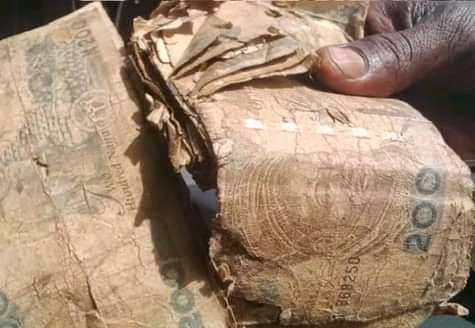
The Central Bank of Nigeria’s announcement that some of the country’s old notes will cease to be legal tender by the end of January 2023 has caused significant concerns among citizens and businesses. While the move towards a cashless economy has its merits, such as increased security and transparency of monetary transactions, it is crucial to consider the potential negative consequences and ensure that proper measures are implemented to mitigate them.

One of the most pressing concerns is the availability of the new Naira notes. Many citizens have reported difficulties in exchanging their old notes for the new currency, and banks have been dispensing the old notes until only a few days ago. This has led to confusion and frustration among citizens, particularly those in rural areas who may not be as familiar with bank procedures. Therefore, the government should mandate banks to release the new notes in abundance to prevent any shortage or hoarding of the new currency.

Another primary concern is the impact on small businesses. Many small businesses have already shut down because they can no longer accept the old Naira note while the new Naira is scarcely inadequate. This has resulted in job loss and financial hardship for small business owners and created artificial inflation. To mitigate this, the apex bank should consider extending the deadline for the old notes to cease being legal tender to give citizens and businesses more time to adjust and exchange their old notes.

Policymakers need to consider the well-being of the citizens when implementing such a critical change to the country’s monetary system. The decision to cease the old notes as legal tender could disproportionately affect low-income and rural citizens who may not have access to the necessary technology or banking services to conduct electronic transactions.

To address this, the government must provide support and education on the benefits of a cashless economy, especially in rural areas. Such sensitisations should involve traditional and religious leaders because they are respected and trusted figures in their communities. They can help explain the system’s benefits and dispel any misconceptions or fears that people may have about the change. It is also important to note that the success of this transition will depend on the cooperation and participation of the public. Therefore, the government must provide adequate education and support to ensure that everyone can easily navigate the new system.

Undoubtedly, the cashless economic system constitutes the model of transactions embraced by all technologically advanced nations. With most transactions being conducted electronically, it becomes easier for the government to monitor and detect illicit activities such as money laundering or tax evasion. Additionally, a cashless economy can help reduce the risk of kidnapping for ransom, as there would be limited cash in circulation. It would also help curb buying political votes in the forthcoming general elections.

However, the sudden transition to a cashless regime also has its drawbacks. One of the most notable concerns is the potential decline in the value of the currency. The Naira has been facing significant inflationary pressures in recent years, and the cessation of the old notes could exacerbate this problem. Furthermore, the change in the currency and the scarcity of new notes may halt economic activities, which will hurt the economy and the well-being of the people.

It is important for the apex bank to consider the challenges people face and adjust accordingly. The deadline for the transition to a cashless economy should be reconsidered, and more time should be given for proper planning and implementation. The banks should also be mandated to release the new notes in abundance and ensure they are readily available to the public. The policymakers should also consider the impact of this change on small businesses so that the economy and livelihoods of the people are not negatively affected. The purpose of government is to develop policies that would improve the well-being of its citizens and not burden them with unnecessary hardships.

Dr Yakubu Wudil writes from King Fahd University of Petroleum and Minerals, Saudi Arabia, and can be reached via yswudil@yahoo.com.

Kano-based lawyer drags CBN, Gov to court over currency swap deadline

By Muhammad Aminu

A Kano-based lawyer, Sanusi Umar Sadiq has dragged the Central Bank of Nigeria (CBN) alongside its governor, Godwin Emefele, to a Federal High Court in Kano over currency swap deadline of 31st January, 2023.

Barr Sadiq is asking the Court of his fundamental human rights in line with sections 44 and 46 of the 1999 Constitution, Article14 of the African Charter on Human and Peoples’ Right Act, Laws of the Feederation of Nigeria 2010 Order Rule 2 and 3 of the Fundamenmtal Rights Rule 2009.

He asked the Court to declare that the cessation of the existing N200, N500 and 1000 from being used as legal tender from 31st January 2023 as unlawful and unconstitutional.

The legal luminary contended that the arbitrary stoppage of the existing notes which are largely in circulation will cripple the econmony and further entrench poverty among Nigerians.

“An order of this Honorable Court enforcing the Fundamental Rights of the Applicant as enshrined under and guaranteed by the 1999 Constitution of the Federal Republic of Nigeria (As Altered) and the African Charter on Human and Peoples’ Rights (Ratification and Enforcement) Act Cap. A9, Laws of the Federation of Nigeria 2010.

“…that it is unlawful and unconstitutional for the Respondents to declare the existing N200, N500 and N1, 000 currency notes, which are currently largely in circulation, as no longer the legal tender of Nigeria by 31st January, 2023.

“…that the abrupt and arbitrary policy adopted by the Respondents to make the existing N200, N500 and N1, 000 currency notes that are widely in circulation now is a threat to national security and inimical to national interest as same will cripple the economy and throw many more innocent Nigerians into poverty.

“…this Honorable Court restraining the Respondents from making the existing N200, N500 and N1, 000 currency notes cease to be the legal tender in Nigeria by 31st January, 2023, which currency notes are the ones largely in circulation now, are the ones issued by the various commercial banks in the country, and are the ones dispensed by the various Automated Teller Machines (ATMs),” the originating motion states.

According to him, he wants the Court to compel the CBN and its governor “to follow and comply with the Global Best Standard Practices for changing currency whereby the old ones are gradually withdrawn from circulation by not releasing them to the public once they get deposited in banks within a reasonable time that shall not be less than six months.”

Barr Sadiq argued that the apex bank has not made adequate preparations or put in place appropriate measures to make the redesigned notes available to the public as the commercial banks across the country, both within the banking halls and via the Automated Teller Machines (ATMs) continue issuing and dispensing the currency notes intended to be replaced until few days to the deadline.

He urged the Court to restrain the Bank else “they will throw the country into an economic chaos and anomie.”

Naira policy: Nigerian governors summon CBN boss, Emefiele

By Muhammadu Sabiu 

The Governor of the Central Bank of Nigeria, Godwin Emefiele, has been summoned by the 36 state governors in relation to the withdrawal policy and the repainted naira notes.

The Nigeria Governors’ Forum, which embodies the governors, said on Tuesday that the scheduled meeting would take place on Thursday through its spokesperson, Abdulrazaque Bello-Barkindo.

Recall that Nigerians were instructed to deposit their old notes in banks by January 31, 2023, under the CBN’s naira redesign programme, which was implemented in October 2022 of last year.

The spokesperson noted that the virtual meeting would concentrate on the most recent apex bank withdrawal policy and currency redesign.

“For the virtual meeting, the agenda is the Economic and Security implications of naira redesign and withdrawal policy.

“The discussion promises to foster involvement and dialogue among various stakeholders, including governments and civil society organisations, to devise a solution to the lingering issue,” he said.

Old Naira Notes: January 31 deadline sacrosanct – CBN

By Sumayyah Auwal Ishaq

The Central Bank of Nigeria (CBN) has reiterated that the deadline for exchange of the old Naira notes for new ones remains January 31, 2023.

In its official Facebook handle, on Friday, the apex bank wrote, “A reminder to the general public that the old series of N200, N500 and N1,000 notes cease to be legal tender by January 31, 2023. You are once again advised to return them to your bank before the deadline”.

It may be recalled that last October, CBN announced that the old Naira notes would cease to circulate, and be legal tender from January 31, 2023 after detailing a number of reasons for the action.

The announcement sparked various reactions from the public, which in part, informed the call by the National Assembly for CBN to extend the deadline of January 31, 2023.

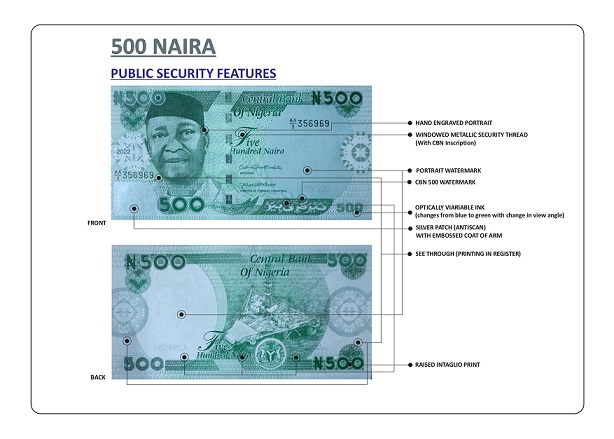
Currency redesign and its attendant expectations

By Muhammed Umar-Hong

Changing the appearance of a country’s currency is widely practised worldwide by various methods and for different reasons. It could portray a nation’s rich cultural heritage, a change in regime to symbolise a ruler or celebrate national heroes with portraits of them attached to these currencies. However, the most cited reason has been to combat threats of counterfeiting. Threats which may lead to inaccurate figures of the total amount of money in circulation, for example. 

The Naira is certainly not a stranger to the redesign concept, which has seen various denominations change over the last few decades. Chief among the changes had been the transition to more durable currency notes which began with the N5, N10, N20 and N50 denominations all upgraded to polymer substrates in 2007. While 2014 saw the birth of the N100 commemorative note marking the nation’s centenary celebration. 

It should thus not be a contentious issue if the CBN decides, as it has, to make further modifications to the country’s currency. After all, it is within the apex bank’s constitutional powers as stated in the CBN Act, 2017 (Section 19, subsection 1b). This time, its primary aim will be to address our security challenges by reducing the hoarding of certain denominations whilst ensuring proper monitoring of monies in circulation. 

But before the release of the new bank notes, however, interactions on social media had clearly shown that not many Nigerians understood the difference between currency redesign and currency redenomination (which involves removing/adding more zeros to the currency), and some were highly expectant of the policy to have some technical outcome. Opinions and suggestions are illogical or don’t seem to rest on sound economic principles. But I took the trouble to note a few, and to explain my views on them below. Feel free to make your contributions.

Q: Why wouldn’t the government set our highest currency denomination to N20 to end money laundering? 

V: The reason for raising our highest denomination to N1000 is because our Naira has a fallen value. The change in exchange rates between two countries is usually determined by the constant demand for one currency by the other. If a country produces goods and services in commercially exportable quantities, the demand for those goods by foreign customers would automatically lead to foreign currencies being converted to local currency to enable these purchases, which ultimately drives the value of the local currency up. Foreign currencies would have to chase more Naira, thereby bolstering its value. 

On the other hand, for products such as petroleum, where the purchases are made in US dollars, the additional dollars can be used by the apex bank to purchase the Naira, thus creating a sort of artificial demand for the Naira that usually raises its value. 

I don’t think any money launderer (assuming I know how this is being done) would be deterred just because he now has to carry/stash away more currency in N20 denominations.

Q: Why wouldn’t the government choose an interval of four years to redesign its currency? 

V: The international standard for countries to redevelop their currencies is between a 6 – 8 year interval. This is not, however, a strict rule, as some countries do it more frequently than others. In the US, for example, the practice is to focus more on widely used denominations (prone to more wear-and-tear) or are frequently targeted for currency fraud (counterfeiting) for a redesign. For instance, a currency like the two-dollar bill has a much longer lifespan due to its near-absence in daily transactions compared to a dollar bill. 

Additionally, not every need for currency changes can be accurately foreseeable. And it may only sometimes be financially viable to make wholesale changes if it coincides with financial or economic shocks. Both of which our mono-economy is particularly susceptible to.

Q: Will the unaffected currency notes (i.e. N5, N10, N20, N50 and N100) remain in circulation after this redesign? Would their value fall?

V: The other currency notes that haven’t been affected by the current redesign will still maintain their legal tender status, fortunately, until the CBN says otherwise. They will also retain value as market forces dictate and are expected to remain in wide circulation. Elsewhere though, lower denomination currencies have been the most exchanged and most subjected to redesign, mainly due to their frequent use.

Q: Why not grant amnesty to hoarders of cash instead of embarking on the expensive redesign?

V: Well, I believe you can’t exert leverage over hoarders of cash if you were never going to carry out your threat (the redesign). 

But Abdullahi Imam has another angle to it: The question of amnesty is straightforward. Amnesties are mostly for criminal activities. It’s not a crime to have cash or to store it. So the topic of amnesty is a non-starter. Except if an amnesty is for those that need to exchange their old notes before the agreed deadline. 

Q: The government should introduce the use of coins if it hopes to increase its purchasing power.

V: Purchasing power is simply the value of a unit of currency in terms of the goods/services it can buy, which is effectively how strong/weak your currency is. The higher the purchasing (buying) power of a unit of your currency,  the greater the number of goods/services it can purchase, and vice versa.

Does the N5 note come to mind? It’s okay to say the note has become worthless these days. I can’t remember when I walked into a shop for an item priced in the multiple of 5. Most of our goods have now been (deliberately, I think) rounded up to the power of 10.

Although they play little or no role in our daily transactions, coins are currently the oldest form of money available to us. They used to have intrinsic value based on the valuable metals (gold, silver) they were made with until it became less expensive to produce using materials like Copper. In more notable climes, they have been used for commemorative purposes. 

Just recently, Britain had to redesign its fifty pence (50p) coin to feature the portrait of its new king, Charles III, following the death of Elizabeth II. And in many other countries, coin usage has practically been resigned to handling smaller transactions, often serving as ‘change’ from paper currency payments. This is more evident in countries assigning lower denominations to coins, effectively making the highest value of the coin in circulation worth less than the lowest-value note. 

Even in our case, Prof. Soludo, then CBN governor, in his 2007 paper titled ‘Strategic Agenda for the Naira’ had proposed the reintroduction of coins in the following denominations: 1 kobo, 2 kobos, 5 kobos, 10 and 20 kobos in his bid to make the Naira a currency of reference in Africa. 

Paper currency has become the preferred medium of exchange for higher denominations worldwide due to their convenient nature and the fiat status conferred on them by governments. To the best of my knowledge, no relationship EXISTS between using coins and increasing the purchasing power of a nation’s currency. But that’s not to say coins are wholly valueless and lack significance in the overall dealings of a country because, who knows, “the most important decisions you will ever make in your life may be decided with the toss of a coin.”

Muhammed Umar-Hong wrote via muhammedu.hong@gmail.com.

Confusion as CBN does not know quantities of new naira notes

By Uzair Adam Imam

The Central Bank of Nigeria (CBN) says it does not know the quantities of the new naira notes it printed and released for circulation in the country.

The CBN Deputy Governor, Aisha Ahmad, made this disclosure when she appeared before the House of Representative on Thursday.

Ahmad, who represented the CBN Governor, Godwin Emefiele, was before the lawmakers to brief them on the apex bank’s cashless policy and cash withdrawal limits.

The Daily Reality gathered that the lawmakers had on Wednesday requested that Ahmad should appear before the House since Emefiele was outside the country for health issues.

Ahmad was asked by a lawmaker, Sada Soli, about the quantities of the new notes printed due reason to non-availability of the notes days after they were released to the public.

But Ahmad, while responding to his question, said she does not know the quantities of notes printed by the apex bank.