Germany

Don raises alarm over alleged job racketeering in Kano as governor promises action

By Sabiu Abdullahi

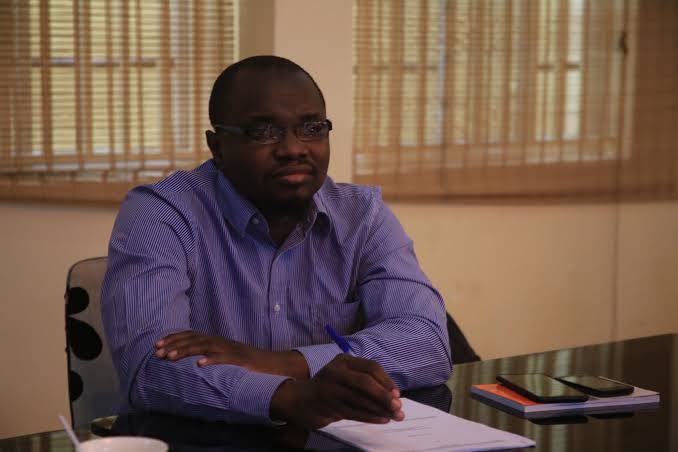
A Kano indigene and university lecturer based in Cologne, Germany, Muhsin Ibrahim, has raised concerns over alleged job offer racketeering in Kano State, claiming the practice remains widespread despite a change in administration.

In a series of Facebook posts, Ibrahim alleged that the sale of job placements in government ministries and institutions became common toward the end of the administration of former governor Abdullahi Umar Ganduje and has continued under the current government led by Abba Kabir Yusuf.

He stated, “Job offer racketeering was prevalent in Kano towards the end of Governor Ganduje’s administration, in late 2022 and early 2023. I wrote extensively about it here. I thought Governor Abba Kabir Yusuf, with his purported principles, would stop it. I was wrong.”

The lecturer explained that recent discussions with contacts in Kano revealed that the alleged practice is not only ongoing but expanding. He described a situation where employment opportunities are treated like commodities and sold openly.

“For two days, I happened to speak with family and friends about this illicit business in Kano. It is not only happening but also booming and carried out in broad daylight. Like merchandise, job offers at different ministries and institutions are priced and sold in the market,” he said.

Ibrahim also claimed that some individuals have fallen victim to fraud while attempting to secure such opportunities, describing the situation as “double jeopardy.”

“To make matters worse, several people have been scammed. I call this double jeopardy. You are duped while engaging in immoral, unethical practices. You have no one and nowhere to report your case to,” he added.

He acknowledged the challenges faced by job seekers, especially those who have spent years pursuing education without securing employment. However, he blamed those involved in selling job offers and criticised authorities for failing to curb the trend.

“I can understand why some people feel pushed into buy job offers. It is depressing to be without a job after investing so much money, time and energy in obtaining qualifications. So, I largely blame the sellers but also the government for doing almost nothing to stop this,” he stated.

The lecturer urged those involved to desist from the practice and called for adherence to due process in recruitment.

“Please stop selling job offers. Follow proper hiring procedures and standard practices. Do not abet corruption in Nigeria or anywhere else. Change begins with you and me.”

In a follow-up post, Ibrahim disclosed that a government official in Kano forwarded his earlier message to Governor Yusuf, who has reportedly pledged to respond to the issue.

“A Kano government official forwarded my previous post about job offer racketeering in the state to Governor Abba Kabir Yusuf. The Governor has promised to take appropriate action. May Allah (SWT) grant him the wisdom and the will to do so, amin.”

Tinubu seeks used helicopters from Germany to strengthen Sahel security

By Sabiu Abdullahi

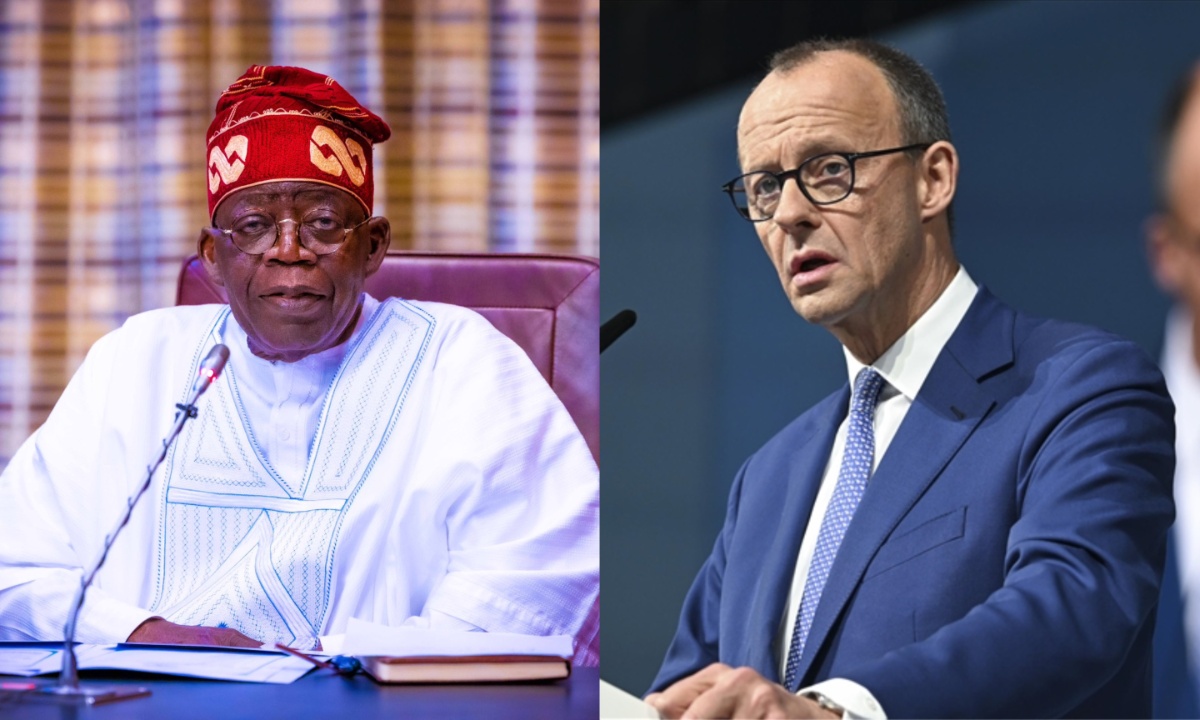
President Bola Ahmed Tinubu has asked the German government to provide used helicopters to support intelligence and reconnaissance operations in the Sahel region.

The request came during a telephone conversation with German Chancellor Friedrich Merz on Wednesday. This was disclosed in a statement issued by Bayo Onanuga, Special Adviser to the President on Information and Strategy. The discussion centered on ways to deepen security collaboration between Nigeria and Germany.

Onanuga said both leaders showed concern about the deteriorating security situation across the Sahel corridor. He stated, “The two leaders also expressed worry over the situation in the Sahel region. President Tinubu called for the supply of used helicopters to help in intelligence reconnaissance in the region.”

Quoting the President further, he added, “The Sahel corridor is bad and needs our support. Intelligence support reconnaissance is needed.”

Security was not the only issue addressed. Talks also covered Nigeria’s electricity sector, with emphasis on the Presidential Power Initiative. Tinubu stressed the country’s need for support in power transmission.

In response, Chancellor Merz assured that Siemens would offer technical assistance, while Deutsche Bank would show readiness to finance the project.

Onanuga noted that both sides also discussed partnerships in other sectors. According to him, “the two leaders also expressed their willingness to cooperate in creative arts and skill development”.

Railway cooperation also formed part of the conversation, alongside collaboration in arts and vocational development.

Merz spoke about diplomatic relations as well. He said, “Germany is eagerly awaiting the arrival of Nigeria’s new ambassador to Germany.”

Onanuga added that the German leader highlighted cultural cooperation. “He also spoke about the importance of the arts and called for the establishment of the Great Museum of African Arts,” he said.

The phone call started at 2:01 p.m. and ended at about 2:10 p.m., the statement concluded.

Arewa Community Germany disowns Berlin “Hausa International Protest,” warns against divisive messaging

By Muhammad Sulaiman

The Arewa Community Germany has formally disassociated itself from a video circulating online about a so-called “Hausa International Protest” organised by Hausa Tsantsa Development Association, staged in Berlin.

In a letter addressed to Nigeria’s Consul General in Frankfurt, Ambassador Yakubu A. Dadu, the group said it had no role in organising or endorsing the demonstration and warned that the protest’s message conflicts with its core values.

The association, represented by Alhaji Tijani Garba, Dr. Ummah Aliyu Musa and Buhari Abubakar, stressed that it was founded on the principle of unity among all northern Nigerian peoples. It noted that Hausa, Fulani, Kanuri, Tiv, Nupe and other groups share a common heritage, adding that the organisation “does not draw lines” between northerners and will not support any activity that promotes ethnic profiling or elevates one group above another.

According to the statement, the Berlin protest risks fueling division and misunderstanding among Arewa communities in the diaspora, where the group says cohesion is especially important. The association reaffirmed its focus on cooperation, peaceful engagement and presenting a positive image of Northerners living in Germany.

The Arewa Community Germany also cautioned the public against linking its name to the protest, emphasising that any event involving the association will be announced through its official channels.

The group concluded by reaffirming its stance on harmony, mutual respect and a united Arewa identity.

Mainz lose court appeal over Anwar El Ghazi’s dismissal

By Maryam Ahmad

Bundesliga club Mainz 05 have lost their appeal against the unfair dismissal ruling in favour of Dutch winger Anwar El Ghazi, who has been awarded €1.7 million in compensation.

A German labour court had earlier found that the club acted unlawfully when it terminated El Ghazi’s contract in November 2023 following social-media posts he made during the Gaza–Israel crisis. The arbitration panel upheld that decision, rejecting Mainz’s argument that the posts constituted grounds for immediate dismissal.

In a statement, Mainz said it accepted the ruling but stressed its commitment to maintaining its internal code of conduct. El Ghazi welcomed the outcome, describing it as a vindication of his right to express his views.

German police arrest 16 over ‘Grandchild Scam’

By Maryam Ahmad

German police have arrested 16 people in a major operation against an international network behind a telephone fraud known as the “grandchild scam.”

The Berlin State Criminal Police Office stated that the operation involved officers from all German states, as well as Europol and police forces in Austria, Poland, Switzerland, Slovakia, and the Czech Republic.

Several call centres linked to the scam were shut down, and 44 planned fraud attempts — worth about €2 million (₦3.9 billion) — were prevented.

In the scheme, fraudsters call elderly victims pretending to be relatives in urgent need of money. In some cases, they claim to have caused a fatal road accident and are followed by fake police officers demanding cash to avoid prosecution.

The suspects, aged between 22 and 63, included callers and money collectors. Among them is a 26-year-old Slovakian woman accused of similar crimes in her country.

Police said the coordinated raids took place between mid-September and late October.

Suspected racist’s brutal murder of Algerian lady in Germany sparks outrage

By Sabiu Abdullahi

The fatal stabbing of 26-year-old Rahma Ayad, an Algerian nursing trainee, in the German town of Arnum near Hanover has ignited protests and diplomatic conversations between Algeria and Germany.

Many are urging that the incident be treated as a racially motivated hate crime.Rahma was killed on the morning of 4 July in the stairwell of her apartment building.

According to German police and eyewitness reports, her screams were heard by neighbours who called emergency services. She was discovered with multiple stab wounds to her chest and shoulder.

Despite the rapid arrival of medical personnel, she succumbed to her injuries shortly afterward.A 31-year-old German man, who resided in the same building, was arrested later that day.

While he remains in custody, authorities have yet to officially confirm a motive or file formal charges.

Rahma’s family alleges that she had previously expressed concerns about her safety.

They claim she had been repeatedly harassed by her neighbour, particularly because of her Arab identity and choice to wear the hijab.

In an interview with Al-Araby TV, her mother revealed that Rahma had felt unsafe for months due to the neighbour’s behaviour, which reportedly included verbal abuse.

Algerian community activists in Germany echoed these concerns, stating that the suspect had a history of making derogatory remarks directed at Rahma.

They are now calling on authorities to treat the incident as a case of racist violence rather than dismissing it as a random act or linking it to mental instability.

The killing has sparked widespread protests across Germany.

On Tuesday, demonstrators gathered outside Rahma’s residence in Arnum, holding a rally to demand justice and draw attention to what they described as rising Islamophobia across Europe.

The protesters also criticised the muted response from German officials and the limited coverage the story received in mainstream media.

“If the killer had been a Muslim and the victim German, this would be headline news everywhere,” one protester told Al-Araby TV.

Another participant accused German authorities of applying justice “only selectively”.

The incident has stirred strong emotions online as well.

A user on X (formerly Twitter) commented, “People travel to Europe for safety and a better life […] and they end up like this.”

Responding to the outcry, Algeria’s Secretary of State for National Community Abroad, Sofiane Chaib, held talks with the German ambassador in Algiers.

He described Rahma’s death as a “heinous crime” and called for greater protection of Algerians living in Germany.

In a related gesture, the Algerian consulate in Germany has committed to covering the expenses for transporting Rahma’s body back to Oran, where she will be laid to rest.

PhD scholarships: Scholars to study in Germany as ABU announces positions

By Ishaka Mohammed

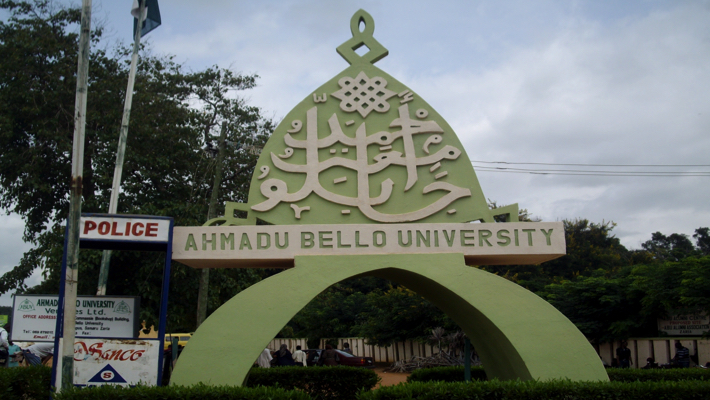
Ahmadu Bello University (ABU) Zaria, Nigeria, in collaboration with the University of Rostock, Germany, has announced four fully funded PhD positions in Bioenergy, Green Hydrogen, Waste Management, and Circular Economy.

The positions are under a joint research program between the Bioresources Engineering Research Group at ABU and the Professorship for Material and Energy Valorization at the University of Rostock.

As shared by a lecturer at ABU, Zaria, Dr Muhammad Hashim Suleiman, the positions will involve advanced research in the aforementioned bio-resource fields, aiming to develop sustainable solutions for global environmental and energy challenges. 

Successful applicants will be offered provisional admission to the University of Rostock, Germany, where they will spend six months. However, the main research will be conducted at ABU.

The scholarship will cover tuition fees, stipends for living costs during the research period, and costs of research and laboratory logistics.

Each successful applicant will be required to conduct independent and high-quality research but will submit regular progress reports to their supervisors. 

They are also expected to publish at least two articles per year in reputable and indexed journals, in addition to performing any other tasks assigned by their supervisors, if deemed necessary, from both universities.

An applicant for each position should have a minimum of upper second class in their first degree and a good master’s degree in any field of engineering with a research focus on bioenergy, waste-to-energy, circular economy, or green hydrogen.

Each applicant must also be proficient in both spoken and written English, 35 years old or younger, and not be under any other scholarship at the time of application.

Interested and eligible applicants are required to send the under-listed documents to daie@abu.edu.ng and copy saniabbaaliyu2015@gmail.com before Wednesday, May 7, 2025. 

The documents include a detailed curriculum vitae (CV) showing a publication profile, copies of academic certificates and transcripts, proof of research in bioenergy, waste-to-energy, circular economy or green hydrogen, two reference letters from academic or professional referees, a personal statement detailing motivation and research interests related to the PhD program, a concept note of within five pages on any of the aforementioned research areas, and proof of study leave (if employed).

Ahmadu Bello University, Zaria, is the fourth oldest university in Nigeria, while the University of Rostock, founded over 600 years ago, is the third oldest in Germany.

Germany gears up for crucial federal elections


By Hadiza Abdulkadir

The political atmosphere in Germany is intensifying as the country approaches its highly anticipated federal elections on February 23, 2025. With multiple parties in the race, the election results are expected to influence Germany’s domestic policies and international stance significantly.

Key political parties are ramping up their campaigns, focusing on issues such as economic stability, immigration, climate change, and Germany’s role in global affairs. Analysts predict a tight contest, with shifting voter sentiments crucial to determining the next government.

Among the key contenders is the ruling Social Democratic Party (SPD), led by Chancellor Olaf Scholz, facing strong challenges from the conservative Christian Democratic Union (CDU) under Friedrich Merz. 

The Greens, led by Annalena Baerbock, are pushing a climate-focused agenda, while the Free Democratic Party (FDP), under Christian Lindner, is emphasising economic liberalisation.

The far-right Alternative for Germany (AfD) and the leftist Die Linke are also competing for voter support, making this election highly competitive and defining for Germany’s political future.

As Germany finds itself at a crossroads, the results of these elections will not only influence the nation’s governance but also have significant repercussions on European and global politics.

Germany: Duisburg offers free beer to boost voter turnout

By Maryam Ahmad

According to Bild, the German city of Duisburg is taking an innovative approach to encourage voter participation in the upcoming federal elections by offering free beer to those who cast their votes.

Mayor Sören Link explained the initiative, saying, “We want to do something about the low voter turnout and strengthen democracy.”

In the 2021 federal elections, Duisburg recorded a voter turnout of 68.1%, significantly below the national average of 76.6%. The city hopes the promise of a cold drink will motivate more residents to vote.

Non-alcoholic beer and other beverages will also be available for those who don’t drink alcohol.

The erosion of values: How Hisbah’s decision to stop arrests is affecting Kano, by Muhsin Ibrahim

By Muhsin Ibrahim – Cologne, Germany

Let me say it aloud today: the Kano Hisbah Board’s decision to stop arresting people is quite disturbing.

Of course, I am one of those brave few commentators who criticised their method of arresting suspects some time ago, and I still stand by that view and criticism.

From Berlin to Baltimore, London to Lahore, Tel Aviv to Taipei, and Moscow to Muscat, security operatives sometimes manhandle individuals when arresting them. We are all humans!

If all arrests are halted, people will have free rein in Kano. Soon after Hisbah’s announcement, some socialites from other states and countries began relocating to Kano. They act freely and upload their videos on social media.

Kano is cosmopolitan but has unique norms, values, cultures, and religion that deserve respect. We cannot stop globalisation and cultural diffusion, but we should be concerned when our values are undermined.

Globally, countries still protect their “values” in one way or another. “Muhammad” can be – and is – the most popular baby name in England and Wales, but that doesn’t mean Muslims can, for example, legally practice polygyny. This is just but one example.

Kano State Government should reconsider how it manages Hisbah. You either have a functioning Hisbah or no Hisbah at all.

Hisbah should not be a toothless dog. Several clerics are already preaching (wa’azi, nasiha, etc.). It’s not Hisbah’s role to do just that; they need some power to use “force” at a certain level.

May we be guided, amin.

Muhsin Ibrahim is a Kano-born lecturer at the University of Cologne, Germany. He can be reached via muhsin2008@gmail.com.