Gaza

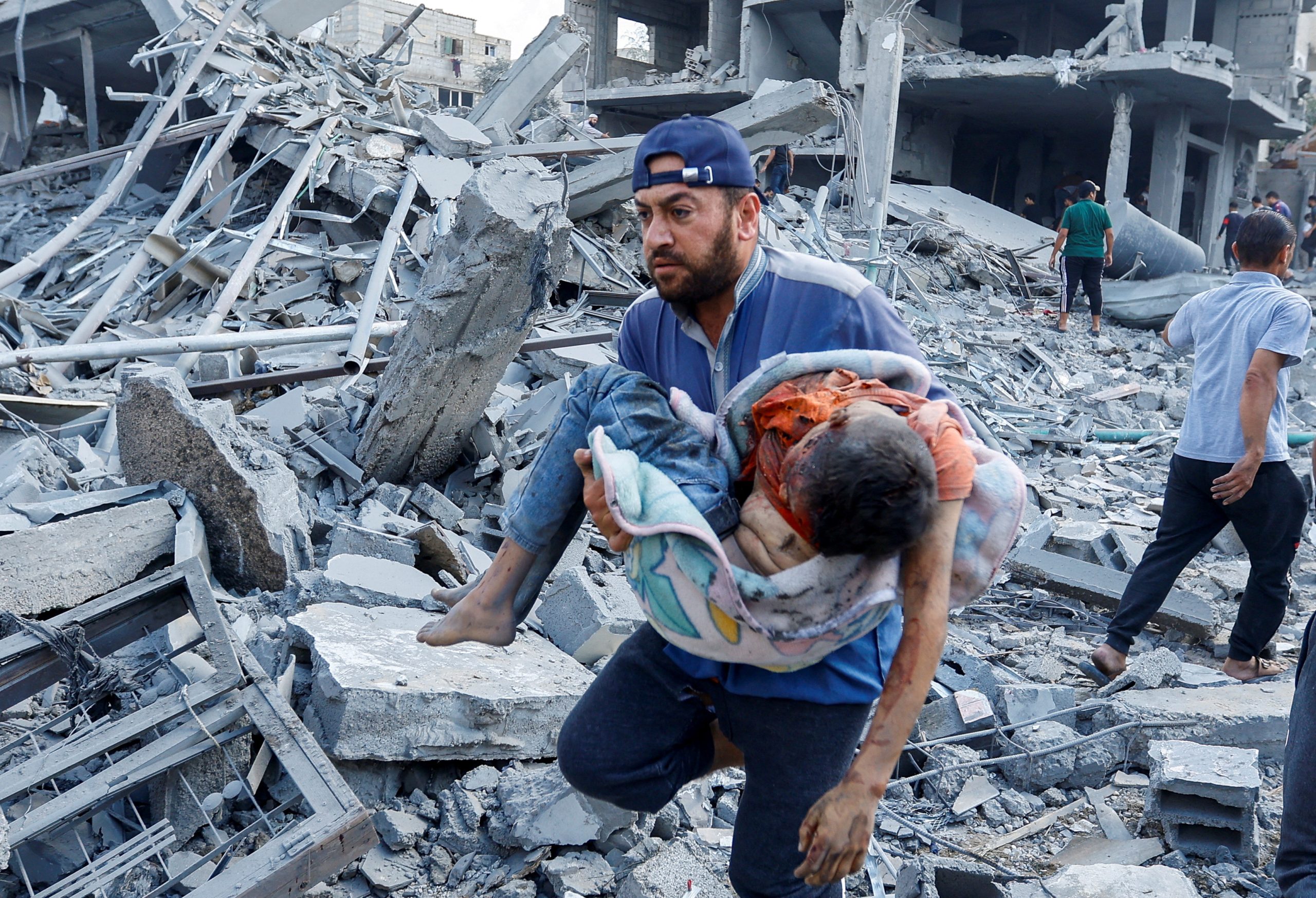
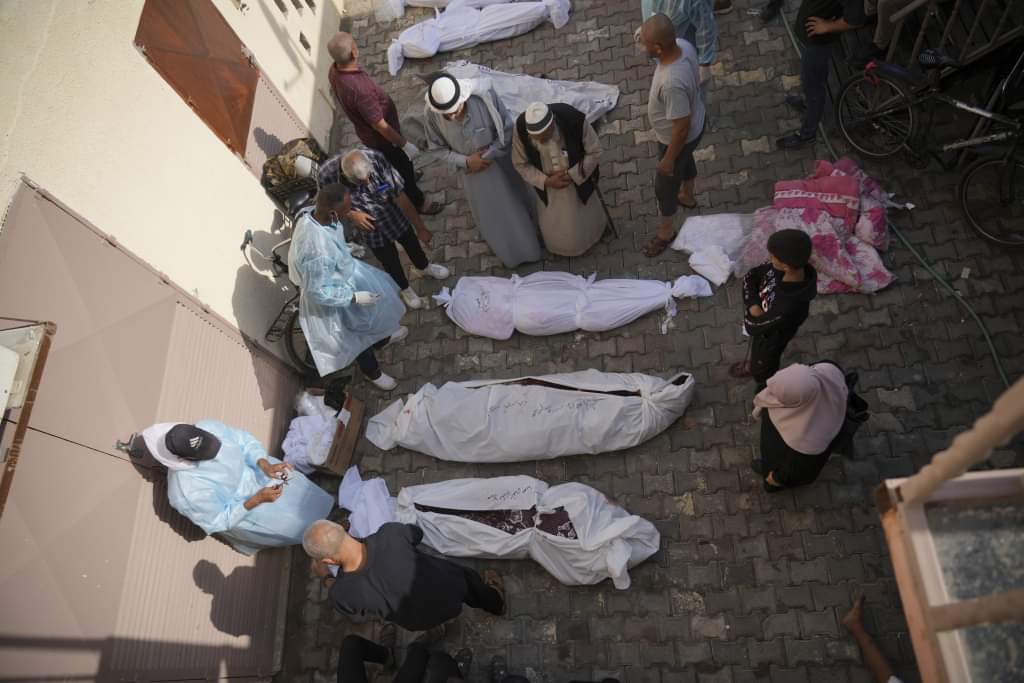
UN mourns staff killed in Gaza

By Ahmad Deedat Zakari

The United Nations (UN) has mourned staff of the organization killed by the Israel attacks in Gaza. 

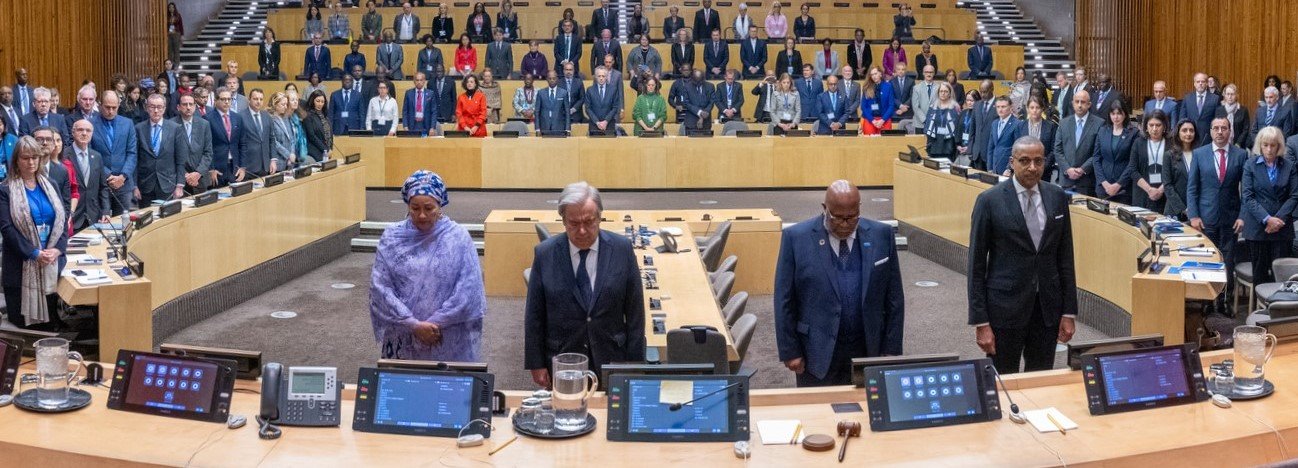
The UN Secretary-General, Antònio Guterres, disclosed the development in a tweet on Monday. 

According to Guterres, more than 100 staff of the United Nations Relief and Work Agency met their death as a result of the raging war. 

“Today, the @UN family observed a moment of silence to mourn & honour our colleagues killed in Gaza. Since the start of this conflict, more than 100 @UNRWA staff have lost their lives – the highest number of UN aid workers killed in a conflict in such a short time. They will never be forgotten.” He tweeted.

Protection of persons Hors de combat: Perspective on Israeli-Palestine crises

By Yusuf Idris

The Israel-Palestine conflict is one of the most complex and long-standing disputes in modern history. Rooted in deep historical, religious, and political tensions, the conflict has resulted in a series of wars, uprisings, and ongoing violence between Israelis and Palestinians.

The origins of the conflict can be traced back to the late 19th century when Jewish and Arab nationalist movements emerged in the region, claiming their right to self-determination. After World War I, the League of Nations granted Britain a mandate to govern Palestine, facilitating Jewish immigration and settlement. However, this sparked resistance from the Arab population, who feared displacement and loss of their homeland.

Following the horrors of the Holocaust during World War II, international sympathy for the establishment of a Jewish homeland grew. In 1947, the United Nations proposed a partition plan to divide Palestine into separate Israeli and Palestinian states, but the Arab countries and Palestinian leadership rejected this plan.

The protection of persons, including both combatants and civilians, is a crucial aspect to consider in any conflict. From the perspective of the Israeli-Palestinian crisis, this issue carries significant weight as the conflict has led to the loss of countless lives and resulted in widespread suffering on both sides.

One of the key aspects to examine regarding the protection of persons in the Israeli-Palestinian conflict is the nature of the conflict itself. The conflict has been marked by a series of military confrontations, uprisings, and acts of terrorism, which have had severe humanitarian consequences. Both Israelis and Palestinians have been subjected to violence, displacement, and the violation of their fundamental human rights.

From the Israeli perspective, the protection of persons, particularly Israeli citizens, is a paramount concern. Israel, as a sovereign state, has the responsibility to safeguard the lives and security of its population, which various Palestinian militant groups have consistently targeted. 

The causes and origins of the Israel-Palestine crisis are complex and deeply rooted in historical, political, and religious factors. 

The Israel-Palestine conflict dates back to the late 19th and early 20th centuries when Zionist Jews sought to establish a Jewish homeland in historic Palestine, which was under Ottoman rule at the time. This intensified with the Balfour Declaration in 1917, in which Britain supported establishing a Jewish homeland in Palestine.

Partition and Creation of Israel: Following World War I and the collapse of the Ottoman Empire, Britain was granted the mandate to administer Palestine. Rising tensions between Jewish immigrants and the Arab local population led to conflicts. In 1947, the United Nations proposed a partition plan, recommending the creation of separate Jewish and Arab states in Palestine. 

 The term “protection of civilians” refers to the measures taken to ensure the safety and security of civilians during armed conflicts. This can include various actions such as providing humanitarian assistance, establishing safe zones or protected areas, and enforcing international human rights and humanitarian laws.

“Hors de combat” is a French term that translates to “combat horse” in English. It refers to horses used in military operations, particularly in combat roles.

 The phrase “protection of civilians horse de combat” does not inherently have a specific meaning as it combines two distinct concepts. However, one possible interpretation could be using combat horses in military operations, specifically focusing on protecting civilians.

Combat horses may be employed in a conflict situation for various purposes like transportation, reconnaissance, or combat roles. If the emphasis is on protecting civilians, combat horses could be trained to rescue civilians in dangerous situations, evacuate them from conflict zones, or provide a deterrent against attacks on civilians.

There is no specific international instrument called “Words de combat” to protect civilians. However, several international legal frameworks and instruments address the protection of civilians during armed conflicts.

1. Geneva Conventions and Additional Protocols: The Geneva Conventions of 1949 and their Additional Protocols provide the foundation for protecting civilians during armed conflicts. They outline rules for the humane treatment of civilians, prohibit attacks against them, and provide for the establishment of protections such as safe zones and medical facilities.

2. United Nations Security Council Resolutions: The UN Security Council has issued several resolutions to protect civilians in armed conflicts. For example, Resolution 1894 (2009) reaffirms the responsibility of all parties to an armed conflict to protect civilians and calls for accountability for those who violate these obligations.

3. International Humanitarian Law: This body of law includes principles and rules that regulate the conduct of armed conflicts and aim to minimise civilian harm. 

Several international humanitarian principles, protocols, and provisions of the Geneva Conventions govern the protection of civilians in armed conflict situations. These frameworks aim to ensure that civilians are protected from the effects of armed conflict and that their human rights and dignity are preserved. 

 Key principles, protocols, and provisions related to the protection of civilians:

1. Principle of Distinction: This principle, enshrined in the Geneva Conventions, requires parties to distinguish between civilians and combatants and between civilian objects and military objectives. It prohibits direct attacks on civilians and civilian objects.

2. Principle of Proportionality: Under this principle, parties to the conflict must ensure that the anticipated military advantage from an attack is not outweighed by the expected harm to civilians or civilian objects. The excessive use of force that could cause disproportionate civilian casualties is prohibited.

3. Principle of Precautions in Attack: This principle obliges parties to take all feasible precautions to avoid or minimise harm to civilians and civilians.

The Israel-Palestine conflict falls within the scope of international humanitarian law, and the principle of protecting civilians applies to both parties. International humanitarian law, including the Geneva Conventions, stipulates that parties must take all necessary measures to protect civilians from the effects of hostilities in armed conflict situations.

This means that parties to the conflict, including Israel and Palestine, are obligated to:

1. Respect the distinction between civilians and combatants and between civilian objects and military targets. Deliberate attacks on civilians or civilian objects are prohibited.

2. Uphold the principle of proportionality by ensuring that the anticipated military advantage does not outweigh the expected harm to civilians or civilian infrastructure.

3. Take precautions in attacks to minimise harm to civilians. Parties should give effective warning of attacks that may affect the civilian population and take all feasible measures to avoid or minimise civilian casualties.

4. Provide medical care and humanitarian assistance to civilians affected by the conflict without discrimination.

Conclusively, the Israel-Palestine crisis is a complex and ongoing conflict with deep-rooted historical, political, and religious dimensions. A few general suggestions that various international actors have highlighted:

1. Dialogue and Negotiations: A peaceful and lasting resolution to the conflict can only be achieved through a comprehensive, inclusive, and sustained dialogue between the parties involved. This should be based on mutual recognition, understanding, and respect to reach a mutually acceptable solution.

2. Two-State Solution: The international community, including the United Nations, has long supported the idea of a two-state solution where Israel and Palestine exist side by side in peace and security. This solution typically involves the establishment of an independent and sovereign Palestinian state alongside Israel, with agreed-upon borders and mutually acceptable arrangements for Jerusalem, refugees, and security.

3. Respect for International Law: All parties should uphold and abide by international humanitarian law

Resolving the Israel-Palestine conflict is a complex and multifaceted issue that requires the commitment and cooperation of all parties involved. While there is no one-size-fits-all solution, several proposals have been put forward. Here are some potential solutions that have been discussed:

4. Two-State Solution: This solution involves the establishment of an independent and sovereign Palestinian state alongside Israel, based on the pre-1967 borders, with mutually agreed upon land swaps and a negotiated resolution to the status of Jerusalem. This solution has been endorsed by the international community, including the United Nations, as a means to address the aspirations of both Israelis and Palestinians for self-determination and security.

Yusuf Idris writes from  Lagos and can be reached via yusufibnadamu@gmail.com.
UK government sacks ministerial aide for calling for ceasefire in Gaza

By Sabiu Abdullahi 

Tensions within the British government have come to the forefront as a ministerial aide, Paul Bristow, was dismissed from his position after calling for a permanent ceasefire in the ongoing Gaza conflict.

Bristow’s plea for a ceasefire conflicted with the government’s support for “humanitarian pauses” instead. 

The dismissal came in the wake of a letter Bristow addressed to the Prime Minister, urging for a lasting ceasefire to save lives and enable crucial aid delivery to the affected region.

His removal was swift, with government officials citing his comments as a breach of the principle of collective responsibility, wherein government members are expected to publicly support official policies regardless of personal beliefs. 

The internal discord was further highlighted during a recent session of Prime Minister’s Questions, where Chancellor of the Exchequer Rishi Sunak advocated for “specific pauses” to facilitate aid delivery while firmly rejecting calls for a complete ceasefire.

Sunak emphasised Israel’s legitimate right to self-defence, underscoring the government’s stance on the matter. Bristow, a Conservative MP representing Peterborough, expressed his deep concern for his constituents, a significant portion of whom have been directly impacted by the conflict.

His questioning of the effectiveness of ongoing military actions in enhancing security or improving the situation resonated with a portion of the public. 

This incident reveals a rift within the UK government, raising questions about the nation’s diplomatic stance and the complex challenges posed by international conflicts.

Gaza hospital bombing: Will this open your eyes now?

By Ismail Obansa Nimah

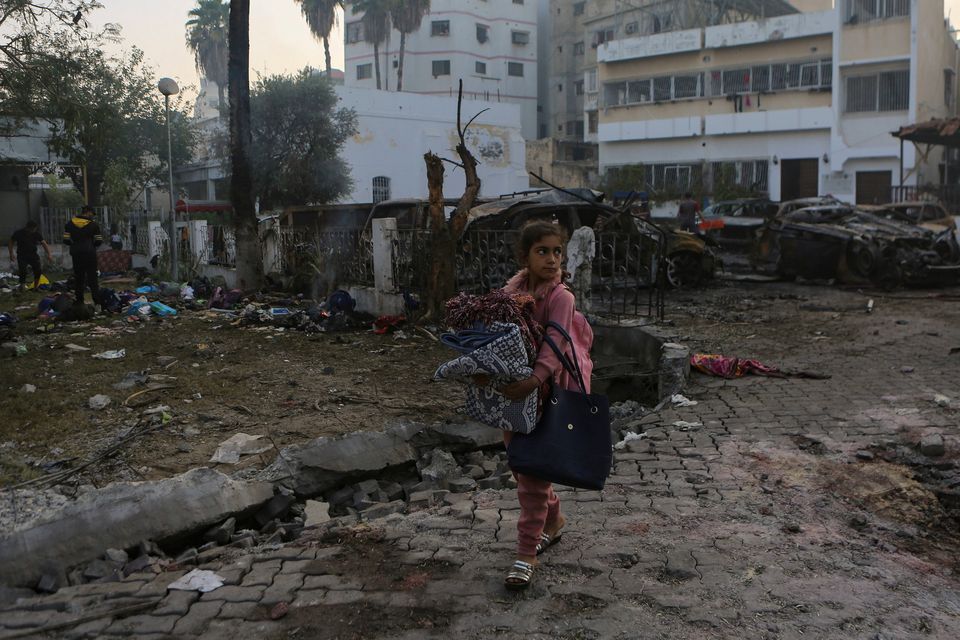
Moments before the deadly Israeli strike on the Al Ahli Baptist Christian National Hospital, an official Israeli government page posted the following on X (formerly Twitter):  “Due to the lack of medical equipment and the lack of medical staff, it was decided to bomb the Baptist hospital in Gaza and give them euthanasia death”.  

The attack is the worst to hit a hospital since World War II. It has so far killed more than 500 people, with many still under the rubble. The tweet has been deleted, and as usual, Israeli and mainstream Western media have begun damage control to embellish the ignominy with half-truths and outright falsehood.

There is no sitting on the fence in this conflict. You are either here or there. You either stand for the Palestinians against the monstrous apartheid regime of Israel, or you are with the Israelis, of whom a significant majority, save just a few, are so inhumane.

And when I say Palestinians or Israeli, it does not just equate pitting Muslims against Jews. If you must know, Bethlehem, the birthplace of Jesus himself, is amongst Palestine’s illegally occupied and besieged regions and has been under constant attack and bombardment by Israel for the past seven decades.

I hope our Christian counterparts also realise that cheering Israel on and being sympathetic to their cause on whatever basis or allusion, scriptural or not,  erodes the very humanity in us and is tantamount to aiding the systematic tyranny and barbarism that entity represents – the same barbarism we all spoke against and condemned when it occurred in South Africa.  We are all targets. This is a war on our collective humanity. Upon deeper reflection, we will find examples of similar demagoguery against Jesus and his Mother, Mary, in the scripture.

Ask yourself, is it not insane and malevolent to think that the Just and Merciful Creator will choose a group of people as his beloved or ‘chosen’ and help them commit atrocities of this scale to fulfil some prophecy?

We, Muslims, are not your enemy. We are not what the propagandists of the West and Israel propagate. We have an entire chapter in the Qur’an named after Mary in deference to her honour. We have numerous verses exalting her status in the sight of God, away from what the Jews still assert. No Muslim is a Muslim until he/she loves, respects and honours Jesus Christ as one of the mightiest messengers of God. We do not call his name, except we add “peace be upon him” to it. We make no distinction between him and other great messengers of God. Yet you somehow think we are your enemy? And help the Jews who curse Mary and Jesus further their evil plot, particularly against us?

For more than One thousand years, the Muslims ruled Palestine, with Jerusalem as its capital. During these years,  Muslims, Jews and Christians coexisted together in goodness, peace, justice and prosperity. Every Muslim was obligated to respect and ensure the human rights of those living under the Islamic Caliphate, no matter who they were and what they worshipped. It was and still is a huge sin and a punishable offence for any Muslim to trespass on the rights of a non-Muslim living under the protection of a Muslim government. No non-Muslim blood was allowed to be illegally spilt without justice. No one was made to unduly suffer on account of being different in any regard.

And even when the European Christian crusaders sacked Jerusalem and massacred hundreds of thousands of its inhabitants in the 11th century, the  Muslims under Salahudeen Al-Ayub did not spill a single innocent blood when they took the city back from the crusader occupation some 88 years later. Not even the blood of many cruel crusaders who had massacred Muslims in their thousands.

It may be that history is repeating itself all over again. But I am sure Palestine will again survive this cruel attempt at extermination and targeted ethnic cleansing. And I know that it will be soon, very soon. Until then, hang in there, brethren, for the help of our Creator is near.

I hope this opens your eyes and we all see more clearly away from sentiments and propaganda.

Ismail Obansa Nimah wrote via nimah013@gmail.com.

Hamas: The faith triumphant

By Bala Muhammad

Every Israeli Prime Minister makes it an article of faith to attack Palestine – both the West Bank and the Gaza Strip. But as the West Bank is usually led by the compliant and complacent so-called Palestinian Administration of PLO inheritors, it is mainly spared the fury of Israel. But Gaza, the home of HAMAS and Islamic Jihad, always takes the brunt whenever an Israeli leader wants to flex muscle and show ‘manhood’.

With each passing day of the Israeli aggression against the Palestinians, with each additional death of a child or mother, Muslims worldwide are becoming more militant, more fundamentalist, and more jihadic. This is very ominous for the West, on whose behalf Israel is doing what it is doing.

Samuel Huntington, who died not too long ago, wrote Clash of Civilisations. Now, more than ever before, this Clash is at hand. If there is any cause that unites Muslims today, it is the Palestinian Question; if there is any future war that Muslim youth would gladly join and wage, it would be the Jihad to liberate Al Aqsa, Al Quds and Palestine. But for the Western-propped-up Arab regimes encircling Gaza, many young people would have gone into the Strip to join the martyred army of Hamas and Islamic Jihad.

In the matter of HAMAS, Faith will always be Triumphant. Incidentally, The Faith Triumphant is the title of Chapter Eleven in one of the most important books of the Islamic Movement, Ma’alim fit Tariq (Milestones), written by the Movement’s leading intellectual and Martyr, Sayyid Qutb (1906-1966) of the Muslim Brotherhood, Ikhwan al Muslimun.

In Milestones, Qutb wrote: “Allah says, ‘Do not be dejected or grieve. You shall be the uppermost if you are Believers’ (3:139). The first thought which comes to mind on reading this verse is that it relates to the form of Jihad, which is actual fighting, but the spirit of this message and its application with its manifold implications is greater and broader than this particular aspect. Indeed, it describes that eternal state of mind that should inspire the believer’s consciousness. It describes a triumphant state which should remain fixed in the believer’s heart in the face of everything, every condition, every standard and every person; the superiority of the Faith.

“It means to be above all the powers of the earth which have deviated from the way of the Faith, above all the values of the earth not derived from the source of faith, above all the customs of the earth not coloured with the colouring of the faith, above all the laws of the earth not sanctioned by the Faith, and above all traditions not originating in the Faith. It means to feel superior to others when weak, few and poor, as well as when strong, many and rich. It means the sense of supremacy which does not give in before any rebellious force.

“Steadfastness and strength on the battlefield are but one expression among many of the triumphant spirit which is included in this statement of Almighty God. The superiority through faith is not a mere single act of will nor a passing euphoria or a momentary passion but is a sense of superiority based on permanent Truth centred on the very nature of existence.

“The person who takes a stand against the direction of the society – its governing logic, its common mode, its values and standards, its ideas and concepts, its error and deviations – will find himself a stranger, as well as helpless, unless his authority comes from a source which is more powerful than the people, more permanent than the earth, and nobler than life.

“Conditions change, the Muslim loses his physical power and is conquered; yet the consciousness does not depart from him that he is most superior. If he remains a Believer, he looks upon his conqueror from a superior position. He remains certain that this is a temporary condition which will pass away and that faith will turn the tide from which there is no escape. Even if death is his potion, he will never bow his head. Death comes to all, but for him, there is martyrdom. He will proceed to the garden while his conquerors go to the fire. What a difference!”

So wrote Sayyid Qutb. Let us now end today’s treatise with the following story on Challenge, the type the Palestinians are facing: “The Japanese love fresh fish. However, the waters close to Japan have not held many fish for decades. So to feed the Japanese population, fishing boats got bigger and went farther. The farther the fishermen went, the longer it took to bring in the catch. If the return trip took more than a few days, the fish were not fresh. The Japanese did not like the taste.

“To solve this problem, fishing companies installed freezers on their boats. They would catch the fish and freeze them at sea. However, the Japanese could taste the difference between fresh and frozen, and they did not like frozen fish. So fishing companies installed fish tanks. They would catch the fish and stuff them in the tanks, fin to fin. After a little thrashing around, the fish stopped moving. They were tired and dull but alive. Unfortunately, the Japanese could still taste the difference. Because the fish did not move for days, they lost their fresh-fish taste. The Japanese preferred the lively taste of fresh fish, not sluggish fish. So how did Japanese fishing companies solve this problem?

“To keep the fish tasting fresh, the Japanese fishing companies still put the fish in the tanks. But now, they add a small shark to each tank. The shark eats a few fish, but most of the fish arrive in a very lively state. Because they are challenged, they kick and protest and ultimately arrive fresh. Or martyred.”

Allah has put a tiny shark (Israel) in the Arab tank. Only some fish called Hamas, Islamic Jihad and Hezbollah are kicking. The others are frozen stiff. RIP. After all, L. Ron Hubbard once wrote: “Man thrives, oddly enough, only in the presence of a challenging environment.”

May Allah help the Palestinians.

Dr Bala Muhammad wrote from Kano, Nigeria. He can be reached via balamuhammad@hotmail.com.