Gaza

Gaza ceasefire agreement reached amidst mounting tensions

By Sulaiman Abdullahi

A ceasefire agreement was reached late Tuesday between Israel and Palestinian factions in Gaza after months of bloodshed that left thousands of civilians dead and injured. The truce, brokered by Qatar and the United States, aims to halt hostilities and restore a calm region.

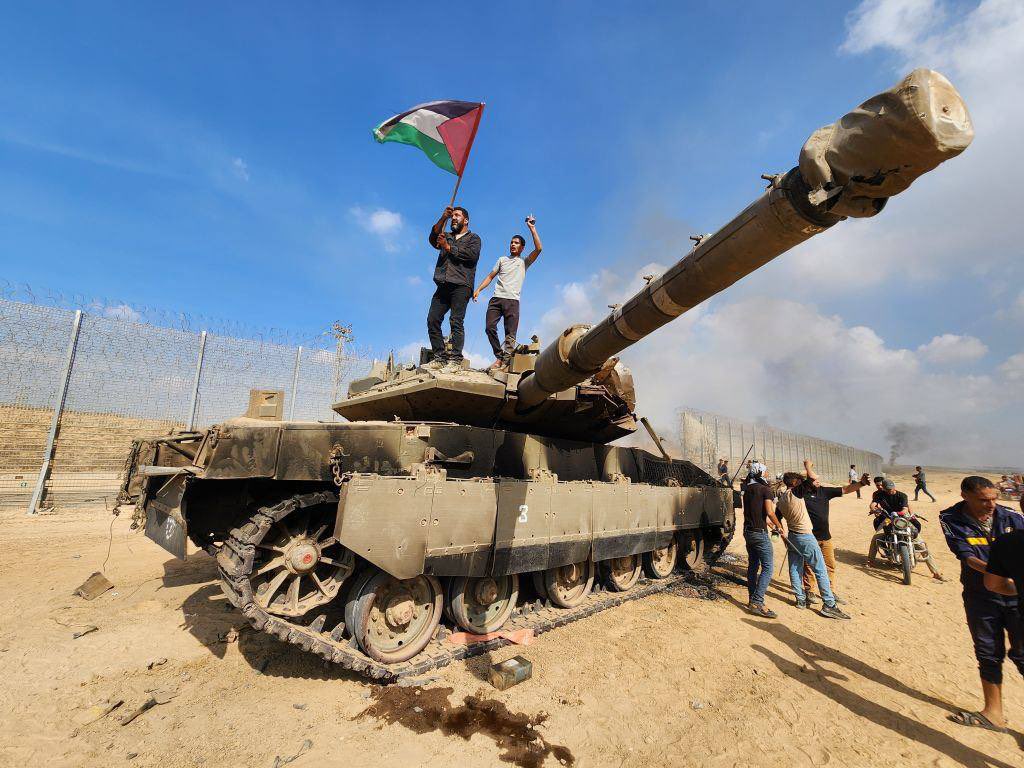
The recent conflict, which erupted following the October 7 attack on Israel by Hamas militants last year, rapidly escalated into the deadliest episodes in the Middle East. Rocket barrages from Gaza were met with retaliatory airstrikes by Israel, displacing thousands and prompting widespread international condemnation.

“We have agreed to this ceasefire to prevent further bloodshed and suffering for our people,” said a spokesperson for Hamas, the group governing Gaza. Israeli officials confirmed the ceasefire but stressed that the agreement hinged on “absolute quiet” from Gaza.

The United Nations welcomed the truce, with Secretary-General António Guterres urging both sides to engage in meaningful dialogue to address underlying issues. “This cycle of violence will only end when both parties commit to a sustainable political solution,” Guterres remarked.

Residents expressed cautious optimism. “We are tired of war; we just want to live in peace,” said Mariam Al-Khatib, a mother of three in Gaza City. However, the region remains tense, with many fearing the fragile agreement could unravel.

As the international community continues to call for restraint, the focus shifts to ensuring that the ceasefire holds, offering a glimmer of hope for a long-term resolution to the decades-old conflict.

Dual Disasters: LA wildfires and Gaza war

By Sulaiman Abdullahi

Los Angeles is currently experiencing severe wildfires that have burned over 26,000 acres. This has led to a state of emergency and mandatory evacuations for approximately 150,000 residents. 

The Palisades Fire has caused significant destruction, including the loss of numerous buildings and the deaths of at least 16 people. High winds and limited firefighting resources have complicated efforts.

In contrast, Gaza is enduring a humanitarian crisis due to prolonged conflict, resulting in over 46,000 Palestinian deaths and extensive damage to infrastructure, including water and sanitation facilities, due to Israel’smassive attacks on the enclave. The United Nations estimates that recovery and rebuilding will take years and require billions in funding.

While both regions are experiencing severe destruction, the causes differ: Los Angeles is facing a natural disaster, while Gaza’s devastation stems from military conflict. The recovery for both areas will demand substantial resources, time, and international assistance.

Several social media users share pictures of the two devastations. Many also make comparisons. Some view the LA fire as punishment for U.S. support of Israel, while others see it as a natural disaster that can affect anyone, anywhere.

We’ll militarily intervene if Gaza conflict is not resolved—Erdogan

 By Sabiu Abdullahi 

Turkish President Recep Tayyip Erdogan has warned that his country may take military action against Israel if the conflict in the Gaza Strip is not resolved quickly.

Speaking at a campaign rally on Sunday, Erdogan reiterated Turkey’s support for the Palestinian cause and hinted at potential intervention. 

Erdogan stated, “We must be strong so that Israel cannot strike Palestine. Just like we entered Karabakh and Libya, maybe we’ll do the same thing. There’s nothing we can’t do. We have to be strong.” 

The Turkish president’s comments come as tensions between Israel and Hezbollah continue to escalate.

Israel has blamed Hezbollah for a recent rocket attack that killed at least 12 people, an accusation Hezbollah denied. 

Israeli Foreign Minister Israel Katz responded to Erdogan’s threats, warning that any attempt to intervene in the conflict could lead to a fate similar to that of former Iraqi leader Saddam Hussein.

Katz wrote on his social media handle, “Erdogan follows in the footsteps of Saddam Hussein and threatens to attack Israel. Just let him remember what happened there and how it ended.”

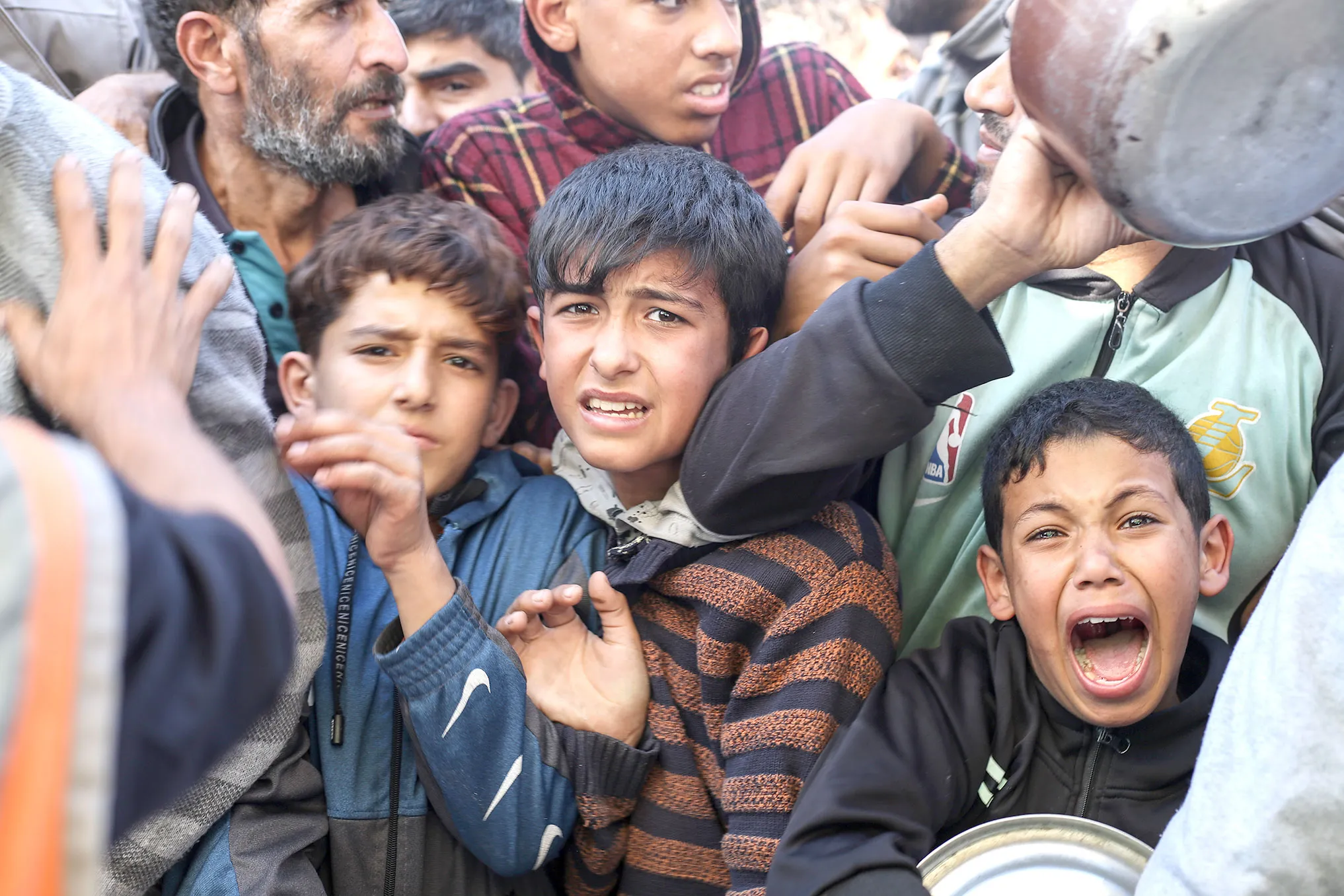
Tragedy: Children starve to death in Gaza hospitals

By Uzair Adam Imam

According to reports from Turkish TRT World, a recent aid mission to two hospitals in northern Gaza by the World Health Organization (WHO) has uncovered horrifying scenes of children dying from starvation. 

Dire shortages of food, fuel, and medicines exacerbate the situation.

WHO Chief Tedros Adhanom Ghebreyesus described the findings as “grim,” particularly highlighting the dire conditions at Al Awda Hospital, where one of the buildings has been destroyed. 

The Kamal Adwan Hospital, the only paediatrics facility in northern Gaza, struggles to cope with the overwhelming number of patients. Tedros revealed that the lack of food has tragically led to the deaths of 10 children.

Meanwhile, the Geneva-based organization Euro-Med Human Rights Monitor has released a statement presenting disturbing evidence of Israeli tanks deliberately running over Palestinians. 

Describing these actions as part of Israel’s genocide against Palestinians in Gaza, Euro-Med reported several cases of Israeli forces intentionally running over Palestinian civilians, including incidents on February 29, January 23, December 2023, and February 20.

The organization has called for an independent international investigation committee to address Israel’s ongoing military actions in the Gaza Strip.

The deadly offensive initiated by Israel following a cross-border incursion by Hamas on October 7, 2023, has resulted in significant casualties. 

As the Israeli bombardment continues into its 150th day, TRT casualty counts estimate that at least 30,534 Palestinians, mostly children and women, have been killed, with 71,980 others wounded due to mass destruction and shortages of essentials.

‘Entirety of Hamas is a terrorist organization’ —New Zealand

By Sabiu Abdullahi 

New Zealand has escalated its stance against Hamas, extending its classification of the group as a terrorist entity to encompass its entire organization.

This decision, announced by the Ministry of Foreign Affairs, signifies a significant shift in New Zealand’s policy towards the Palestinian militant group. 

Prime Minister Christopher Luxon condemned Hamas for its role in the brutal terrorist attacks that occurred in October 2023, leading to this decisive move by the New Zealand government.

Luxon’s statement affirmed the severity of the attacks and the government’s unwavering stance against terrorism.

Foreign Minister Winston Peters elaborated on the rationale behind the expanded designation, citing the inability to differentiate between Hamas’s military and political wings following the October incidents.

According to Peters, the organisation as a whole bears responsibility for the “horrific terrorist attacks,” prompting the comprehensive designation. 

With the new classification in place, any form of material support or financial transaction with Hamas within New Zealand’s jurisdiction becomes a criminal offense.

However, Luxon clarified that the designation is targeted at Hamas as an organisation and does not hinder private humanitarian assistance to Palestinian civilians. 

Despite the firm stance against Hamas, Luxon reaffirmed New Zealand’s commitment to providing humanitarian aid and future development assistance to benefit civilians in Gaza.

This distinction aims to ensure that the punitive measures against Hamas do not exacerbate the humanitarian situation faced by innocent civilians in the region. 

U.S. airman sets himself alight outside Israeli embassy to protest genocide in Gaza

By Sabiu Abdullahi 

A 25-year-old U.S. Airman, identified as Aaron Bushnell, died on Sunday night after setting himself on fire outside the Israeli Embassy in Washington, D.C., according to independent journalist Talia Jane. 

D.C. Fire and Emergency Medical Services (DC FEMS) confirmed an adult male was transported with critical, life-threatening injuries to a local hospital following the incident on Friday.

Authorities have not confirmed the identity, condition, or status of the individual when asked by TIME. 

Bushnell reportedly sent a message to media outlets before his self-immolation, stating, “Today, I am planning to engage in an extreme act of protest against the genocide of the Palestinian people.”

He also allegedly live-streamed the act on Twitch, which has since removed the video for violating guidelines and not responded to requests for comment from TIME. 

Footage reviewed by TIME shows Bushnell walking towards the driveway of the Israeli Embassy, stating, “I will no longer be complicit in genocide. I’m about to engage in an extreme act of protest.”

Authorities are investigating the incident and the reasons behind Bushnell’s actions. The Israeli Embassy has not issued a statement regarding the incident. 

The incident has sparked outrage and concern within the U.S. and abroad.

Critics have questioned the lack of information available about Bushnell’s motivations and mental health.  

Mental health experts urge anyone experiencing distress to seek help and the resources readily available.

The National Suicide Prevention Lifeline (1-800-273-8255) is available 24/7 in the U.S. 

Gaza War: Might is Right

By Dr Raji Bello

I have no intention of aggravating anyone’s feelings over the war in Gaza. I also feel bad about it, even though I don’t write much on the subject. The main reason for this is that nothing surprises me about what is happening. I have completely anticipated what Israel would do as well as the reaction of the Western countries to Israel’s conduct. No UN vetoes or abstentions by the Western countries is a surprise or a shock to me. 

My interest in history and current affairs for over 40 years has taught me two uncomfortable truths, which I have written about a few times:

1. Might is right. Powerful civilisations, kingdoms or countries have always done as they wished and will continue to do so until the end. Most other countries would either accept or at least not confront what the powerful countries do.

2. Relations between human societies or countries have never been based on moral considerations and will never be. They have always, and will always be, based on interests. Morality only becomes a consideration when there are no compelling interests to pursue.

When these two truths have been understood, two conclusions can be made:

1. no level of horror of human suffering would make powerful countries stop pursuing their interests. This is why the US and the UK behave like they do at the UN.

2. While it is incumbent upon the less powerful countries to also pursue their interests, they should never get in the way of a powerful country’s pursuit of its interests. 

Human beings are not as mentally sophisticated as we might think. We are technically and materially advanced, but the ancient rules still apply. For less powerful countries to survive and flourish, tact is essential. They could get what they wanted through tact but would risk being crushed if they stood in the way of a powerful country. 

The only feasible way to take on a powerful country directly is by acquiring more power than them. Until a less powerful country acquires more power, its strategy should be tact, and tact only.

Israeli military occupation: Nigeria’s suggestion

By Bilyamin Abdulmumin

Last quarter of 2023, 7th October to be precise, the patience of Palestinians on the forceful occupation and increasing encroachment of Israel in the Gaza Strip, Westbank, and East Jerusalem reached the breaking point, as the voice and heartbeat of Palestine in the Gaza Strip, Hamas, launched a devastating attack on Israel in the occupied areas. The coordinated attack was said to bypass Israeli intelligence and caught their security off guard. But in a swift reaction, Israel has since been responding brutally, threatening the annihilation of not only Hamas but Palestinians in Gaza.

This article is the second from my reading of the book that Dr Muhsin Ibrahim generously shared: They called me a lioness.

 As far back as the beginning of the 19th century, the geopolitical entity now known as Israel did not exist. Instead, the Jewish population was scattered globally (this is a topic for another day); their population would be dispersed across Europe, America, and even our continent, Africa, as some reports claim. 

The clamour for Israel to settle in Palestine first gained traction after the First World War. When the Ottoman Empire collapsed, the control over Palestine fell under British rule.  Regardless of how one will view the situation,  the genesis of the Palestine-Israel turmoil must go back to the British. Because they sought both the help of Israel and Palestine during the war,   promising  Israel to establish a state for them on one hand and agreeing to get independence for Palestine from the Ottoman Empire on another, the British eventually sided with Israel.

So, in 1917, the British issued the Balfour Declaration, pledging to establish “a national home for the Jewish people” in Palestine. This marked (substantially) the beginning of a series of ongoing conflicts between Israel and Palestine.

 The Second World War saw the Zionist movement get even more traction.  According to Hitler’s fascist ideology, for humanity to attain Utopia, all forms of inefficiency must be removed, including problematic races and even physically or mentally challenged individuals. In Hitler’s vision, Israel fell in the former category,  so they have to be eradicated. In this regard, about six million Jews had been said to have met their brutal end. The individuals with discounts, either physically or mentally, should also have allied nations to thank for ending the fascism ideology; had Hitler succeeded, it would have been the beginning of their eradication, too.  But for Palestine, their predicament increased. Hundreds of thousands of Holocaust survivors fled Europe, with tens of thousands seeking refuge in Palestine.

It appears that Hitler’s apprehension against Israel had some element of truth because all European countries closed their doors to Jews both before and after the World War. The Jewish population seemed a burden, and the world grappled with an approach to address the puzzle.

In 1947, the United Nations formalised Zionism by approving a plan to partition Palestine into a Jewish state and a Palestinian state, with Jerusalem remaining under international control. This marked a triumphant year for Israel, the culmination of the Zionist struggle. Conversely, for Palestinians, it was a time of national mourning and sadness.

A whole new chapter of the standoff between Israel and Palestine would ensue as Arab nations united against Israel to stop the partition. However, the coalition achieved limited success, with only Jordan managing to capture East Jerusalem and the West Bank and Egypt taking control of Gaza after the 1948 war; Palestinians referred to this war as the “Nakba” or catastrophe, reflecting the extent of devastation that was inflicted on them by Israel.

Again, in the 1967 war, known as the Six-Day War, Israel got the upper hand, capturing Gaza, the West Bank, and East Jerusalem and initiating what Palestine currently fights with their heart in their mouth: the military occupation of Palestinian territories. In this process, Israel implemented various methods to relegate Palestinians to second-class status, including the construction of a separation wall, the issuance of green identification cards, and the assignment of white license plates to Palestinians, a sort of apartheid-style.

The fact that both Israel and Palestine are descendants of a common ancestor, Abraham, with the former tracing their lineage through Isaac and the latter through Ishmael, is significant and, at the same time, intriguing. To paraphrase former US president W. J. Clinton, dear brothers and sisters Shalom, sheathe the sword and make a sacrifice to accept the common deal beneficial to both sides like the one Nigeria offered.

 Through the then Ambassador/Permanent Representative of Nigeria to the UN, Tijjani Muhammad-Bande, Nigeria gave the suggestions: “We encourage Israel to take concrete steps to freeze and reverse all settlement-related activities in the West Bank and East Jerusalem. On their part, Palestinian leaders must also signal their readiness to return to the negotiating table, and we reaffirm our unwavering support for a two-state solution, with Israel and Palestine existing side-by-side in peace.” 

Bilyamin Abdulmumin is a doctoral researcher in chemical engineering at ABU Zaria.

Middle East, Israel targeted assassinations and the increasing risk of all-out war 

By Ismail Obansa Nimah

Yesterday again saw another targeted Israeli assassination of a high-profile leader of the Palestinian resistance axis, Hamas deputy leader Saleh Al Arouri. The assassination by Israel took place in the heart of Beirut, the capital of Lebanon, at about 5:45 pm Local time. It comes roughly 24 hours before the 4th anniversary of the assassination of Qassem Soleimani, former Commander of Iran’s elite Quds brigades of the Iranian Revolutionary Guard corps.

On the 3rd of January, 2020, turmoil was yet again unleashed in the Middle East when the United States of America (USA), in collaboration with her Israeli ally, assassinated Major-General Qassem Soleimani, a man who doubled as the commander of the Iranian Elite Revolutionary Quds Force and the second most potent/influential man in Iran after Ayatollah Al-Khamenei (Iran’s supreme leader).

Citing the preservation of the interest and national security of America, the United States launched a drone strike at a convoy conveying Soleimani and Iraqi militia leader Abu Mahdi Al-Muhandis, killing them both and eight others near Baghdad airport in Iraq.

The conflict between the US and Iran dates as far back as the 1970s, and as almost always, the killing of Soleimani immediately rattled up tensions, bringing the US and Iran to the brink of war. According to some Iranian sources, General Soleimani was on an important mission to deliver a message to the Iraqi prime minister about its gulf neighbours and reconciliatory steps taken between Iran and its neighbours, especially its regional rival Saudi Arabia, suggesting that Riyadh may have leaked intelligence to Washington.

The killing of Soleimani was met with shock, worldwide condemnation and fierce declarations of avenge from Iranian officials and Iranians, generally with the supreme leader, President and military commanders/leaders pledging a harsh retaliation. Following the killing, massive protests and mourning broke out in the cities of Iran and Iraq, with hundreds of thousands of Iranians pouring out into the streets, mourning and chanting their desires for revenge.

On January 5th, 2020, the remains of General Soleimani and the other Iranians killed alongside him were flown into Iran amidst a sea of millions of mourners. The funeral and national procession of the Iranian legend was planned for the 7th of January, at his home town in ‘Kerman’, but an ensuing stampede due to massive crowds led to the death of at least 56 people and injuring 213 people, resulting in the immediate postponement of the burial.

In the early hours of the 5th day after Soleimani’s assassination, on the 8th of January 2020, Iran retaliated and launched over a dozen ballistic missiles on two US bases in Iraq. The attack by Iran injured over 100 US soldiers, with most of them reportedly suffering traumatic brain injuries, and also resulted in the destruction of important US assets in the bases. Tensions immediately skyrocketed following the Iranian counterattack, with oil prices rising to levels not seen in 3 months and countries including the US ordering their citizens to evacuate and leave Iraq and its environments, as well as airliners being told to avoid the airspace over Iran and Iraq.

As the world woke up to the news of an Iranian response, so did the news of the downing of Ukrainian International Airlines flight 752, killing all 176 on board. The Iranian Revolutionary Guard Corps placed its defences on high alert following the counterattack, allowing its surface-to-air missile defence system to mistakenly shoot down the Kyiv-bound airliner shortly after take-off from Tehran. Following damages to the US bases and injuries to personnel, President Trump and the Pentagon ordered the immediate deployment of more US military assets to the Gulf region. Consequently, an airstrike on Iran that would be called off at the last minute by President Trump was ordered.

 Iraq, caught in a conflict between the world’s superpower and a Middle Eastern regional power, became destabilised. With the outright violations of its national sovereignty by a supposed ally, protest broke out with both ordinary Iraqis and the Iraqi parliament calling for the expulsion of American troops and other foreign forces from its soil. For a lot of them (Iraqis), the horrors and consequences of decades of war can still very much be remembered and felt, and they, by all means, want to be left out of another regional conflict.

Four years on, tensions remain at a ceiling level between Iran and the US/its Middle Eastern allies, particularly Israel. Israel’s brutal genocidal war on Gaza has killed more than 22,000 Palestinians, as well as more Israeli-targeted killings of Iranian officials. It’s regional allies with American support, including Mohsen Fakhrizadeh; it is yet to be fully known how close an all-out war is between Iran and American-backed forces within the region, particularly Israel.  Although so many structures have been re-named after Soleimani, the void created in the hearts of Iranians, the Palestinian resistance axis and the Islamic Republic of Iran by his death will take a long time to heal and will require more than an anniversary celebration for the already sanction crippled nation.

Ismail Obansa Nimah wrote via nimah013@gmail.com.

Gaza’s humanitarian crisis deepens as UN report warns of imminent famine

By Sabiu Abdullahi

A United Nations report, disclosed on December 21, sheds light on an escalating humanitarian crisis in Gaza, revealing that over 576,600 Palestinians stand on the precipice of “a serious famine.”

This distressing revelation affects a staggering one in four individuals in the besieged territory, underscoring the gravity of the situation. 

The report issues a stark warning, indicating that without swift action to address the ongoing conflict and improve access to aid, Gaza could confront a severe famine within the next six months.

This imminent threat has sparked global concern, particularly as vulnerable populations, such as children, pregnant women, nursing mothers, and the elderly, face heightened health risks due to escalating hunger. 

Complicating matters further, Israel’s sustained attacks on Gaza since October 7 have had devastating consequences.

Shockingly, over 20,000 Palestinians, predominantly women and children, have lost their lives, with more than 52,000 individuals left wounded.

The persistent violence has not only claimed numerous lives but has also exacerbated already precarious living conditions, pushing the population to the brink of famine. 

As the international community grapples with the urgency of the situation, the World Health Organisation predicts a surge in health problems in the region.

The intersection of conflict, restricted aid access, and the looming famine poses a severe threat to the well-being of Gaza’s inhabitants, necessitating immediate attention and intervention to avert an impending humanitarian catastrophe.