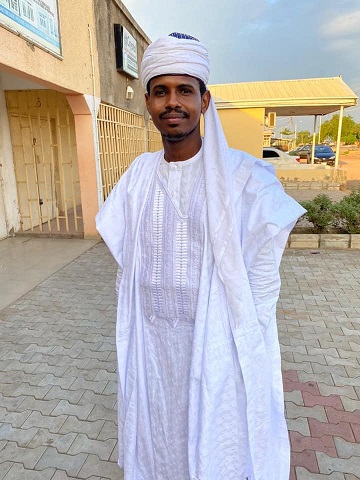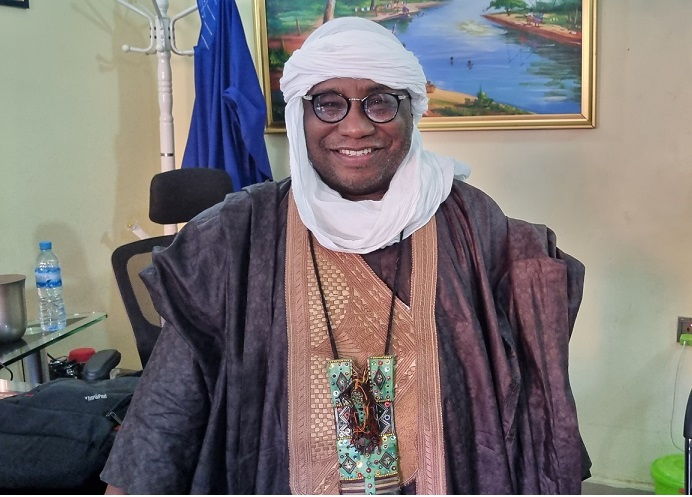
Fulani

Language and the specific gravity of identity

By Prof. Abdalla Uba Adamu

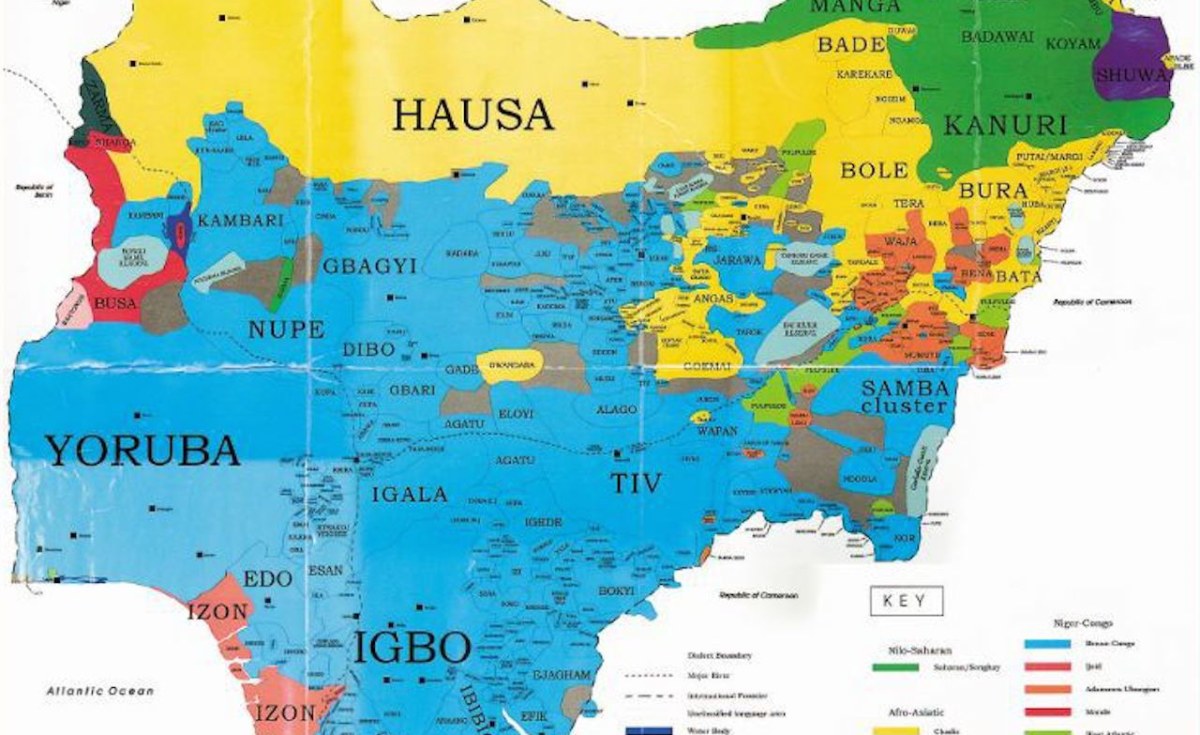
Muhsin Ibrahim had started a very interesting thread on his Facebook wall about language usage in northern Nigeria. Basically, the argument is about whether predominantly Hausa (his publics) should intensify their use of English in public discourse, especially now that things are getting more virtual. There has been a lot of resistance in using English among the Hausa because of the belief that using English (or other languages, except Arabic) leads to the erosion of identity. Muhsin urges the Hausa to embrace or at least immerse themselves as much as they can in the English language to gain a competitive advantage. I agree with him.

The arguments against the use of English are predicated upon language and identity. Generally, language symbolizes our identity and conveys identities to those who speak them. But how true is this in an interconnected world? I have a friend whose children were born in Hong Kong. They are adults now. They hardly speak Hausa. Does that make them Chinese? Imagine an Urdu-speaking Pakistani immigrant whose children were born in Wales and do not speak Urdu. Does that make the children Welsh?

In South Africa, the apartheid regime used language as one of the yardsticks, besides skin colour, to develop its divide-and-rule ideology against the black population. If a Black South African somehow was able to speak fluent Afrikaans, does that shifts his identity and make him White? I have encountered Hausa merchants in the Deira section of Dubai’s textile market speaking fluent Hindi – are they then Indians?

I once encountered a Yoruba mechanic in Gusau – born and bred there, but could only speak the Sokoto dialect of Hausa, not my absolutely wonderful Kano dialect, and informed me that although his parents were Yoruba, he does not speak the language. So, what was he? Bayarabe or Bazamfare? The Kano Hausa even created sociolinguistic categories for his situation: ‘Ɗan Kasa’ (‘son of the soil’), ‘Muna Kano’ (immigrant non-Hausa, Hausa-speaking), ‘Muna Hausa’ (immigrant, non-Hausa, retaining immigrant language identity). The two ‘outsider’ categories are easily recognized by Kanawa, who describe their Hausa as ‘wata iri’/strange. Oh, they will interact freely with you – until you come to marry one of their daughters!

So, does merely speaking a particular language confer on the speaker the identity of the originators of the language? We learn English and Arabic. Become fluent in them. Does that make us English or Arabs? Thus, if we speak other languages besides our mother tongue, does that shift the specific gravity of our identity? I have three adult children (an oxymoron, I know, but there you are!). We always address each other in Hausa, but we always write to each other in English! Does that alter our identity?

Then the big one. Any DNA test on me will reveal that I am genetically Fulbe (Silsilɓe/Torodbe mix). I don’t speak Pulaar. I tried to convince myself that I should speak Pulaar as a form of anchor to an identity. When I asked Aliyu U. Tilde about the easiest way to learn the language of my genetic ancestors, he suggested marrying a Fulɓe woman! Not on the cards – I am a single-wife person for life.

So, I moved into the anthropology of cultural preservation. At one stage, I was even the Grand Patron of the Fulani Development Association of Nigeria (FULDAN) Kano Branch. During one or two erratic meetings, I was the only one who could not speak Pulaar – and I was the Chairman! We set up an evening class school at Gidan Makama school in Kano to teach Pulaar. Not many people came – despite the usual posturing of many Kanawa that they are Fulɓe.

Next, with some funding from Maison des Cultures du Monde in Paris, I produced two CDs of Pulaar children’s songs (Surbajo, Short Round Crew), and with the help of the British Council in Kano, held a Pulaar music festival, Voices from the Desert, and included a Pulaar rap song (Wazobia Waru). I have no clue what the artists were singing! I next personally sponsored a series of video lessons on how to speak the language and paid lots to make the finished product sleek and professional. I planned to upload the lot on YouTube. That was four years ago. I never got around to it. If I could, somehow, learn Pulaar, what, exactly, would I do with it – none of my publics speaks it; so, with whom will I converse this new form of lost-and-found language identity?

I stopped all that and quit deceiving myself on the issue. Not even my great-grandparents from both sides of the genetic pool spoke it. At all. Only lovely, glorious, wonderful Hausa. In this, I stand with The Nigerian Bahaushe, where I belong. Gregor Mendel, the father of the modern study of Genetics, rest in peace.

So where do I find the intersection of my identity – at the junction of Hausa and Pulaar languages? And please, don’t say ‘Hausa Fulani’. There is absolutely nothing like that. The fact that the ‘Hausa’ was written before the ‘Fulani’ suggests a linguistic dominance, at the very least, not a genetic chiasma.

Yes, there is often a particularly strong link between language and a sense of belonging to a national group, a sense of national identity. Further, although fears are voiced in some countries about the loss of national identity caused by learning foreign languages, especially English, there is little, if any, research evidence to justify this fear. Studies of language and identity have traditionally focused on how individuals or groups maintain, construct, project or negotiate their social identities in and through linguistic practices. Speaking English, however, does not make you English (not to talk of being Welsh, Irish, or Scottish), even if you are British.

It is believed that languages become endangered when they are not passed on to children or when a metropolitan language dominates over others. The tenacity of the Hausa language and its speakers will only endanger those who come in contact with Hausa, not the other way around. No matter how much immersion in English the Hausa have, I doubt if they are in danger of losing their language and identity. After all, what is identity?

Broken down to the interpersonal level, identity is a person’s sense of self, established by their unique characteristics, affiliations, and social roles. We must therefore see identity as a shifting focus on multiple planes – cultural identity, professional identity, ethnic and national identity, religious identity, gender identity, etc. Language can bind but not suppress them.

Thus, acquiring the English language gives the Hausa a competitive advantage in any international communication while, at the same time, tenaciously retaining their identity. I know. I am one of them!

Prof. Adamu can be contacted via auadamu@yahoo.com.
Till death do us part

By Dr Abubakar Mohammed Gombe

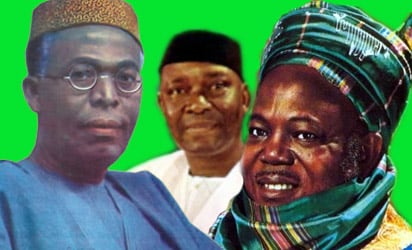
It is interesting to understand the divine marriage between a country and its citizens, specifically between Nigeria and Nigerians. In such a marriage, no amount of lives lost puts asunder. The mysterious marriage keeps producing low-quality products who believe eliminating half brothers will better their lives. Nonetheless, the marriage produced the golden voice of the continent that was, however, eliminated by the products of his mother.

The first army General who coordinated the marriage affair was also eliminated by the same products. Many more military coordinators in charge of the Nigerian marriage were eliminated. The latest were the homemade healthy transition of General Sani Abacha GCON; the prison made transition of MKO Abiola with General Shehu Musa Yaradua, and the contagious transition of President Umaru Musa Yaradua GCON. Yet, the marriage stands. It was only death that did them part.

A three-year civil war could not put asunder. The Ojukus were forcefully retained for the survival of the marriage of interest that occasionally accepts religious and tribal killings and hailing such acts by pardoning popular champions like General Zamani Lekot of the Zangon Kataf crises by the IBB regime and rehabilitating others for communal reintegration by the Buhari regime. These are sincerely done to sustain the cracked marriage until death.

The emergence of popular movements like Boko Haram, IPOB, Kidnapping, Cattle rustling, Herdsmen, Bandits, and Terrorism move to ensure the marriage failure. Still, the lifetime Unity in Corruption among the children of the marriage, which recently pardoned Joshua Dariye and Jolly Nyame, is stronger than the distraction of the popular movement groups that also exploit brothers of the same marriage.

While Unity in Corruption ensures poor education for brothers and sisters of the same marriage, BH went on destroying primary and secondary schools. They also vandalized electricity supplying poles and transformers to complement Unity in Corruption’s idea of rural electrification. IPOB, in its territorial states, declares Monday as an additional weekend while Kaduna officially declares Friday as the beginning weekend. In their territorial states, Bandits know all the army free zones where they peacefully operate without stepping on army toes. Cattle rustlers also know where there are no cattle, and so, instead of taking away cattle, they take the lives of entire villages that provoke them by not keeping cattle, their needs.

Nigerian lives are not safe on the road, on rail and at the airport. One finds it difficult to comprehend a passage in which children of the same mother kill within the home. Yet, the marriage stands and keeps producing children. Everyone identifies with the mother in a polygamous family and blames half brothers. In the Nigerian case, there is only one mother with several tribal lands. It seems only the Fulani have no land. Yet, the Fulani also join the powerful elites’ movement of Unity in Corruption. Under the same mother, the socio-political and economic status becomes the dividing line. The certified children that form Unity in Corruption blame the Almajiri for retrogression.  

Then, the most disturbing effort of closing universities to seek the attention of the I Assure You Regime by the educated class that formed ASUU appeared with the support of their supporting staff of SSANU and NASU to seek revitalization. ASUU believes closing universities and sending brothers and sisters home will pain Unity in Corruption. It indeed doesn’t. Instead, ASUU complements Unity in Corruption in denying access to university education and actualizing BH’s mission while in self and family hunger. While most state universities in the north religiously observe the ASUU strike, some state universities in the south graduate students. Yet, the marriage stands till death do us part.  

Considering the time, the response of the previous regimes, the regime of assurance with less action, and the possible incoming regime, ASUU ought to have a comprehensive retreat, call off its hunger strike, restrategize and declare regime change in Nigeria with the support of SSANU, NASU, Colleges, Polytechnics, NUT, students, parents and good citizens.

All Nigerians are deeply involved, and all political and armed movements are sponsored either to sustain Nigeria’s marriage for sponsors’ personal gain or to put asunder. With all the prophesies, projections and armed movements, the marriage of amalgamation remains. What Nigeria needs is the game-changer, and that changer can be found in ASUU. Nigeria needs focus and determination. ASUU must go into governance en mass. Otherwise, one or two members hardly make a meaningful impact.

ASUU should simply declare for the office of the Federal and State University Visitors, Senatorial Districts, Federal and State Houses of Assembly in the 2023 general elections and work with SSANU, NASU, Colleges, Polytechnics, Monotechnics, NUT, students, parents and good citizens. Nigeria must be saved. We remain Nigerians till death do us part. 

ASUU must retain its strong UTAS team and set in motion its national planning and enforcement team, policy enforcement team, economic team, company revival and creation team, employment creation team, national security management team, education monitoring team, patriotism enforcement team, salary and pension enforcement team, manufacturing promotion team, local and international lobby team, Crude oil and refinery enforcement team, action or resignation enforcement team, among others,  

Let’s use our hunger to save our country. With ASUU, SSANU, NASU, Colleges, Polytechnics, Monotechnics, NUT, students, parents and good citizens, Nigeria can be saved.

Let’s save Nigeria till death do us part.

Dr Abubakar Mohammed Gombe wrote from Gombe State University. He can be reached via amgombe2@yahoo.com or +23408060839578.

SPECIAL REPORT: How desire for materialism affects marriages and relationships

By Uzair Adam Imam 

Materialism is not limited to friendship or brotherhood; marriages and relationships also suffer greatly.

Friendship and brotherhood are gradually losing their true meaning, if not buried at all, because of this sudden shift of behaviour to materialism, The Daily Reality gathered. 

The menace led and is still leading to the breakdown of many relationships, including marriages, thereby manifesting itself into a serious problem in society – such as the increase in the number of widows and heartbreaking individuals.

The Daily Reality speaks with some people on this issue.

People like Aisha Mujitaba believe that guys pretend to be rich in life in order to woo girls.

“Nowadays, both loves and marriages are based on materialism; that is how equivocation and deception have chipped in in the process of getting married.

“Guys pretend to be wealthy in order to win girls’ hearts. Consequently, when they are joined in matrimony, the true nature of what the person is will be revealed. This leads to the breakdown of relationships,” Aisha said.

Parents were also accused of encouraging this lingering issue in society, according to Suwaiba Umar. 

She said, “Today, parents encourage their children to marry rich people. Marriages nowadays are not for the sake of Allah, the almighty. That is why guys make-believe a big life.”

Frowning at this behavioural change, Juwairiyya Aminu compared marriages in the past and marriages today.

She said, “Marriage in those days was entirely different from the marriage in these days, including the process, lefe (trousseau), ceremonies and whatnot.”

Both girls and their parents find it very exciting to have rich as their husbands or sons-in-law, making it difficult for the poor to get married.

“A poor man finds it very difficult to be loved, much less being married. But when a rich person proposes, without hesitation or any proper investigation on his religion, habit or maturity, he will be accepted,” Sa’adatu Shu’aibu.

Buhari Ahmad posited that guys fear being rejected by the girls, let alone the parents. For this, he said, “Guys make a pretence of big life out of fear of being rejected by girls and their parents.

“That is why guys now rent clothes, hats, shoes, bikes or even cars when visiting their suitors.” 

Materialism: What Brings About It?

Dr Muhammad Sulaiman Abdullahi is a lecturer at the Department of Nigerian Languages, Bayero University, Kano. He told this reporter in an interview that many reasons made our society materialistic.

“There are so many reasons which contribute to the moral decadence we are witnessing today in the Hausa society. I can summarily list them as follows:

“1. Deficiency in terms of Islamic education and pursuing more in terms of Western educational life and style.

2. Negative modernity

3. Access to the new media and multi-media stuff which led to increasing in absorbing haram items.

4. Lack of proper orientation, etc.”

The solution to materialistic life

“Having sound Islamic education and fear of Allah, pursuing what is halal in any form of education and social life; and abiding strictly to Islamic teachings are the solution,” Sulaiman added.

Plateau Killings: ‘No place for this sort of violence’ – Buhari

By Uzair Adam Imam


President Muhammadu Buhari expressed deep grief over the recent atrocious killings in Bassa Local Government Area of Plateau State.


The incident has claimed the souls of not fewer than eighteen people, The Daily Reality discovered.


Buhari’s lamentation was in a press statement by his spokesman, Malam Garba Shehu.


The president has lamented that the incident was not in keeping with the principles of the peace agreements reached between the two ethnic groups, Irigwe and the Fulani, in the area.


“My thoughts are with the families of the victims in this time of grief. May their souls rest in peace,” the president said.


Buhari warned that “Every group taking the law into their hands claims to be retaliating. As a society, there is no place for this sort of violence. This is unacceptable.”

Girei: The First Wakilin Fulani Adamawa

By Ahmadu Shehu, PhD.

On Friday, December 17, 2021, HRH Laamiiɗo Fombina, Alh. Muhammadu Barkindo Aliyu Mustapha, PhD, the International Grand Patron of Tabital Pulaaku International, appointed Dr Abubakar Umar Girei as the first Wakilin Fulani Adamawa. 

This appointment would have passed the waves without noise, just as other traditional appointments go unnoticed, had it not been put on the very head that fits it in all ramifications. The title itself is rare in a place like Adamawa, where the traditional council and the emirate are based on the Fulɓe culture and traditions.

The Lamiɗo of Adamawa is regarded as the global custodian of the Fulani race, Fulɓe cultural, linguistic, historical, economic and religious identity. Although the Fulani hold most of the major Islamic emirates in West Africa, and indeed within Nigeria, none of these traditional councils upholds the sanctity of the Fulani culture than Adamawa.

It was, therefore, highly unlikely that anyone could ever merit this office, nor could anyone be trusted with this critical responsibility by the Lamiɗo, who himself, is the first custodian of this special role. The traditional office of Wakili refers to “custodian”. In this case, Girei has become an ambassador between the Lamiɗo and all Fulɓe, the overseer of issues concerning Fulɓe and Pulaaku in the Emirate.

The new Wakili Fulani was born on May 25 1962, in Girei, a semi-urban town some ten kilometres away from Yola, the Adamawa State capital. He holds a PhD, M.A. and B.A. in Linguistics and Fulfulde studies from the University of Maiduguri, where he taught for fifteen years at the Department of Languages and Linguistics. His basic education started in Girei I Primary School, after which he proceeded to Arabic Teachers College, Gombe, where he completed his secondary education.

Having earned a First Class degree, Girei took off well and maintained an excellent academic career, rising through the ranks as a prolific writer, linguist and poet. His publications cut across the linguistic circle, publishing in competitive local and international journals on sociolinguistics, morphology, semantics and other fields of applied linguistics.   

It is safe to state Girei is the most prominent modern Fulfulde poet with numerous titles that address diverse fields, uniquely analysing all aspects of human endeavours. His books on poetry, such as Duuniya e Fiiji maaru, are the most recent modern Fulfulde poetry that have become reference points for scholars and the general public. 

The hope of an academic is to push back the horizon of ignorance on a global stage. In Fulfulde linguistics, where he specialises, Girei has become an undisputed authority, with scholarly and teaching experience in numerous European universities, including London, Bayreuth, Hamburg, and Vienna.   

His sojourn into the humanitarian services of the Fulani people began early in his life when he joined the crusade to enlighten the nomadic Fulani to settle down for education. His passion for the education of the Fulɓe led him to pick an appointment as a nomadic teacher, for which he travelled far and wide with nomads to teach their children. For instance, despite being a headmaster in his hometown, Girei moved to Labbare nomadic primary school in Wukari over eight hundred kilometres from his home to teach nomadic kids. 

His dedication to the service of the Fulɓe became more apparent when he rejected the admission to study Law and instead applied and studied Fulfulde in the university. His academic career revolved around teaching and researching Fulfulde, Fulɓe Literature and Culture, not only in the university but also in colleges of education where Fulfulde is taught. Those years have seen him produce and mentor future scholars and students of Fulfulde (including yours sincerely) who have become teachers in various prestigious universities worldwide.

Beyond the classroom, Dr Girei has led global projects on Fulfulde. For instance, he was the secretary of Lamido Aliyu’s committee on the translation of the glorious Qur’an into Fulfulde. He was my lead as the editor of the final version commissioned by Lamido Barkido Aliyu Mustapha in 2011. In addition, he serves on various linguistics and translation boards of organisations such as UNESCO, in which Fulfulde has been his primary language of interest.

Girei has served Fulɓe and Fulfulde in more capacities beyond academia. He was a founding member and the pioneer national secretary of Tabital Pulaaku International and is the founding and trustee member of other various Fulani socio-cultural organisations. The entire Fulani leadership understands his wit and dedication to the course, so the Sultan once appointed him to harmonise the Fulani socio-cultural groups.        

By and large, in the almost 60 years of his life, Girei had one goal, one career and one success. These are the well-being of the Fulani people and their cultural heritage. Thus, if anyone deserves to be the ambassador and overseer of the Fulani people, Girei is the one. Therefore, it is highly commendable that the royal father, the grand custodian of our culture, has made the right choice when it is most needed. 

Given the current socio-economic and political problems facing the Fulani people across the continent, this office couldn’t have been created at a better time, and Girei is the head that fits the cap. We ask Allah to guide him to success. Aameen.

Dr Ahmadu Shehu is Dr Girei’s academic son and can be reached at ahmadsheehu@gmail.com.

The polyethnic-state-policy we need

By Lawi Auwal Yusuf

Several innovatory constitutional devices, administrative and technical solutions were tried to resolve the sectional tensions that, minimally in writing, attempted to enhance tolerance and political affinity between the heterogeneous regions of our dear country, Nigeria. These supposed solutions failed because they were unfounded paperwork, if not lip service.

The dispositions of politicians denote that they have no true intentions of dissipating all forms of religious and tribal harassment that undermine Nigeria’s progress as a diverse but cohesive society. They exploit the divisions for political deceit and their malicious divide and rule tactics. Politicians misuse the distinctions to garner more support, increase popularity and gain votes. But the effect is that it augments people’s consciousness of the differences and raise the importance they affix to them.

Hence, there exist mutual antipathy among the ethnicities. They strongly hold ethnic prejudices and stereotypical views against each other and counter-blaming themselves for the country’s woes. Frequent destructive fracases, secessionism and bloodshed depict Nigeria.

We need a poly-ethnic policy that will help us forge a pluralist democracy that fully respects tribal and religious dissimilarities. A country that truly recognizes and values such pluralism in society. This worthwhile project must establish mutual veneration among Nigerians which is essential for a peaceful future of multiethnic Nigeria. It should socialize Nigerians to enfold cultural diversity, support multiculturalism and believe that the tribes can harmoniously cohabitate through respecting each other’s cultures.

For this dream to become reality, the policy must be accompanied by genuine efforts to eradicate poverty and inequality. Research confirmed that lack of cohesion results mainly from inequality.

This policy must emphasize universalistic moralities like supremacy and rule of law, transparency in governance, economic development and nationalist sentiments to combat the particularistic moralities of the individual tribes. This will make Nigerians united by a common purpose rather than individualistic purposes.

Also, there is an immense need of maintaining a distinct Nigerian identity to replace particularistic cultural identities. People will develop a sense of common identity. Nationalism is a powerful ideology that unites perversely fractious and ethnocentric cultures effectively. It leads to a sense of sameness, uniformity and also bring people into closer fraternities. This will help them understand their differences and how to live with them. Therefore, tolerance will manifest and subsequently love will flourish among them. Diversity will be a source of strength, unity and progress.

Good leadership must be the leading force in this trip. Ethnic favouritism and turning public office an instrument of creating wealth for acquaintances and tribal brethren must utterly vanish. Justice, transparency and equal treatment of all irrespective of closeness or ethnic background must prevail.

Furthermore, Nigeria should adopt the integration approach to ethnic relations. Ethnic relations exist where individuals show allegiance to different groups that conflict exists among them. When disputes and competition divide tribes, then integration brings them together. Conflict wither away and there will be no ethnic consciousness and therefore less potential for dispute. Integration is a permanent cure for the ailments generated by ethnic relations. This model involves a continuous process by which individuals learn one another’s language, acquire modes of behaviour, characteristic attitudes and habits. At the macro level, the process also involves the gradual incorporation of smaller groups into the mainstream culture.

Increased contact and intermingling ought to be facilitated through ensuring inter-regional trading, sports competitions and encouraging people to travel widely because contact between members of divergent tribes reduces tensions, suspicion and dispute. This will turn Nigerians into cosmopolites. Those are individuals who travelled extensively and lived in different communities. Thus, they tend to be familiar with different cultures, communities and languages. Instead of exhibiting an overwhelming loyalty to their tribes, they have intricate repertoires of loyalty and identity. Therefore, they hardly become bigots.

Institutional ethnic stratification has to be dispelled from society. Political, social and economic institutions must be crafted to help manage the differences and all indigenous people need to have equal rights whatever their social background. Policies should be devised to deal with such diversity and prevent forms of social exclusion both at the national and community levels. Equal opportunities must be given to all and these institutions must be reformed so that they no more exclude and discriminate against minorities or disadvantaged groups.

Minority cultures must be protected because resistance intensifies where the dominant groups arbitrarily oppress the interests and aspirations of the feeble minorities. The conflict may manifest either violently or through political processes. Moreover, fundamentalist convictions emerge among minorities as they become apprehensive that their cultural distinctiveness will perish as the elements of dominant cultures become integrated into their own. They retaliate to defend their cultures in malevolent ways to people from the major cultures.

Finally, it is of paramount importance to establish an agency with broader powers and scope to enhance tribal equality in Nigeria. It should have the responsibility of implementation of the new policy. Yet, it can be assigned with the tasks of promoting peaceful co-existence and provision of legal aid to victims of harassment. In the same vein, statutes should be enacted making it obligatory for government agencies and private enterprises to vigorously exterminate all forms of discrimination and ensure equal opportunities for all.

Lawi Auwal Yusuf wrote from Kano, Nigeria.

Rearing, consumption of cattle will be illegal in East, IPOB declares

By Muhammad Sabiu

The separatist group agitating for the breakaway of Nigeria’s southeastern region, Indigenous People of Biafra (IPOB), has imposed a ban on the consumption and rearing of cows in their region.

The group made the declaration in a statement signed by Mazi Chika, Head of Directorate of State, in Anambra on Saturday, adding that the ban would take effect in six months’ time.

“From that date, no more Fulani cows shall be allowed into Biafra land for any reason, not for burials, title taking, weddings, etc.,” the statement read.

However, Mr Chika stated that they would only be consuming cattle locally produced in “Biafraland.”

Igbonomics in Northern Nigeria

By Ahmadu Shehu, PhD.

My previous article titled If there was Biafra generated debates around Biafra’s disadvantages (and advantages) to the Igbo people. Many of these comments were very insightful, and in line with the thoughts I presented. While I cannot respond to all the commentators, I will briefly address the most salient rejoinders. But, once again, let me quickly state that this conversation does not target the Igbo as an ethnic group. Instead, I aim to provide an outsider view to these pressing issues of national unity on which all Nigerians share equal rights and responsibilities to tell ourselves the home truth.

Some commentators say that the article was biased as I only focused on the disadvantages and neglected the “obvious” advantages the Igbo will gain from Biafra. However, I do not see a single demographic, economic, geographical or even political advantage the Igbo will gain by simply seceding from Nigeria. That is the thesis of the previous article. In fact, the post-exile writings of Odumegwu Ojukwu, the architect of Biafra himself, buttress this point.

The most critical observations from many prominent Igbo elites and friends claim that as much as the Igbo people enjoy Nigeria’s unity from both economic and political perspectives, we should equally be thankful to the southeasterners for the jobs they create for other Nigerians. In other words, the Nigerian market saturated by Igbo traders is also lucky to have the Igbo money as capital for the employment of other Nigerians.

Well, this claim might seem valid at face value. Still, it may not be entirely accurate when Igbonomics – a term I use here to refer to the economic strategy of the Igbo people – is subjected to a critical view. In the said article, I noted that one of the weaknesses of the southeastern economic model is that it is closed to other Nigerians. The resentment the Igbo folks have against the majority of Nigerians do not allow “strangers” from any region of the country to freely establish or run businesses in Igboland. That is why most Igbo billionaires today were made one hundred per cent in and by other regions of this country, but not the other way round. There is hardly a non-Igbo billionaire made by or in the southeast.

This xenophobia is not only applied against the Hausa-Fulani northerners or the Yoruba south-westerns but also their closest cousins, the Niger-Deltans. This approach is based on three exclusionist strategies of Igbonomics: First, the market and product, and indeed the value-chain must strictly remain an Igbo affair. Second, other regions’ markets, their products and value-chains must be proportionately shared with the Igbos. Third, to drift public attention from this ongoing reality, maintain the victim card by crying louder than the bereaved – the real victims of marginalization. While the first two tenets are lawful but greedy, the third is a clear case of hypocrisy. Here is a simple example to foreground this scenario.

The Igbo form the largest group of Nigerians in the diaspora. Since Nigeria is an import economy, the Igbo people in diaspora serve as business agents for their brethren in Nigeria. Therefore, the import business is basically an Igbo – Igbo transaction. Here in Nigeria, these goods are transported mainly to the southeastern markets, such as Abba and Onitsha. Instead of Lagos or Port Harcourt, most Igbo traders, who are widely dispersed across the nooks and crannies of this country, buy their goods mostly from Igbo distributors in the southeast. Another Igbo – Igbo transaction.

Up here in the north and other parts of the country, the Igbo employ strictly Igbo artisans, mostly from their own villages or communities in the east, and in some cases, the so-called northern Igbos. From sales girls and boys to messengers, marketers and suppliers, the Igbos domiciled in the north only trust their own ethnic brothers regardless of the opportunities employing locals might portend to their businesses.

For instance, you find a single Igbo shop owner in a village. By the following year, s/he has brought two, three or four Igbo artisans, thereby growing in population, manipulating the resources and seizing the business opportunities further away from the local people.

In most cases, the deal is that a separate business in the same line is established for the younger artisan, expanding further the grip of the Igbos in that line of business in the communities they are domiciled. Thus, the profits, gains and resources of the business in any of these communities become an Igbo affair entirely. Therefore, in this arrangement, the Igbo create jobs primarily for themselves while other sections of Nigeria serve as their consumers.

While the Igbos living in the north own properties and investments in the region, they return their proceeds to their homelands. Thus, I can bet my last penny that Igboland has more properties and investments built from profits and wealth acquired outside the Igboland than those made from the businesses run within the Igboland. Moreover, I had said earlier that businesses domiciled in the southeast largely depend on the larger Nigerian market to thrive.

Therefore, it should be clear from the foregoing that Igbonomics in the north is an Igbo economic affair that largely – if not only – benefits the Igbos. The brutal truth is that the Igbo are NOT marginalized in Nigeria. Instead, they are playing a victim card to maintain the economic status quo. While the various sections of this great country have a lot to thank one another for, none of these sections should claim any superiority. Neither should any of these play a gimmick of marginalization. We are equals in the hands of God and our country.

Dr Ahmadu Shehu is a nomad cum herdsman, an Assistant Professor at the American University of Nigeria, Yola, and is passionate about the Nigerian project. You can reach him via ahmadsheehu@yahoo.com.

Nomadic Education: panacea for banditry

By Tajuddeen Ahmad Tijjani

As long as ignorance becomes the norm, insecurity, instability, lawlessness, and all sorts of violence will continue to erode, escalate, and nibble in every nook and cranny of Nigeria. According to statistics, the country has spent 6 trillion Naira on defence over the last ten years, with no end in sight. 

If a small fraction of this enormous sum of money had been spent on training the young people in the forest, the result would have been positive, with greater output and revenue for the country. Likewise, if herders were taught to raise cattle like Brazilians, Americans, and the rest of the industrialised world, the result would have been productive enough to cover the country’s domestic demands while increasing our foreign reserve.

Multiple flaws in the country’s administrative system and social values appear to be the source of these archaic sorts of violence. The federal government seems to have lost effective control over the North-West, particularly in relation to bandits and cattle rustlers, who have become more militarised and destructive in their operations, which have destroyed a significant portion of the economy and resulted in the deaths of an untold number of people with impunity. Lack of knowledge and cultural orientation are the causes of many forms of violence and insecurity. Education is the key to showcasing the human psyche’s behaviour pattern.

In fact, the vicious cycle of violence perpetrated by these hoodlums, murderers, and godless animals stands condemned by all well-meaning Nigerians. However, this shouldn’t allow us to forget that they are Nigerians who deserve a better life with the expectation of contributing their quarter to the country’s development. Unfortunately, they are brainwashed to take up arms against the state. Positive outcomes would have been much more likely if they had received adequate education.

These pastoralists are within our communities. It baffles me that ballot boxes reach them during elections, but they are hardly seen where Western and Islamic education is being taught. Perhaps they are considered second class citizens, but their ignorance has affected everyone in Nigeria. Only when they are well-informed educationally they can rationalise reasonably and be softhearted people who find it hard to deny any boon, whether it be for a friend or stranger or just general feelings towards humanity. 

Lastly, I would like to appeal to the government to consider educating these folks to reintegrate them into society. Thus, the hostility they have towards the Nigerian populace would indeed vanish, and innovations would emerge that could be of immense benefit to not only our country but the ‘world’ in general.

 Tajuddeen Ahmad Tijjani writes from Galadima Mahmud Street, kasuwar-Kaji Azare, Bauchi state.

We are herders, not terrorists

Ahmadu Shehu, PhD.

Once upon a time, the Fulani were the aristocrats of West Africa – the wealthiest, most intellectual hegemony in the West African sub-region. They were and still are the traditional rulers, Islamic scholars, leaders of the black civilisation, a melting point of the Arabian and Western cultures assimilated into the river of African traditions. These are the most physically appealing, Caucasian-like Africans; skinny, silky-haired, relatively light-skinned and tall. These were the kings of Africa, founders of the Sokoto, Futa Jalo and the Masina empires.

Back in history, the Fulani conquered kingdoms, took over cities and established polities across the region, for those were the days of war and conquests. But, they have also found cities that are capitals of states and nations, which have become business enclaves of all kinds, and for all Nigerians, nay Africans. From a barracks, they founded Sokoto; from a valley, they created Gombe, and from a hill, they established Yola. They went across mountains, and on the rocks, they found Jalingo. In the deserts, they founded many other cities, talk of Niamey, the capital of Niger, Maroua, Garoua, Ngaundere, etc., in the southern end of the Fombina empire. In these urban centres lie the fortress of fortunes for the Igbo, employment for the Yoruba and civilisation for the Hausa. From these cities comes the livelihood of all Africans, education for everyone and sustenance for all folks. The Fulani provided beef, the manure on which most of the Nigerian crop production relies. These are the employers of millions of people, teachers for many and mentors for others.

The triumvirates and their disciples, such as Nana Asma’u, bequeath West Africans the richest traditions of scholarship, the most valued native literature and a civilisation that has been resilient for centuries. This academic scholarship bequeaths northern Nigeria a space on the world map, drawing global scholarly attention, indigenous metalanguage, indelible history and a proud place in the comity of nations. At inception, the Fulani were the key and lock of the sub-Saharan economy, providing, subsidising, protecting and developing Nigeria with all that was needed. Like other ethnic groups, the Fulani gave their lives for Nigeria – Premier Ahmadu Bello, who inspired Prime Minister Sir Abubakar Tafawa Balewa, Murtala Muhammed, the Yar’adu’as and Shehu Shagari, to mention a few of the Fulɓe folks who served this country with distinction.

They served as the first line of defence for cities, the defenders of our religions and traditions. Even today, they are the leaders of most local security outfits that lay their lives to protect Nigerians against Boko Haram, kidnappers, armed bobbers and other terrorists bred by the failed Nigerian justice system. They are found at most gates of the elites, protecting the lives and property of Nigerians from Sokoto to Port Harcourt and from Maiduguri to Lagos. They are trusted with arms and ammunition to defend their Christian Igbo, Hausa or Yoruba bosses and are brave enough to lay their lives for the unknown passersby. 

But where are these people today? How did they become the villains in the lands, cultures, civilisations, nations and economies they helped build and sustain? The answers to these questions lie in the historical injustice, failure of leadership and sustained discrimination and demonisation of the most essential, most conservative section of the Fulani population. The travail of the herding Fulani began right at the peak of the Fulani empires. First, the hegemony created centuries ago recognised this category of its population for being good at military matters. Then, subsequent traditional administrations continued on the same lane, deploying the same people for warfare and nothing more. The results? They continued in the traditional ways of life and became even more sophisticated at combat.

The colonial rulers neglected this population, focusing only on the taxes, which they significantly contribute more than anyone else. Instead of the native authorities to reinvest these taxes in the integration, education and socioeconomic emancipation of this population, they squandered the resources. So, for our grandparents and parents, and indeed our brothers and sisters still on the cattle routes, nothing has changed in their lives since the 1900s. For us, no change has happened!

Then came the natural discord between herders and farmers, regardless of ethnicities. Then population explosion; sixty million people became two hundred million in sixty years, cohabiting the same 923768 Km2, sharing the same forests, water and other natural resources.

Again, climate change and environmental degradation took over most parts of the Sahel. Major grazing fields and waters, such as Lake Chad, have dried up, and herding folks have multiplied by dozens. Ethnoreligious crises have overtaken much of the Lake Chad region, pushing herding populations down south, searching for water and green pasture. Over there, farms have encroached all lands, including major highways, food insufficiency, joblessness, and economic degradation have forced families into the deeper forests in search of livelihood. Resource control sets in, and crises become inevitable.

Unfortunately, no one came to our rescue on time, as our sedentary brothers moved to modernity, leaving us at the mercy of the forests. Although we are one ethnic group, bound together by language and traditions, the socioeconomic and modern (dis)advantages have created a strong barrier; distinct kinship emerged, often leading to animosities and hostilities. They got the power, wealth, knowledge and resources. But, they have disassociated from us, laughed and called us Mbororo, “the unenlightened”, as stories of our perceived naiveté go viral in cities and communities.

Our closest friends – the farmers – with whom we enjoyed cordial relationships due to mutual economic interests have become enemies of necessity. Just as our lives depend on our herds, their own lives depend on their farms. Call it the clash of economic interests! With this, crises set in; lives lost, and livestock diminished. The large, vast country becomes a small spot, as we were chased away wherever we went. Our cattle were rustled both by our own impoverished, unemployed youth and neighbours. For any slight provocation or disagreement, our means of livelihood – the livestock – are targeted and killed, often leading to reprisals.

But, this situation has been stage-managed until governments in some northwestern states began ceding ancestral grazing lands to farmers and urban development. When herds diminish, herders settle down to crop farming. Thousands of people came out of this economic depression but woke up to landlessness without notice. Add this to the historical aspects, social deprivation and economic dislocation, you find that criminality is the natural turn of events. As usual, the Nigerian governments are ad-hoc, simplistic, never interested in long-lasting solutions and even scared of reality. Instead of addressing these issues head-on, criminals were made political thugs, monies and weapons provided, all for political greed.  

The natural promise land for such a criminally profitable business is more membership, innovations, and recruitments. Similarly, the natural candidates are those with similar backgrounds, social and cultural affiliations and mental dispositions. In this way, the Fulani folks are made the majority in the ongoing banditry and kidnapping. Therefore, the old circle is repeated.

Evidently, the fire-power in the hands of these bandits is far beyond their reach. The economic strength, resources and sophistication are not the kinds obtained by mere herders in the bush. That says a lot about their masters in cities, higher places and strong networks from other ethnic and social backgrounds. So, like they were deployed as foot soldiers for warfare centuries ago, and then as a conduit for taxations and money-making in cooperate Nigeria, they are today deployed as the bush soldiers, arm-bearing, front-raw men in the terrible enterprise that is kidnapping and banditry in northern Nigeria.

Look at it this way. If the billions made in this wicked trade were to be traced, they indeed wouldn’t be found in a ruga or a Fulani settlement. They might, instead, be found in dollar, pounds and naira accounts held by the very ethnic groups that are so quick to demonise millions of the herders’ kinsmen.

When it is elections circle, politicians would turn to the criminals, deploy them and win elections, and promise afterwards, to end them. When the security agencies arrest them, their bosses and other beneficiaries pay huge monies to get them released, damning the justice system and the nation’s well-being. Therefore, the truth is that just like Boko Haram are not Kanuri, Maitatsine not Hausa, IPOB and drug pushers not Igbo, Yahoo-Yahoo not Yoruba, these criminals are NOT Fulani. They are Nigerians and must be treated as such. Because we, the Fulani herders, are not terrorists. We are victims of socioeconomic circumstances. 

Dr Ahmadu Shehu is a nomad cum herdsman, an Assistant Professor at the American University of Nigeria, Yola, and is passionate about the Nigerian project. You can reach him at ahmadsheehu@yahoo.com.